Deep-Sky Wonders
The most famous objects beyond our solar system — 39galaxies, nebulae, star clusters and stranger things, each with real imagery from Hubble, NASA, ESO and the world's great observatories.See them in 3D →
Galaxies
Island universes of billions of stars, from our neighbour Andromeda to colliding giants far beyond.
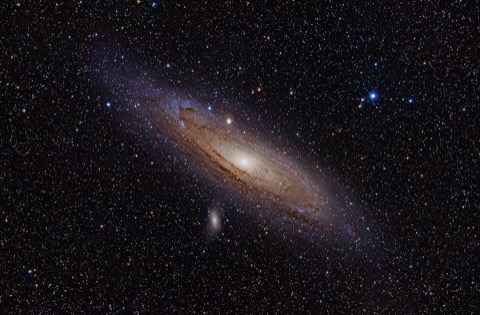 Adam Evans / Wikimedia Commons (CC BY 2.0)
Galaxy · M312.5 million light-years
Andromeda Galaxy
The nearest large galaxy to the Milky Way — a barred spiral of a trillion stars on a slow collision course to merge with us in about 4.5 billion years. Visible to the naked eye as a faint smudge in Andromeda.
View & see in 3D →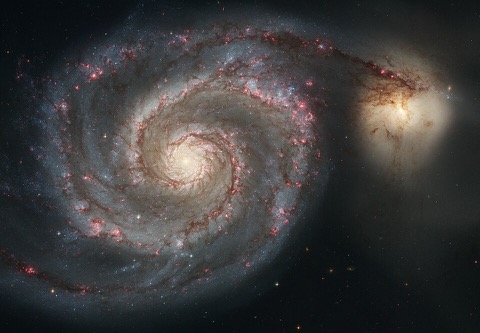 NASA, ESA, S. Beckwith (STScI) & the Hubble Heritage Team
Galaxy · M5128 million light-years
Whirlpool Galaxy
A textbook grand-design spiral locked in a gravitational dance with a smaller companion. Its sweeping arms made it the first galaxy ever recognised as a spiral, by Lord Rosse in 1845.
View & see in 3D →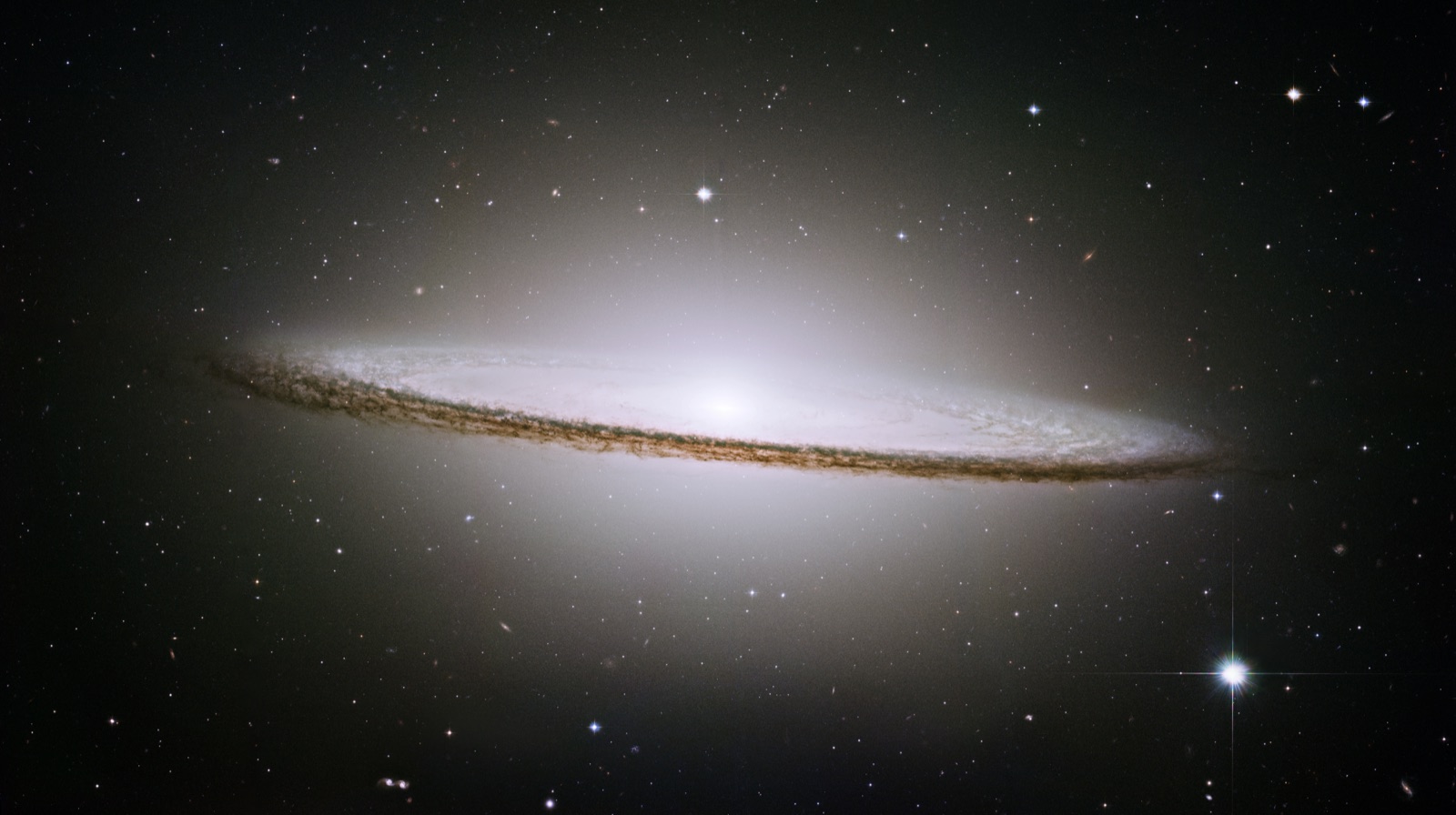 NASA/ESA and The Hubble Heritage Team (STScI/AURA)
Galaxy · M10428 million light-years
Sombrero Galaxy
The Sombrero Galaxy (M104) is an edge-on spiral whose brilliant white core and thick, encircling dust lane make it look uncannily like a wide-brimmed Mexican hat — one of the most recognizable galaxies in the sky. Famous for harboring a billion-solar-mass supermassive black hole and roughly 2,000 globular clusters (about ten times the Milky Way's haul), it sits at the southern edge of the Virgo galaxy cluster.
View & see in 3D →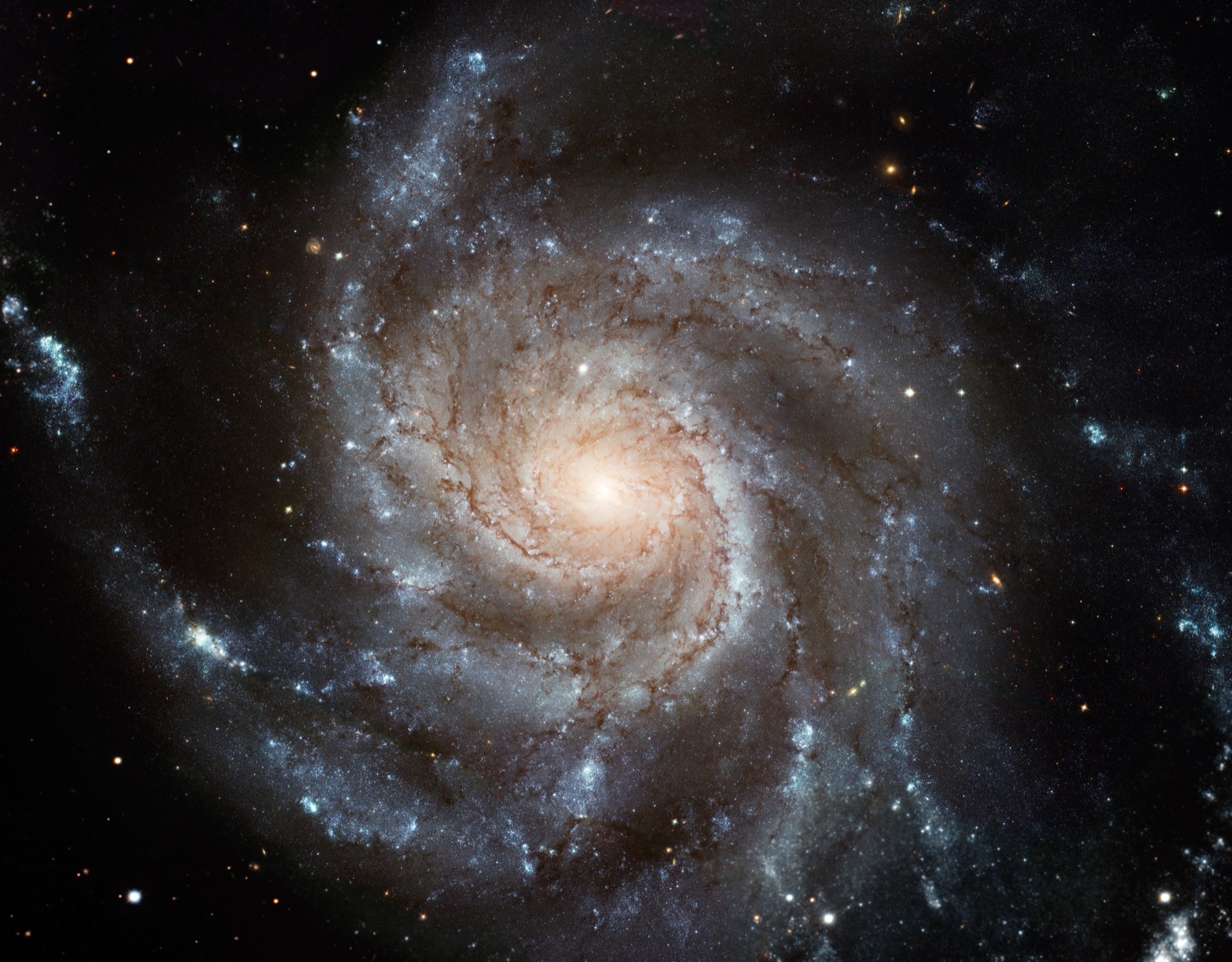 NASA, ESA, K. Kuntz (JHU), F. Bresolin (University of Hawaii), J. Trauger (Jet Propulsion Lab), J. Mould (NOAO), Y.-H. Chu (University of Illinois, Urbana) and STScI; CFHT Image: Canada-France-Hawaii Telescope/J.-C. Cuillandre/Coelum; NOAO Image: G. Jacoby, B. Bohannan, M. Hanna/NOAO/AURA/NSF
Galaxy · M10125 million light-years
Pinwheel Galaxy
The Pinwheel Galaxy (M101) is a stunning face-on spiral in Ursa Major whose disk spans about 170,000 light-years — nearly twice the width of our Milky Way — making it one of the largest spiral galaxies known. It is famous for the iconic, ultra-detailed NASA/ESA Hubble portrait that reveals its sweeping arms studded with brilliant blue star clusters and glowing pink star-forming nebulae.
View & see in 3D →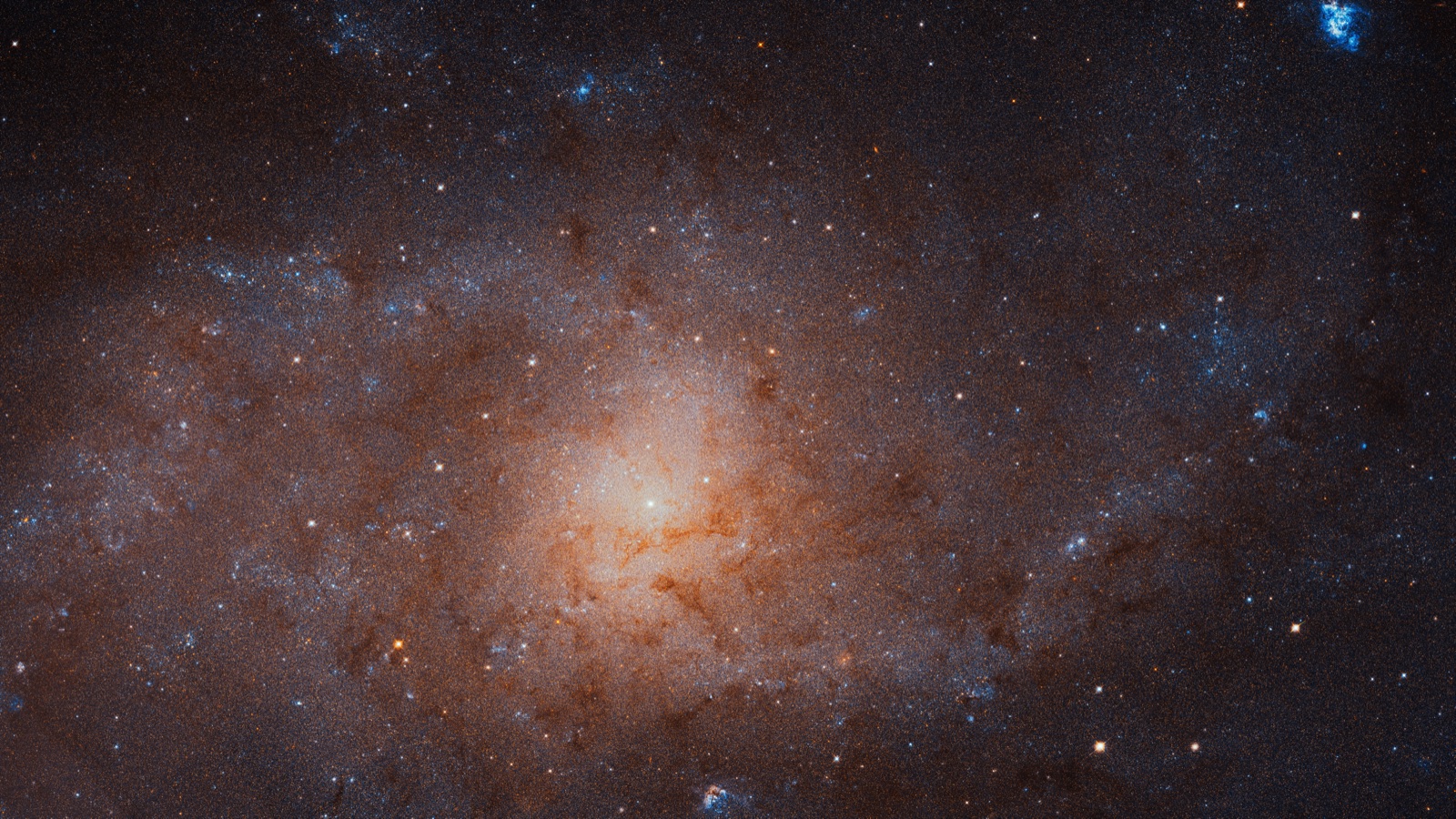 NASA, ESA, and M. Durbin, J. Dalcanton, and B. F. Williams (University of Washington)
Galaxy · M332.73 million light-years
Triangulum Galaxy
The Triangulum Galaxy (M33) is a face-on spiral and the third-largest member of our Local Group, after the Milky Way and Andromeda. It is famous as the subject of the largest, sharpest Hubble portrait of a spiral galaxy ever assembled — a 665-million-pixel mosaic resolving roughly 25 million individual stars — and is among the most distant objects visible to the naked eye under dark skies.
View & see in 3D →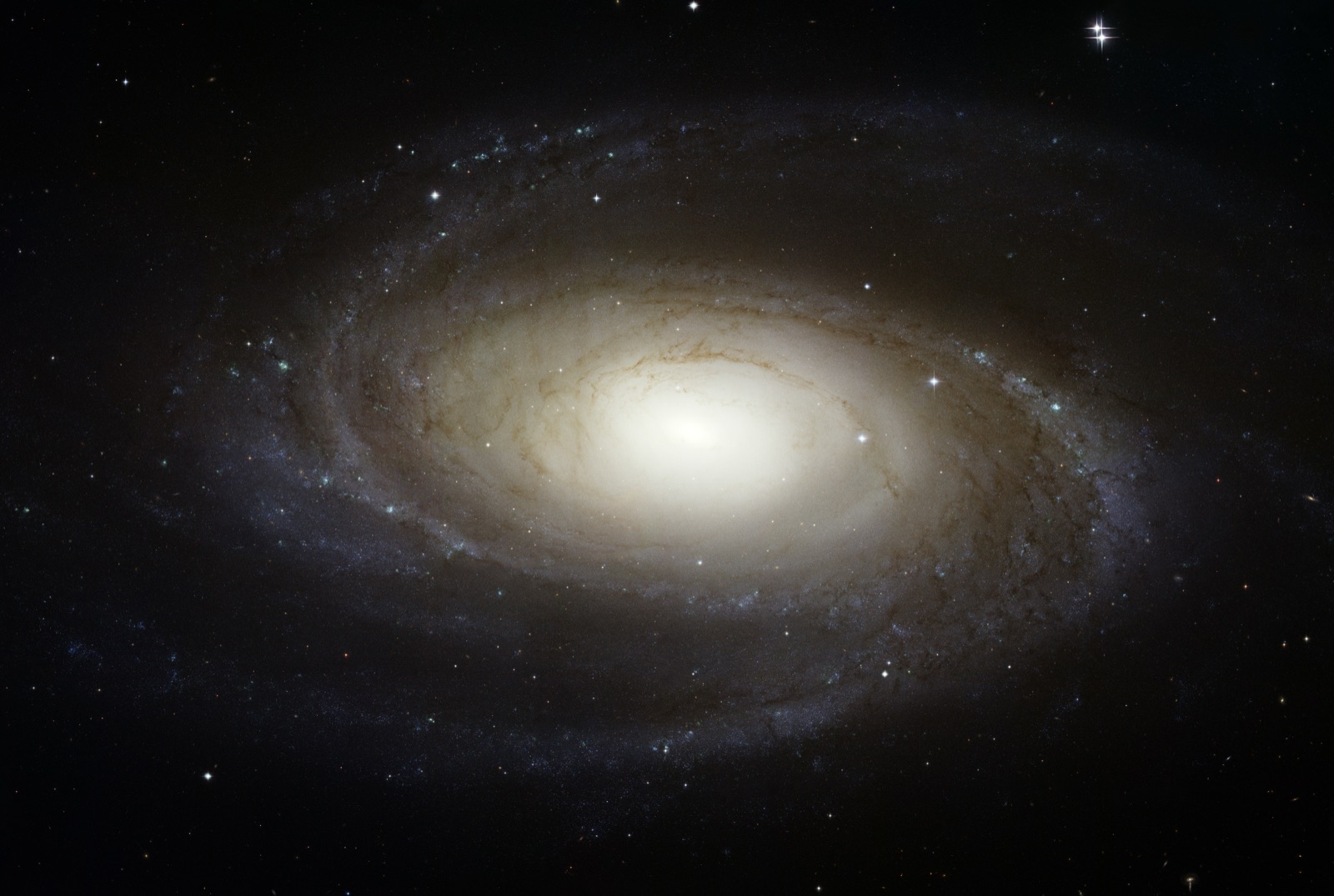 NASA, ESA and the Hubble Heritage Team (STScI/AURA). Acknowledgment: A. Zezas and J. Huchra (Harvard-Smithsonian Center for Astrophysics)
Galaxy · M8111.6 million light-years
Bode's Galaxy
Bode's Galaxy (M81) is a stunning grand-design spiral in Ursa Major, one of the brightest galaxies in the night sky and a favorite target for backyard telescopes. Discovered by Johann Bode in 1774, it is famous for its perfectly symmetric spiral arms and a supermassive black hole at its core weighing about 70 million times the mass of the Sun.
View & see in 3D →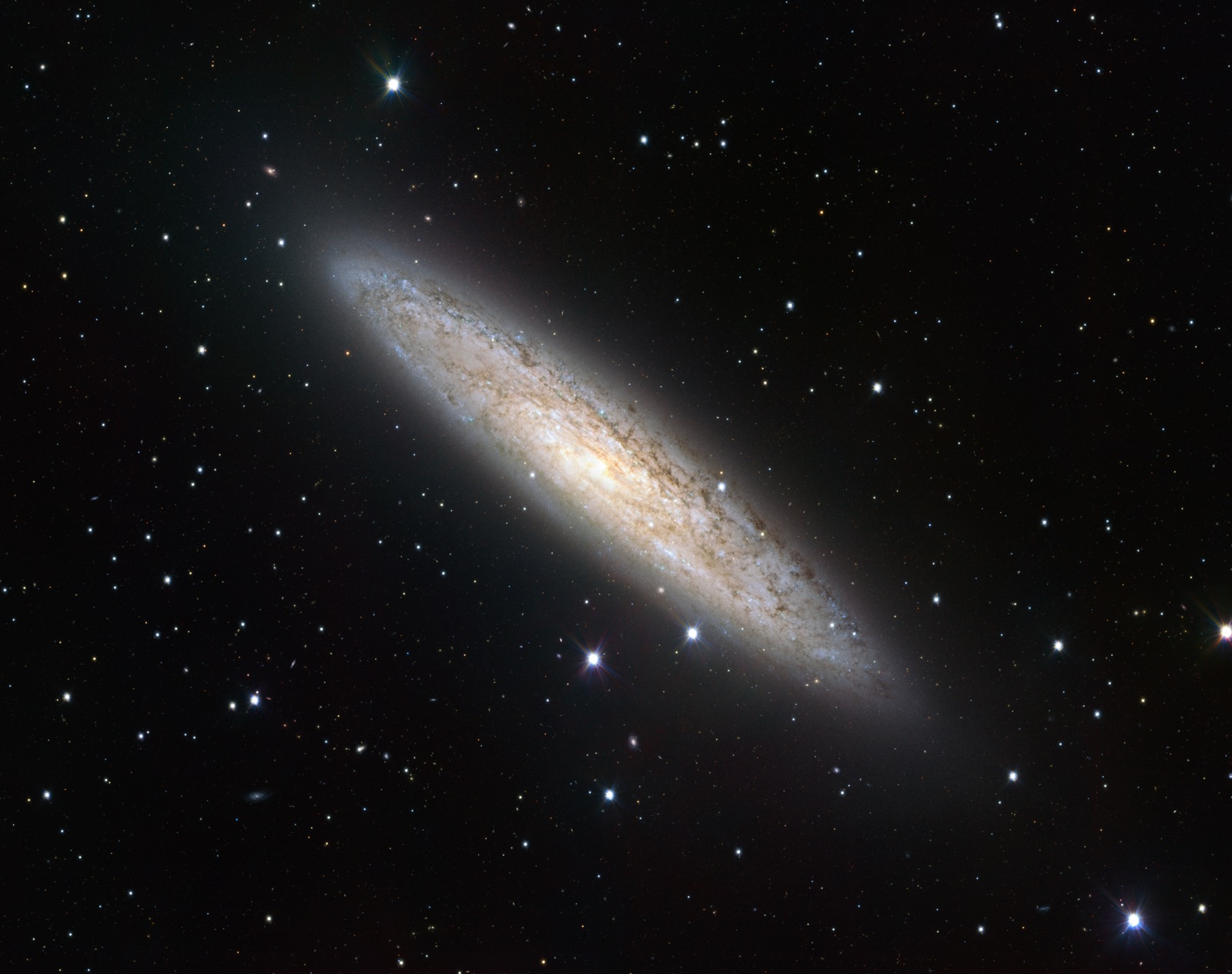 ESO/INAF-VST. Acknowledgement: A. Grado/L. Limatola/INAF-Capodimonte Observatory
Galaxy · NGC 25311.4 million light-years
Sculptor Galaxy
The Sculptor Galaxy (NGC 253), nicknamed the Silver Dollar or Silver Coin Galaxy, is a brilliant dust-laced spiral about 11.4 million light-years away and one of the brightest galaxies in the sky after Andromeda. It is the closest and most famous "starburst" galaxy, a near-edge-on disk blazing with intense star formation that drives glowing outflows of gas above and below its plane.
View & see in 3D →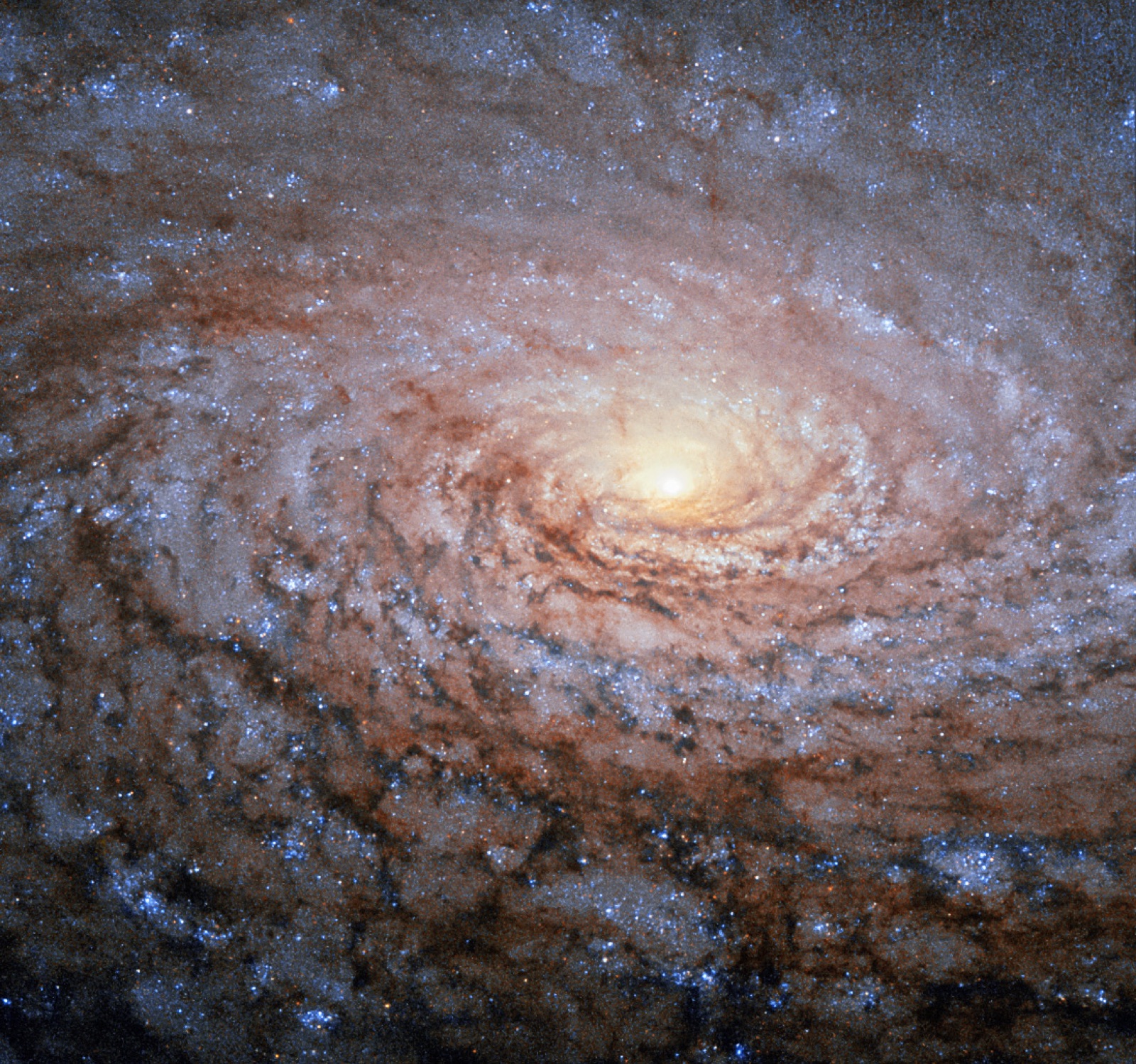 ESA/Hubble & NASA
Galaxy · M6327 million light-years
Sunflower Galaxy
The Sunflower Galaxy (Messier 63) is a dazzling spiral whose many short, feathery arms swirl around a glowing golden core like the seeds of a sunflower, earning it its memorable name. It is a textbook example of a "flocculent" spiral galaxy, prized by astronomers for studying how stars form in galaxies that lack the grand, sweeping arms of their more orderly cousins.
View & see in 3D →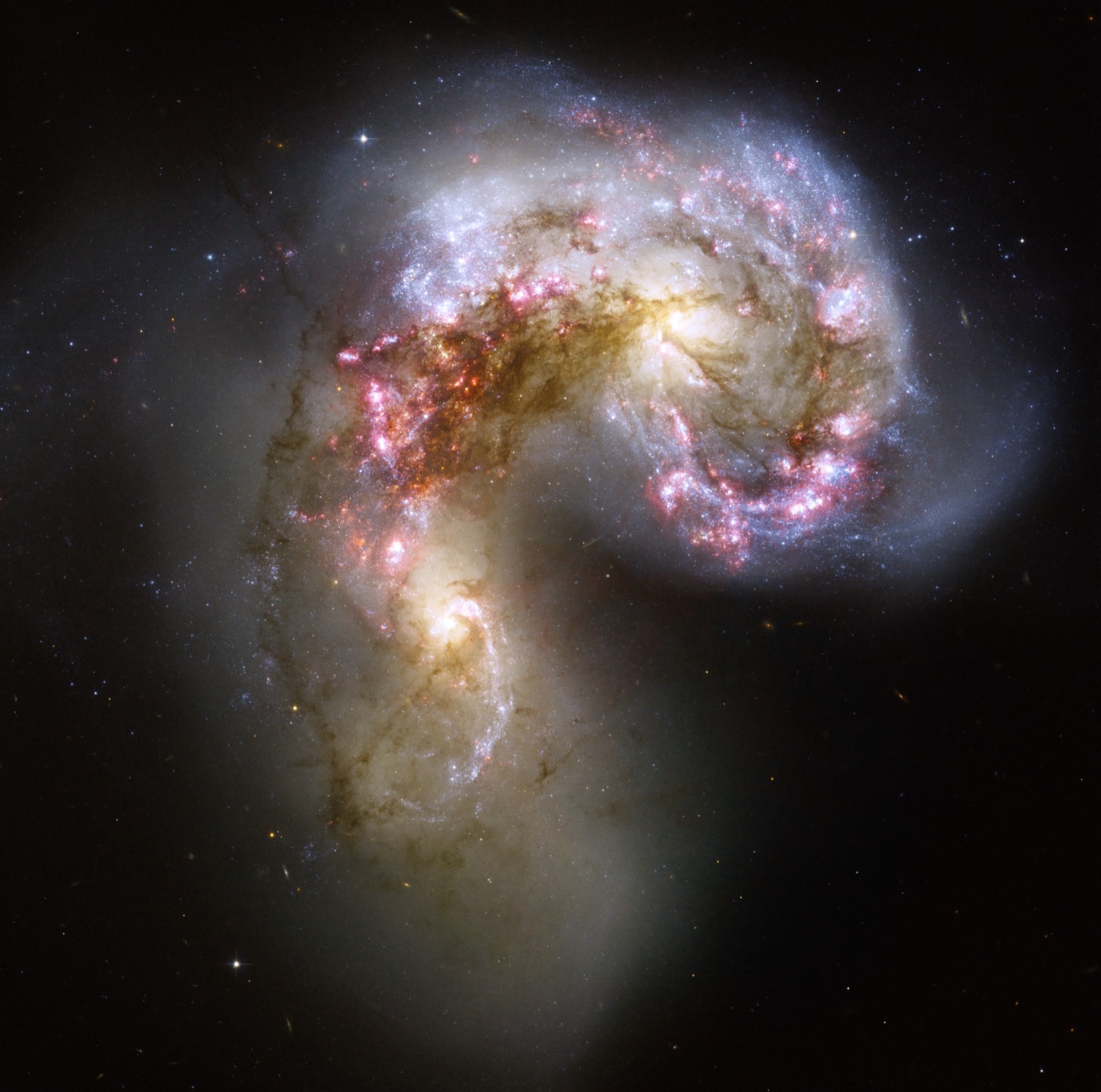 NASA, ESA, and the Hubble Heritage Team (STScI/AURA)-ESA/Hubble Collaboration. Acknowledgement: B. Whitmore (Space Telescope Science Institute) and James Long (ESA/Hubble).
Galaxy · NGC 403862 million light-years
Antennae Galaxies
The Antennae Galaxies are two spiral galaxies caught in the act of a head-on collision, their stars and gas flung into sweeping tidal tails that resemble an insect's antennae. They are the nearest and youngest example of colliding galaxies, where the cosmic crash is triggering an explosion of brilliant blue star clusters — a preview of the fate awaiting our own Milky Way and Andromeda.
View & see in 3D →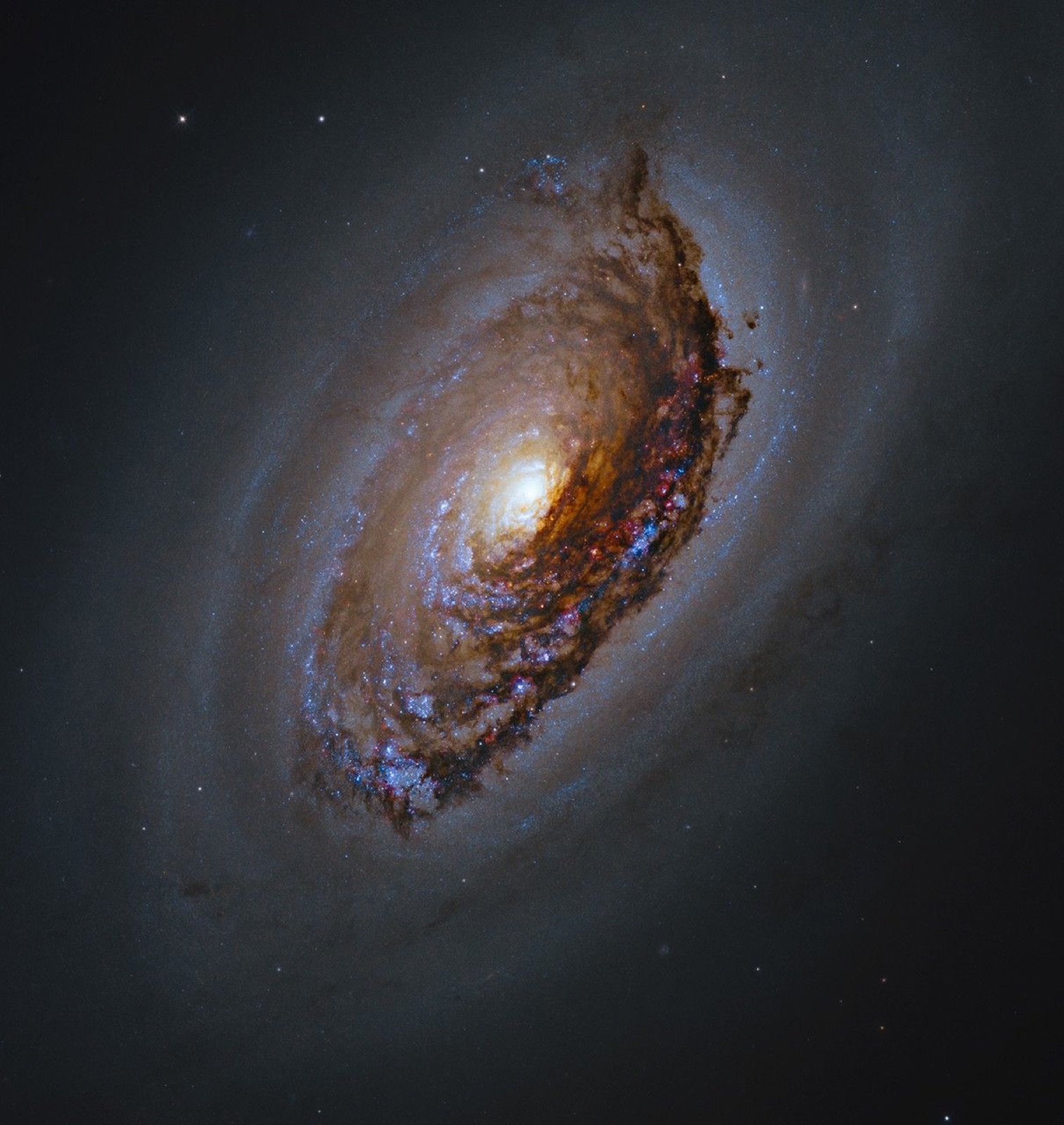 NASA, ESA, CSA, F. Belfiore (ESO), J. Lee (STScI), A. Leroy (Ohio State), D. Thilker (Johns Hopkins); Processing: Gladys Kober (NASA/Catholic University of America)
Galaxy · M6417 million light-years
Black Eye Galaxy
The Black Eye Galaxy (M64) is named for the dramatic dark band of dust that sweeps across the front of its glowing core, giving it the look of a bruised, watchful eye. It's famous for a cosmic secret hidden inside: the outer gas spins in the opposite direction to the inner gas and stars, evidence that this galaxy swallowed a smaller companion more than a billion years ago.
View & see in 3D →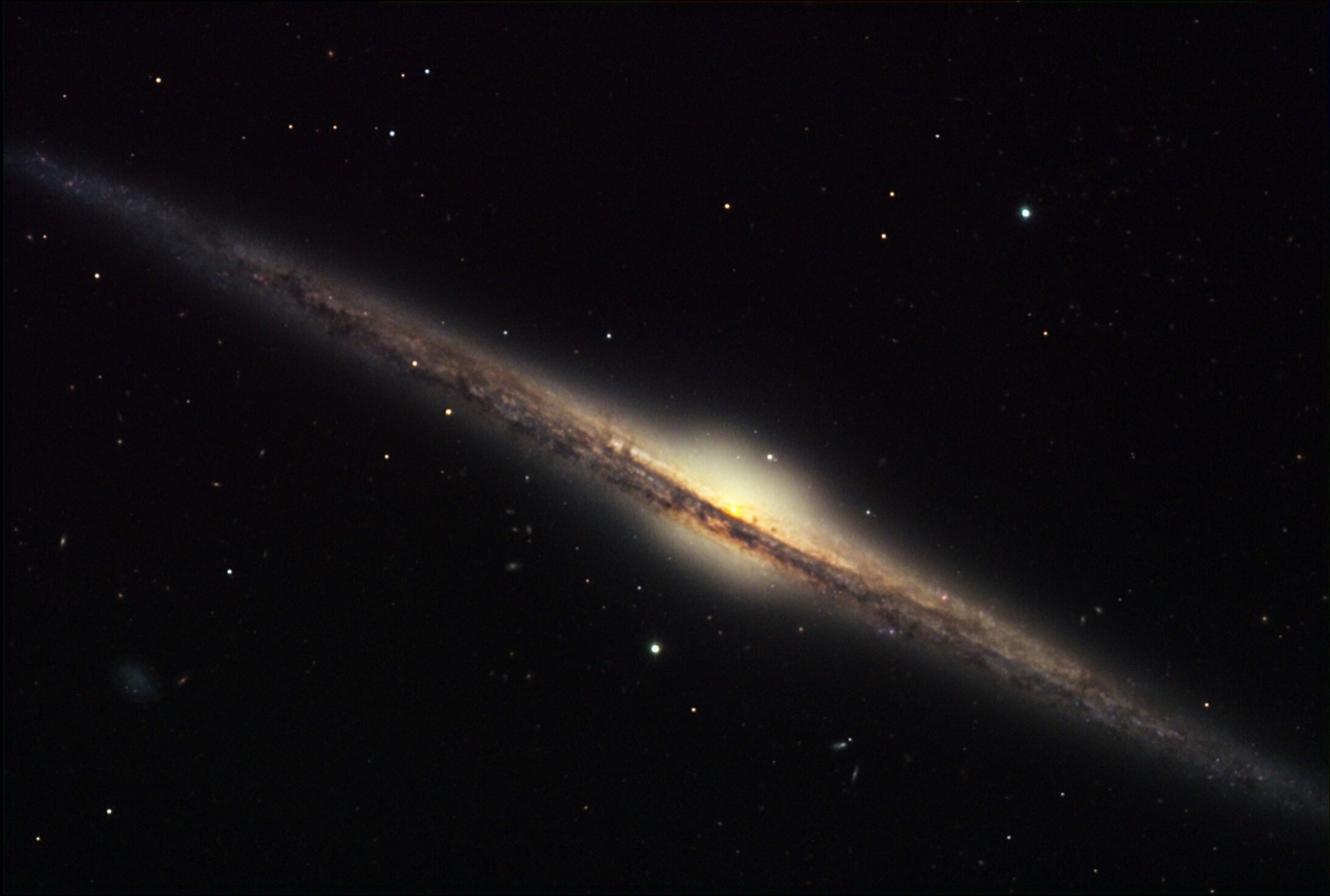 KPNO/NOIRLab/NSF/AURA/Bruce Hugo and Leslie Gaul/Adam Block
Galaxy · NGC 456540 million light-years
Needle Galaxy
The Needle Galaxy (NGC 4565) is one of the most famous edge-on spiral galaxies in the sky, seen so perfectly side-on that it looks like a glowing sliver of light pierced by a dark ribbon of dust. About a third larger than our own Milky Way, it gives astronomers a stunning preview of what our galaxy would look like from the outside, with its bright golden bulge bulging above a razor-thin disk.
View & see in 3D →Nebulae
Glowing clouds where stars are born and where dying stars cast off their shells.
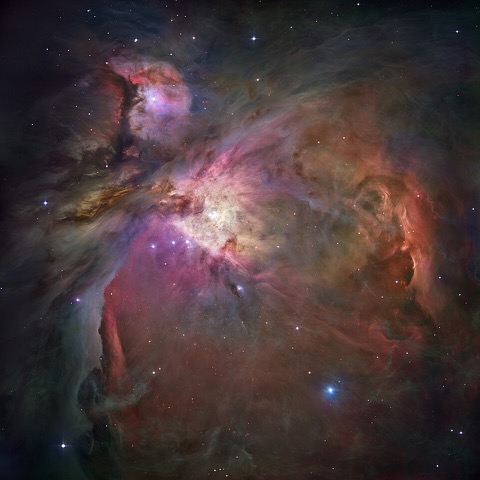 NASA, ESA, M. Robberto (STScI/ESA) & the Hubble Orion Treasury Team
Nebula · M421,344 light-years
Orion Nebula
The closest large stellar nursery to Earth — a glowing cloud of gas birthing hundreds of new stars. Visible to the naked eye as the fuzzy middle 'star' of Orion's sword.
View & see in 3D →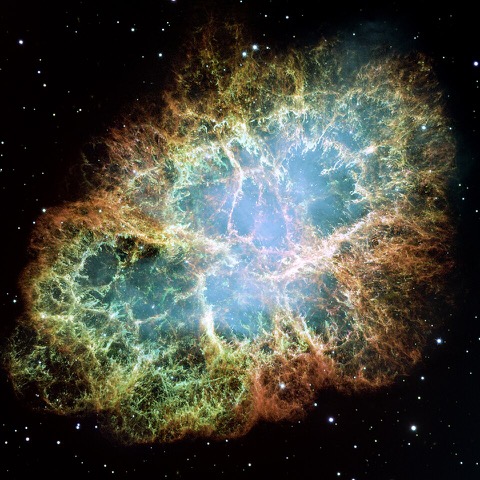 NASA, ESA, J. Hester & A. Loll (ASU) / Hubble
Nebula · M16,500 light-years
Crab Nebula
The expanding wreckage of a supernova seen exploding in 1054 AD and recorded by Chinese astronomers. At its heart spins the Crab Pulsar, the collapsed core of the dead star.
View & see in 3D →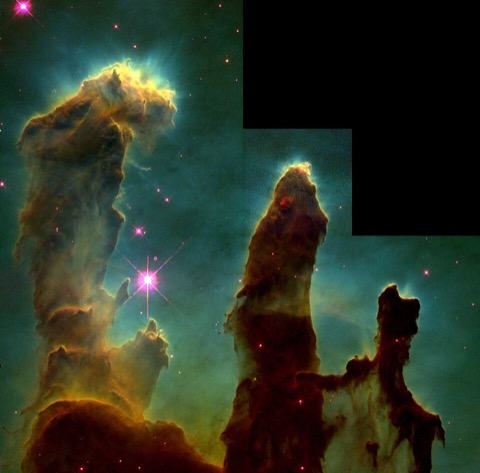 NASA, ESA, STScI, J. Hester & P. Scowen (ASU) / Hubble
Nebula · M165,700 light-years
Eagle Nebula
Home to the iconic 'Pillars of Creation' — towering columns of gas and dust where new stars are condensing. Made famous by Hubble in 1995 and reimaged in the infrared by JWST in 2022.
View & see in 3D →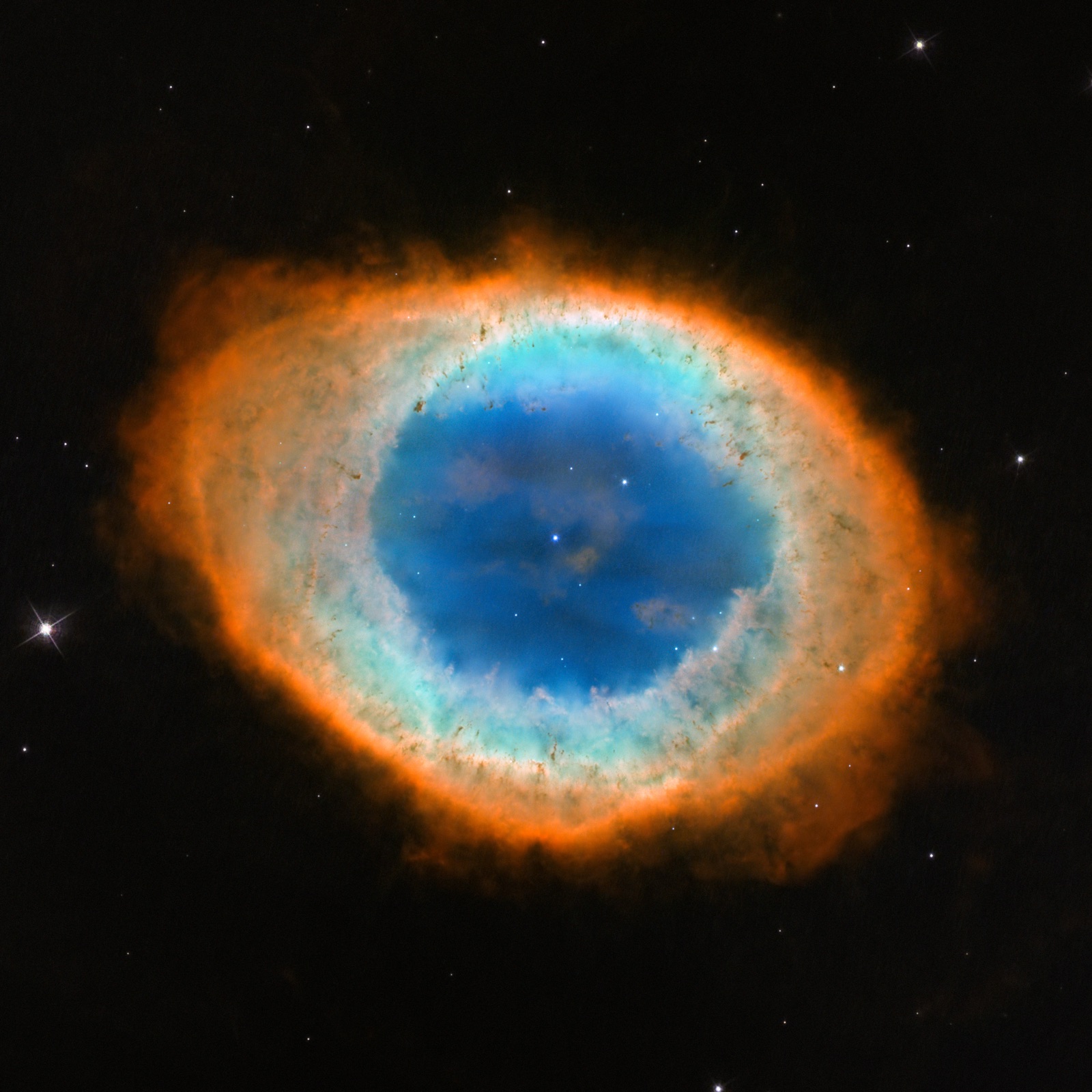 NASA, ESA, and C. Robert O'Dell (Vanderbilt University)
Nebula · M572,500 light-years
Ring Nebula
The Ring Nebula (M57) is the glowing, smoke-ring-shaped shell of gas blown off by a dying Sun-like star in the constellation Lyra, and it's the most famous "planetary nebula" in the sky. Hubble revealed that its iconic ring is actually a football-shaped, doughnut-like structure seen nearly end-on, lit from within by the hot ember of the star's exposed core.
View & see in 3D →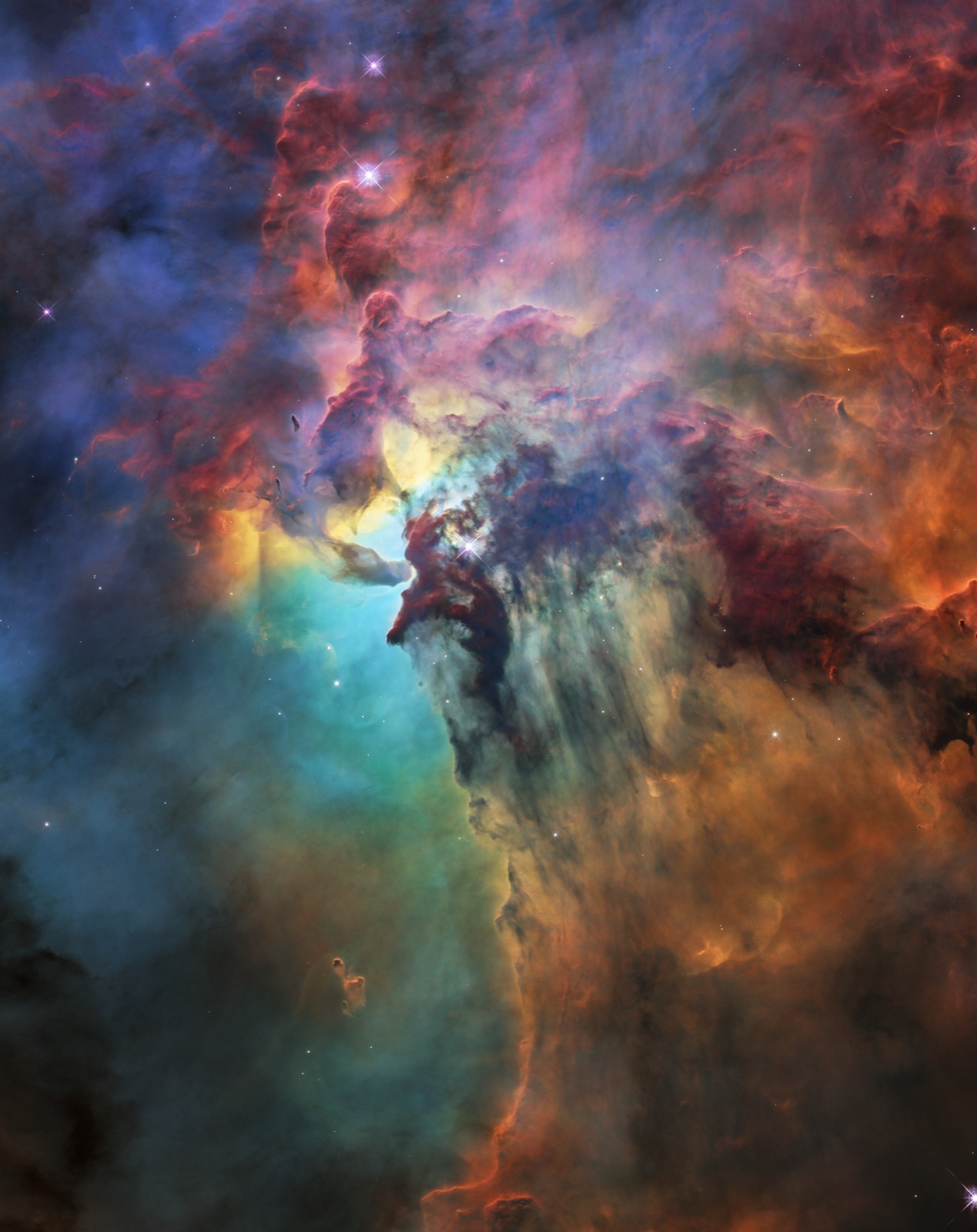 NASA, ESA, STScI
Nebula · M85,200 light-years
Lagoon Nebula
The Lagoon Nebula (Messier 8) is a vast, glowing stellar nursery in the constellation Sagittarius, where newborn stars blaze inside swirling clouds of pink hydrogen gas and dark dust lanes. Bright enough to glimpse with the naked eye under dark skies, it became one of astronomy's most celebrated portraits when the Hubble Space Telescope imaged its turbulent heart to mark the observatory's 28th anniversary in 2018.
View & see in 3D →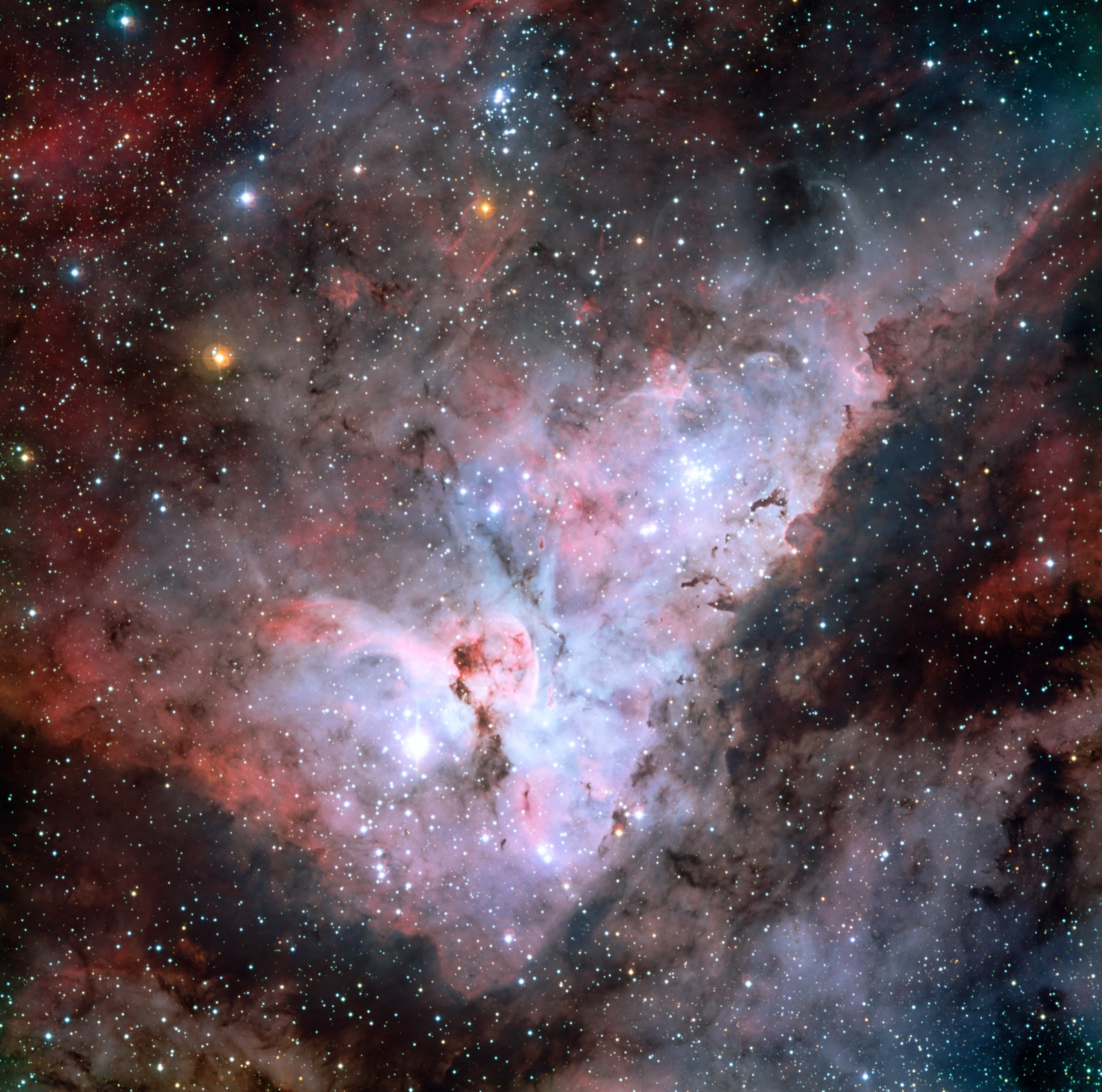 ESO
ESONebula · NGC 33727,500 light-years
Carina Nebula
The Carina Nebula is one of the largest and brightest star-forming regions in the sky, a turbulent cloud of glowing gas and dark dust roughly 300 light-years across in the southern constellation Carina. It is famous for harboring Eta Carinae, an unstable hypergiant about 100 times the Sun's mass, and for being among the first dazzling targets imaged by the James Webb Space Telescope in 2022.
View & see in 3D →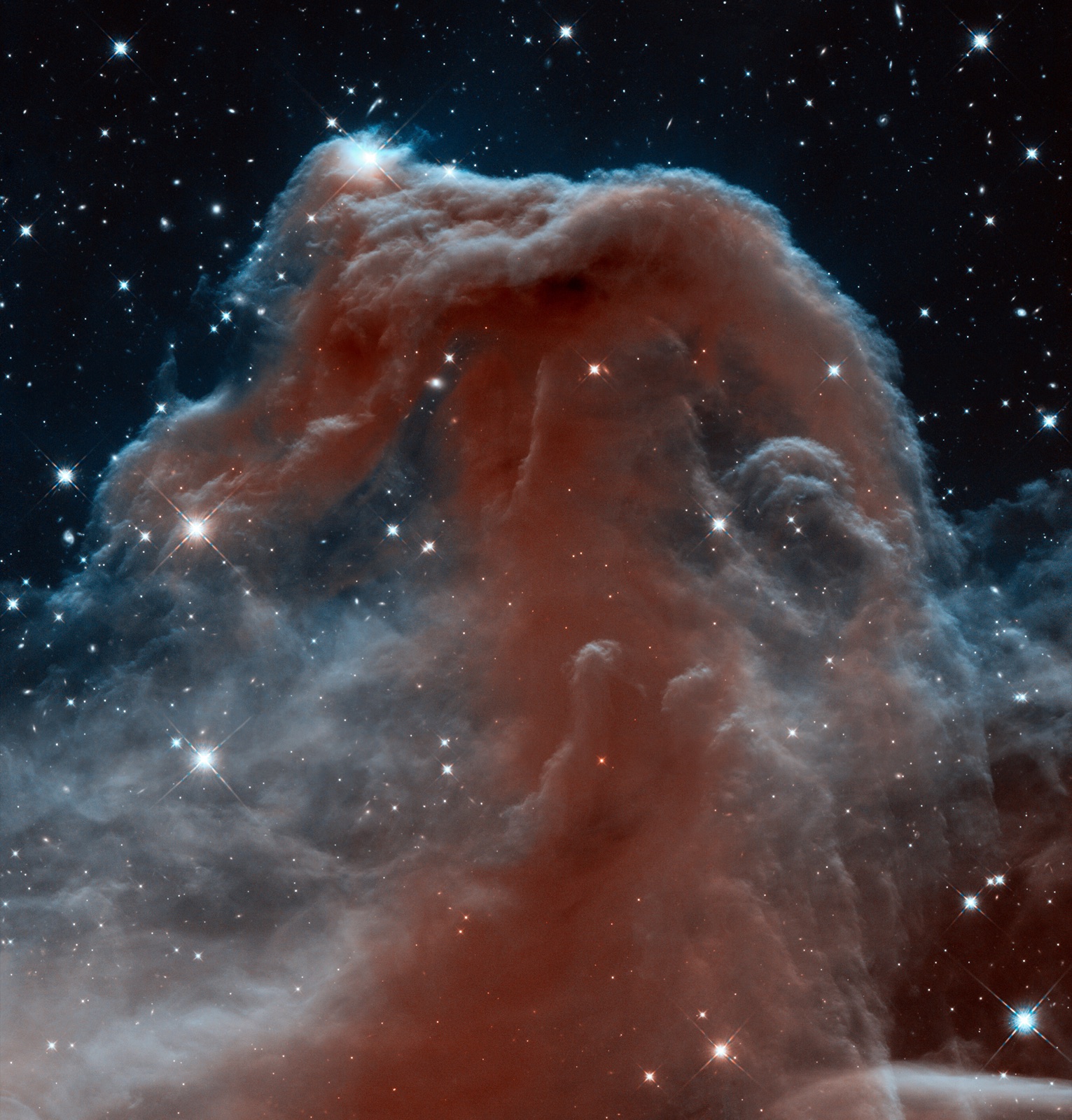 NASA, ESA, and the Hubble Heritage Team (AURA/STScI)
Nebula · Barnard 331,375 light-years
Horsehead Nebula
The Horsehead Nebula is a dark cloud of cold gas and dust, silhouetted against a glowing backdrop, whose unmistakable shape resembles a horse's head rearing up from the cosmic surf. One of the most photographed and instantly recognizable objects in the entire sky, it sits in the constellation Orion just below the belt star Alnitak and was famously imaged by Hubble for the telescope's 23rd anniversary.
View & see in 3D →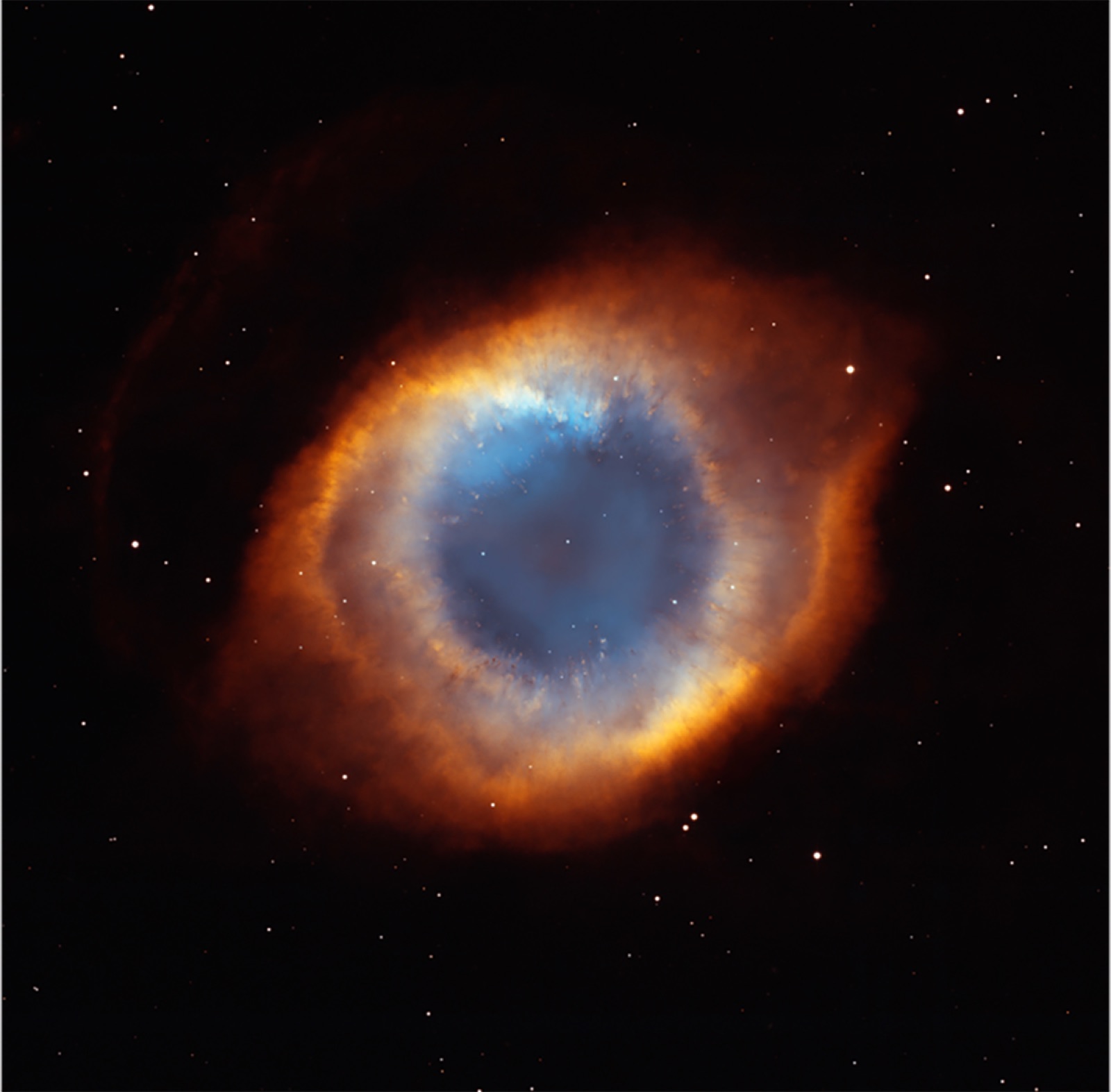 NASA, NOAO, ESA, the Hubble Helix Nebula Team, M. Meixner (STScI), and T.A. Rector (NRAO)
Nebula · NGC 7293655 light-years
Helix Nebula
The Helix Nebula is one of the nearest and most photographed planetary nebulae — the glowing, expanding shroud of gas cast off by a dying Sun-like star, with a tiny white dwarf burning at its heart. Nicknamed the "Eye of God" for its striking iris-like rings, it is famous for the thousands of comet-shaped gaseous knots that Hubble revealed around its ghostly central star.
View & see in 3D →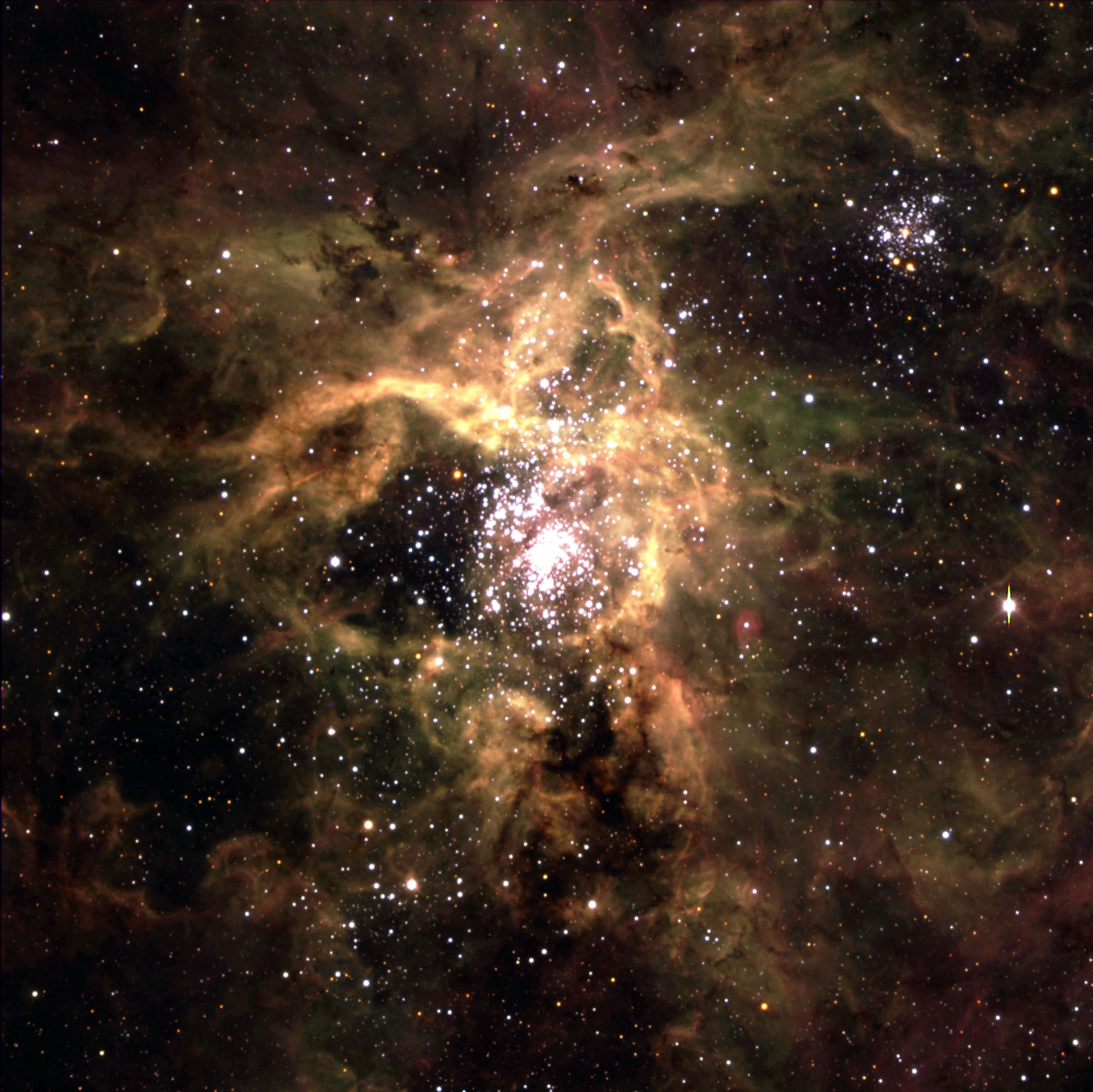 ESO
ESONebula · NGC 2070160,000 light-years
Tarantula Nebula
The Tarantula Nebula (NGC 2070, also called 30 Doradus) is the largest and most active star-forming region in our entire galactic neighborhood, blazing inside the Large Magellanic Cloud some 160,000 light-years away. So luminous that if it sat as close as the Orion Nebula it would cast shadows on Earth, it is famous for hosting R136 — a dense cluster packed with some of the most massive stars ever found — and for being the site of supernova 1987A, the closest observed stellar explosion in nearly 400 years.
View & see in 3D →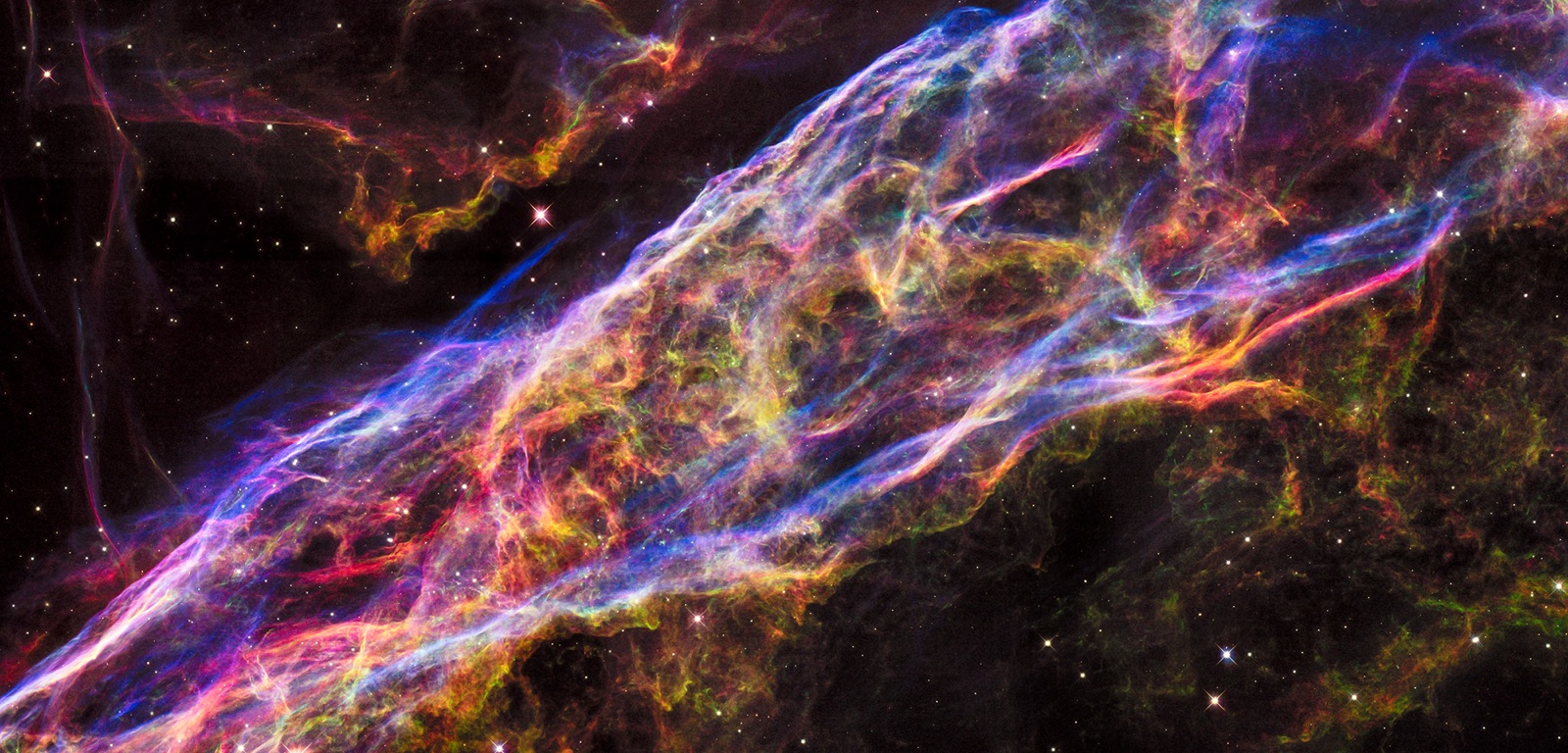 NASA, ESA, and the Hubble Heritage Team (STScI/AURA)
Nebula · NGC 69602,100 light-years
Veil Nebula
The Veil Nebula is the glowing, lace-like wreckage of a massive star that exploded as a supernova roughly 8,000 years ago, forming the western arc (NGC 6960) of the vast Cygnus Loop in the constellation Cygnus. Famous for its delicate, ribbon-thin filaments that look like a crumpled bed sheet seen edge-on, it is one of the best-known and most photographed supernova remnants in the night sky.
View & see in 3D →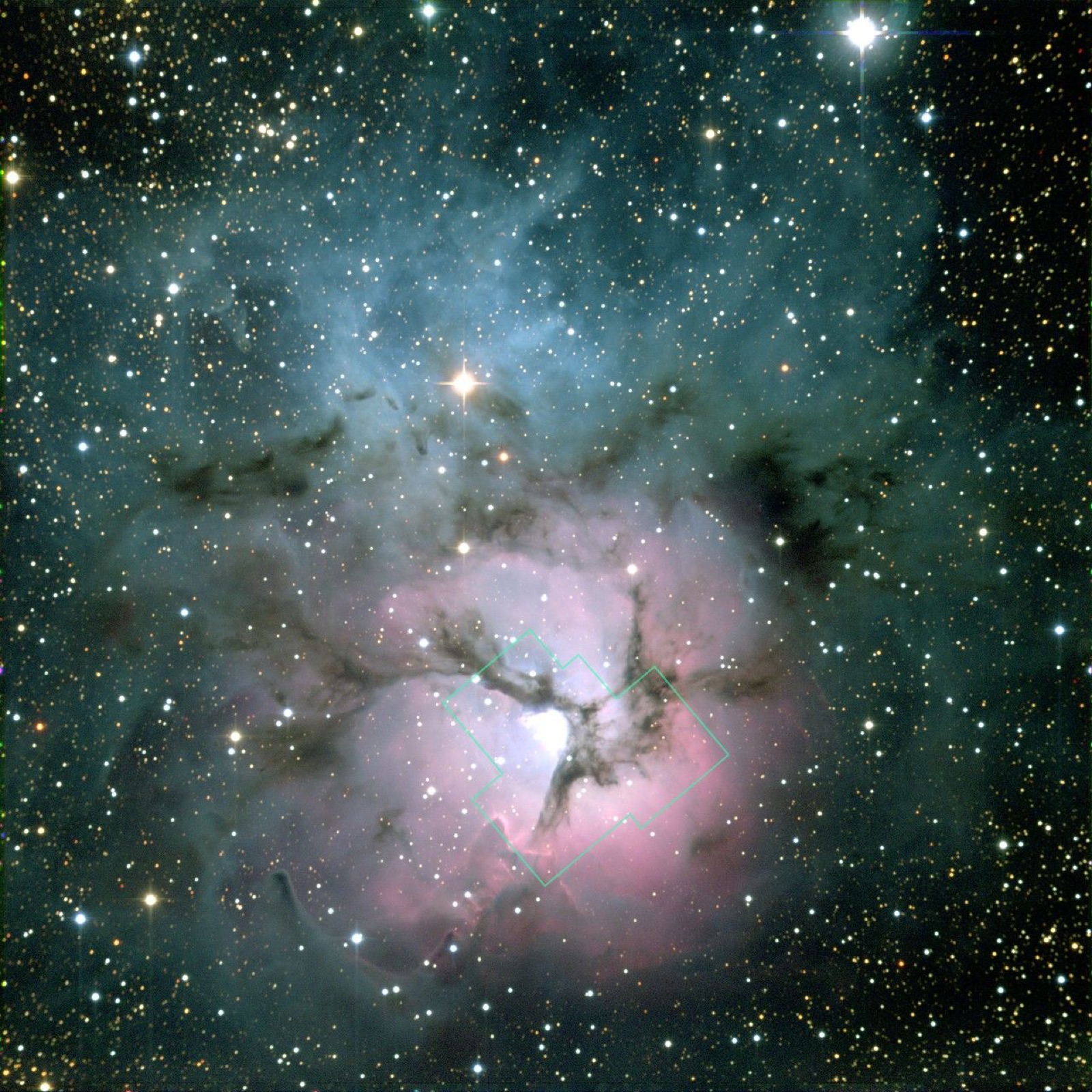 NOAO (National Optical Astronomy Observatory) / NASA Hubble mission archive
Nebula · M204,100 light-years
Trifid Nebula
The Trifid Nebula (M20) is a striking stellar nursery in Sagittarius, famous for the three dark dust lanes that slice its glowing pink gas into a clover-like trio — the feature that gives it its name. It is a rare cosmic three-in-one, combining a red emission nebula, a blue reflection nebula, and dark dust clouds all in a single bright object visible in small backyard telescopes.
View & see in 3D →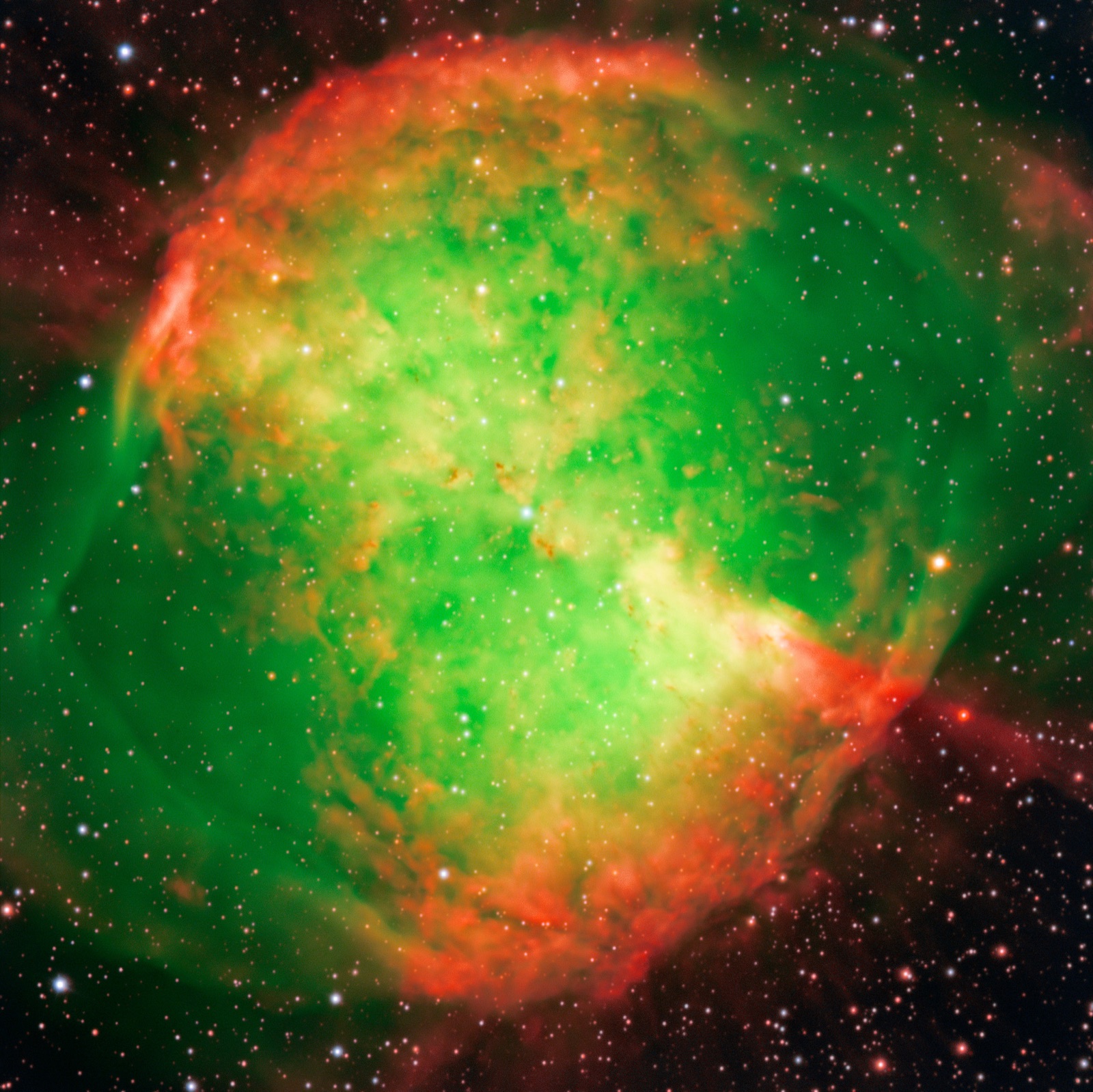 ESO/I. Appenzeller, W. Seifert, O. Stahl, M. Zamani
Nebula · M271,200 light-years
Dumbbell Nebula
The Dumbbell Nebula (M27) was the very first planetary nebula ever discovered, spotted by Charles Messier in 1764, and remains one of the brightest and most beloved targets for backyard stargazers. Its glowing, double-lobed "apple core" shape is the cast-off outer atmosphere of a dying Sun-like star, offering a preview of what our own Sun will become billions of years from now.
View & see in 3D →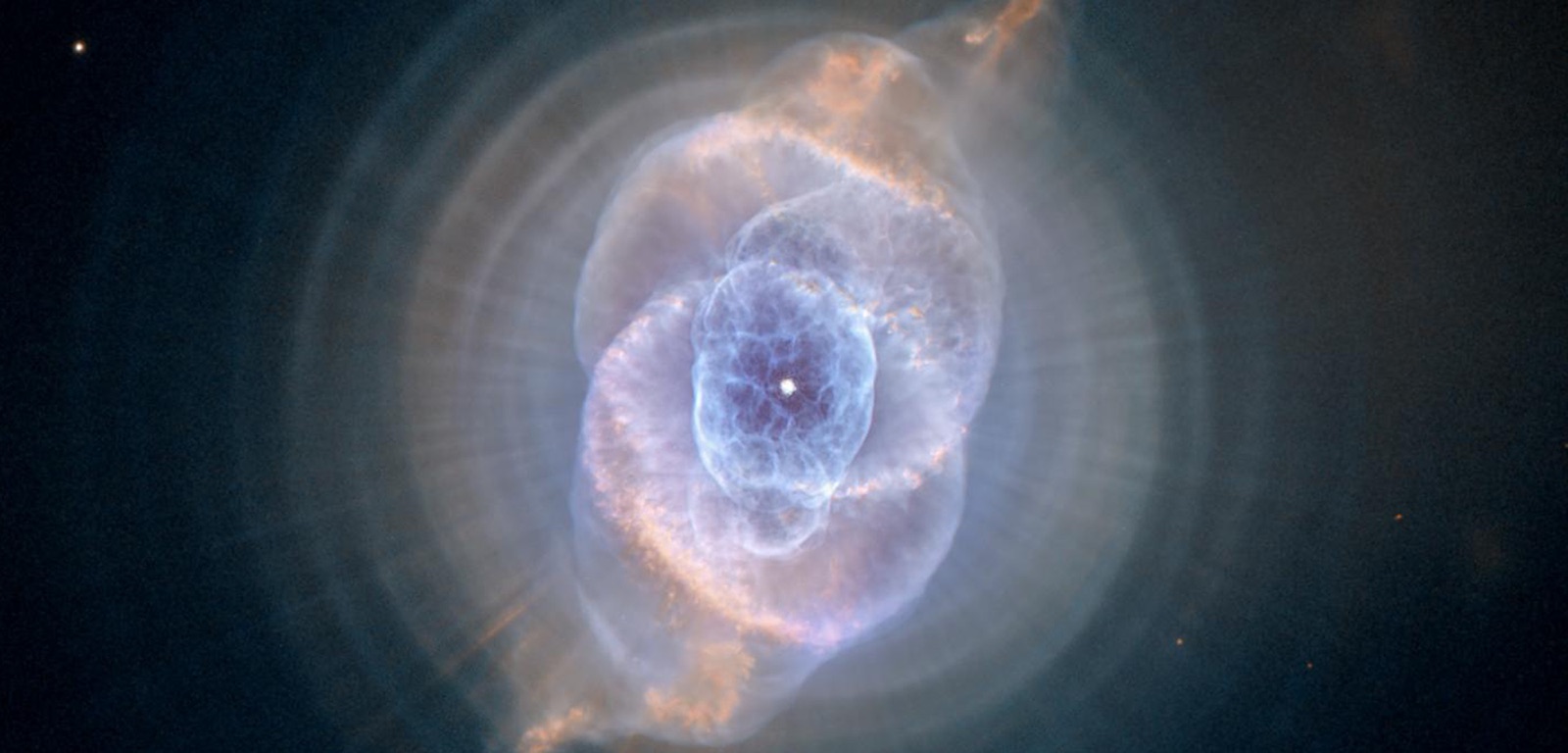 NASA, ESA, and the Hubble Heritage Team (STScI/AURA)
Nebula · NGC 65433,000 light-years
Cat's Eye Nebula
The Cat's Eye Nebula is one of the most intricate planetary nebulae ever seen — the glowing, shell-shedding death throes of a Sun-like star, captured by Hubble in dazzling detail. Its hypnotic onion-like rings, high-speed gas jets, and knotted filaments made it a Hubble icon and a textbook glimpse of what our own Sun may look like in about five billion years.
View & see in 3D →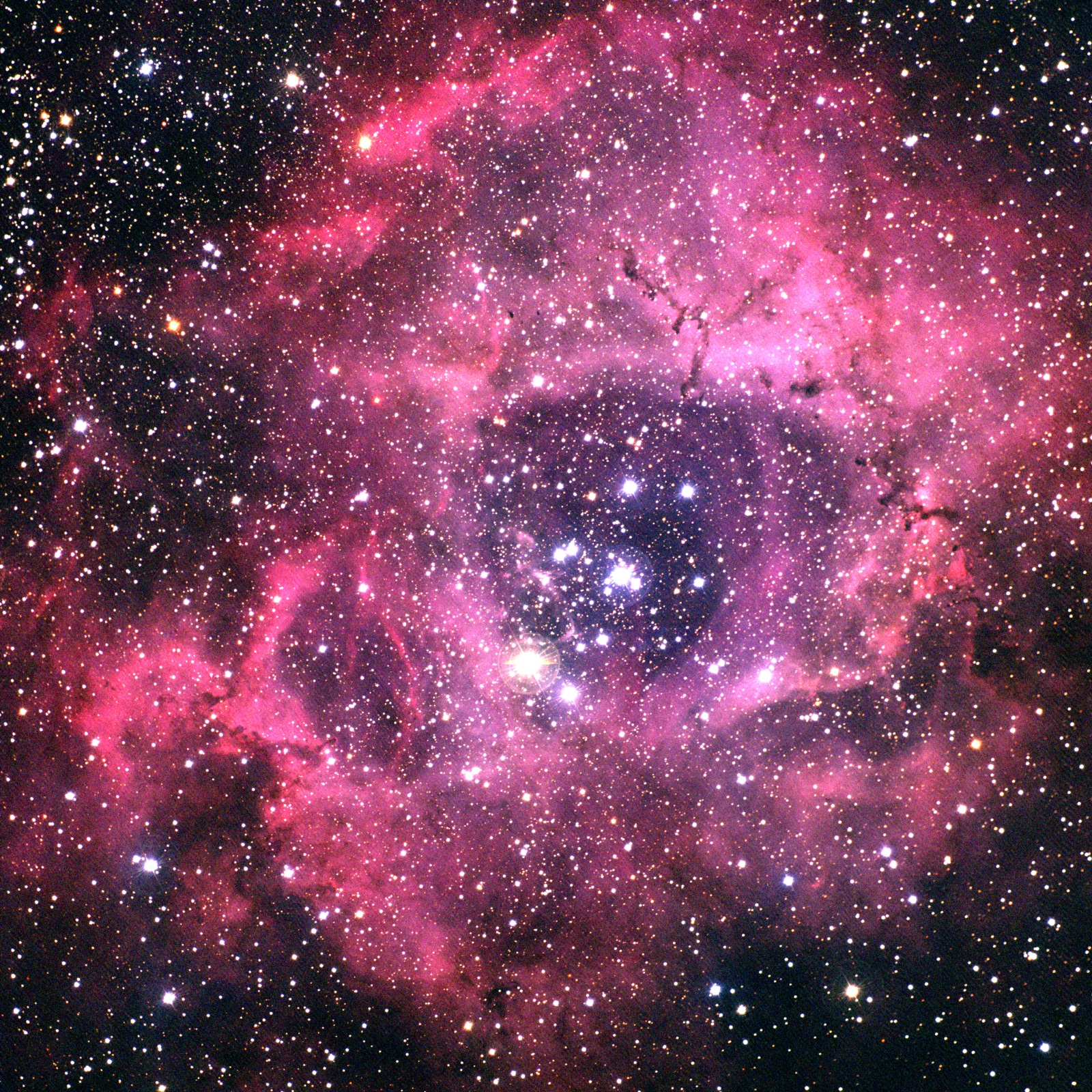 N.A. Sharp/NOIRLab/NSF/AURA
Nebula · NGC 22375,200 light-years
Rosette Nebula
The Rosette Nebula is a vast, rose-shaped cloud of glowing hydrogen gas roughly 100 light-years across in the constellation Monoceros, famous for the brilliant cluster of young stars (NGC 2244) blazing at its heart. The radiation and stellar winds from those hot newborn stars have carved out the nebula's signature central cavity, making it one of the most beloved and photographed star-forming regions in the night sky.
View & see in 3D →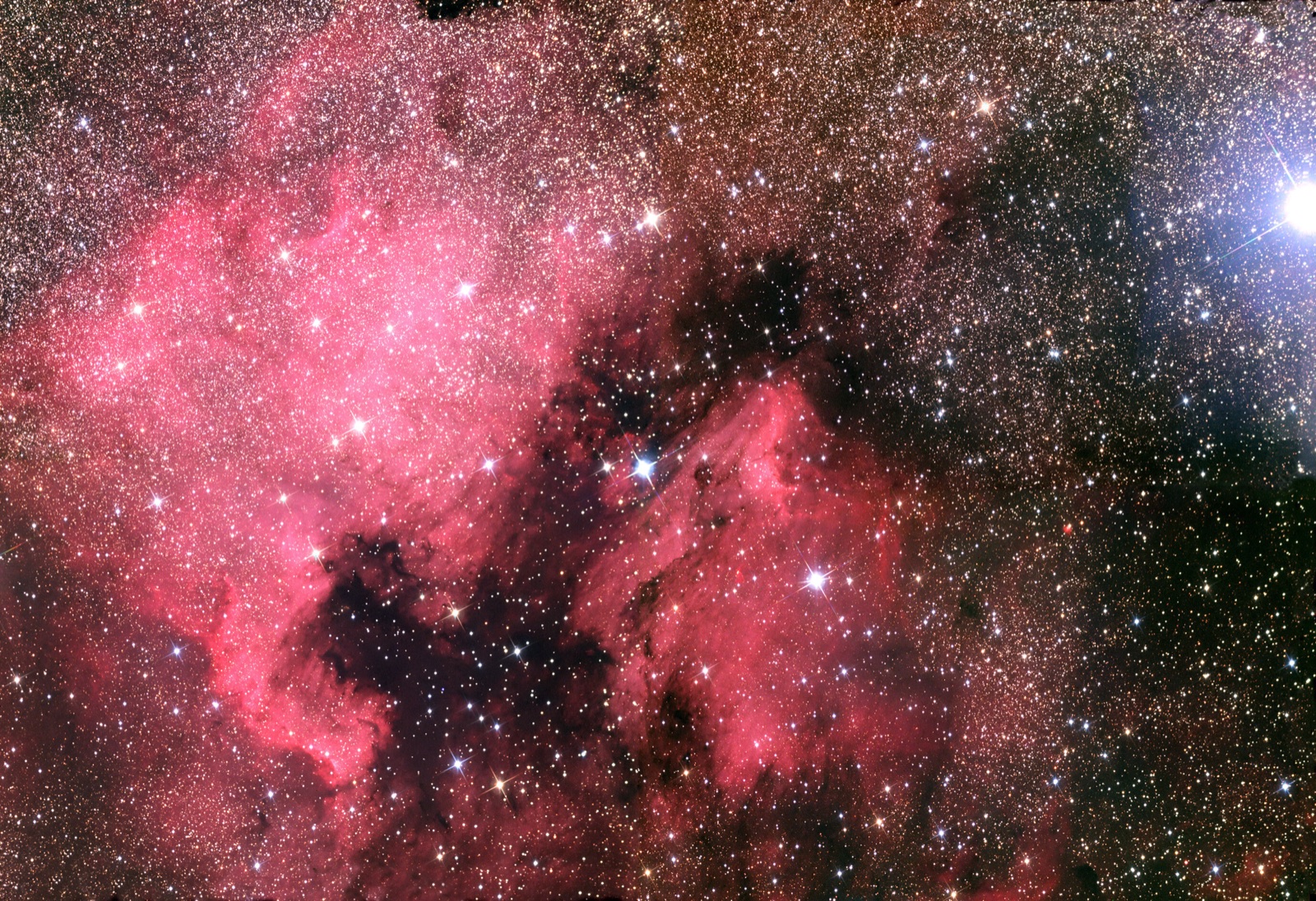 KPNO/NOIRLab/NSF/AURA/Adam Block
Nebula · NGC 70002,590 light-years
North America Nebula
The North America Nebula (NGC 7000) is a vast glowing cloud of hydrogen gas in the constellation Cygnus whose ragged outline famously mirrors the shape of the North American continent, complete with a dark "Gulf of Mexico." Spanning an area more than three times wider than the full Moon and lit by hidden young stars, it is one of the most photographed and beloved emission nebulae in the northern sky.
View & see in 3D →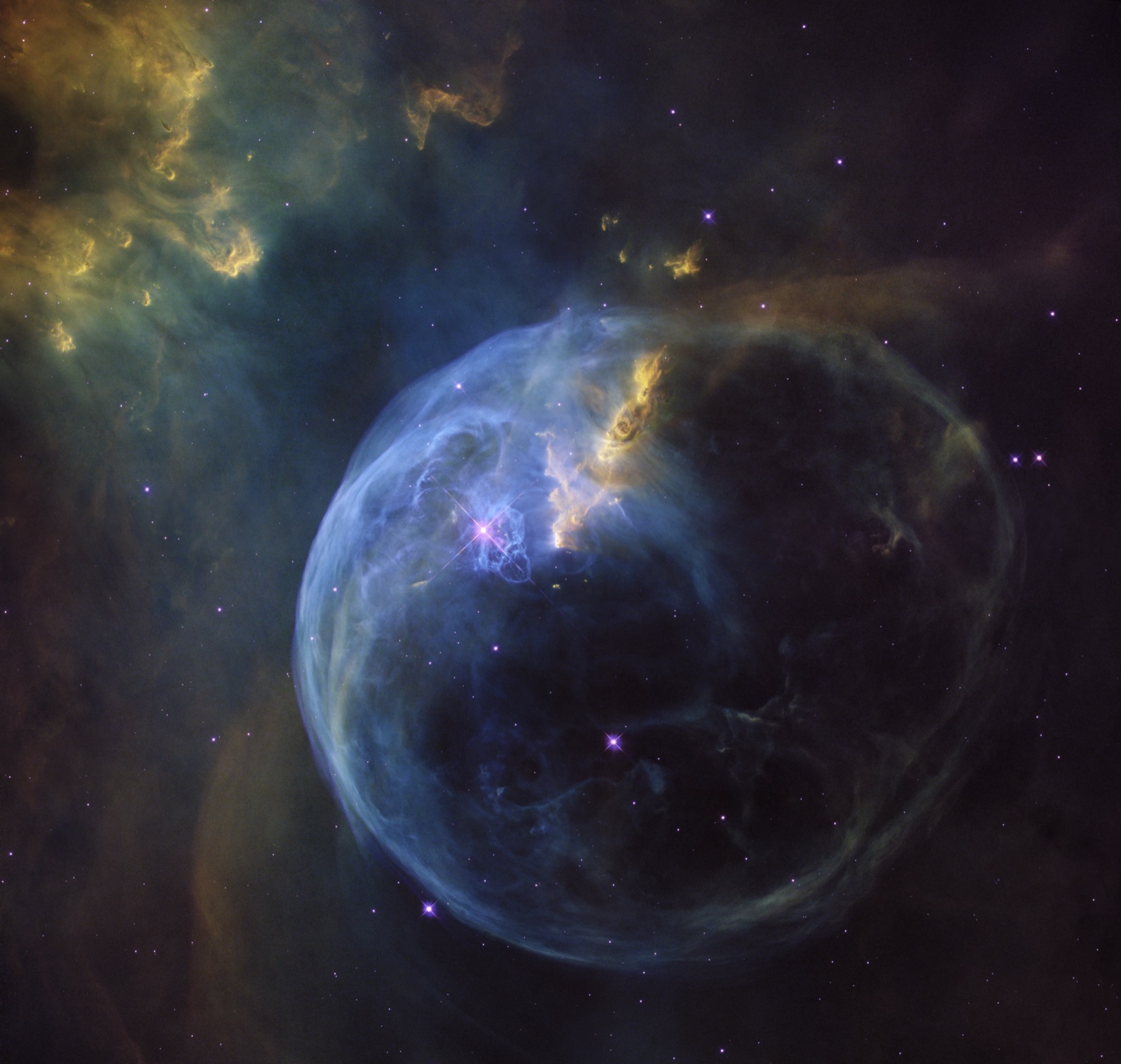 NASA, ESA, Hubble Heritage Team
Nebula · NGC 76357,100 light-years
Bubble Nebula
The Bubble Nebula is a giant, near-perfect sphere of glowing gas about 7 light-years wide, sculpted by the fierce stellar wind of a single super-hot star roughly 45 times the mass of our Sun. NASA and ESA chose it as the showcase image to celebrate the Hubble Space Telescope's 26th anniversary in 2016, making its delicate cosmic soap-bubble shape one of the most recognizable sights in the night sky.
View & see in 3D →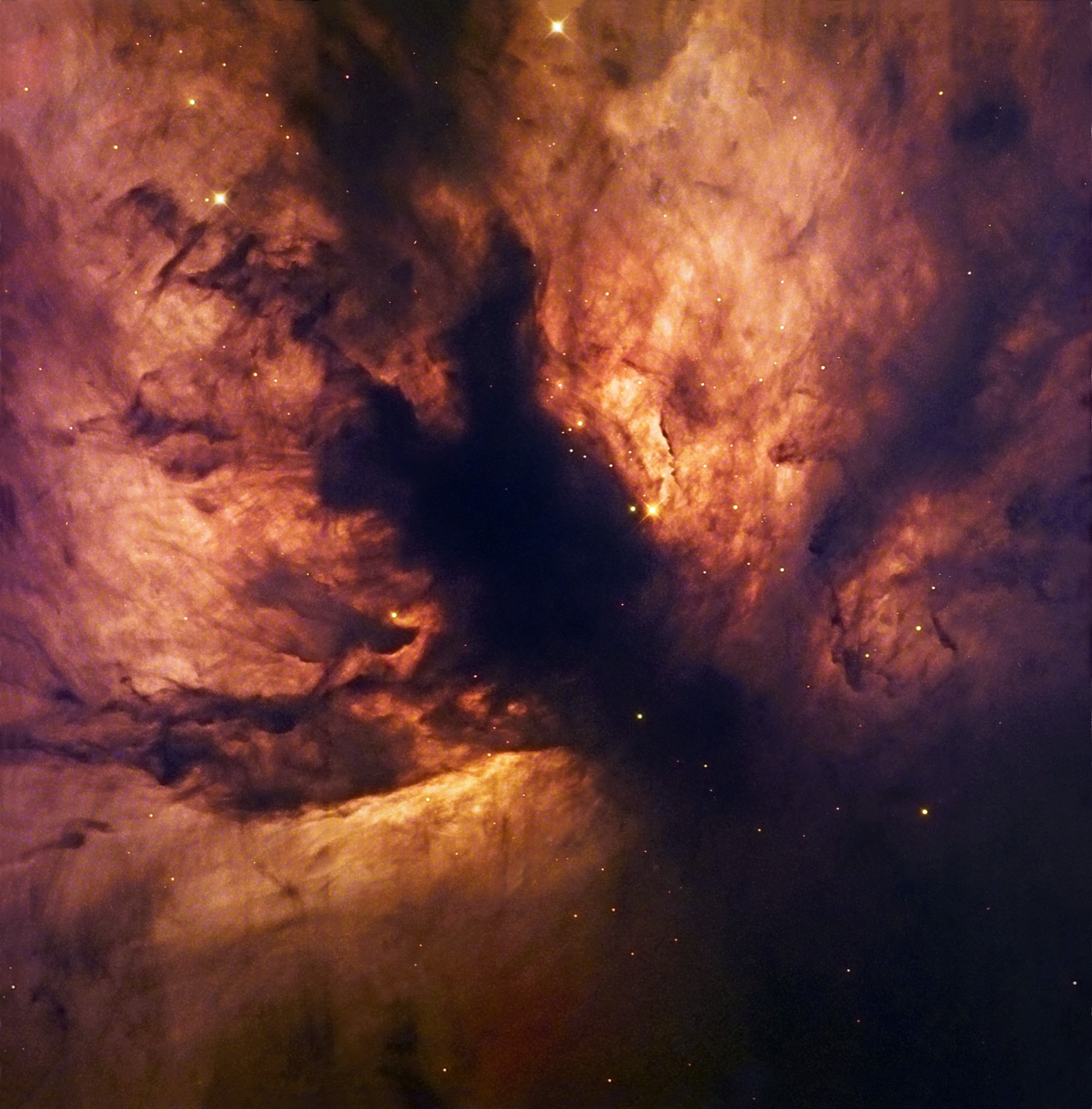 ESO/IDA/Danish 1.5 m/R. Gendler, J.-E. Ovaldsen, C. Thöne and C. Féron
Nebula · NGC 20241,400 light-years
Flame Nebula
The Flame Nebula is a glowing cradle of newborn stars in Orion, set ablaze by ultraviolet light pouring from the brilliant belt star Alnitak just beyond its edge. Its fiery streaks of orange gas split by dark dust lanes make it one of the most photographed star-forming regions in the night sky, and infrared telescopes have peered through the dust to reveal hundreds of infant stars hidden within.
View & see in 3D →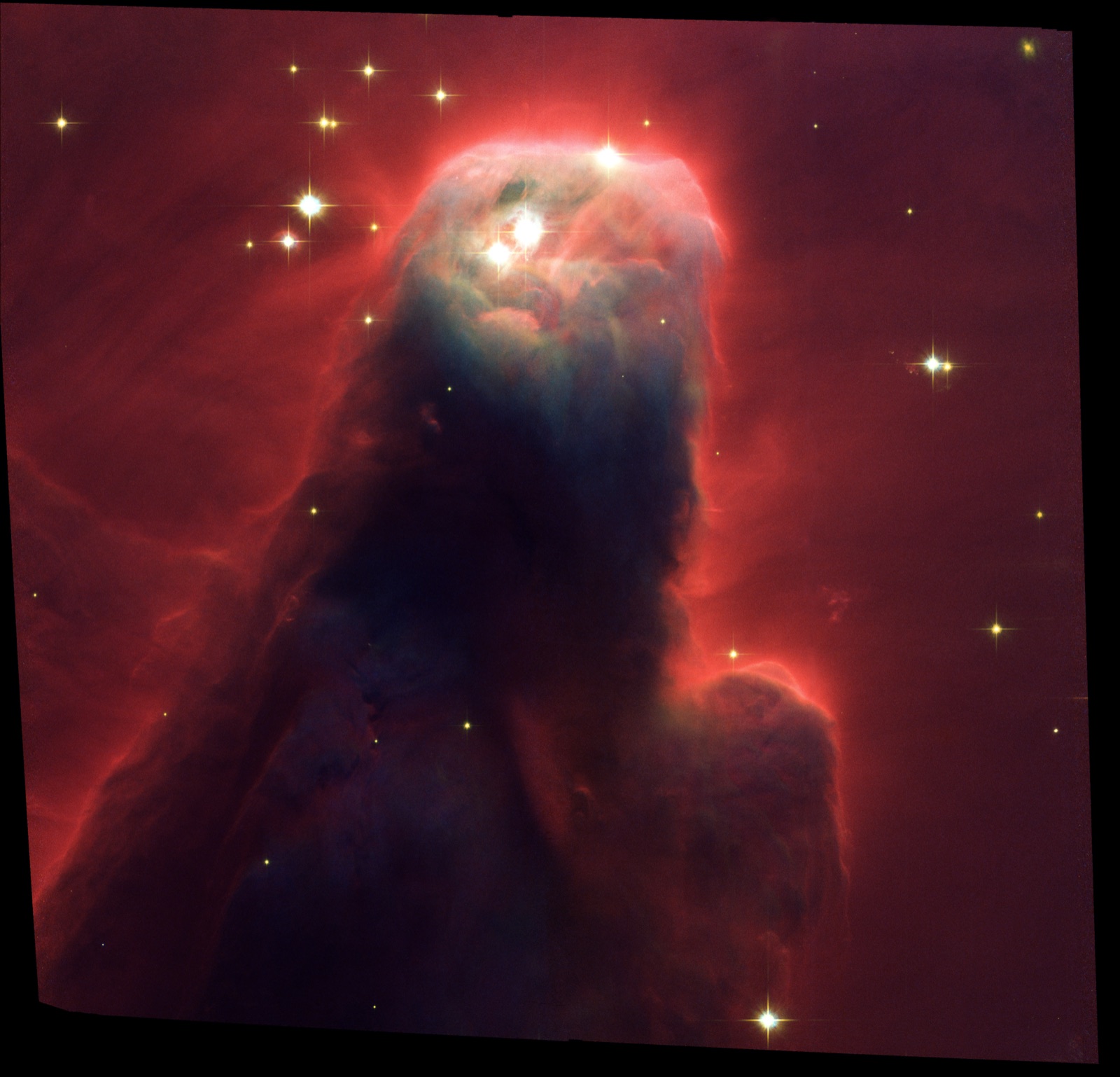 NASA, H. Ford (JHU), G. Illingworth (UCSC/LO), M. Clampin (STScI), G. Hartig (STScI), the ACS Science Team, and ESA
Nebula · NGC 22642,500 light-years
Cone Nebula
The Cone Nebula is a towering 7-light-year-long pillar of cold gas and dust in the star-forming region NGC 2264, sculpted by radiation from hot young stars nearby. It became one of Hubble's most celebrated portraits when the newly installed Advanced Camera for Surveys imaged its craggy, glowing peak in 2002.
View & see in 3D →Star Clusters
Swarms of stars born together — open clusters of hot young suns and ancient globular cities.
 NASA, ESA, AURA/Caltech, Palomar Observatory. Science team: D. Soderblom and E. Nelan (STScI), F. Benedict and B. Arthur (U. Texas), and B. Jones (Lick Obs.)
Star cluster · M45444 light-years
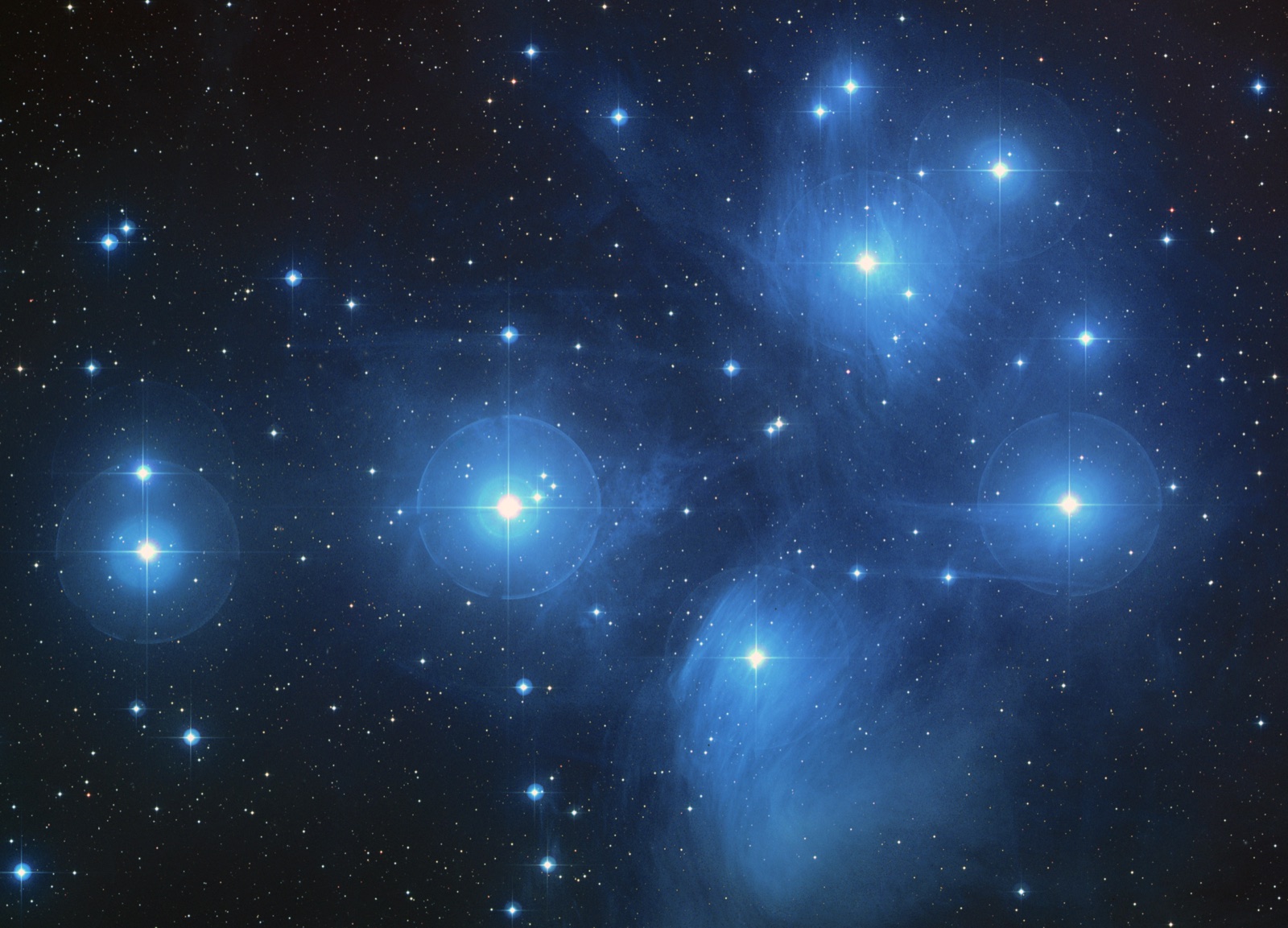
Pleiades
The Pleiades, or Seven Sisters, is the most famous open star cluster in the sky — a glittering swarm of more than 1,000 hot young blue stars, a handful of which are easily visible to the naked eye and have been celebrated by cultures worldwide since ancient times. Wisps of blue reflection nebulosity drape its brightest members, the dusty remnant of a passing interstellar cloud lit up by the cluster's brilliant stars roughly 444 light-years away in the constellation Taurus.
View & see in 3D →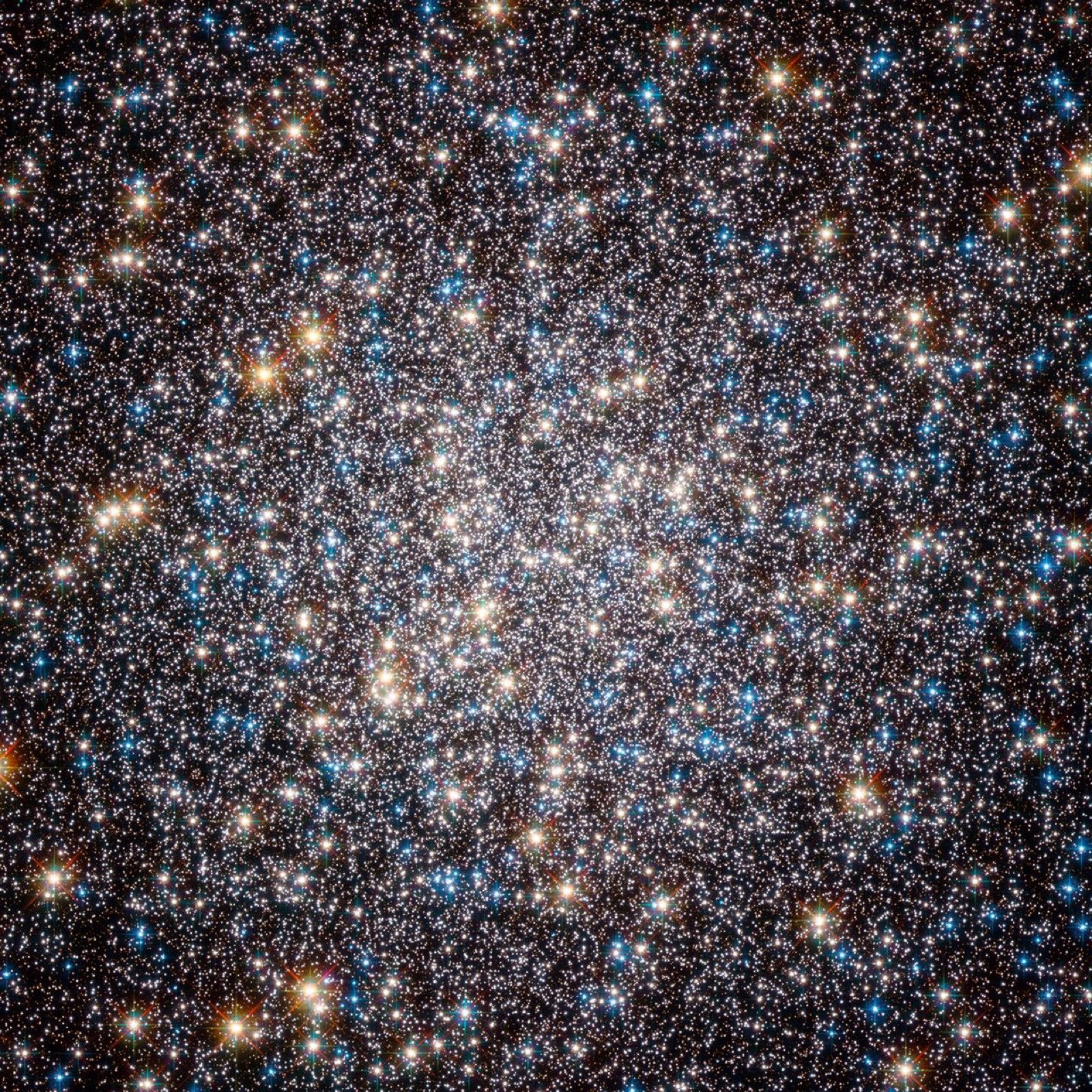 ESA/Hubble and NASA
Star cluster · M1325,000 light-years
Hercules Globular Cluster
The Hercules Globular Cluster (M13) is a glittering ball of over 100,000 ancient stars packed into a sphere roughly 145 light-years across, making it the brightest and most famous globular cluster in the northern sky. Easily spotted with binoculars in the constellation Hercules, it also earned a place in history in 1974 as the target of the Arecibo Message, humanity's first deliberate radio broadcast aimed at possible extraterrestrial civilizations.
View & see in 3D →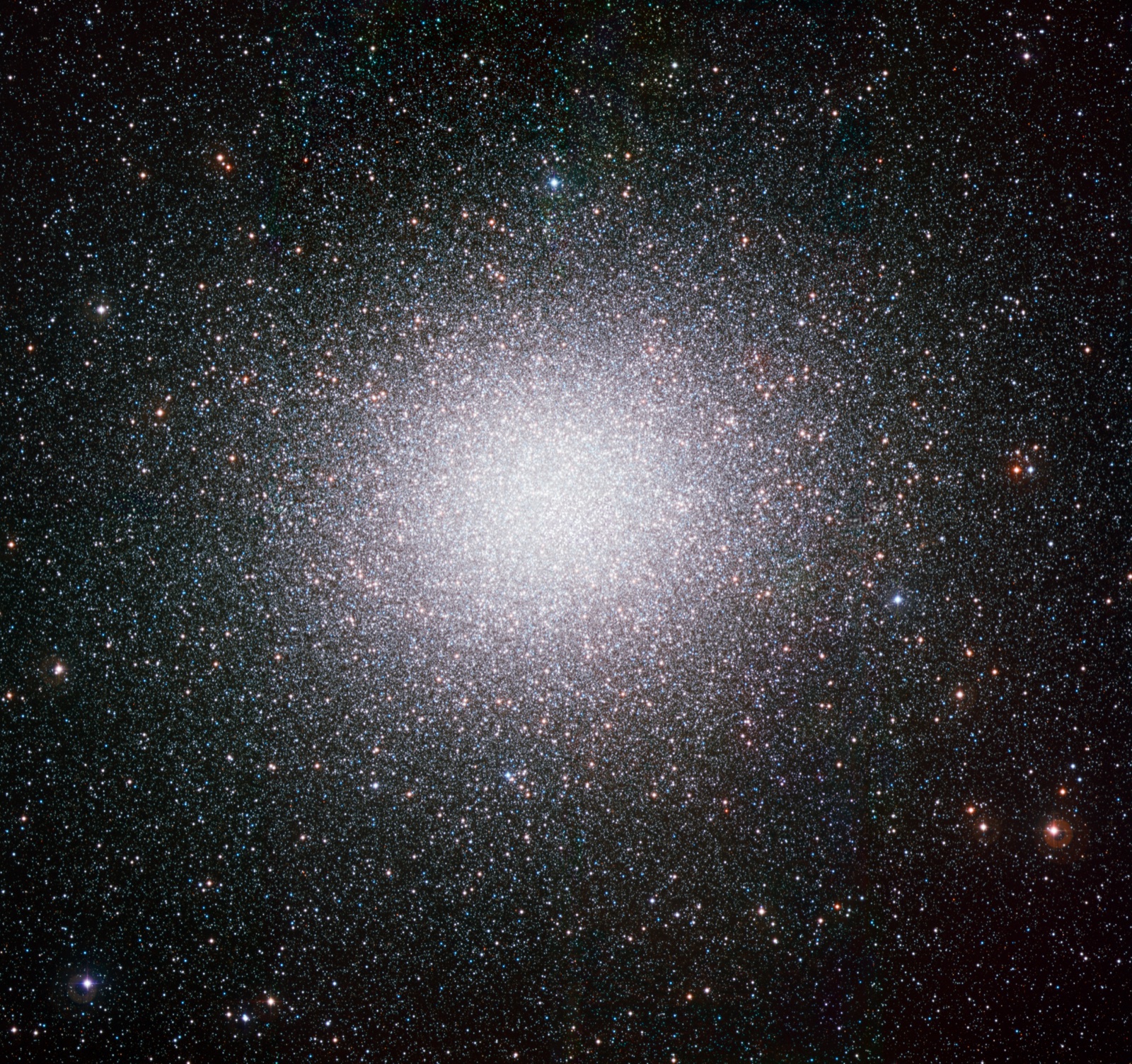 ESO
ESOStar cluster · NGC 513917,000 light-years
Omega Centauri
Omega Centauri is the largest and most massive globular cluster orbiting the Milky Way, a glittering swarm of roughly 10 million ancient stars packed into a ball about 150 light-years wide and visible to the naked eye from the southern sky. Astronomers now suspect it may be the stripped-down core of a dwarf galaxy our galaxy once devoured, and Hubble has uncovered compelling evidence for a rare intermediate-mass black hole hiding in its crowded heart.
View & see in 3D →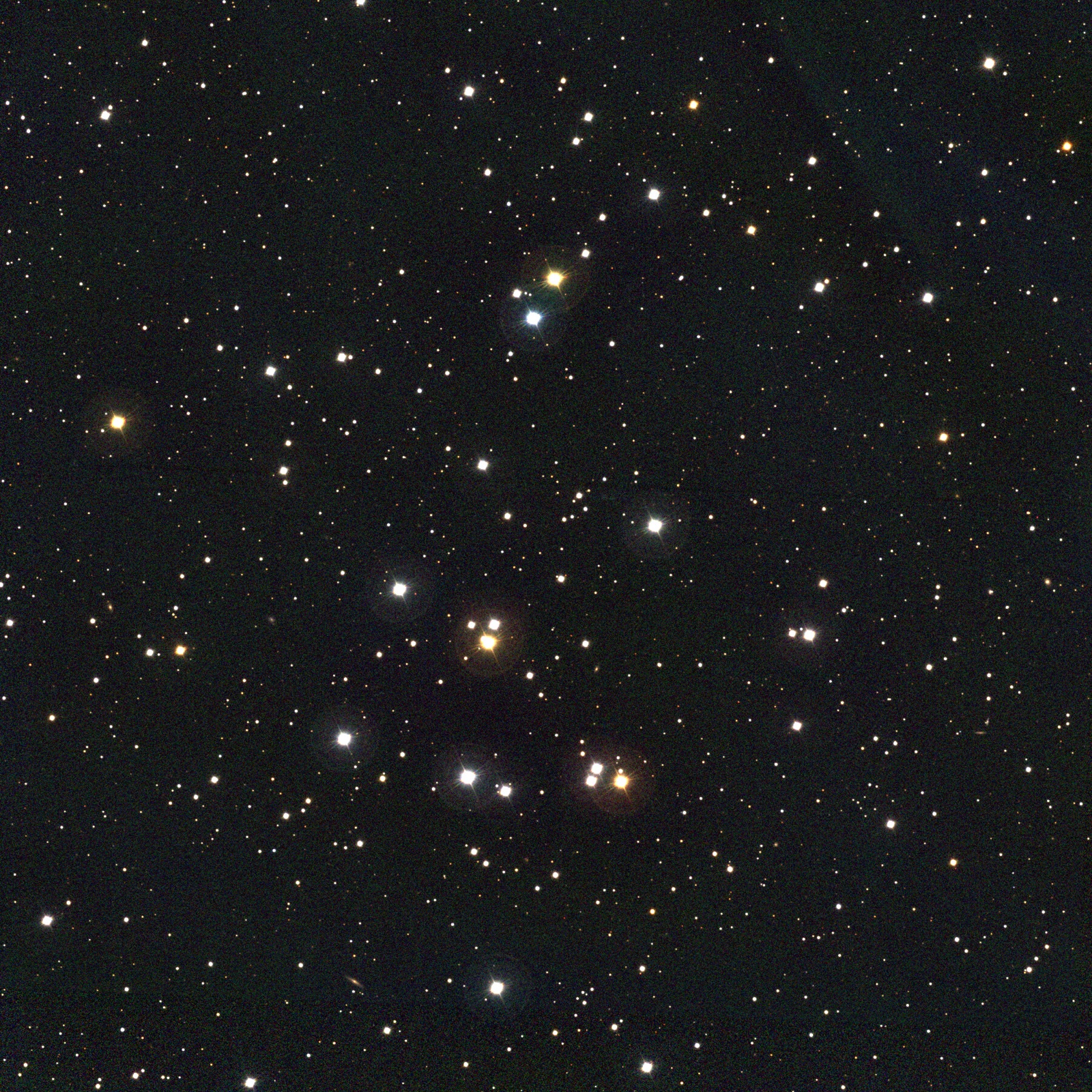 NOAO/AURA/NSF
Star cluster · M44about 600 light-years
Beehive Cluster
The Beehive Cluster (Messier 44), also called Praesepe, is one of the nearest open star clusters to Earth — a swarm of roughly 1,000 loosely bound stars about 600 light-years away in the constellation Cancer. Visible to the naked eye as a hazy patch since antiquity, it was famously resolved into individual stars by Galileo in 1609, and at around 600-700 million years old it shares an age and motion with the Hyades, hinting the two clusters were born together.
View & see in 3D →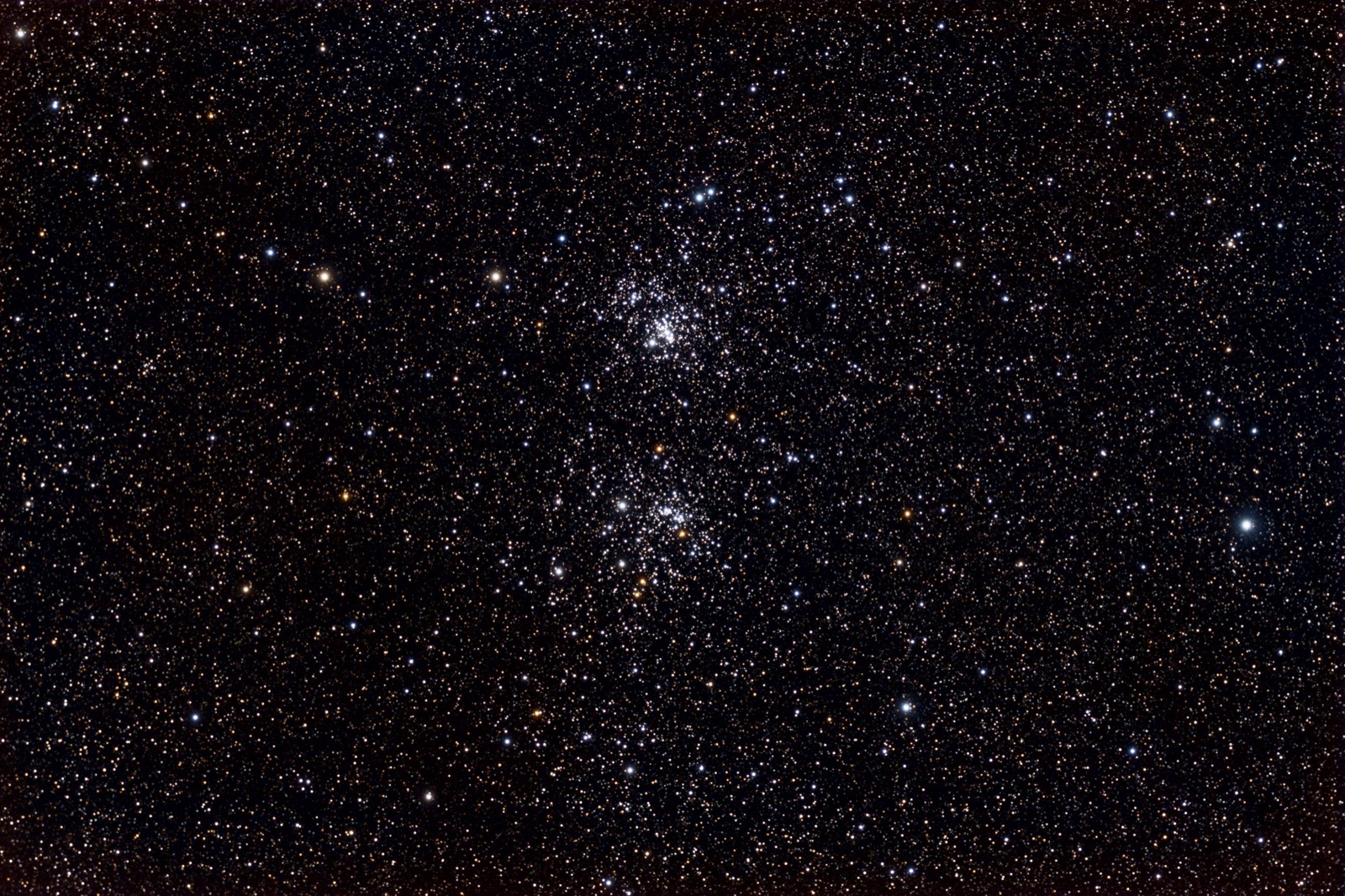 Genuson / Wikimedia Commons
Star cluster · NGC 8697,500 light-years
Double Cluster
The Double Cluster (NGC 869 and its twin NGC 884) is a dazzling pair of young open star clusters glittering side by side in the constellation Perseus, each packed with hundreds of brilliant blue-white supergiant stars only about 14 million years old. Famous since antiquity — the Greek astronomer Hipparchus cataloged it around 130 BCE — this naked-eye showpiece in the Milky Way's Perseus Arm is one of the most beloved targets for binoculars and small telescopes.
View & see in 3D →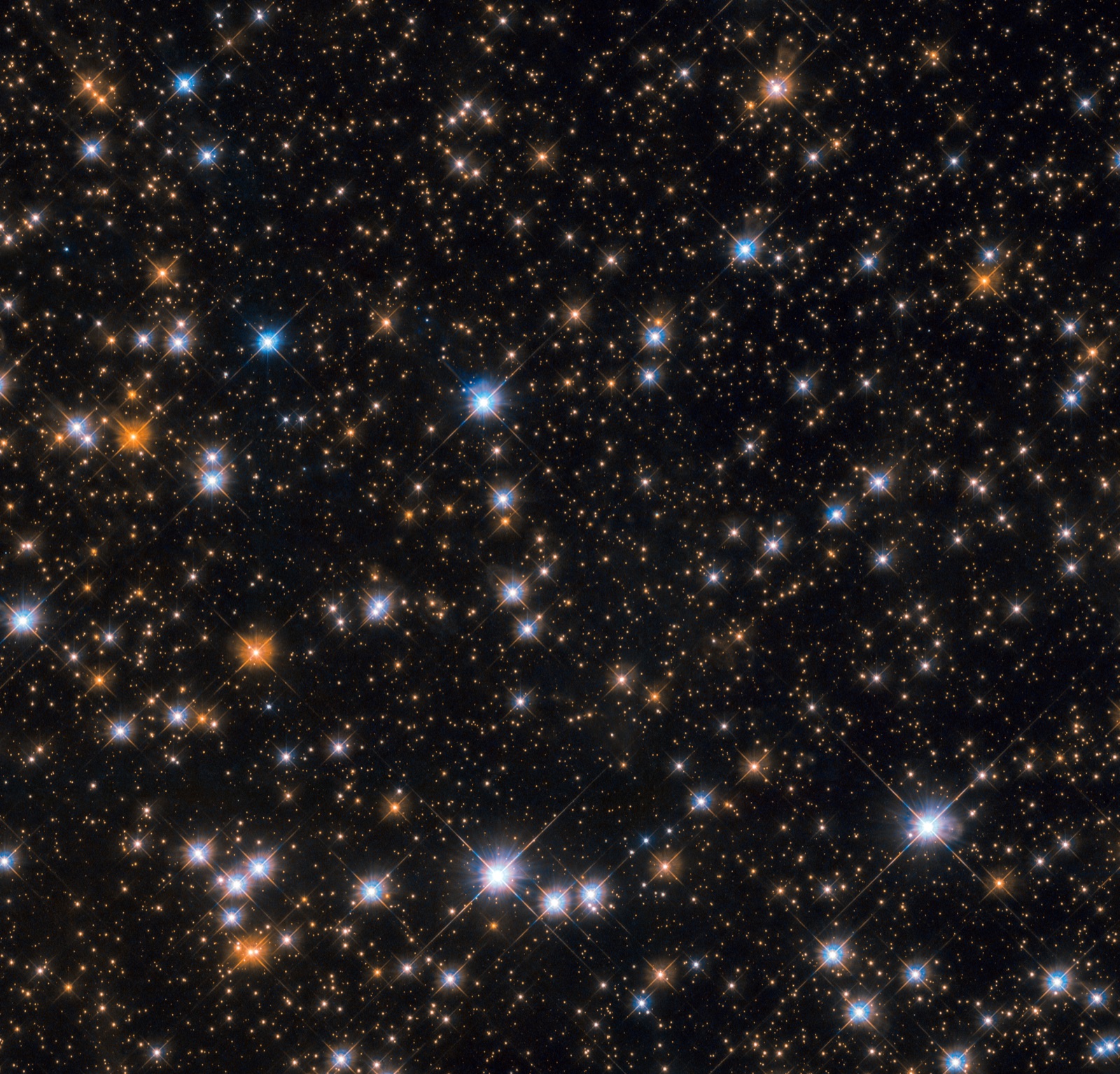 ESA/Hubble & NASA, P. Dobbie et al.
Star cluster · M116,200 light-years
Wild Duck Cluster
The Wild Duck Cluster (Messier 11) is one of the richest and most compact open star clusters known, packing nearly 3,000 stars into a glittering swarm in the constellation Scutum. Its brightest members form a V-shape that 19th-century observers thought resembled a flock of ducks in flight, and it ranks as the most distant open cluster in the Messier catalog still visible to the naked eye.
View & see in 3D →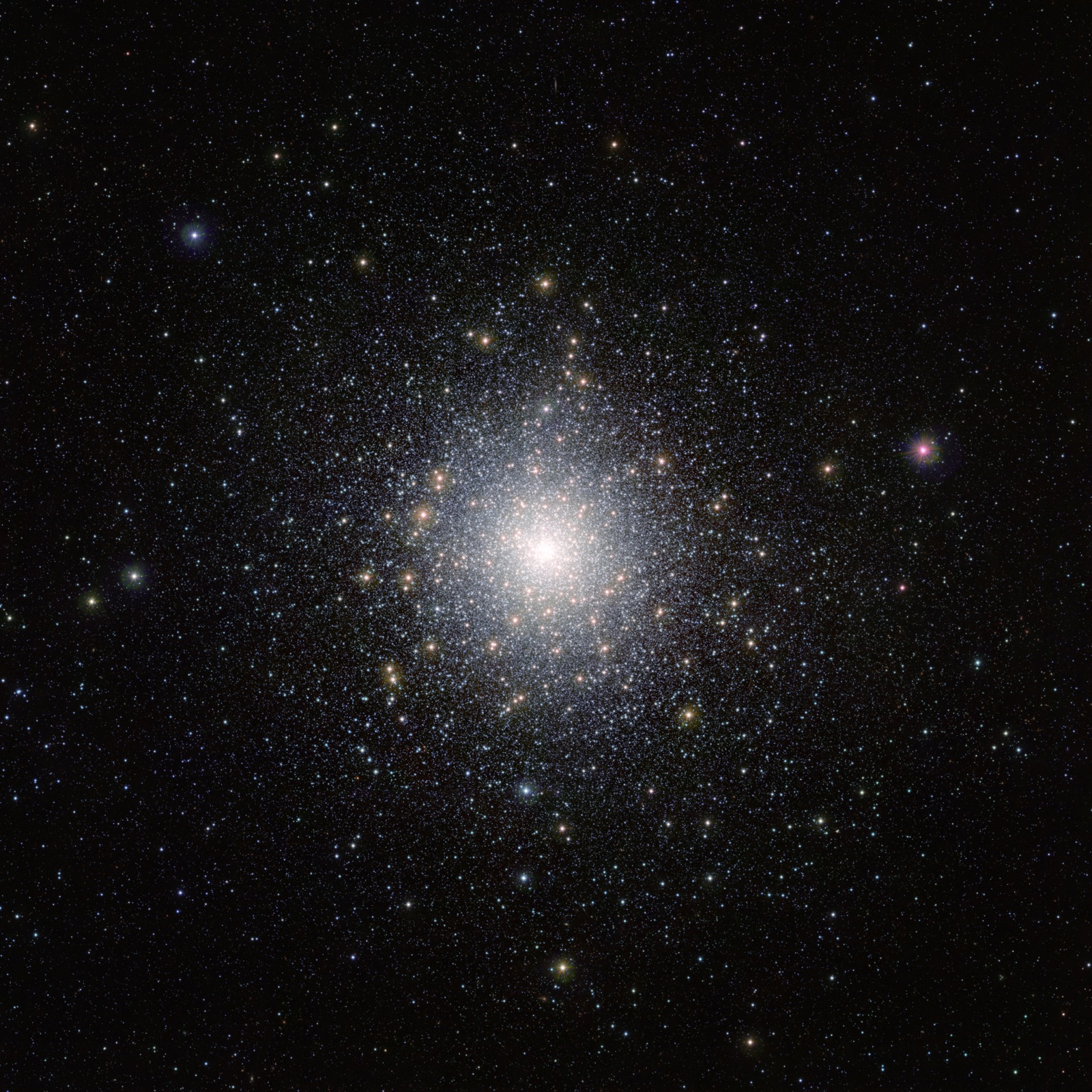 ESO/M.-R. Cioni/VISTA Magellanic Cloud survey. Acknowledgment: Cambridge Astronomical Survey Unit
Star cluster · NGC 10415,000 light-years
47 Tucanae
47 Tucanae is the second-brightest globular cluster in the night sky, a dazzling ball of up to a million ancient stars packed so tightly that its blazing core looks like a single fuzzy star to the naked eye. Famous for harboring one of the richest known swarms of millisecond pulsars and a possible central black hole, this 13-billion-year-old relic is a favorite hunting ground for Hubble's searches for stellar oddballs and exoplanets.
View & see in 3D →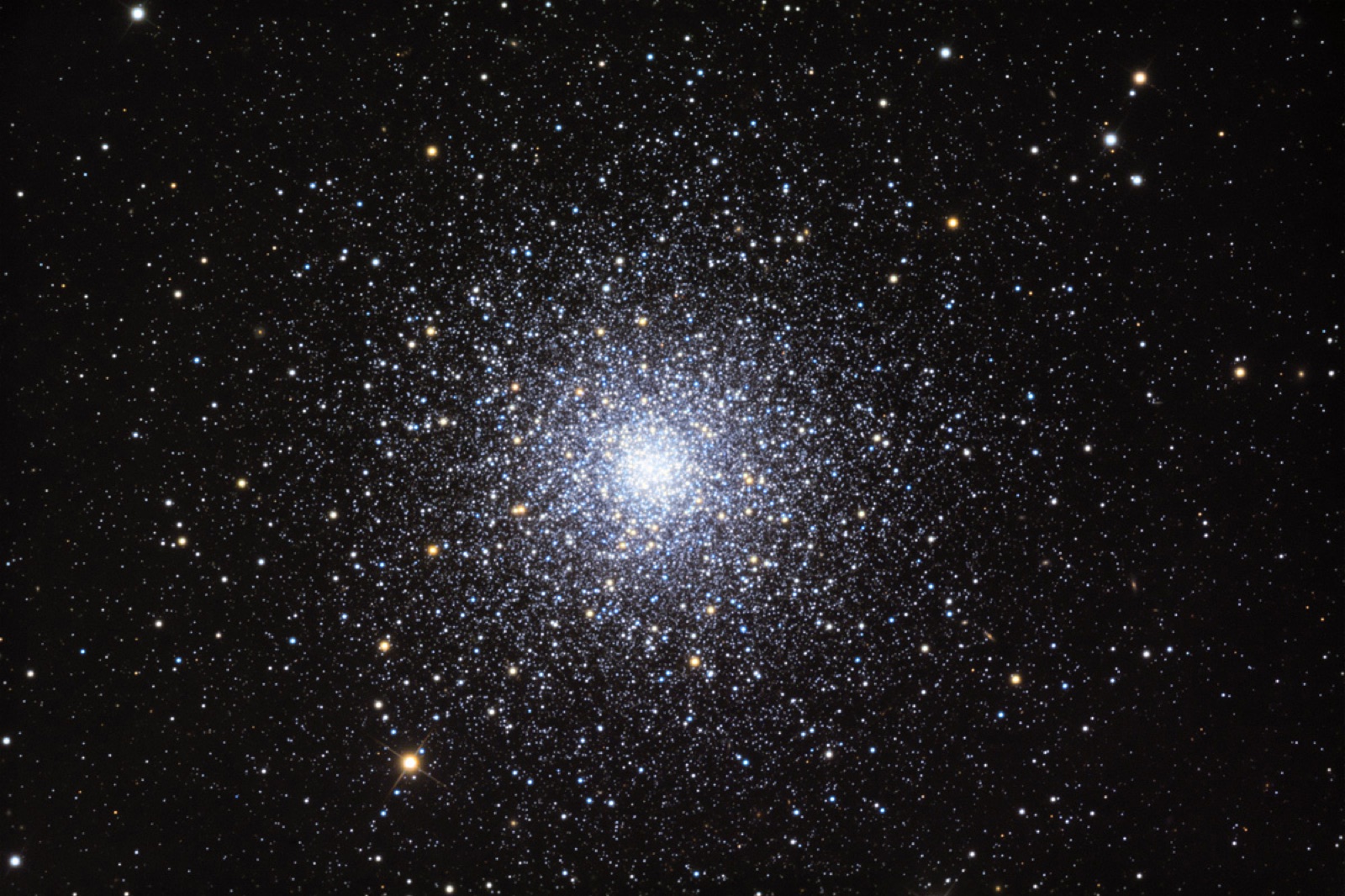 Adam Block/Mount Lemmon SkyCenter/University of Arizona
Star cluster · NGC 527233,900 light-years
Messier 3
Messier 3 is one of the brightest and most populous globular clusters in the sky, a glittering ball of roughly half a million ancient stars packed into a sphere about 180 light-years across. It is famous for harboring 274 known variable stars — more than any other globular cluster — along with a striking population of "blue straggler" stars that look mysteriously young.
View & see in 3D →Cosmic Extremes
The strangest objects of all — a galaxy-anchoring black hole and the spinning core of a dead star.
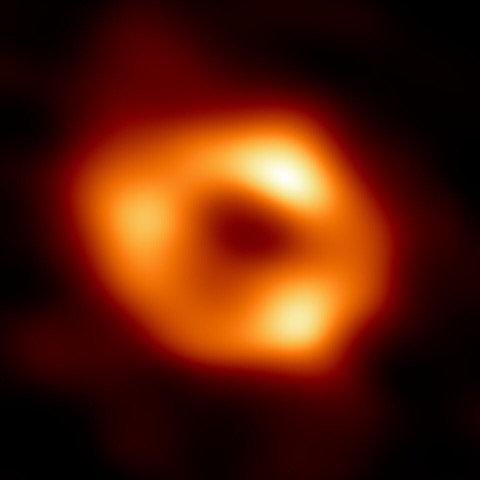 EHT Collaboration (CC BY 4.0)
Black hole · Sgr A*26,700 light-years
Sagittarius A*
The supermassive black hole at the centre of the Milky Way — about 4 million times the Sun's mass packed into a region smaller than Mercury's orbit. Imaged directly by the Event Horizon Telescope in 2022.
View & see in 3D →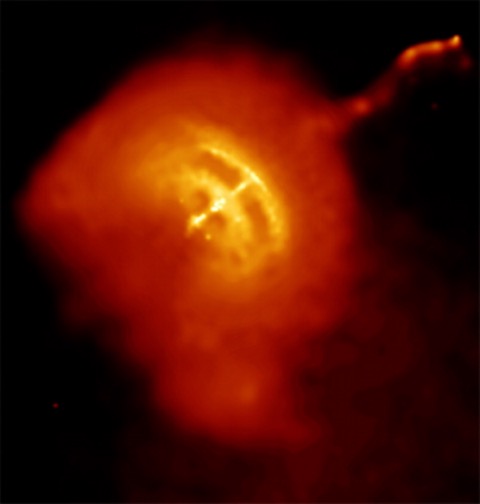 NASA / CXC / PSU / G. Pavlov et al. (Chandra)
Pulsar · PSR B0833−45960 light-years
Vela Pulsar
The collapsed core of a star that exploded around 11,000 years ago — a city-sized neutron star spinning 11 times a second, sweeping beams of radiation across the sky like a lighthouse.
View & see in 3D →Explore more of the universe
Universe ExplorerExplore the connected cosmos in 3DThe Cosmic LadderFly through 119,000 real starsWorldsLand on 16 real planets, moons & asteroidsThe PlanetsA tour of the solar system in real imagerySpace AcademyFly history's missions yourselfMission ReplaysRelive the great missions as they happenedStarsMeet the galaxy's brightest starsSpacecraftThe great robotic explorers in real imageryMulti-WavelengthSee the cosmos in every kind of lightCosmic PerspectiveFrom your street to the edge of everythingSpace Time MachineTravel to any date in the Space Age