Multi-Wavelength Universe
9 iconic objects, each seen through as many as six different windows on the electromagnetic spectrum. Click any object to scrub from radio waves to X-rays in one frame.
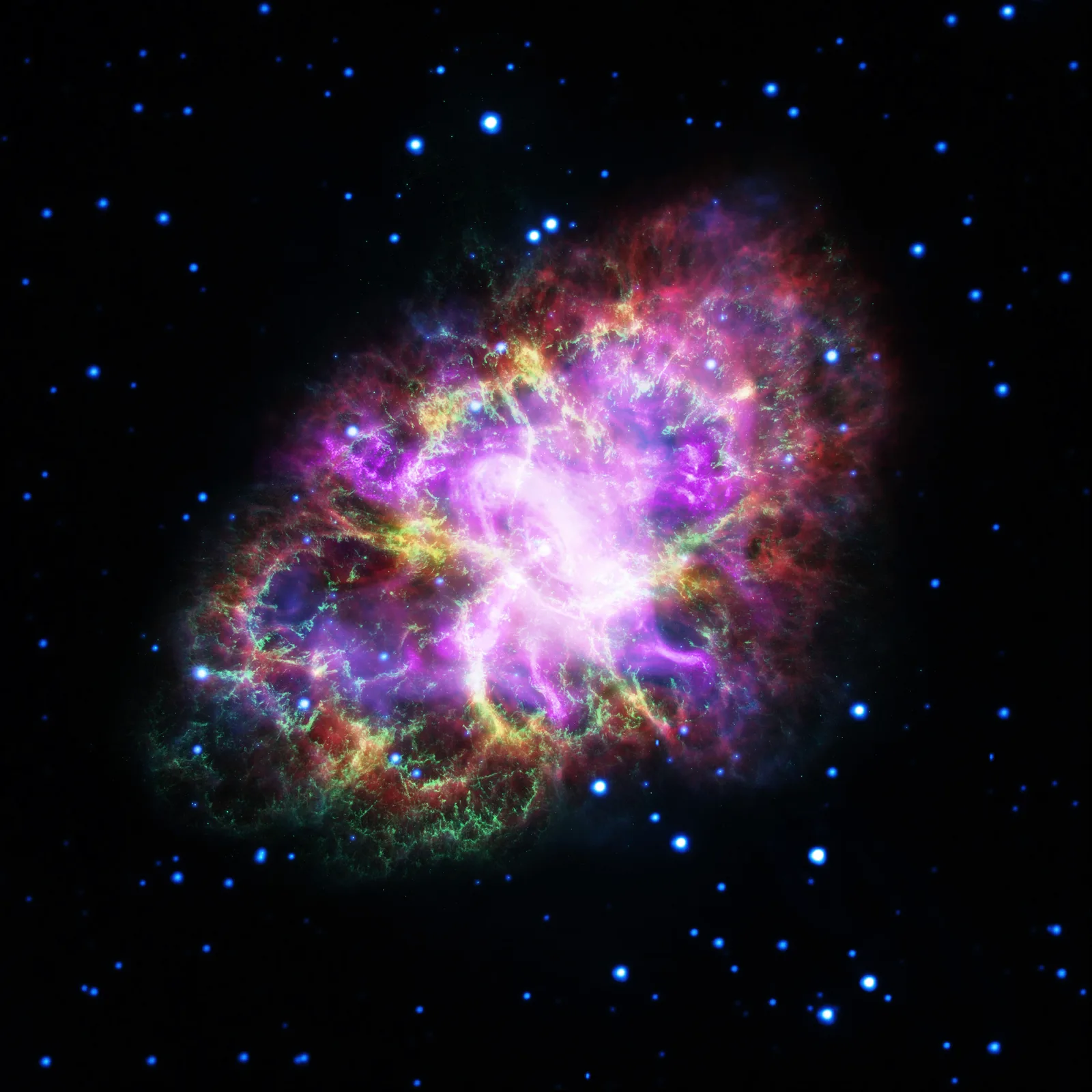
Crab Nebula
A 1,000-year-old supernova remnant powered by a rapidly spinning neutron star, blazing across every wavelength.
supernova remnant · Taurus
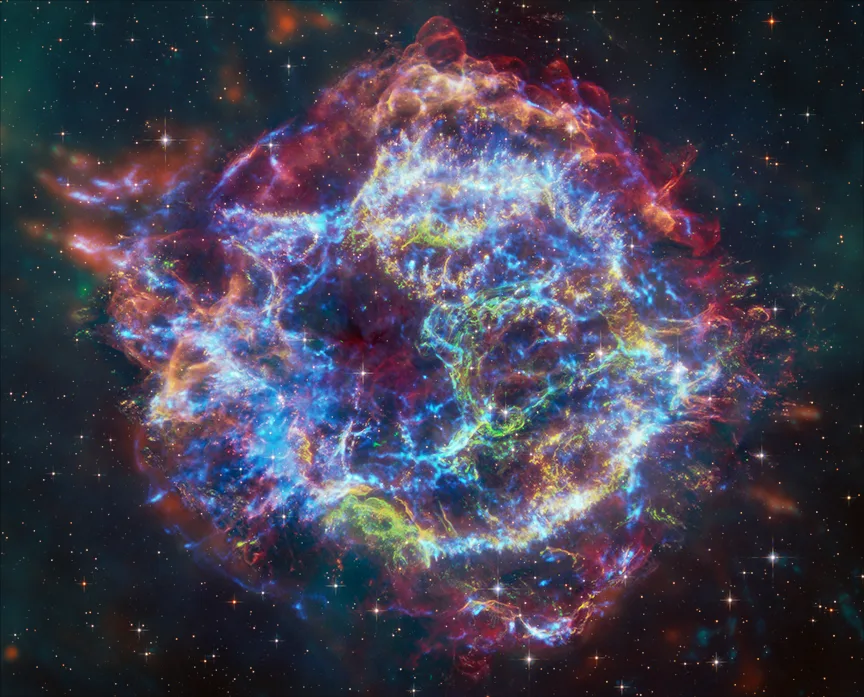
Cassiopeia A
The brightest radio source beyond the Solar System — a ~340-year-old blast wave still racing through its own ejecta.
supernova remnant · Cassiopeia
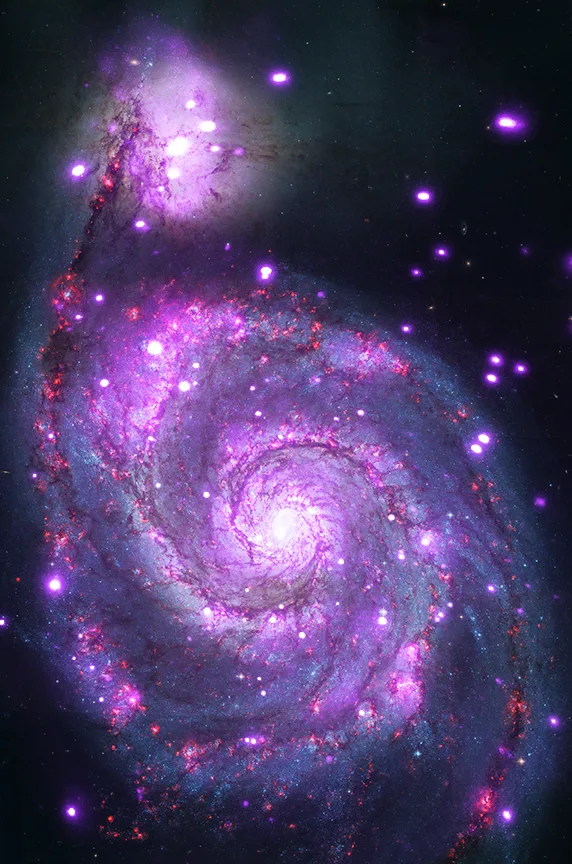
M51 (Whirlpool Galaxy)
A grand-design spiral in gravitational dialogue with its companion NGC 5195, ablaze with star formation traced across every wavelength.
galaxy · Canes Venatici
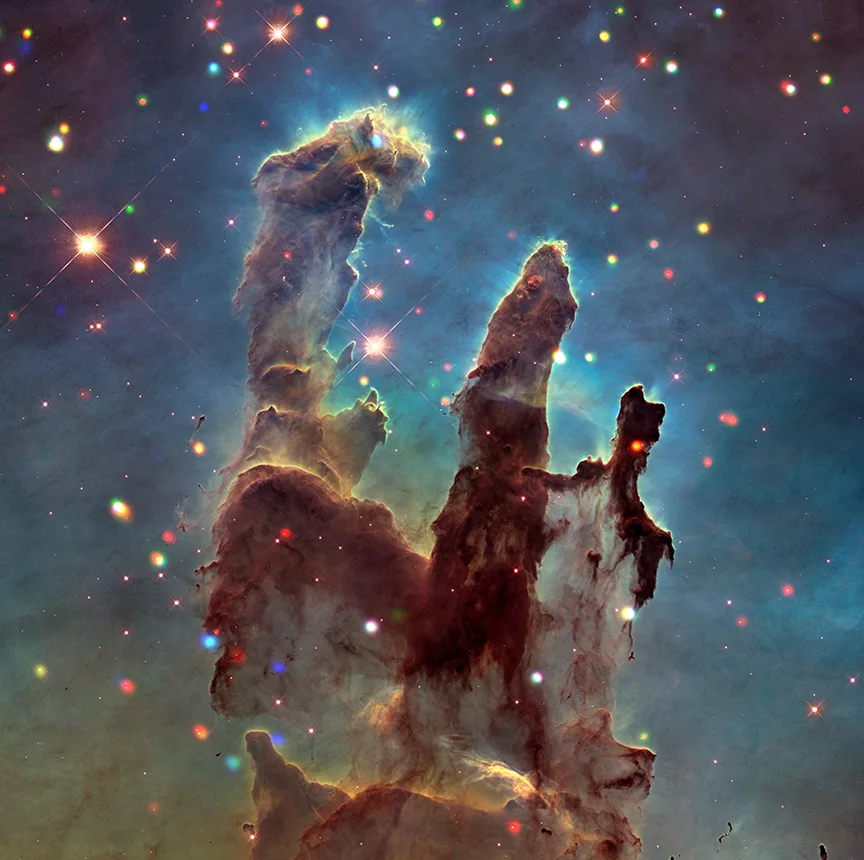
Eagle Nebula
Home to the iconic Pillars of Creation, where dense molecular columns are being sculpted by UV radiation from a nearby young star cluster.
star forming region · Serpens
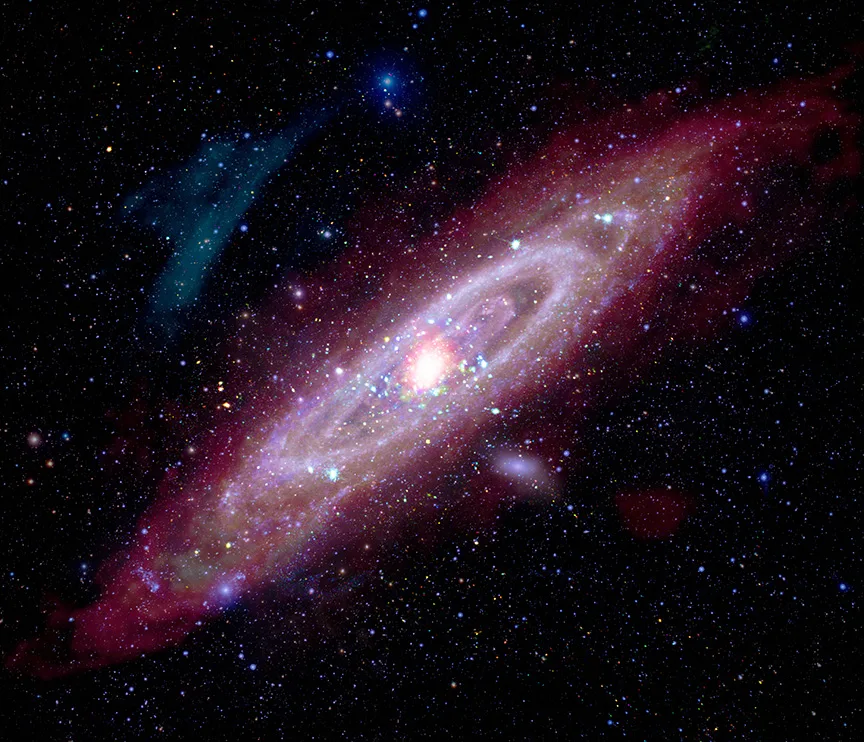
Andromeda Galaxy
Our nearest large galactic neighbour — a 1-trillion-solar-mass spiral whose full extent spans more than 6° on the sky.
galaxy · Andromeda
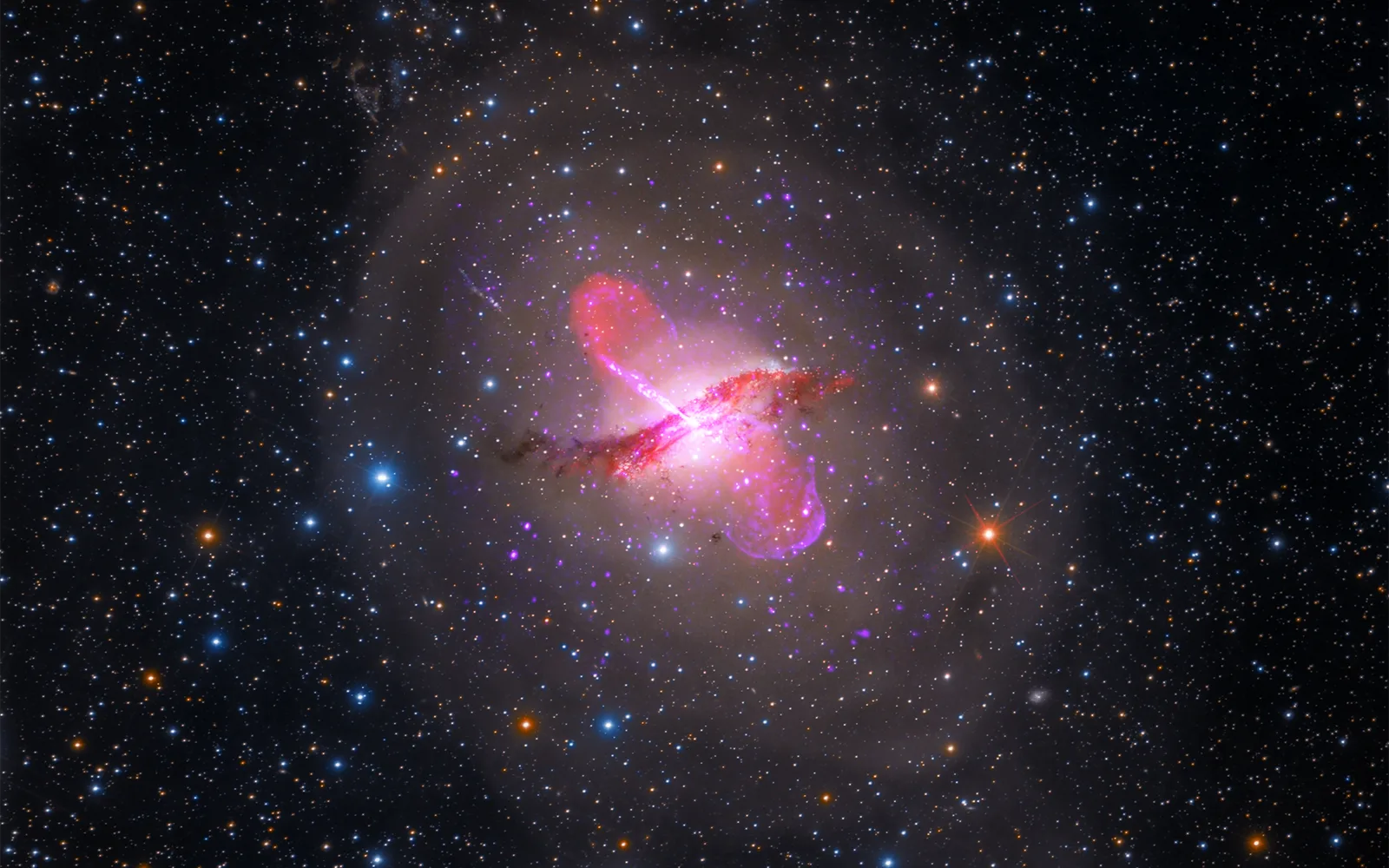
Centaurus A
The nearest giant active galaxy — an elliptical that swallowed a spiral, crossed by a dark dust lane while a supermassive black hole fires jets across the spectrum.
galaxy · Centaurus
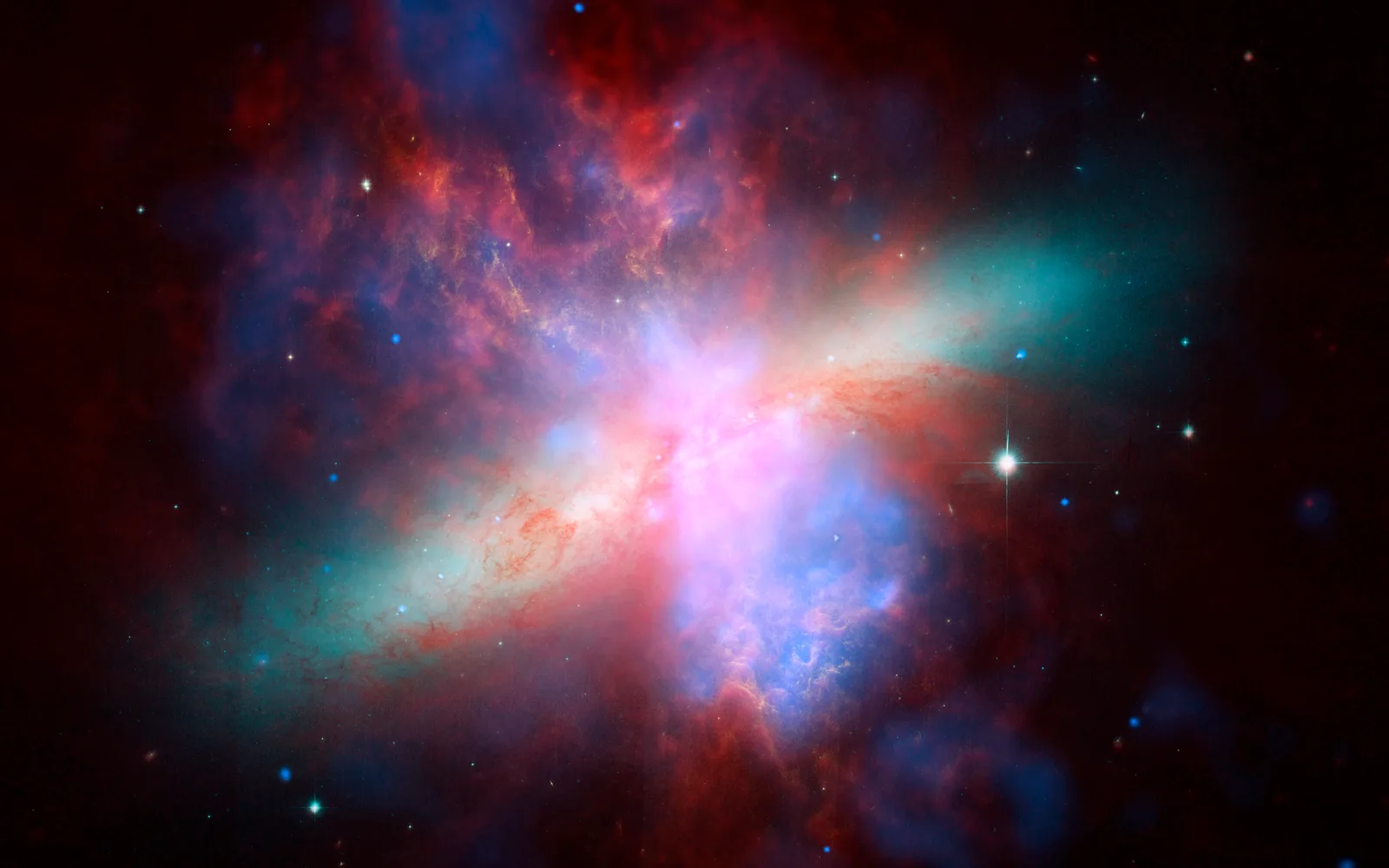
M82 (Cigar Galaxy)
The nearest starburst galaxy — an edge-on disk forming stars so furiously that it blasts a bipolar superwind of hot gas thousands of light-years into space.
galaxy · Ursa Major
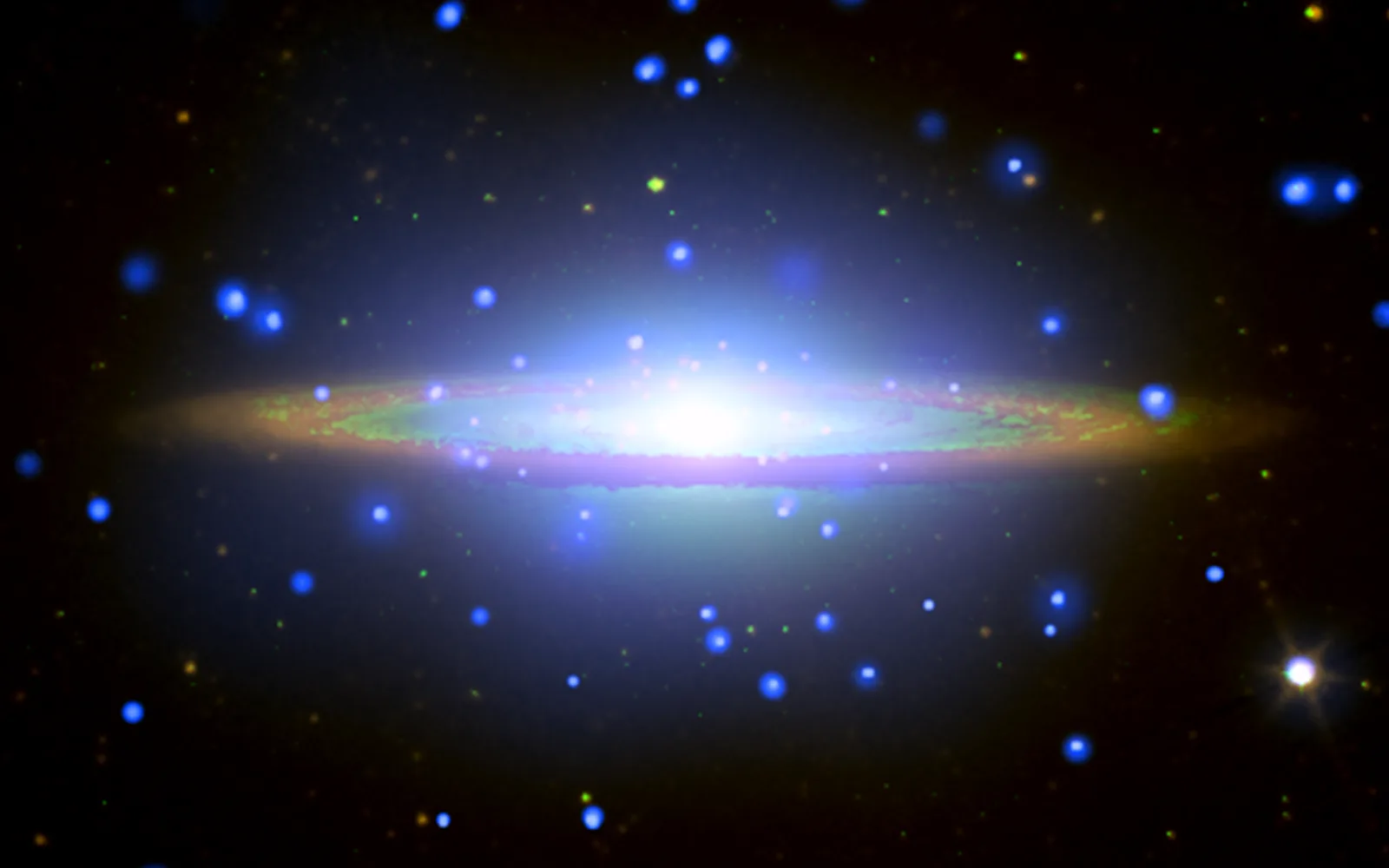
M104 (Sombrero Galaxy)
An edge-on galaxy with a vast glowing bulge and a sharply defined ring of dark dust — its brim — wrapped around a billion-solar-mass black hole.
galaxy · Virgo
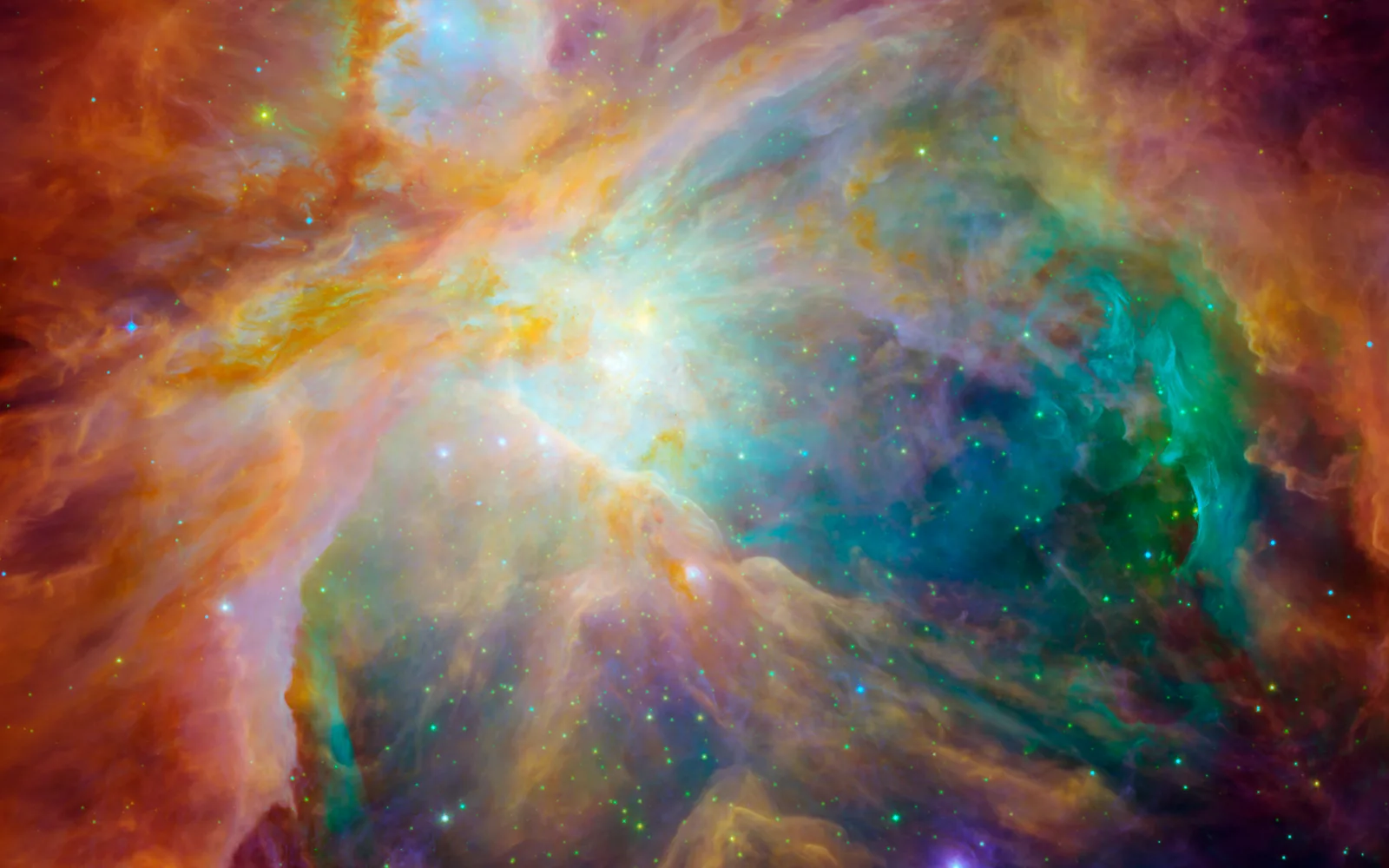
Orion Nebula (M42)
The nearest stellar nursery — a glowing cavern of gas and dust where the hot young Trapezium stars are setting the whole nebula ablaze.
star forming region · Orion
Common questions about multi-wavelength astronomy
What is multi-wavelength astronomy?
It's the practice of studying the same object across many kinds of light — radio, infrared, visible, ultraviolet, X-ray and gamma rays — instead of just the narrow band our eyes can see. Combining these views gives a far fuller picture than any single wavelength alone.
Why observe the universe in different wavelengths?
Because each wavelength reveals different physics. Radio and infrared trace cold gas and dust and can see through it; visible light shows stars; ultraviolet and X-rays expose the hottest, most energetic events — exploding stars, black holes and million-degree gas that visible light misses entirely.
What is the electromagnetic spectrum?
It's the full range of light, ordered by wavelength — from long, low-energy radio waves, through microwaves, infrared and visible colours, up to short, high-energy ultraviolet, X-rays and gamma rays. Visible light is just a thin slice near the middle.
What can infrared show that visible light can't?
Infrared light passes through the dust that hides so much of the cosmos, letting telescopes peer into stellar nurseries and galactic cores. It also reveals cool objects — forming planets, distant galaxies whose light has been stretched by the expanding universe — that stay invisible to the eye.
Why are some telescopes placed in space?
Earth's atmosphere blocks most X-rays, ultraviolet and much of the infrared before they reach the ground. To capture those wavelengths, observatories like the Chandra X-ray Observatory and the James Webb Space Telescope have to operate in orbit, above the air.
Explore more of the universe
Universe ExplorerExplore the connected cosmos in 3DThe Cosmic LadderFly through 119,000 real starsWorldsLand on 16 real planets, moons & asteroidsSpace in ARPut the ISS, JWST & real asteroids in your roomThe PlanetsA tour of the solar system in real imagerySpace AcademyFly history's missions yourselfMission ReplaysRelive the great missions as they happenedStarsMeet the galaxy's brightest starsDeep-Sky Wonders39 galaxies, nebulae & clusters in real imageryThe Great CometsHalley, Hale-Bopp, NEOWISE & more in real photographyAsteroid WatchWatch real asteroids fly past Earth in 3DThe Sun Right NowWatch our star live in seven wavelengthsEarth From a Million MilesWatch the whole Earth turn, live from spaceDeep Space NetworkWho NASA is talking to across the solar system, liveHumanity's Farthest TravelersWatch Voyager & the outbound probes recede, liveSpacecraftThe great robotic explorers in real imageryConstellationsThe figures of the night sky & how to find themCosmic PerspectiveFrom your street to the edge of everythingSpace Time MachineTravel to any date in the Space Age