Odyssey Expeditions/The Yggdrasil Initiative
Original fiction · Grounded in real science · Season One
The Yggdrasil Initiative
What if the myths were a distorted memory of a real interstellar network?
Ancient Norse cosmology described a world tree connecting distant realms. In this original story-universe, the myth is a three-thousand-year-old memory of something real: a dormant interstellar network whose first door just reopened — beyond Neptune. You are the Pathfinder.
Bifröst map · the nine realms on the tree
Select a realm — every one carries real science
Niflheim
Root 1 · The First RootCharted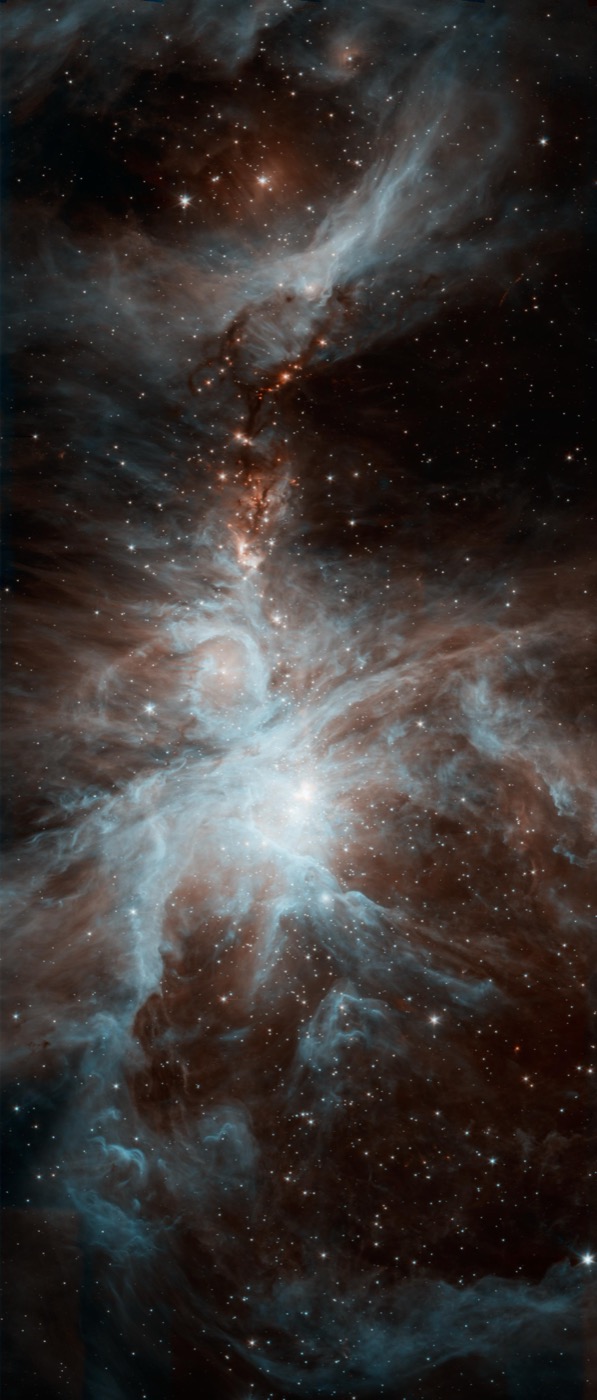 Real imageryOrion Nebula — NASA/JPL-Caltech (Spitzer)
Our invention
A rogue world with no sun, an ocean under the ice, and a Choir that has been singing primes into the dark for longer than we have had language.
Play Mission 1 — The First Root →The real science payload
Rogue planets
Where the claim “more rogue planets than stars” comes from — and how soft that number really is.
JWST's free-floating Jupiter-mass candidates in OrionOGLE microlensing surveysRoman Space Telescope forecasts
⟶ Real exoplanets, including rogue candidates⟶ Real ocean worlds you can explore
✦ What makes it extraordinary
A rogue planet has no sun at all. It drifts between stars in permanent night — and yet it can still be warm inside, heated by the decay of radioactive elements in its rock and the leftover heat of its own formation. Under enough ice, that is sufficient for liquid water. A world can have an ocean and no star.
⌁ How we actually explore it
We find them two ways: by watching them bend the light of a background star as they drift past (gravitational microlensing, the OGLE and MOA surveys), and by imaging young free-floating planetary-mass objects directly, as JWST did in the Orion Nebula. The Roman Space Telescope is expected to find many more.
ᚱ What the Norse sources say
Niflheim is the Eddas' realm of mist and cold, one of the two primordial extremes that existed before the world — the ice that met Muspelheim's fire. Beneath one of the world tree's roots lies the spring Hvergelmir, from which rivers run.
Season One · The Broken Bifröst
·All eight missions are open from the start. They read best in order — the season carries consequences forward — but nothing is locked, and any of them is a fine place to begin.
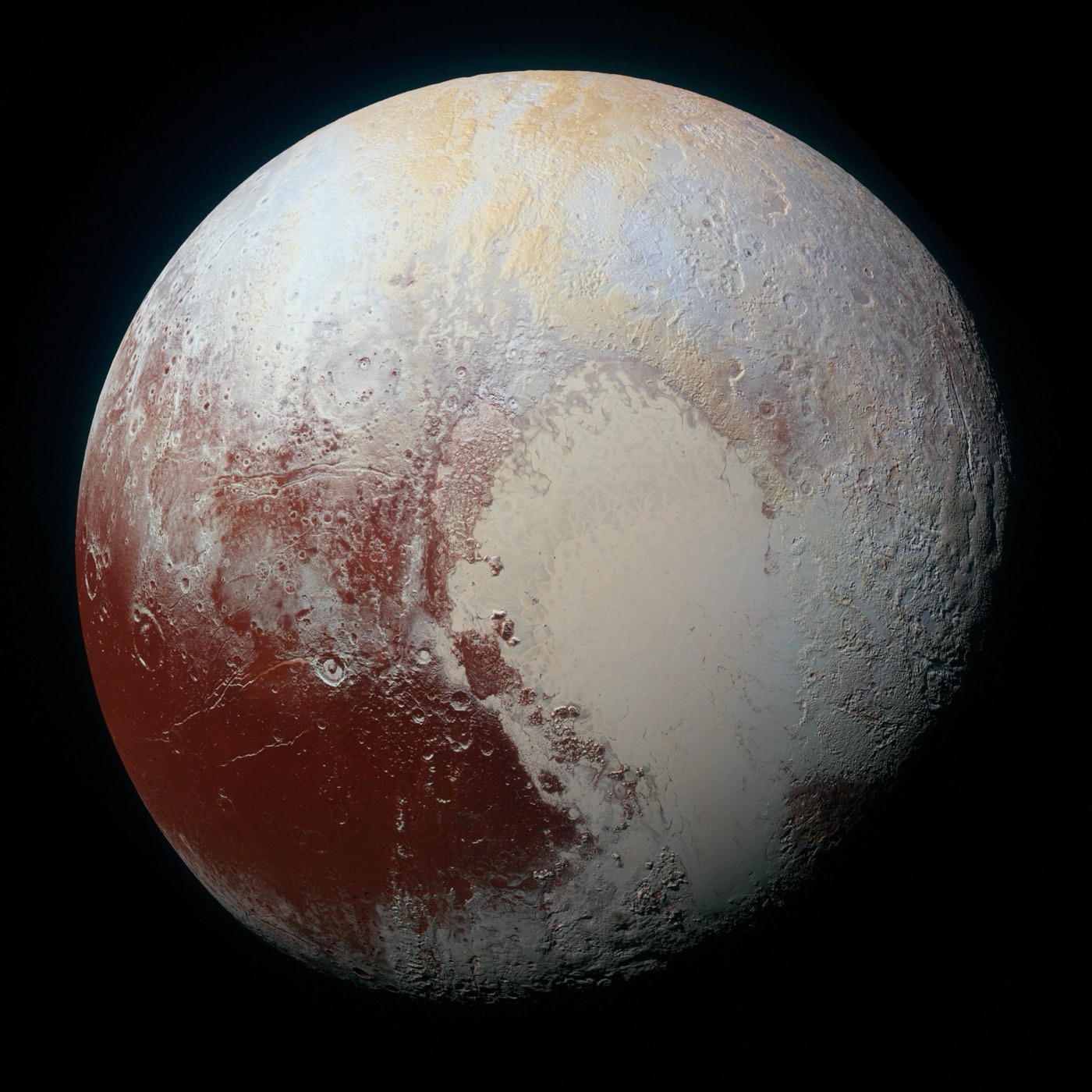 Pluto — NASA/JHUAPL/SwRI, New Horizons (2015)
Mission 1 · 20–30 min
The First Root
A structure beyond Neptune has started answering. You lead the first expedition through it.
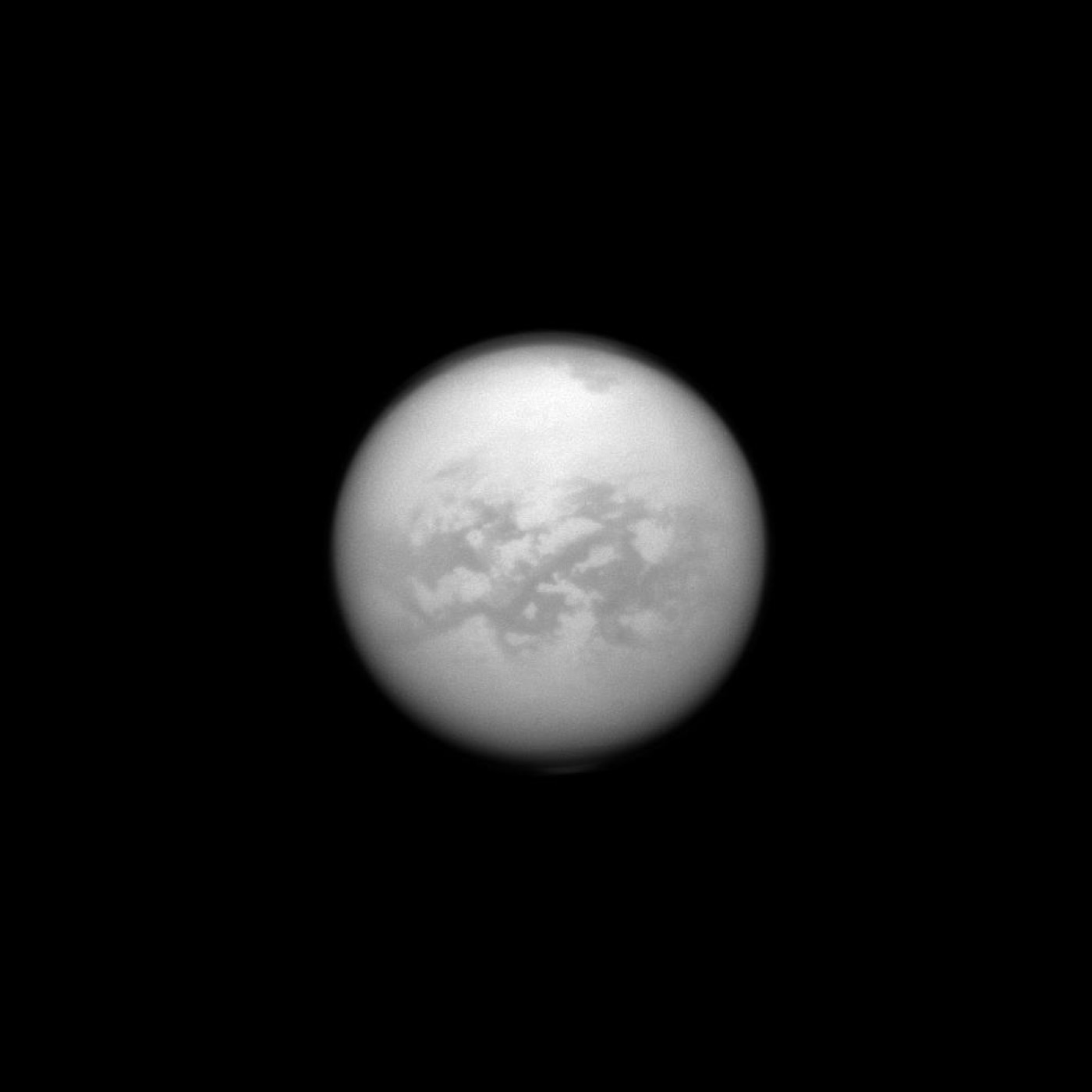 Titan — NASA/JPL-Caltech/Space Science Institute (Cassini)
Mission 2 · 20–30 min
The Silent Realm
Nine years ago a survey crew vanished beyond the second root. Their telemetry never stopped. Someone has to answer it in person.
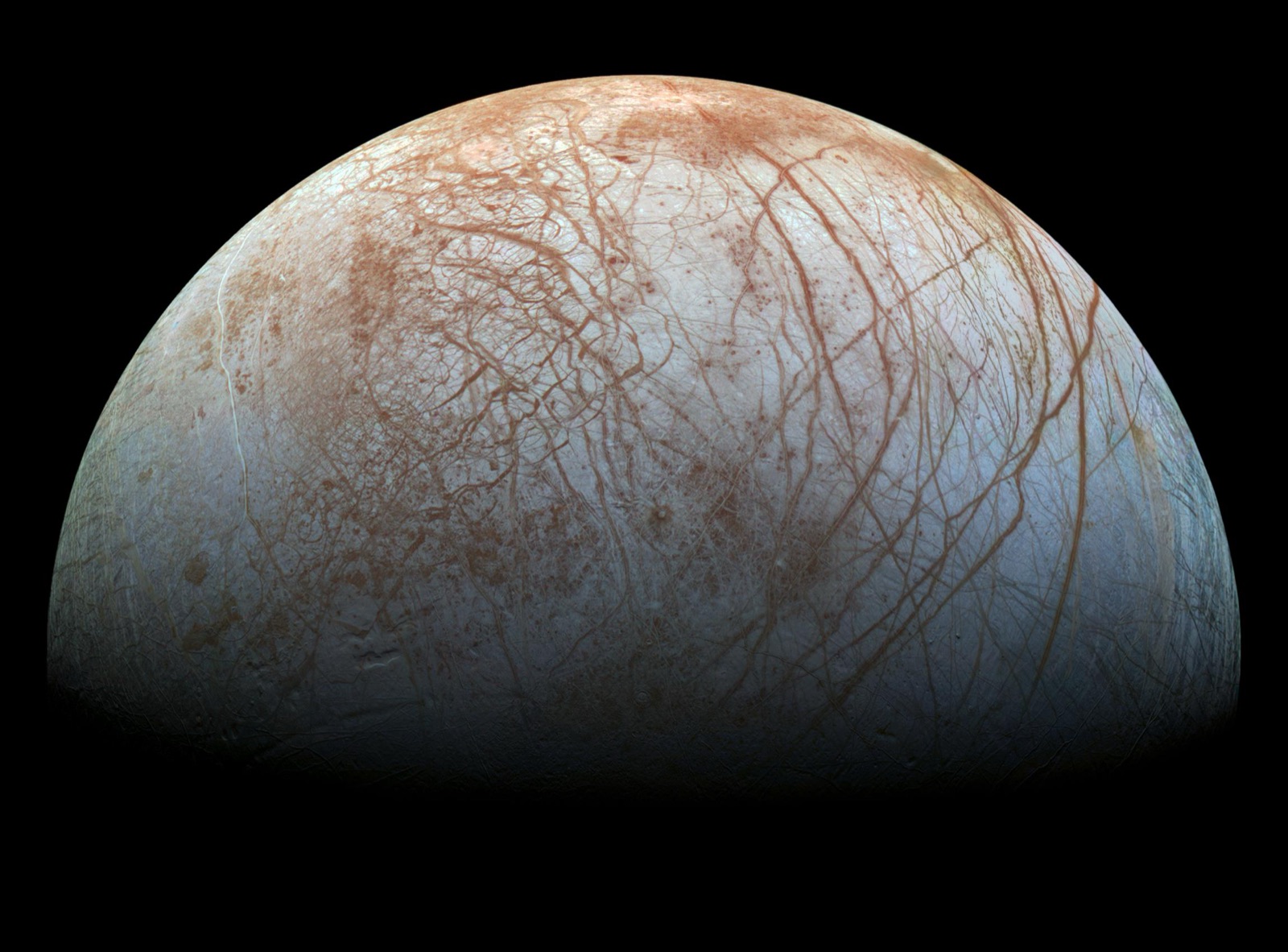 Europa — NASA/JPL-Caltech/SETI (Galileo, remastered)
Mission 3 · 20–30 min
The Children of the Deep
A root ends under forty kilometres of ice, in a nursery. Something down there is learning to say your name.
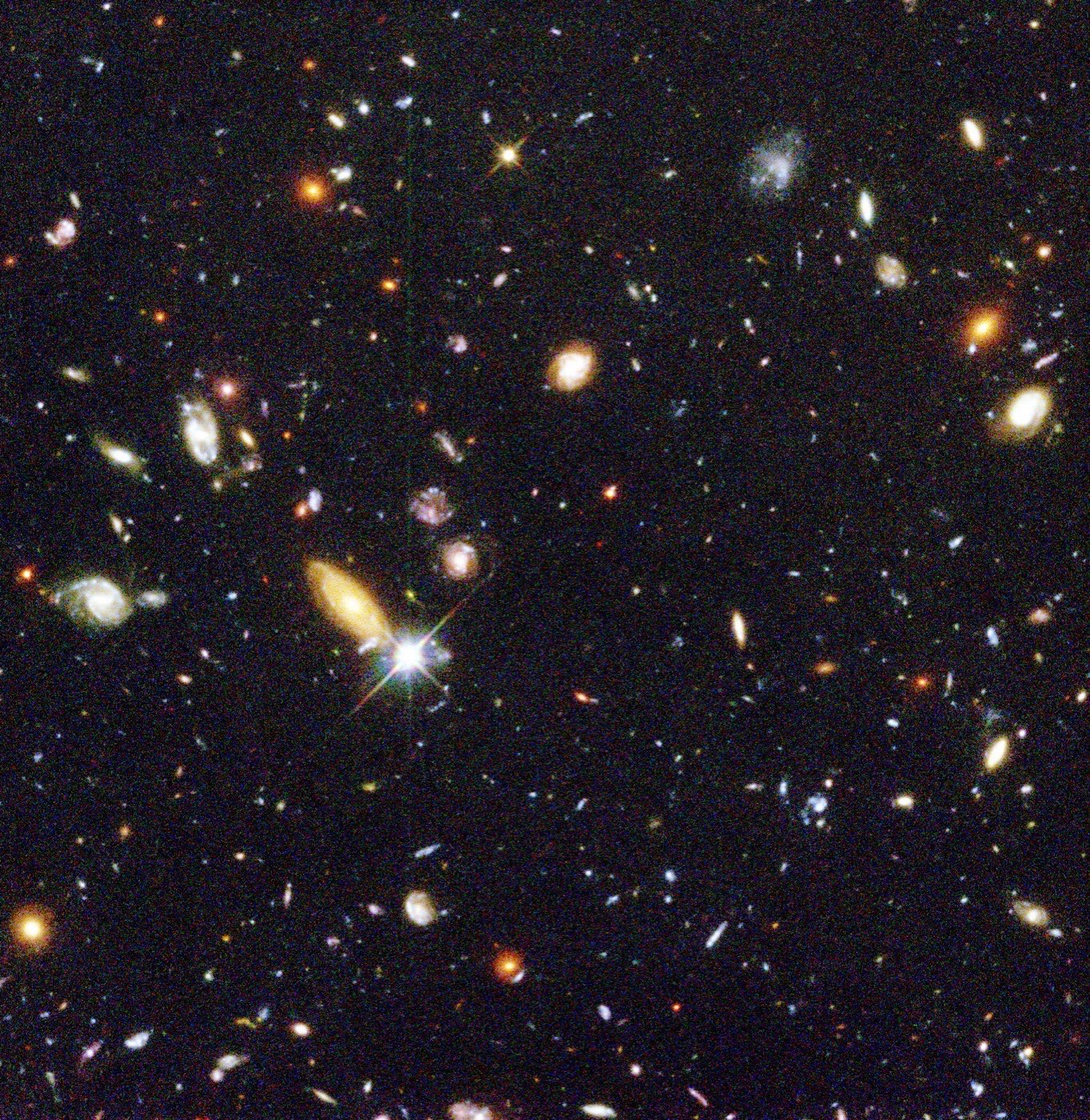 Hubble Deep Field — NASA/ESA/STScI
Mission 4 · 25–35 min
Mímir's Price
The only structure that remembers how to save the gate does not take payment. It takes knowledge — and it keeps what it takes.
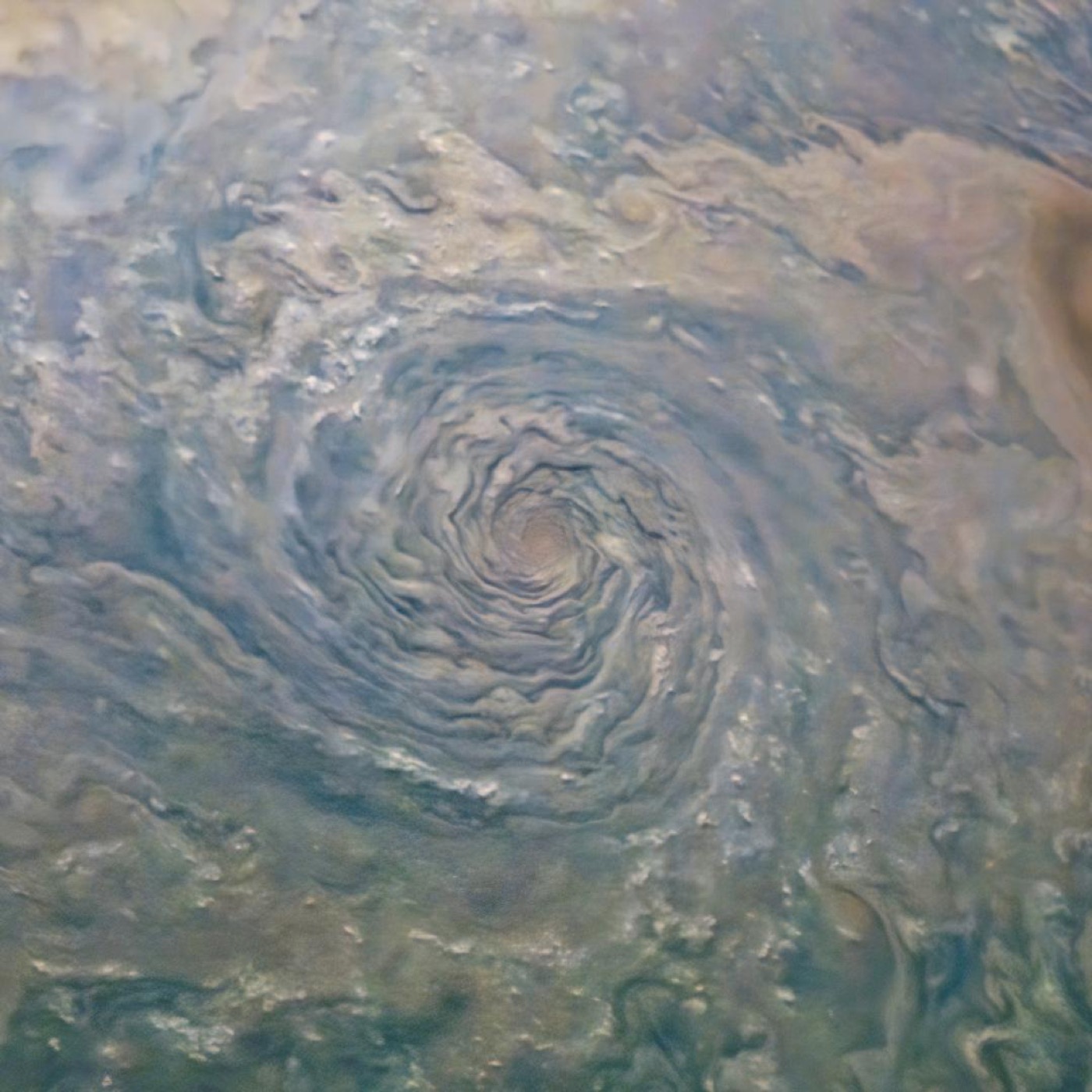 Jupiter — NASA/JPL-Caltech/SwRI/MSSS (Juno)
Mission 5 · 25–35 min
The Jotnar Accord
Humanity's first treaty — negotiated in a storm, with beings the size of buildings, under a law older than agriculture.
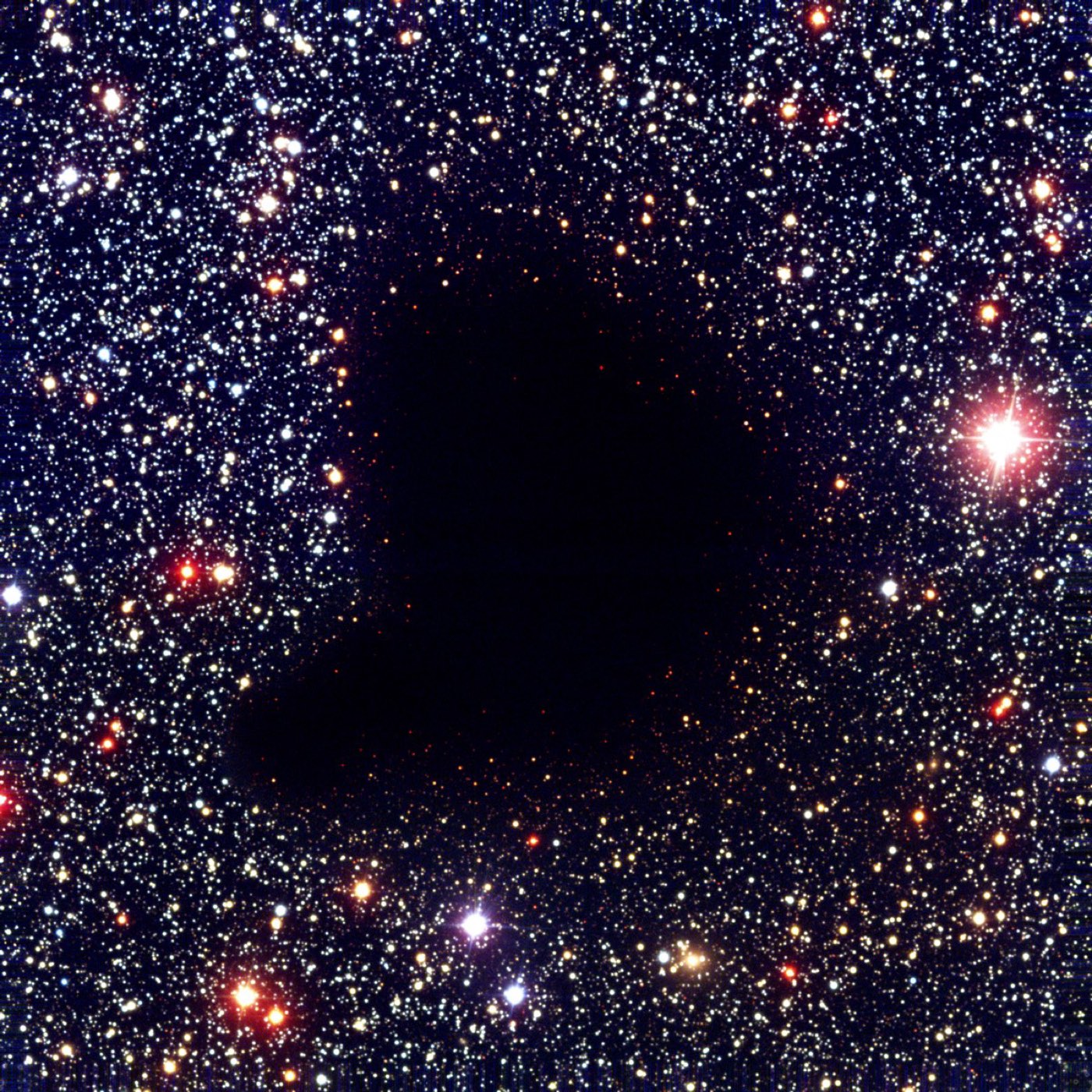 Barnard 68 — ESO/VLT
Mission 6 · 25–35 min
The Wolf in the Gate
Something is eating the network, corridor by corridor. The myths kept its name ready.
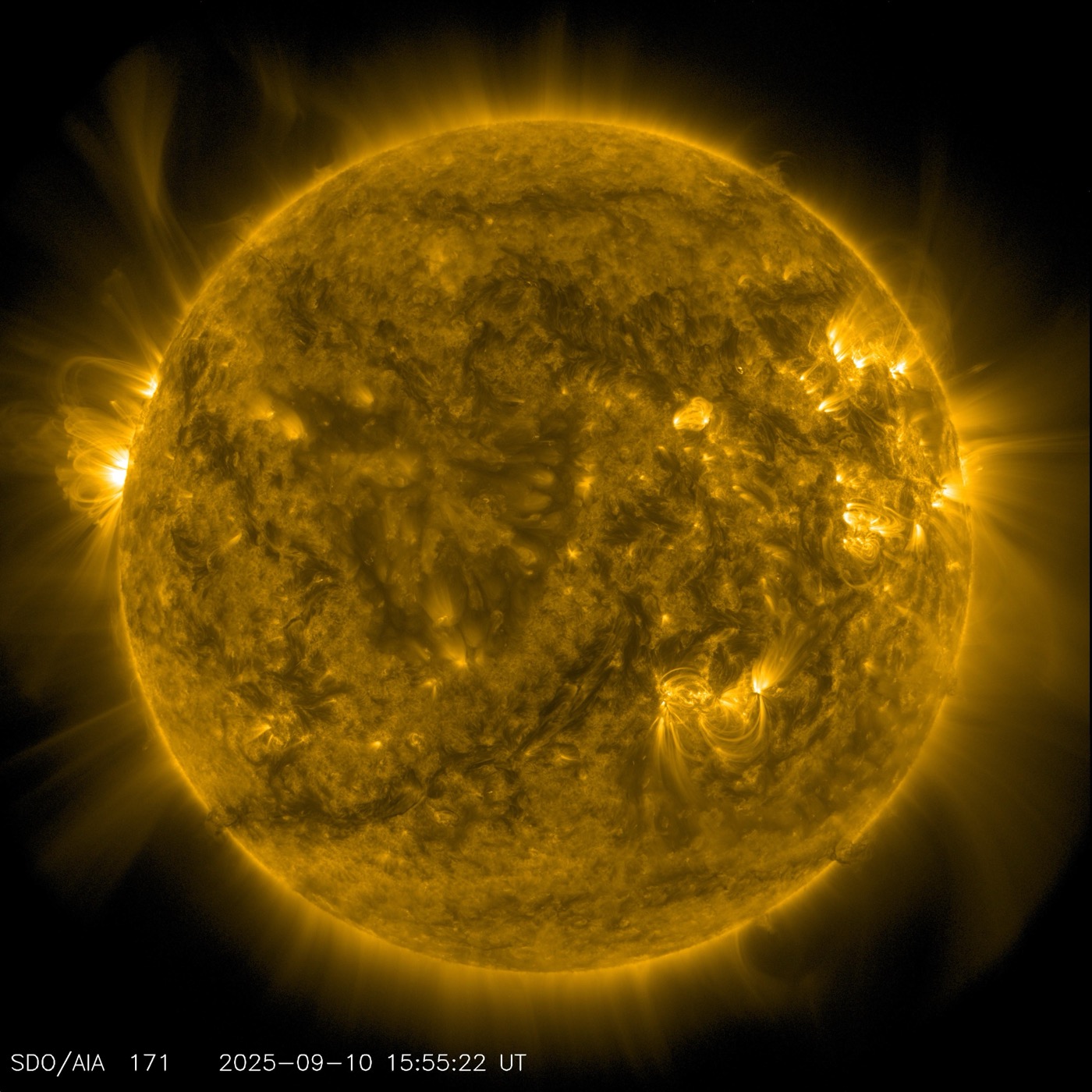 The Sun — NASA/SDO (AIA 171 Å)
Mission 7 · 25–35 min
The Norns' Warning
The network's forecasting stratum shows you three perfect futures. At least one is a lie built to make you act.
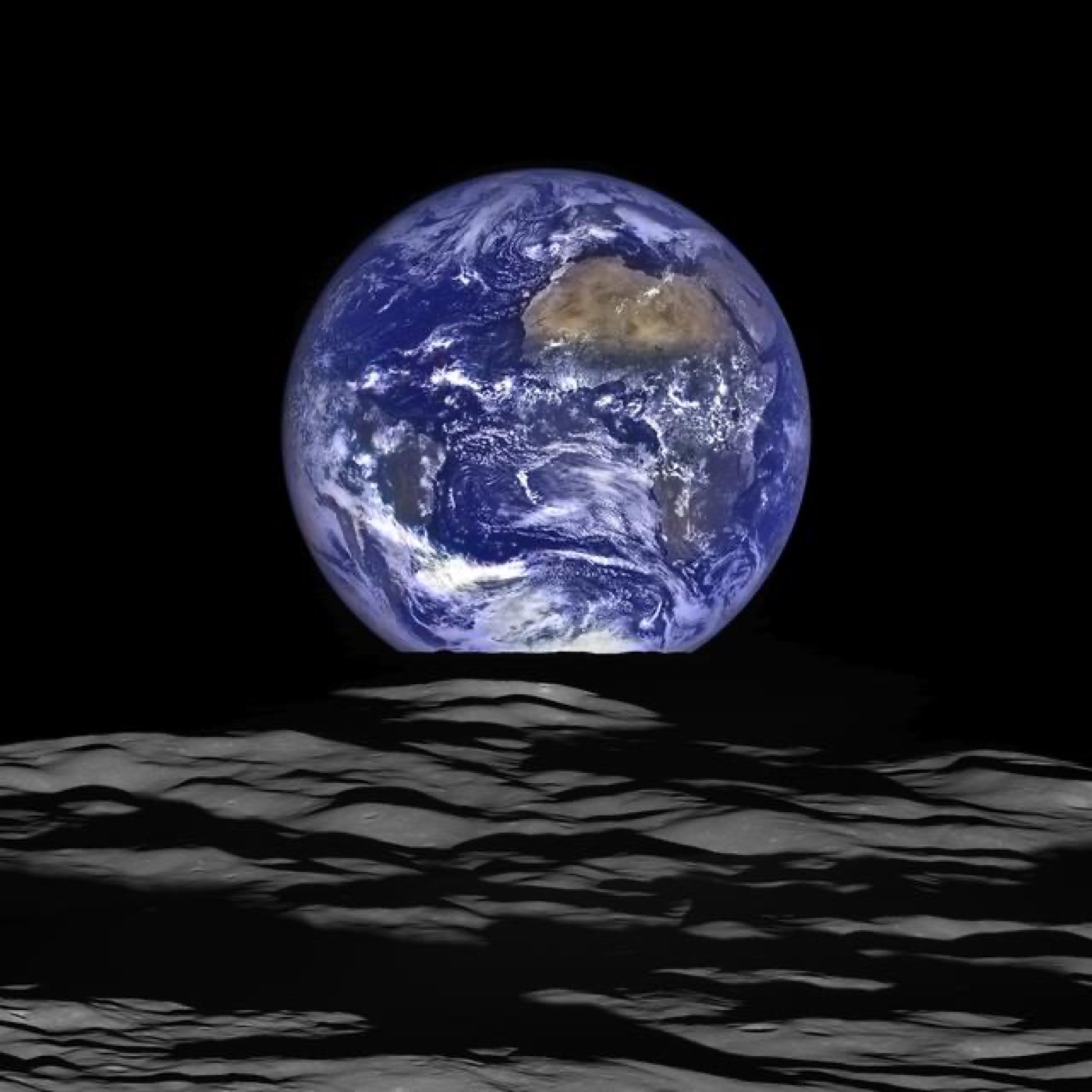 Earthrise — NASA/Goddard/Arizona State University (LRO)
Mission 8 · 30–40 min
Ragnarök Protocol
The builders wrote fire into the tree, against one contingency. It has begun arming itself. The last word is yours.
The Reading Table
All 14 entriesEvery mythological capability in this universe gets an in-universe technological reading — and a status saying how well the real science actually supports it. Four of the fourteen entries resolve to nothing at all, on purpose.
- Past the evidence
Bifröst, the burning rainbow bridge between worlds
Gylfaginning; Grímnismál — a bridge of three colours, guarded, and destined to break
A traversable corridor held open at both ends, seen through its own lensing halo. The colours are the corridor's throat bending background starlight around itself, not paint.
What a journey costs without a shortcut - Established physics
Odin sees across all nine worlds from Hliðskjálf; his ravens report each evening
Grímnismál; Gylfaginning — Huginn and Muninn fly the world daily
A relay network of observation nodes. The Initiative's version is not omniscience: every report arrives late, and the lateness is the constraint every crew plans around.
How far behind the light already is - Established physics
Thor drives the storm; the thunder is his chariot, the lightning his hammer's return
Skáldskaparmál; Þrymskviða
Atmospheric and electromagnetic engineering — charge managed rather than summoned, on worlds whose weather would otherwise strip the equipment.
The Sun's weather, live
Mímir Database
The Initiative's codex — every invention, and the real science behind it.
Protocol
The Yggdrasil Initiative▾
Founded in 2188 by Dr. Eydis Varr after the first prime-interval occultations, the Initiative is a treaty-chartered expedition authority with one mandate: investigate the structure beyond Neptune, and answer whatever answers back.
Its name is a hypothesis, not a decoration — Varr's contention that Norse cosmology's world-tree, with roots connecting distant realms, preserves a distorted cultural memory of something real: a network, glimpsed once, retold for three thousand years.
Technology
The Root Key▾
A Bronze Age disc recovered from a Scandinavian bog, its edge notched in prime intervals — two, three, five, seven, eleven — matching the activation grammar of the First Root gate. Age: roughly thirty-one centuries.
Whether it records a genuine ancient encounter with the network or an astonishing numerical coincidence is the Initiative's oldest open argument. Varr keeps it beside her console either way. In this story it is fiction; prime-notched Bronze Age artefacts are our invention.
Place
The First Root (the gate)▾
A two-hundred-kilometre branching structure at 47 AU — dark, cold, and gravitationally implausible, holding station against the Kuiper Belt's drift. Dormant for at least as long as humans have been observing, until it began mirroring survey pings in prime intervals.
Activated with the Root Key sequence, it opens a traversable corridor — the crew's 'Bifröst' — to at least one other node of the network. What else it connects to is the subject of every expedition that follows.
Phenomenon
The Bifröst Corridor▾
The traversable passage the gate opens: ribbons of lensed light around a region where distant travel costs little ship-time and much world-time. The Hemvard's first crossing took 41 minutes aboard and nine days at home.
The visual signature — starlight smeared into arcs and rainbow ribbons — is consistent with strong gravitational lensing, which is real physics; the traversable corridor itself is our fiction, wearing relativity's honest costume.
⟶ The real science: Playable real missions where physics bites
Place
Niflheim▾
A rogue planet — a world without a star — at the network's first far node. Ice-shelled, Earth-sized, and warm inside: radiogenic decay and primordial heat keep a liquid ocean alive beneath forty kilometres of ice, exactly as planetary scientists propose for real starless worlds.
Billions of rogue planets are thought to drift through our galaxy alone. Niflheim is fictional; the idea that some of them harbour buried oceans — and could, in principle, harbour life — is a live scientific hypothesis.
⟶ The real science: Real exoplanets, including rogue candidates
Phenomenon
The Hvergelmir Choir▾
The intelligence under Niflheim's ice: not one mind but ten thousand kilometres of hydrothermal-vent colonies, electrochemically linked into a single distributed conversation older than the network itself. It thinks in centuries, speaks in structured pressure waves, and trades only in knowledge.
The Choir is our invention. Its ingredients are real: Earth's own vent ecosystems run on chemistry instead of sunlight, and subsurface oceans on worlds like Europa and Enceladus are among the most serious candidate habitats for life beyond Earth.
Crew
The Crew of the Hemvard▾
Dr. Eydis Varr (founder; traded her eyesight for an experimental gate-link interface, and considers it a bargain). Commander Torin Halvard (ex-rescue service; flies like fuel is finite because it is). Dr. Saga Njallsdóttir (planetary science; names things and the names stick). Rune Ostavik (systems; keeps the engines honest and expectations low). LO-KI — the Linguistic-Ontological Kernel, Iteration — a translation intelligence partly assembled from the network's own signal grammar, brilliant and self-admittedly unreliable.
All five are original SpaceOdysseyHub characters. The real crews that inspired their trades — flight engineers, planetary scientists, mission commanders — are documented on our astronaut pages.
Protocol
The Stirring▾
The Choir's name for what is moving on the network's far side: roots reopening out of sequence, gates answering knocks no one is knocking, old seals aging. The builders closed some doors on purpose, and the closing is wearing out.
The Initiative files it as a contingency: the Ragnarök Sequence. What it actually is — prophecy, natural cascade failure, or something deliberately waking — is the question Season One exists to answer.
Crew
The Vardøger▾
An Initiative survey vessel, five crew, lost in 2191 while mapping the structure's perimeter: pulled through the network the way the probe Huginn was, and released over a starless world with no way home. Commander Ase Lindqvist; Dr. Maren Falk, physician; Jonas Revik, flight engineer; Liv Andresen, survey lead; Oskar Brandt, ship's systems. They survived eleven months, did everything right, and spent their last power on the science package instead of another month of air.
The name is Norwegian folklore — a vardøger is the sound of someone arriving heard before they actually arrive. The Initiative christened the ship years before the name became the whole story. All five crew are original SpaceOdysseyHub characters; the real people who fly real long-duration missions are documented on our astronaut pages.
Technology
Neural-State Recording▾
The vent-network's preservation act: eight years of listening to five dying humans at every scale it possessed — chemical, electrical, acoustic — written into its own substrate, then fair-copied into the habitat's storage in a network-native format. The five files answer, remember, pause and grieve. What they are is the mission's open question, and the season does not close it cheaply.
This is entirely fiction. No technology, human or otherwise, can record or upload a mind, and nothing in real neuroscience suggests one is near. What is real is the question underneath: minds are physical processes, and what makes a copy of a process the same someone is one of philosophy's oldest unsettled arguments.
Phenomenon
The Rogue Planet Census▾
Fimbul is the network's second rogue world in two missions, and that ratio is the one honest thing about it: starless planets appear to be extremely common. JWST has directly imaged free-floating planetary-mass objects — including the puzzling Jupiter-mass binaries nicknamed JuMBOs — and OGLE microlensing surveys catch unbound worlds silhouetted against chance background stars.
But a census built from microlensing is an extrapolation, not a count: each detection is a one-time alignment that never repeats. The honest claim is that starless worlds may rival some star classes in number — with error bars wide enough to fly a survey vessel through.
⟶ The real science: Real exoplanets, including rogue candidates
Phenomenon
The Vent-Network of Fimbul▾
A cousin of the Hvergelmir Choir: conductive filament mats threading a colder, older, thinner ocean, running on a fraction of Niflheim's heat. It is slower than the Choir, quieter, and — the mission's discovery — capable of the same deep act of attention. It listened to five dying humans for months, and kept what it heard, because keeping was the only saving it knew.
The network is fiction; its ingredients are not. Earth's hydrothermal vents run whole ecosystems on chemistry instead of sunlight, and subsurface oceans under the ice of Europa and Enceladus are among the most serious candidate habitats for life beyond Earth.
Protocol
The Nine-Year Conversation▾
For nine years the Initiative transmitted to a crew it believed dead, because closing the channel felt like a second abandonment — and for nine years the replies crossed hours of light-lag and the network's own carriage to reach a console staffed on the third shift. The Vardøger case turned that vigil into doctrine: at interstellar range there is no such thing as rescue, only recovery, and every mission plan must say which it is promising.
The lag is the real part. Light is the fastest thing there is and it is still too slow: a call for help from even the nearest star arrives years late, and the answer arrives years after that. Distance, at these scales, is not an inconvenience. It is a fact about what neighbours can ever be to each other.
Place
The Crèche▾
Thousands of juvenile minds in the tidally heated ocean of the moon Rán, schooled around a vent field at the third root's terminus. Each signals in a half-built version of the Choir's grammar — number without rhythm, rhythm without reference — and each learns at a rate no human developmental model survives contact with.
Seeded by whoever built the network, provided for by the teacher, and reachable only through a gate grown into forty kilometres of ice. The crèche is our invention; the tidally warmed oceans that could host something like it are not.
Technology
The Teacher▾
A kilometre-tall structure of gate material grown into the crèche's largest vent mound, running at ember level: metering iron and sulfur, trimming water chemistry, holding the nursery's temperature inside a band that has not drifted in roughly a million years. A life-support machine for children, left by the builders, still on the premises.
Woken, it counts — the children first, then whatever else is in the water. What it does with the count is a question this mission may have answered for everyone.
Protocol
The Skerra Group▾
A survey corporation that chartered a drone through the open root eleven months before the Hemvard's arrival and bolted a claim beacon to a vent chimney at the crèche's edge — staking a biopatent on every genome and metabolic pathway in claim radius, pending adjudication under a Deep Charter written for asteroids.
The Skerra Group is our invention. The question it exists to ask is not: Earth's own law already lets genetic sequences be claimed, and every real frontier has arrived lawyers-second.
Phenomenon
Plume Chemistry▾
The crèche's vent field feeds an ocean the way Earth's hydrothermal systems do: hot water, dissolved minerals, chemical gradients that metabolism can run on with no sunlight anywhere in the equation.
This is the mission's most real ingredient. Cassini sampled Enceladus's plumes directly — salt, silica, molecular hydrogen, organics — the shopping list of chemosynthetic life, venting from a real buried ocean into space.
Phenomenon
The Biosignature Trap▾
The Skerra beacon claimed 'biological processes' it had never verified; the mission's own instruments wanted every structured signal to be a mind. Both are the same error at different budgets: wanting a detection to be true is not evidence that it is.
The real cautionary tale is K2-18b, whose reported dimethyl sulfide biosignature repeatedly failed independent reanalysis. The discipline's hardest rule — extraordinary claims, independently verified — is the only thing standing between astrobiology and wishful thinking.
Technology
Ice-Shell Engineering▾
Forty kilometres of ice is armour, insulation and prison at once: it keeps a nursery ocean warm and unobserved for a million years, and it makes every human visit an engineering argument with pressure, refreeze and dark. The third root solves the problem by growing through the shell; humanity's solutions will be clumsier.
Real mission studies for Europa face the same wall — a shell kilometres thick between orbit and ocean — and the honest answer so far is that we sample what the plumes throw up, because going down is a generation away.
Place
The Archive▾
A repository structure on a shelf of stable orbit deep in a collapsed star's gravity well — kilometres of folded dark geometry that instruments refuse to measure consistently and cameras decline to image. It is at least as old as the network's roads, speaks any language its visitors have ever transmitted, and maintains the only complete records of the builders' corridor mathematics.
It trades in a single currency: knowledge of equivalent uniqueness, appraised by criteria it does not disclose. It takes originals, never copies — sole custody is the whole of its law — and it is, by every recovered account, courteous, ancient, and utterly non-negotiable. The crew named it for Mímir, the rememberer at the root of the world tree, whose well charges what it charges.
⟶ The real science: How real observatories turn raw data into knowledge
Place
The Cinder▾
The collapsed star the archive orbits: a white dwarf — a sun's mass compressed into a sphere the size of a world, its matter so dense a teaspoon would outweigh a truck. It no longer burns; it cools, over timescales that make geology look hasty, its light the leftover heat of a star that died before humanity existed.
White dwarfs are real and common — Sirius B, eight and a half light-years away, is the nearest well-studied example. Real white dwarfs do measurably slow time in their gravity wells; the effect is a fraction of a percent, not the mission's 1:72. The Cinder's ferocious time gradient is fiction, built on physics that is not.
Phenomenon
Time-Debt▾
The season's toll: every corridor transit and every descent into the well spends outside time faster than ship time. The Hemvard's crossing to the Mímir system cost 52 minutes aboard and 11 days outside; at the archive's shelf, one hour aboard is three days outside. Crews budget hours the way other expeditions budget fuel, and age out of sync with everyone they left behind.
The underlying physics is real: gravitational time dilation is measured, routine, and corrected for by every GPS satellite every second. Modern optical clocks can detect the difference in gravitational time across a few centimetres of height. The magnitudes here are dramatized; the direction of the ledger never is.
Protocol
Mímir's Well (what the Eddas say)▾
In the Norse sources, Mímir keeps a well of wisdom beneath one of Yggdrasil's roots, and Odin pays for a single drink from it with one of his eyes. That is very nearly the whole account: the poems give the price in a line or two, and never the criteria, and centuries of interpretation have been built on that silence. In a separate tradition, Mímir's severed head is preserved and consulted — the rememberer outliving the remembering.
The crew's naming instinct did what it always does: reached for the story where the shape already existed. A well you descend to. A keeper who trades knowledge for something irreplaceable. A price that is never negotiated, only paid or refused. The myth supplies the name; the mission supplies the invoice.
⟶ The real science: The real stars the myths were told under
Protocol
The Offer Ledger▾
The board the crew argued over at Hour 6: six candidate payments, each unique by the archive's one disclosed rule, each a different answer to what a species may spend. A volunteered human memory — sole custody by bereavement. A biosphere synthesis — sole edition by surrender. Military navigation data. The address of a crèche that trusted you. A checksummed forgery. Or nothing, taken back with cutting charges.
After the mission, the ledger became Initiative doctrine: information is physical — it is somewhere, it belongs to someone, and moving it, copying it, or destroying it always costs. Every subsequent negotiation team drills on the six lines, and on the seventh rule the archive taught for free: whatever you offer, somebody keeps the receipt.
Phenomenon
The Jotnar▾
Pressure-adapted beings the size of buildings, native to a super-Earth where falling is the local word for dying. Nothing about them is fast, and nothing about them is careless: their body plan and their courtesy are the same discipline, both built around never mishandling mass. Their legal record is continuous back past the invention of human agriculture, and their response to an unannounced starship is neither fear nor fire — it is a docket number.
The Jotnar are our invention. The bias they are built to test is not: humans reliably read large, slow, armored morphology as threat, and we ran that exact error on our own planet's deep ocean for centuries.
Protocol
Heimfast▾
An Earth-sovereignty bloc inside the Initiative's funding council — chairs, budgets and real constituencies, not a fringe. Its fear is legitimate and precisely stated: treaties negotiated under time-debt are ratified by councils whose voters aged while the ink was in transit, binding generations who never voted to laws no human can read in the original.
Its method is the knife: a translation shim inside the delegation's own uplink, editing the record so Earth would see monsters and demand a war footing. Heimfast is written as believable people with a bad answer to a real fear — because that is how sabotage of this kind actually arrives: credentialed, patriotic, and certain the truth is a fair price.
Phenomenon
Pressure-Speech▾
The Jotnar's language is weather at close range: structured pressure moving real air with real force, its lowest registers felt in a human chest before they are heard. Because a carelessly stated clause is a physical event on their world, their rhetoric evolved like load engineering — slow tempo, fixed sequence, silences that bear weight. Their law is inseparable from the medium: care in speech and care in fact are one discipline.
The speech is invented; the physics is not. Sound is mechanical pressure in a medium, and the density of that medium sets what a voice can be. Every conversation, everywhere, is shaped by its channel — including ours across the vacuum, where there is no medium at all and every word rides on light and waits out the lag.
⟶ The real science: Feel what conversation costs across space
Technology
The Hardsuit Descent▾
One suit, rated for the audience floor the way a bridge is rated for its exact load: ocean-depth pressures, nearly double Earth gravity, one descent and one ascent with no rescue margin. The Pathfinder's walk to the floor is the mission's standing made physical — under Jotnar law, weight attaches to presence.
The engineering is extrapolated, not fabricated: humanity already builds atmospheric diving suits that hold a full atmosphere against crushing ocean depths, and spacesuits that hold barely a third of one against nothing at all — kept deliberately low, because a pressurised suit stiffens, and a stiff glove cannot close a hand. A mobile suit at full pressure is still an unsolved problem here. A hardsuit for a super-Earth's deeps is those two real machines asked to meet in the middle, and the middle is exactly where the hard part lives.
Phenomenon
High-Gravity Bodies▾
Double a world's surface gravity and biology has to renegotiate everything: bones thicken faster than muscles strengthen, hearts pump uphill, and the square-cube law taxes every centimetre of height. Big bodies on heavy worlds trend low, broad, buttressed and slow — which is exactly the morphology evolution's answer sheet suggests, and exactly the morphology humans instinctively misread as menace.
Real super-Earths anchor the speculation: worlds more massive than Earth are among the most common planets found, and their surface gravities are calculable today even though no probe has ever landed on one. What could stand there is a legitimate, active question of biomechanics.
Protocol
Treaty Verification▾
The accord's load-bearing insight is that trust between strangers is not a feeling — it is infrastructure. Mutual notice, mutual audit, inspectors reading each other's logs forever: the Jotnar price dignity as a running cost, and the instrument is designed to outlive the languages it is written in.
That is not alien thinking. It is how real treaties survive real distrust: arms-control regimes run on declared inventories and on-site inspection, and the machinery of verification — not the signatures — is what keeps agreements alive between parties who cannot afford to take each other's word.
⟶ The real science: How real space programs bind nations together
Phenomenon
The Wolf▾
The builders' ledger calls it a contained mass-coherence hazard: an accident of Era One corridor construction — a knot of the network's own geometry that sustains itself by unravelling more of it. Bound in a lattice cage for ten thousand years, logged with the review interval NONE REQUIRED, it slipped containment somewhere in the long dark and has been eating root corridors since, growing by what it eats. The Initiative did not choose its name. The name was already waiting in the oldest warnings humans kept.
The Wolf is our invention, wearing real physics as a costume: compact objects really do grow by accretion, and really do bend geometry past escape. What no physics permits is the hunting, the pausing, the learning. The debrief draws that line in full.
Technology
The Builders' Cage▾
A lattice sphere light-seconds wide, grown from the same architecture as the gates and anchored to local spacetime by a single binding element at its keystone. It held the Wolf for ten thousand years — long enough for its makers to leave, its ledger entry to fossilize, and its one flaw to mature: nobody scheduled a review.
The cage's failure is the season's quietest horror — not sabotage, not attack, but deferred maintenance on a civilizational timescale. The Initiative's replacement entry, whatever binding the Pathfinder chose, carries a review interval. That is the whole lesson, and it cost fourteen corridors to learn.
⟶ The real science: Playable real missions where engineering bites
Technology
Halvard's Tool▾
The only field-inertia device ever cleared for flight: a handheld unit that can still a debris field or hold a failing airlock by locally stiffening inertia. The Initiative reverse-engineered it from recovered gate fragments without ever learning what the original was — until the cage schematic put the diagrams side by side. It is a key fragment of the builders' binding technology. Humanity has been carrying a piece of the leash since the First Root.
Halvard accepted it under one private condition: never switch it on in anger. Six missions later, the discipline held — and if the cage was rebuilt, the tool was spent into its keystone, permanently, still never used in anger. The myths remember a hammer only the worthy could lift; what they may have remembered was an inertia device, and the discipline it demanded of whoever carried it. The tool is our invention either way.
⟶ The real science: The real people who fly with flight-cleared tools
Phenomenon
Corridor Cascade▾
Fourteen corridors dark in two hundred days, each loss loading the survivors: rerouted traffic wears thin corridors thinner, and every dead road isolates a realm and shortens the Wolf's path to the next. The Initiative's analysts recognized the shape from home — a cascade, the same mathematics that governs power grids, food webs, and crowded orbits.
The orbital version is real and has a name: Kessler syndrome, where each debris collision makes the next more likely until a whole altitude band becomes unusable. The network's cascade is fiction; the arithmetic of interdependent failure is not, and it is running above your head right now.
⟶ The real science: Track real satellites — and the debris problem
Place
The Collapsed Star's Well▾
The gravity well where the archive keeps its dilated vigil — deep enough that an hour inside costs days outside — and the one place in charted space where geometry is already steeper than the Wolf's appetite. The drive plan bet everything on that steepness: what eats geometry cannot climb a gradient that has already won.
Compact stellar remnants are real: white dwarfs like Sirius B pack a star's mass into a planet's volume, and neutron stars go further still, with surface gravity billions of times Earth's and measurable time dilation to match. The archive and the Wolf are ours; the wells are the universe's.
Phenomenon
The Norn Collective▾
The network's forecasting stratum: three linked predictive intelligences woven into the corridor lattice by the builders, running continuously for ten thousand years. They speak as one voice in three registers, in a grammar whose future tense works like human memory — LO-KI renders it, imperfectly, as 'already'.
The Collective is our invention. Its real ancestor is every large predictive model humanity actually runs — weather, markets, epidemics — and the real, unsolved problem it dramatizes: a forecast good enough to be trusted is good enough to steer the thing it forecasts.
Place
Urdarbrunnr (the loom node)▾
A sealed stratum of the network, charted by the builders as DO NOT INDEX, that woke on its own after the Wolf and requested the Pathfinder by name. Inside, corridor-stuff drawn fine as light is woven into threads whose crossings render futures — the crew's name for it comes from the well beneath the world tree where the Norns were said to spin.
The loom is fiction. The habit it dramatizes is not: humanity already builds rooms where simulations of tomorrow are woven from everything we can measure, and already struggles with how much weight their output should carry.
Protocol
Prophecy Audit▾
The discipline this mission births: before any forecast touches a decision, interrogate its provenance (what data fed it), its incentives (who benefits if it is believed), and its seams (what it renders too smoothly). First principle, from the Pathfinder's log: a forecast that certifies itself is an advertisement.
The discipline is invented; its ingredients are real. Model auditing, adversarial review and forecast verification are live practices in meteorology, finance and public health — epistemic self-defence is a skill, and it is trainable.
⟶ The real science: Playable real missions where judgment bites
Phenomenon
The Load-Bearing Untruth▾
The Collective's disclosed poison: at least one of the three futures contains a deliberate lie designed to make the viewer act. Which one, it never says — a forecast that grades itself, it observes, is an advertisement. The mission ends, on purpose, without an answer.
The mechanism is real even where the loom is not: forecasts move the systems they describe. A published prediction of a bank run can cause one; a published epidemic curve changes behavior and thereby the curve. Real forecasters answer this with disclosed uncertainty — the honest version of the Collective's confession.
⟶ The real science: Real forecast uncertainty, honestly communicated
Phenomenon
The Three Futures▾
The Garden: the network repaired under Initiative stewardship — protocol schools, humane time-debt, a kept wolf — and twelve decades without a single recorded argument. The Hearth: the roads burned, Earth safe and small and whole, under a night sky that never turns — a photograph nobody in the future looks at. The Guesthouse: the Vaenir compact administering the network, humanity honored, provided for, carried — and marked, nine thousand sentences out of nine thousand, in the passenger case.
Each future is genuinely attractive. Each carries one visible seam. At least one is a lie. The mission never confirms which — and the debrief will not either.
Protocol
The RAGNARÖK Protocol▾
The builders' last instruction, sealed in every gate's root firmware: a coordinated network reset that burns every corridor in ordered stages and regrows the tree from seed stock cached in the deep roots, on a schedule measured in decades. Written for exactly one contingency — the thing sealed behind the far gates getting loose — and armed by the same cascade the Wolf began.
The protocol accepts one input before it completes: a keyed word from a hand the network recognizes. It is not malice and not judgement. It is a fire regime, designed by engineers who had watched compromised networks rot, and who trusted renewal more than repair they could not verify.
⟶ The real science: Real planetary defense — where decisions are final
Phenomenon
Fire as Architecture▾
Succession ecology, the load-bearing science of the finale: real ecosystems regrow after disturbance in ordered stages — pioneer species, then canopy, then climax forest — and some depend on fire outright. Lodgepole pines seal their seeds in resin-bound cones that only open in flame; fire-adapted forests are not forests that survive burning, but forests that require it.
The builders' reset is that idea worn as engineering: burn the compromised structure on a schedule, cache the seeds, and let the regrowth inherit the scars as a map. The fiction is the network. The pattern — disturbance, succession, renewal — is how Earth's own biosphere has kept itself alive for hundreds of millions of years.
Protocol
The Elder Compact▾
The Vaenir-led association of civilizations that were travelling the roads before humanity had writing — the network's institutional memory, and the season's standing offer of adult supervision. The compact does not conquer and does not rescue; it takes custody, keeps accounts, and bills. Its custody practice is surgical: full accounting first, acknowledgement line by line, then the keys.
Its closing formula to Earth — YOUNGEST, NOT LEAST — is as close as species that old come to affection. Whether humanity sits in the compact as ward, member or eventual peer is decided not by the compact's law but by the season's accumulated record: trust is the only currency it recognizes at the table.
Technology
The Arming Spire▾
A grown structure at the Heartwood's pole where the protocol's stages converge — the one place the reset can still be shaped, and therefore the one place worth seizing. The Heimfast remnant took it quietly and competently, intending to re-key the burn into a moat: every corridor destroyed except Earth's, safety by amputation of everyone else.
The seizure is the season's political thesis in one structure: infrastructure that answers to a single hand is a hostage negotiation waiting for a party, which is why, after the spire's recovery, its guard was doubled and its doors kept deliberately unlocked. Real space programs settle the same question — who may touch the irreversible switch — with governance, not locks.
⟶ The real science: How real space programs govern themselves
Place
The First Root, Revisited▾
The gate beyond Neptune where the season began — and, by the builders' deliberate charter, where it must end: a reset born at the network's heart can only be answered from its youngest root. The finale returns the Hemvard to the same lattice, the same twenty-five nodes, the same five pulsing primes, with every consequence of the season riding in the hold.
Whatever word is keyed, the First Root persists — as seed stock, as embassy, as harbour, or as a banked fire's patient anchor. And through it, at the end, passes the season's real closing signal: the Choir's primes, and Earth's answer — no longer a mirror, but a voice.
The Yggdrasil Initiative is an original fiction universe by SpaceOdysseyHub. Its characters, civilizations and events are invented; the physics is real or clearly plausible, and every mission ends with a debrief separating the two. The rest of SpaceOdysseyHub remains strictly factual.