RegolithProspecting — mapped / surveyed
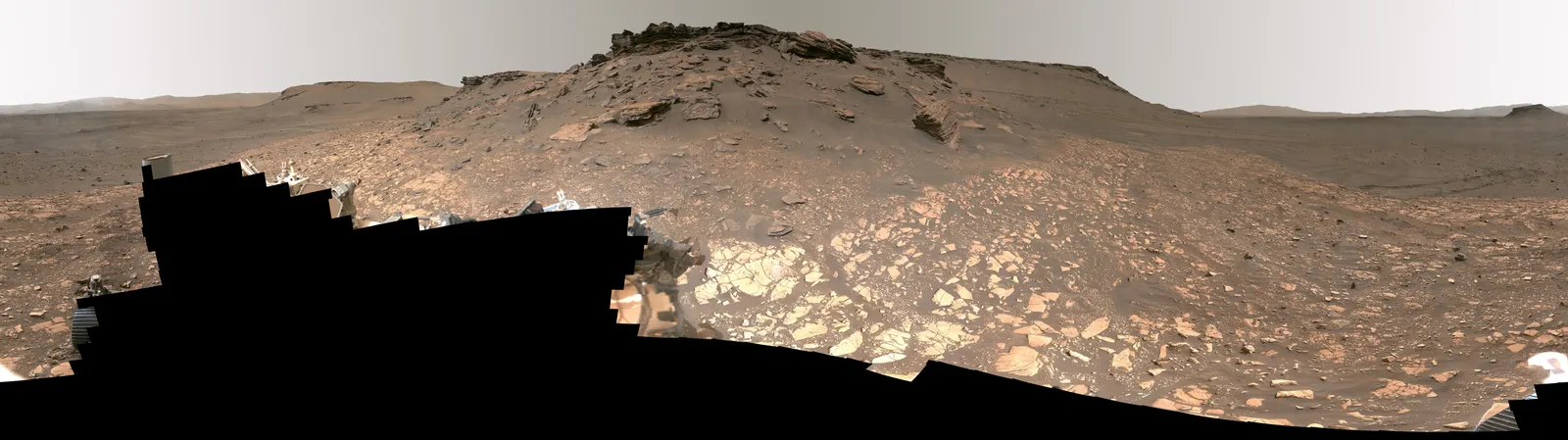
Iron Oxide Regolith (Martian Soil)
Global — regolith covers entire Martian surface
Estimated Quantity
~15–19 wt% iron oxides (Fe₂O₃) by APXS; rust color from nanophase ferric oxide dust
APXS bulk-soil data from Opportunity, Curiosity, Perseverance (Fe₂O₃ ≈ 15–19 wt%; an earlier '~43%' figure conflated total Si+Fe oxides)
As of 2021-01-01
Location & ISRU Feasibility
Where
Global (basaltic regolith blankets the surface; reference composition from Rocknest soil, Gale Crater 5.4°S 137.8°E)
Extraction feasibility
Moderate feasibilityEverywhere and trivially collected at any landing site, but turning it into structural material needs high-energy processing (furnace sintering ~1000–1100°C), and it is unusable for crops until perchlorates are removed.
Extraction technology
Proposed furnace/sinter 'space bricks' (lab studies on simulant report up to ~45 MPa) and carbothermic metal reduction; composition characterized in situ by rover APXS; no in-situ processing demonstrated on Mars.
Overview
The iconic rust-red color of Mars is caused by iron oxide in the regolith — primarily nanophase ferric oxides. APXS instruments on multiple rovers have quantified composition. Martian regolith is remarkably consistent globally: ~40-45% SiO2+Fe2O3, ~10% MgO, ~7% CaO with trace sulfur and chlorine. While unsuitable as-is for agriculture (perchlorates), regolith sintered at 700°C could form structural bricks without any binding agent.
ISRU Application
Structural material for 3D-printed habitats (analogous to terrestrial sintered bricks), iron extraction for manufacturing, thermal mass for passive heating
Sources
- [1] NASA / JPL (CRISM mineralogy) — retrieved 2026-06-13
- [2] Icarus (peer-reviewed) — retrieved 2026-06-01
Confidence: high · Last verified 2026-06-01
← All Mars ResourcesContinue your journey
Continue the story
Mars resource
Volcanic Basaltic Minerals
Continue the story
Continue the story
Mars resource
CO₂ Atmosphere
Continue the story
Continue the story
Mars resource
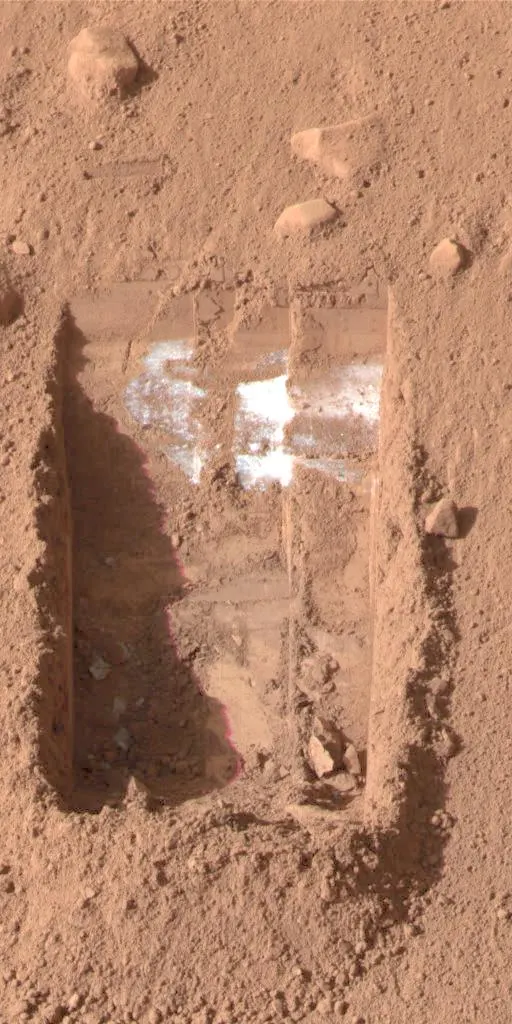
Potential Geothermal Energy
Continue the story
Continue the story
Mars resource
Perchlorate Compounds (ClO4⁻)
Continue the story

Continue the story
Mars resource
Polar Water Ice Caps
Continue the story
Continue the story
Mars resource
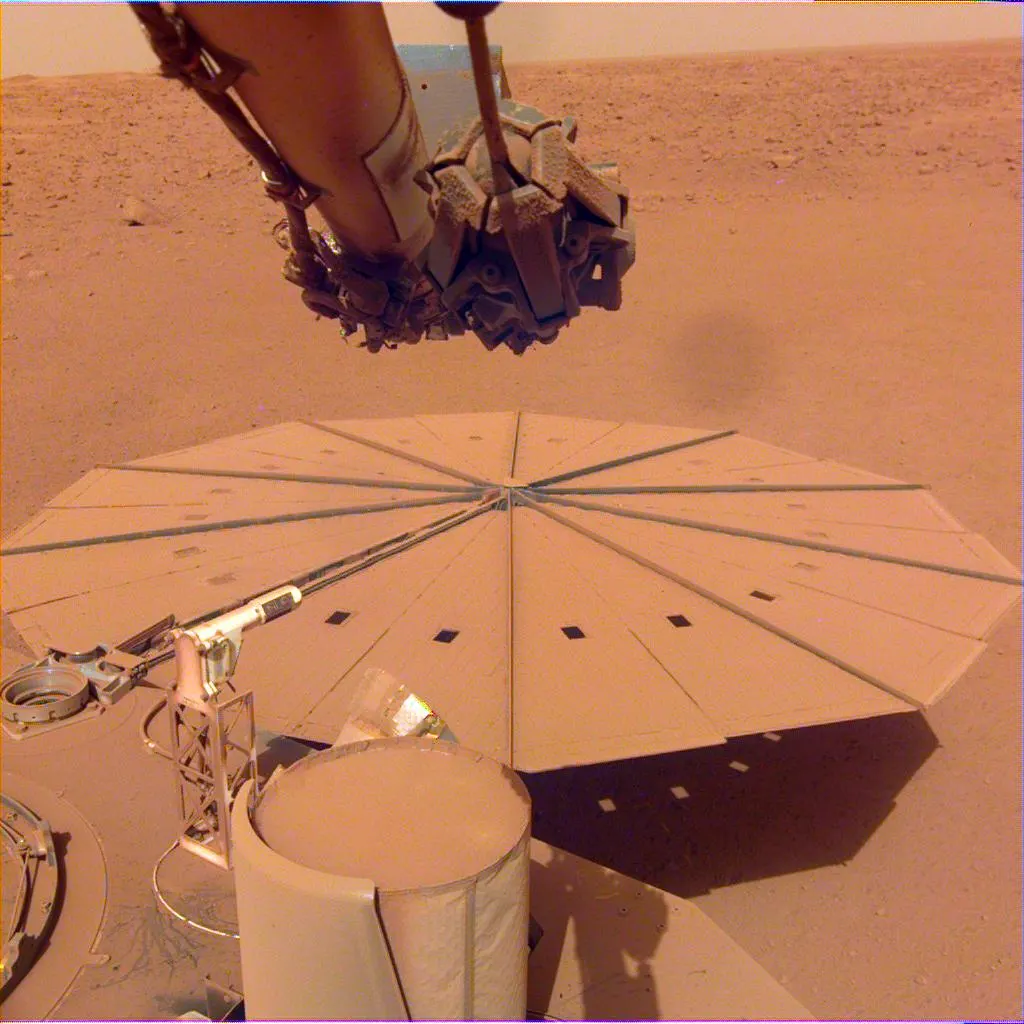
Solar Energy
Continue the story