Mars In-Situ Resources
What Mars has to offer for human exploration and settlement — 8 tracked resources with confidence ratings, utilization status, and primary-source citations. ISRU (In-Situ Resource Utilization) is the foundation of any sustainable Mars presence.
TheoreticalProspectingDemonstrationOperationalUtilization status

Polar Water Ice Caps
Water IceNorth and South Poles; north cap is water ice year-round, south cap CO2 ice over water ice
Quantity: ~3.7 million km³ equivalent water
Electrolysis to produce rocket propellant (H₂+O₂), life support water and oxygen for crewed missions, radiation shielding via water walls
prospecting⚠ caveat
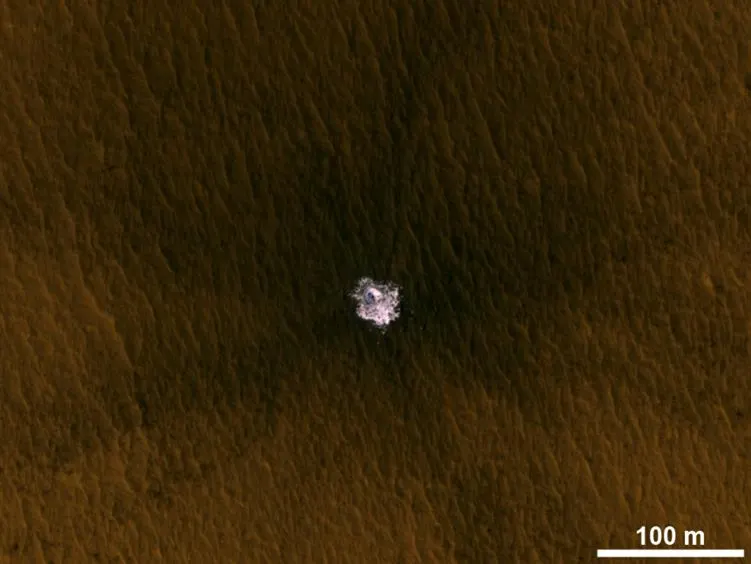
Mid-Latitude Subsurface Ice
Water IceMid-latitudes (30°–60° N and S), within 1–5 meters of surface
Quantity: Estimated > 5 million km³ total
Primary water source for crewed surface habitats; mining with heated drill could extract several liters/hour per site
prospecting
CO₂ Atmosphere
AtmosphereGlobal atmosphere (95.3% CO2 by volume)
Quantity: Average 600 Pa surface pressure (0.6% of Earth)
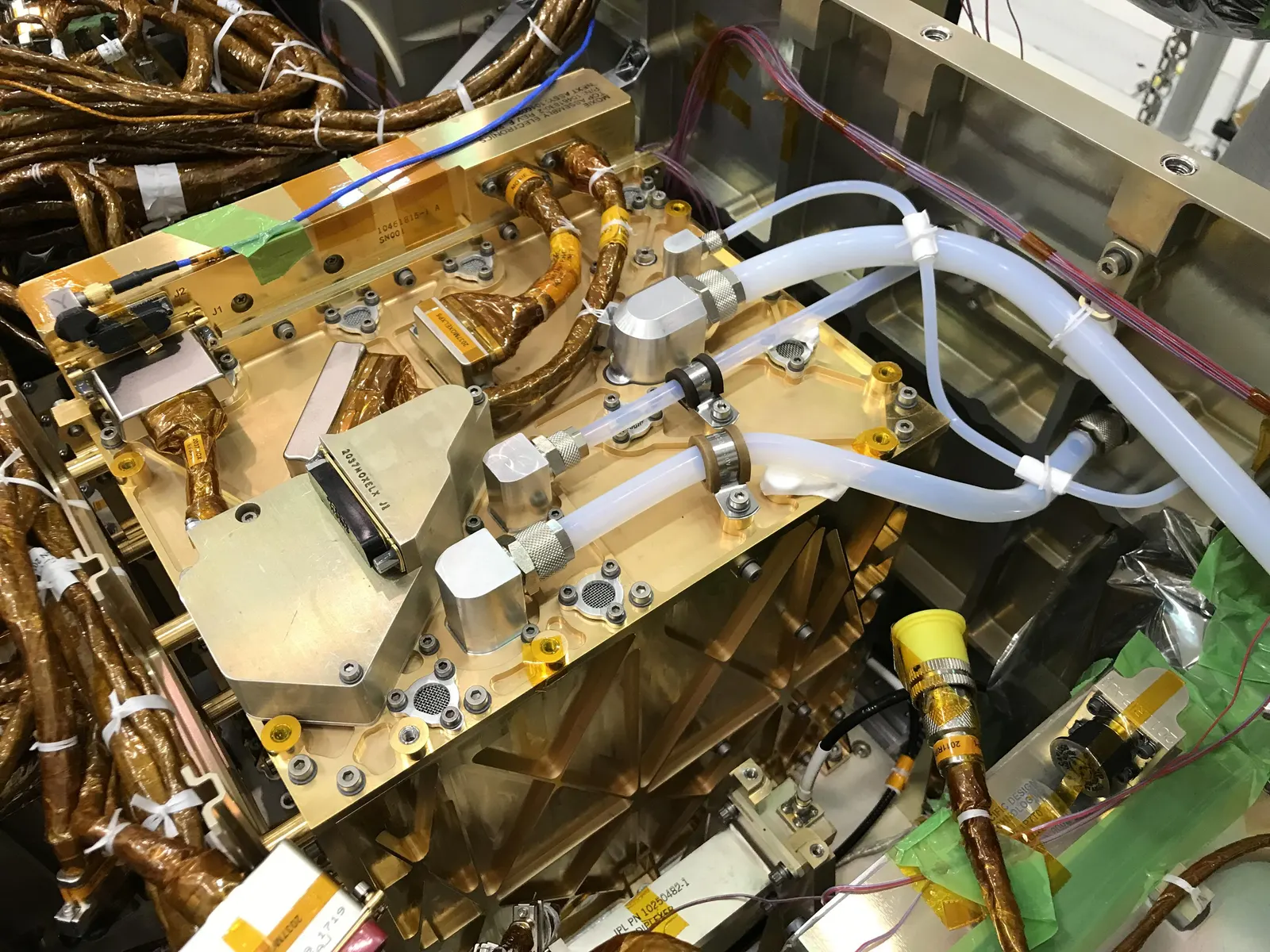
MOXIE on Perseverance demonstrated O2 production from CO2 via SOXE (solid oxide electrolyzer) — 6g/hour at scale needed for launch propellant means scaling to 25 kg/day for MAV
demonstration⚠ caveat
Iron Oxide Regolith (Martian Soil)
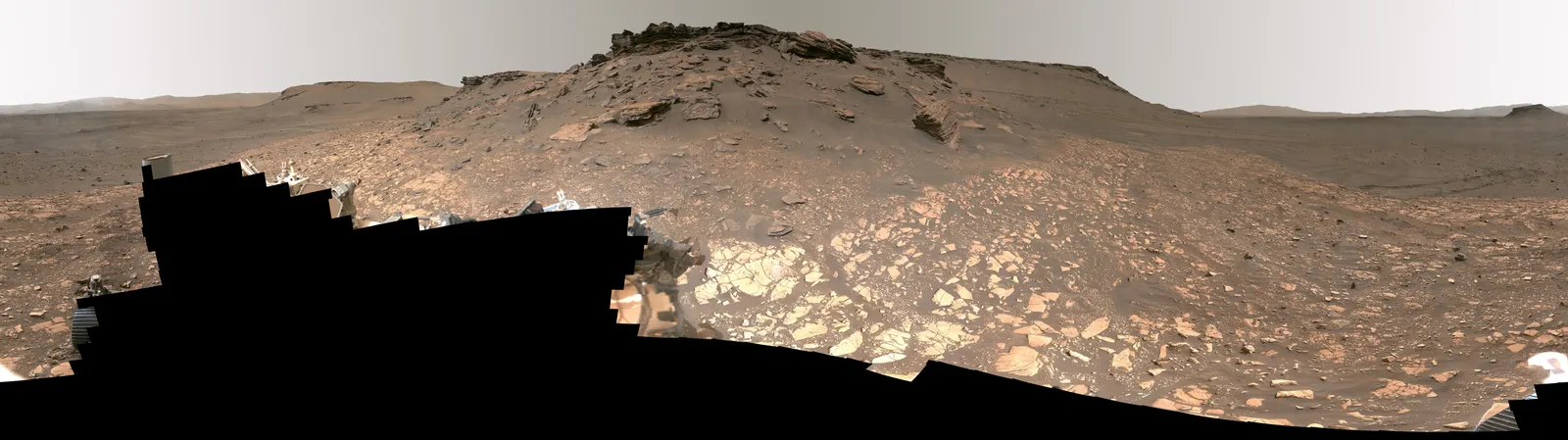
RegolithGlobal — regolith covers entire Martian surface
Quantity: ~15–19 wt% iron oxides (Fe₂O₃) by APXS; rust color from nanophase ferric oxide dust
Structural material for 3D-printed habitats (analogous to terrestrial sintered bricks), iron extraction for manufacturing, thermal mass for passive heating
prospecting
Perchlorate Compounds (ClO4⁻)
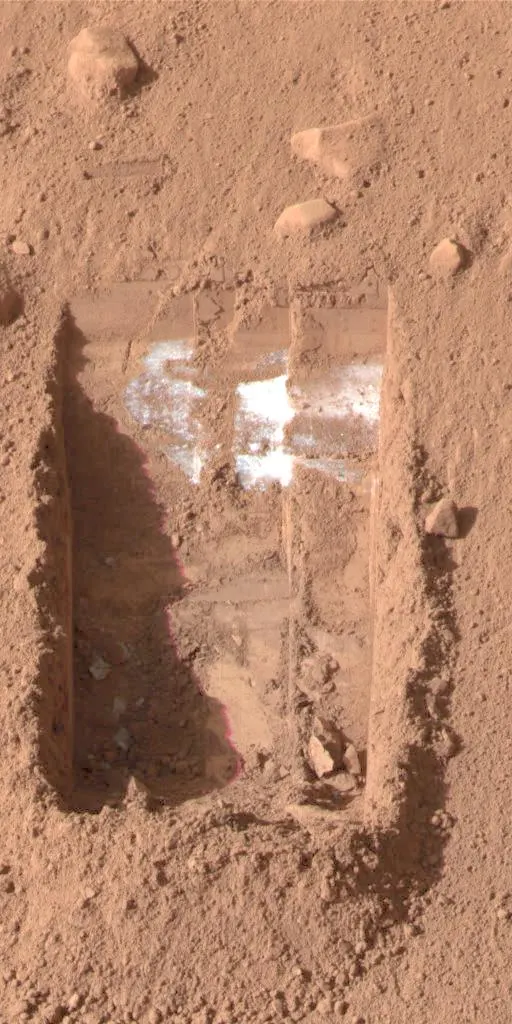
MineralGlobal — detected at Phoenix landing site (68°N), Gale Crater (Curiosity), Jezero Crater (Perseverance)
Quantity: 0.5–1% perchlorate by weight in near-surface soil
Ammonium perchlorate is a solid rocket oxidizer — in theory Martian perchlorates could be chemically processed into propellant components; also possible source of oxygen via thermal decomposition
theoretical⚠ caveat

Volcanic Basaltic Minerals
MineralWidespread — Noachian basalts (ancient), Amazonian volcanic plains
Quantity: ~45% pyroxene and olivine in volcanic regions
Silica for glass production, olivine/pyroxene for geopolymer cement without heating, basalt fiber composite materials for structural applications
prospecting
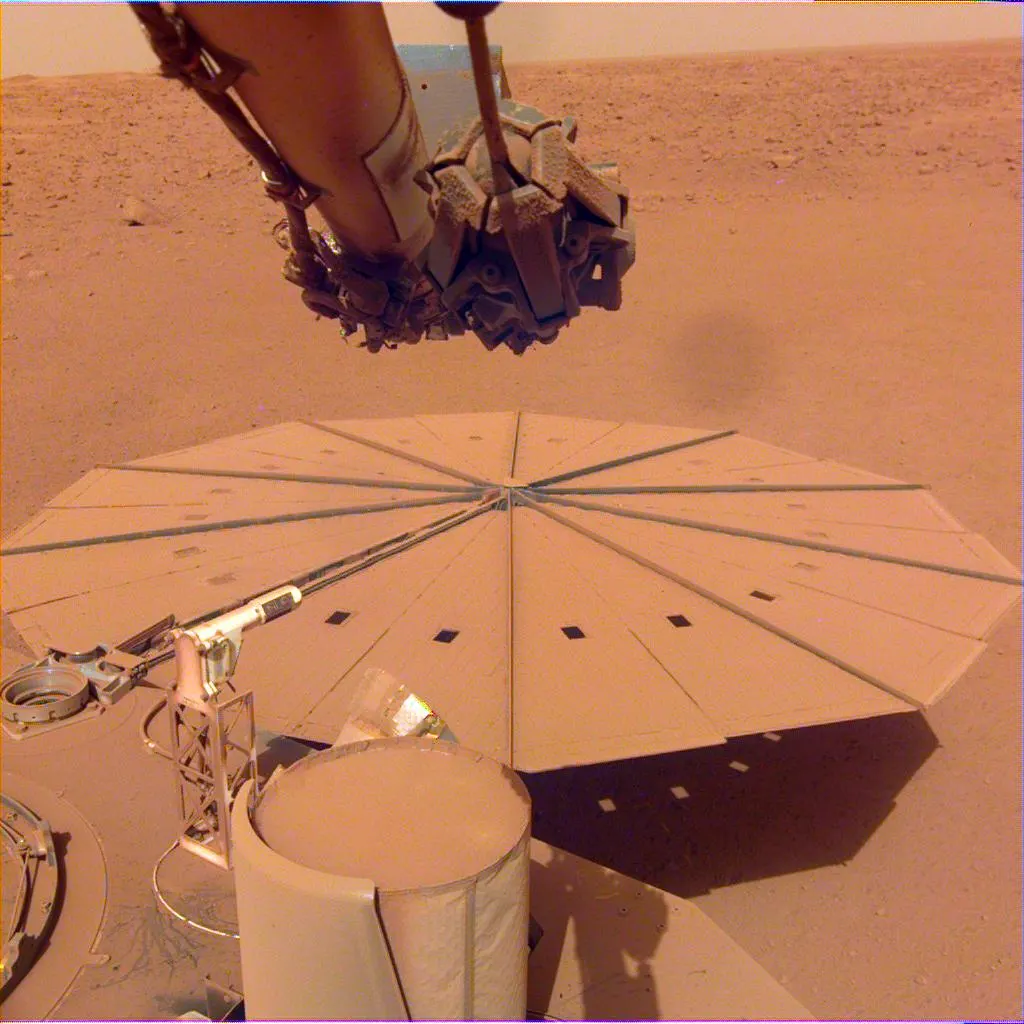
Solar Energy
EnergyEquatorial and low-latitude zones — usable globally but reduced by ~40-45% vs Earth
Quantity: ~590 W/m² at perihelion, ~493 W/m² at aphelion (vs Earth's 1,361 W/m²)
Primary power source for landed assets without RTGs — Perseverance uses RTG while Ingenuity uses solar panels as test case; future crewed habitats must use nuclear fission (Kilopower/KRUSTY) or large solar arrays
demonstration

Potential Geothermal Energy
SubsurfaceVolcanic regions: Tharsis Bulge, Elysium Planitia — areas of potential residual geological heat
If accessible — geothermal could power crewed outposts without nuclear or solar dependence
theoretical⚠ caveat
About ISRU on Mars
In-Situ Resource Utilization (ISRU) is the practice of extracting and using resources found at a mission destination rather than carrying everything from Earth. For Mars, ISRU is not just convenient — it is a prerequisite for any sustained human presence. The propellant cost alone for a return trip from Mars would be prohibitive without using local resources. NASA's MOXIE experiment aboard Perseverance has demonstrated the first oxygen production from Martian CO2, validating a key ISRU technology.
Confidence ratings reflect the strength of observational evidence. All figures sourced from NASA/ESA agency primaries and peer-reviewed literature.