Full mission transcript
Every chapter of Apollo 17, in sequence.
T+00:00:00
A Saturn V at Midnight
December 7, 1972 · 05:33 UTC
At 12:33 a.m. EST on December 7, 1972 — after a two-hour-forty-minute hold, the only launch delay in the Saturn V's career — the last Apollo Moon rocket lit the Florida night. The five F-1 engines turned darkness into a false dawn that could be seen for hundreds of miles, the only crewed night launch of the program.
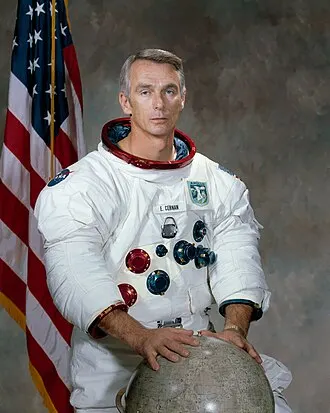
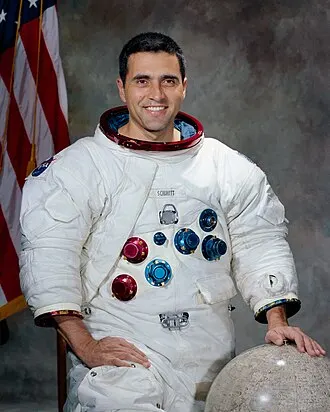
Aboard were Commander Eugene Cernan, Command Module Pilot Ronald Evans, and Lunar Module Pilot Harrison 'Jack' Schmitt — a professional geologist, the first scientist NASA sent to the Moon, and the only one who would ever go.
T+05:06:00
The Blue Marble
December 7, 1972 · 10:39 UTC
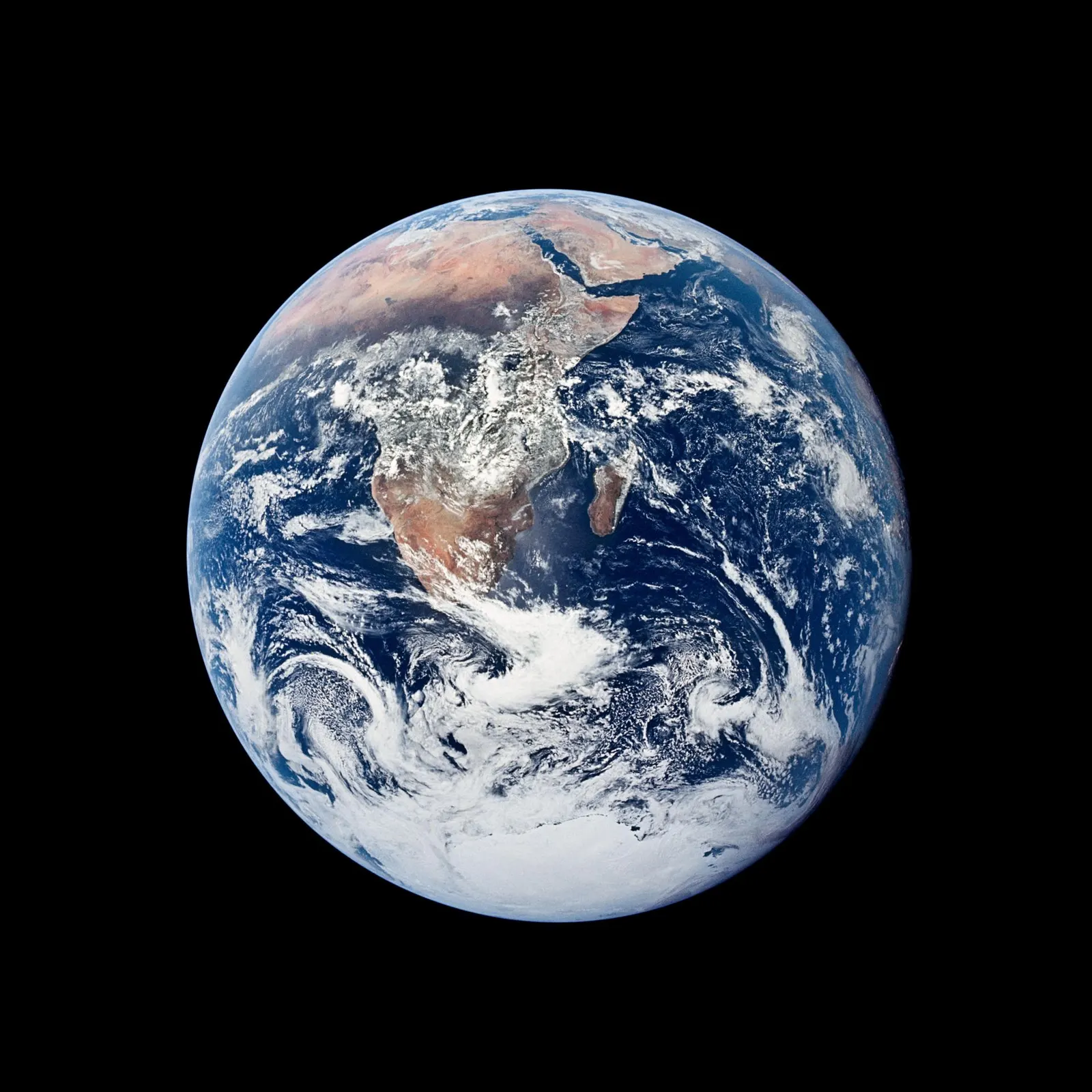
About five hours after launch, some 29,000 kilometers from home and with the Sun behind them, the crew looked back and saw the whole Earth lit edge to edge — Africa, the Arabian Peninsula, and the white cap of Antarctica all at once. One of them lifted a Hasselblad and pressed the shutter.
The result, catalogued AS17-148-22727, became 'The Blue Marble' — one of the most reproduced photographs in history. No human has been far enough from Earth to take a picture like it since.
T+110:22:00
Challenger Lands in Taurus-Littrow
December 11, 1972 · 19:54 UTC
While Evans orbited overhead in the command module America, Cernan and Schmitt took the lunar module Challenger down into Taurus-Littrow — a deep valley ringed by mountains taller than the Grand Canyon is deep, chosen because it promised both ancient highland rock and the chance of young volcanic material.
Threading between the massifs, Cernan set Challenger down on the valley floor. For the sixth and final time, humans were on the surface of another world.
T+118:00:00
Three Days in the Valley
December 12, 1972 · 03:33 UTC
Over three days and three moonwalks totaling more than 22 hours, Cernan and Schmitt unloaded the Lunar Roving Vehicle and ranged across the valley, driving some 36 kilometers — far enough that, had it failed, they could not have walked back.
They climbed the slopes of the massifs, sampled house-sized boulders that had rolled down from the heights, and set up a small science station. Apollo 17 would bring home 110.5 kilograms of the Moon — the largest haul of any mission.
T+121:00:00
A Man, a Flag, a World
December 12, 1972 · 06:33 UTC
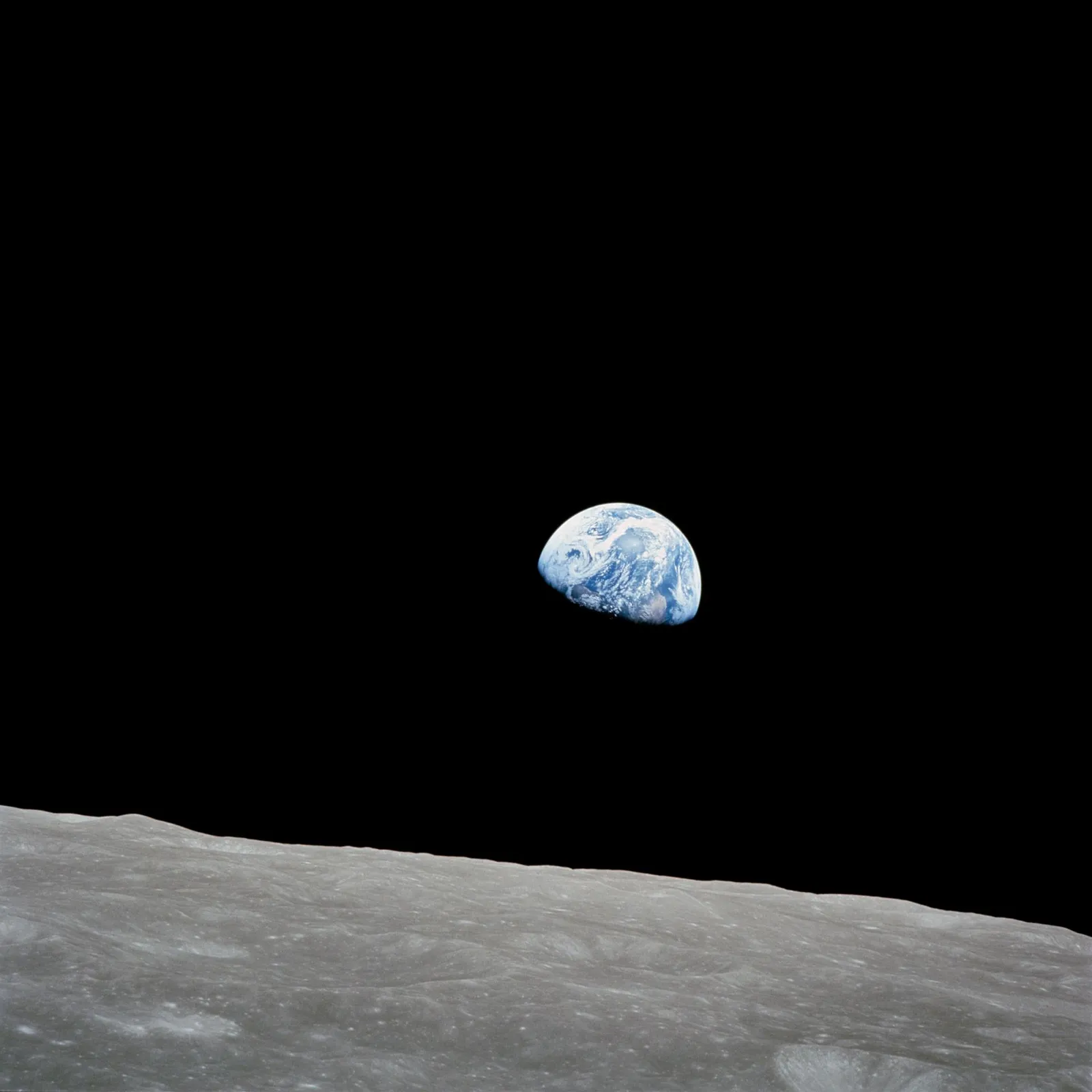
Between the science and the driving, there were moments of pure stillness — an astronaut beside the flag, the blue-and-white Earth hanging motionless in a black sky that never brightens, never clouds over.
Twelve men in all had walked here, across six landings in just three and a half years. Standing in the silence of Taurus-Littrow, Cernan and Schmitt knew theirs would, for a long time, be the last.
T+137:00:00
"It's Orange!"
December 12, 1972 · 22:33 UTC
At the rim of Shorty Crater, scuffing the gray regolith with his boot, Schmitt suddenly stopped. 'There is orange soil!' he called out — a vivid streak of color where everything else was monochrome. Cernan, half-disbelieving, came to look.
It was no rust or contamination. The orange was countless tiny beads of volcanic glass, sprayed out in a fire-fountain eruption some 3.6 billion years ago and frozen ever since — direct evidence that the Moon, long dead, had once been volcanically alive. It remains one of Apollo's most important discoveries.
T+168:07:00
The Last Footstep
December 14, 1972 · 05:40 UTC
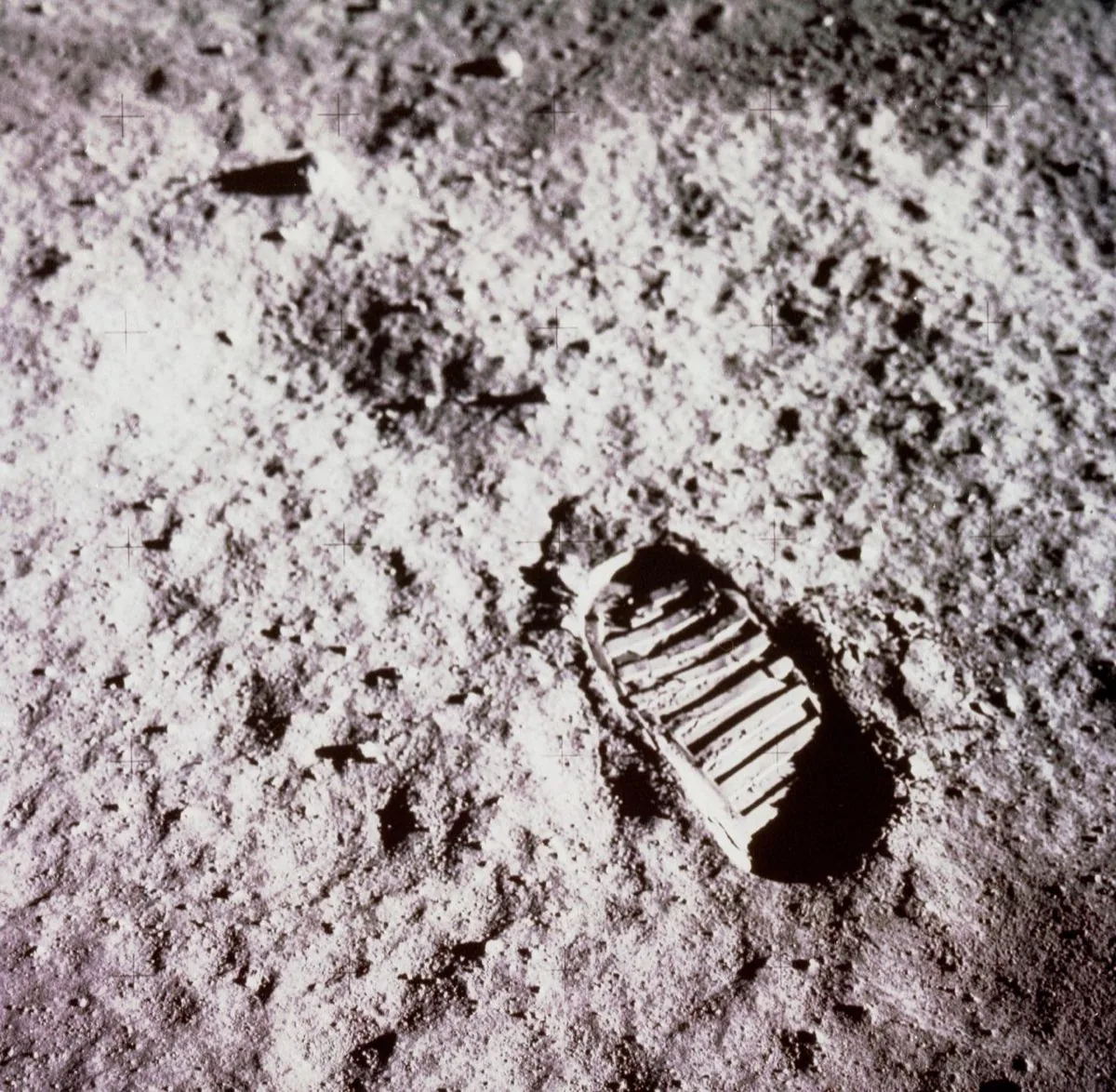
At the end of the third moonwalk, Schmitt climbed the ladder first. Cernan made one last circuit, then knelt and traced his daughter's initials — T D C — in the lunar dust, where no wind will ever erase them.
Before he stepped up, he spoke for everyone who had come here, and everyone who someday would. Then the last human lifted his boot from the Moon. No one has set foot there since.
T+301:51:00
The End of an Era
December 19, 1972 · 19:24 UTC
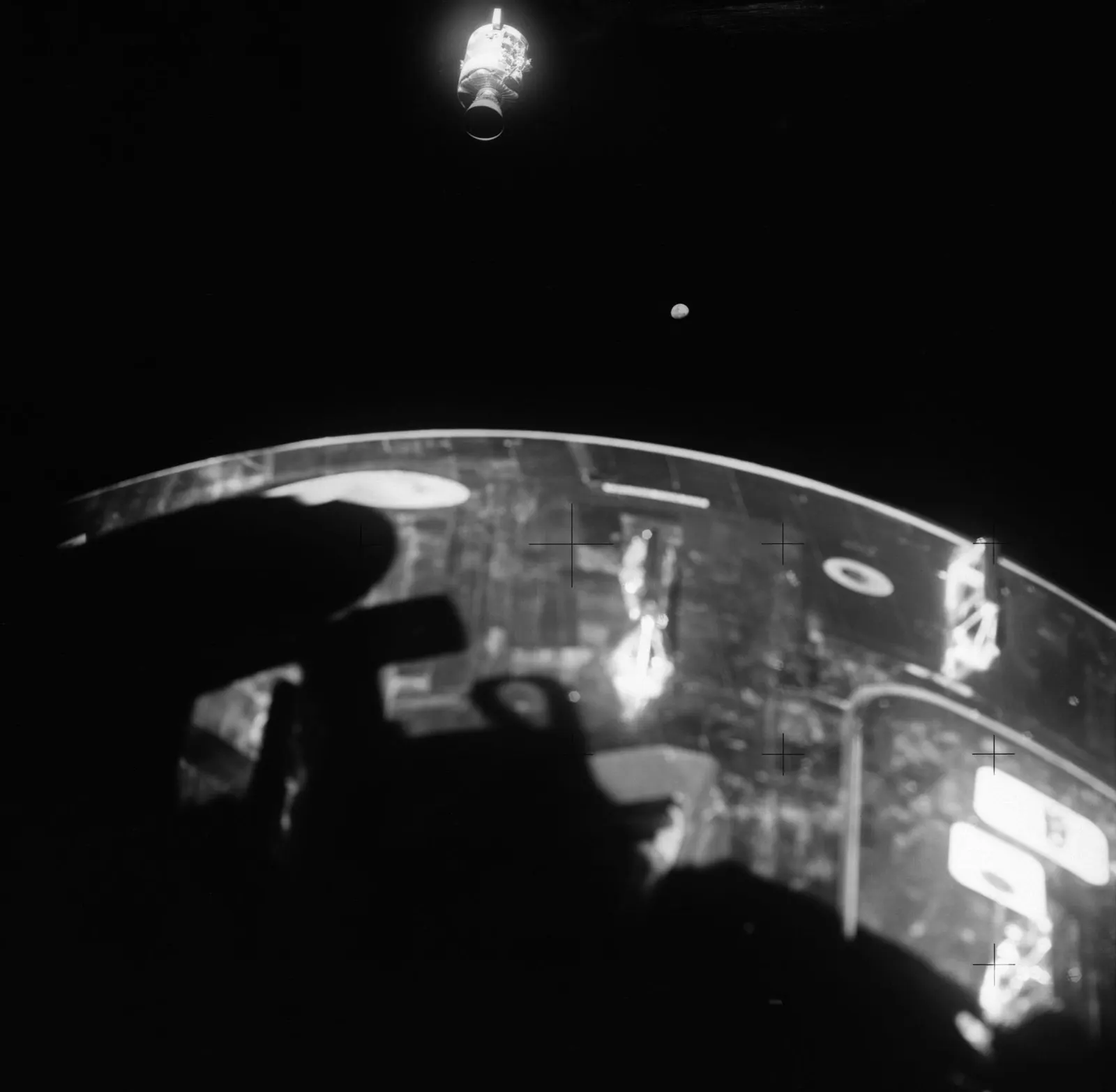
Challenger's ascent stage rose from the valley to rejoin Evans, who had spent six days alone in lunar orbit running a full survey of the Moon from above. Three days later, America splashed down in the Pacific near the USS Ticonderoga.
Apollo 17 closed the most extraordinary chapter of exploration in human history. It would be the last time people travelled beyond low Earth orbit for over half a century — until a new generation of ships, and the Artemis program, set out to return.
Sources: NASA — Apollo 17 Mission Overview · NASA History — Apollo 17 Lunar Surface Journal
The people who flew it
Meet the Apollo 17 crew
Answers come only from the Apollo 17 mission record above.