α Boötis
Arcturus
Guardian of the Bear · Orange giant on the red-giant branch
At a glance
- Distance
- 36.7 ly
- Constellation
- Boötes
- Type
- K1.5III
- Apparent magnitude
- -0.05
- Absolute magnitude
- -0.3
- Mass
- 1.08 M☉
- Radius
- 25.4 R☉
- Luminosity
- 170 L☉
- Surface temp
- 4,286 K
- Age
- 7.1 billion yrs
The story
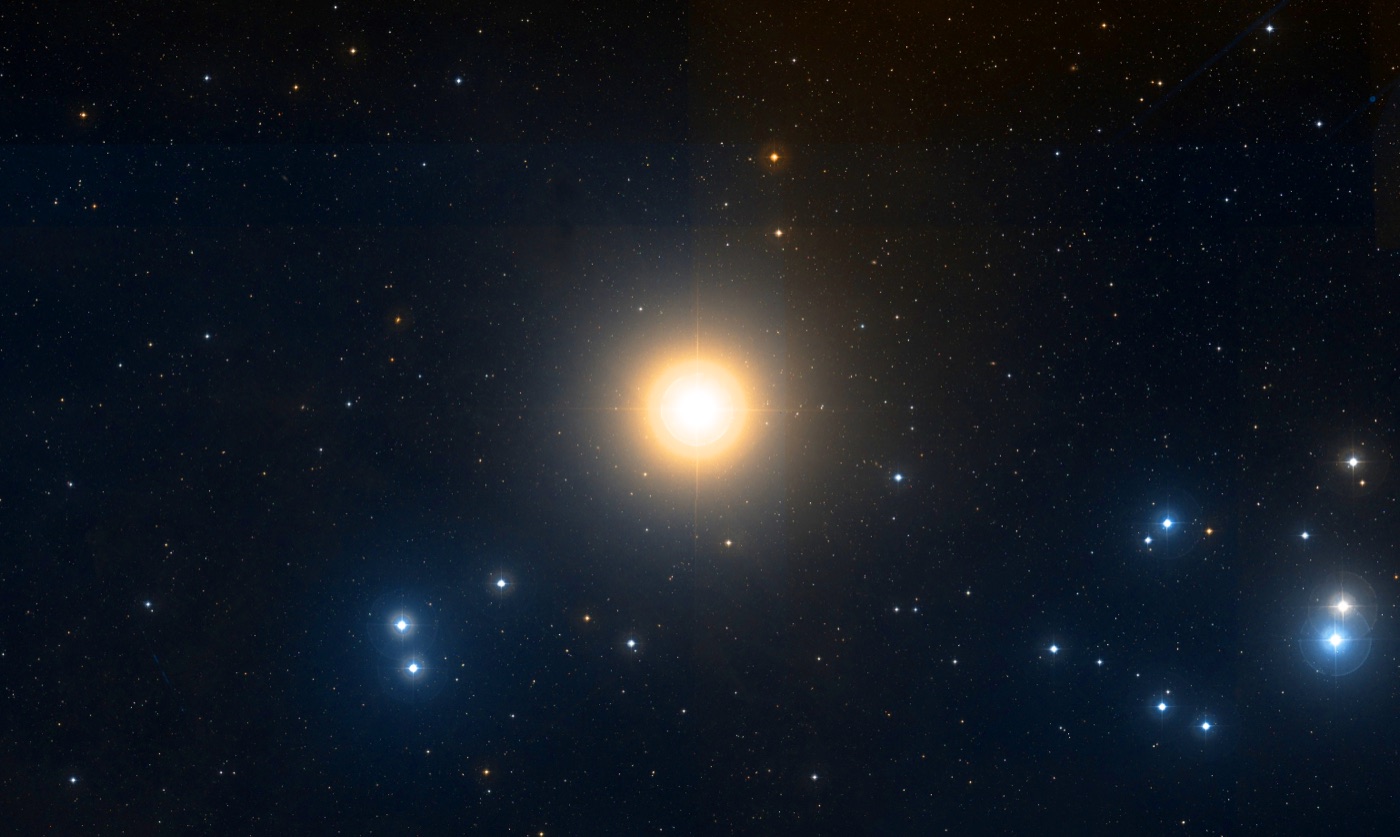
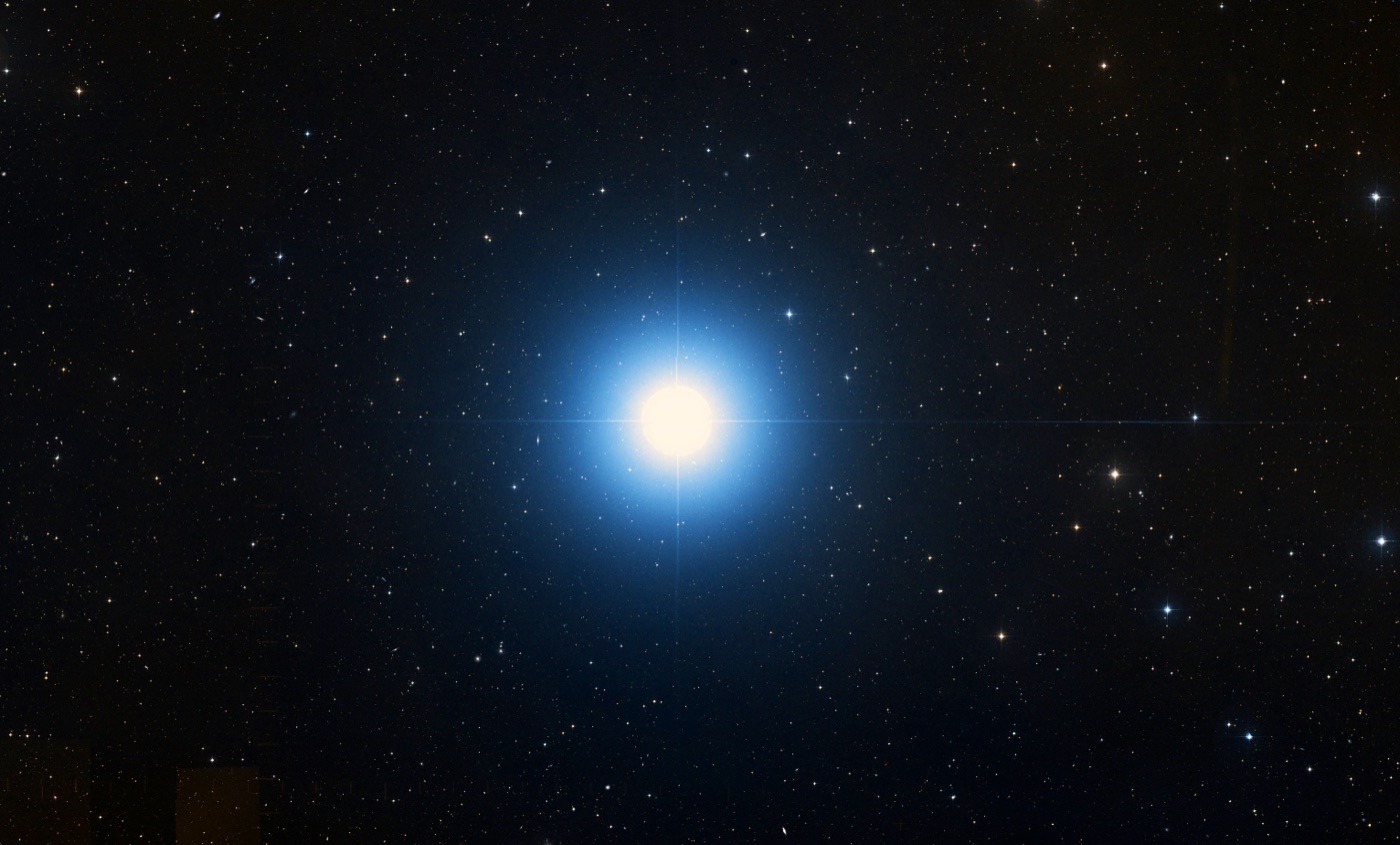
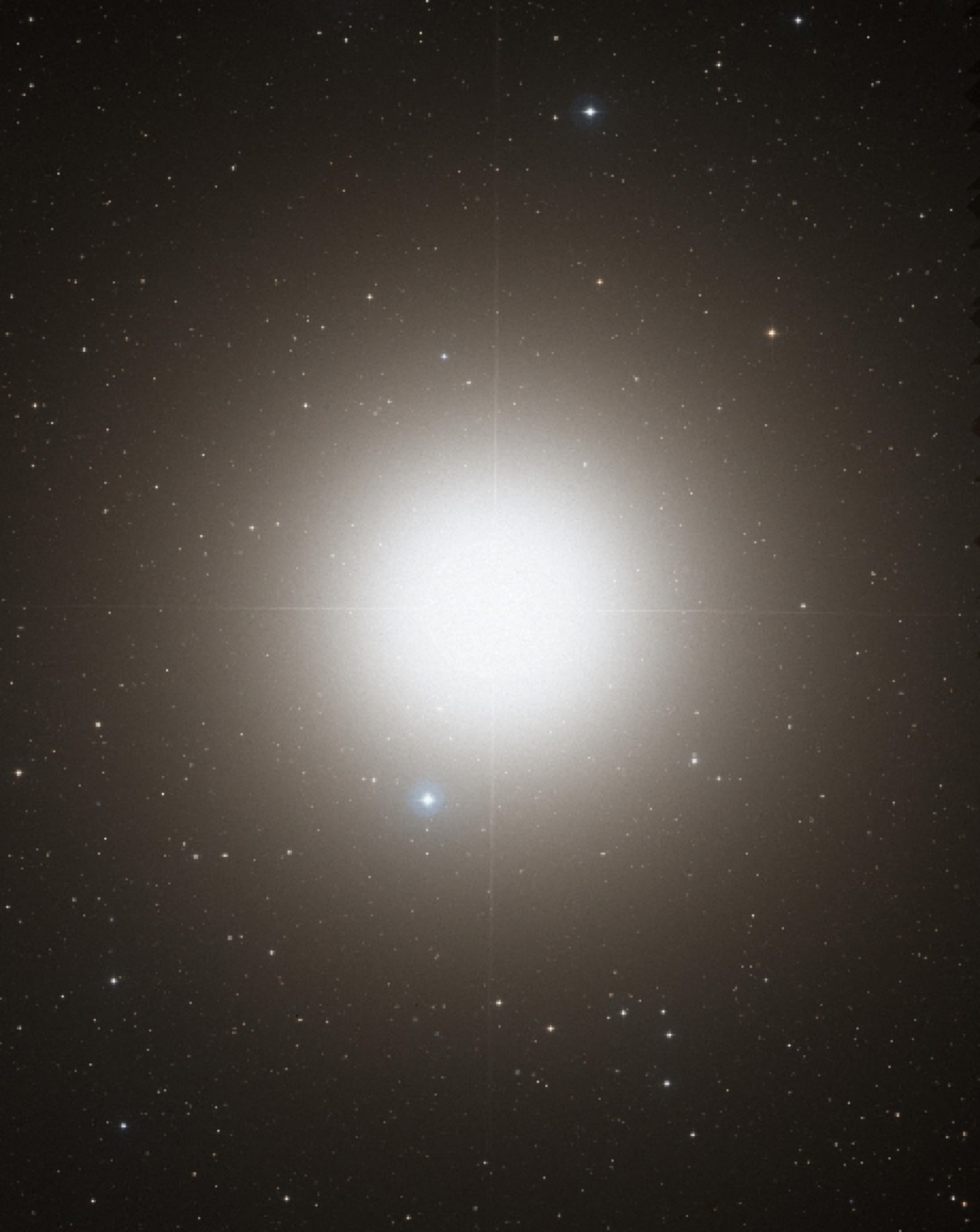
Arcturus shines at magnitude −0.05, the brightest star in the northern celestial hemisphere and fourth brightest in all the night sky. At 36.7 light-years it is among the closer naked-eye giants, and its amber-orange colour betrays a star that has exhausted core hydrogen and swollen to 25 times the Sun's diameter.
The name comes from ancient Greek, meaning 'Guardian of the Bear' — it follows the Great Bear (Ursa Major) eternally across the northern sky. Polynesian navigators knew it as Hōkūleʻa, 'Star of Joy', the zenith star that marks the latitude of the Hawaiian Islands; the voyaging canoe of the same name crossed the Pacific using this tradition. Chaucer mentioned Arcturus in his 1391 Treatise on the Astrolabe, and its heliacal rising marked the grape harvest in ancient Greece.
What makes Arcturus scientifically unusual is its kinematics: it moves through space at high velocity and belongs to a stream of stars thought to be the shredded remnant of a dwarf galaxy the Milky Way consumed billions of years ago. At 7.1 billion years old, it is substantially older than the Sun, offering a preview of our own star's distant future.
Compared to the Sun
Sun
This star · 25.4× radius
It shines about 170 times as bright as the Sun.
Its fate
Arcturus will continue ascending the red-giant branch, eventually igniting a helium-core flash. It will then cycle between giant and horizontal-branch phases before shedding its outer layers as a planetary nebula, leaving behind a white dwarf about half the Sun's mass.
Find it in the sky
In spring and early summer, follow the arc of the Big Dipper's handle ('arc to Arcturus') to find this brilliant amber point in the constellation Boötes. It is visible from virtually every inhabited location on Earth.