α Aurigae
Capella
The Little She-Goat · Spectroscopic binary — two giant stars (G8 III + G0 III) in a quadruple system
At a glance
- Distance
- 42.8 ly
- Constellation
- Auriga
- Type
- G8III + G0III
- Apparent magnitude
- 0.08
- Absolute magnitude
- 0.3
- Mass
- 2.57 M☉
- Radius
- 12 R☉
- Luminosity
- 78.7 L☉
- Surface temp
- 4,970 K
- Age
- 0.62 billion yrs
The story
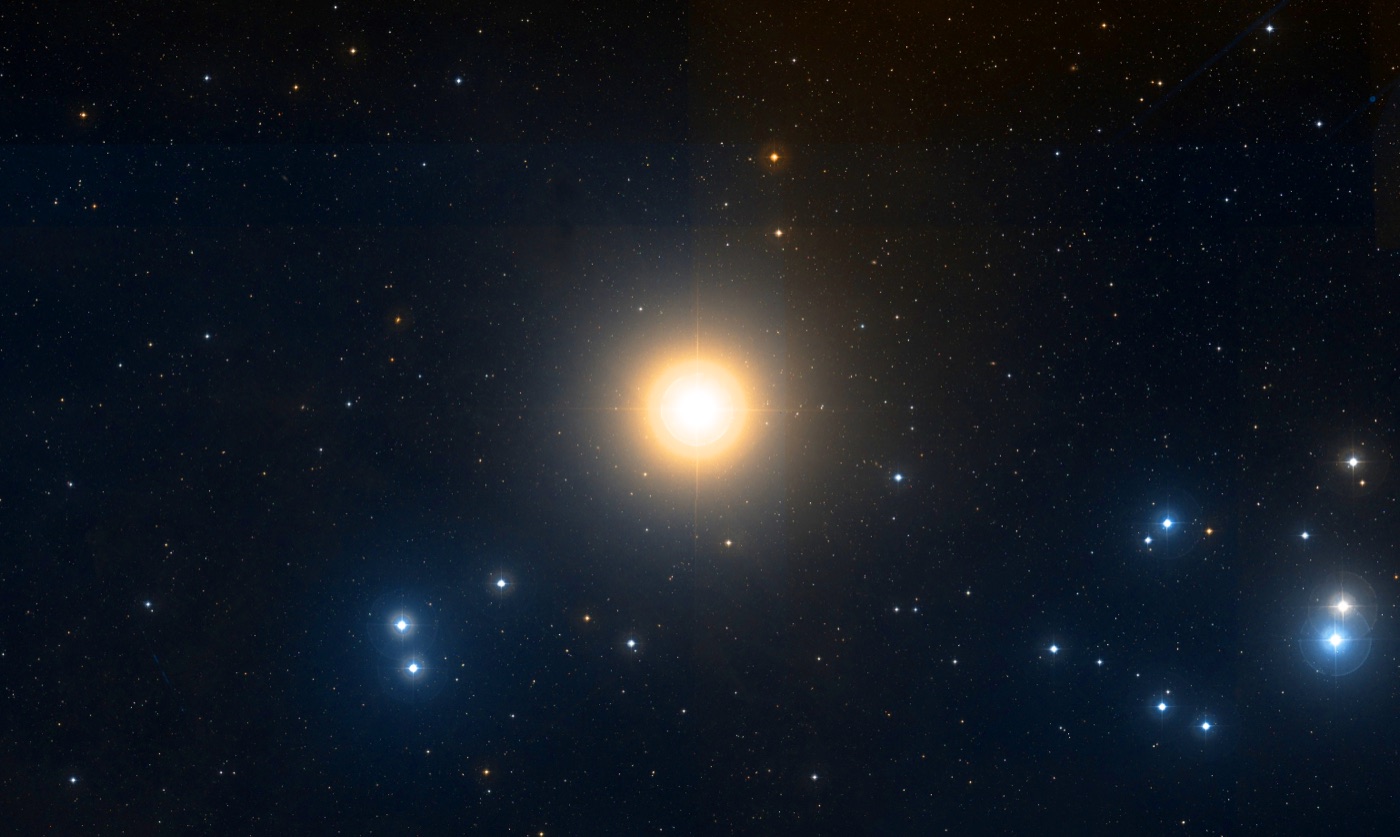
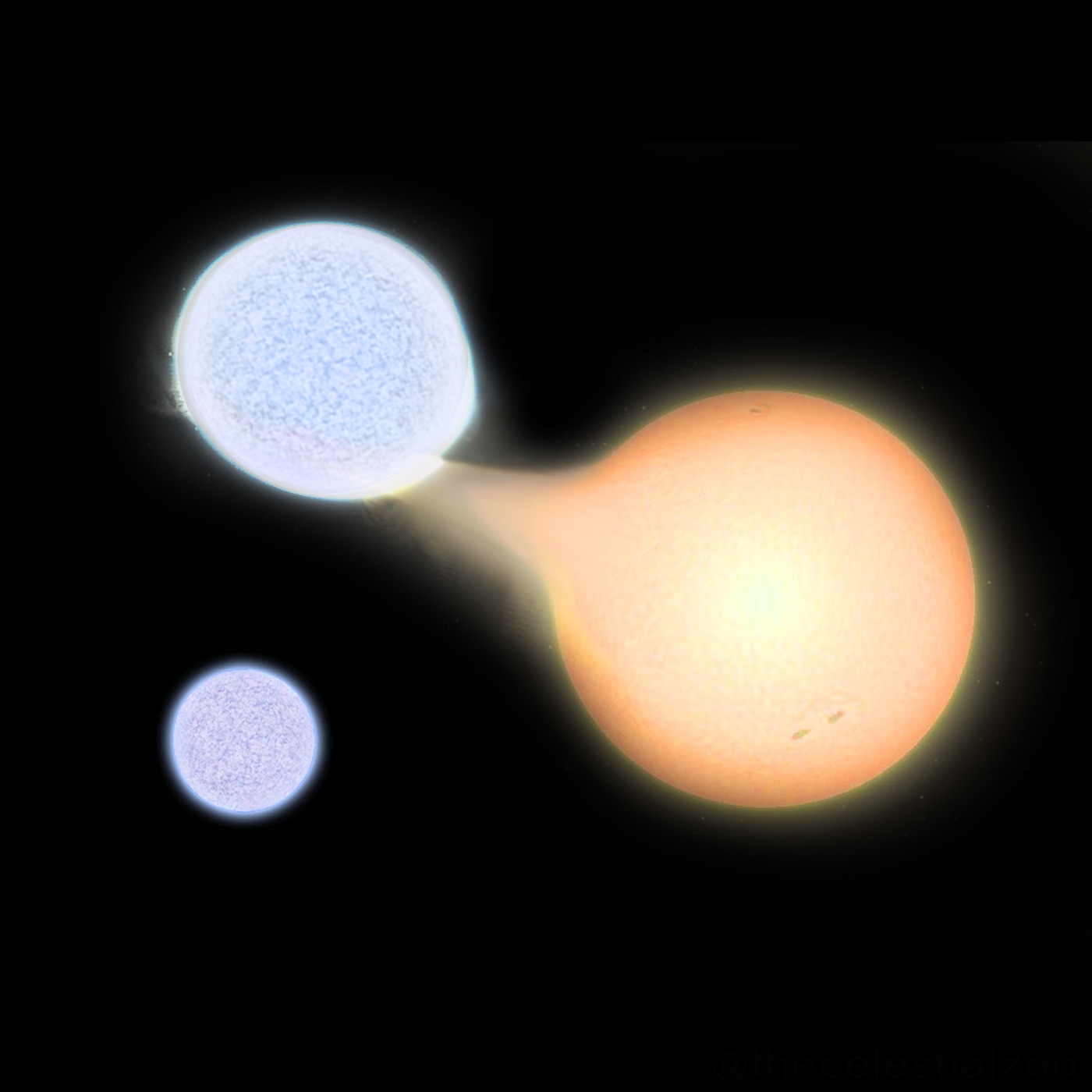
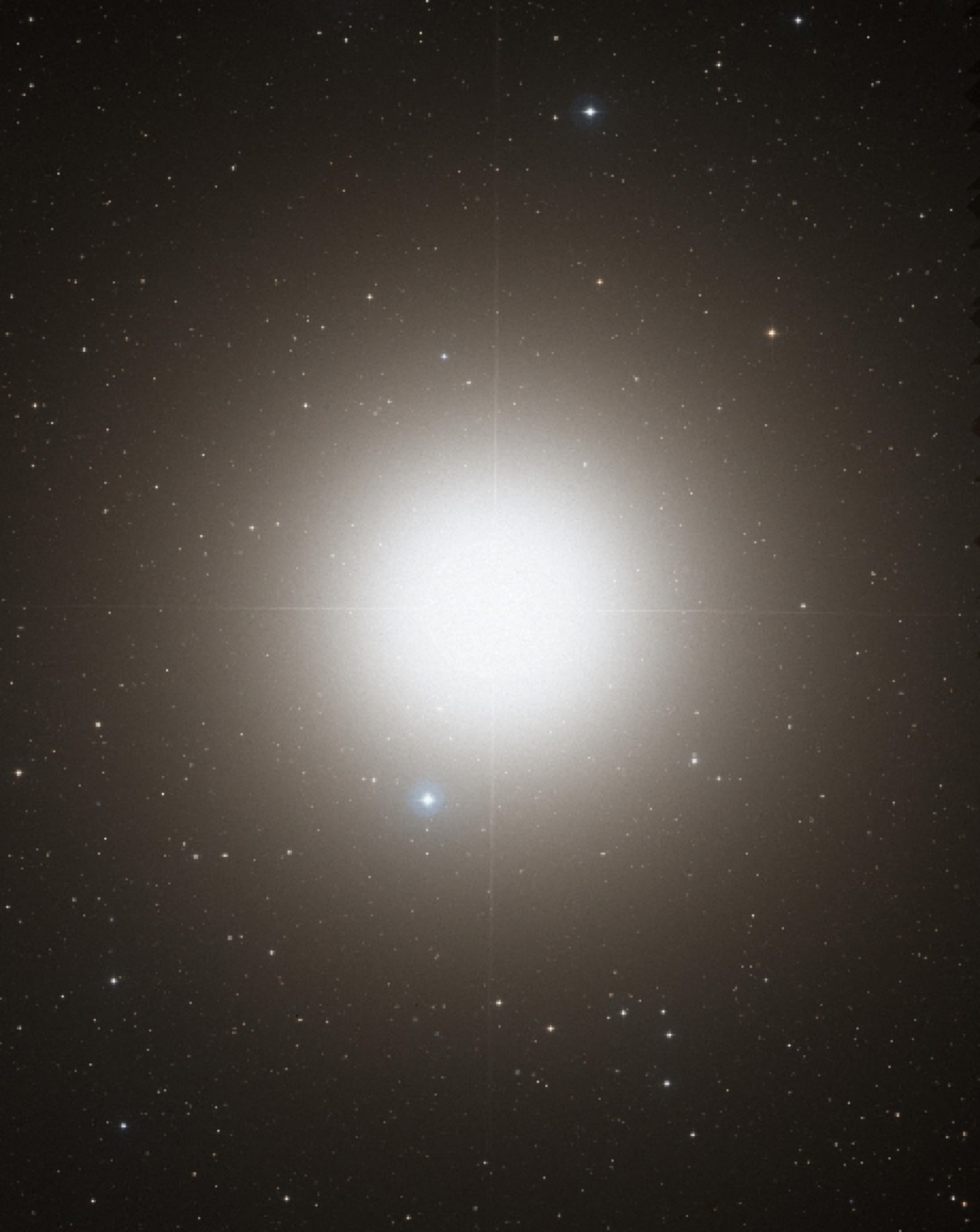
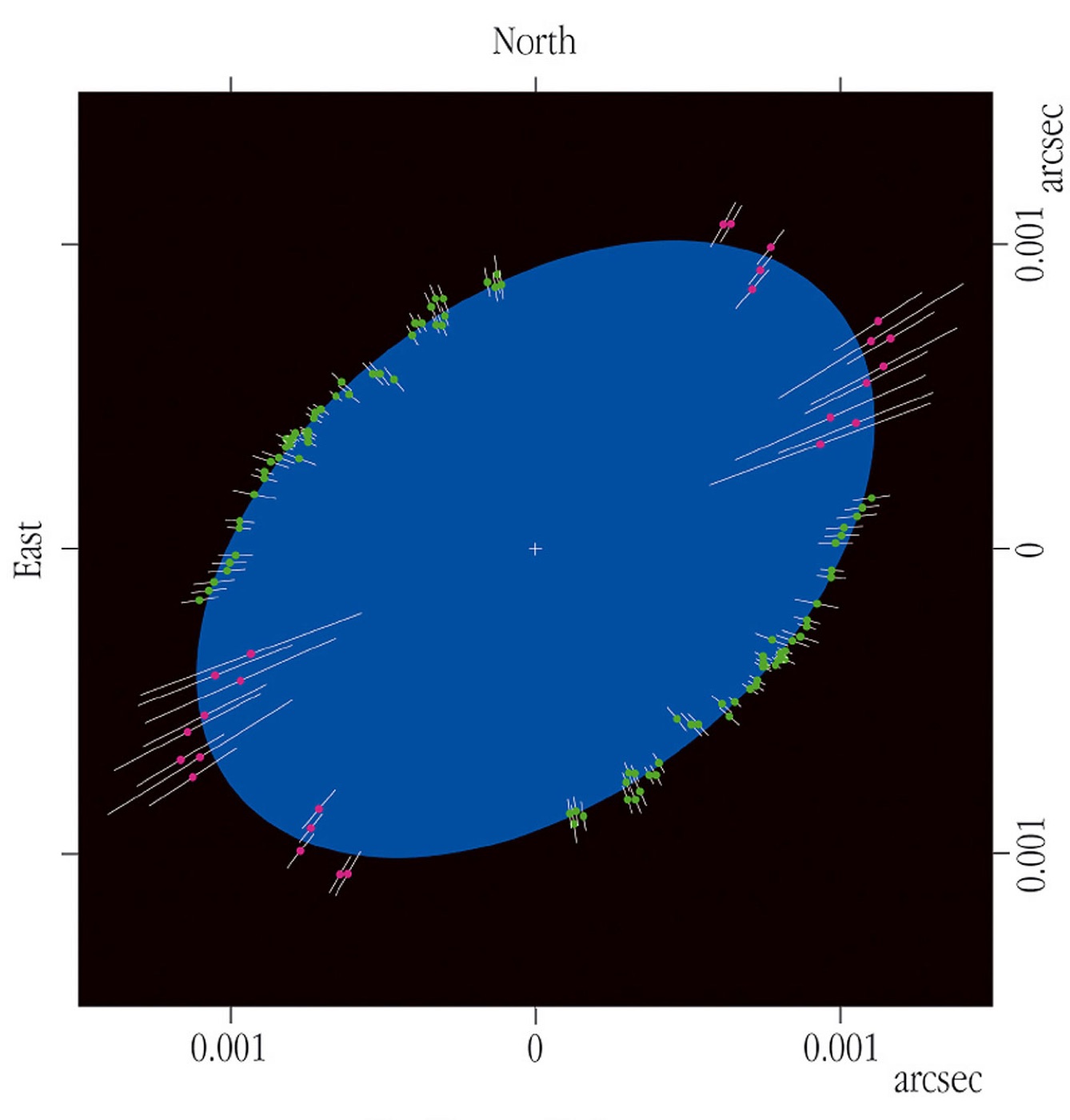
Capella blazes at magnitude +0.08, the sixth-brightest star in the night sky and the brightest in the constellation Auriga. To the naked eye it is a single golden-yellow point, but telescopes reveal an unresolved binary: two giant stars designated Capella Aa (G8 III) and Capella Ab (G0 III), so close that they orbit each other every 104 days at a separation of barely 0.74 AU. A second, distant pair of dim red dwarfs orbits the system at roughly 10,000 AU, making Capella a quadruple star.
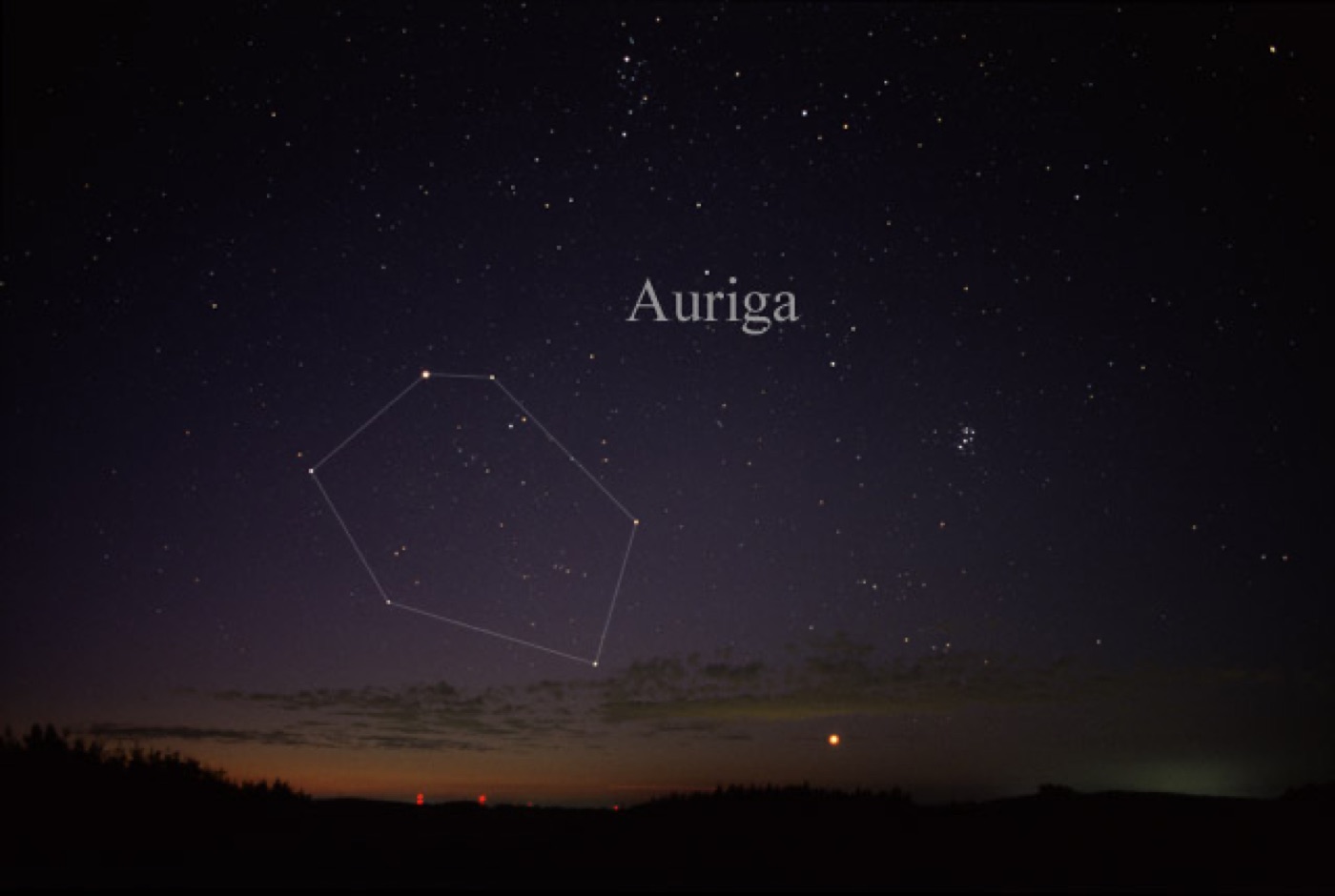
The name derives from the Latin 'little she-goat', representing the goat Amalthea who suckled the infant Zeus according to Greek mythology. The two bright 'kids' flanking it in Auriga — Epsilon and Eta Aurigae — reinforce the mythological family. Capella was also associated with harvest in Mesopotamian astronomy, and the Aztec city of Monte Albán was oriented toward its rising.
The two giants are caught at different stages of evolution: Capella Aa has already finished core-helium burning and sits in the red-clump stage; Capella Ab has just left the main sequence and is crossing the Hertzsprung gap on its way to becoming a red giant. Both share the same age of roughly 620 million years, their nearly identical masses leading to almost identical but slightly staggered evolutionary paths.
Compared to the Sun
Sun
This star · 12× radius
It shines about 78.7 times as bright as the Sun.
Its fate
Both Capella Aa and Ab will eventually exhaust their helium cores and ascend the asymptotic giant branch, shedding their envelopes as interacting planetary nebulae before settling as white dwarfs. Given their modest masses (~2.5 solar masses), neither will go supernova.
Find it in the sky
Capella is circumpolar from latitudes north of 44°N, wheeling close to the zenith on winter nights. Look for its brilliant golden-yellow light high overhead in the northern sky during winter evenings; it is bright enough to be seen through light pollution and even on clear twilight skies.