Ursa Major
Lalande 21185
The Brightest Invisible Star · Red dwarf
At a glance
- Distance
- 8.3 ly
- Constellation
- Ursa Major
- Type
- M2V
- Apparent magnitude
- 7.49
- Absolute magnitude
- 10.48
- Mass
- 0.389 M☉
- Radius
- 0.392 R☉
- Luminosity
- 0.022 L☉
- Surface temp
- 3,547 K
- Age
- 8 billion yrs
The story
Lalande 21185 is a paradox: it is the apparently brightest red dwarf visible from the northern hemisphere and yet it glows at magnitude 7.5 — just beyond naked-eye reach. Catalogued by the French astronomer Jérôme Lalande in 1801, it sits in Ursa Major at a distance of only 8.3 light-years, making it the fourth-nearest stellar system to the Sun and the closest single red dwarf in the northern sky.
At about 39% of the Sun's mass and diameter, Lalande 21185 is a mid-range M dwarf: cooler, redder, and far less luminous than the Sun, producing roughly 2.2% of solar output — most of it as infrared radiation. Its age of approximately 8 billion years means it is considerably older than the Sun, placing it among the senior citizens of the local stellar neighbourhood.
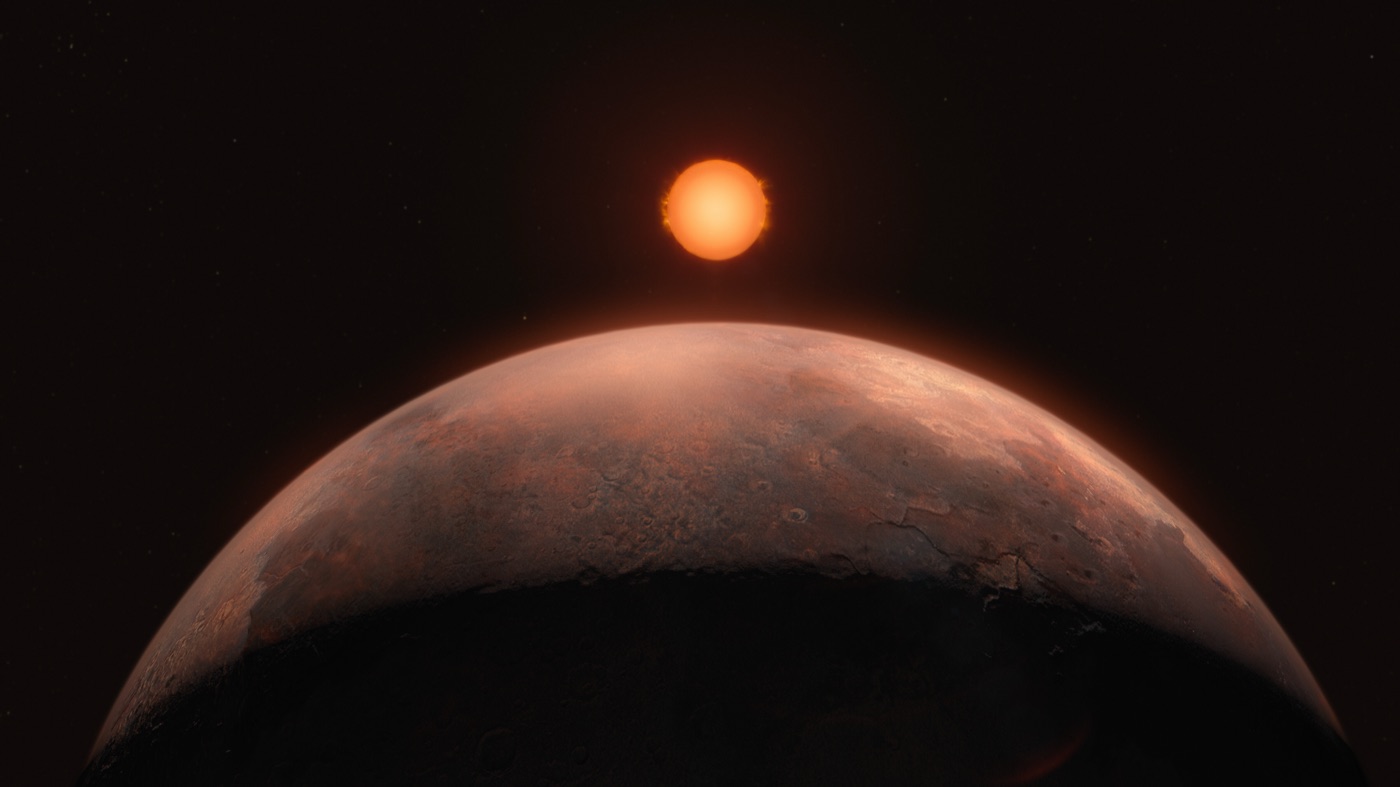
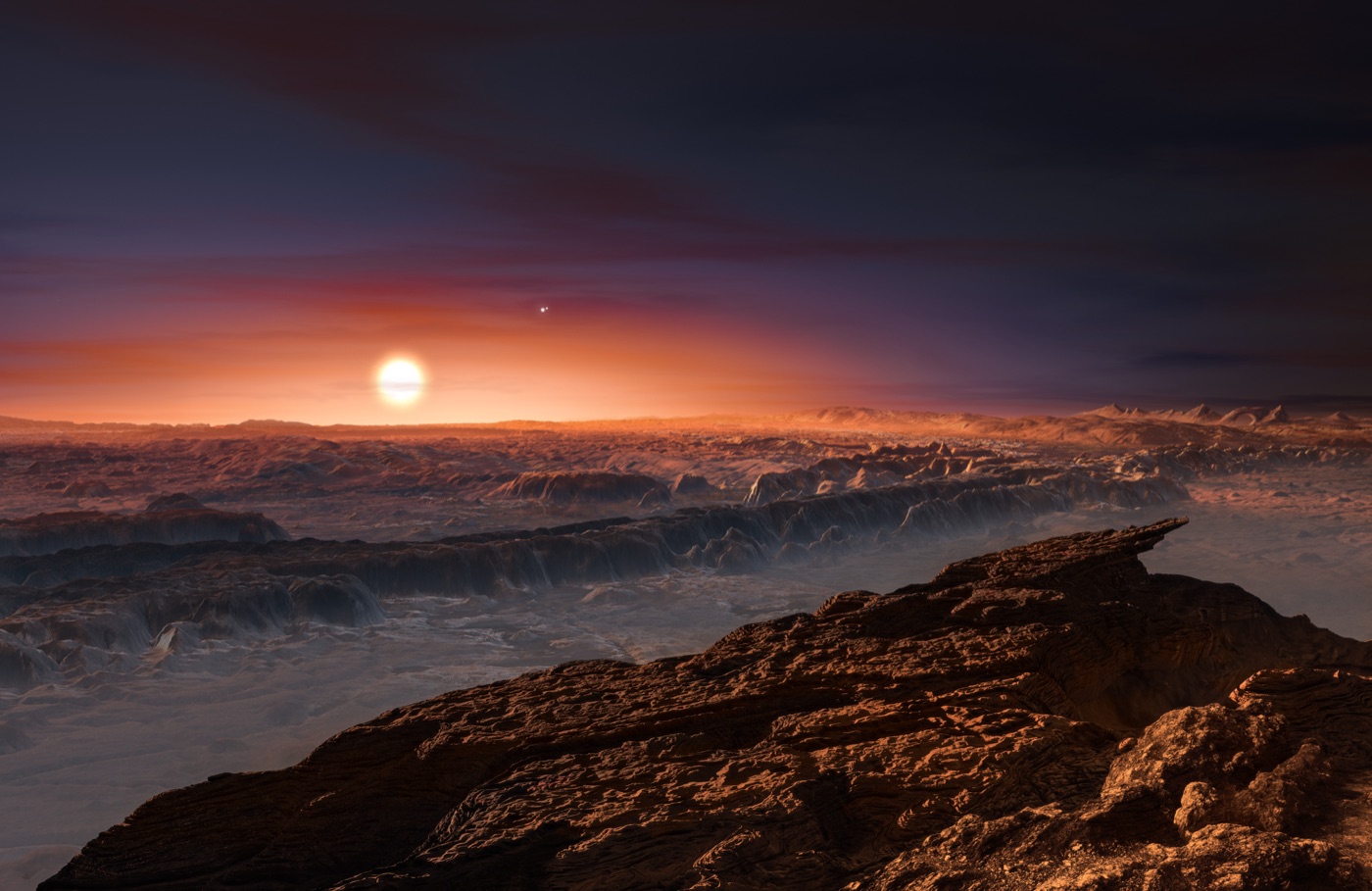
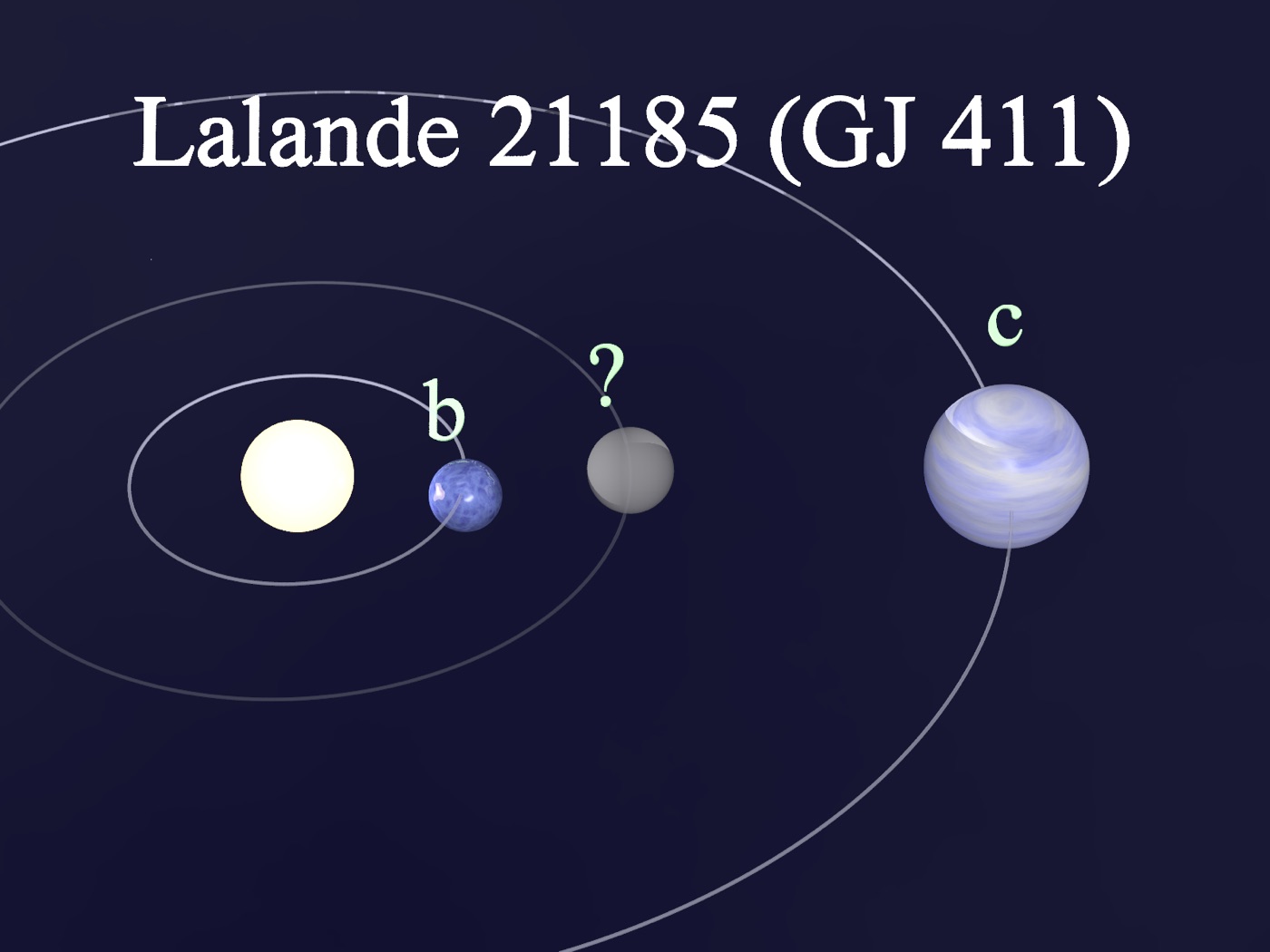
Two confirmed planets orbit the star. Lalande 21185 b (also designated Gliese 411 b), a super-Earth of at least 2.69 Earth masses, completes one orbit every 12.9 days. A second, much larger body — Gliese 411 c, at least 13.6 Earth masses — orbits at roughly 2,946 days. A third candidate sits at a 215-day period. The compact inner planet is likely too hot and radiation-blasted to be habitable, but the system adds this elderly red dwarf to the growing census of planet-hosting nearby stars.
Compared to the Sun
Sun
This star · 0.392× radius
It shines about 0.022 times as bright as the Sun.
Its fate
As an M2 dwarf, Lalande 21185 will remain on the main sequence for far longer than the current age of the universe — perhaps 50–100 billion years. It will gradually cool and dim over astronomical timescales, eventually fading to a cold black dwarf without ever expanding into a red giant.
Find it in the sky
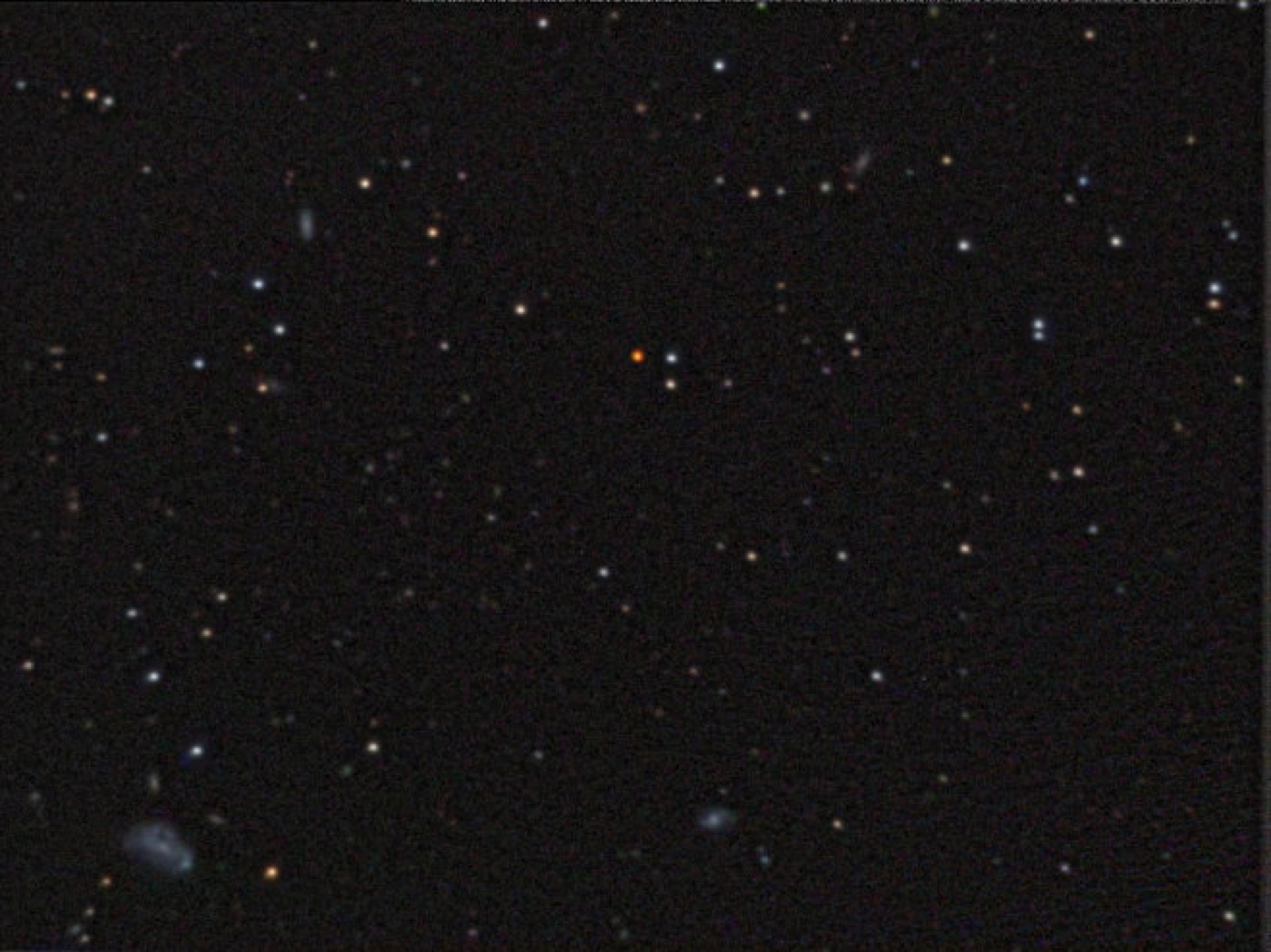
Lalande 21185 shines at magnitude 7.5 and requires binoculars or a small telescope. It lies in Ursa Major, in the area between the tip of the Great Bear's nose and Coma Berenices. Best viewed in northern-hemisphere spring, when Ursa Major rides high overhead.