Virgo
Ross 128
The Quiet Red Dwarf · Red dwarf (flare star, quiescent)
At a glance
- Distance
- 10.9 ly
- Constellation
- Virgo
- Type
- M4.5V
- Apparent magnitude
- 11.12
- Absolute magnitude
- 13.53
- Mass
- 0.176 M☉
- Radius
- 0.198 R☉
- Luminosity
- 0.004 L☉
- Surface temp
- 3,189 K
- Age
- 5 billion yrs
The story
Ross 128 is a faint red dwarf in Virgo, catalogued by astronomer Frank Elmore Ross in 1926 and barely perceptible at magnitude 11.1 — far below naked-eye visibility. At 10.9 light-years it is the 13th-closest stellar system to the Sun and is approaching us at 31 km/s; in about 71,000 years it will briefly become our nearest stellar neighbour, passing within 6.2 light-years before receding.
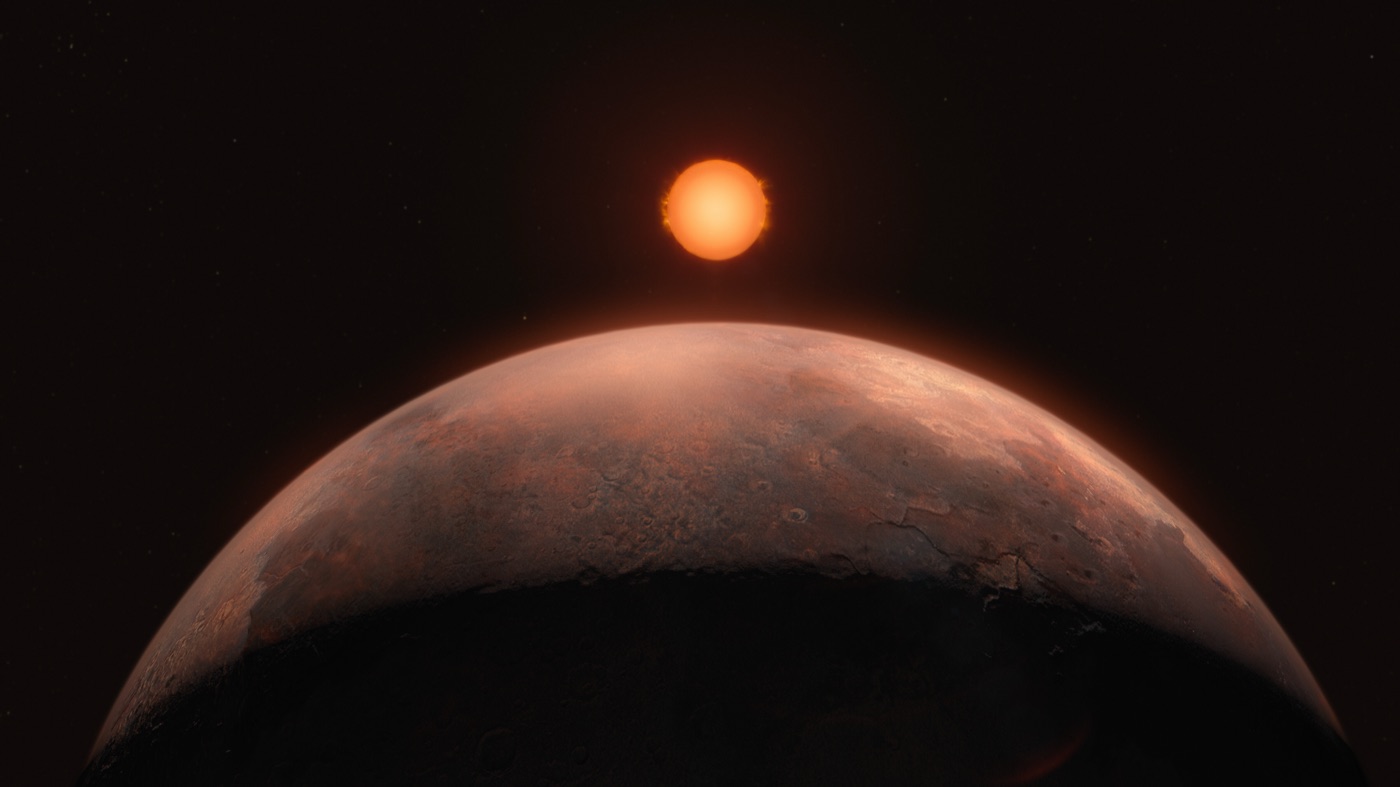
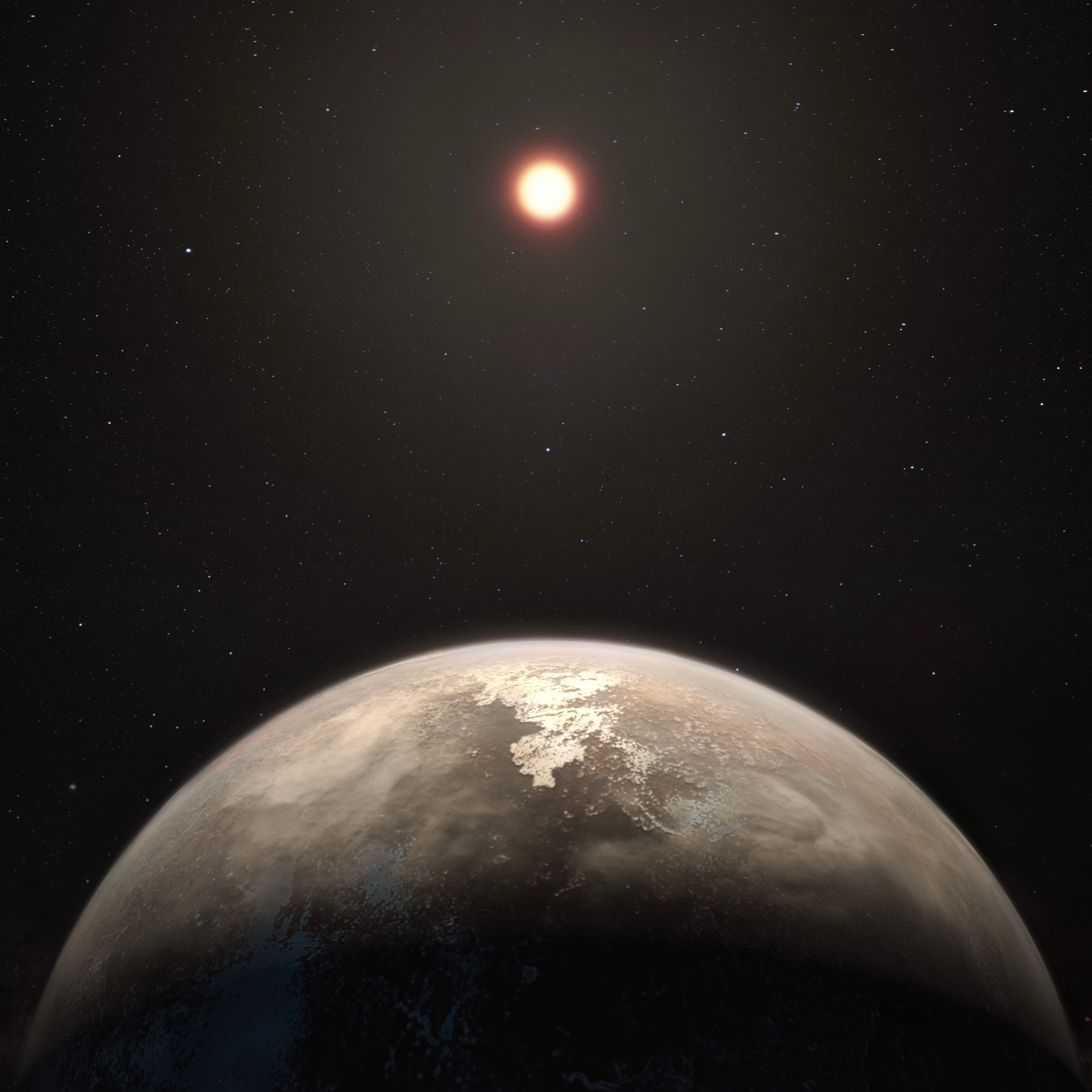
What makes Ross 128 remarkable is its temperament. Unlike Proxima Centauri, which blasts its planets with frequent ultraviolet flares, Ross 128 is classified as an 'inactive' flare star — its surface magnetic activity is low compared to most M-dwarfs, making conditions around it potentially more hospitable to life. Its sole known planet, Ross 128 b, was announced by ESO's HARPS spectrograph team in 2017: a world of at least 1.35 Earth masses orbiting every 9.9 days near the inner edge of the star's habitable zone.
At a surface temperature of just 3,189 K and a luminosity less than 0.4 percent of the Sun, Ross 128 radiates almost entirely in infrared. It is roughly 5 billion years old — comparable in age to the Solar System — suggesting that any planets have had time to evolve a stable environment. The star's proximity and quiescence make it one of the highest-priority targets for the next generation of extremely large telescopes searching for biosignatures.
Compared to the Sun
Sun
This star · 0.198× radius
It shines about 0.004 times as bright as the Sun.
Its fate
As a low-mass red dwarf, Ross 128 will burn hydrogen at its current sedate rate for roughly a trillion years — roughly 70 times the current age of the universe. It will never swell into a red giant; instead, it will slowly dim and cool into a white dwarf over aeons, far outlasting every other star currently visible in the night sky.
Find it in the sky
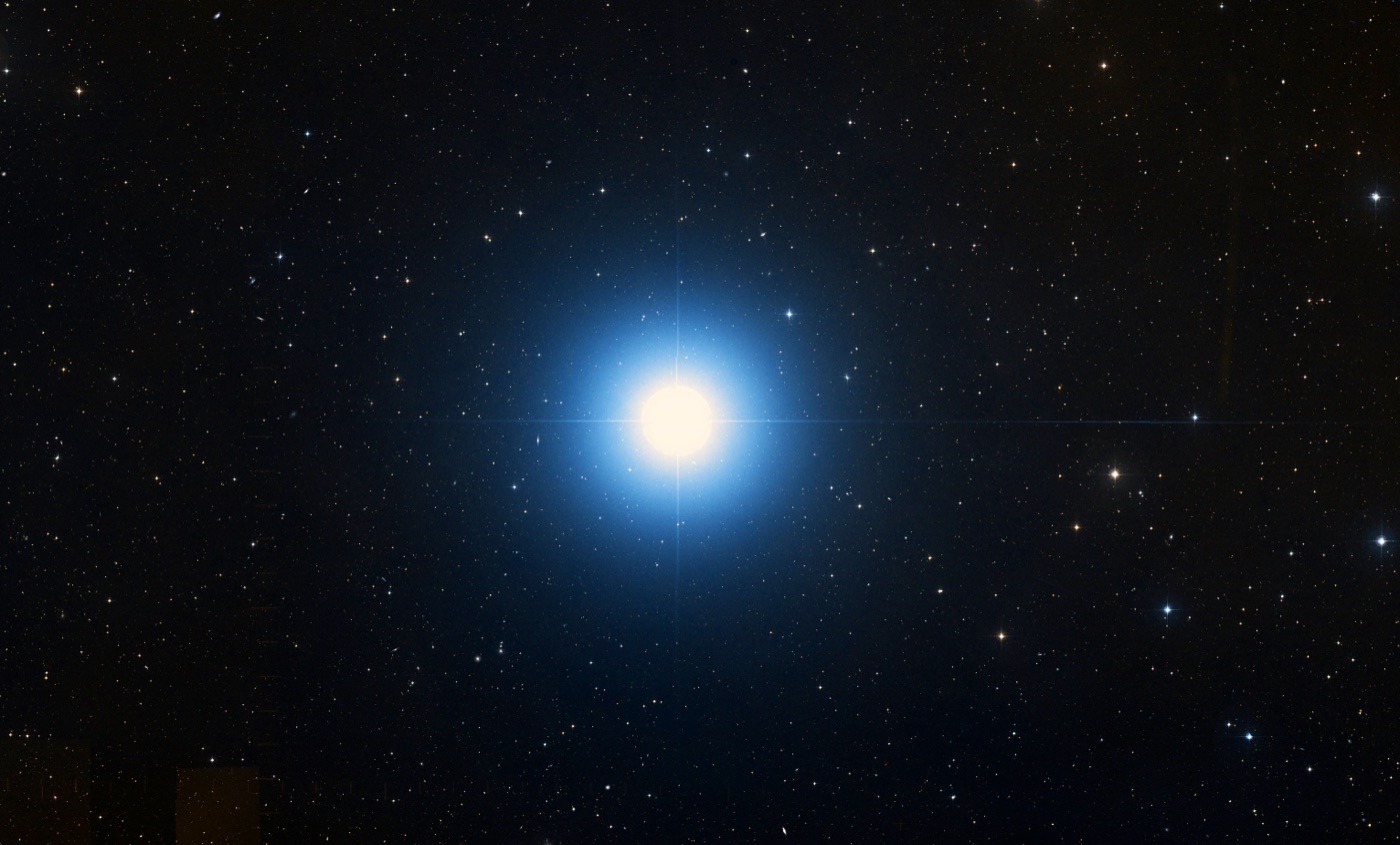
Ross 128 is invisible to the naked eye (magnitude 11.1) and requires at least a moderate telescope. It lies in Virgo, roughly 1.5° east-northeast of the bright yellow star Porrima (γ Virginis). It is best placed for evening observation from the northern hemisphere in spring.