α Geminorum
Castor
The Six-Star Sun · Sextuple star system — two A-type pairs plus a red-dwarf pair
At a glance
- Distance
- 50.9 ly
- Constellation
- Gemini
- Type
- A2Vm
- Apparent magnitude
- 1.58
- Mass
- 2.37 M☉
- Radius
- 2.09 R☉
- Surface temp
- 10,286 K
- Age
- 0.29 billion yrs
The story
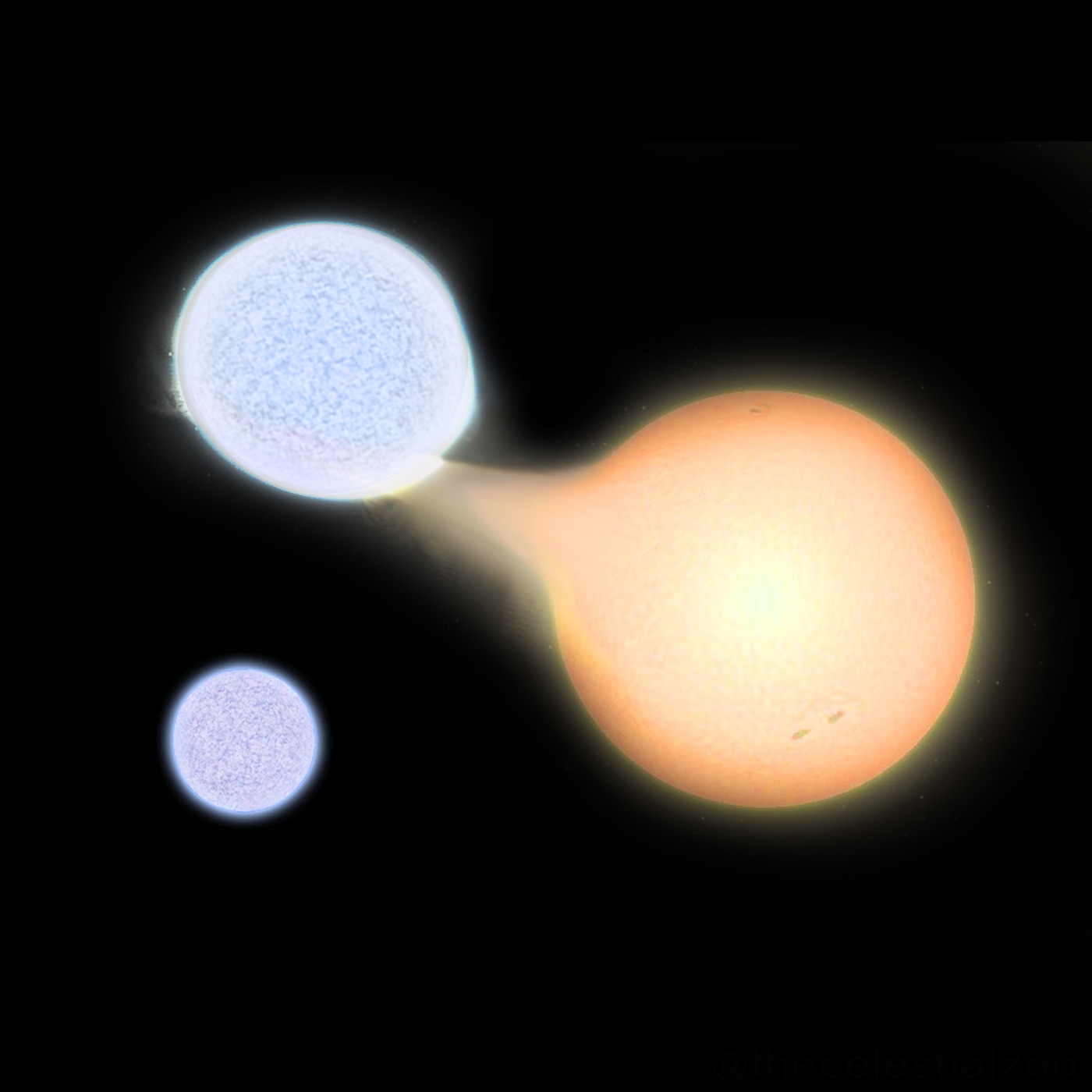
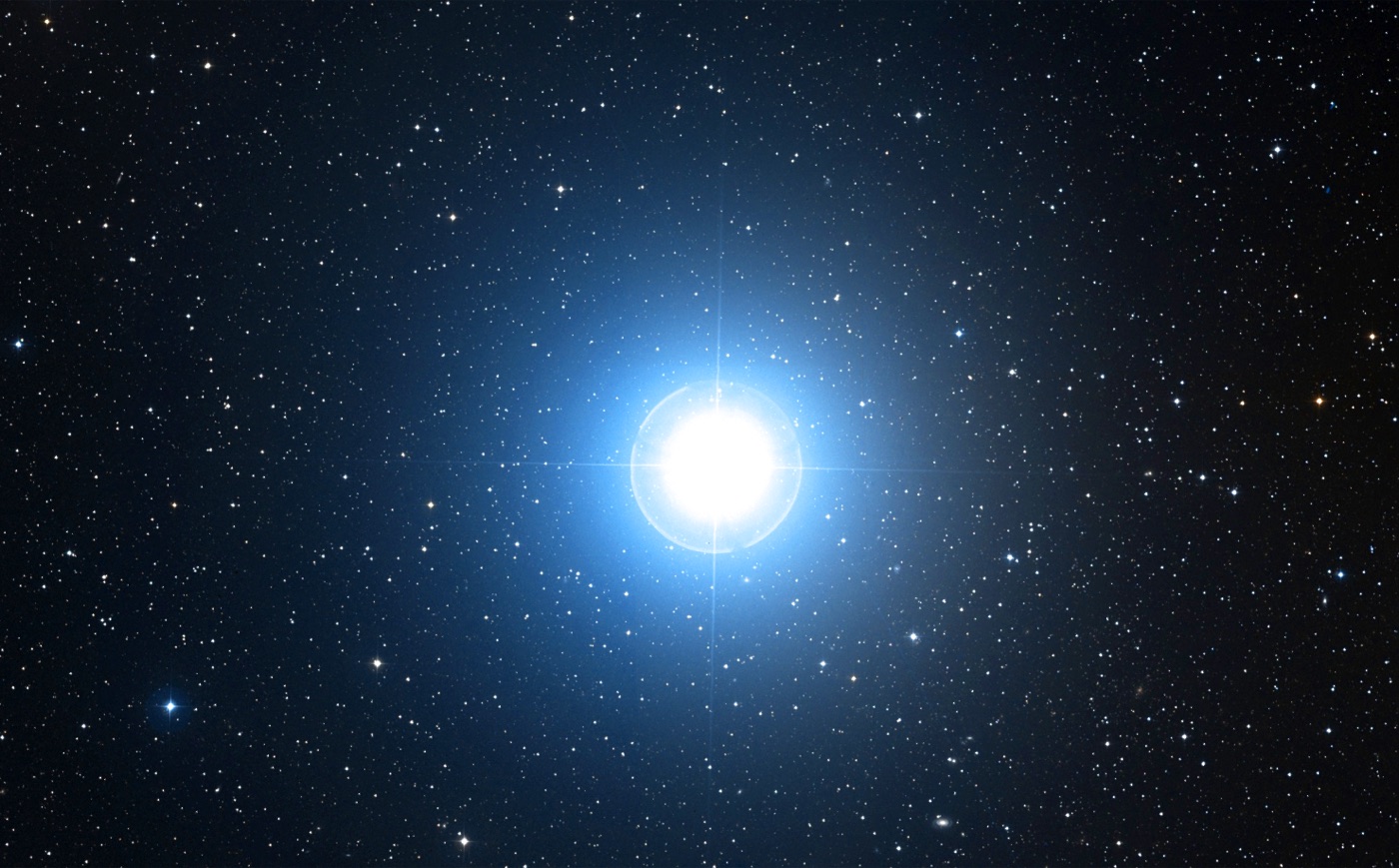
Castor appears to the naked eye as a single brilliant point of magnitude 1.58 in Gemini — the less luminous of the two 'twin' stars (Pollux is actually brighter). Point a modest telescope at it and you see two close white stars separated by a few arcseconds. Point a spectroscope at each of those, and the story explodes: every visible component is itself a spectroscopic binary. Six stars in all, bound together by gravity across two orders of magnitude in orbital scale.
The innermost pair, Castor A (Aa + Ab), consists of a bright A1V primary of 2.37 solar masses and a dim M-dwarf companion orbiting in 9.2 days. A few hundred AU away, Castor B (Ba + Bb) is a similar arrangement — an A-type primary of 1.79 solar masses paired with another red dwarf in a 2.93-day orbit. Far out at about 1,000 AU, Castor C (Ca + Cb) is a pair of nearly identical red dwarfs — both classified dM1e — circling each other every 19.5 hours. The A and B pairs themselves slowly orbit their common centre every 467 years, while the entire AB+C system takes hundreds of thousands of years to complete a single revolution.
The two Dioscuri — Castor and Pollux — are among the most storied stars in antiquity. In Greek and Roman mythology they were the divine twins born to Leda, one fathered by the god Zeus, the other by the mortal Tyndareus. Patron deities of sailors, they were said to appear as St. Elmo's fire during storms at sea. To the ancient Greeks, the first rising of Castor above the horizon in late spring marked the sailing season.
Compared to the Sun
Sun
This star · 2.09× radius
Its fate
The most massive components, Castor Aa and Ba, will eventually exhaust their hydrogen fuel and swell into red giants before shedding their envelopes to become white dwarfs. The red dwarf components of Castor C will outlive them by many billions of years. The system will eventually be a trio of white dwarfs chaperoning two long-lived red dwarfs.
Find it in the sky
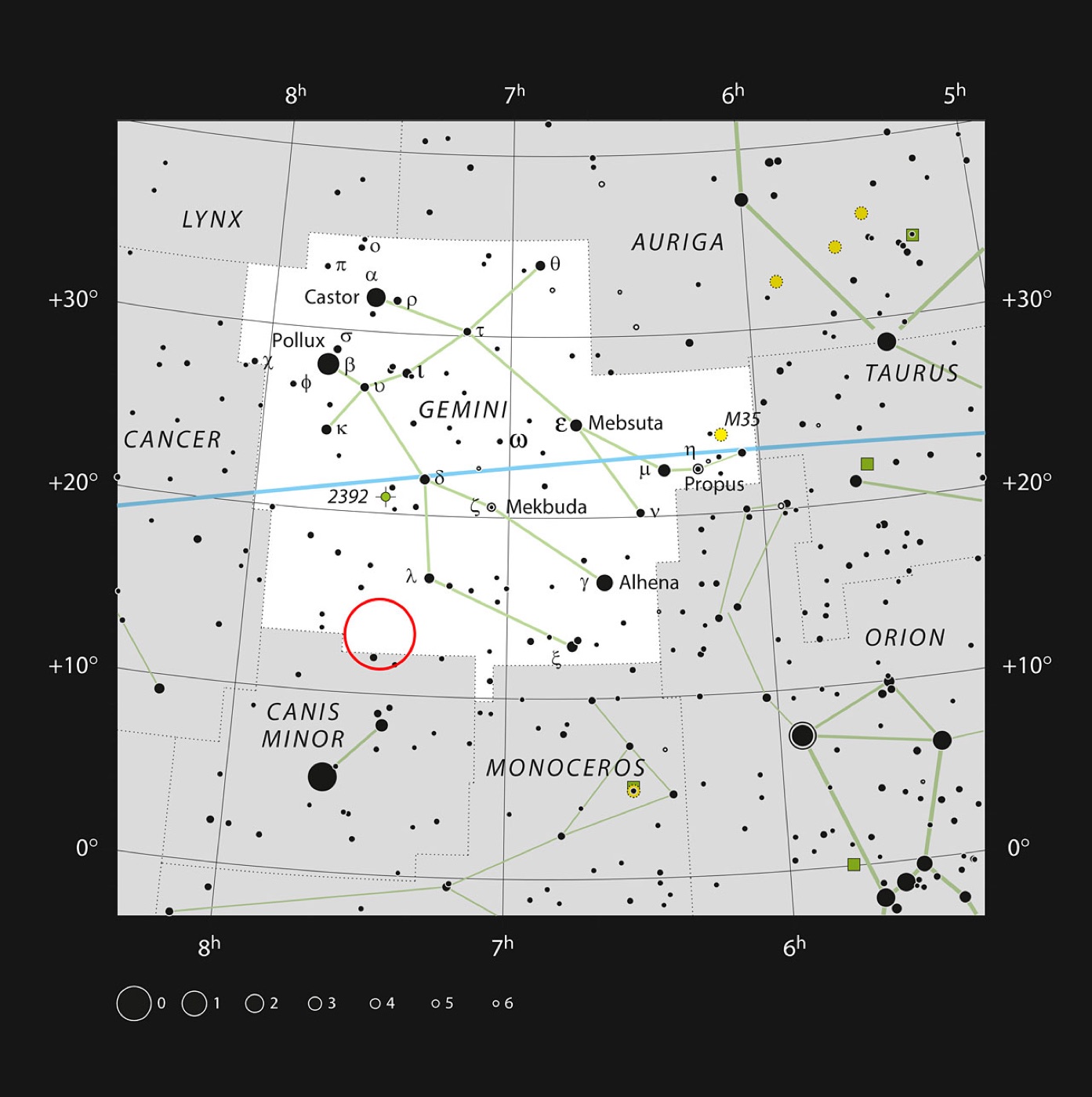
Castor is the second-brightest star in Gemini — look for the 'top' twin to the upper-left of the brighter, more orange Pollux. It reaches its highest point in northern-hemisphere winter evenings. A 2-inch refractor at 100× will split the two brightest components on a steady night.