The Next Giant Leap After Vikram
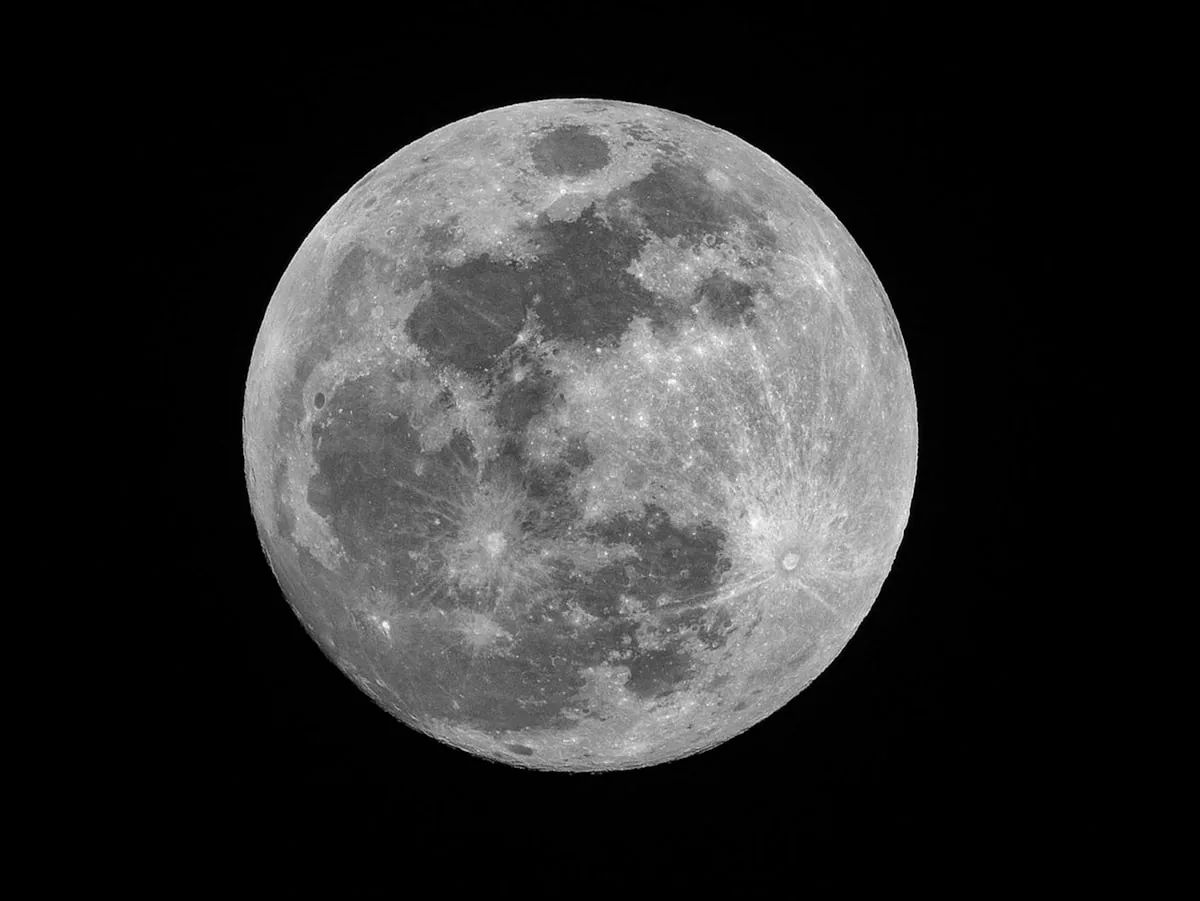
When the Vikram lander settled softly onto the lunar south pole on August 23, 2023, it was a beginning rather than an ending. Chandrayaan-3 proved that India could reach the Moon and survive the terrifying final minutes of descent. But it left the most tantalizing question in planetary science unanswered: what, exactly, is the south pole made of? The Pragyan rover sniffed at the regolith with its onboard instruments, confirming sulfur and a handful of other elements. Yet nothing a robot carries to the Moon can rival what a laboratory on Earth can do with an actual, physical scoop of lunar dust.
That is the entire premise of Chandrayaan-4. Where Chandrayaan-3 was a mission of arrival, Chandrayaan-4 is a mission of return — an attempt to grab roughly three kilograms of south-polar material and haul it, sealed and pristine, back across a quarter of a million miles to Indian soil. If it succeeds, India will join one of the most exclusive clubs in the history of spaceflight: only the United States, the Soviet Union, and China have ever brought pieces of the Moon home.
A Mission Approved and a Budget Set
Chandrayaan-4 stopped being an aspiration and became a funded program on September 18, 2024, when India's Union Cabinet, chaired by Prime Minister Narendra Modi, approved the mission with a budget of ₹2,104.06 crore — roughly $220 million. The approval set a development window of about 36 months and formally tasked the Indian Space Research Organisation with delivering the technologies needed to collect and return a lunar sample.
By the standards of sample-return missions, that price tag is extraordinary. NASA and its partners routinely spend billions on comparable robotic ventures. ISRO's culture of frugal engineering — the same ethos that put Chandrayaan-3 on the Moon for about $75 million — is once again on display. But Chandrayaan-4 is not merely a cheaper version of something that has been done before. In several respects, its architecture is more complex than anything ISRO has ever attempted.
The approval also signaled a shift in how India frames its lunar program. Chandrayaan-1 was an orbiter that helped confirm water on the Moon. Chandrayaan-2 attempted a landing and, though its lander failed, delivered an orbiter that is still returning data. Chandrayaan-3 nailed the soft landing. Each step deliberately built on the last, and Chandrayaan-4 is the logical next rung: it reuses the proven Chandrayaan-3 propulsion and landing heritage as a foundation, then adds an entirely new set of capabilities on top. Nothing about the mission is a leap into the dark; it is a carefully sequenced expansion of skills India has already demonstrated in flight.
Five Modules, Two Rockets, One Sealed Capsule
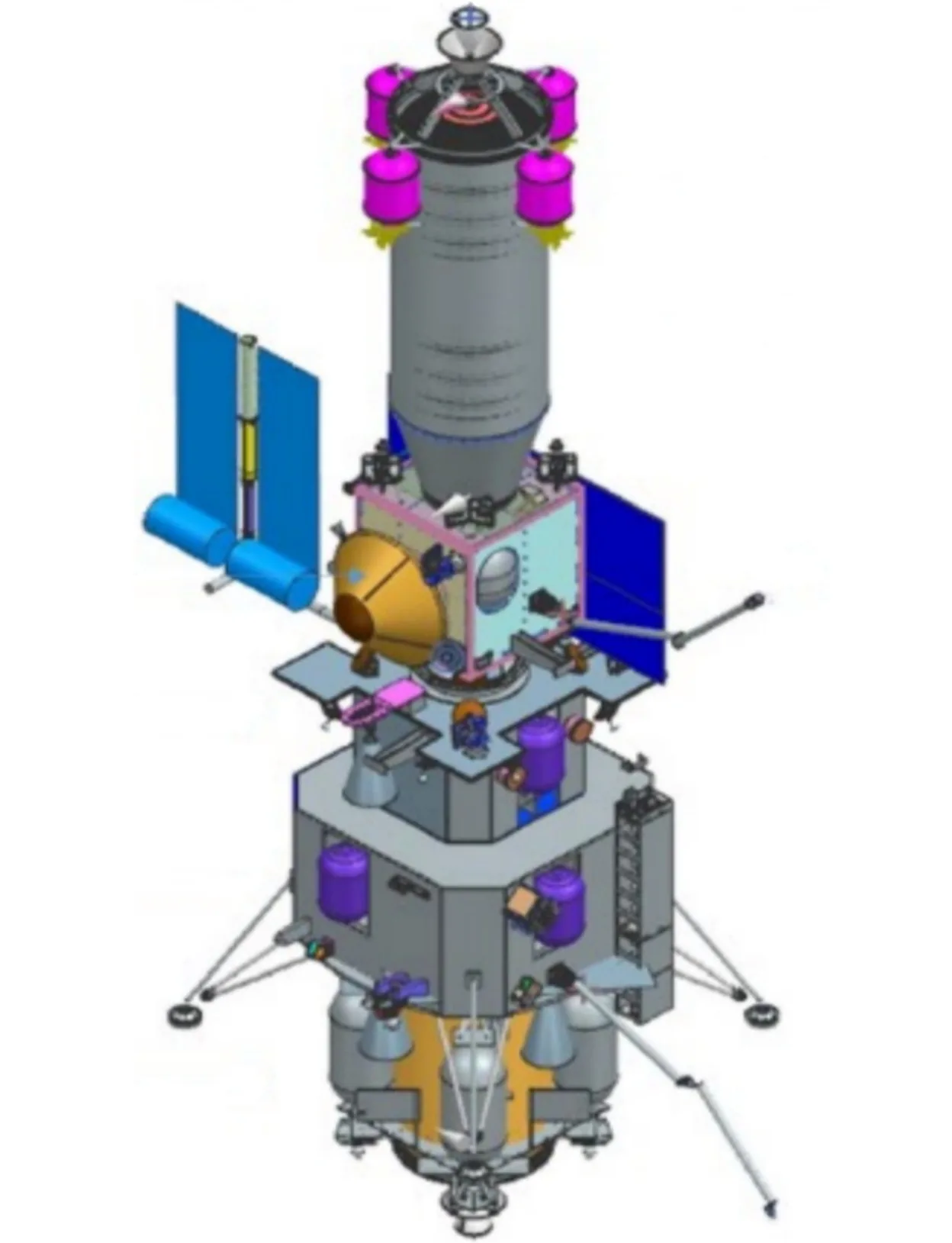
The heart of what makes Chandrayaan-4 so audacious is its structure. Instead of a single stacked spacecraft, the mission is built from five distinct modules, and they will not even reach orbit on the same rocket.
The five modules each have a job. The Propulsion Module, a close relative of the one that carried Chandrayaan-3, ferries the assembled spacecraft from Earth orbit toward the Moon. The Descender Module — the lander — carries the sampling hardware down to the surface, where a scoop and a drill will gather regolith from the top layer and from a little deeper down. The Ascender Module then does something no Indian spacecraft has done before: it lifts off again from the lunar surface, carrying the precious sample up into lunar orbit. There, the Transfer Module, fitted with a Liquid Apogee Motor, collects the sample from the ascender and begins the long journey back toward Earth. Finally, the Re-entry Module shields the sealed capsule through the searing plunge into the atmosphere and delivers it to a landing site on the ground.
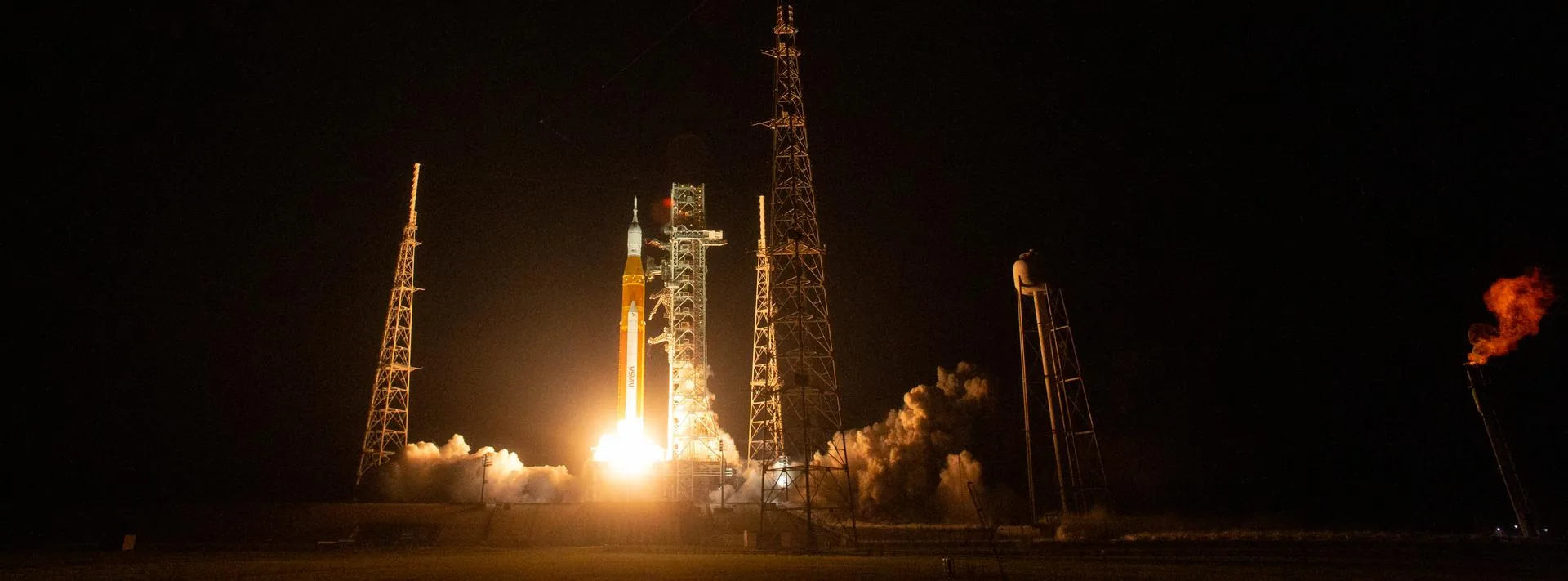
To loft all of this, ISRO will use two separate launches of its most powerful rocket, the LVM3. The modules are packed into two composites, or stacks. One stack carries the Propulsion Module together with the Descender-and-Ascender pair; the other carries the Transfer Module and the Re-entry Module. The two stacks will rendezvous and dock in Earth orbit, join into a single vehicle, and only then set course for the Moon.
Why go to all this trouble instead of launching everything at once? The answer is mass. A full sample-return stack — with the fuel to land, the fuel to launch back off the surface, and the shielding to survive re-entry — is simply too heavy for a single LVM3 to send to the Moon in one shot. Splitting the payload across two launches sidesteps that limit without waiting for a bigger rocket to be developed. It is a clever, cost-conscious solution that turns a hardware constraint into an opportunity to master in-space assembly, a skill India will need for far more ambitious projects to come.
The First-Ever ISRO Docking in Two Orbits
Splitting a mission across two rockets and assembling it in space is, for ISRO, genuinely unprecedented. And Chandrayaan-4 will not dock just once. It will dock and undock in Earth orbit to assemble the outbound spacecraft, and then dock again in lunar orbit when the Ascender Module carrying the sample rejoins the Transfer Module for the ride home. Autonomous rendezvous and docking around the Moon — hundreds of thousands of kilometers from any ground controller who could intervene in real time — is a formidable engineering challenge that only a handful of programs in history have solved.
ISRO did not wait for Chandrayaan-4 to start learning. On December 30, 2024, it launched SpaDeX, the Space Docking Experiment, sending up two roughly 220-kilogram satellites — a "Chaser" (SDX01) and a "Target" (SDX02) — aboard a PSLV. On January 16, 2025, the two spacecraft successfully docked, making India only the fourth nation, after the United States, Russia, and China, to demonstrate space docking. The satellites later undocked cleanly on March 13, 2025, and the mission validated an indigenously built docking system. SpaDeX was, in effect, a dress rehearsal — proof that the docking maneuvers at the core of Chandrayaan-4 are within India's reach.
That capability reaches far beyond a single Moon mission. The same in-space assembly and docking techniques are prerequisites for the Bharatiya Antariksh Station, India's planned modular space station now targeted for around 2035, and for the crewed Gaganyaan program. Chandrayaan-4 is thus a technology proving ground disguised as a science mission.
Hunting for the Right Patch of the South Pole
Choosing where to land is its own scientific and engineering puzzle. Chandrayaan-3 touched down at a site the Indian government named Shiv Shakti Point, but Chandrayaan-4 is aiming even closer to the pole. Through 2026, ISRO has been converging on the Mons Mouton region, a high-standing massif near the south pole, and has identified a candidate site designated MM-4 as a hazard-free spot for the soft landing.
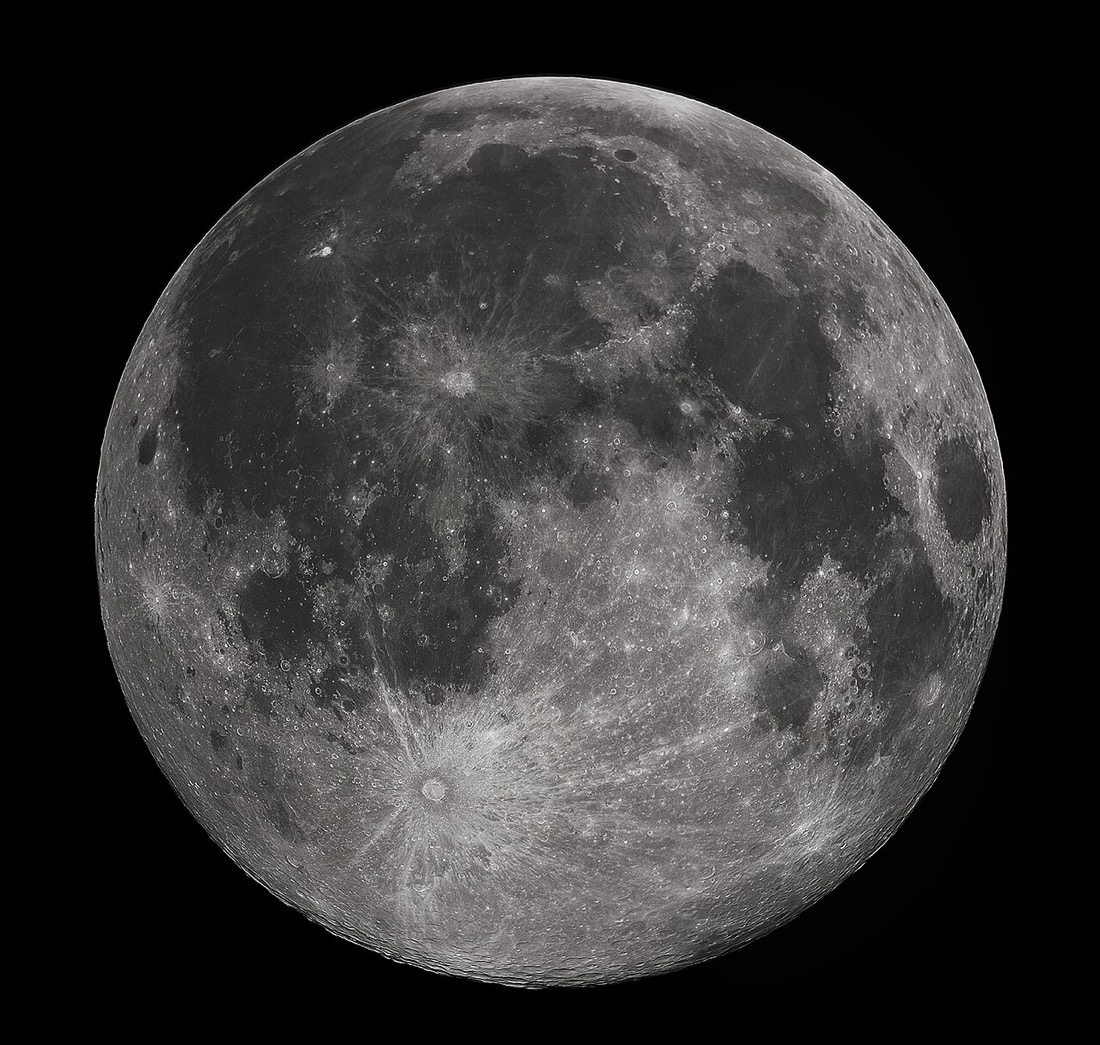
The south pole is where the real scientific treasure lies. Its permanently shadowed craters may harbor water ice — a resource that could one day supply drinking water, breathable oxygen, and rocket propellant for future explorers. Even the sunlit ridges nearby preserve a chemical record of the Moon's ancient history, and of the volatiles that have accumulated in the polar cold traps over billions of years. Bringing that material back to terrestrial laboratories, where instruments far too heavy and power-hungry to fly can be brought to bear, could transform our understanding of how the Moon — and the early Earth-Moon system — came to be.
Following in China's Footsteps, on India's Own Path
Chandrayaan-4 does not arrive in a vacuum. In June 2024, China's Chang'e-6 mission accomplished a genuine first, returning just under two kilograms of material from the far side of the Moon — the first samples ever collected from that hidden hemisphere. Chang'e-6, like the Chang'e-5 mission before it, used a multi-module architecture with a lander, an ascender, an orbiter, and a re-entry capsule, and it performed the same kind of lunar-orbit rendezvous that Chandrayaan-4 will attempt.
India is charting an adjacent but distinct course. Rather than copy China's single-launch design, ISRO has embraced a twin-launch, in-space-assembly approach that doubles as a rehearsal for its station and crewed ambitions. And Chandrayaan-4 is only one thread in a broader lunar tapestry. Chandrayaan-5, also known as LUPEX (the Lunar Polar Exploration Mission), is a joint venture with Japan's space agency JAXA that received Union Cabinet approval in March 2025; in that mission, an ISRO-built lander will deliver a large, capable JAXA rover to the south pole to hunt for water ice, with a launch targeted for the end of the 2020s. Together, these missions form a coordinated campaign to characterize the lunar south pole from every angle — in-situ, sample-return, and long-range roving.
What It Means for India's Deep-Space Future
Every capability Chandrayaan-4 demands is a stepping stone toward something larger. Launching a payload back off the lunar surface is a rehearsal for the ascent a future crew will one day have to make. Docking two spacecraft in lunar orbit is a rehearsal for the choreography of a crewed lunar transfer. Sealing a sample and surviving atmospheric re-entry is a rehearsal for bringing astronauts safely home. India has been explicit about where this road leads: the government has set a target of landing an Indian astronaut on the Moon by 2040, with Gaganyaan's first crewed flight expected around 2027 and the Bharatiya Antariksh Station taking shape through the 2030s.
Seen in that light, Chandrayaan-4's roughly 2028 target is not just a date on a mission calendar. It is the moment India intends to prove it can do the full round trip — down to the surface, up again, across the void, and home. The three kilograms of Moon rock it hopes to deliver will be scientifically priceless. But the greater prize is the mastery of every maneuver a spacefaring nation needs before it can send its own people to another world and bring them back. Chandrayaan-3 planted the tricolor at the south pole. Chandrayaan-4 aims to close the loop — and in doing so, to turn a robotic triumph into the foundation of a human one.