In 1960, physicist Freeman Dyson published a two-page paper in the journal Science that quietly became one of the most influential ideas in the history of thinking about extraterrestrial civilizations. His proposal was simple, audacious, and rooted in thermodynamics: any sufficiently advanced civilization would eventually need to capture most or all of the energy output of its host star. The structure that would accomplish this has entered popular culture as a "Dyson Sphere," though what Dyson actually described was something quite different -- and far more interesting.
What Dyson Actually Proposed
The popular image of a Dyson Sphere is a solid shell completely enclosing a star, with a civilization living on the inner surface. This makes for spectacular science fiction, but it is not what Dyson had in mind, and it is probably not physically possible.
A solid shell around a star would be gravitationally unstable. It would not orbit the star; it would simply drift until it contacted the star's surface, because a uniform shell exerts no net gravitational force on objects inside it (a consequence of the shell theorem in Newtonian gravity). You could theoretically stabilize it with active thrust systems, but the engineering requirements would be absurd even by megastructure standards. The structural stresses would also be immense -- a rigid shell at Earth's orbital distance would need to resist its own gravitational compression, and no known or theorized material could manage this.
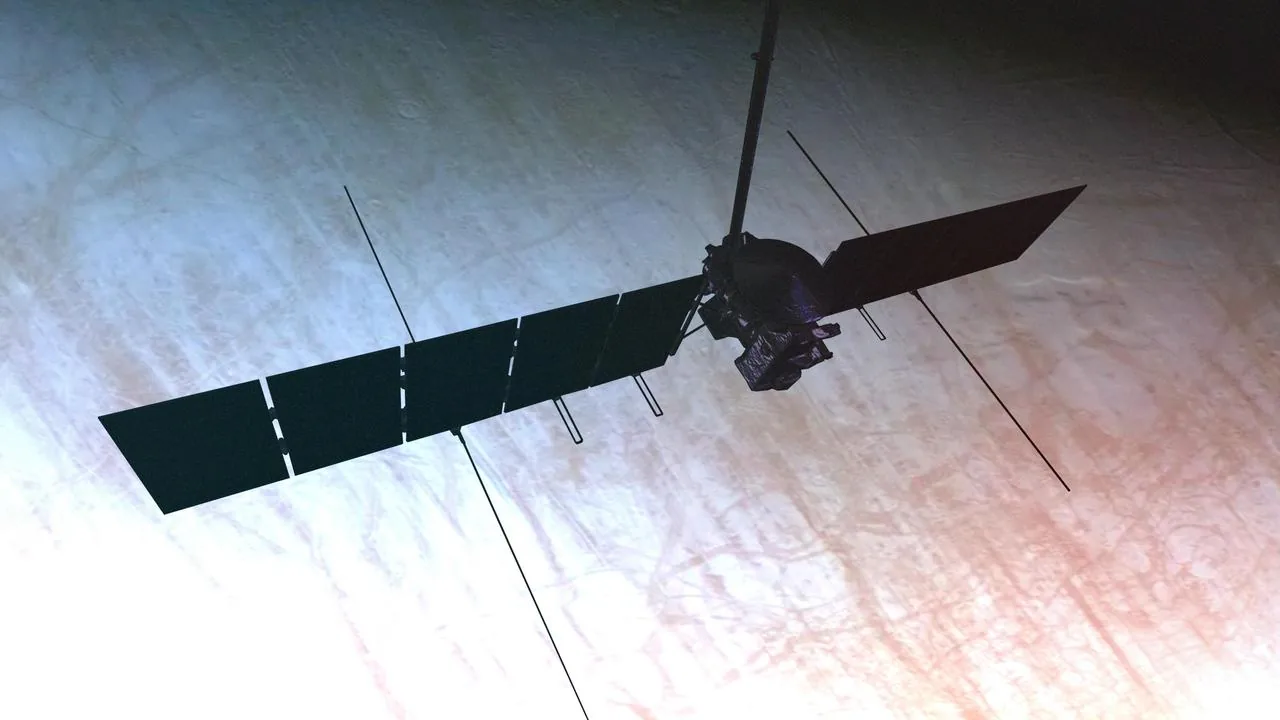
What Dyson actually proposed was a swarm: a vast collection of independent satellites, each in its own orbit around the star, collectively intercepting most of the star's light. Think of it as a cloud of solar collectors so dense that, from a distance, the star appears dimmer or even invisible at optical wavelengths.
This is the Dyson Swarm, and it is the version that physicists and engineers take seriously. Each element of the swarm could be a solar collector, a habitat, or a combination. The satellites would not need to be physically connected. They would simply need to be numerous and widespread enough to capture a significant fraction of the star's output.
A Dyson Swarm around our Sun, capturing the full solar luminosity of 3.8 x 10^26 watts, would provide roughly 2 trillion times humanity's current total energy consumption. That is not a typo. It is the kind of energy budget that makes interstellar travel, planet-scale computation, and feats we cannot currently imagine into routine engineering.
The Kardashev Scale

Dyson's idea dovetails with a classification scheme proposed by Soviet astronomer Nikolai Kardashev in 1964. The Kardashev Scale categorizes civilizations by their total energy consumption:
Type I civilizations harness the total energy available on their planet -- roughly 10^16 to 10^17 watts for an Earth-like world. This includes all solar energy hitting the planet, geothermal energy, and potentially fusion power. Humanity is currently at roughly 0.73 on the Kardashev Scale, depending on whose extrapolation you use. We consume about 1.8 x 10^13 watts, which is a fraction of the total energy Earth receives from the Sun.
Type II civilizations harness the total energy output of their host star -- roughly 10^26 watts for a Sun-like star. A Dyson Swarm is the canonical technology for a Type II civilization. At this energy level, a civilization could power continent-sized computers, propel starships at relativistic speeds, or reshape entire planetary systems.
Type III civilizations harness the total energy output of their galaxy -- roughly 10^36 watts. This would require Dyson Swarms (or equivalents) around a significant fraction of the galaxy's hundreds of billions of stars. A Type III civilization is so far beyond current human capability that meaningful discussion of its engineering is nearly impossible, but the classification is useful as a theoretical upper bound.
The Kardashev Scale is a simplification, of course. A civilization might develop vastly beyond Type I in some dimensions (computation, biotechnology) while remaining below Type II in raw energy consumption. But as a framework for thinking about what is possible, it remains remarkably durable.
How Would You Actually Build One?
Assume humanity survives, thrives, and expands over the next several centuries. Could we actually build a Dyson Swarm?
The raw materials are available. Mercury, the innermost planet, is a ball of iron and silicates conveniently located close to the Sun. Disassembling Mercury and converting its mass into solar collectors has been seriously analyzed (notably by Robert Bradbury and later by Stuart Armstrong). The mass of Mercury, roughly 3.3 x 10^23 kilograms, is sufficient to construct thin-film solar collectors covering a sphere at Earth's orbital distance.
The process would be bootstrapping: use solar energy near Mercury to power mining and manufacturing operations, producing solar collectors that capture more solar energy, which powers more manufacturing, in an exponential growth cycle. Armstrong estimated that, given self-replicating robotic factories and exponential growth, a Dyson Swarm could be completed in as few as 40 years once the process begins. The initial startup phase -- developing the self-replicating technology -- is the hard part. Once exponential growth kicks in, the timeline compresses dramatically.
This is, to be clear, far beyond anything humanity can currently accomplish. Self-replicating robotic factories, autonomous space mining at planetary scale, and the orbital mechanics of managing billions of independent satellites are all unsolved problems. But none of them violate known physics. They are engineering challenges, not physical impossibilities.
Tabby's Star: A Dyson Sphere in the Wild?

In 2015, astronomer Tabetha Boyajian (then at Yale) published observations of KIC 8462852, a star in the constellation Cygnus that exhibited bizarre and unprecedented brightness variations. The star dimmed irregularly by up to 22% -- far more than any known planet transit could explain. Some dimming events lasted days, others months. The pattern was not periodic and did not match any known natural phenomenon.
Citizen scientists from the Planet Hunters project first flagged the anomaly, and Boyajian's paper ignited a firestorm of speculation. Jason Wright, an astronomer at Penn State, published a companion paper noting that the dimming pattern was consistent with what you might expect from a partially constructed Dyson Swarm -- a megastructure in progress, with incomplete coverage producing irregular dimming as different swarm elements transited the star.
The media loved it. "Alien Megastructure Star" became a headline staple for months.
Subsequent observations have largely pointed toward natural explanations. Infrared observations did not detect the excess heat radiation that a Dyson Swarm would produce (the collected energy has to go somewhere, and waste heat radiated in the infrared is the inevitable thermodynamic signature). Spectroscopic studies suggested that the dimming was wavelength-dependent, consistent with fine dust rather than opaque structures.
The current leading hypothesis involves a swarm of cometary or dust debris, possibly from a recently disrupted body. But the case is not fully closed, and Tabby's Star remains one of the most intensely monitored objects in the sky. It taught the astronomical community an important lesson: we should be looking.
Searching for Alien Megastructures
Dyson's original paper was not really about engineering. It was about detection. His argument was that if advanced civilizations exist, and if they obey the same laws of thermodynamics we do, then they must produce waste heat. A Dyson Swarm absorbing visible light and re-radiating it as infrared waste heat would be detectable as a star that is anomalously bright in the infrared and anomalously dim in the visible.
This insight launched a subfield of SETI (Search for Extraterrestrial Intelligence) focused on searching for infrared excesses around nearby stars. Several surveys have been conducted, including analyses of data from the WISE and Spitzer infrared space telescopes. Results so far have been null -- no convincing Dyson Swarm candidates have been identified among the hundreds of thousands of stars surveyed.
This null result is itself informative. It constrains how common Type II civilizations are in our galactic neighborhood. Either they are very rare, they do not build Dyson Swarms, they use energy in ways that do not produce detectable waste heat (which would require new physics), or they are there and we have not looked carefully enough.
More ambitious surveys are coming. The James Webb Space Telescope, with its unprecedented infrared sensitivity, could detect the thermal signature of a Dyson Swarm around stars out to considerable distances. Project Hephaistos, a research initiative specifically designed to search for megastructure signatures, has been analyzing data from Gaia and WISE with increasingly sophisticated algorithms.
Beyond Dyson: Other Megastructure Concepts
The Dyson Swarm is the most famous megastructure concept, but theorists have proposed others:
Stellar engines (sometimes called Shkadov thrusters) use a large mirror to reflect a star's radiation asymmetrically, producing net thrust that gradually accelerates the entire star. This could be used to move a solar system away from a supernova threat or toward a desirable destination. The timescales are measured in millions of years, but the physics is sound.
Matrioshka brains are nested Dyson Swarms, where each layer absorbs waste heat from the layer inside it and uses that energy for computation before radiating its own waste heat outward at a lower temperature. The result is a star-powered computer of almost inconceivable processing power, optimized to extract maximum computational work from every photon.
Alderson disks and ringworlds (popularized by Larry Niven) are rotating structures around a star that provide vast habitable surface areas. Unlike Dyson Swarms, these require structural materials of impossible strength and are generally considered physically unrealizable. They make excellent fiction but poor engineering.
What It All Means
Dyson Spheres -- properly understood as Dyson Swarms -- represent the logical endpoint of a civilization's energy trajectory. They require no unknown physics, only engineering far beyond our current reach. Their construction is plausible over centuries to millennia. And their thermodynamic signatures give us a way to search for civilizations we might never otherwise detect.
Whether humanity will ever build one depends on whether we survive long enough and maintain the industrial momentum to do so. The Kardashev Scale reminds us that we are still less than a Type I civilization, struggling to harness even the energy falling on our single planet. A Dyson Swarm is not tomorrow's project, or this century's. It is a goal for a civilization that has learned to think in millennia.
But the physics permits it. The materials exist. The logic is compelling. And somewhere out there, around a star we have not yet carefully observed, a civilization far older than ours may have already made the decision to wrap their sun in light-catching sails and claim every photon.
We just need to learn where to look.