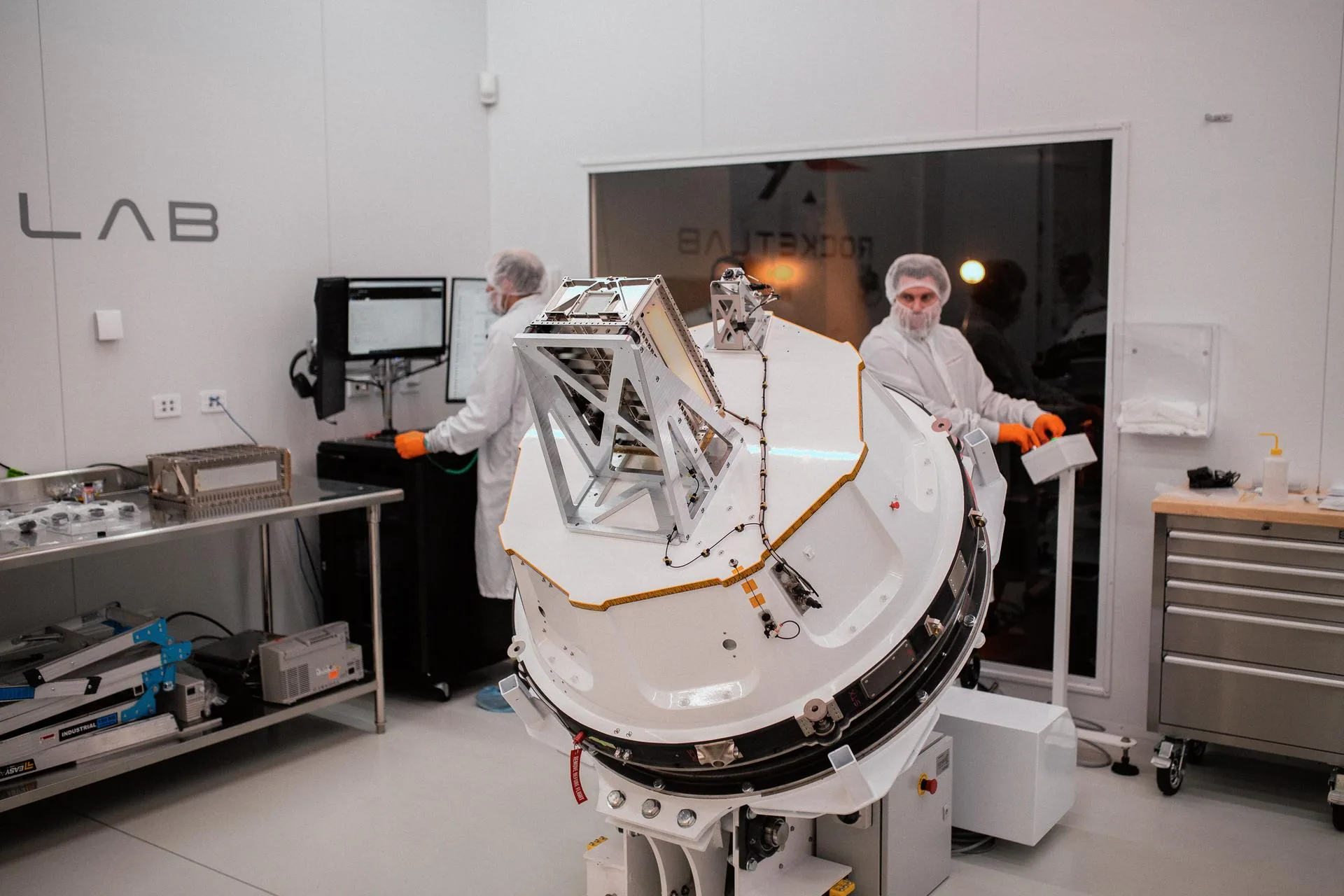
In an industry often dominated by a few massive players, Rocket Lab has carved out something truly special. Founded by Peter Beck in 2006 in a garage in Auckland, New Zealand, the company has grown into one of the most capable and vertically integrated space companies on the planet. What began as a scrappy startup with big ambitions is now a publicly traded, end-to-end space company that launches rockets, builds satellites, manufactures spacecraft components, and has sent a mission to the Moon.
I have been watching Rocket Lab since its early days, and their trajectory is one of the best stories in modern aerospace. Let me take you through how they got here and where they are headed.
The Origin Story: Peter Beck and the Dream
Peter Beck is not your typical aerospace CEO. He did not come from MIT or Stanford. He grew up in Invercargill, one of the southernmost cities in New Zealand, and was obsessed with rockets from childhood. He built his first rocket engine as a teenager and went on to work in various engineering roles before founding Rocket Lab with a singular vision: make space accessible.
At the time, the small satellite revolution was just beginning. CubeSats and microsatellites were proliferating in universities and research institutions, but there was no dedicated launch vehicle for them. Small satellite operators had to hitch rides as secondary payloads on large rockets, accepting whatever orbit and schedule the primary customer dictated. Beck saw the gap and decided to fill it.
Rocket Lab's early years involved extensive development of rocket engines and propulsion technology, including the Aeolus sounding rocket program that validated key technologies. The company attracted venture capital funding and, crucially, a contract from DARPA in the United States, which helped accelerate development of what would become the Electron rocket.
Electron: The Small Launch Revolution

Electron is a two-stage, carbon-composite launch vehicle standing 18 meters tall and capable of delivering up to 300 kilograms to low Earth orbit. What makes Electron remarkable is not just its size but its engineering philosophy.
The first stage is powered by nine Rutherford engines, and the second stage by a single vacuum-optimized Rutherford. These engines are extraordinary. They were the first orbital-class engines to use 3D-printed primary components, with the engine chambers, injectors, pumps, and main propellant valves all additively manufactured from electron beam-melted Inconel. This approach drastically reduced manufacturing time and cost compared to traditional machining.
Rutherford also uses electric turbopump-fed propulsion rather than gas-generator or staged-combustion cycles. Electric motors powered by lithium-polymer batteries drive the pumps, simplifying the engine and eliminating the need for a separate turbine power source. It was a bold design choice that paid off.
Electron first reached orbit on its second flight, "Still Testing," on January 21, 2018. Since then, the vehicle has become the most frequently launched small orbital rocket in the Western world, with over 50 launches completed by early 2025. The manifest includes missions for NASA, the National Reconnaissance Office, the US Space Force, commercial constellation operators, and international customers.
Key milestones include:
- "It's Business Time" (November 2018): The first fully commercial Electron mission, deploying six satellites and marking Rocket Lab's transition from test flights to commercial operations.
- Rapid launch cadence: Rocket Lab has steadily increased its launch rate, conducting missions roughly every two to three weeks and targeting even higher frequency.
- Two launch sites: Electron operates from Launch Complex 1 on the Mahia Peninsula in New Zealand (the first private orbital launch site in the Southern Hemisphere) and Launch Complex 2 at Wallops Island, Virginia, in the United States. The dual-site capability provides schedule flexibility and access to different orbital inclinations.
Recovering and Reusing Electron
Electron was initially designed as an expendable vehicle, but Rocket Lab began pursuing first-stage recovery to improve economics and turnaround time. The concept is audacious: because Electron is too small for propulsive landing (the fuel required would unacceptably reduce payload capacity), Rocket Lab instead uses a parachute system to slow the booster after reentry, then catches it mid-air with a helicopter.
Yes, you read that correctly. A helicopter catches a rocket falling from space.
The company has successfully recovered Electron boosters from the ocean after parachute descent and performed a dramatic mid-air helicopter catch in May 2022, though the pilot released the booster for safety reasons and it was subsequently recovered from the water intact. Rocket Lab has continued refining the recovery process, with the goal of reflying recovered boosters.
The engineering challenges here are significant. The first stage must survive the extreme heat and forces of reentry without a heat shield heavy enough to compromise performance. Rocket Lab developed a custom thermal protection system and guidance algorithms to orient the booster for optimal reentry. It is a clever, unconventional solution that perfectly fits Electron's unique constraints.
Photon: From Launch Provider to Space Systems Company

A rocket company launches payloads. A space company builds them too. Rocket Lab made this leap with Photon, a satellite platform derived from Electron's kick stage (the small third stage used to precisely place payloads in their target orbits).
Photon is a versatile spacecraft bus that Rocket Lab offers as a configurable platform for missions ranging from low Earth orbit to deep space. It includes propulsion, power, communications, attitude control, and flight software, essentially everything a customer needs except the specific instrument or payload.
The most dramatic demonstration of Photon's capability came with the CAPSTONE mission. In June 2022, Rocket Lab launched NASA's CAPSTONE (Cislunar Autonomous Positioning System Technology Operations and Navigation Experiment) spacecraft on an Electron rocket from New Zealand. Photon's Lunar Photon variant, called "Lunar Photon," served as the spacecraft's departure stage, performing a series of orbit-raising maneuvers over six days before sending CAPSTONE on a ballistic lunar transfer trajectory.
CAPSTONE arrived at the Moon in November 2022 and entered a near-rectilinear halo orbit (NRHO) -- the same orbit planned for NASA's Gateway lunar space station. The mission validated the stability of this orbit and tested autonomous navigation technology. It was a huge success and proved that a small company with a small rocket could execute a sophisticated lunar mission.
For Rocket Lab, CAPSTONE was a statement: we are not just a launch company. We can design, build, and operate entire missions to the Moon.
The Space Systems Division: Vertical Integration in Action
Rocket Lab's ambitions extend well beyond launch and spacecraft. Through a series of strategic acquisitions in 2021 and 2022, the company built a comprehensive space systems division that manufactures critical satellite components:
- Sinclair Interplanetary (acquired 2020): A Toronto-based company that builds reaction wheels, star trackers, and sun sensors used on hundreds of satellites. Sinclair's components have flown on missions from NASA, ESA, and numerous commercial operators.
- Advanced Solutions Inc. (ASI) (acquired 2021): A Colorado-based provider of flight software, simulation, and mission operations tools. ASI's software has been used on over 400 space missions.
- Planetary Systems Corporation (PSC) (acquired 2021): A Maryland-based manufacturer of satellite separation systems -- the mechanisms that release satellites from their launch vehicles. PSC's systems have been used on virtually every major US launch vehicle.
- SolAero Technologies (acquired 2022): A New Mexico-based manufacturer of high-efficiency solar cells and solar panels for spacecraft. SolAero's cells have powered missions including the Mars Insight lander, the Parker Solar Probe, and the Ingenuity Mars Helicopter.
This vertical integration strategy means Rocket Lab can supply components to the broader satellite industry while also using them in its own Photon spacecraft. It reduces dependency on external suppliers, controls costs, and creates multiple revenue streams. By 2025, the space systems division generates substantial revenue alongside the launch business, making Rocket Lab a diversified space company rather than a one-product launch startup.
Neutron: The Medium-Lift Contender
The next chapter for Rocket Lab is Neutron, a reusable medium-lift launch vehicle designed to carry up to 13,000 kilograms to low Earth orbit. Neutron represents a significant step up from Electron and is aimed at the constellation deployment, national security, and eventually human spaceflight markets.
Key design features of Neutron include:
- Reusable first stage: Unlike Electron's helicopter catch approach, Neutron's first stage will perform propulsive return-to-launch-site landings, similar in concept to Falcon 9 but with Rocket Lab's own innovations.
- Archimedes engine: A new engine developed in-house, burning liquid oxygen and methane. Rocket Lab chose methane because it is cleaner-burning (simplifying reuse), widely available, and can theoretically be produced on Mars using the Sabatier reaction. The Archimedes engine reached full-duration hotfire testing in 2024.
- Carbon composite structure: Neutron's first stage features a carbon composite structure, an unusual choice at this scale that leverages Rocket Lab's deep expertise in composite manufacturing from Electron.
- "Hungry Hippo" fairing: Rather than a traditional jettisoned fairing, Neutron's payload fairing is integrated with the upper stage and opens like a jaw to deploy payloads, then returns with the first stage. This eliminates fairing recovery as a separate challenge.
Neutron is being built at a dedicated production complex in Middle River, Maryland, near Baltimore. Peter Beck has described Neutron as designed "for reuse from the ground up," learning from the industry's experience with retrofitting reusability onto expendable designs.
First launch is targeted for 2025, though rocket development schedules frequently slip. When Neutron flies, it will position Rocket Lab as a competitor in the medium-lift market currently served by SpaceX's Falcon 9, ULA's Vulcan Centaur, and Blue Origin's New Glenn.
A Culture of Doing More with Less
What I admire most about Rocket Lab is their resourcefulness. They started in a country with no orbital launch heritage and built the world's first private orbital launch site there. They developed 3D-printed electric pump-fed engines when the established players said it could not work at scale. They attempted to catch a rocket with a helicopter. They sent a mission to the Moon on a vehicle originally designed for 300-kilogram payloads to low Earth orbit.
Peter Beck has spoken often about the philosophy of "punching above your weight" and building a company that can compete with organizations many times its size through smart engineering and relentless execution. The results speak for themselves: Rocket Lab is the second most frequently launching US rocket company after SpaceX, and its space systems components fly on spacecraft built by organizations around the world.
Looking Ahead
Rocket Lab's trajectory points toward continued growth across all three pillars of the business: launch, spacecraft, and space systems components.
With Electron providing reliable and frequent small-satellite access to orbit, Neutron preparing to open the medium-lift market, Photon enabling ambitious satellite and interplanetary missions, and the space systems division supplying critical hardware across the industry, Rocket Lab has built something genuinely unique -- a vertically integrated space company that can take a mission from concept to orbit using largely its own technology.
For those of us who believe that a vibrant, competitive space industry is essential for humanity's future, Rocket Lab is one of the most exciting companies to watch. They have demonstrated that you do not need to start with billions of dollars or decades of institutional heritage to build world-class space technology. You need vision, great engineering, and the audacity to try things that others consider impossible.
From a garage in Auckland to the surface of the Moon, Rocket Lab's story is far from over. And I cannot wait to see what comes next.