If you had told someone in the 1990s that rockets would one day land themselves on drone ships in the middle of the ocean, they would have called you a dreamer. Yet here we are in 2025, living in a golden age of space systems where reusable rockets are routine, thousands of satellites blanket the Earth in broadband internet, and artificial intelligence helps us navigate the cosmos. As someone who has spent years following every launch, every mission update, and every breakthrough, I can tell you with complete sincerity: this is the most exciting era in the history of spaceflight.
Let me walk you through where we have been, where we are, and where space systems are taking us next.
A Quick Look Back: The Foundations We Built
Every skyscraper needs a foundation, and our modern space capabilities rest on decades of bold, often dangerous pioneering work. The Soviet Union kicked the door open with Sputnik 1 in October 1957, a beeping metal sphere that changed everything. Four years later, Yuri Gagarin became the first human in orbit aboard Vostok 1 on April 12, 1961. The United States answered with the Apollo program, culminating in Neil Armstrong and Buzz Aldrin walking on the Moon on July 20, 1969, a moment that still gives me chills every time I watch the footage.
The Space Shuttle era from 1981 to 2011 gave us the first reusable orbital vehicle and built the International Space Station, which has been continuously occupied since November 2000. Mir, Skylab, the Hubble Space Telescope, the Voyager probes now in interstellar space -- each of these programs laid crucial groundwork for the revolution we are living through today.
Reusable Rockets: The New Standard

There was a time when landing a rocket booster was considered borderline impossible by mainstream aerospace engineers. SpaceX changed that perception forever on December 21, 2015, when a Falcon 9 first stage landed upright at Cape Canaveral. Fast forward to 2025, and booster recovery is simply how the industry operates.
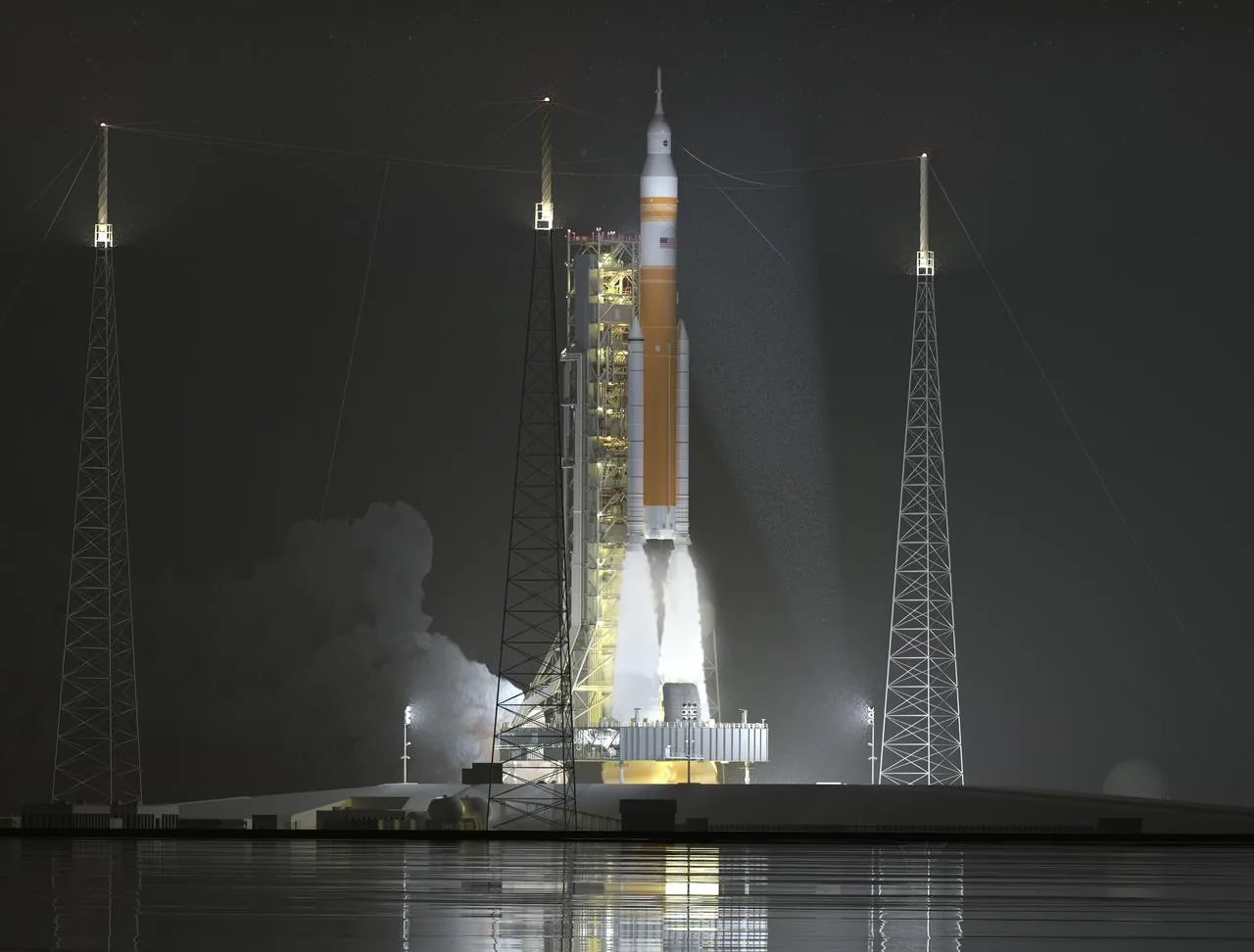
SpaceX's Falcon 9 has become the workhorse of the global launch market, with individual boosters flying 20 or more times each. The company's Starship system, the largest and most powerful rocket ever built, achieved its first fully successful orbital test flight in 2024 and is central to NASA's Artemis lunar landing plans. Watching a Super Heavy booster return to the launch tower and get caught by the mechanical "chopstick" arms is one of the most jaw-dropping engineering feats I have ever witnessed.
But SpaceX is not alone. Rocket Lab recovers and reflies Electron boosters. Blue Origin's New Glenn, a partially reusable heavy-lift vehicle, completed its inaugural flight in early 2025. Europe's Ariane 6 finally reached orbit in mid-2024 after years of delays. China's commercial sector, led by companies like LandSpace with its Zhuque-2 methane-fueled rocket, is advancing rapidly. ULA's Vulcan Centaur launched successfully in January 2024 using Blue Origin's BE-4 engines. The launch market is more competitive, more accessible, and more innovative than at any point in history.
Mega-Constellations: Satellites by the Thousands
Look up on a clear night shortly after sunset, and you might spot a train of bright dots gliding silently across the sky. Those are Starlink satellites, part of SpaceX's constellation that now numbers over 6,000 spacecraft delivering broadband internet to users in more than 70 countries. Whether it is a remote school in rural Kenya, a research station in Antarctica, or emergency responders after a natural disaster, Starlink has fundamentally changed what satellite internet can do.
OneWeb, now part of Eutelsat, operates its own constellation of roughly 630 satellites in low Earth orbit. Amazon's Project Kuiper launched its first prototype satellites in late 2023 and is gearing up for mass deployment starting in 2025, promising to bring even more competition and coverage to the market. China's Guowang constellation is also in early deployment.
These mega-constellations are extraordinary achievements, but they bring real challenges. Astronomers have raised legitimate concerns about light pollution affecting ground-based observations. SpaceX has responded with darker "VisorSat" designs and more recently "DarkSat" coatings, though the issue is far from fully resolved. The sheer number of objects in orbit also increases collision risk, which brings us to one of the most urgent problems in modern spaceflight.
Space Debris: The Cleanup Begins
There are currently more than 30,000 pieces of tracked debris orbiting Earth, and millions of smaller fragments too small to track but fully capable of destroying a satellite or puncturing a space station. This is not a hypothetical threat. In 2009, the defunct Russian satellite Cosmos 2251 collided with the active Iridium 33, creating thousands of new debris fragments.
The good news is that the space industry is finally treating debris removal as a priority rather than a future problem. The European Space Agency's ClearSpace-1 mission, scheduled for launch in 2026, will be the first mission dedicated to actively removing a piece of debris from orbit, specifically a Vega Secondary Payload Adapter left behind in 2013. Astroscale, a Japanese-founded company, successfully demonstrated its ADRAS-J mission in 2024 by rendezvousing with and inspecting a spent Japanese rocket upper stage in orbit, proving that approaching uncooperative debris is technically feasible.
Meanwhile, new international guidelines are pushing satellite operators to deorbit their spacecraft within five years of end of life, down from the previous 25-year guideline. The FCC in the United States adopted this stricter rule in 2024.
In-Space Servicing: Extending Satellite Life
Why throw away a perfectly good satellite just because it ran out of fuel? Northrop Grumman's Mission Extension Vehicle (MEV) program proved this concept by docking with aging Intelsat communications satellites and extending their operational lives by years. Their next-generation Mission Robotic Vehicle (MRV) takes this further, carrying small "Mission Extension Pods" that can be attached to multiple client satellites.
This emerging field of in-space servicing, assembly, and manufacturing (ISAM) could reshape the economics of the entire satellite industry. Imagine a future where satellites are refueled, repaired, and upgraded in orbit the way we service aircraft on the ground. That future is closer than most people realize.
Nuclear Propulsion: Reaching Mars Faster
Chemical rockets have served us well, but they have fundamental limitations when it comes to deep space travel. A crewed mission to Mars using conventional propulsion would take roughly seven to nine months each way, exposing astronauts to dangerous levels of radiation and the physical toll of prolonged microgravity.
NASA and DARPA are collaborating on the DRACO (Demonstration Rocket for Agile Cislunar Operations) program, which aims to flight-test a nuclear thermal propulsion engine by 2027. Nuclear thermal rockets heat hydrogen propellant using a nuclear reactor, achieving roughly twice the efficiency of the best chemical engines. This could cut a Mars transit to approximately three to four months, a game-changer for crew health and mission feasibility. Lockheed Martin was selected to build the spacecraft for DRACO, with BWX Technologies providing the reactor.
AI and Autonomy in Space Operations
Artificial intelligence is quietly transforming nearly every aspect of space operations. Satellites now use onboard AI to process Earth observation imagery in real time, deciding which data to downlink rather than sending everything to ground stations. This is critical as the volume of satellite data grows exponentially.
NASA's autonomous navigation systems allowed the OSIRIS-REx spacecraft to execute a precision touchdown on the asteroid Bennu in 2020, collecting samples from a surface strewn with building-sized boulders. The Perseverance rover on Mars uses its AutoNav system to drive itself across the Martian surface, covering more ground per day than any previous rover. The James Webb Space Telescope relies on sophisticated algorithms to maintain its position at the L2 Lagrange point and optimize its observation schedules.
Looking ahead, AI will be essential for managing the increasingly crowded orbital environment, autonomously maneuvering satellites to avoid collisions, and eventually enabling robotic construction and maintenance in orbit.
What Comes Next
We are standing at an inflection point. The Artemis program aims to return humans to the lunar surface within the next few years, with Artemis III targeting a landing near the lunar south pole using SpaceX's Starship Human Landing System. China and Russia are developing the International Lunar Research Station. India's Chandrayaan-3 successfully landed near the lunar south pole in August 2023, making India the fourth country to achieve a soft lunar landing.
Commercial space stations from Axiom Space, Vast, and Orbital Reef are being developed to succeed the aging ISS, which is scheduled for deorbiting around 2030. The space economy is projected to exceed one trillion dollars by the early 2030s.
From reusable rockets to AI-driven spacecraft, from debris cleanup to nuclear propulsion, space systems in 2025 are not just enabling exploration -- they are building the infrastructure for a civilization that extends beyond Earth. And honestly, I cannot think of a more thrilling time to be paying attention.
The cosmos is not some distant abstraction. It is where we are headed. And the systems we are building today are the vehicles that will carry us there.