Space tourism has evolved faster in the past three years than most people realize. What started as a handful of billionaires buying their way to the edge of space has matured into something far more interesting -- a nascent industry with multiple providers, different price points, and genuine ambitions to make space accessible to a much wider audience. It is not there yet, not by a long shot. But the trajectory is unmistakable, and the developments of 2023 and 2024 have given us a clear picture of where this industry is heading.
Let me take you through the landscape as it stands today.
Space Tourism Operators (2026)
| Operator | Vehicle | Altitude | Trip Duration | Weightlessness | Price (USD) | Passengers Flown | Status |
|---|---|---|---|---|---|---|---|
| Blue Origin | New Shepard | ~107 km (above Kármán line) | ~10-11 min total | ~3-4 min | $500K-$1.5M (auctioned + private) | ~80+ across ~15+ flights | Operational; routine cadence |
| Virgin Galactic | SpaceShipTwo Unity (retired) → Delta-class (2026) | ~85 km (above US definition) | ~90 min total | ~4-5 min | $450K-$600K | ~50+ during 2023-2024 commercial flights | Unity retired Jun 2024; Delta-class debut planned 2026 |
| SpaceX (private) | Crew Dragon (free-flier or ISS) | ~400-700 km LEO | 3-14 days | Continuous | ~$55M per seat | Polaris Dawn (2024), Fram2 (2025), multiple Axiom flights | Operational; flagship orbital tourism |
| Axiom Space | Crew Dragon to ISS | ~400 km LEO (ISS) | ~10-14 days | Continuous | ~$55M per seat | Ax-1 (2022), Ax-2 (2023), Ax-3 (2024), Ax-4 (2025) | Operational; quarterly cadence |
| Polaris Program | Crew Dragon (custom) | Up to ~1,400 km (Polaris Dawn) | 5-day | Continuous | Self-funded by Jared Isaacman | Polaris Dawn (Sep 2024); follow-ons planned | First commercial EVA achieved |
| Space Perspective | Spaceship Neptune (balloon) | ~30 km (stratosphere; not space) | ~6 hr round trip | None | $125K | First commercial flights early 2026 | Test flights complete; commercial debut H1 2026 |
| Sierra Space | Dream Chaser (cargo first) → crewed plans | LEO | TBD | TBD | TBD | Cargo only as of 2026 | Dream Chaser cargo first flight late 2025 |
| Boeing | Starliner | LEO | TBD | TBD | TBD | NASA crew only as of 2026 | Crewed certification ongoing post-2024 anomalies |
| Voyager / Starlab | Starship — Hilton "Starlab Hotel" partnership | LEO | Multi-day stays | Continuous | TBD | First flights ~2028-2029 | In development |
Virgin Galactic Unity completed its commercial run in 2023-2024 and was retired June 2024 to focus on Delta-class development. Some prices are public; others are negotiated and private. The Kármán line (100 km) is the FAI definition of space; the US recognizes 80 km / 50 mi.
Virgin Galactic: A Bumpy Road
Virgin Galactic, Richard Branson's suborbital space tourism company, had a breakthrough year in 2023 -- and then hit pause. After years of delays and development setbacks, the company finally flew its first commercial passengers in June 2023 aboard VSS Unity, carrying three Italian Air Force researchers. Over the following months, Virgin Galactic flew a total of six commercial missions, including flights carrying private tourists who had waited years (in some cases over a decade) for their tickets to be honored.
Then, in late 2023, Virgin Galactic announced it was suspending SpaceShipTwo flights to focus on developing its next-generation Delta-class vehicles. The company acknowledged that VSS Unity was never going to be the basis for a scalable business -- it was essentially a prototype that could fly a handful of passengers at a time with extensive refurbishment between flights.
The Delta-class spaceplane, which Virgin Galactic is targeting for operational debut in 2026, is designed to fly far more frequently and carry more passengers, which is essential for turning suborbital tourism into an actual business rather than a demonstration project. The pause has meant that since the Unity retirement in June 2024, Virgin Galactic has not flown commercial passengers. For the hundreds of ticket holders still waiting on Delta-class, it is yet another exercise in patience.
This is the honest reality of space tourism: the gap between vision and execution remains wide. Virgin Galactic deserves credit for getting passengers to space, but the business model has yet to prove itself.
Blue Origin: Back in Flight
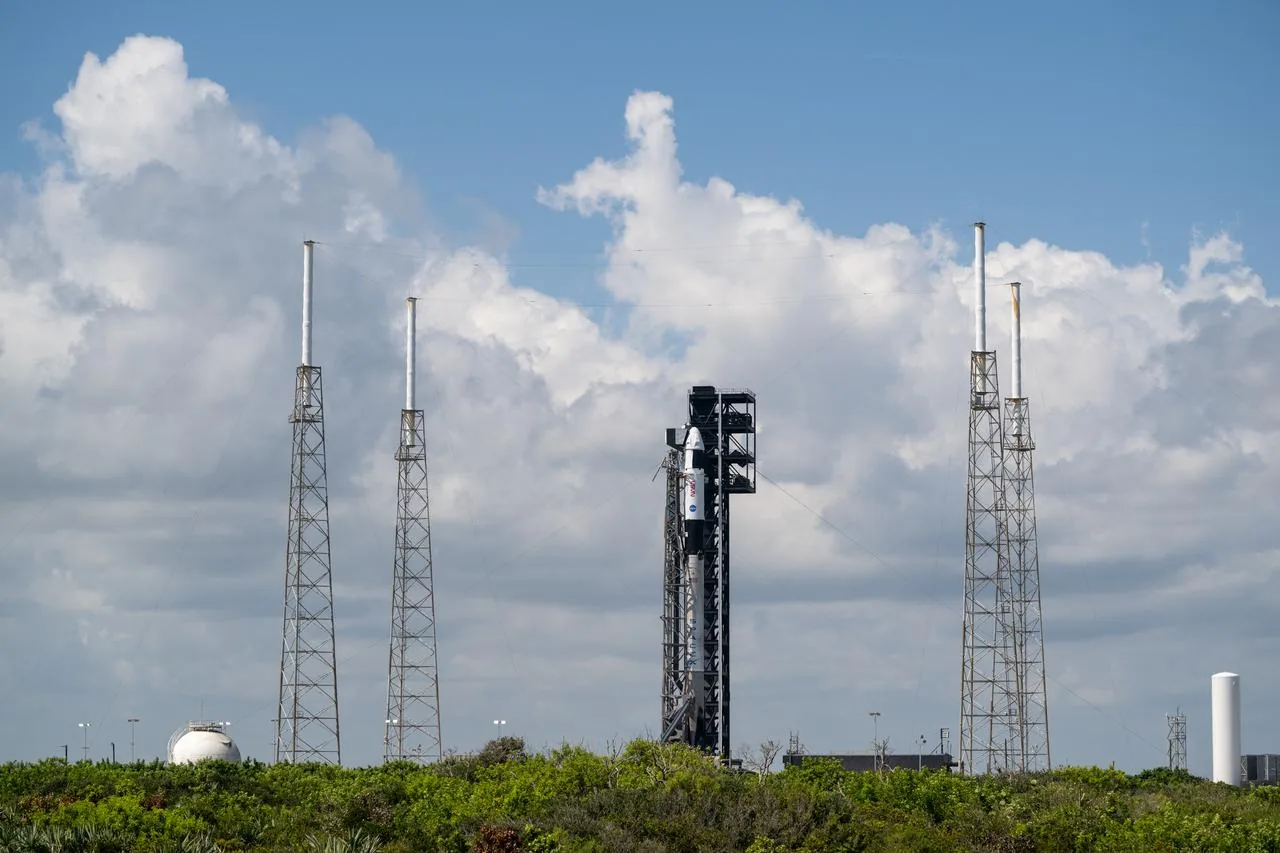
Blue Origin's New Shepard suborbital vehicle had its own hiatus after an uncrewed mission failure in September 2022 forced a stand-down for investigation. The company returned to flight with the NS-25 mission in May 2024, carrying six passengers to the edge of space -- including the first Mexican-born woman to reach space.
New Shepard offers a different experience from Virgin Galactic: a vertical rocket launch, capsule separation at the edge of space, several minutes of weightlessness with views through the largest windows ever flown in space, and a parachute landing. The whole experience lasts about 11 minutes from launch to landing, with roughly three to four minutes of weightlessness.
Blue Origin has been relatively quiet about its future New Shepard flight cadence, but the successful return to flight was an important milestone. The company's primary focus has clearly shifted to New Glenn, its orbital-class rocket, which completed its first flight in January 2025. In the long term, Blue Origin's vision extends far beyond brief suborbital hops -- Jeff Bezos has spoken about millions of people living and working in space -- but New Shepard remains the company's most visible tourism product for now.
SpaceX: Redefining What "Space Tourism" Means
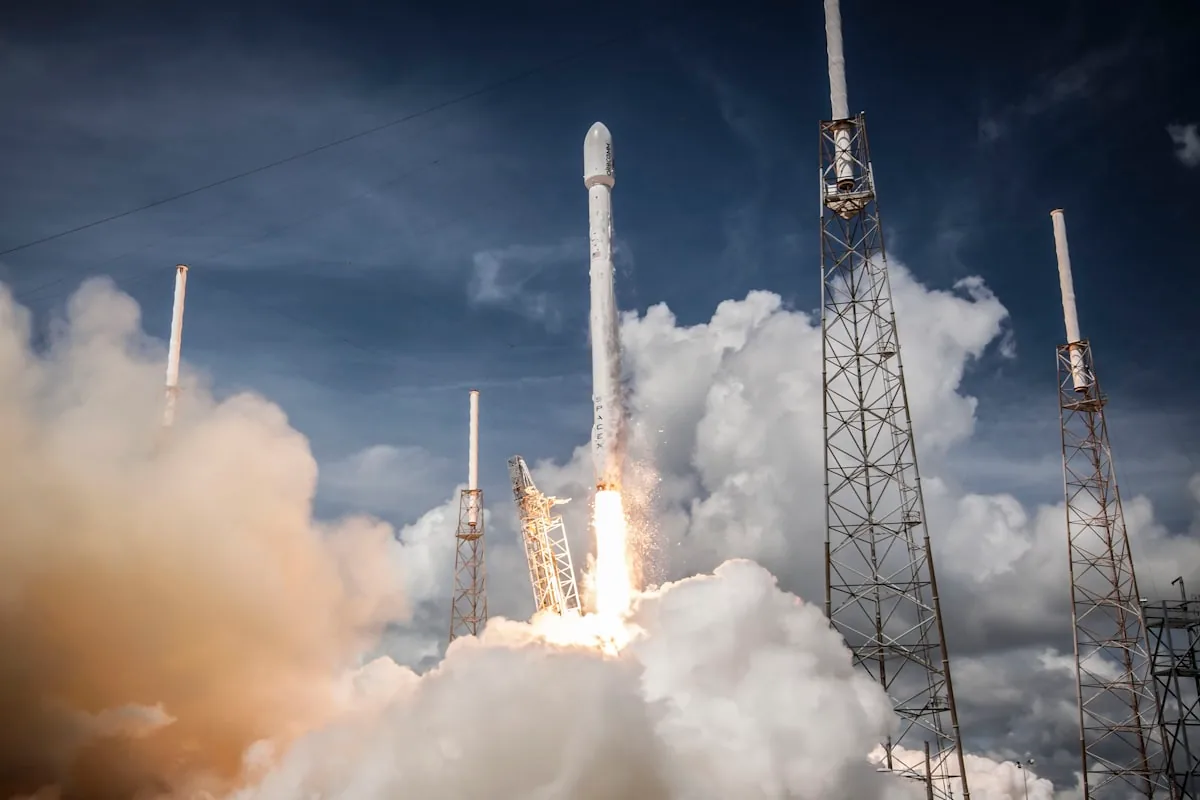
While Virgin Galactic and Blue Origin offer minutes in space, SpaceX has been operating on an entirely different level. The company's approach to space tourism has been to send private citizens on multi-day orbital missions -- experiences that are qualitatively different from suborbital flights and far closer to what professional astronauts experience.
Inspiration4 (September 2021) was the opening act: four private citizens orbiting Earth for three days aboard a Crew Dragon capsule, reaching a higher altitude than the International Space Station. The mission, funded by billionaire Jared Isaacman, raised hundreds of millions of dollars for St. Jude Children's Research Hospital and proved that an all-civilian crew could operate safely in orbit.
Polaris Dawn (September 2024) took things much further. The same Jared Isaacman led a four-person crew on a mission that reached over 870 miles in altitude -- the highest any humans have traveled since the Gemini program in the 1960s -- and conducted the first-ever commercial spacewalk. The crew spent five days in orbit, conducted scientific research, and tested SpaceX's new EVA suits. This was not tourism in the traditional sense; it was a private expedition that advanced human spaceflight capabilities.
SpaceX has also facilitated private missions for other clients. The Axiom Space missions (which I will discuss below) and discussions about future Polaris program flights suggest that SpaceX sees Crew Dragon as a platform for regular private orbital missions. The price tag is steep -- estimates suggest tens of millions of dollars per seat for orbital flights -- but the capability is proven and operational.
Axiom Space: Building the Future Station
Axiom Space has quietly become one of the most important companies in commercial spaceflight. The Houston-based company has conducted three private missions to the International Space Station -- Ax-1 (April 2022), Ax-2 (May 2023), and Ax-3 (January 2024) -- all using SpaceX Crew Dragon vehicles.
These missions are not pure tourism. Each Axiom flight has carried a mix of private astronauts and mission specialists who conducted research, tested equipment, and performed outreach activities during their stays on the ISS. Ax-1 was commanded by former NASA astronaut Michael Lopez-Alegria and included the first Saudi woman in space. Ax-3 carried astronauts representing Turkey, Sweden, Italy, and ESA, with a significant scientific research agenda.
But Axiom's real ambition extends far beyond ISS visits. The company is developing the Axiom Station, a commercial space station that will initially attach to the ISS as additional modules before eventually separating to become a free-flying station. The first module, Axiom Hub One, is planned for launch no earlier than 2026. If Axiom succeeds, it will provide a dedicated commercial destination in low Earth orbit that can host tourists, researchers, and even sovereign astronaut programs for countries that lack their own space stations.
Space Perspective: A Gentler Approach
Not everyone wants to ride a rocket to space, and Space Perspective is betting on that. The company is developing Spaceship Neptune, a pressurized capsule lifted by a massive balloon to approximately 100,000 feet -- the edge of space, though not the Karman line at 62 miles (100 km) that is traditionally considered the boundary of space.
The experience is dramatically different from a rocket launch: a gentle two-hour ascent, several hours floating at peak altitude with 360-degree views of Earth's curvature and the darkness of space, followed by a gradual descent and ocean splashdown. There are no G-forces, no need for a flight suit, and the capsule includes a bar and a bathroom. Space Perspective has been selling tickets at $125,000 per seat and aims to begin commercial flights in 2025.
Is it "real" space travel? Purists will say no -- you are not crossing the Karman line. But as an experience that makes the overview effect accessible to people who could never handle (or afford) a rocket launch, it fills a genuinely interesting niche. The democratization of space will not happen through a single pathway; it will happen through many different experiences at many different price points.
Vast: The Next Commercial Station
Vast, founded by cryptocurrency entrepreneur Jed McCaleb, has announced plans for Haven-1, a single-module commercial space station that would launch on a SpaceX Falcon 9 rocket as early as 2025 or 2026. Haven-1 would be the first commercial space station in orbit, beating both Axiom and Orbital Reef (Blue Origin and Sierra Space's planned station) to the milestone.
The station would initially be uncrewed, with SpaceX Crew Dragon missions bringing visitors for stays of up to 30 days. Vast's longer-term plans include a much larger multi-module station called Haven-2. Whether Vast can execute on this ambitious timeline remains to be seen, but the company represents yet another entry in an increasingly crowded field of commercial station developers.
The Affordability Question
Let me be direct about the elephant in the room: space tourism remains extraordinarily expensive. A suborbital flight with Blue Origin or Virgin Galactic costs somewhere in the range of $250,000 to $450,000. An orbital mission on Crew Dragon is estimated at $55 million or more per seat. Even Space Perspective's balloon experience costs $125,000.
These are not prices that most people can afford. The industry's promise that costs will come down is based on sound logic -- reusable rockets, higher flight rates, and competition should drive prices lower over time, just as they have in the aviation industry -- but we are still in the very early innings. Space tourism today is roughly where commercial aviation was in the 1920s: exciting, pioneering, and accessible only to the wealthy.
The question is whether the current wave of investment and development will create a self-sustaining industry that eventually reaches a mass market, or whether it will remain a luxury niche. My honest assessment is that we will see meaningful price reductions over the next decade, particularly for suborbital flights, but truly affordable space tourism -- the kind where a middle-class family could save up for a trip -- is probably still 20 to 30 years away.
Where It All Goes From Here
What excites me most about the current state of space tourism is the diversity of approaches. Suborbital rockets, orbital capsules, high-altitude balloons, commercial space stations -- each offers a different experience and serves a different market. That diversity is healthy. It means the industry is not dependent on a single technology or company succeeding.
The next few years will be critical. If Axiom and Vast can get their stations operational, if SpaceX continues flying private orbital missions, if Blue Origin increases New Shepard's flight rate, and if Space Perspective begins commercial balloon flights, we will have a genuine multi-provider space tourism industry by the end of the decade.
We are not yet at the point where space travel is routine. But we have moved well beyond the era of one-off stunts and billionaire vanity projects. Real businesses are being built, real infrastructure is being developed, and real customers are flying. The future of travel is, slowly but surely, moving upward.