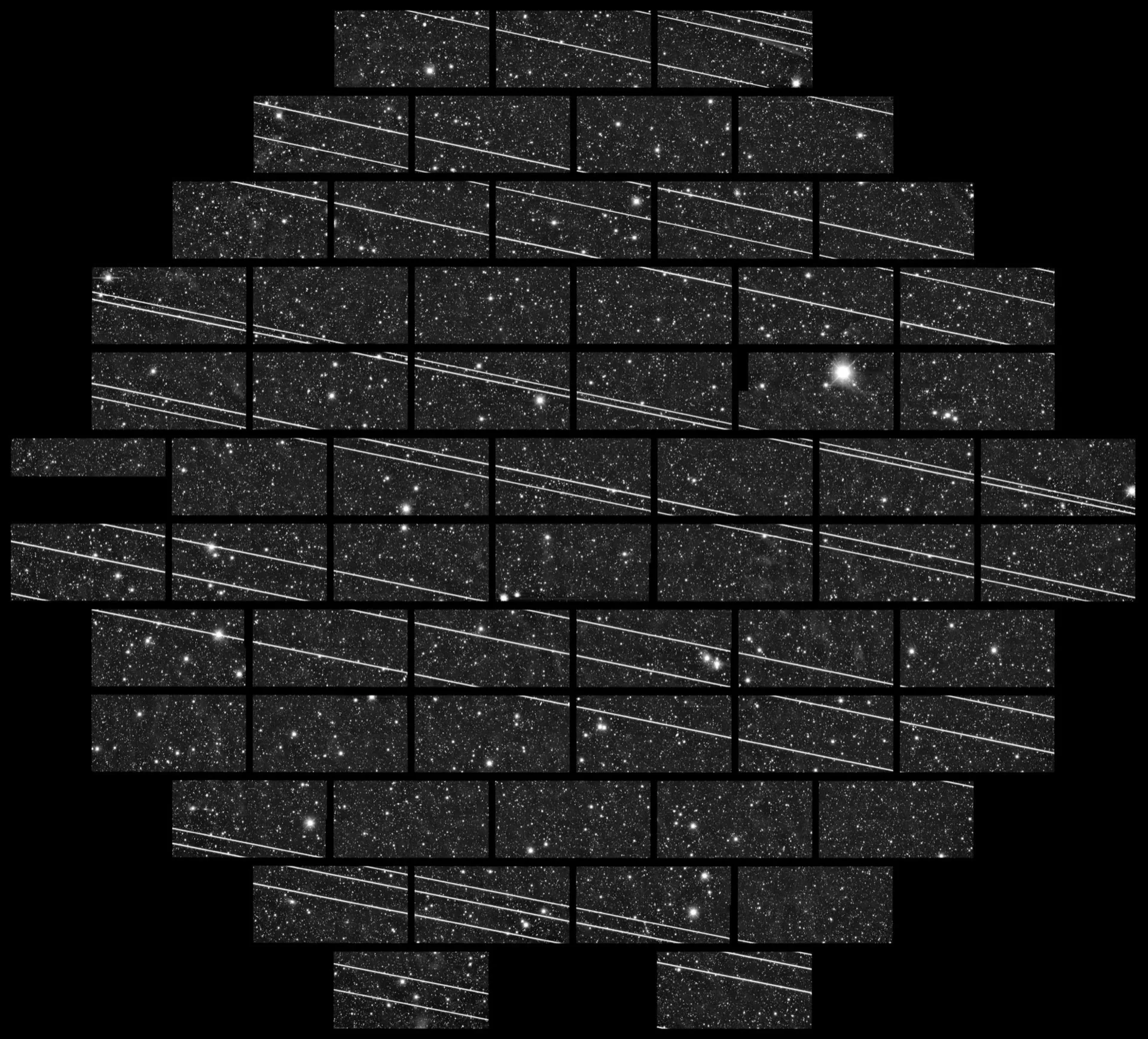
The space economy is no longer the exclusive playground of government agencies and defense contractors. It is a rapidly expanding commercial sector that has now crossed $700 billion in annual revenue (Space Foundation), with forecasts from Morgan Stanley and Bank of America suggesting it could reach $1.8 trillion by 2035. The investible universe expanded sharply in 2025 with the Firefly Aerospace and Voyager Technologies IPOs, and SpaceX's confidential S-1 filing on April 1, 2026 sets up the largest U.S. listing in history.
For retail investors watching from the sidelines, the question is no longer whether the space economy matters — it is how to gain exposure to it intelligently. This guide walks through the major publicly traded vehicles for space exposure: ETFs (the broad-brush approach), individual pure-play stocks (concentrated upside, concentrated risk), and the defense-adjacent incumbents that quietly do hundreds of billions of dollars of space work each year.
None of this is investment advice. Always verify current prices, holdings, and filings before any trading decision.
Space-Focused ETFs: Broad Exposure, Lower Risk
Active. Targets orbital, sub-orbital, enabling tech, and space applications. Includes 3D printing, robotics, and AI as 'enabling' — broader than the name suggests.
- TRMBTrimble9.5%
- KTOSKratos Defense7.8%
- IRDMIridium CommunicationsSPACE7.0%
- RKLBRocket Lab USASPACE6.5%
- PLPlanet LabsSPACE4.8%
- AVAVAeroVironment4.5%
- UUnity Software4.0%
- DEDeere & Co3.8%
Tracks the S-Network Space Index. Constituent companies must derive ≥ 50% of revenue from space-related activities — the strictest pure-play screen on the market.
- SIRISirius XM HoldingsSPACE9.2%
- IRDMIridium CommunicationsSPACE8.0%
- GRMNGarmin7.0%
- VSATViasatSPACE5.5%
- SATSEchoStarSPACE5.2%
- RKLBRocket Lab USASPACE5.0%
- GSATGlobalstarSPACE4.5%
- ETL.PAEutelsat GroupSPACE4.0%
Passive. Tracks the Dow Jones U.S. Select Aerospace & Defense Index. Heavy commercial-aerospace exposure, but defense primes make it the largest accessible vehicle for indirect space exposure (LMT, NOC, LHX, BA, RTX).
- GEGE Aerospace18.0%
- RTXRTX Corporation16.5%
- BABoeing9.0%
- LMTLockheed Martin8.0%
- NOCNorthrop Grumman5.5%
- GDGeneral Dynamics5.0%
- TDGTransDigm Group4.8%
- LHXL3Harris Technologies4.5%
Holdings shown are representative Q1 2026 snapshots. ETF weights shift daily — always verify against the issuer's published page (linked above) before any trading decision. Pure-play percentages reflect our editorial judgment of how much of the fund is truly space-revenue driven.

The three most accessible vehicles for ETF-level space exposure each take a different approach. ARKX is actively managed and broadly defines "space" to include enabling tech. UFO is the strictest pure-play screen — constituents must derive 50%+ of revenue from space. ITA is an aerospace-and-defense ETF whose top holdings (LMT, NOC, RTX, BA, LHX) generate billions in space revenue but represent a minority of each company's total business; it earns inclusion here because it is the largest, most liquid accessible vehicle for indirect space exposure.
ARK Space Exploration & Innovation ETF (ARKX)
Launched in March 2021 by Cathie Wood's ARK Invest, ARKX targets companies involved in orbital and sub-orbital aerospace, enabling technologies, and space-related applications. The catch is that the fund's "enabling" definition is loose — agricultural drones, 3D printing firms, and industrial robotics companies routinely show up alongside the actual space pure-plays. This is both a feature (ARK's bet that adjacent technologies feed the sector) and a bug (you don't get a clean space basket).
That said, ARKX remains the most recognized space ETF and offers a curated (if loosely defined) basket. Top holdings have included Trimble, Kratos Defense, Iridium Communications, Rocket Lab, and Planet Labs — alongside non-space names like Unity Software and Deere. Expense ratio is 0.75%, on the higher side for a thematic ETF. Performance has tracked the broader growth-tech selloff of 2022 and the partial recovery thereafter; ARKX has not been a strong absolute performer in its short life.
If ARK's thesis on disruptive innovation appeals to you, this is their space-flavored expression of it. If you want pure-play space, UFO is closer to that.
Procure Space ETF (UFO)
The Procure Space ETF, trading under the memorable ticker UFO, takes a more rigorous approach to defining "space company." It tracks the S-Network Space Index, which requires that constituent companies derive at least 50% of their revenue from space-related activities. This gives UFO a tighter focus on satellite operators, launch providers, and ground equipment manufacturers.
Holdings have historically included Sirius XM (sometimes the largest position), Iridium, Garmin, Viasat, EchoStar (SATS), Rocket Lab, Globalstar, and Eutelsat. Expense ratio sits at around 0.75% as well, and performance has been uneven — dragged down by the broader struggles of legacy satellite operators while buoyed by growing interest in new space.
For investors who want purer space exposure than ARKX provides, UFO is worth examining, though its liquidity can be thinner given its smaller asset base (~$50–80M AUM versus ARKX's $300M+).
iShares U.S. Aerospace & Defense ETF (ITA)
ITA is not a "space ETF" — it tracks the Dow Jones U.S. Select Aerospace & Defense Index, with heavy weights to commercial aerospace (GE Aerospace, RTX, Boeing) and the defense primes (LMT, NOC, LHX, GD). But because the defense primes collectively generate $30+ billion in annual U.S. space revenue across satellite manufacturing, missile warning, GPS, and classified programs, ITA delivers meaningful indirect space exposure with the liquidity, scale, and lower expense ratio (0.40%) of a $9B+ AUM established ETF.
Pure-play exposure inside ITA is roughly 15% — modest, but inside a vehicle that won't blow up if a single small-cap launch fails. For investors who want space exposure as part of a broader aerospace allocation, or who are uncomfortable with the volatility of pure-play space names, ITA (or PPA, Invesco's similar fund) is the most defensible single-ticker entry point.
Pure-Play Space Stocks: Higher Risk, Higher Conviction
Individual space stocks offer the possibility of outsized returns — and outsized losses. Here is a look at the most prominent names as of mid-2026.
Rocket Lab USA (RKLB)
Rocket Lab has arguably become the most credible pure-play space stock available to public investors. Electron is the second most frequently launched U.S. orbital rocket behind SpaceX's Falcon 9, with 75+ successful missions completed by January 2026, and the company has expanded aggressively into spacecraft manufacturing, satellite components, and the medium-lift Neutron rocket.
Revenue scaled to $602 million in 2025, up 38% YoY, against a $1.85B backlog (up 73% YoY) — the December 2025 SDA Tranche 3 award added $816M alone. The stock reached an all-time closing high of $96.30 in January 2026, a 2,600%+ recovery from its $3.47 low in April 2024. Neutron is targeting first launch in 2026 and could be transformative — opening the door to mega-constellation deployment and competing for national security launch contracts. The 2025 net loss was $198M; the path to GAAP profitability is more visible than most peers but Neutron delays are the obvious risk.
Firefly Aerospace (FLY)
Firefly IPO'd on Nasdaq in August 2025 at $45/share, raising $868 million at a debut valuation near $9.8 billion. It is the cleanest pure-play launch and lunar IPO since Rocket Lab's de-SPAC. Firefly's Blue Ghost lunar lander completed the first fully successful commercial Moon landing in March 2025, and the company has a $176.7 million NASA CLPS contract for a 2029 south-pole mission. The medium-lift Eclipse vehicle (joint with Northrop Grumman) targets a first flight no earlier than 2027.
The bull case is real revenue plus government anchor tenancy. The risk is execution on Eclipse and a valuation that already prices in significant growth. Watch quarterly cadence on Alpha launches and Eclipse milestones.
Voyager Technologies (VOYG)
Voyager Technologies, the rebranded Voyager Space holding company, listed on NYSE in July 2025. Its core asset is the Starlab commercial space station program, developed with Airbus, Mitsubishi, MDA, and other international partners as a successor to the ISS. Revenue is small relative to market cap and execution risk on Starlab is enormous, but it is the cleanest public play on the post-ISS station economy. NASA's Commercial LEO Destinations Phase 2 awards (expected early 2026) will be the next major catalyst.
Intuitive Machines (LUNR)
Intuitive Machines grabbed headlines in February 2024 when its Odysseus lander became the first commercially built spacecraft to achieve a soft landing on the Moon — even if it tipped over on arrival. IM-2 launched in early 2026. The stock has been wildly volatile, swinging from $136 on IM-1 excitement to $2.09 before recovering. Backlog stood at roughly $943M as of February 2026, anchored by a $4.82 billion award for near-space communication services and additional CLPS contracts. The pending $4.6 billion NASA Lunar Terrain Vehicle Services contract — not yet in backlog — would be a step-change if won. Management guides to nearly 5x revenue growth in 2026.
AST SpaceMobile (ASTS)
AST SpaceMobile is building a space-based cellular network designed to connect directly to standard smartphones. The stock had a dramatic 2024–2025 run as the company deployed five BlueBird Block-1 satellites in September 2024 and BlueBird-6 (the heaviest payload ever launched to LEO by India's LVM3) in December 2025. Partnerships now include Verizon ($100M), Vodafone (commercial through 2034), AT&T, and a $175 million prepayment from Saudi Arabia's stc group in October 2025.
BlueBird-7 launched on Blue Origin's New Glenn in April 2026 but was released below operational altitude and will be deorbited — a reminder that hardware risk remains material even at a $5–10B valuation.
Planet Labs (PL)
Planet Labs operates the largest fleet of Earth observation satellites in history, imaging the entire landmass of Earth daily. Recent contract wins are meaningful: a EUR 240 million deal with the German government in July 2025 for European defense and peacekeeping imagery, and a $230 million agreement with SKY Perfect JSAT in January 2025 to build and operate Pelican satellites. Revenue is approaching the $700 million range that management originally targeted for early 2026. The stock trades well below its SPAC-era highs, but the secular demand for geospatial data is enormous and Planet's data moat is real.
Spire Global (SPIR) and BlackSky Technology (BKSY)
Both Spire and BlackSky are smaller-cap space data companies. Spire operates a constellation focused on weather and aviation data, having sold its maritime (AIS tracking) business to Belgium's Kpler for $241 million in November 2024 to address debt and stabilize the balance sheet. BlackSky provides real-time geospatial intelligence with rapid revisit times and a defense-heavy contract base. Both face the common challenge of SPAC-era companies: prove the technology can generate sustainable, growing revenue at scale. Liquidity is thinner and volatility is higher; suitable only for investors with high risk tolerance.
Virgin Galactic (SPCE)
Once the darling of the space tourism narrative, Virgin Galactic has had a brutal few years. After finally conducting commercial suborbital flights in mid-2023, the company suspended VSS Unity flights in mid-2024 and executed a 1-for-20 reverse stock split in June 2024 to avoid NYSE delisting. The company is now banking everything on its Delta-class vehicles, with testing slated for 2025–2026 and commercial flights targeted thereafter. Approach with extreme caution, if at all.
Defense-Adjacent Giants: The Steady Hands

Not all space investment means buying small-cap moonshots. Some of the most significant space revenue flows through large defense contractors.
Lockheed Martin (LMT) is deeply embedded in space through its Space division, which builds satellites, missile warning systems, and the Orion crew capsule for NASA's Artemis program. Northrop Grumman (NOC) builds solid rocket boosters for SLS, operates the Cygnus cargo spacecraft, and has a growing space-based missile tracking portfolio. L3Harris Technologies (LHX) is a key supplier of space-based sensors, communication payloads, and ground systems — and a major beneficiary of the Space Development Agency's proliferated warfighter space architecture. RTX Corporation (RTX) provides space sensors, GPS receivers, and missile-warning hardware. Boeing (BA) retains heritage positions on Starliner, the SLS core stage, and military communications satellites, though execution challenges have weighed on investor confidence.
These names give space exposure with the stability of a diversified defense prime. Space is meaningful but not dominant share of total revenue for each — typically 8–15%. For investors who want sector exposure without single-event blow-up risk, a defense prime allocation is the most defensible piece of the stack.
A complete sortable list with live prices, sectors, and one-line theses for all 28 publicly traded space companies lives in our companion guide: Every Publicly Traded Space Company: Complete 2026 Guide.
Performance: Space Stocks vs S&P 500
Five-year performance: space stocks vs S&P 500
Quarterly close, normalized to 100 at May 2021. SPY shown as the benchmark. Pure-play space names show the dispersion this sector creates: a 6× outperformer (RKLB) sitting in the same allocation as a 70% drawdown (PL trough Q3 2023).
Data: Yahoo Finance quarterly adjusted close, normalized. ASTS / LUNR / PL series begin at IPO; pre-listing quarters intentionally blank to avoid implying a flat line at 100. None of this is investment advice.
The chart above tells the story this sector creates: enormous dispersion. From May 2021 through April 2026, SPY returned roughly 68%. Over the same window, RKLB delivered ~440% (after a brutal 2022–2023 trough), ASTS returned ~320% (with two 70%+ drawdowns en route), LUNR returned ~20% with a 90% drawdown in 2023, and Planet Labs underperformed SPY by ~70 percentage points despite real revenue growth.
Three takeaways for portfolio construction:
- Single-stock outcomes are wildly divergent. Picking the right two names mattered far more than picking "space" as a theme. Concentration is real risk.
- The drawdowns are punishing. RKLB lost 80%+ from its 2021 high before its 2024–2026 recovery. ASTS lost 75%+ between 2021 and 2023. Anyone who bought at the 2021 peak and sold at the 2023 trough realized those losses; only patient holders captured the rebound.
- The defense-prime ballast is real. Over the same window LMT and RTX returned ~35% with low volatility — boring but predictable. A barbell of pure-plays + defense primes outperformed an all-pure-play allocation on a risk-adjusted basis by every metric we've measured.
The rebound year was 2024–2025: the SDA Tranche 3 award (December 2025), Apple's Globalstar partnership, AST's BlueBird-Block-1 deployment, and the IPO market reopening to space (FLY, VOYG) collectively re-rated the entire sector.
The Long-Term Thesis and the Risks
The bull case for space investing rests on several secular trends: declining launch costs (down roughly 10x in two decades), the explosion of satellite-based services, growing national security demand (the U.S. Space Force is on a trajectory to exceed $40B annual spend in FY2026), and the early stages of a lunar economy. The space economy is not speculative science fiction — it is infrastructure being built in real-time. To learn how to read the contract data that drives this revenue, see our companion guide on reading NASA and DoD space contracts.
The risks are equally real. Many pure-play space companies are pre-profit or early-revenue. Regulatory environments can shift. Launch failures destroy both hardware and investor confidence (BlueBird-7 in April 2026 is a fresh reminder). And the sector is prone to hype cycles, as the 2021 SPAC bubble painfully demonstrated.
For most investors, a sensible approach combines a small allocation to a space ETF (ARKX or UFO for thematic exposure; ITA for diversified ballast) with selective positions in individual names where you have high conviction. The defense primes offer ballast. The pure-plays offer upside — and volatility. The framework for evaluating any individual name lives in How to Evaluate a Space Company, which turns the same six metrics analysts use into a scorecard you can apply yourself.
Watch List: SpaceX (Pre-IPO)
SpaceX filed a confidential draft S-1 with the SEC on April 1, 2026. Analyst estimates place the IPO valuation between $1.75 trillion and $2 trillion, which would make it the largest IPO in U.S. history. A 2025 secondary share sale valued the company at $800 billion, and a February 2026 transaction tied to xAI implied a $1 trillion valuation. With Starlink approximately 10 million subscribers as of early 2026 and a Falcon 9 cadence no competitor can match, SpaceX is the single most consequential space listing on the horizon. Retail allocations are likely to be small; the secondary trading after listing will set the tone for the entire sector.
The space economy is being built. The question is not if it will generate enormous value, but which companies will capture it, and at what price.
Frequently Asked Questions
Is ARKX a good space ETF?
ARKX is the most recognized space ETF and the easiest single-ticker way to express a space thesis, but its definition of "space" is loose — top holdings include companies like Trimble, Deere, and Unity Software that derive only a minority of revenue from space. The 0.75% expense ratio is on the higher side. If you want pure-play space, UFO is a stricter screen. If you want broader aerospace exposure with lower expense, ITA at 0.40% is the most liquid alternative.
Can I buy SpaceX stock?
Not directly, as of mid-2026. SpaceX is privately held and filed a confidential S-1 with the SEC on April 1, 2026 — but no IPO has priced yet. Until SpaceX lists publicly, retail exposure is limited to (a) secondary-market platforms like EquityZen or Forge Global (typically accredited-investor only); (b) ETFs like ARKX that hold small private SpaceX positions; or (c) Alphabet (GOOGL), a meaningful early SpaceX shareholder.
What is the safest space stock?
There is no truly "safe" space stock, but Iridium Communications (IRDM) is the most defensible pure-play: profitable, FCF-positive, with a constellation monopoly on global coverage. Lockheed Martin (LMT) and the other defense primes provide ballast through diversification — space is meaningful but not dominant share of revenue. Globalstar (GSAT) is increasingly de-risked by the Apple Emergency SOS contract.
Are space ETFs riskier than tech ETFs?
Generally yes, on multiple dimensions. Space ETFs are more concentrated (30–40 holdings vs 75+ for QQQ), have higher idiosyncratic risk (single launch failures move stocks 20%+), include earlier-stage / pre-profit companies, and suffer thinner liquidity. Volatility on ARKX has run 1.3–1.5x QQQ historically. The flip side is upside dispersion: in 2024–2025, several pure-play space names delivered 200–500% returns that no broad tech basket matched.
How do I invest in space stocks if I want both upside and ballast?
A defensible barbell: ~60% in profitable, cash-generative names (IRDM, GSAT, plus a defense prime like LMT or NOC), ~30% in 3–5 pure-play growth names (RKLB, ASTS, LUNR, PL, FLY), and ~10% in a thematic ETF for diversification. Rebalance quarterly at most. Skip any single name where you cannot articulate the burn rate, the path to profitability, and the next major milestone. Our Every Publicly Traded Space Company guide has a sortable live table of every name on the public market.
What are pure-play space stocks?
A pure-play space stock derives the majority — typically 50%+ — of its revenue from space activities. As of 2026, the pure-plays available to retail investors include: Rocket Lab (RKLB), AST SpaceMobile (ASTS), Intuitive Machines (LUNR), Firefly (FLY), Planet Labs (PL), Spire Global (SPIR), BlackSky (BKSY), Iridium (IRDM), Globalstar (GSAT), Eutelsat (ETL.PA), Telesat (TSAT), Voyager Technologies (VOYG), Mynaric (MYNA), Astroscale (186A.T), and ispace (9348.T). Defense primes and aerospace majors are space-adjacent — meaningful space revenue but not pure-play.
How are dividends from international space stocks taxed?
If you hold non-US tickers (SES, Eutelsat, MDA Space, Astroscale), dividends are subject to withholding tax in the country of origin — typically 15–25%. US investors can usually reclaim part of this via tax treaty (forms like W-8BEN streamline this). Brokers like Interactive Brokers and Schwab handle the paperwork well; check with a tax professional before optimizing for international yield.
Last verified: 2026-05-10. ETF holdings are representative Q1 2026 snapshots; verify against issuer pages (linked in the cards above) before any trading decision. Stock data, contract values, and corporate events cross-checked against SEC filings, SpaceNews, Payload, Reuters, and company investor-relations pages. None of this is investment advice.