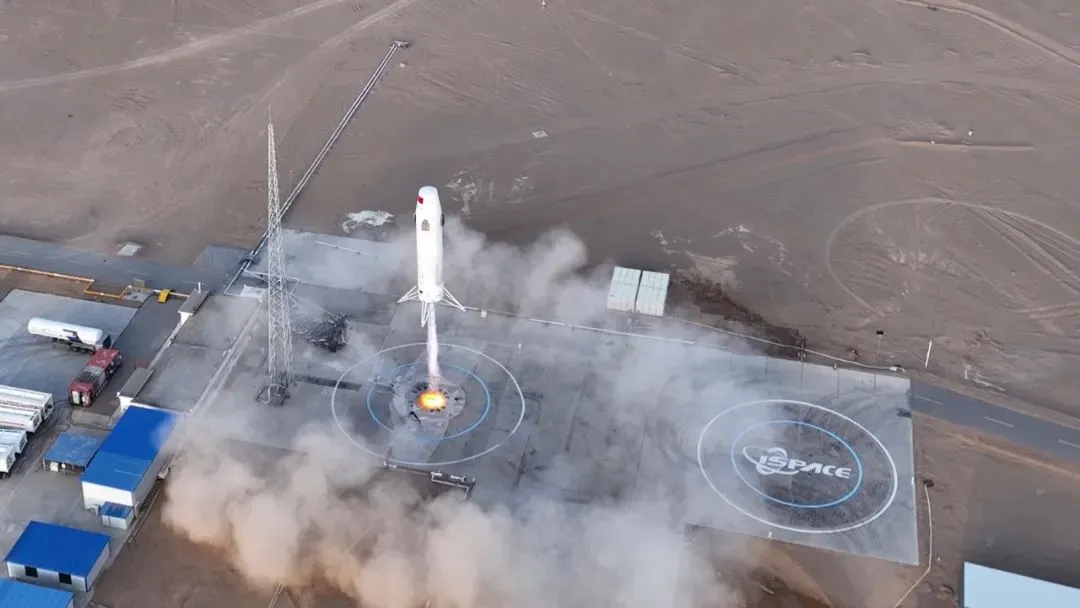
 iSpace / CGTN
iSpace (Beijing Interstellar Glory Space Technology)
Overview
Pioneer Chinese private orbital-launch operator — became the first Chinese privately developed rocket to reach orbit on 25 July 2019 with the solid Hyperbola-1. After a difficult run on Hyperbola-1 (3 successes, 4 failures through 2024), iSpace pivoted strategically to focus on the methalox reusable medium-lift Hyperbola-3 (8.5 t reusable / 13.4 t expendable to LEO). The company now operates a vertically integrated stack covering JD-1/JD-2 methalox engines, reusable structures, the Qinglan autonomous sea-recovery drone ship, and launch operations from Wenchang Commercial Pad-2. Revenue flows from Chinese commercial smallsat customers and is set to expand sharply once Hyperbola-3 enters service with Guowang/Qianfan megaconstellation deployment work.
Moat: First-mover advantage as the only Chinese private firm to have reached orbit (Hyperbola-1, 2019), giving multi-year operational data others lack. Vertically integrated methalox stack (JD-1 hop-test engine, JD-2 flight engine — all qualified by April 2026), proprietary Qinglan autonomous sea-recovery drone ship, and the largest single funding round in Chinese private aerospace history (CNY 5.04B Feb 2026) provide capital and infrastructure leadership relative to Chinese reusable-rocket peers.
Business
Primary customers
- Commercial: Chinese commercial smallsat operators (Yunyao-1, Kunpeng, etc.)
- Commercial: Guowang / Qianfan megaconstellation deployment slots
- Government: State-aligned scientific and provincial payload buyers
Sectors
Launch Services · Reusable Rockets · Liquid Methane/LOX Engines
Gallery
Last Funding Round
Key Products
- Hyperbola-1 (SQX-1)operational
Solid-fueled four-stage small launcher, ~300 kg to SSO; first Chinese private orbital rocket (2019); 3 successes / 4 failures through Y10 in Jul 2025
First flight: 2019-07-25
- Hyperbola-3 (SQX-3)development
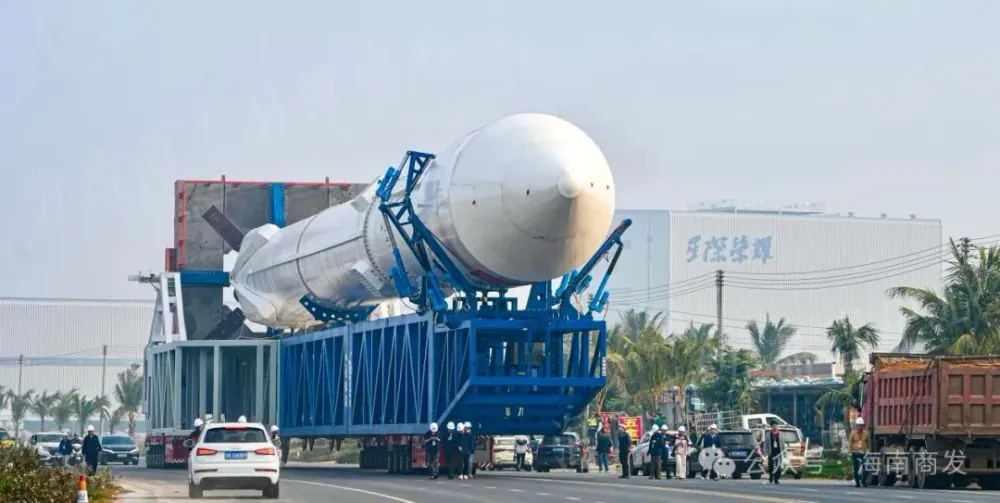
69m two-stage methalox partially reusable medium-lift launcher; 9× JD-2 engines on first stage + 1× JD-2 vacuum on upper stage; 8.5 t reusable / 13.4 t expendable to LEO; maiden flight expected 2026
- Hyperbola-3B (planned)development
Three-core heavy-lift derivative of Hyperbola-3 on the medium-term roadmap (~25 t to LEO target)
- JD-2 methane/LOX engineoperational
In-house staged-combustion methalox flight engine; 10 engines for the maiden Hyperbola-3 fully qualified by April 2026
- Qinglan autonomous sea-recovery drone shipoperational
Custom drone ship completed Aug 2025 for Hyperbola-3 first-stage downrange sea recovery; analogous to SpaceX's ASDS
Investor Resources
Primary-source documents — straight from iSpace (Beijing Interstellar Glory Space Technology)'s investor relations and SEC filings.
Near-term Catalysts
- 2026 H2
Hyperbola-3 maiden orbital flight from Wenchang Pad-2 with first-stage propulsive sea-landing attempt
If successful, instantly puts iSpace among the top-tier Chinese reusable-rocket operators and validates the largest Chinese private aerospace funding round to date
- 2027
Second Hyperbola-3 flight with first-stage drone-ship recovery
First Chinese private booster recovery would close the architectural gap to Falcon 9 Block 5
- Throughout 2026
Hyperbola-1 cadence ramp serving smallsat manifest
Recurring solid-launch revenue while reusable program scales
- 2027–2028
Hyperbola-3B three-core heavy-lift critical-design milestones
Long-term Guowang/Qianfan batch capacity and lunar/military payload optionality
Top Risks
- Hyperbola-1 has a mixed history (3 wins / 4 failures); any further solid-rocket loss would damage commercial confidence in the brand
- Hyperbola-3 maiden flight is the single largest binary-outcome event — failure could push reuse demonstration into 2027 and pressure follow-on fundraising
- Capital intensity: spending the CNY 5B Series D++ on Beijing/Shaanxi/Hainan/Sichuan/Guangdong infrastructure expansion before recurring flight revenue is sustained
- US export-control regime (ITAR/EAR) bars Western satellite customers, capping the addressable market to Chinese and Belt-and-Road buyers
- Crowded Chinese reusable race (LandSpace Zhuque-3 already flown, Space Pioneer, Deep Blue, Galactic Energy, CAS Space, Space Epoch) compresses pricing and talent costs
Recent Milestones
- 2019-07-25
Hyperbola-1 maiden flight reached orbit — first Chinese privately developed rocket to do so
- 2023-04
Hyperbola-1 returned to flight successfully without payload after prior failures
- 2023-12
Hyperbola-2Y verification stage performed successful 343m VTVL hop test
- 2024-07
Hyperbola-1 Y7 failed in ascent, losing three Yunyao-1 weather satellites to a fourth-stage separation anomaly
- 2025-07
Hyperbola-1 Y10 successfully launched the Kunpeng-03 satellite, restoring confidence in the solid launcher
- 2025-08
Unveiled completed 'Qinglan' autonomous drone ship for Hyperbola-3 first-stage sea recovery
- 2026-02-09
Closed record Series D++ of CNY 5.037B (~$730M) co-led by Cowin Capital and Jingming Capital — largest single private space funding round in Chinese history
- 2026-04
All ten flight-set JD-2 methalox engines for the maiden Hyperbola-3 qualified for flight
From Management
Recent interviews and talks from iSpace (Beijing Interstellar Glory Space Technology)'s leadership — hear the strategy in their own words.
What investors should know
Q1What does iSpace do?⌄
Q2What is the key technology behind Hyperbola-3?⌄
Q3How is iSpace funded?⌄
Q4What is iSpace's commercial path?⌄
Q5What geopolitical or export-control risks does iSpace face?⌄
Q6What near-term catalysts should investors watch?⌄
Q7How does iSpace compare to its peers?⌄
Peers
Sources & References
Trade Press
- SpaceNews — China's iSpace launch firm raises record $729 million for reusable rockets · 2026-02-10(archived)
- Yicai Global — Interstellar Secures Biggest Financing in China's Private Commercial Aerospace Industry · 2026-02-10(archived)
- China-in-Space — Hyperbola-3 Hardware Qualified Before First Flight, New Funding Round · 2026-04-28(archived)
- China-in-Space — Commercial Reusable Launch Vehicle Prepares to Fly From Wenchang in 2026 · 2026-01-15(archived)
- SpaceNews — China's iSpace launches and lands rocket test stage · 2023-12-11(archived)
- SCMP — China's iSpace Hyperbola-1 rocket fails losing 3 weather satellites · 2024-07-12(archived)
- Wikipedia — i-Space (Chinese company) · 2026-04-01(archived)