When a 7.8 magnitude earthquake struck southern Turkey and northern Syria on February 6, 2023, the destruction was so vast and so sudden that rescue teams on the ground had no way to grasp the full scale of what had happened. Entire city blocks had pancaked. Roads were impassable. Communications were severed. The fog of disaster was total.
But 700 kilometers above the chaos, satellites were already at work. Within hours of the earthquake, radar and optical satellites began capturing detailed images of the affected region, mapping collapsed buildings, identifying areas where survivors might be trapped, and helping coordinate the massive international rescue effort that followed. In those critical first hours and days, when every minute counted, space technology did not just assist the response -- it fundamentally shaped it.
This is the story of how satellites and space-based systems have become indispensable tools in humanity's response to natural disasters. It is a story that does not get told often enough.
The International Disaster Charter: A Global Agreement to Help
In the year 2000, the European Space Agency and the French space agency CNES established the International Charter on Space and Major Disasters. The concept was elegantly simple: when a major disaster strikes anywhere in the world, any authorized user can activate the charter, and member space agencies will task their satellites to capture imagery of the affected area as quickly as possible. The data is provided free of charge.
Since its founding, the charter has been activated more than 800 times, covering earthquakes, floods, hurricanes, tsunamis, volcanic eruptions, and wildfires on every continent. Seventeen space agencies are now members, contributing satellites from the United States, Europe, Japan, India, China, South Korea, and others. It represents one of the finest examples of international cooperation in space -- nations that might disagree on many things coming together to help people in crisis.
When the charter is activated, a project manager coordinates which satellites can image the disaster zone and when. Priority is given to the most useful passes, and processed imagery is delivered to emergency responders within hours. For countries that do not operate their own Earth observation satellites, the charter is a lifeline -- giving them access to world-class satellite data when they need it most.
Copernicus Emergency Management Service
Europe's Copernicus programme goes a step further with its Emergency Management Service (EMS). Rather than just providing raw satellite imagery, the EMS produces analysis-ready maps that emergency responders can use immediately. These include damage grading maps showing which buildings are destroyed, which are damaged, and which appear intact; flood extent maps showing which areas are underwater; and situation maps that combine satellite data with other information layers.
The service operates in two modes. Rapid Mapping delivers products within hours for sudden-onset disasters. Risk and Recovery Mapping supports longer-term efforts like reconstruction planning and risk assessment. During the catastrophic floods that hit Libya's city of Derna in September 2023, the Copernicus EMS produced detailed maps within 24 hours showing that entire neighborhoods had been washed into the sea -- information that was critical for directing search and rescue operations.
Seeing Through Clouds and Darkness: Synthetic Aperture Radar
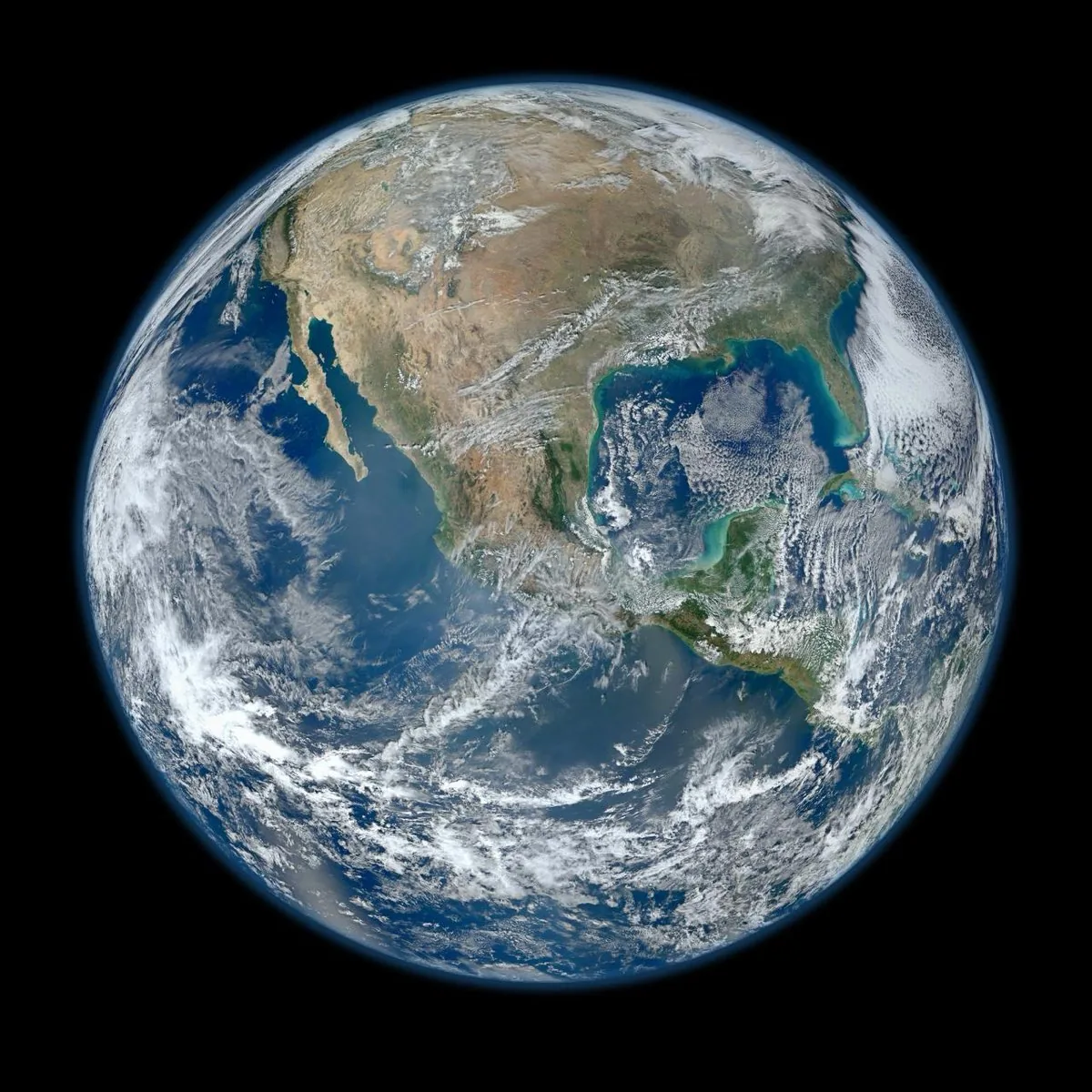
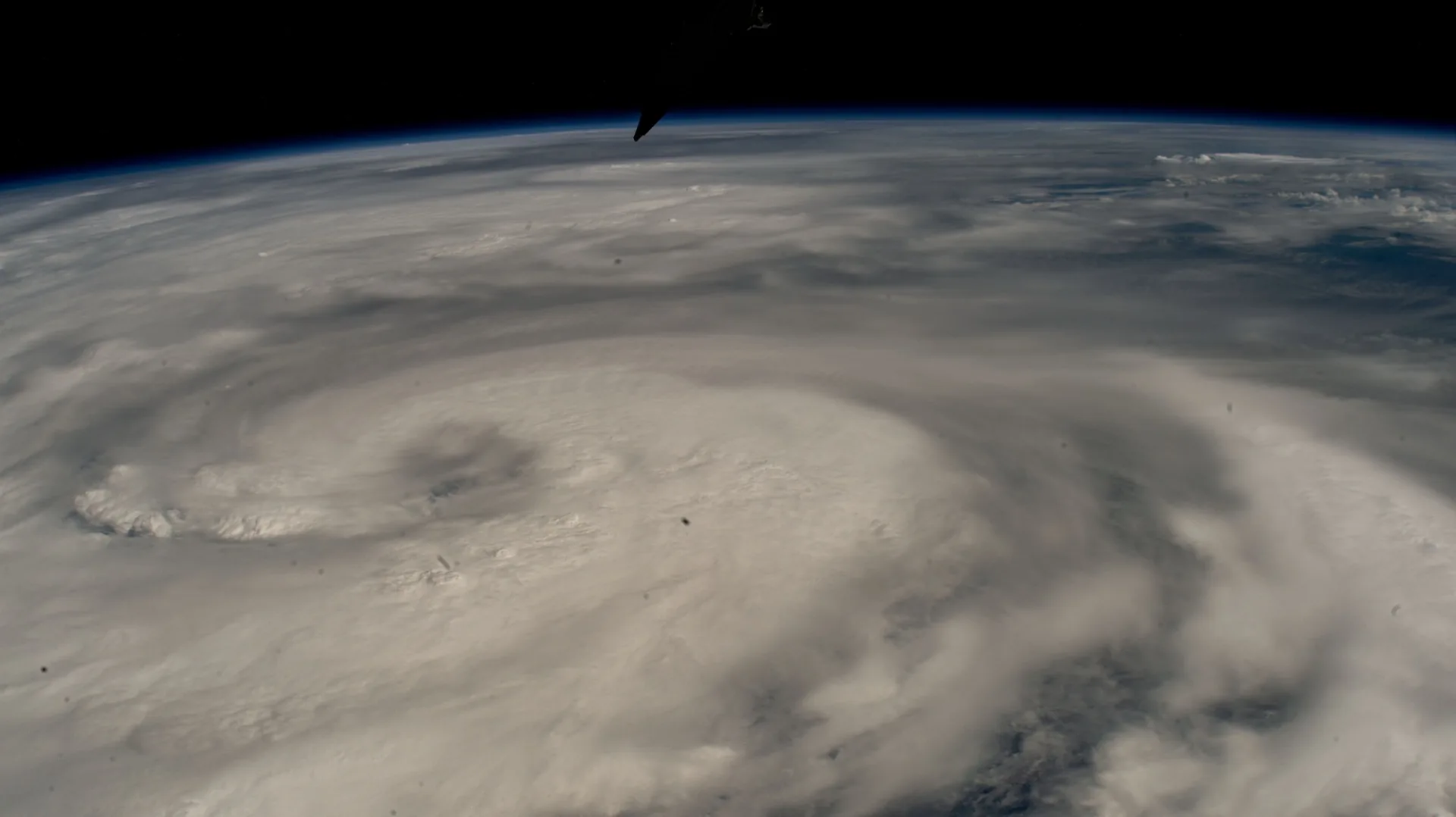
One of the cruelest tricks nature plays during disasters is that the worst events often come with the worst observing conditions. Hurricanes bring thick cloud cover. Floods happen during prolonged rainstorms. Earthquakes strike at night. For optical satellites that rely on sunlight and clear skies, these conditions can make imagery useless.
This is where synthetic aperture radar, or SAR, becomes a game-changer. SAR satellites emit their own microwave signals and measure the reflections. Microwaves pass through clouds, rain, and smoke, and they work equally well day and night. This makes SAR invaluable for disaster response.
During Hurricane Ian in September 2022, SAR satellites mapped the flooding across southwestern Florida even as the hurricane's cloud bands still covered the region. Responders could see which neighborhoods were underwater before the storm had fully passed, allowing them to pre-position rescue assets. The Copernicus Sentinel-1 satellites, along with commercial SAR operators like ICEYE and Capella Space, provided near-continuous monitoring of the flood extent as it evolved.
For earthquake response, SAR offers another powerful capability: interferometry. By comparing radar images taken before and after an earthquake, scientists can measure ground displacement with centimeter accuracy. After the Turkey-Syria earthquake, interferometric SAR maps showed that the ground had shifted by several meters along the fault -- data that helped seismologists understand the event and assess aftershock risk.
Wildfire Detection from Space
Wildfires are accelerating in frequency and intensity across the globe, and satellites have become essential tools for detecting and monitoring them. NASA's VIIRS (Visible Infrared Imaging Radiometer Suite) instruments, flying aboard the Suomi NPP and NOAA-20 satellites, can detect thermal hotspots as small as a few dozen square meters. The data feeds into the FIRMS (Fire Information for Resource Management System), which provides global fire alerts with a latency of just a few hours.
During the devastating Maui wildfires of August 2023, satellite data played a critical role. VIIRS detected the initial fire breakouts and tracked the fire's rapid spread through Lahaina. Post-fire, high-resolution optical satellites documented the extent of destruction, helping damage assessment teams prioritize their work. Satellite-derived burn severity maps guided the subsequent environmental recovery efforts.
What makes satellite-based fire detection particularly valuable is its ability to monitor remote and inaccessible areas. Wildfires in Siberia, the Canadian boreal forest, or the Brazilian cerrado can burn for days before anyone on the ground notices. Satellites catch them early, when they are still small enough to fight.
Flood Mapping: A Perfect Use Case for Space
Flooding is the most common natural disaster worldwide, affecting more people than any other hazard. It is also a perfect use case for satellite monitoring. Floodwaters spread over large areas, often in regions with limited ground infrastructure, and the situation can change rapidly.
SAR satellites excel at flood mapping because water surfaces produce a distinctive dark signature in radar imagery -- smooth water reflects the radar signal away from the satellite like a mirror, creating an obvious contrast with surrounding terrain. Automated algorithms can process SAR data and produce flood extent maps within minutes of image acquisition.
During Pakistan's catastrophic monsoon floods of 2022, which submerged a third of the country and displaced 33 million people, satellite-derived flood maps were essential for coordinating humanitarian aid. The International Disaster Charter was activated, and a fleet of satellites from multiple agencies provided continuous monitoring over the weeks-long disaster. Relief organizations used the maps to identify which villages were cut off, plan helicopter delivery routes, and estimate the number of people affected in each district.
Tsunami Early Warning
The devastating Indian Ocean tsunami of 2004, which killed over 230,000 people, exposed the dangerous lack of warning systems in many parts of the world. Since then, space technology has been integrated deeply into tsunami warning networks.
GPS stations along coastlines can detect the subtle ground movements that precede tsunamis. Satellite altimeters can measure the tsunami wave itself as it crosses the open ocean -- the 2004 tsunami was actually observed by the Jason-1 satellite altimeter, though the data was not processed in time to provide a warning. Today, the integration of satellite altimetry data into warning models has significantly improved forecast accuracy.
The DART (Deep-ocean Assessment and Reporting of Tsunamis) system uses seafloor sensors that communicate via satellite to relay real-time ocean pressure data to warning centers. Without satellite communications, these deep-ocean sensors would be useless -- there is no other way to transmit data from the middle of the Pacific in real time.
Starlink: Connectivity When Everything Else Fails
In recent years, a new dimension of space-based disaster response has emerged: broadband internet connectivity from low Earth orbit. SpaceX's Starlink constellation has been deployed to disaster zones around the world, providing high-speed internet when terrestrial infrastructure -- cell towers, fiber optic cables, and telephone lines -- has been destroyed.
After Hurricane Ian knocked out communications across large parts of Florida, Starlink terminals were deployed to help coordinate rescue operations and allow displaced residents to contact family members. In the aftermath of the Turkey-Syria earthquake, Starlink terminals provided connectivity to rescue teams operating in areas where all ground communications had been severed.
This capability matters enormously. Modern disaster response depends on communication. Rescue teams need to coordinate. Medical facilities need to transmit patient data. Aid organizations need to share logistics information. Affected populations need to access emergency information and contact loved ones. When a disaster takes down traditional communications, the gap can cost lives. Satellite-based connectivity fills that gap in a way nothing else can.
Earthquake Damage Assessment at Scale
After a major earthquake, one of the most urgent tasks is figuring out where the damage is worst. Traditional damage assessment requires teams of engineers going building by building -- a process that can take weeks or months. Satellites compress this timeline dramatically.
Using pre- and post-earthquake satellite imagery, analysts can classify damage across entire cities in days. High-resolution optical satellites with sub-meter resolution can distinguish between collapsed buildings, heavily damaged structures, and those that appear intact. Machine learning algorithms, trained on damage patterns from previous earthquakes, are increasingly automating this process.
After the 2023 Turkey-Syria earthquake, satellite-based damage assessments were produced within 48 hours, covering hundreds of square kilometers. These maps guided search and rescue teams to the areas with the most collapsed buildings -- the areas where survivors were most likely to be trapped. In a situation where thousands of buildings had collapsed across multiple cities, this kind of rapid, wide-area assessment simply could not have been done any other way.
The Human Element
For all the impressive technology, what makes satellite-based disaster response truly powerful is the human network behind it. Thousands of volunteer image analysts, coordinated through organizations like the Humanitarian OpenStreetMap Team and Tomnod (now part of Maxar's platform), donate their time to interpret satellite imagery after disasters. They trace roads, identify damaged buildings, and map refugee camps, turning raw satellite data into actionable information.
This combination of advanced space technology and human compassion represents something genuinely hopeful. When disaster strikes anywhere on Earth, a global community of space agencies, satellite operators, data scientists, and volunteers mobilizes within hours. Geographic and political boundaries dissolve. The only thing that matters is getting the right information to the right people in time to save lives.
The next time you look up at the night sky, remember that some of those moving points of light are working around the clock to keep you safe. They cannot prevent disasters, but they can -- and do -- make the difference between a disaster that overwhelms and one that humanity weathers together.