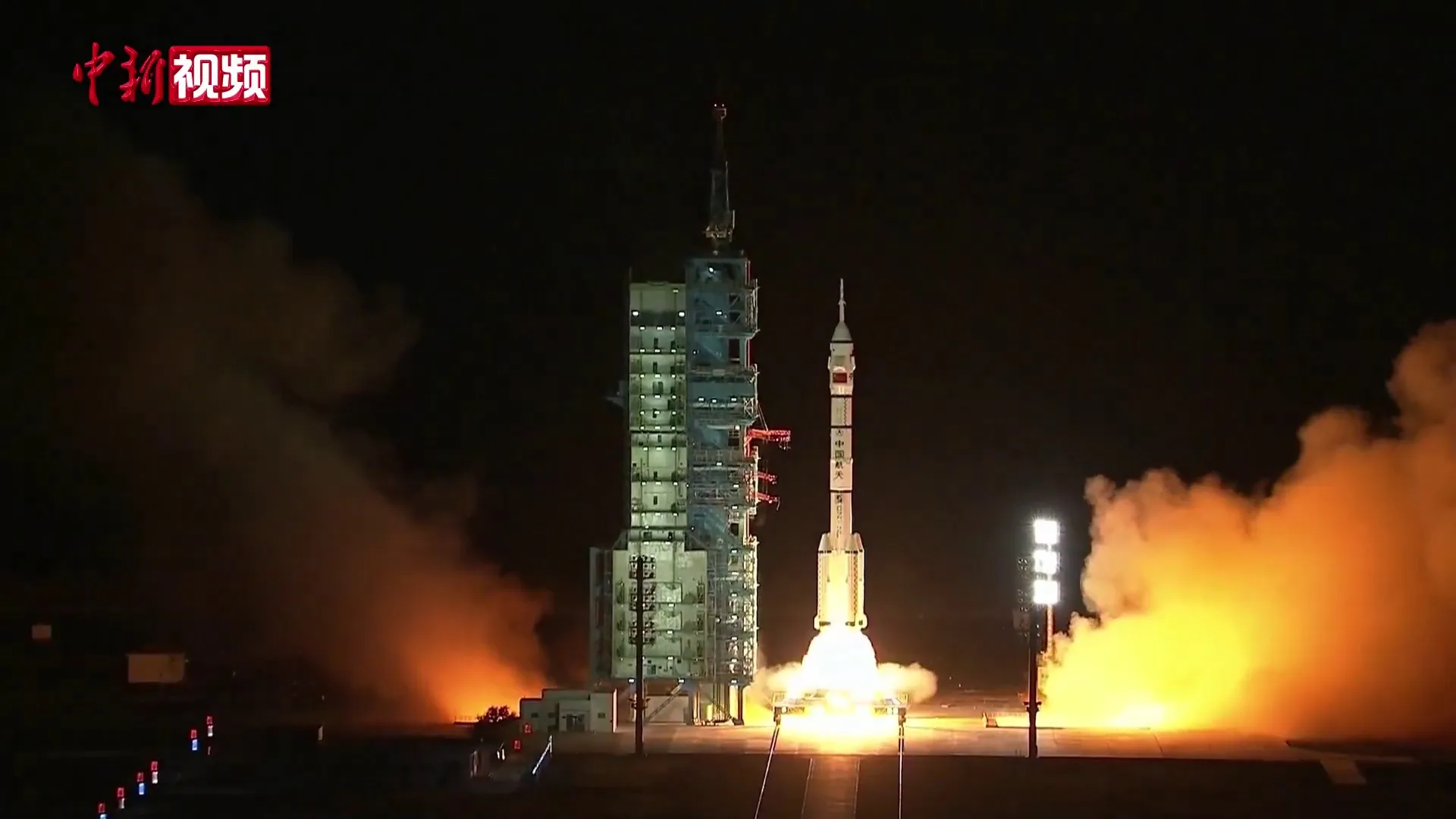
In December 2024, a Long March 5B lifted off from Wenchang carrying the first ten satellites of a constellation the Chinese state had barely acknowledged existed. There was no glossy render, no spacecraft mass, no orbital diagram — just a terse launch notice and a name: Guowang, the "national network." Eighteen months later, the secrecy has scarcely lifted, but the intent could not be clearer. China is building not one but two low-Earth-orbit broadband megaconstellations on the scale of SpaceX's Starlink, and behind them lies a filing with the International Telecommunication Union that reaches for a number so large it has rewritten the terms of the orbital race.
This is the story of China's LEO broadband bid: two flagship systems, a launch industry straining to keep up, and a spectrum land-grab whose consequences will outlast every satellite now in orbit.
Why China Wants a Sovereign Sky
Starlink demonstrated something Beijing could not ignore. A single company, using reusable rockets and mass-produced flat-panel satellites, had assembled a global communications layer independent of any terrestrial network — and had proven its strategic value in Ukraine, where Starlink terminals kept a military connected under fire. For Chinese planners, the lesson was twofold. First, whoever controls low Earth orbit controls a resilient, hard-to-jam communications backbone that no adversary can sever by cutting a cable or bombing a tower. Second, orbit is finite: the useful shells of LEO can hold only so many satellites and only so much spectrum before they are, in effect, claimed.
A sovereign Chinese constellation answers several imperatives at once. It provides broadband to the roughly one-third of Chinese territory — mountains, deserts, maritime zones — that fixed infrastructure serves poorly. It offers an export product for Belt and Road partners wary of routing their connectivity through Western networks. It backstops the People's Liberation Army with a dual-use communications and sensing layer. And it keeps Starlink dishes off Chinese soil, closing a channel Beijing views as an information-security threat. The State Council's space white papers frame the logic bluntly as strategic necessity rather than commerce — a system China must own end to end, dependent on no foreign supply chain.
Guowang: The State's National Network
Guowang is the government's constellation in the most literal sense. It is operated by China Satellite Network Group Co. (China SatNet, or Xingwang), a state-owned enterprise established in April 2021 that reports directly to the State-owned Assets Supervision and Administration Commission (SASAC) — placing it among the roughly one hundred central SOEs that answer to the State Council. The company is headquartered in Xiong'an, the new city rising southwest of Beijing that Xi Jinping has designated to host relocated "non-core" central functions. The symbolism is deliberate: Guowang is national infrastructure, not a startup.
The design target is enormous. Guowang comprises two sub-constellations filed with the ITU — GW-A59 (6,080 satellites) and GW-2 (6,912 satellites) — for a combined roughly 12,992 spacecraft, spread across shells from around 500 to 1,145 kilometers. What those satellites actually carry remains extraordinarily opaque. China SatNet has released almost no technical detail, but Chinese state sources have indicated on the record that Guowang payloads span broadband, laser inter-satellite links, synthetic-aperture radar, and optical remote sensing — a mix that reads less like a consumer ISP and more like a dual-use military-civil sensing and communications web.
Deployment has been steady but unspectacular. As of mid-2026, Guowang has flown roughly 20 launch missions placing on the order of 160 to 190 satellites in orbit — estimates vary by source and date, with independent trackers counting around 145 to 190 depending on the week. China SatNet has spoken of reaching roughly 400 satellites by 2027, but the constellation is running well behind its notional ramp.
Qianfan: Shanghai's Thousand Sails
If Guowang is Beijing's constellation, Qianfan is Shanghai's. Also called "Thousand Sails," the G60 Starlink, or Spacesail, it is developed by Shanghai Spacecom Satellite Technology (SSST), backed by the Shanghai municipal government and the Chinese Academy of Sciences and marketed abroad under the Spacesail brand. Where Guowang guards its secrets, Qianfan behaves more like a commercial operator: it publishes launch groups, courts foreign customers, and raises outside capital. In mid-2026, reports indicated SSST was seeking up to 15 billion yuan (about $2.2 billion) in a fresh funding round — a reminder that even a state-adjacent Chinese megaconstellation must confront the same brutal economics that have kept its revenue firmly earthbound.
Qianfan's ITU ambition is even larger than Guowang's: roughly 15,000 satellites approved to operate, flying in relatively high shells around 1,160 kilometers. That altitude buys broader per-satellite coverage at the cost of higher latency than Starlink's lower orbits. Deployment has outpaced Guowang in raw numbers. The constellation reached about 108 satellites by early 2025, crossed 200 in mid-June 2026, and stood at roughly 218 satellites across 13 launch groups by early July 2026, lofted primarily on Long March 6A and Long March 8 vehicles from Taiyuan.
Qianfan's positioning also differs. Rather than chasing mass-market consumers first, it is pitched as a wholesale space backbone for telecom operators, governments, and enterprises — particularly in countries China is courting. That B2B, government-to-government orientation is central to its international strategy, discussed below.
The Long March Bottleneck
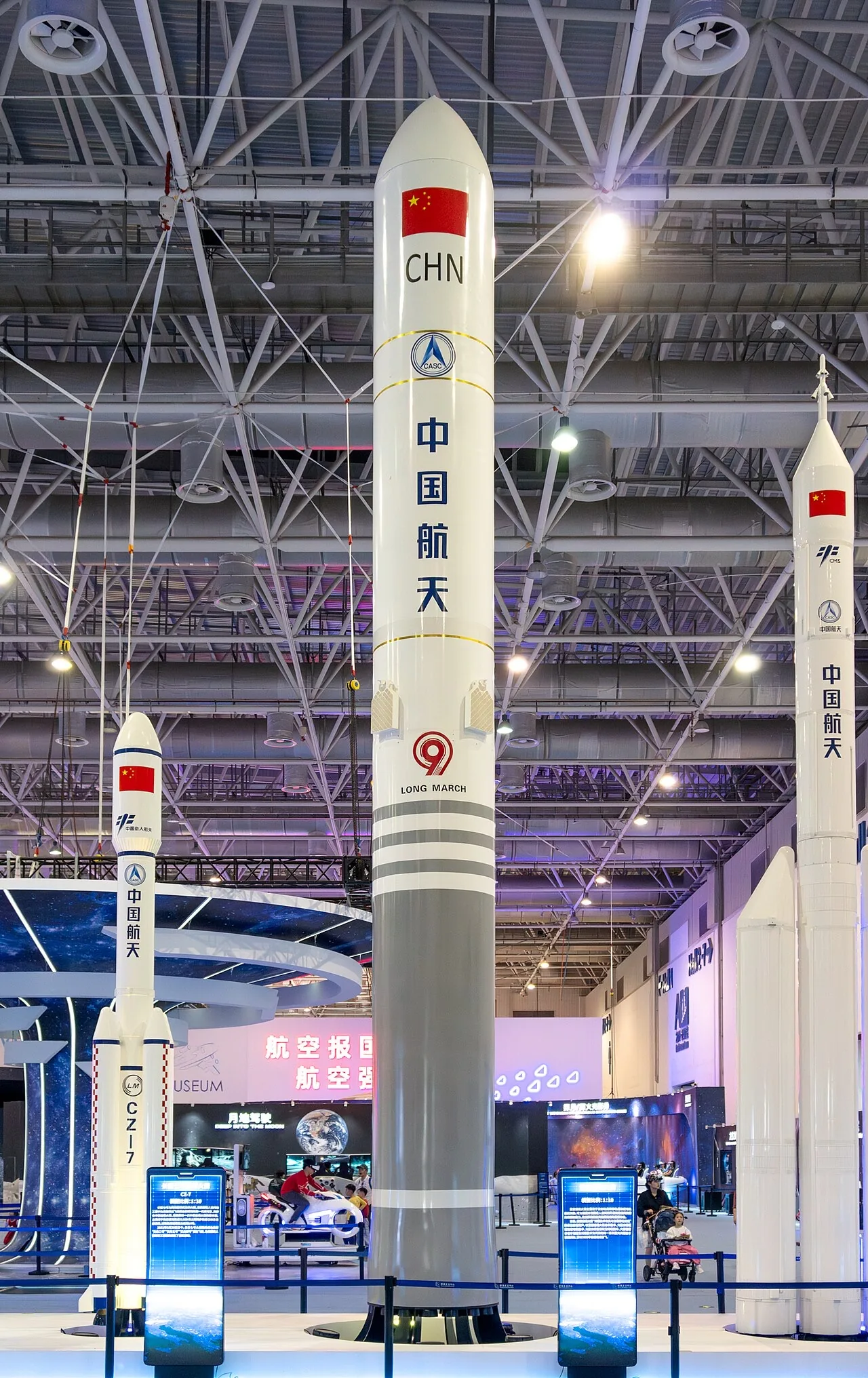
Here is the constraint that defines both programs: China cannot launch fast enough. Reaching the ITU-mandated milestones will require deploying thousands of satellites per year, yet as of mid-2026 no Chinese operator had demonstrated routine recovery and reuse of an orbital-class booster. The workhorses lofting Guowang and Qianfan — Long March 8A, 6A, and 5B — are expendable. Independent estimates put Chinese launch cost near $21,000 per kilogram against roughly $2,700–3,000 for a reused Falcon 9, a gap of over 90 percent that both throttles cadence and inflates capex.
The math is unforgiving. Analysts note that hitting Guowang's near-term targets would demand dozens of dedicated launches per year from a single vehicle type, and both constellations are already running behind their original schedules with rocket capacity the persistent bottleneck. The Long March 8A debuted in 2025 and flew six times that year, with CASC promising a near-monthly cadence in 2026 specifically to feed Guowang — helpful, but far short of what full deployment demands.
Relief is coming, slowly. The Long March 12 flew its maiden mission in December 2025, and a Long March 12A recovered a first stage that China aimed to refly in mid-2026 — a genuine step toward reusability. But the transition has been rough: 2026 has already seen high-profile stumbles, including a Long March 12B maiden flight in the Gobi that carried paying satellites yet made no booster-landing attempt, and a day of paired rocket failures that analysts cast as evidence of how fragile the cadence remains. Meanwhile China's commercial firms — LandSpace, Space Pioneer, Galactic Energy, iSpace, Deep Blue — are all racing to field reusable methalox and kerolox launchers precisely to absorb this megaconstellation demand. Whichever fields a clean, reliable, reusable rocket first will inherit an enormous captive market.
The Spectrum Race and a 200,000-Satellite Filing
The deepest logic of these constellations is not bandwidth but real estate. Under ITU rules, an operator must actually deploy a meaningful fraction of a filed constellation within fixed windows to keep its frequency and orbital rights — for Guowang, roughly half its satellites by around 2032 to protect its spectrum. Miss the milestone and the claim weakens. This "use it or lose it" regime turns deployment into a race against the calendar, and against SpaceX, whose Starlink is filling the most desirable shells first.
In late December 2025, China escalated dramatically. It submitted ITU filings — designated CTC-1 and CTC-2, each covering 96,714 satellites across 3,660 orbital planes — that together reach for nearly 200,000 spacecraft across roughly fourteen constellations. The number is almost certainly aspirational; no one expects 200,000 Chinese satellites this decade. But an ITU filing is a legal placeholder, and filing early stakes a claim on spectrum and slots before rivals lock them up. Set against SpaceX's own push toward 30,000-plus Starlinks and a filing for tens of thousands more, the message is that China intends to be a co-equal claimant on the orbital commons — and, if possible, to crowd the register before Western operators do. A third major Chinese system, Honghu-3, adds roughly 10,000 more satellites to the national tally.
Going Global: Brazil, Malaysia, and Beyond
Qianfan is where China's LEO ambitions meet foreign soil. Brazil's telecom regulator Anatel authorized the constellation to operate through partner Telebras, following a November 2024 agreement that gives Spacesail a two-year window to begin service from up to 324 satellites — with commercial operation targeted for the fourth quarter of 2026. Ground stations have been established in Brazil and Malaysia, and trials have run elsewhere: in Kazakhstan's remote Almaty region, tests with the then-90-satellite fleet demonstrated download speeds around 200 Mbps. Spacesail has signaled plans to begin services in Brazil, Malaysia, Kazakhstan, Türkiye, and via airline connectivity around late 2026.
This is a deliberately different playbook from Starlink's direct-to-consumer model. By partnering with national carriers and selling wholesale capacity, Qianfan offers governments a sovereign-flavored alternative to a US-controlled network — connectivity that routes through local operators rather than a Silicon Valley company. For countries in the Belt and Road orbit, that framing has real appeal, even if the underlying constellation is far from complete. The reach is early and thin, but the direction is unmistakable: China is exporting orbital infrastructure as an instrument of technological alignment.
Starlink's Lead, and What It Means
For all the ambition, the gap with Starlink remains vast. By mid-2026, SpaceX had well over 7,000 operational Starlink satellites in orbit and millions of subscribers on every continent, flying on a reusable rocket that launches multiple times a week. China's two flagship constellations combined had fewer than 500 satellites aloft and no paying consumers at scale. On raw deployment, Starlink is years ahead and pulling away.
Yet the comparison flatters the wrong metric. China is not trying to beat Starlink to a subscriber count; it is trying to secure a sovereign, dual-use orbital layer and to lock in spectrum before the window closes. Guowang's apparent SAR and optical-sensing payloads point to a system with military-civil fusion baked in from the start — closer to a distributed intelligence and communications architecture than to a broadband ISP. Qianfan, meanwhile, is executing a patient B2B export strategy that does not require winning the consumer market to matter geopolitically.
The strategic implication is that low Earth orbit is becoming a contested commons in the way the seas and the electromagnetic spectrum already are. Two great powers are each assembling thousands-strong constellations that double as communications infrastructure and strategic assets, filing for hundreds of thousands of slots between them, and racing a regulatory clock that rewards speed over restraint. The result is mounting pressure on orbital traffic, spectrum coordination, and astronomy — and a new axis of competition where the decisive variable is not who dreams biggest, but who can launch, and reuse, fast enough to fill the sky they have claimed.
For now, that variable belongs to SpaceX. Whether China can close it — through the Long March 12, a breakout commercial reusable rocket, or sheer industrial will — is the question on which Guowang and Qianfan ultimately turn.
Sources
- SpaceNews — "Qianfan constellation deployment hits 200 satellites"
- SpaceNews — "China files ITU paperwork for megaconstellations totaling nearly 200,000 satellites"
- SpaceNews — "China enters race for LEO broadband dominance"
- Guowang — Wikipedia
- Qianfan — Wikipedia
- KeepTrack — "Guowang's First Ten: Inside China's Secretive Megaconstellation"
- MERICS — "Orbital geopolitics: China's dual-use space internet"
- China-in-Space — "Brazil Approves Qianfan Constellation to Begin Providing Connectivity Services"
- The Bamboo Works — "SpaceSail seeks billions for China's Starlink challenge"
- China Daily Brief — "Two Rocket Failures in One Day Expose China's Launch Bottleneck"