Operational
Starlink
SpaceX · USA · Broadband Internet + Direct-to-Cell
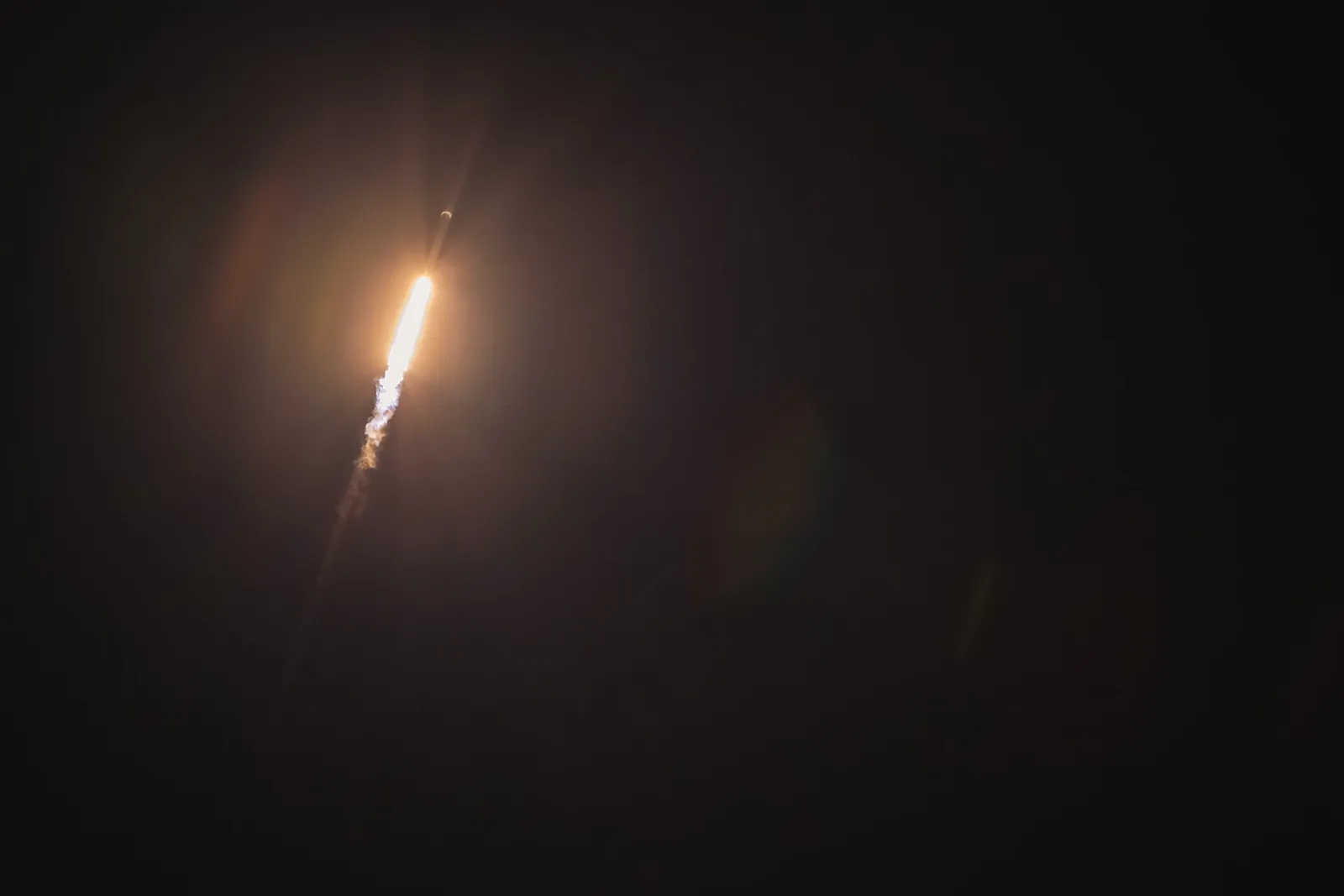
Starlink is SpaceX's low-Earth-orbit broadband constellation — the largest array of satellites ever built. Launched in batches aboard Falcon 9 (and increasingly Starship), it delivers low-latency internet to more than 4 million subscribers across 100+ countries, with newer V2 Mini satellites adding Direct-to-Cell service to ordinary smartphones. Inter-satellite laser links let the network route traffic over oceans and poles without ground stations.
6,200 in orbit42,000 planned
14.8% of the planned constellation deployed
Live track
Acquiring…Live sub-point of a representative low-Earth-orbit satellite — the regime Starlink operates in — propagated in your browser from current CelesTrak orbital elements.
Latitude
—
Longitude
—
Altitude
—
Velocity
—
Acquiring current orbital elements…
Constellation specifications
- Operator
- SpaceX
- Country
- USA
- Purpose
- Broadband Internet + Direct-to-Cell
- Orbit
- LEO (540–570 km)
- Launch vehicle
- Falcon 9 (60 sats/launch), Starship (400+ planned)
- Latency
- 25–60 ms
- User terminal
- $299–$599
- Revenue / funding
- ~$6.6B (2025 est.)
- Status
- Operational — 4M+ subscribers in 100+ countries
Key facts
- ▹Largest satellite constellation in history
- ▹Launches ~50 sats every ~5 days
- ▹V2 Mini sats have Direct-to-Cell capability
- ▹Gen2 on Starship will dramatically increase capacity
- ▹Inter-satellite laser links for global coverage including oceans
Frequently asked questions
How many Starlink satellites are in orbit?▾
As of mid-2026, SpaceX has roughly 10,700 operational Starlink satellites in low Earth orbit (of about 12,550 launched) — nearly two-thirds of all active satellites around Earth. The constellation is licensed to grow to as many as 42,000 satellites.
How fast is Starlink and what does it cost?▾
Starlink delivers latency of about 25–60 ms — comparable to wired broadband — because its satellites orbit at just 540–570 km. User terminals cost roughly $299–$599 depending on the plan and region.
Can Starlink connect to a normal phone?▾
Yes — newer Starlink V2 Mini satellites carry Direct-to-Cell payloads that let unmodified smartphones send texts and, increasingly, data without a dish, by treating the satellite as a cell tower in space.
Related
Data sourced from UCS Satellite Database, ESA Space Debris Office, Space-Track.org, ITU filings, and company disclosures. Live positions propagated from CelesTrak TLEs. © SpaceOdysseyHub.
Continue your journey
Build it yourself
Build it
Mission Integration Facility — build the Satellites
Build it yourself
✦
Debris event
Starlink Satellite Anomaly
Continue the story
✦
Constellation
Amazon Kuiper
From the same program
✦
Constellation
Guowang (SatNet)
From the same program
Build it yourself
Build it
Landsat 9 — the digital twin
Build it yourself
✦
Constellation
IRIS² (EU)
From the same program