FragmentationDecember 2025
Starlink Satellite Anomaly
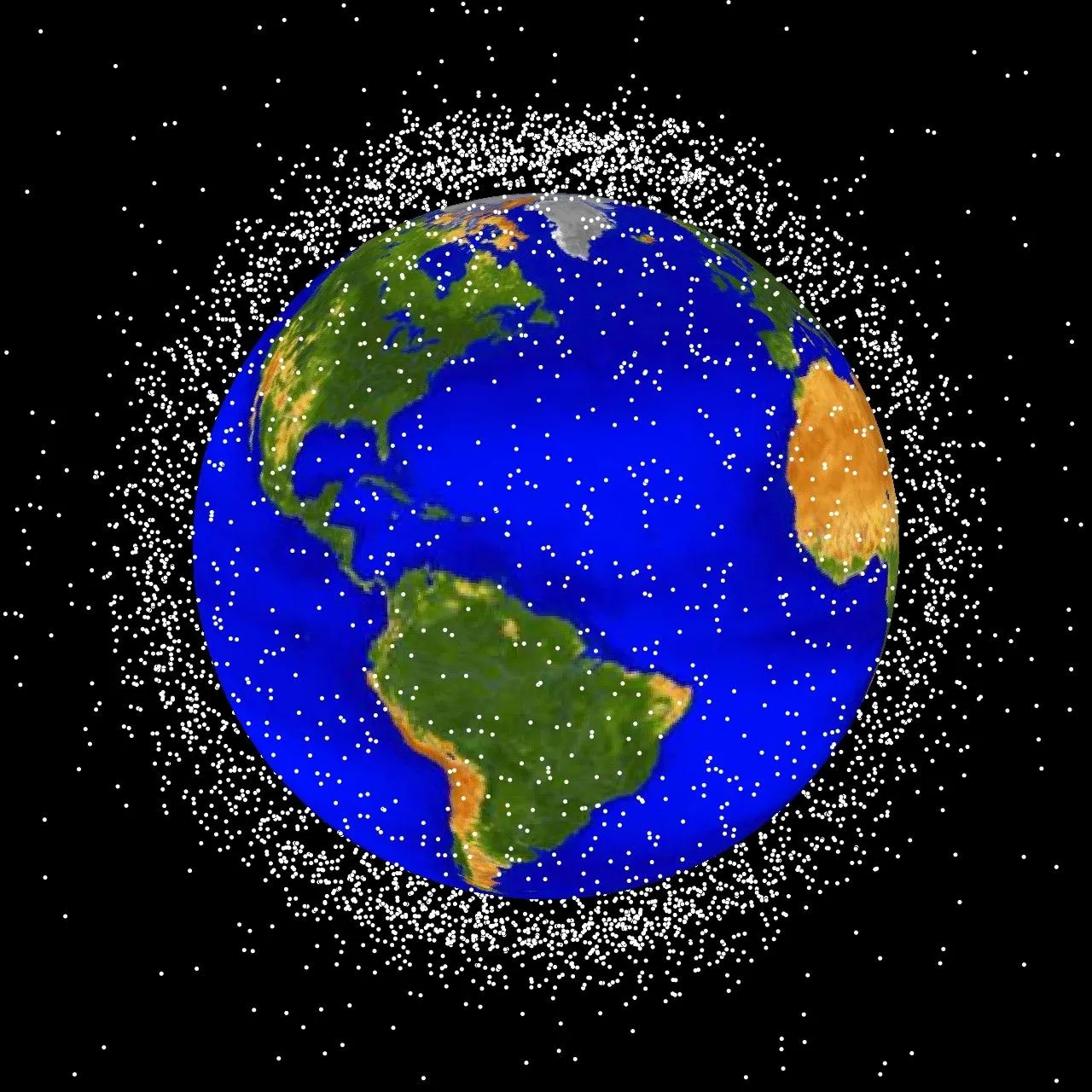
In December 2025, a Starlink satellite experienced an anomaly that released propellant and a cluster of tracked objects. Because Starlink operates at low altitudes (now being lowered toward ~480 km to further cut collision risk), most resulting debris re-enters and burns up within months rather than persisting for decades. The event renewed scrutiny of failure modes in the world's largest constellation even as its low orbits keep the long-term debris footprint comparatively small.
At a glance
- Date
- December 2025
- Type
- Fragmentation
- Orbit regime
- LEO (~350–550 km)
- Trackable fragments
- —
In depth
In December 2025, a Starlink satellite designated Starlink-35956 — launched only weeks earlier, on 23 November 2025 — suffered an anomaly at roughly 418 km altitude, lost communication and began tumbling. On 17 December, the spacecraft vented its propulsion tank, its orbit decayed by about 4 km, and it released a small cluster of trackable, low-relative-velocity objects; SpaceX and independent trackers publicized the event over the following days. Radar observers at LeoLabs characterized the cause as consistent with "an internal energetic source" rather than a collision — in other words, an on-board failure rather than an impact. It was a rare event for the world's largest constellation, and a second, similar Starlink anomaly followed months later, in March 2026, keeping the failure mode under scrutiny.
Even so, the debris consequences were modest by orbital-breakup standards, and the reason is altitude. Because the satellite was operating well below 500 km, atmospheric drag acts strongly on every fragment. LeoLabs tracked hundreds of associated objects that spread out along roughly 6,000 km of the orbital track within a few days, but SpaceX stated the satellite and its debris would re-enter and fully burn up within weeks — a stark contrast to the years-to-centuries lifetimes of the Long March 6A and Intelsat 33e clouds. The satellite itself re-entered in January 2026, about a month after the anomaly. Because the fragments' trajectory carried them below the International Space Station's orbit, the event posed no risk to the station or its crew. SpaceX also designs Starlink satellites to demise completely on re-entry, limiting the chance of surviving debris reaching the ground.
The anomaly renewed questions about failure rates across a constellation now numbering in the thousands, where even a very low per-satellite failure probability translates into occasional incidents at that scale. SpaceX said its engineers were working to identify and fix the root cause and were hardening other Starlink vehicles against a repeat. The episode also underscored the design philosophy behind the constellation's low operating altitudes — SpaceX has favored lower shells partly to keep the debris footprint short-lived — which means that when things do go wrong at those altitudes, the resulting hazard clears itself in weeks to months rather than lingering for decades. The follow-on March 2026 event occurred at a higher altitude (around 560 km), where debris lingers somewhat longer, underscoring how altitude shapes the consequences.
Frequently asked questions
How much debris did the December 2025 Starlink anomaly create?
The satellite vented its propulsion tank and released a cluster of trackable objects; LeoLabs tracked hundreds of associated pieces that spread along roughly 6,000 km of the orbital track within a few days. Because the objects were released at low relative velocity, the cloud stayed comparatively coherent rather than exploding outward.
Are the Starlink fragments still in orbit?
No — they cleared quickly. The anomaly happened at around 418 km, low enough that atmospheric drag pulls debris down fast. SpaceX stated the satellite and its fragments would re-enter and fully demise within weeks, and the satellite itself re-entered in January 2026 — a very different outcome from high-altitude breakups that persist for years or longer.
Did the Starlink debris threaten the ISS?
No. The debris trajectory carried the fragments below the International Space Station's orbit, so operators reported no risk to the station or its crew. Starlink satellites are also designed to burn up completely on re-entry, limiting the chance of surviving pieces reaching the ground.
What caused the Starlink satellite anomaly?
LeoLabs assessed the December 2025 event as consistent with an internal energetic source — an on-board failure — rather than a collision with another object. SpaceX said engineers were working to root-cause the problem and were hardening other Starlink satellites against a recurrence; a similar anomaly on another Starlink satellite followed in March 2026.
Related
Data sourced from ESA Space Debris Office, NASA Orbital Debris Program Office, and U.S. Space Command catalog reporting. © SpaceOdysseyHub.