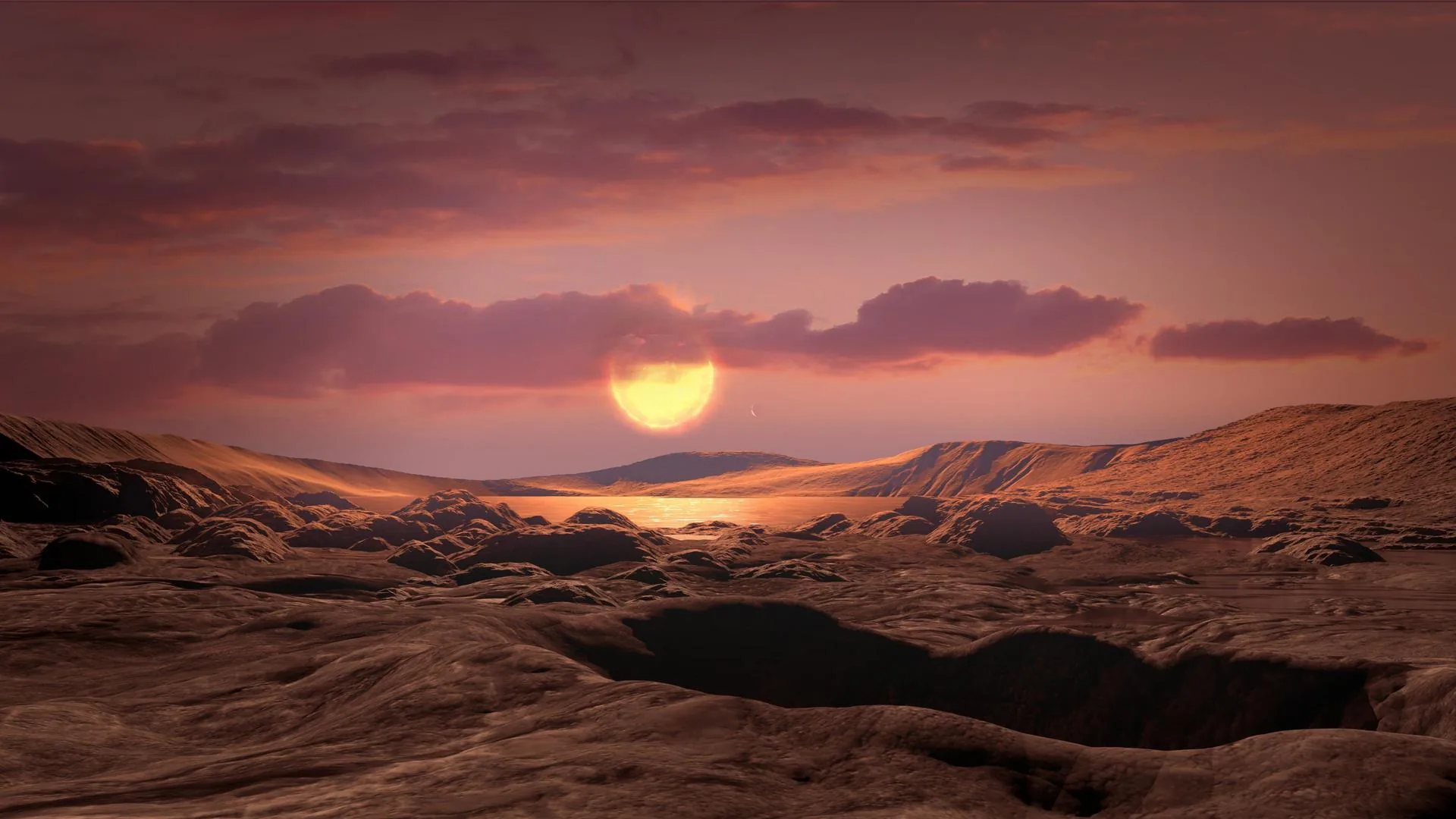
If you have read anything about exoplanets in the last decade, you have almost certainly encountered the phrase "habitable zone." It shows up in headlines every time a new planet is discovered in the right orbital sweet spot: "New Exoplanet Found in Star's Habitable Zone!" The concept is usually explained with a tidy metaphor. The habitable zone is the "Goldilocks zone," the region around a star where temperatures are not too hot and not too cold, but just right for liquid water to exist on a planet's surface.
It is a useful starting point. It is also, as planetary scientists will quickly tell you, a dramatic oversimplification that can be genuinely misleading. The reality of what makes a world habitable is far more complex, far more interesting, and far less certain than the Goldilocks metaphor suggests. Let us dig into what the habitable zone actually means, where the concept works, where it breaks down, and why the search for life demands a much broader perspective.
The Traditional Definition
The classical habitable zone (HZ) was formally defined in a landmark 1993 paper by James Kasting, Daniel Whitmire, and Ray Reynolds. Their model calculated the range of orbital distances around a star where a rocky planet with a CO2-N2-H2O atmosphere could sustain liquid water on its surface, given certain assumptions about atmospheric feedback mechanisms.
The inner edge of the HZ is set by the "runaway greenhouse" limit. Move a planet too close to its star, and increasing temperatures evaporate surface water into the atmosphere. Water vapor is a potent greenhouse gas, so more water vapor means more warming, which means more evaporation, in a feedback loop that eventually turns the planet into a Venus-like hellscape with all its water baked into the atmosphere and subsequently lost to space.
The outer edge is set by the "maximum greenhouse" limit. At sufficient distances from the star, even a thick CO2 atmosphere cannot keep the surface warm enough for liquid water. CO2 itself begins to condense at low temperatures, removing the very greenhouse gas needed for warming and causing the planet to freeze.
For our Sun, the classical HZ extends from roughly 0.95 to 1.67 astronomical units (AU). Earth sits comfortably inside at 1 AU. Venus, at 0.72 AU, is inside the inner edge. Mars, at 1.52 AU, is within the traditional HZ, though its thin atmosphere and low gravity have allowed it to lose most of its warmth and water.
Where the Traditional Model Falls Short
The elegance of the classical HZ hides a host of assumptions that may or may not hold for any given planet. Here are the big ones.
Atmosphere is everything. The classical model assumes a specific type of atmosphere: primarily nitrogen and carbon dioxide, with water vapor. But what if a planet has a hydrogen-rich atmosphere, which is a far more powerful greenhouse gas? Such a planet could maintain surface liquid water well beyond the traditional outer edge. Conversely, a planet with no atmosphere at all, or one dominated by non-greenhouse gases, could be frozen solid even within the HZ.
The planet must be rocky with a surface. The HZ concept is designed for terrestrial planets with solid or liquid surfaces. It does not straightforwardly apply to gas giants, ice giants, or the proposed "Hycean" worlds with deep hydrogen atmospheres over water oceans. A planet can be in the habitable zone and be completely uninhabitable if it has the wrong composition.
The carbonate-silicate cycle is assumed. The classical model relies on a feedback mechanism found on Earth: the carbonate-silicate cycle, a geological thermostat that regulates CO2 levels over millions of years. If the planet cools, weathering slows, CO2 builds up, and greenhouse warming increases. If the planet warms, weathering accelerates, CO2 is drawn down, and temperatures stabilize. This cycle requires active geology, plate tectonics, surface water, and silicate rocks. Not every planet will have all of these.
Stellar evolution matters. Stars do not have constant luminosity. Our Sun was about 30 percent dimmer when it was young. This means the HZ migrates outward over a star's lifetime. A planet that is in the HZ today may not have been billions of years ago, and vice versa. Astrobiologists sometimes define a "continuously habitable zone," the region that remains habitable over the timescales needed for life to emerge and evolve.
Subsurface Oceans: Life Beyond the Zone
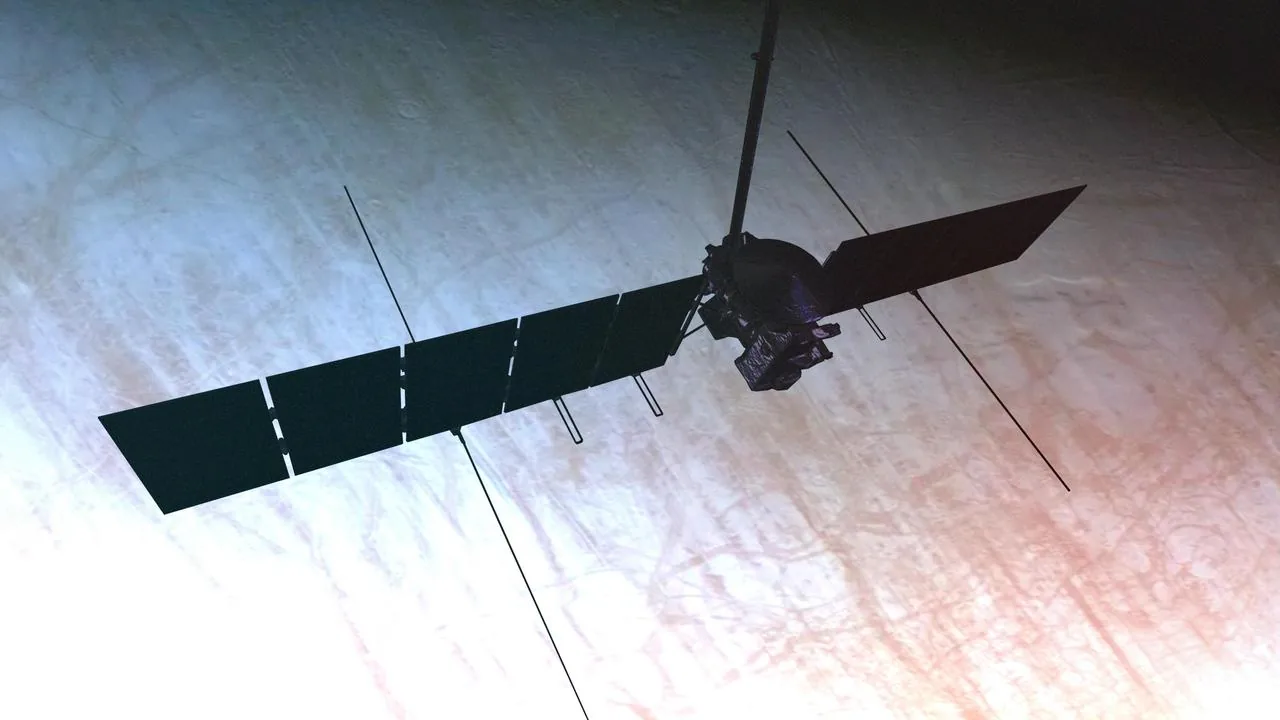
Perhaps the most important challenge to the traditional HZ comes from our own solar system. Europa, Enceladus, and possibly other icy moons maintain liquid water oceans beneath their frozen surfaces, not because of solar heating, but because of tidal forces.
Jupiter's immense gravity flexes Europa's interior as the moon moves through its slightly elliptical orbit, generating frictional heat that keeps the subsurface ocean liquid. Saturn does the same for Enceladus. These moons are far outside the traditional habitable zone, well beyond where surface liquid water could exist, yet they may be among the most promising places to search for life in our solar system.
This forces a profound question: if life can exist in subsurface oceans maintained by tidal heating, then the habitable zone as traditionally defined captures only a fraction of the places where life might thrive. Every gas giant in every planetary system could potentially have tidally heated ocean moons, regardless of the star's luminosity or the system's distance from the habitable zone.
Some researchers have proposed an expanded concept: the "tidal habitable zone," which considers the range of orbital configurations around a giant planet where tidal heating can maintain liquid water in a moon. Others argue that we should abandon the term "habitable zone" altogether and instead assess each world individually based on its specific energy budget, composition, and geological activity.
The M-Dwarf Problem
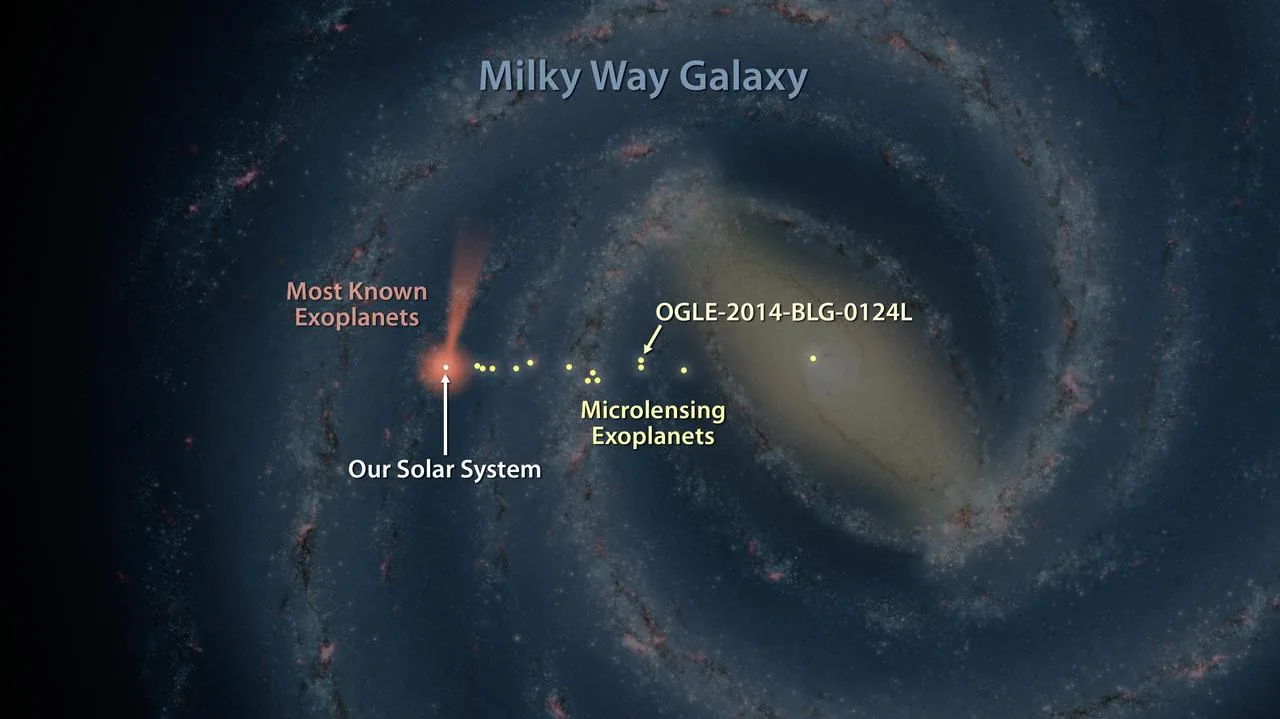
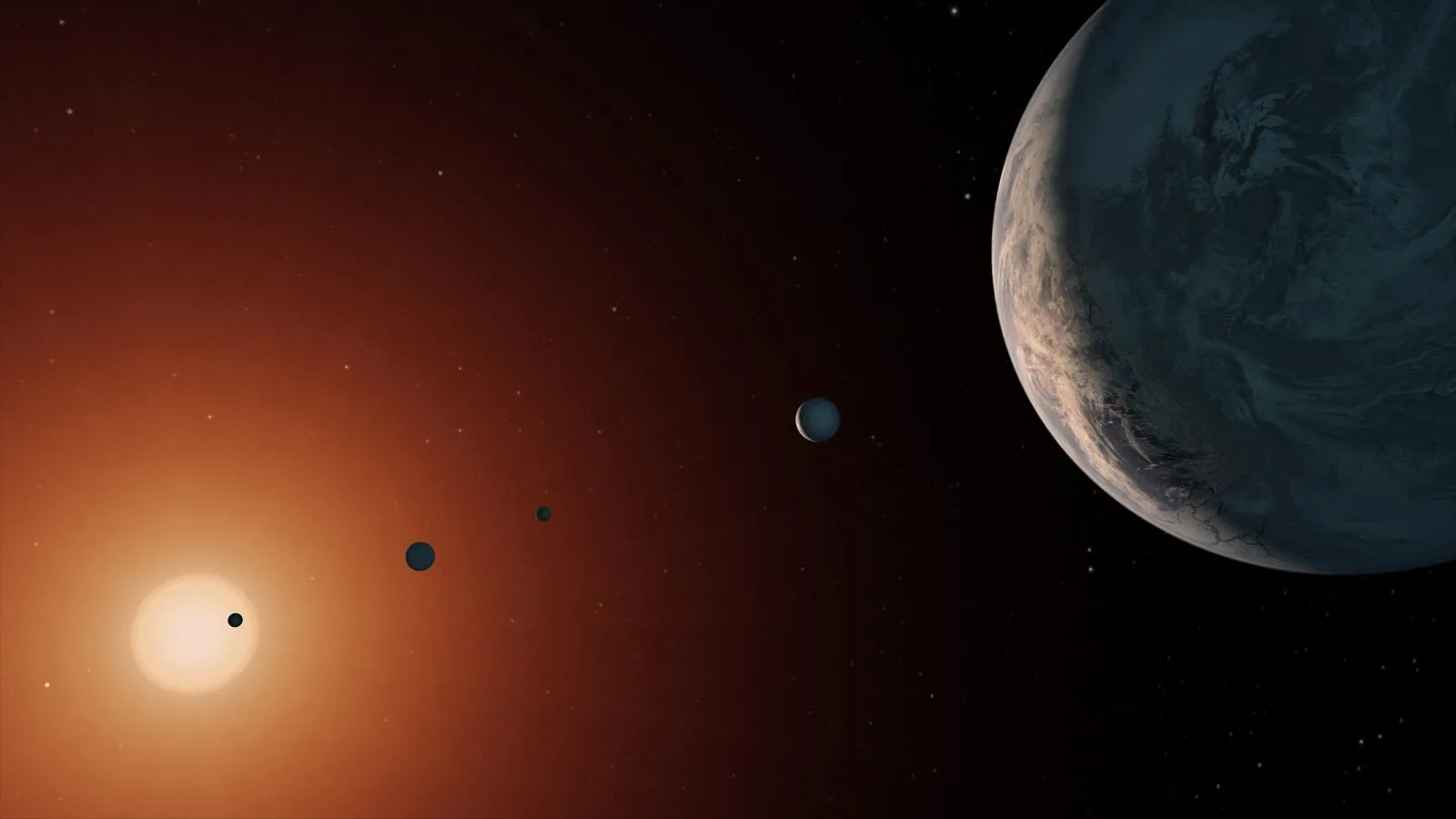
Most stars in our galaxy are M-dwarfs, also called red dwarfs. These are small, cool, dim stars with masses between about 8 and 60 percent of the Sun's. Their habitable zones are correspondingly close-in, typically at orbital distances of 0.1 to 0.4 AU. Planets in these tight orbits are easier to detect via the transit and radial velocity methods, which is why M-dwarf habitable zone planets dominate the exoplanet census. The famous TRAPPIST-1 system, with its seven Earth-sized planets (three in the HZ), orbits an M-dwarf.
But M-dwarf habitable zones come with serious complications.
Tidal locking. Planets so close to their star are likely tidally locked, meaning one hemisphere permanently faces the star while the other faces the cold of space. The dayside could be scorching, the nightside frozen, and whether an atmosphere could redistribute heat effectively enough to maintain habitable conditions is an active area of research. Some models suggest it is possible, with strong atmospheric circulation creating temperate zones at the terminator (the boundary between day and night). Others are less optimistic.
Stellar activity. M-dwarfs, especially young ones, are notoriously active. They produce powerful stellar flares and coronal mass ejections that can strip a close-in planet's atmosphere over time. Without an atmosphere, there is no greenhouse effect, no liquid water, and no protection from radiation. Whether a planet can maintain its atmosphere against this onslaught depends on factors like its magnetic field strength, atmospheric mass, and replenishment rate from volcanic outgassing.
UV and X-ray radiation. During flares, M-dwarfs can increase their UV and X-ray output by factors of hundreds or thousands. This radiation can drive photochemistry that destroys ozone and other protective atmospheric molecules. For surface life, the radiation environment around an M-dwarf could be far more hostile than around a Sun-like star, even if the planet is technically in the habitable zone.
The pre-main-sequence luminosity problem. M-dwarfs take a long time to settle onto the main sequence, during which they are significantly brighter than their eventual steady-state luminosity. Planets that end up in the HZ of a mature M-dwarf may have spent hundreds of millions of years being baked by a much more luminous young star, potentially losing their water and atmosphere before the star dimmed to its final luminosity.
None of these challenges are necessarily deal-breakers, but they illustrate that being "in the habitable zone" of an M-dwarf is a far cry from being habitable.
Atmospheric Requirements
Even for a rocky planet at the right distance from a well-behaved star, habitability depends critically on its atmosphere. Consider the three terrestrial planets in or near our Sun's habitable zone:
Venus has a crushing 90-bar CO2 atmosphere and surface temperatures of 460 degrees Celsius. It is in or very near the inner edge of the HZ, but a runaway greenhouse has rendered it utterly inhospitable to life as we know it.
Earth has a 1-bar nitrogen-oxygen atmosphere with trace greenhouse gases that maintain a comfortable average temperature of about 15 degrees Celsius. It is the definition of habitable.
Mars has a wispy 0.006-bar CO2 atmosphere and average surface temperatures of minus 60 degrees Celsius. It is within the traditional HZ, but it is a frozen desert with no stable liquid water on the surface.
Same star. Similar region of space. Three radically different outcomes, determined almost entirely by atmospheric mass, composition, and evolutionary history. The habitable zone sets the stage, but the atmosphere writes the script.
This is why the next frontier of exoplanet science is atmospheric characterization. JWST, and future missions like the Habitable Worlds Observatory, aim to analyze the atmospheres of habitable zone planets and determine whether they have the right conditions for liquid water, not just the right orbital address.
Beyond the Goldilocks Metaphor
The habitable zone remains a valuable concept in astronomy. It provides a way to prioritize targets, allocate telescope time, and frame our search for life. But it is essential to understand it as a first filter, not a final answer.
A planet in the habitable zone might be a Venus, a Mars, or an airless rock. A moon outside the habitable zone might have a warm ocean beneath its ice. A free-floating planet with a thick hydrogen atmosphere might maintain surface liquid water with no star at all.
The search for life in the universe demands that we think beyond the Goldilocks metaphor. We need to understand atmospheres, interiors, magnetic fields, geological activity, stellar environments, and orbital dynamics. The habitable zone tells us where to start looking. Everything else tells us whether we have actually found something worth getting excited about.
And frankly, that complexity is what makes this field so captivating. The universe is not simple enough for a fairy tale. It is strange, varied, and full of surprises, exactly the kind of place where life might pop up in ways we have not yet imagined.