If you have ever watched a rocket launch -- that deafening roar, the pillar of flame, the raw brute force of chemical propulsion shoving thousands of tonnes off the launch pad -- then ion propulsion is going to feel like a completely different universe. Because it is. Ion engines produce roughly the thrust of a sheet of paper resting in your palm. You could literally hold back an ion thruster with your hand. And yet, these whisper-quiet engines have propelled spacecraft across billions of kilometers, visited dwarf planets, deflected asteroids, and are now being counted on for humanity's push to Mars and beyond.
The secret is patience. And physics.
How Ion Drives Actually Work
The fundamental principle behind ion propulsion is elegant. Take a noble gas -- typically xenon -- and ionize it by stripping electrons from the atoms using an electric field or electron bombardment. Now you have positively charged ions. Accelerate those ions through an electric field and shoot them out the back of the engine at extremely high velocities. Newton's third law does the rest: the spacecraft gets pushed in the opposite direction.
The exhaust velocity of an ion engine is extraordinary -- roughly 30 to 50 kilometers per second, compared to about 4.5 kilometers per second for the best chemical rockets. That ratio is the key to everything. In rocketry, we talk about specific impulse, which is essentially a measure of how efficiently an engine uses its propellant. Chemical rockets have specific impulses in the range of 300 to 450 seconds. Ion engines? They routinely achieve 3,000 to 10,000 seconds. That means for every kilogram of propellant, an ion engine extracts vastly more velocity change than a chemical engine ever could.
The tradeoff is thrust. Ion engines produce millinewtons to newtons of force, while chemical engines produce millions of newtons. You cannot launch from Earth with an ion engine. But once you are in space, where there is no gravity well to fight and no atmosphere to push through, that tiny thrust adds up. Run an ion engine for days, weeks, months, and the accumulated velocity change is enormous. It is the tortoise-and-the-hare story of propulsion, and the tortoise wins every time on long missions.
Dawn: The Mission That Proved It
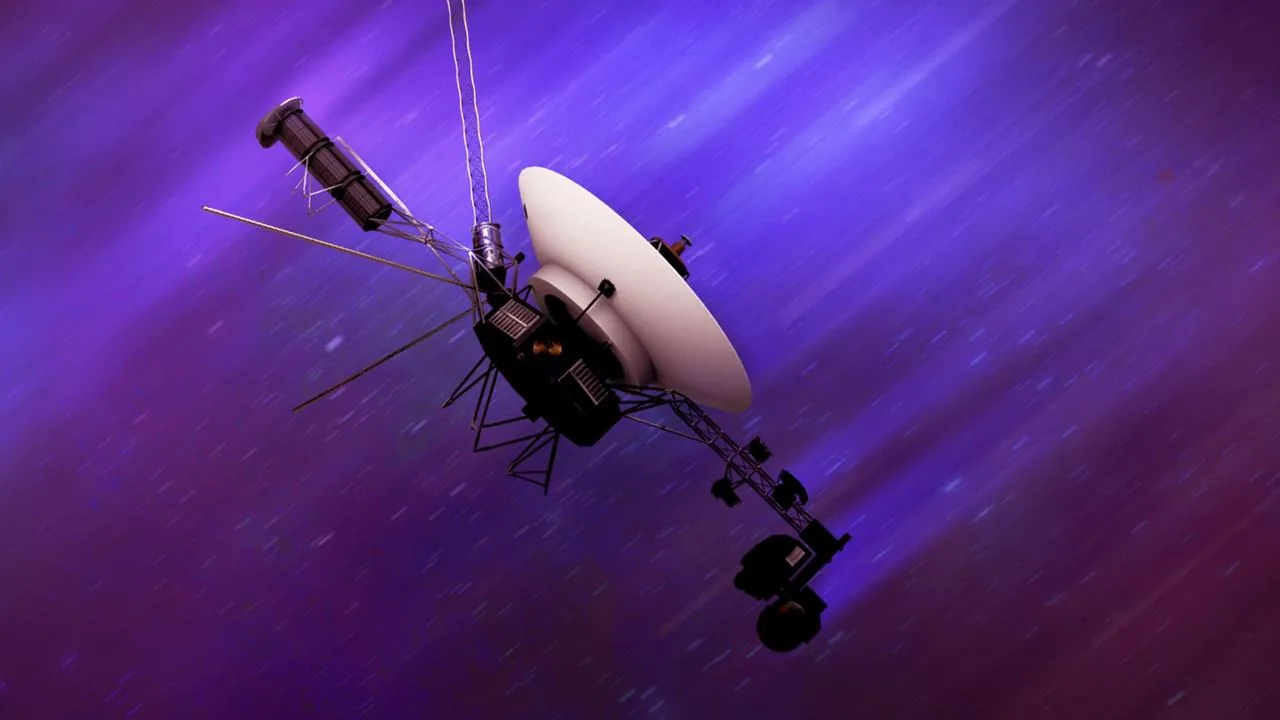
NASA's Dawn spacecraft remains one of the most spectacular demonstrations of what ion propulsion can do. Launched in 2007, Dawn carried three NSTAR ion engines -- gridded ion thrusters that used xenon propellant and produced about 90 millinewtons of thrust each. With that modest push, Dawn accomplished something no chemical-propulsion spacecraft could have: it orbited two different bodies in the asteroid belt.
Dawn first traveled to Vesta, the second-largest object in the asteroid belt, arriving in 2011. It spent 14 months mapping Vesta's surface in extraordinary detail, revealing a world far more complex and geologically interesting than anyone expected. Then -- and this is the remarkable part -- Dawn left Vesta's orbit, spiraled outward, and traveled to Ceres, the largest object in the asteroid belt and a dwarf planet in its own right. It arrived at Ceres in 2015 and spent years studying its mysterious bright spots (which turned out to be sodium carbonate deposits, likely from a subsurface brine).
The total velocity change Dawn achieved over its mission exceeded 11 kilometers per second -- more than any other spacecraft had achieved with onboard propulsion at the time. A chemical rocket could not have carried enough fuel to visit both Vesta and Ceres on a single mission. Ion propulsion made it possible by being absurdly efficient with every gram of xenon.
DART and the NEXT-C Engine
When NASA decided to slam a spacecraft into an asteroid to test planetary defense -- the DART mission, which successfully impacted the moonlet Dimorphos in September 2022 -- the spacecraft carried a technology demonstration of the NEXT-C ion engine. NEXT-C stands for NASA's Evolutionary Xenon Thruster - Commercial, and it represents a significant step forward from the NSTAR engines used on Dawn.
NEXT-C produces more thrust (about 236 millinewtons), operates at higher power, and is designed for longer lifetimes. While DART's primary propulsion was a conventional hydrazine system (the spacecraft needed to arrive on a precise timeline, and the NEXT-C was a technology demo), the engine's successful operation in space validated it for future missions. NEXT-C is expected to power deep space missions for the next generation.
Psyche: Hall-Effect Thrusters Go Deep
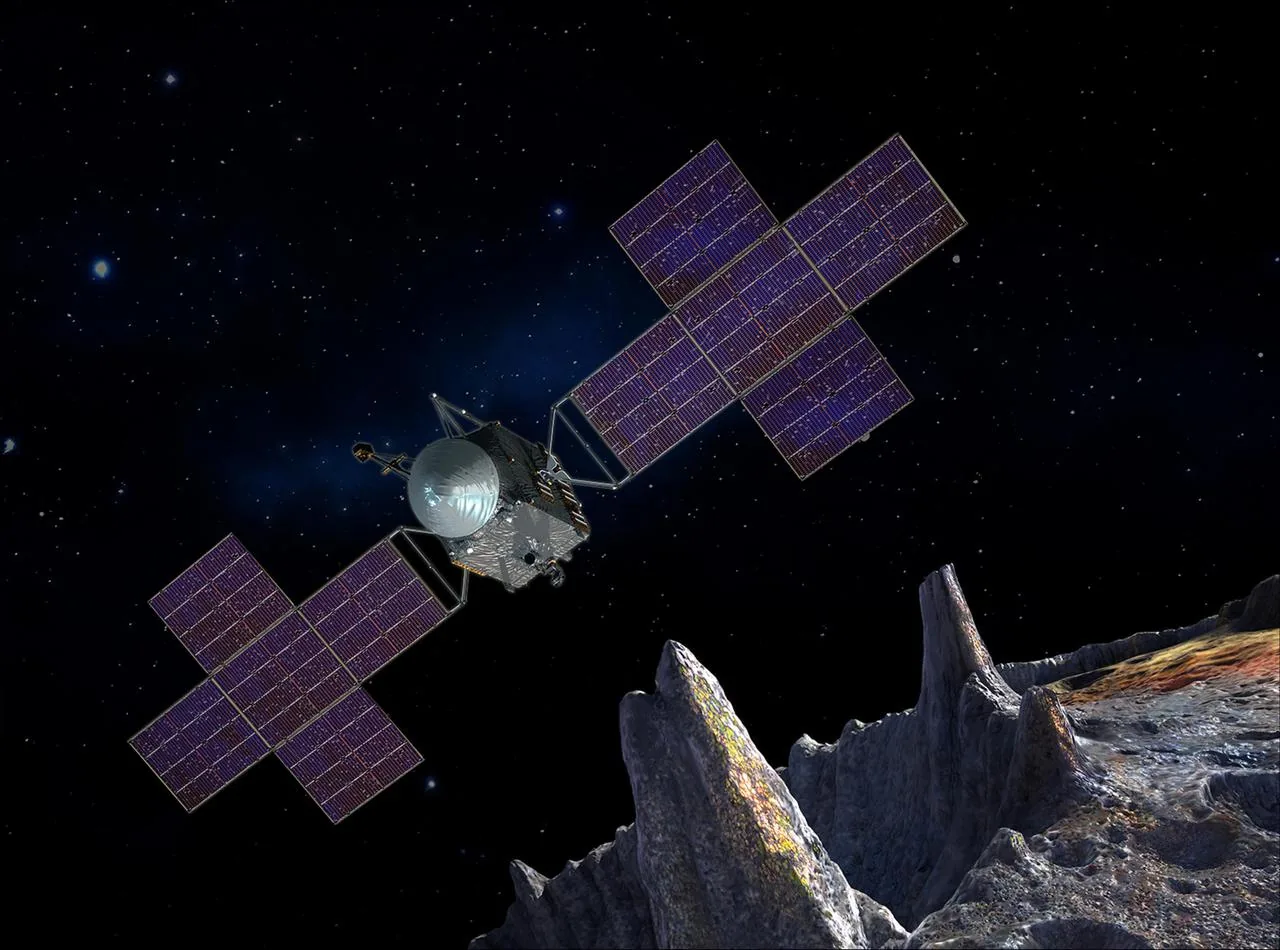
NASA's Psyche mission, launched in October 2023 and currently en route to the metal-rich asteroid 16 Psyche, is pushing ion propulsion into new territory. Psyche uses Hall-effect thrusters -- specifically, SPT-140 engines built by Maxar -- rather than the gridded ion engines used by Dawn.
Hall-effect thrusters work on a slightly different principle. Instead of using grids to accelerate ions, they use a magnetic field to trap electrons in a circular Hall current, which creates an electric field that accelerates the xenon ions. The result is an engine that is simpler, more compact, and produces somewhat higher thrust, though at slightly lower specific impulse than gridded ion engines.
Psyche's thrusters produce a distinctive blue glow from the ionized xenon exhaust -- it is one of the most beautiful things in aerospace engineering, and the team loves showing it off. The spacecraft will use its ion engines to spiral out to the asteroid belt over a journey of roughly six years, arriving at its target in 2029. The mission will be the farthest any spacecraft has traveled using Hall-effect thrusters as its primary propulsion.
Hall-Effect vs. Gridded Ion: The Great Debate
The two main types of ion engine -- Hall-effect and gridded ion -- each have their advocates, and the choice between them depends on the mission.
Gridded ion engines (like NSTAR and NEXT-C) offer higher specific impulse, meaning they extract more velocity change per kilogram of propellant. They are ideal for missions where propellant mass is the limiting factor and you need maximum efficiency. The downside is that the grids erode over time as ions sputter material away, limiting engine lifetime, and the thrust levels are lower.
Hall-effect thrusters produce more thrust per unit of power and are mechanically simpler -- no grids to erode. They are often preferred for Earth-orbit applications like satellite station-keeping and orbit-raising, and they are increasingly being chosen for deep space missions too. Their specific impulse is somewhat lower, but their higher thrust means faster trip times for some mission profiles.
In practice, both types are mature, flight-proven technologies, and the choice often comes down to the specific requirements of the mission. The field is not really in an "either-or" mode anymore -- it is more about picking the right tool for the job.
VASIMR: The Variable Dream
No discussion of ion propulsion is complete without mentioning VASIMR -- the Variable Specific Impulse Magnetoplasma Rocket, developed by Ad Astra Rocket Company under the leadership of former astronaut Franklin Chang Diaz. VASIMR is a fundamentally different beast from conventional ion engines. It uses radio waves to heat a plasma (typically argon or xenon) to extreme temperatures, then a magnetic nozzle directs the plasma out the back of the engine.
The "variable" in VASIMR is the key innovation. The engine can be tuned to trade between high thrust and high specific impulse in real time. Need to climb out of a gravity well quickly? Dial up the thrust. Cruising through deep space with time to spare? Maximize efficiency. This flexibility could make VASIMR extraordinarily versatile.
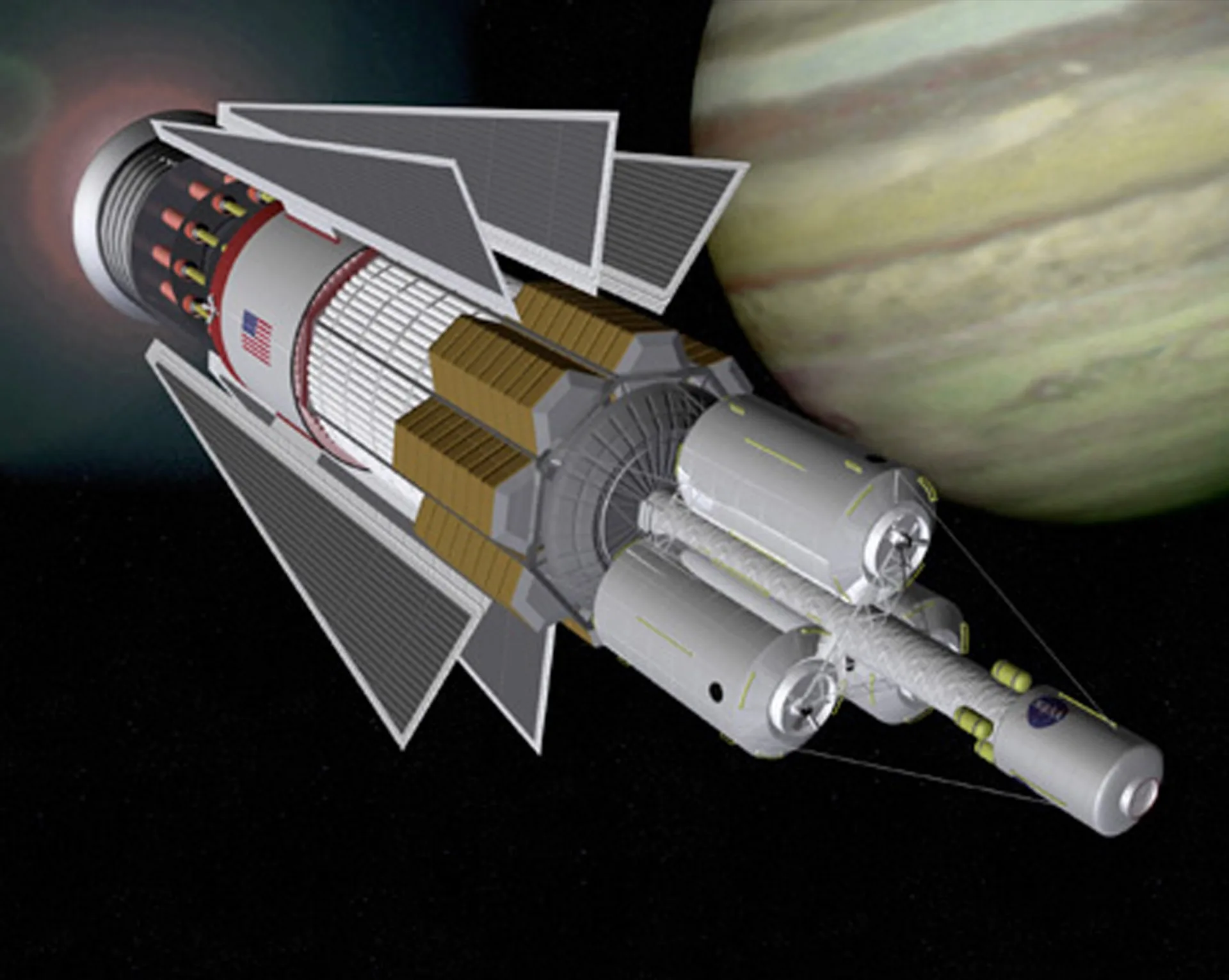
The challenge is power. VASIMR requires hundreds of kilowatts to megawatts of electrical power to operate at its most impressive performance levels. Current solar arrays can provide tens of kilowatts, and nuclear power sources in space are still in development. If the power problem is solved -- and that is a significant "if" -- VASIMR could dramatically reduce transit times for crewed missions to Mars, potentially cutting the journey to 39 days in some optimistic analyses.
Ad Astra has tested VASIMR extensively on the ground and has long sought a flight demonstration on the International Space Station, though that test has faced repeated delays. The technology remains promising but unproven in space.
Why Ion Propulsion Matters for Mars
The human mission to Mars is the backdrop against which all propulsion technologies are judged, and ion propulsion has a significant role to play. The fundamental problem with Mars transit is time. A conventional chemical propulsion trajectory takes roughly six to nine months each way. That is six to nine months of radiation exposure, muscle atrophy, bone density loss, and psychological strain for the crew.
High-power electric propulsion -- whether advanced Hall thrusters, NEXT-generation gridded ions, or something like VASIMR -- could reduce that transit time substantially. The key requirement is abundant electrical power, which is why NASA's investment in nuclear electric propulsion goes hand in hand with ion engine development. A nuclear reactor in space could provide the megawatts needed to drive high-thrust ion engines, potentially cutting the Mars transit to two to three months.
Ion propulsion will not replace chemical rockets for launch or landing. But for the long cruise through deep space, where efficiency matters more than raw thrust, these quiet blue-glowing engines are the technology that makes the solar system accessible. Every millinewton, sustained over months, adds up to something magnificent.