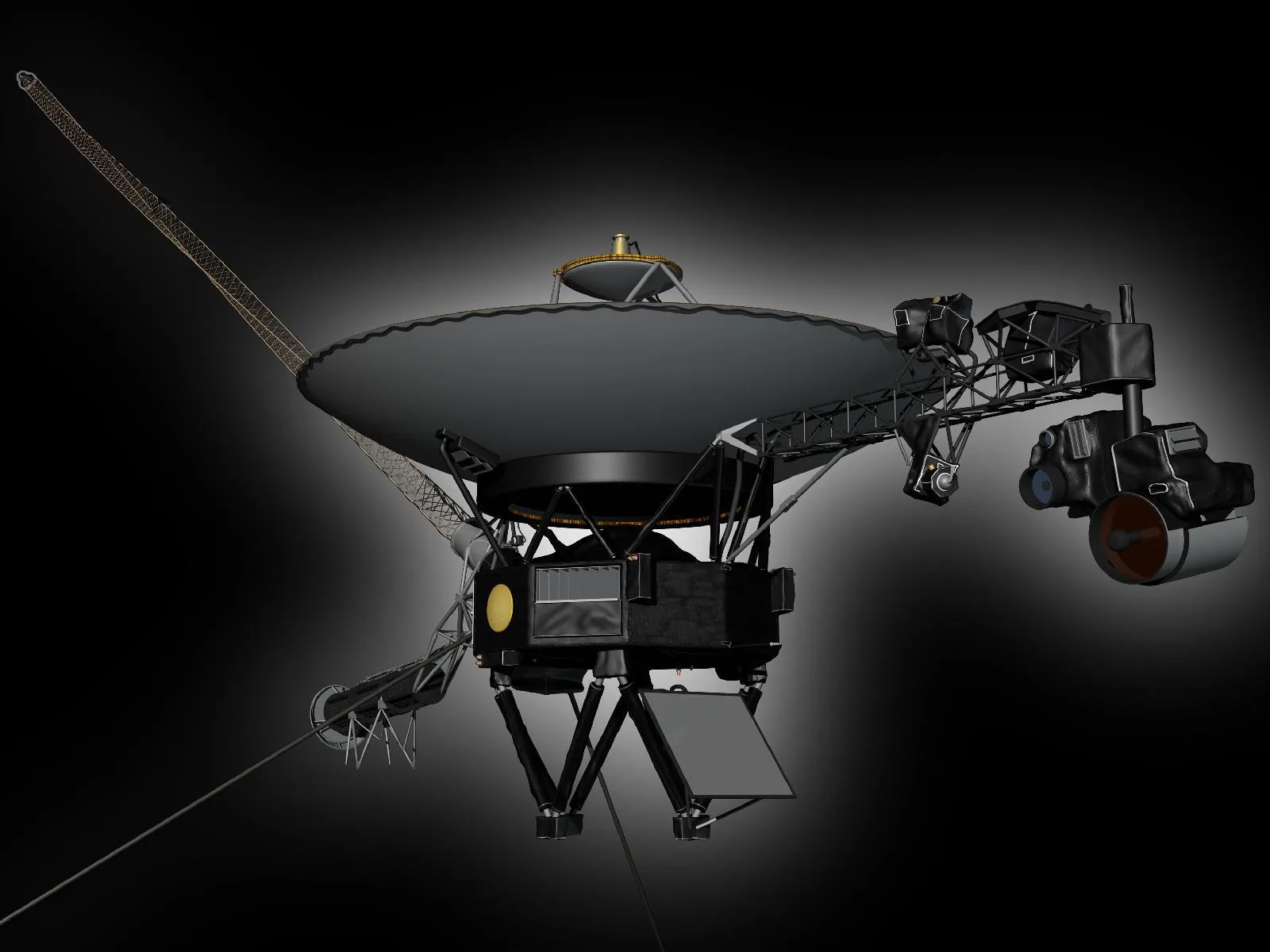
Nearly half a century ago, two robotic emissaries departed Earth on journeys that would rewrite our understanding of the solar system and, ultimately, carry the story of our civilization beyond the reach of the Sun itself. Voyager 1 and Voyager 2 are not merely spacecraft. They are monuments to human curiosity -- artifacts of an age when we dared to fling a piece of ourselves into the void and listen for what came back.
No other machines built by human hands have traveled farther. No other robotic mission has operated longer. And no other act of exploration has so profoundly changed what we know about the worlds that share our star. This is their story.
Voyager 1 vs Voyager 2 (Status May 2026)
| Spec | Voyager 1 | Voyager 2 |
|---|---|---|
| Launched | Sep 5, 1977 (faster trajectory) | Aug 20, 1977 (launched first) |
| Trajectory direction | Toward solar apex (Hercules constellation) | Toward Sagittarius |
| Planets visited | Jupiter (1979), Saturn (1980) | Jupiter (1979), Saturn (1981), Uranus (1986), Neptune (1989) — only spacecraft to visit the ice giants |
| Entered interstellar space | Aug 25, 2012 | Nov 5, 2018 |
| Distance from Sun (May 2026, approx.) | ~167 AU / ~25.0 billion km / ~23.2 light-hours | ~138 AU / ~20.7 billion km / ~19.2 light-hours |
| One-way light time | ~23.2 hours | ~19.2 hours |
| Speed relative to Sun | ~17.0 km/s (~3.6 AU/yr) | ~15.4 km/s (~3.3 AU/yr) |
| Power source | 3× MHW-RTG (Plutonium-238) | 3× MHW-RTG (Plutonium-238) |
| Power output (May 2026) | ~225 W (down from ~470 W at launch) | ~228 W (similar decline from ~470 W) |
| Active instruments (May 2026) | MAG, PWS, LECP (some heaters/instruments powered down to conserve energy) | MAG, PWS, LECP (CRS turned off in 2024) |
| Expected end of mission | ~2026–2030 as instruments shut down sequentially | ~2026–2030 as instruments shut down sequentially |
| Closest approach to a star (next encounter) | Gliese 445 in ~40,000 years (within ~1.6 ly) | Ross 248 in ~40,000 years (within ~1.7 ly) |
| Golden Record | Yes — identical content on both spacecraft | Yes — identical content on both spacecraft |
Distances and power output update continuously; consult NASA's Voyager Mission Status page for live data.
The Grand Tour: A Cosmic Window That Opens Once Every 176 Years
The Voyager missions owe their existence to a celestial coincidence of staggering rarity. In the late 1960s, aerospace engineer Gary Flandro at NASA's Jet Propulsion Laboratory (JPL) recognized that Jupiter, Saturn, Uranus, and Neptune would align in a configuration that occurs only once every 176 years. This alignment meant that a single spacecraft, using the gravitational pull of each planet to sling itself toward the next, could visit all four outer gas giants in a single voyage -- a concept that became known as the Planetary Grand Tour.
The physics were elegant. As a spacecraft swings past a planet, it borrows a small fraction of that planet's orbital momentum, accelerating without expending fuel. By threading a precise trajectory from Jupiter to Saturn to Uranus to Neptune, a probe could traverse the outer solar system in roughly twelve years rather than the thirty or more that direct trajectories would require.
NASA originally envisioned a dedicated Grand Tour program with large, expensive spacecraft. Budget constraints led to its cancellation, but the concept was reborn in a leaner form: the Mariner Jupiter-Saturn project, later renamed Voyager. Two spacecraft would be built. Both would visit Jupiter and Saturn. If the first succeeded at Saturn, the second would be redirected toward Uranus and Neptune to complete the Grand Tour.
It was a plan built on optimism, engineering brilliance, and the understanding that this window would not open again until the year 2153.
Voyager 2: The First to Launch
In a detail that often surprises people, Voyager 2 launched first. It departed Earth on August 20, 1977, atop a Titan IIIE-Centaur rocket from Cape Canaveral, Florida. It was placed on a slower, more flexible trajectory -- one that preserved the option of visiting all four giant planets.
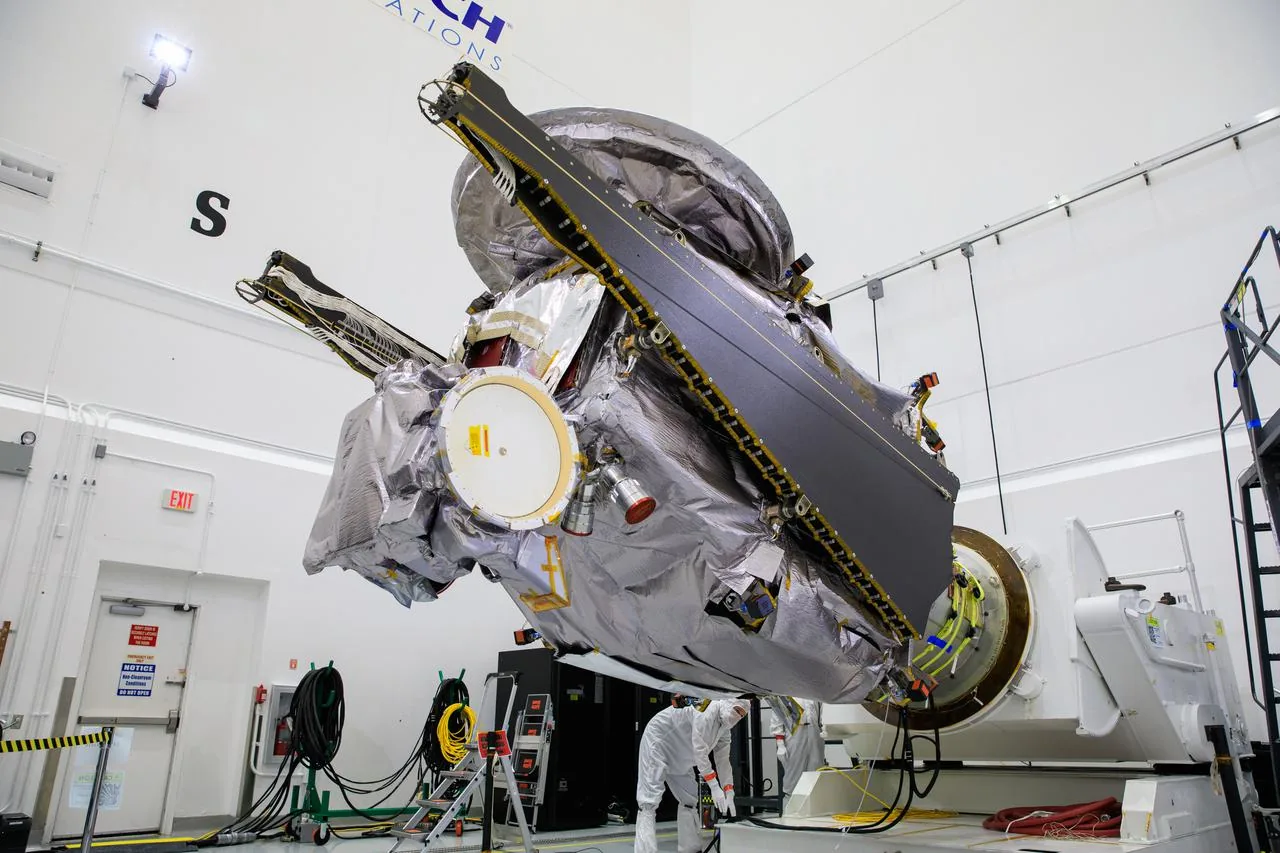
Each Voyager spacecraft weighed approximately 825 kilograms and carried eleven scientific instruments, including cameras, magnetometers, plasma detectors, cosmic ray sensors, and infrared and ultraviolet spectrometers. Their power came not from solar panels -- useless at the distances they would travel -- but from three radioisotope thermoelectric generators (RTGs), converting the heat of decaying plutonium-238 into electricity. At launch, each spacecraft's RTGs produced about 470 watts of power, roughly enough to light a few household bulbs.
Their onboard computers had less processing power than a modern digital watch. Their radio transmitters broadcast at 23 watts -- about the power of a refrigerator light bulb. And yet these modest machines would deliver discoveries that reshaped planetary science.
Voyager 1: The Faster Path
Voyager 1 launched sixteen days later, on September 5, 1977, on a faster, more direct trajectory to Jupiter and Saturn. Despite its later departure, this swifter path meant Voyager 1 would arrive at Jupiter four months ahead of its twin.
From the moment of launch, both spacecraft began their long fall outward through the solar system, past the orbit of Mars, through the asteroid belt, and toward the banded giant that awaited them.
Jupiter: A World of Storms and Fire
Voyager 1 made its closest approach to Jupiter on March 5, 1979, passing within 349,000 kilometers of the planet's cloud tops. Voyager 2 followed on July 9, 1979, closing to within 722,000 kilometers.
What the twin spacecraft revealed was staggering. Jupiter's Great Red Spot, observed from Earth for centuries as a persistent blemish, was resolved into a swirling anticyclonic storm larger than Earth itself, with wind speeds exceeding 400 kilometers per hour and intricate internal structure that no Earth-based telescope could have discerned.
But the true revelation came from Jupiter's moons. Voyager 1 captured images of Io, the innermost of the four large Galilean satellites, that showed active volcanic eruptions -- towering plumes of sulfur and sulfur dioxide rising hundreds of kilometers above the moon's surface. It was the first time active volcanism had been observed anywhere beyond Earth. Io was not the dead, cratered world scientists expected. It was the most volcanically active body in the solar system, tortured by tidal forces from Jupiter's immense gravity.
Europa, another Galilean moon, presented a surface of cracked, frozen ice with remarkably few impact craters -- suggesting a young, constantly resurfaced exterior. Beneath that ice, scientists began to suspect, lay a global ocean of liquid water. That suspicion has since grown into near-certainty and made Europa one of the most promising places to search for extraterrestrial life.
Ganymede was revealed as the largest moon in the solar system -- larger, in fact, than the planet Mercury -- with a complex surface of grooved terrain and ancient dark regions. Callisto, the outermost Galilean moon, displayed a heavily cratered surface that appeared to be among the oldest unchanged landscapes in the solar system.
The Voyagers also discovered Jupiter's faint ring system, previously unknown, and observed lightning in the Jovian atmosphere and aurorae at the planet's poles.
Saturn: Rings of Unimaginable Complexity
Voyager 1 reached Saturn on November 12, 1980, passing within 124,000 kilometers of the planet's cloud tops. What had appeared through telescopes as a handful of broad, smooth rings was revealed to be a structure of almost incomprehensible complexity: thousands upon thousands of individual ringlets, braided structures, gaps, and waves, sculpted by the gravitational influence of Saturn's many moons.
The spacecraft discovered several new moons and revealed that Saturn's largest moon, Titan, possessed a thick, opaque atmosphere composed primarily of nitrogen with significant amounts of methane -- the only moon in the solar system with a substantial atmosphere. The surface pressure on Titan was found to be about 1.5 times that of Earth. The hazy orange atmosphere, rich in complex organic chemistry, tantalized scientists with the possibility that Titan's surface might harbor prebiotic chemical processes.
Voyager 1's trajectory at Saturn was deliberately angled to provide a close flyby of Titan, a decision that came with a consequence: the gravitational deflection sent Voyager 1 out of the ecliptic plane, making it impossible to continue to Uranus or Neptune. The Grand Tour, for Voyager 1, ended at Saturn. But the Titan encounter was judged too scientifically valuable to pass up, and the gamble paid off -- the data would eventually help inspire the Cassini-Huygens mission, which arrived at Saturn in 2004 and landed a probe on Titan's surface.
Voyager 2 arrived at Saturn on August 26, 1981. With Voyager 1 having successfully completed the Saturn encounter, Voyager 2 was cleared for the Grand Tour extension. Its trajectory was shaped to send it onward to Uranus.
Uranus: The Tilted World
On January 24, 1986, Voyager 2 became -- and remains to this day -- the only spacecraft ever to visit Uranus. It passed within 81,500 kilometers of the planet's cloud tops, providing humanity's first and still only close-up look at this ice giant.
Uranus is a world turned on its side. Its axial tilt of 97.77 degrees means it essentially rolls along its orbit, with its poles alternately pointed toward the Sun. Voyager 2 arrived during Uranus's southern summer, when the south pole faced the Sun directly. Despite this extreme geometry, the spacecraft found that the planet's equator was slightly warmer than the Sun-facing pole, suggesting powerful internal heat redistribution mechanisms.
The spacecraft discovered ten previously unknown moons, bringing the total known at the time to fifteen (27 are known as of 2026). It revealed that Uranus's ring system, discovered from Earth just nine years earlier, was composed of dark, narrow rings quite different from Saturn's broad, bright bands.
Perhaps the most striking discovery was Miranda, the smallest of Uranus's five major moons. Its surface was a geological jigsaw puzzle -- enormous canyons up to 20 kilometers deep (roughly twelve times the depth of the Grand Canyon), chevron-shaped ridges, and sharply contrasting terrain types jumbled together as though the moon had been shattered and reassembled. Miranda became one of the most visually dramatic bodies in the solar system.
Voyager 2 also found that Uranus's magnetic field was oddly tilted -- offset 59 degrees from its rotational axis and not centered on the planet's core. This was unlike anything seen at Jupiter, Saturn, or Earth, and it challenged existing models of how planetary magnetic fields are generated.
Neptune: The Last Stop
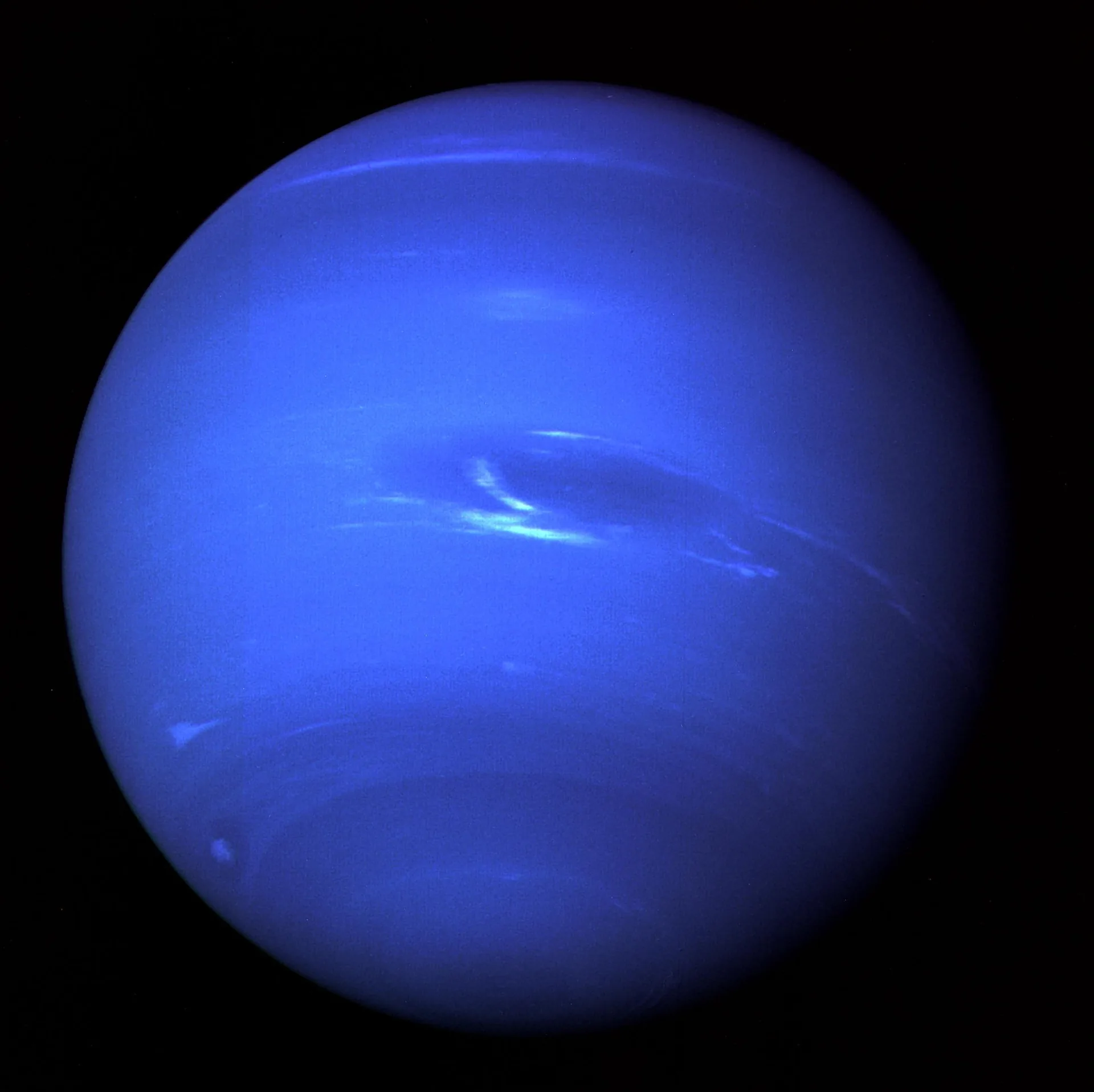
Three and a half years later, on August 25, 1989 -- twelve years after leaving Earth -- Voyager 2 made its closest approach to Neptune, passing just 4,951 kilometers above the planet's north pole. It was the closest flyby of any planet during the entire Voyager mission, and it delivered results that justified every kilometer of the journey.
Neptune, expected by some to be a relatively quiet world at the frigid edge of the solar system, proved to be anything but. Voyager 2 discovered the Great Dark Spot, an anticyclonic storm system roughly the size of Earth, with the fastest winds ever recorded on any planet -- up to 2,100 kilometers per hour. The spacecraft also observed smaller storm systems, bright cirrus-like clouds of methane ice high in the atmosphere, and a banded cloud structure that suggested vigorous atmospheric dynamics despite Neptune's great distance from the Sun.
The planet's largest moon, Triton, was revealed as one of the most remarkable objects in the solar system. With a surface temperature of minus 235 degrees Celsius -- the coldest measured surface of any body visited by a spacecraft -- Triton nonetheless displayed active geysers of nitrogen gas erupting from beneath its frozen surface, sending dark plumes up to 8 kilometers high. Its retrograde orbit (opposite to Neptune's rotation) strongly suggested that Triton was a captured Kuiper Belt object, a wanderer snared by Neptune's gravity eons ago.
Voyager 2 discovered six new moons and confirmed Neptune's ring arcs -- partial rings that had been controversially detected from Earth. The flyby also refined measurements of Neptune's mass, revealing that previous estimates had been slightly off, which in turn resolved small discrepancies in the calculated orbits of other outer planets.
The Neptune encounter was the last planetary flyby of the Voyager program. Voyager 2, its Grand Tour complete, was redirected southward out of the ecliptic plane, following its twin into the void.
The Pale Blue Dot: A Portrait of Home from the Abyss
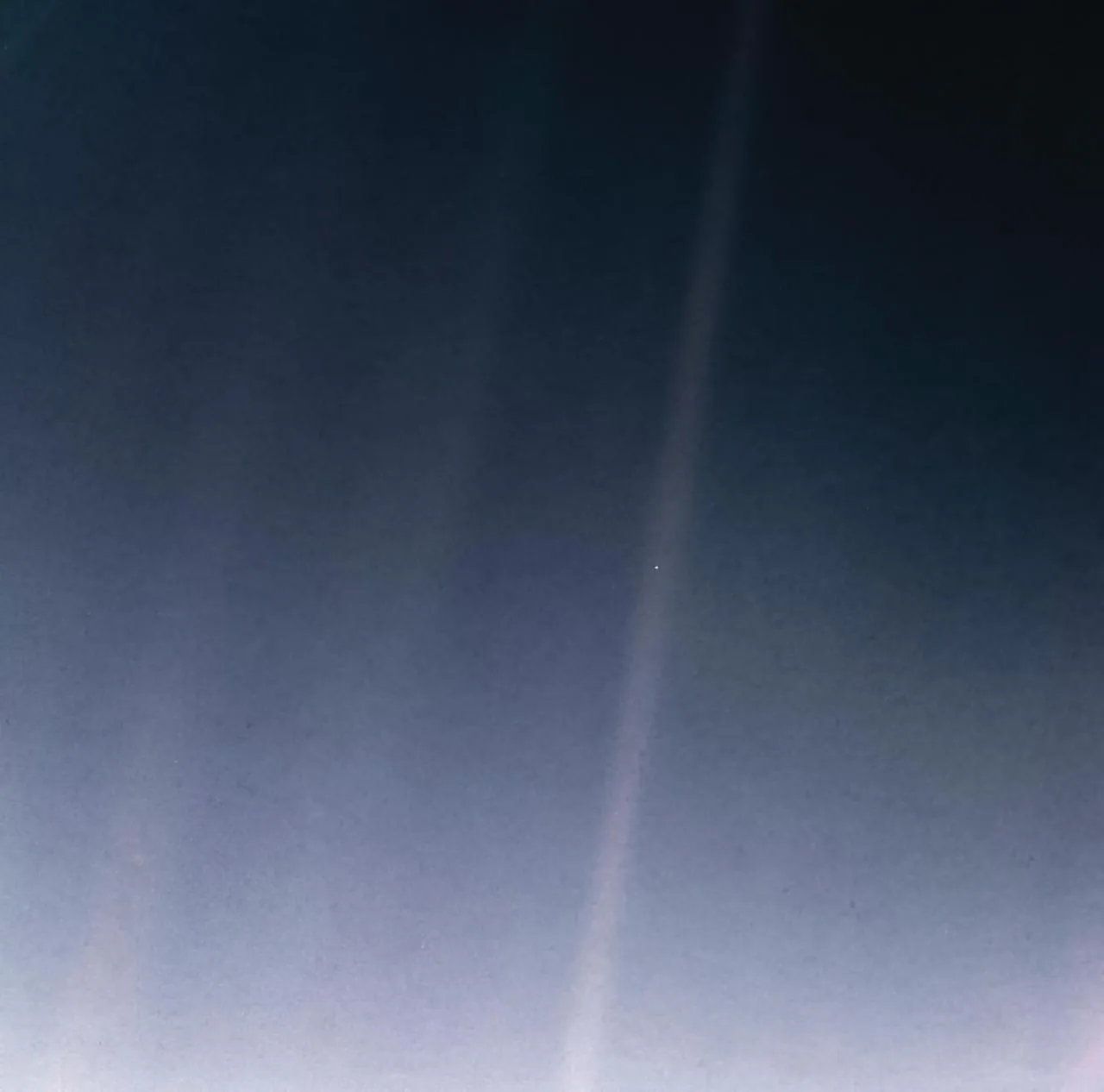
On February 14, 1990, six months after the Neptune encounter, Voyager 1 -- by then 6.06 billion kilometers from Earth -- turned its cameras backward and captured a series of images that would become one of the most celebrated photographs in human history.
The idea came from astronomer and science communicator Carl Sagan, who had campaigned for years to have Voyager take one last look homeward. NASA was initially reluctant. The cameras were not designed for such an image, and pointing them back toward the inner solar system risked damage from sunlight. But Sagan persisted, and NASA relented.
In the resulting image, Earth appears as a tiny speck -- less than a single pixel in size -- suspended in a scattered beam of sunlight. Sagan described it with words that have become among the most quoted in the history of science:
"Look again at that dot. That's here. That's home. That's us. On it everyone you love, everyone you know, everyone you ever heard of, every human being who ever was, lived out their lives... on a mote of dust suspended in a sunbeam."
The Pale Blue Dot image reframed humanity's place in the cosmos more powerfully than perhaps any other single artifact of the Space Age. It was Voyager's final act of photography. Shortly after, the spacecraft's cameras were permanently shut down to conserve power for the long journey ahead.
Crossing the Threshold: Into Interstellar Space
After their planetary encounters, both Voyagers entered what NASA calls the Voyager Interstellar Mission (VIM), continuing to study the outer heliosphere -- the vast bubble of charged particles blown outward by the solar wind.
For decades, scientists awaited the moment when the Voyagers would cross the heliopause, the boundary where the solar wind is halted by the pressure of interstellar medium -- the thin gas and dust that fills the space between stars. Crossing this boundary would mean, in a meaningful physical sense, leaving the solar system.
Voyager 1 crossed the heliopause on August 25, 2012, at a distance of approximately 121.6 astronomical units (AU) from the Sun -- about 18.2 billion kilometers. The crossing was confirmed through measurements of plasma density, which showed an abrupt increase characteristic of the interstellar medium. Voyager 1 became the first human-made object to enter interstellar space.
Voyager 2 followed on November 5, 2018, at a distance of approximately 119 AU. Crucially, Voyager 2's plasma science instrument -- which had failed on Voyager 1 decades earlier -- was still operational, providing the first direct measurements of the density, temperature, and speed of interstellar plasma at the heliopause. The data revealed that the boundary was thinner and more sharply defined than many models had predicted.
Both spacecraft continue to return data about conditions in interstellar space -- the magnetic field, cosmic ray intensity, and plasma environment of the galaxy through which our solar system moves.
Current Status: The Long Twilight (May 2026)
As of May 2026, Voyager 1 is approximately 167 AU from the Sun -- roughly 25.0 billion kilometers, or about 23.2 light-hours. Voyager 2 is at approximately 138 AU -- about 20.7 billion kilometers, or 19.2 light-hours. Both are receding from the Sun at roughly 17.0 kilometers per second (Voyager 1) and 15.4 kilometers per second (Voyager 2).
The spacecraft are aging. Their RTGs, which rely on the radioactive decay of plutonium-238 (half-life: 87.7 years), produce less power each year. As of May 2026, each spacecraft generates only about 225–228 watts -- less than half their original ~470-watt output. NASA engineers have performed extraordinary feats of power management, selectively shutting down heaters, instruments, and subsystems to keep the most critical science instruments running.
Voyager 2's cosmic ray subsystem (CRS) was powered down in 2024 to conserve energy, leaving its magnetometer (MAG), plasma wave subsystem (PWS), and low-energy charged particle (LECP) instrument as its primary active payload. Voyager 1 continues to operate a comparable handful of instruments, though its data return has been affected by hardware anomalies, including a 2022 issue with its attitude articulation and control system (AACS) that caused garbled telemetry data before engineers devised a workaround.
NASA estimates that by the early-to-mid 2030s, there will no longer be enough power to operate any scientific instruments on either spacecraft. At that point, the Voyagers will fall silent -- still traveling, still carrying their golden cargo, but no longer speaking to Earth.
Even when contact is lost, the spacecraft will endure. In the vacuum of interstellar space, there is effectively nothing to erode or degrade them. Voyager 1 will pass within 1.6 light-years of the star Gliese 445 in approximately 40,000 years. Voyager 2 will pass within 1.7 light-years of Ross 248 in about 40,000 years and within 4.3 light-years of Sirius in roughly 296,000 years.
They will orbit the center of the Milky Way galaxy for billions of years -- likely outlasting the Earth itself.
The Golden Record: A Message in a Cosmic Bottle
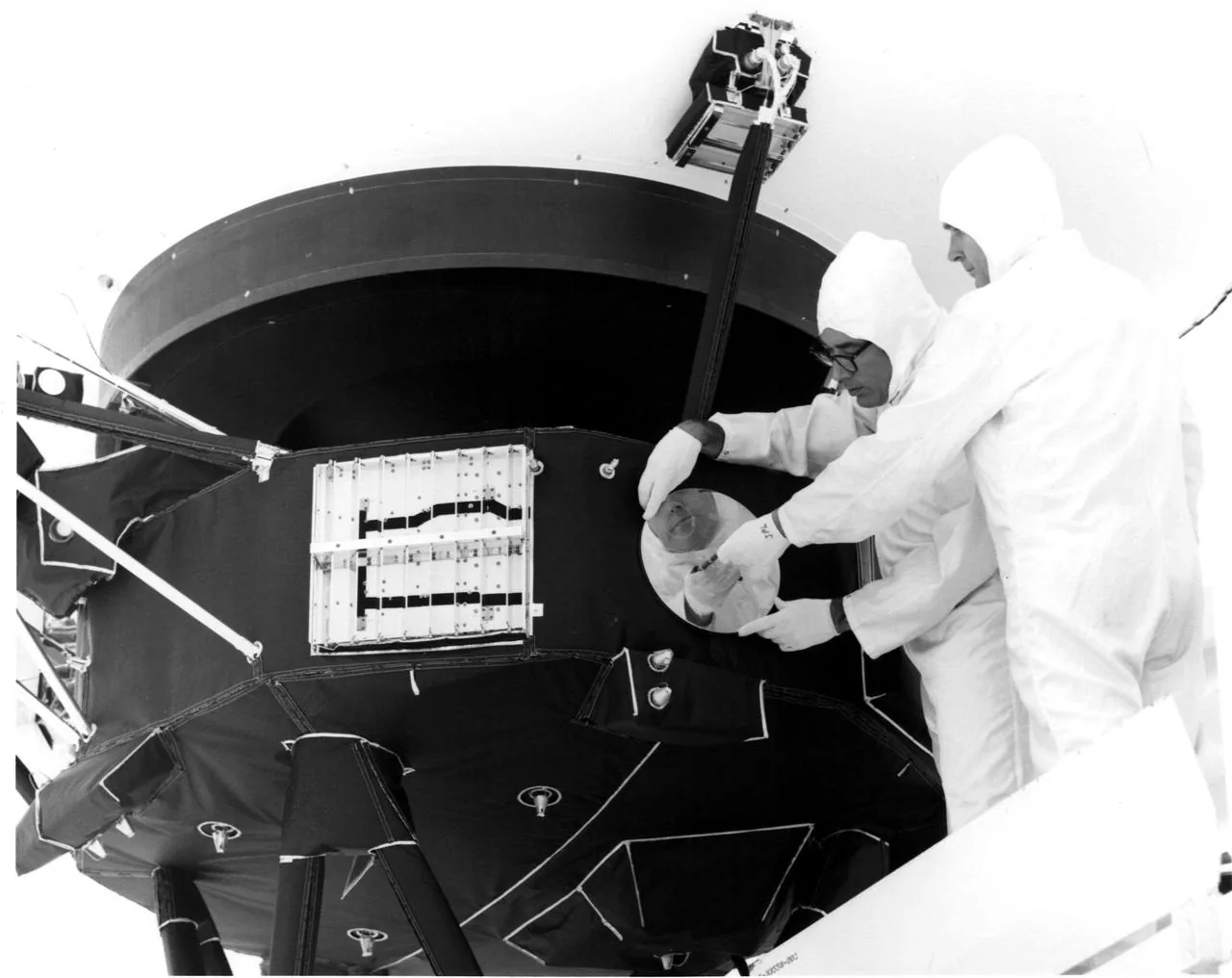
Affixed to the side of each Voyager spacecraft is a 12-inch gold-plated copper phonograph record enclosed in a protective aluminum cover. Electroplated on the cover is an ultra-pure sample of uranium-238, whose radioactive decay serves as a clock, allowing any future finder to determine how long ago the record was launched.
The Golden Record was the brainchild of Carl Sagan and a small committee he assembled in just six weeks in 1977. Its contents were chosen to represent the diversity of life and culture on Earth:
Sounds of Earth: 116 images encoded in analog form, including photographs of humans, animals, landscapes, architecture, and scientific diagrams. Natural sounds: surf, wind, thunder, birds, whales, a human heartbeat. A mother's first words to her newborn child.
Music: 90 minutes of music from around the world -- Bach's Brandenburg Concerto No. 2, Beethoven's Fifth Symphony, Chuck Berry's "Johnny B. Goode," Javanese gamelan, Navajo night chant, Azerbaijani bagpipes, Peruvian panpipes, a Georgian chorus, Indian raga, and many more.
Greetings: Spoken greetings in 55 languages, from ancient Sumerian to modern Wu Chinese, including a message from then-United Nations Secretary General Kurt Waldheim and greetings from U.S. President Jimmy Carter.
Instructions: The cover includes diagrams showing how to play the record, the position of the Sun relative to 14 pulsars (providing a galactic "return address"), and a representation of the hydrogen atom's spin-flip transition as a universal unit of measurement.
The Golden Record is not primarily a practical communication device. The probability that any intelligent being will encounter it in the foreseeable cosmic future is vanishingly small. Rather, it is a statement of intent -- a declaration that a species on a small planet around an ordinary star chose to announce its existence to the universe, encoding in gold the sounds and sights and songs that defined its world.
As Sagan wrote: "The spacecraft will be encountered and the record played only if there are advanced spacefaring civilizations in interstellar space. But the launching of this bottle into the cosmic ocean says something very hopeful about life on this planet."
Legacy and Significance: What the Voyagers Mean
The Voyager missions hold a constellation of records that are unlikely to be surpassed for decades, if ever:
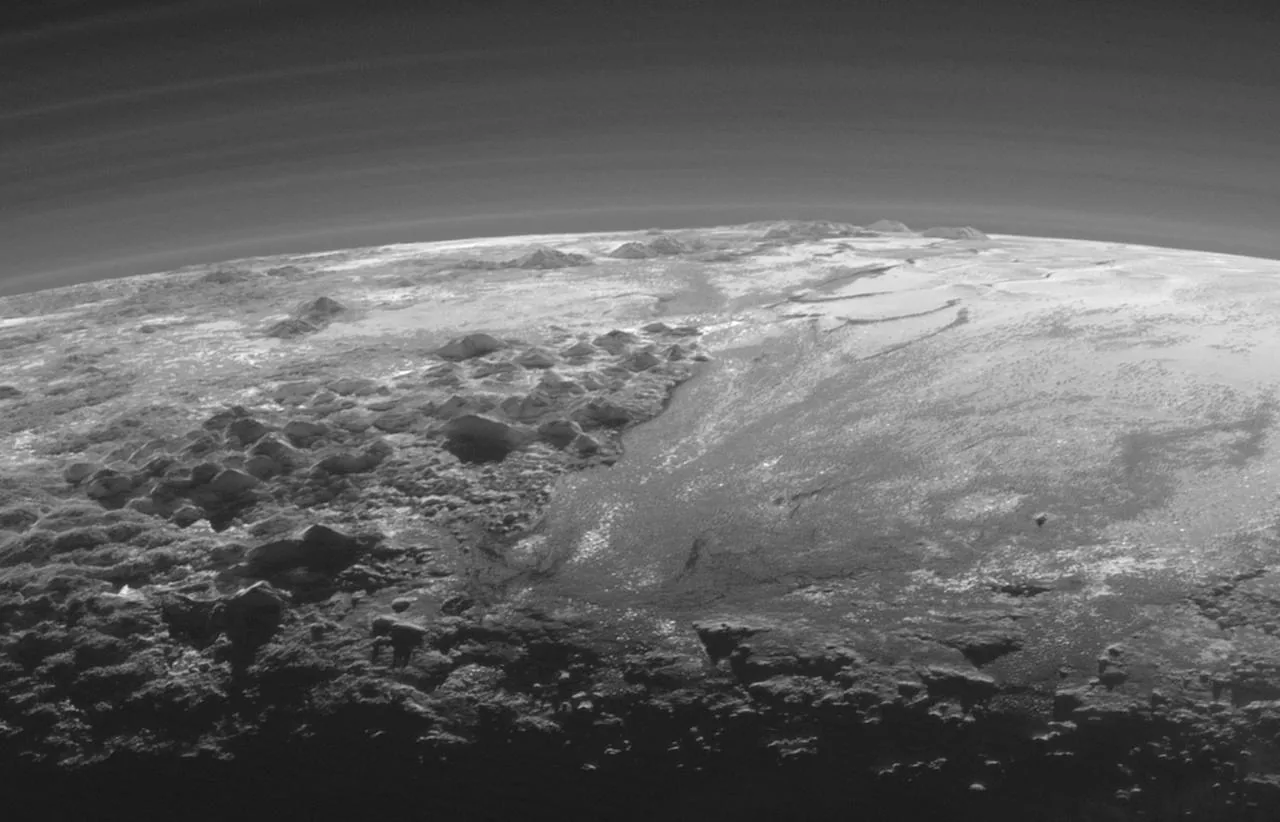
Farthest human-made objects. No other spacecraft approaches their distance from Earth. The New Horizons probe, which flew past Pluto in 2015, is far behind and slower.
Longest continuously operating spacecraft. As of 2026, the Voyagers have been operating for nearly 49 years -- a testament to the engineering of an era when redundancy and durability were paramount design principles.
Only visitors to Uranus and Neptune. No mission to either ice giant has yet been approved for launch, though concepts like the Uranus Orbiter and Probe, recommended by the 2023-2032 Planetary Science Decadal Survey, may eventually follow in Voyager 2's wake. Until then, virtually everything we know about these worlds in detail comes from a few days of data collected by a single spacecraft in the 1980s.
Discoverers of worlds. The Voyagers revealed that the moons of the outer solar system were not inert ice balls but dynamic worlds in their own right -- volcanic Io, ocean-bearing Europa, hydrocarbon-rich Titan, geyser-blowing Triton, shattered Miranda. This paradigm shift reshaped astrobiology and directly inspired subsequent missions including Galileo, Cassini-Huygens, Europa Clipper, and the proposed Dragonfly mission to Titan.
Pioneers of interstellar measurement. The Voyagers are providing the first in situ data about the physical conditions of interstellar space -- information that cannot be obtained in any other way and that will inform our understanding of the galaxy for generations.
Cultural icons. The Voyager missions and the Golden Record have transcended science to become cultural touchstones -- symbols of human aspiration, curiosity, and the desire to reach beyond our immediate surroundings. They appear in films, literature, music, and philosophy. They are among the few space missions that are known by name to the general public worldwide.
A Final Thought
Sometime in the 2030s, the last faint signal from the last operating Voyager will flicker and fall silent. The Deep Space Network antennas will listen, and there will be nothing to hear.
But the spacecraft will not stop. They will continue outward -- through the Oort Cloud, past the gravitational reach of the Sun, into the open galaxy. They carry with them the sounds of wind and surf and Bach, a photograph of a woman nursing her child, a diagram of our DNA, and a map to our star.
In a universe that is mostly void, mostly silence, mostly darkness, two small machines will drift on -- patient, enduring, unimaginably far from home -- carrying the proof that once, on a pale blue dot, there lived a species that looked up at the stars and refused to look away.
The Voyager missions are not just achievements of engineering or science. They are acts of faith -- faith that knowledge is worth pursuing to the ends of the solar system and beyond, faith that the universe is worth speaking to even if no one answers, and faith that the best of what we are deserves to outlive us.
They are, in every sense that matters, humanity's farthest travelers. And they are still going.