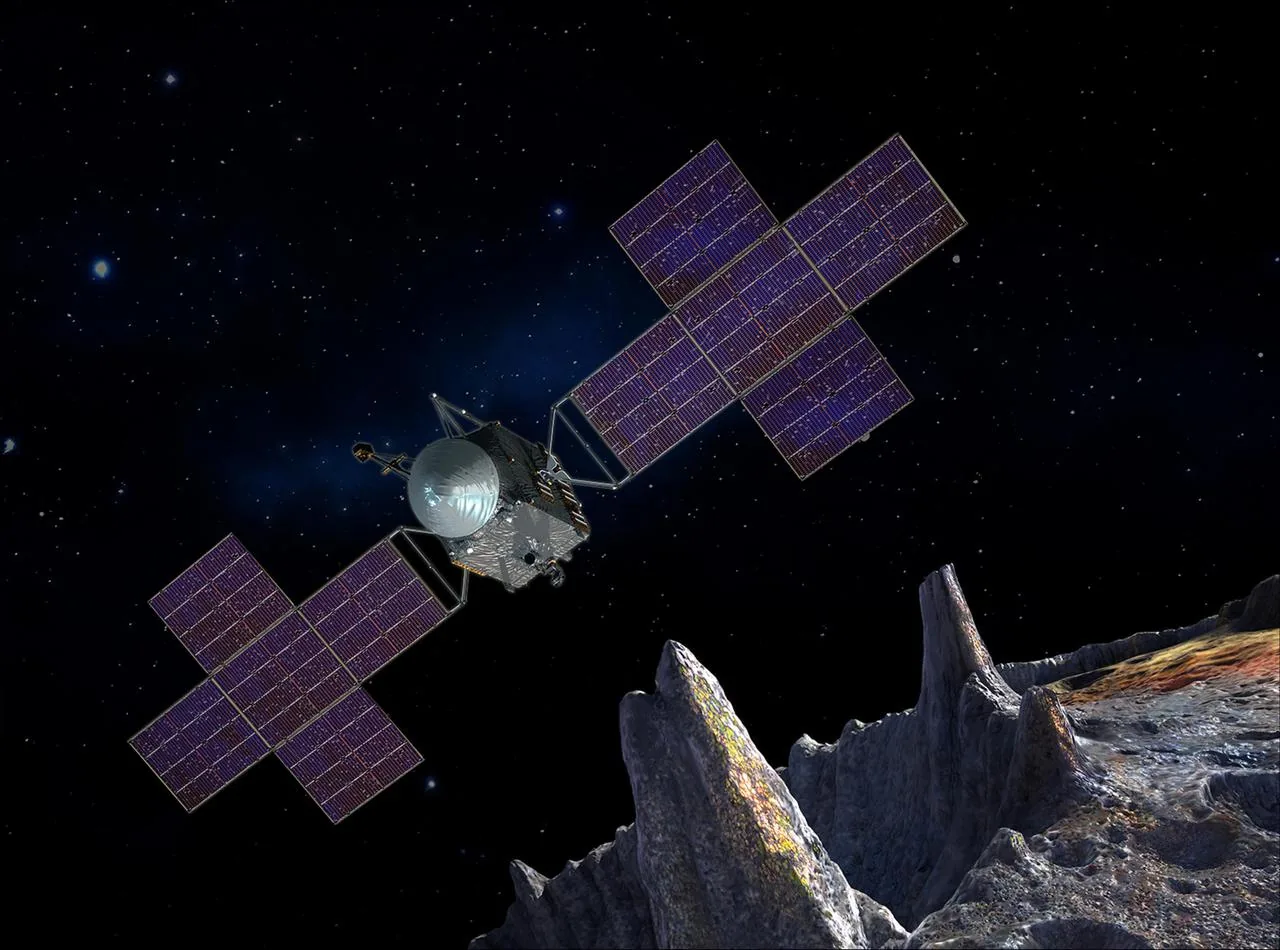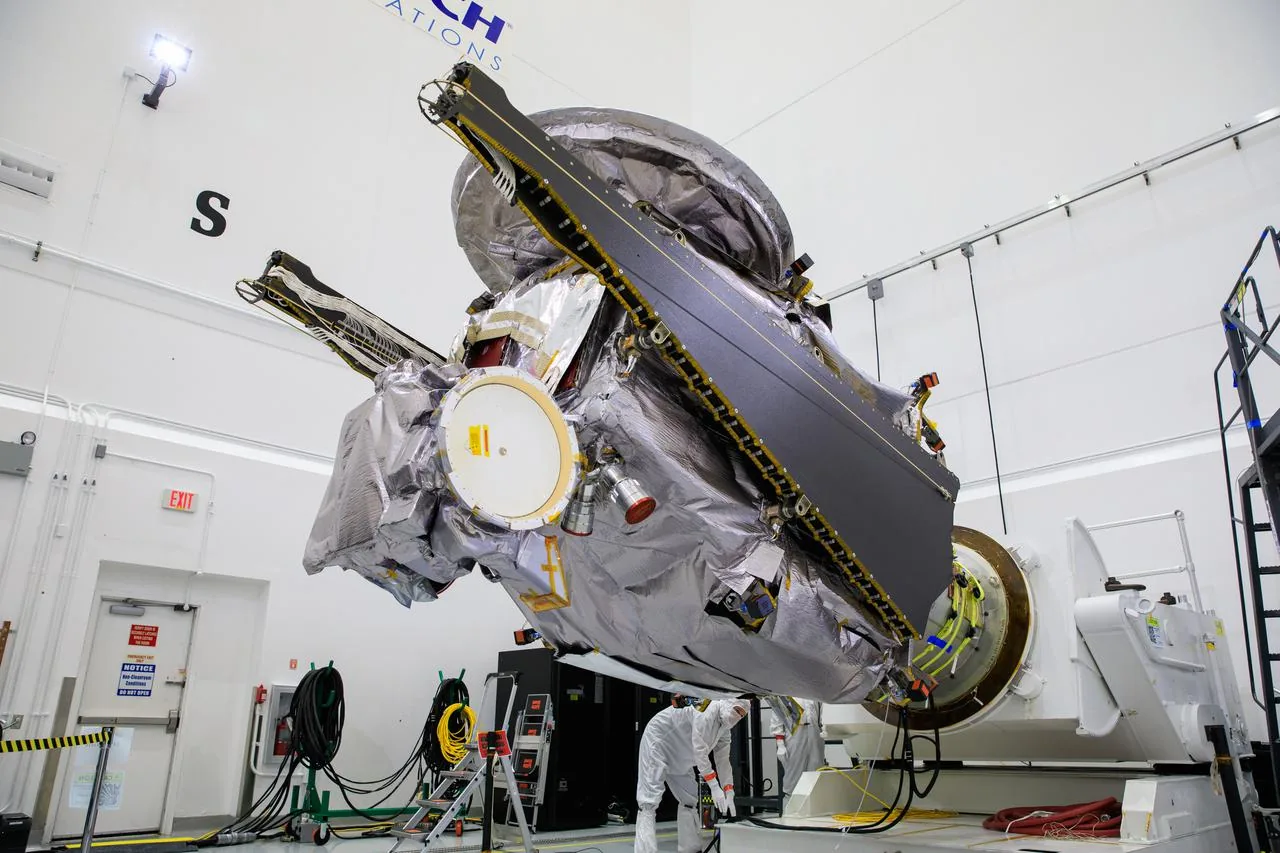
For seventy-five years, Pluto was little more than a smudge. Even through the Hubble Space Telescope, the best images humanity could produce showed a blurry patchwork of light and dark -- a world so distant that its surface features were a matter of guesswork and debate. Then, on July 14, 2015, a spacecraft the size of a grand piano screamed past at 49,600 kilometers per hour, and in the span of a few frantic hours, Pluto went from the solar system's most mysterious world to one of its most astonishing.
The spacecraft was New Horizons, and the story of how it got there -- and what it found -- is one of the great adventures in the history of planetary exploration.
The Last Unexplored World
When Clyde Tombaugh discovered Pluto on February 18, 1930, at the Lowell Observatory in Flagstaff, Arizona, it was hailed as the ninth planet. For decades, Pluto held that status, taught to every schoolchild as the outermost member of the solar system's planetary family. Small, cold, and impossibly remote, it orbited the Sun at an average distance of 5.9 billion kilometers -- about 39.5 astronomical units (AU) -- taking 248 Earth years to complete a single lap.
But Pluto was always a misfit. Its orbit was oddly tilted and elliptical, at times bringing it closer to the Sun than Neptune. Its mass, once estimated to be comparable to Earth's, turned out to be shockingly small -- just 0.2 percent of Earth's mass. And as telescopes improved and the Kuiper Belt was confirmed in the 1990s, astronomers began to realize that Pluto was not a lone oddball at the edge of the solar system. It was the brightest member of a vast population of icy bodies orbiting beyond Neptune.
In August 2006, the International Astronomical Union (IAU) voted to reclassify Pluto as a dwarf planet, a decision that sparked public outcry and scientific debate that continues to this day. The core argument was that Pluto had not "cleared its orbital neighborhood" of other debris -- a criterion the IAU set for full planetary status. Many planetary scientists, including New Horizons principal investigator Alan Stern, have argued that this definition is flawed, that it says more about where an object orbits than what it is. By any geological measure, Stern argues, Pluto is a planet -- complex, dynamic, and layered.
The reclassification happened seven months after New Horizons launched. The spacecraft left Earth heading for a planet and arrived at a dwarf planet. But what it found there made the nomenclature debate feel almost beside the point. Pluto turned out to be far more interesting than anyone had dared to hope.
The Fastest Launch in History
New Horizons lifted off from Cape Canaveral on January 19, 2006, atop a powerful Atlas V 551 rocket with an added solid-fuel upper stage. It left Earth at approximately 58,536 kilometers per hour (36,373 miles per hour), making it the fastest spacecraft ever launched from Earth at that time. It crossed the orbit of the Moon in just nine hours -- a journey that took the Apollo astronauts three days.
The mission was the culmination of decades of advocacy. Scientists had been pushing for a Pluto mission since the late 1980s, but repeated proposals were canceled due to budget constraints. The breakthrough came in 2001, when NASA selected the New Horizons proposal led by Alan Stern of the Southwest Research Institute (SwRI) and managed by the Johns Hopkins Applied Physics Laboratory (APL). The team had to build the spacecraft quickly and cheaply -- the total mission cost through the Pluto flyby was about $720 million, remarkably modest for a flagship-class deep space mission.
The spacecraft itself weighs just 478 kilograms (about 1,054 pounds) and carries seven scientific instruments, including the Ralph visible and infrared camera, the LORRI (Long Range Reconnaissance Imager) high-resolution telescopic camera, the Alice ultraviolet spectrometer, and the SWAP and PEPSSI instruments for measuring the solar wind and energetic particles. It is powered by a single radioisotope thermoelectric generator (RTG) containing about 11 kilograms of plutonium-238, providing roughly 200 watts of electricity at launch.
On February 28, 2007, New Horizons swept past Jupiter at a distance of 2.3 million kilometers, using the giant planet's gravity to boost its speed by about 14,000 kilometers per hour. The Jupiter flyby was no mere slingshot -- the spacecraft spent several months studying the Jovian system, capturing the best-ever images of Jupiter's Little Red Spot, observing volcanic eruptions on Io, and tracking lightning in Jupiter's atmosphere. It was a full dress rehearsal for Pluto, proving that the instruments and mission operations worked.
Then came the long cruise. For most of the next eight years, New Horizons slept in electronic hibernation, waking periodically for systems checks and course corrections. The silence was punctuated by growing anticipation. As the spacecraft closed in on Pluto in early 2015, LORRI began returning images that, pixel by pixel, revealed features never before seen on the distant world.
July 14, 2015: The Day Pluto Came Alive
The closest approach came at 11:49 UTC on July 14, 2015, when New Horizons passed within 12,472 kilometers of Pluto's surface. Because the spacecraft was so far from Earth -- about 4.76 billion kilometers -- radio signals took 4 hours and 25 minutes to make the one-way trip. The flyby itself was entirely autonomous; there was no time for real-time commands. Every observation, every instrument pointing, every data recording had been programmed months in advance.
The spacecraft was oriented to look at Pluto, not at Earth, so during the closest approach there was radio silence. The team at APL in Laurel, Maryland, waited nervously. At 8:52 PM EDT on July 14, a signal arrived -- a simple status beacon confirming that New Horizons had survived the encounter and its memory banks were full of data. The room erupted.
What followed, over the next 16 months as the data slowly trickled back to Earth at a rate of roughly 1 to 4 kilobits per second, was revelation after revelation.
Sputnik Planitia: The Heart of Pluto
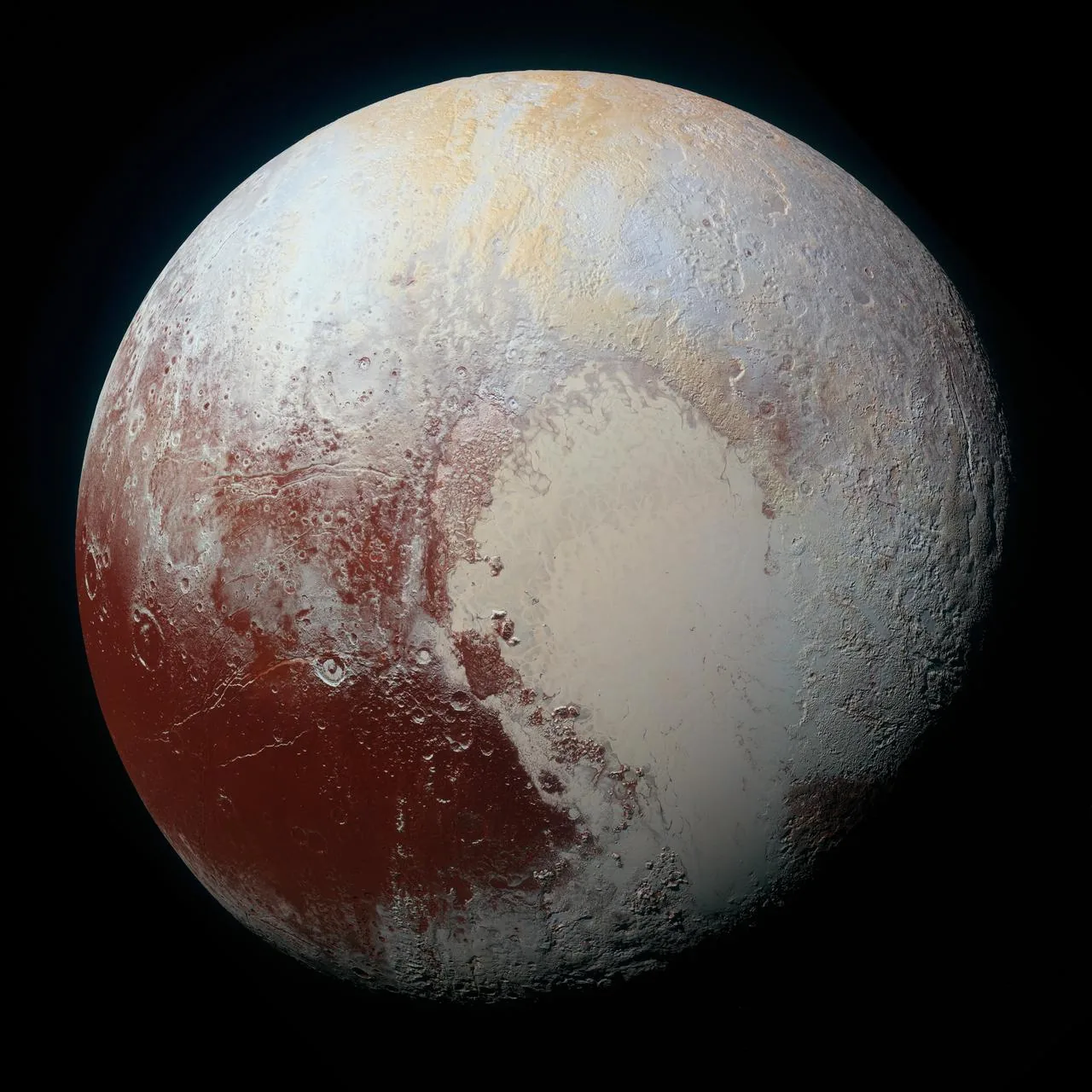
The most iconic image from the flyby shows a vast, bright, heart-shaped feature on Pluto's surface. The left lobe of this heart is a massive basin now named Sputnik Planitia, roughly 1,000 kilometers across and 2 to 3 kilometers deep. It is filled with nitrogen ice, along with traces of carbon monoxide and methane ice, and its surface is divided into irregular polygonal cells 10 to 40 kilometers wide.
These cells are the surface expression of convection -- the nitrogen ice is slowly churning, driven by internal heat from below, turning over on timescales of roughly 500,000 years. This was staggering. Pluto, a world receiving only 1/1,000th of the sunlight that Earth gets, a world where surface temperatures hover around minus 230 degrees Celsius, is geologically active. The ice is flowing. The surface is being renewed. Sputnik Planitia has virtually no impact craters, meaning its surface is cosmically young -- perhaps no more than 10 million years old.
Mountains of Water Ice
Bordering Sputnik Planitia are mountain ranges made not of rock but of water ice -- which, at Pluto's frigid temperatures, is as hard as granite. The Tenzing Montes (named for Tenzing Norgay, who climbed Everest with Edmund Hillary) rise up to 6,200 meters above the surrounding terrain. The Hillary Montes (named for Hillary) reach heights of about 1,500 meters. These are genuine mountains on an alien world, and they are made of frozen water.
The discovery of water ice mountains was significant because it confirmed that Pluto has a rigid water ice crust -- a structural "bedrock" beneath the more volatile nitrogen, methane, and carbon monoxide ices that coat parts of the surface. This layered geology resembles, in a strangely inverted way, Earth's own layered surface of rock and sediment.
An Atmosphere, Thin but Real
New Horizons confirmed that Pluto has a thin atmosphere, primarily nitrogen with traces of methane and carbon monoxide, extending at least 1,600 kilometers above the surface. The atmospheric pressure at the surface is roughly 100,000 times lower than Earth's -- about 1 microbard -- but the atmosphere is there, and it is dynamic.
Backlit images taken as New Horizons looked back at Pluto after closest approach revealed more than 20 distinct haze layers in the atmosphere, extending to altitudes of over 200 kilometers. These hazes are caused by photochemical reactions: ultraviolet sunlight breaks apart methane molecules high in the atmosphere, and the resulting hydrocarbons condense into tiny particles called tholins that slowly drift downward, giving Pluto's surface its characteristic reddish-brown color.
The atmosphere also appears to be in a state of slow escape, bleeding off into space. Pluto's gravity is too weak to hold it indefinitely. The nitrogen ice in Sputnik Planitia acts as a reservoir, sublimating in sunlight and replenishing the atmosphere in a cycle that may shift dramatically as Pluto moves through its 248-year orbit and its distance from the Sun changes.
Pluto's Moons: A System of Surprises
Pluto has five known moons, and New Horizons studied all of them.
Charon: The Giant Companion
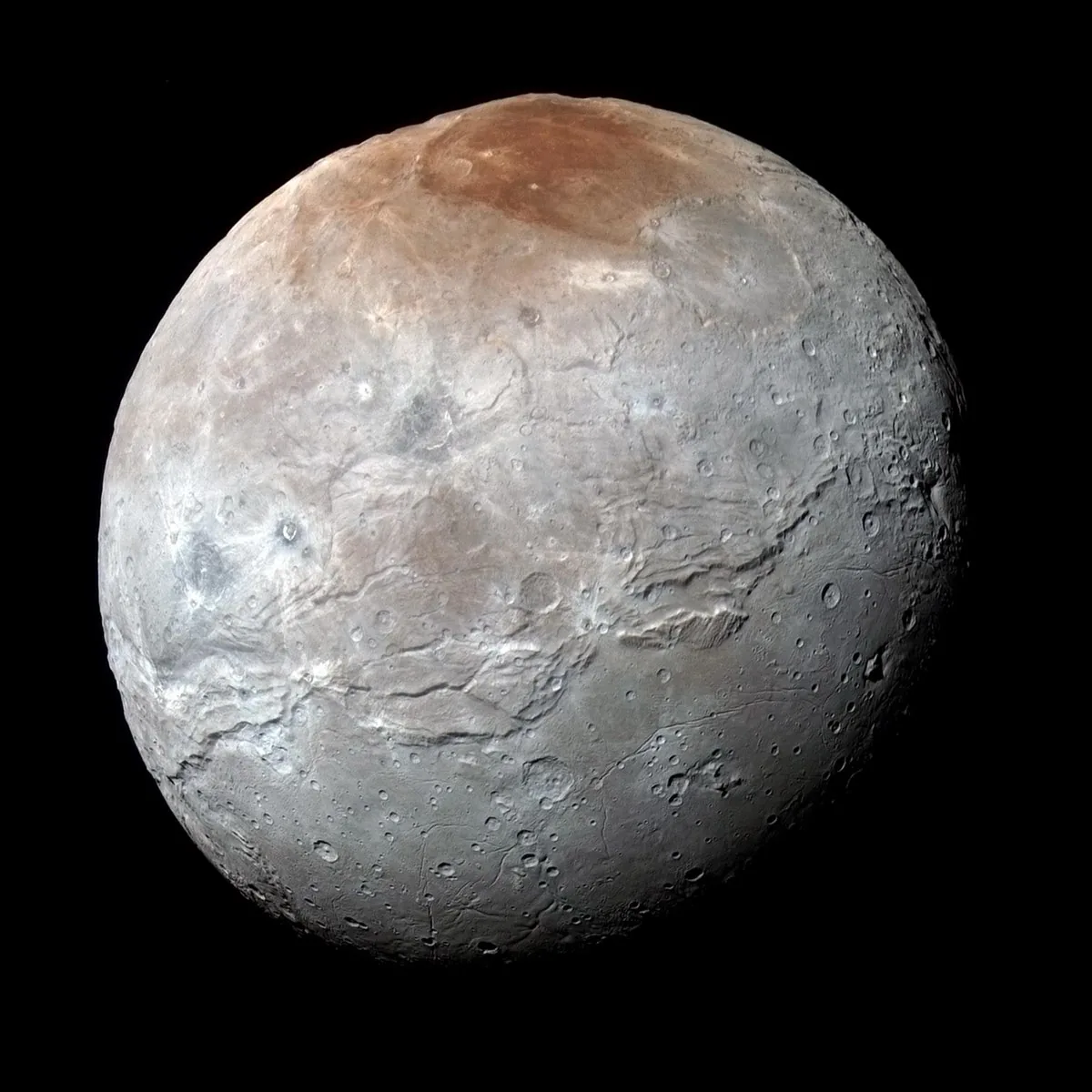
Charon is by far the largest, with a diameter of 1,212 kilometers -- about half the diameter of Pluto itself. The two are so close in size that they orbit a common center of gravity (the barycenter) that lies in the space between them, making the Pluto-Charon system a true binary in all but official name. They are tidally locked: each always shows the same face to the other, like two dancers frozen mid-turn.
Charon's surface tells its own dramatic story. A massive canyon system, informally named Serenity Chasma, stretches at least 1,800 kilometers across the moon's face -- longer and in places deeper than the Grand Canyon on Earth, or even Valles Marineris on Mars. It suggests that Charon's interior once held a subsurface ocean that froze and expanded, literally cracking the moon's crust apart.
Charon's north pole is stained a dark reddish-brown, a region called Mordor Macula. Scientists believe this coloring comes from methane gas that escapes from Pluto's atmosphere, drifts to Charon, and freezes onto the cold polar surface. Ultraviolet light then converts the frozen methane into tholins -- the same reddish organic compounds found on Pluto itself. It is, in effect, Pluto painting its companion.
The Small Moons
The four smaller moons -- Nix, Hydra, Kerberos, and Styx -- are tiny, irregularly shaped bodies ranging from roughly 10 to 50 kilometers across. New Horizons found that Nix and Hydra are surprisingly bright and reflective, suggesting surfaces of relatively clean water ice. Kerberos, by contrast, is dark -- a puzzle, since scientists had expected it to be bright as well.
All four small moons tumble chaotically in their orbits, their rotations driven into unpredictable patterns by the gravitational interplay of the Pluto-Charon binary. Hydra, for example, rotates roughly 89 times for every orbit it completes -- it is spinning so fast that material on its surface could be flung off at the equator. These moons are thought to have formed from debris created in the giant impact that likely created Charon billions of years ago.
Arrokoth: A Snowman at the Edge of Time
After the Pluto flyby, New Horizons still had fuel and functioning instruments, and the Kuiper Belt stretched out ahead. The team identified a new target: a small Kuiper Belt object designated 2014 MU69, later officially named Arrokoth (a Powhatan word meaning "sky").
On January 1, 2019, New Horizons flew past Arrokoth at a distance of just 3,500 kilometers, making it the most distant object ever visited by a spacecraft -- 6.6 billion kilometers (43.4 AU) from the Sun. The encounter happened 6.5 billion kilometers from Earth, so far away that radio signals took over six hours to arrive.
What the cameras revealed was extraordinary. Arrokoth is a contact binary -- two roughly spherical lobes joined together, giving it the appearance of a reddish snowman. The larger lobe, nicknamed "Ultima," is about 22 kilometers across; the smaller, "Thule," about 14 kilometers. The two lobes appear to have come together gently, at walking speed or slower, suggesting they formed through the gradual gravitational collapse of a rotating cloud of particles in the early solar system.
This is profoundly important. Arrokoth is a pristine primordial body -- a relic from the formation of the solar system 4.6 billion years ago, preserved in the deep freeze of the outer Kuiper Belt. Unlike asteroids in the inner solar system, which have been heated, irradiated, and battered over billions of years, Arrokoth has remained largely unchanged since its formation. Its smooth, un-cratered surface and gentle contact binary shape support the theory that planetesimals -- the building blocks of planets -- formed through the slow gravitational accumulation of pebbles and particles (a process called streaming instability or pebble accretion), rather than through violent collisions.
In short, Arrokoth is a fossil from the birth of the solar system, and New Horizons was the first to read its story.
Into the Deep: Current Status and Extended Mission
As of 2026, New Horizons is more than 60 AU from the Sun and continuing to push deeper into the Kuiper Belt at roughly 14 kilometers per second. It is one of only five spacecraft ever to reach this distance from the Sun, joining Pioneer 10, Pioneer 11, and the two Voyagers.
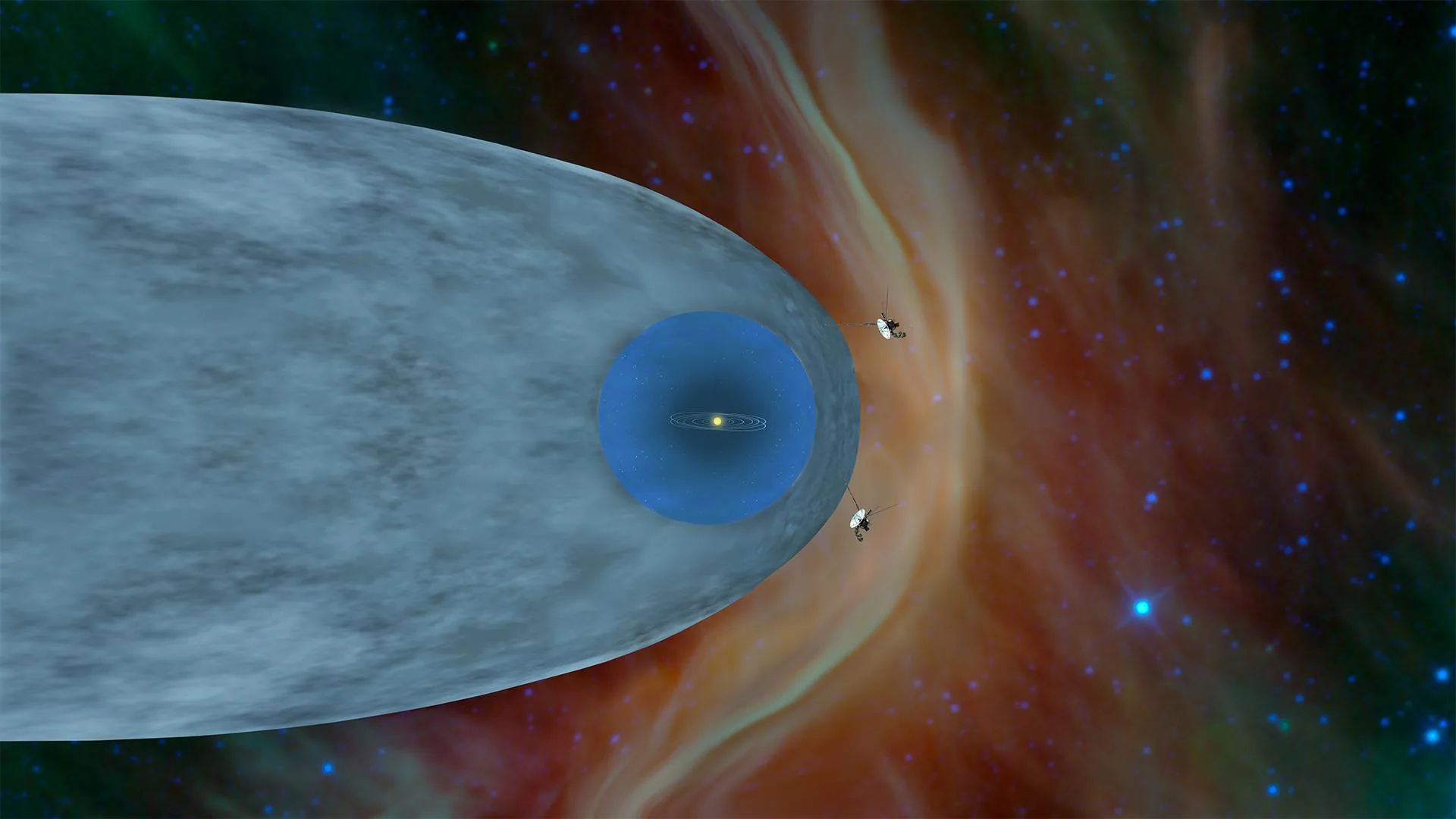
The spacecraft's extended mission, approved by NASA, focuses on two main objectives. First, New Horizons is using its instruments to study the heliosphere -- the vast bubble of solar wind surrounding the Sun -- from a unique vantage point within the Kuiper Belt. Its SWAP instrument measures the solar wind's properties at these extreme distances, complementing data from the Voyagers, which are farther out but have fewer working instruments. Together, these spacecraft are mapping the three-dimensional structure of the heliosphere in a way that no single mission could.
Second, New Horizons is conducting distant observations of other Kuiper Belt objects (KBOs), studying their surface properties, shapes, and rotation periods from ranges that, while too far for the detailed imaging possible during a flyby, still provide data unattainable from Earth. The spacecraft can observe these objects at phase angles impossible from Earth-based telescopes, revealing information about surface texture and composition.
The team has also proposed using New Horizons for astrophysical observations, including measurements of the cosmic optical background -- the total light from all galaxies in the universe -- which is easier to measure from the outer solar system, where the zodiacal dust that plagues Earth-based observations is far less dense. Early results have suggested that the cosmic optical background may be brighter than expected, hinting at unknown sources of light in the universe.
New Horizons' RTG is gradually losing power, declining at about 3.5 watts per year. By the mid-2030s, it will likely no longer have enough electricity to operate its instruments. But until then, it continues to return data from one of the most remote outposts humanity has ever reached.
Transforming Our Understanding
It is worth pausing to appreciate just how completely New Horizons changed our picture of Pluto. Before the flyby, the best images of Pluto were crude maps assembled from Hubble data, showing vague patches of light and dark at a resolution of hundreds of kilometers. The leading assumption among many scientists was that Pluto would be a geologically dead world -- a frozen, cratered iceball, interesting mainly as a curiosity at the edge of the solar system.
What New Horizons found instead was a world of startling complexity:
- Active geology: convecting nitrogen glaciers, young surfaces, cryovolcanic candidates
- A layered interior: a probable subsurface ocean of liquid water beneath the ice shell, kept liquid by residual heat and possibly ammonia antifreeze
- Atmospheric dynamics: haze layers, weather cycles tied to its orbit, surface-atmosphere exchange
- A diverse surface: mountains of water ice, plains of nitrogen ice, dark equatorial regions coated in tholins, possible wind-carved dunes
- A binary companion: Charon, itself geologically interesting, with evidence of a past ocean and tectonic activity
Pluto went from a dot of light to a world -- one that, in many ways, is as geologically complex as Mars. The mission demonstrated that small, distant bodies in the outer solar system can be every bit as dynamic and surprising as the larger, closer planets. It upended the assumption that geological activity requires proximity to the Sun or large size.
And then Arrokoth extended the story even further, reaching back to the very beginning of the solar system to reveal how the building blocks of worlds first came together.
The Legacy of New Horizons
Alan Stern has often said that New Horizons completed the initial reconnaissance of the classical solar system -- the survey of all the major types of worlds orbiting our Sun. The Mariner missions explored the inner rocky planets. The Voyagers and Galileo and Cassini explored the gas and ice giants. New Horizons explored the third zone: the vast, icy realm of the Kuiper Belt and its largest inhabitant, Pluto.
Every time humanity has sent a spacecraft to a new world for the first time, the result has been surprise. Mars had giant volcanoes and canyons. Europa had an ocean under its ice. Titan had methane rain and hydrocarbon lakes. And Pluto -- cold, small, distant Pluto -- had a beating heart of nitrogen ice, mountains of frozen water, and an atmosphere painted with organic hazes.
The spacecraft that revealed all of this carries a small container of Clyde Tombaugh's ashes. The man who discovered Pluto in 1930 as a young Kansas farm boy, working at a small observatory in Arizona, made the journey to his world 85 years later, aboard a machine traveling at more than 14 kilometers per second.
An inscription on the container reads: "Interned herein are remains of American Clyde W. Tombaugh, discoverer of Pluto and the solar system's 'third zone.' Adelle and Muron's boy, Patricia's husband, Annette and Alden's father, astronomer, teacher, punster, and friend: Clyde W. Tombaugh (1906-1997)."
It is, perhaps, the most fitting memorial in the history of exploration. And the spacecraft that carries it is still going, deeper into the dark, deeper into the unknown, sending back whispers from the edge of the solar system.