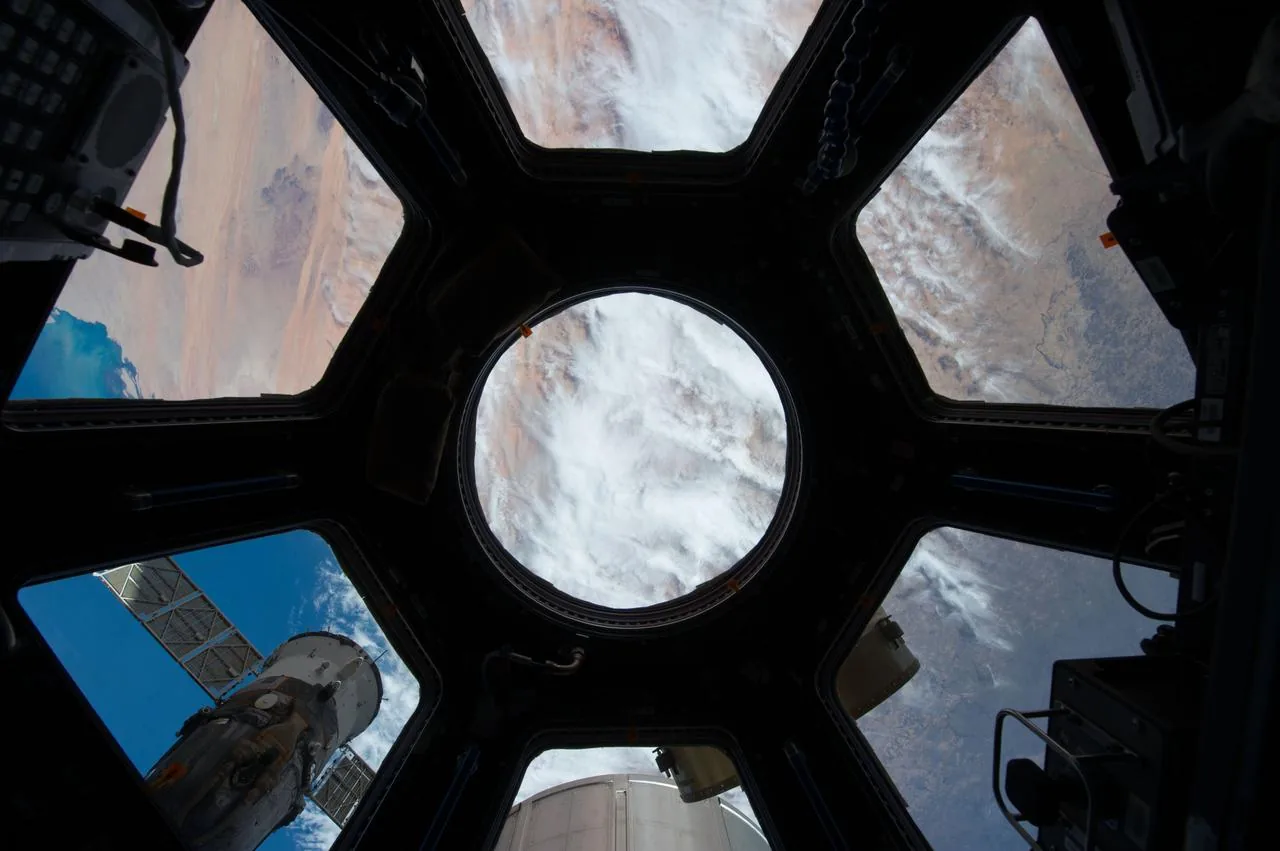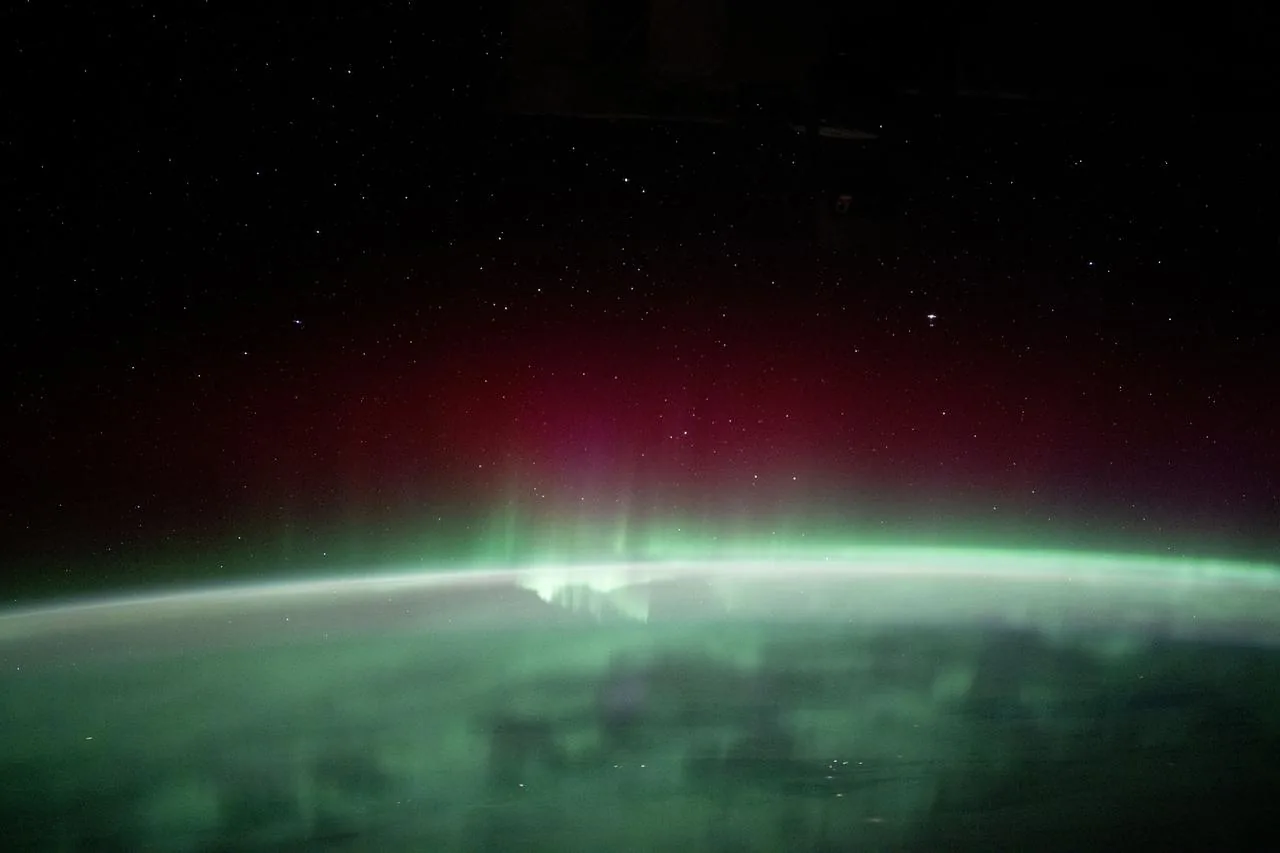
Imagine waking up in a sleeping bag velcroed to a wall, floating gently against your restraints, with the glow of Earth's horizon sliding past a window the size of a dinner plate. You have been asleep for eight hours -- or rather, you have been strapped in for eight hours, because sleeping in microgravity is its own peculiar challenge. Outside, the sun has risen and set five times since you closed your eyes.
This is morning on the International Space Station. And while life 250 miles above Earth might sound like an endless adventure, the truth is that astronauts follow a carefully structured schedule that balances scientific work, physical maintenance, station upkeep, and the basic human needs that do not disappear just because gravity does.
The Wake-Up Call: 6:00 AM GMT
The ISS crew operates on Greenwich Mean Time, a compromise between the time zones of the major partner agencies. The day officially begins at 6:00 AM GMT, though the wake-up process itself is a far cry from anything you experience at home.
First, there is no "getting out of bed" in any traditional sense. Astronauts sleep in small crew quarters about the size of a phone booth, zipped into a sleeping bag tethered to the wall. Some prefer to sleep near a window; others find the constant parade of light and darkness distracting and prefer enclosed quarters. Many wear eye masks. Some use earplugs, because the station is not quiet -- the hum of fans, pumps, and life support systems creates a constant background noise that measures around 60-70 decibels in some modules.
Upon "waking," astronauts float out of their quarters and begin the morning hygiene routine. There are no showers on the ISS. Instead, crew members use rinseless shampoo, no-rinse body wash, and wet towels. Toothpaste is the edible kind -- you swallow it rather than spit it into a sink that does not exist. Water is precious on the station; the Environmental Control and Life Support System recycles about 90% of all water, including moisture from breath, sweat, and yes, urine.
Morning Conference and Breakfast: 6:00-7:30 AM
The crew gathers for a daily planning conference with mission control centers in Houston and Moscow, reviewing the day's schedule, discussing any issues from the previous day, and coordinating tasks. This conference is critical because the crew's time is the most valuable resource on the station -- every minute is scheduled, and ground teams work around the clock to maximize the scientific return from each crew member's day.
Breakfast happens in the galley area of the Unity or Zvezda modules. Space food has come a long way from the squeeze tubes of the Mercury era, but it is still not exactly a culinary paradise. Meals come in several forms: thermostabilized pouches (essentially shelf-stable prepared foods), freeze-dried items that require rehydration, irradiated meat, and fresh food that arrives on cargo resupply missions and must be eaten quickly before it spoils.
Favorites among astronauts include tortillas (bread creates crumbs that float into equipment), shrimp cocktail (the horseradish sauce is popular because microgravity causes fluid to shift toward the head, dulling taste and smell), and whatever fresh fruit or vegetables arrived on the most recent cargo ship. Meals are warmed in a food warmer, and drinks are sipped from pouches through straws.
Everything floats, of course. An inattentive moment means your coffee pouch drifts across the module, and a dropped piece of food becomes a slow-motion projectile that could end up anywhere -- including inside sensitive equipment.
The Two-Hour Workout: Not Optional
Here is something that surprises most people: astronauts on the ISS spend approximately two hours every single day exercising. This is not a suggestion. It is a medical requirement, and it is one of the most important things they do.
In microgravity, the human body begins to deteriorate almost immediately. Without the constant pull of gravity, bones lose density at a rate of about 1-2% per month -- roughly ten times faster than the most severe cases of osteoporosis on Earth. Muscles atrophy, particularly the postural muscles of the legs and back that normally work all day just keeping you upright. The heart, which no longer has to pump blood against gravity, begins to decondition.
The ISS has two primary exercise devices. The Advanced Resistive Exercise Device (ARED) uses vacuum cylinders to simulate weightlifting, allowing astronauts to perform squats, deadlifts, bench presses, and other resistance exercises with loads up to 600 pounds. The second is a specially designed treadmill (the T2, or COLBERT -- named after Stephen Colbert following a public naming contest), which uses a harness and bungee system to pull the runner down against the belt, simulating body weight.
There is also a stationary bicycle, the CEVIS (Cycle Ergometer with Vibration Isolation and Stabilization System), which is mounted on vibration isolators to prevent the astronaut's pedaling from disturbing sensitive experiments elsewhere on the station.
Astronauts report that exercise is often their favorite part of the day -- a chance to push their bodies, listen to music, and look out the window at Earth rolling by below.
The Workday: Science, Maintenance, and More Science
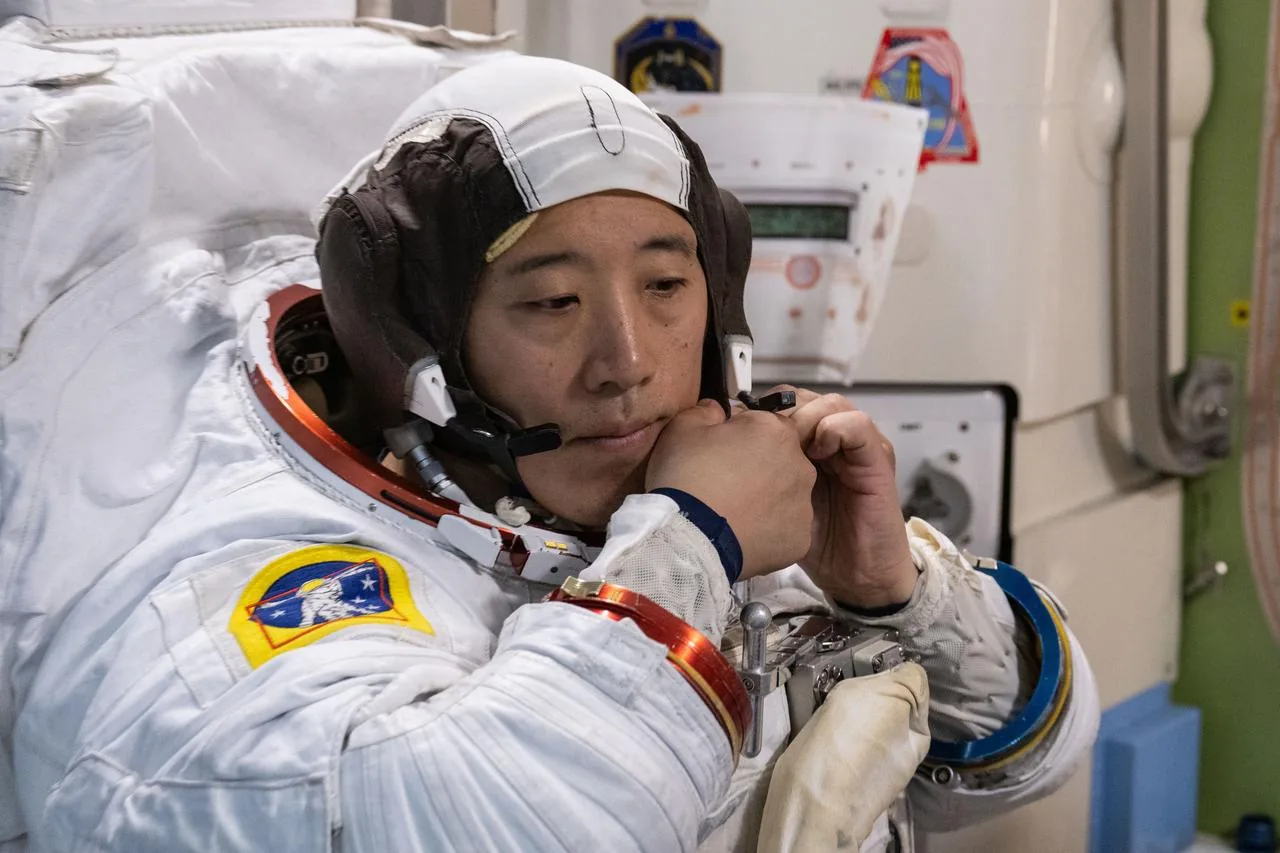
The core of the astronaut's day, from roughly 8:00 AM to 1:00 PM and again from 2:00 PM to 5:30 PM (with a lunch break), is devoted to work. And the work is remarkably varied.
On any given day, a crew member might be growing protein crystals in the Japanese Kibo module, monitoring combustion experiments in the Destiny laboratory, maintaining the water recovery system, replacing a faulty air filter, conducting a medical ultrasound on a crewmate for ground-based researchers, photographing Earth's surface for climate studies, or unpacking cargo from a recently arrived resupply vehicle.
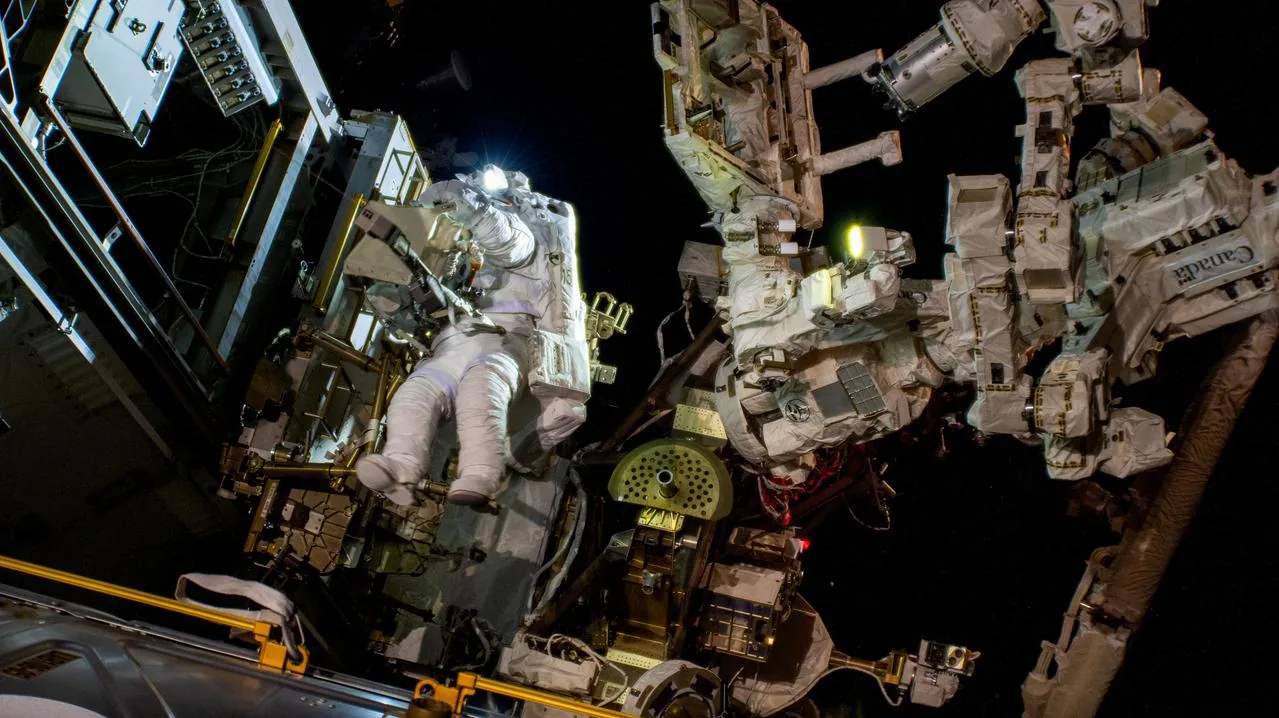
Spacewalks, when they occur, consume entire days and require extensive preparation, including pre-breathing pure oxygen to purge nitrogen from the blood and prevent decompression sickness. But most days are spent inside, working through a task list that ground controllers have carefully sequenced to maximize efficiency.
One underappreciated aspect of astronaut work is maintenance. The ISS is a complex machine with thousands of components, and things break. Toilets malfunction. Air scrubbers need new filters. Cooling loops develop issues. Astronauts are expected to be generalists -- capable plumbers, electricians, computer technicians, and mechanics -- in addition to being scientists.
Lunch, Dinner, and the Art of Eating Upside Down
Lunch is typically a 60-minute break, and dinner happens around 7:00 PM. Mealtimes serve a social function as vital as their nutritional one. The crew eats together when possible, and these shared meals are often the most relaxed, human moments of the day -- a time to joke, share stories, and maintain the social bonds that are essential to crew cohesion during months of isolation.
Astronauts can request specific foods from home, and care packages from family sometimes include favorite snacks. International crews share dishes from their home countries, turning dinner into an impromptu cultural exchange. Russian cosmonauts have been known to share canned fish and borscht; Japanese astronauts bring ramen and rice dishes.
Evening: Free Time and the Window
After the evening planning conference with mission control (around 7:30 PM), crew members have relatively free time until the scheduled sleep period at 9:30 PM. How they spend it varies.
Many astronauts spend their free hours at the Cupola -- the seven-windowed observation dome that provides a panoramic view of Earth. The Cupola is, by all accounts, the spiritual heart of the station. Astronauts photograph storms, auroras, city lights, and the impossibly thin blue line of the atmosphere. They call their families. They simply stare, often for hours, at a view that never gets old.
Others read, watch movies or TV shows loaded onto laptops, play musical instruments (there is a guitar aboard), or post to social media. Email is available, though bandwidth is limited, and astronauts communicate with family primarily through scheduled phone and video calls using an IP phone system.
The Psychological Dimension
Living in a confined space with the same small group of people for six months is psychologically demanding in ways that are difficult to fully prepare for. Astronauts undergo extensive psychological screening and training before flight, and they have access to private psychological counseling via secure communication links throughout their mission.
Isolation, confinement, the absence of natural sunlight cycles, distance from family, and the ever-present awareness that you are separated from every other human being by the vacuum of space -- these stressors are real and cumulative. NASA and its partners take crew psychological health extremely seriously, and the lessons learned from decades of ISS operations are being applied to planning for future long-duration missions to the Moon and Mars.
Small things matter enormously. Fresh food deliveries boost morale. Care packages from family can transform a difficult week. A movie night with crewmates builds bonds. And that view from the Cupola -- the constant, humbling reminder of what they are doing and why -- sustains astronauts through the hard days.
Lights Out
At 9:30 PM GMT, the crew zips back into their sleeping bags, tethers themselves to the wall, and closes their eyes. Outside, Earth turns silently below, cycling through day and night every 90 minutes while the station's inhabitants dream whatever dreams come to people who live among the stars.
Tomorrow, they will do it all again. And the day after that, and the day after that, for months -- maintaining this extraordinary outpost, advancing human knowledge one experiment at a time, and proving daily that people can live and thrive beyond the planet that made them.
It is a routine. But it is a routine performed in the most remarkable workplace in the universe.