The count keeps climbing, and the worlds keep getting stranger and more wonderful. As of early 2026, astronomers have confirmed over 5,900 exoplanets orbiting stars beyond our Sun (per the NASA Exoplanet Archive), with thousands more candidates awaiting verification. Each discovery adds another data point to our understanding of how planetary systems form and evolve -- and each one reminds us that the universe's imagination far exceeds our own.
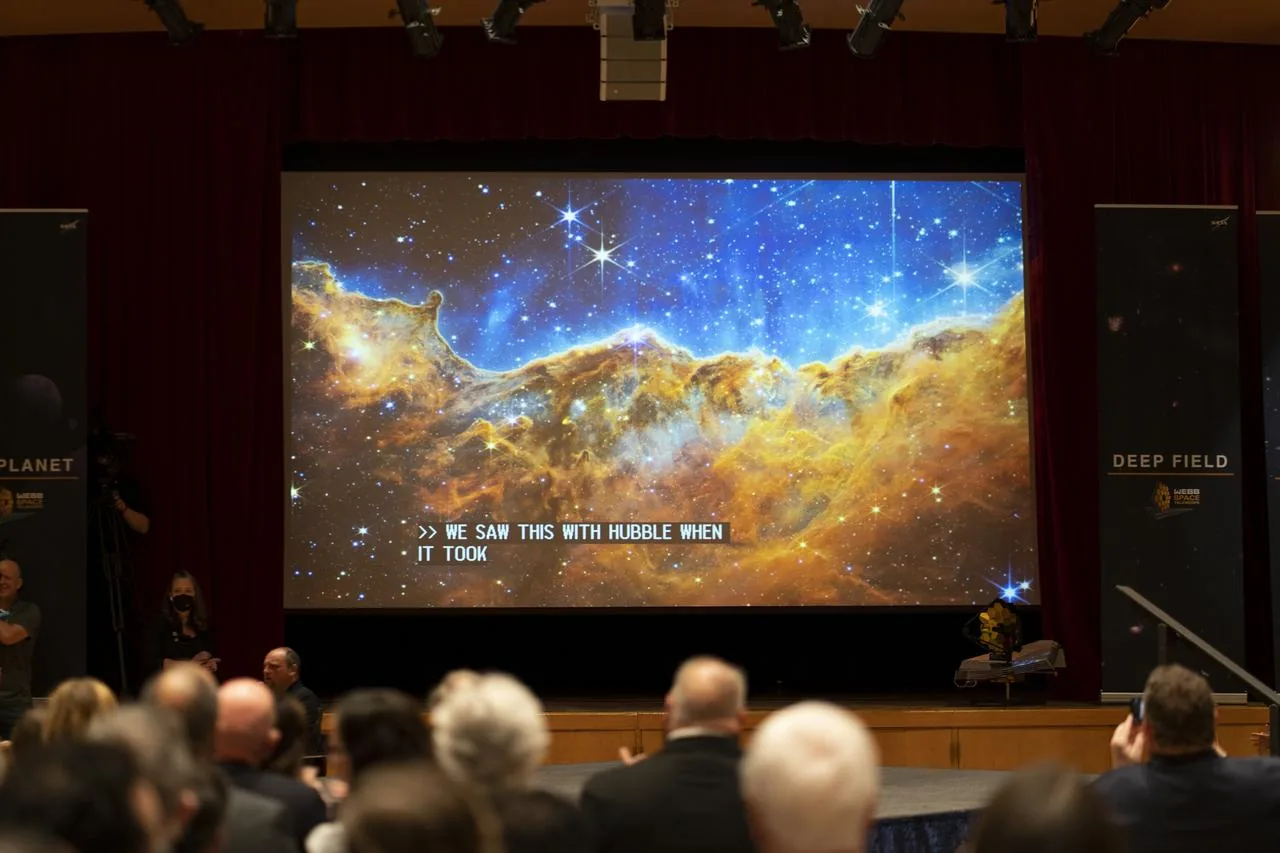
The James Webb Space Telescope has transformed the field in the past three years, moving us from simply detecting exoplanets to actually characterizing their atmospheres, measuring their temperatures, and identifying specific molecules in their skies. We are no longer just counting worlds. We are beginning to understand them.
Here are ten exoplanets that, in my view, represent the most fascinating discoveries in this extraordinary catalog.
Top 10 Exoplanets at a Glance (2026)
| Rank | Planet | Distance | Type | Discovery | Why It Matters |
|---|---|---|---|---|---|
| 1 | LHS 1140 b | 49 ly | Super-Earth / Hycean? | 2017 | Best habitable-zone target with detectable atmosphere |
| 2 | TRAPPIST-1 e | 40 ly | Earth-sized rocky | 2017 | Closest physical match to Earth in size + flux |
| 3 | K2-18 b | 124 ly | Sub-Neptune / Hycean? | 2015 | DMS biosignature debate (JWST 2023–2025) |
| 4 | TOI-700 e | 102 ly | Earth-sized rocky | 2023 | Second HZ planet in a four-planet system |
| 5 | Proxima Centauri b | 4.24 ly | Rocky, ~1.17 M⊕ | 2016 | Nearest exoplanet to Earth |
| 6 | WASP-39 b | 700 ly | Hot Saturn | 2011 | First detection of CO₂ + photochemistry on an exoplanet |
| 7 | Kepler-452 b | 1,400 ly | Super-Earth | 2015 | First near-Earth-size in HZ of a Sun-like star |
| 8 | 55 Cancri e | 41 ly | Lava super-Earth | 2004 | JWST confirmed atmosphere on an ultra-hot rocky world |
| 9 | Kepler-16 b | 200 ly | Circumbinary gas giant | 2011 | The real "Tatooine" — twin-sunset world |
| 10 | HD 189733 b | 64.5 ly | Hot Jupiter | 2005 | Sideways glass rain at 8,700 km/h |
ly = light-years. M⊕ = Earth masses. HZ = habitable zone. Hycean = hydrogen-rich atmosphere over a global ocean.
1. LHS 1140b -- The New Habitability Frontrunner
If you follow exoplanet science, remember this name. LHS 1140b has emerged as arguably the single most promising candidate for a habitable rocky world that we can actually study with current technology. Located just 49 light-years away, this super-Earth orbits within the habitable zone of a quiet red dwarf star. What sets it apart is the star's relative inactivity -- unlike many M-dwarfs, LHS 1140 is remarkably calm, reducing the atmospheric stripping that plagues planets around more active stars.
JWST observations in 2023 and 2024 provided tantalizing hints that LHS 1140b may possess an atmosphere rich in nitrogen, potentially with water vapor. Some analyses suggest the planet could even be a "Hycean" world -- one with a hydrogen-rich atmosphere overlying a global water ocean. If confirmed, this would be the first detection of an atmosphere on a habitable-zone rocky exoplanet. Further JWST observations are ongoing, and LHS 1140b is near the top of every target list for atmospheric characterization.
2. TRAPPIST-1e -- Earth's Best Doppelganger
Forty light-years away, TRAPPIST-1e remains the exoplanet that most closely matches Earth in size, density, and habitable-zone location. With 0.92 Earth radii, 0.69 Earth masses, and an orbital position receiving about 60% of Earth's stellar flux, it is the crown jewel of the seven-planet TRAPPIST-1 system.
JWST has begun atmospheric observations of the TRAPPIST-1 planets, and while the inner worlds (b and c) appear to lack substantial atmospheres, the results for TRAPPIST-1e are still accumulating. The planet's greater distance from its star gives it a better chance of retaining an atmosphere. If TRAPPIST-1e proves to have one, it will become the most studied world in all of exoplanet science.
3. K2-18b -- The Biosignature Debate
K2-18b rocketed to fame in 2023 when JWST detected carbon dioxide and methane in its atmosphere, along with a tentative signal of dimethyl sulfide (DMS) -- a molecule associated with biological activity on Earth. Located about 120 light-years away, K2-18b is a sub-Neptune roughly 8.6 times Earth's mass, orbiting in its star's habitable zone.
The DMS detection remains unconfirmed and has sparked vigorous scientific debate. Some researchers argue that the atmospheric composition is consistent with a "Hycean" world -- a planet with a hydrogen-rich atmosphere over a liquid water ocean, potentially habitable. Others caution that the planet's size and thick atmosphere may create surface pressures and temperatures incompatible with life as we know it. Regardless of the outcome, K2-18b has demonstrated that JWST can search for biologically relevant molecules on worlds light-years away, and that alone is a milestone.
4. TOI-700e -- TESS's Habitable Zone Triumph
Discovered by NASA's Transiting Exoplanet Survey Satellite (TESS) and announced in early 2023, TOI-700e is the second Earth-sized planet found in the habitable zone of its star, TOI-700. The system, located about 100 light-years away, now contains four known planets, with TOI-700d and TOI-700e both orbiting within the habitable zone.
TOI-700e is roughly 95% of Earth's size, making it one of the closest size matches to our planet ever found in a habitable zone. The star is a small, cool M-dwarf, but TOI-700 is notably quiet and stable. This system is a prime target for JWST atmospheric follow-up, and the presence of two habitable-zone planets in a single system raises fascinating questions about planetary formation and the potential for multiple habitable worlds around one star.
5. Proxima Centauri b -- Our Nearest Neighbor
At just 4.24 light-years away, Proxima Centauri b holds the distinction of being the closest known exoplanet to Earth. This rocky world orbits within the habitable zone of Proxima Centauri, the nearest star to our Sun, and has a minimum mass of about 1.17 Earth masses.
The challenge with Proxima b is its host star. Proxima Centauri is a highly active M-dwarf that produces powerful stellar flares, potentially bathing the planet in sterilizing radiation. Whether Proxima b has managed to retain an atmosphere under this bombardment remains one of the most pressing questions in exoplanet science. Its proximity makes it a compelling target for future extremely large telescopes and, someday, perhaps even interstellar probes.
6. WASP-39b -- JWST's Atmospheric Showcase
This hot Saturn, located about 700 light-years away, might not be habitable, but it earned its place in history as the planet where JWST demonstrated its atmospheric characterization capabilities to stunning effect. In 2022 and 2023, JWST detected carbon dioxide, water vapor, sodium, potassium, and -- for the first time on any exoplanet -- sulfur dioxide in the atmosphere of WASP-39b.
The sulfur dioxide detection was particularly significant because it is produced by photochemistry -- chemical reactions driven by starlight in the planet's upper atmosphere. This marked the first time photochemistry had been observed on a world outside our solar system, proving that JWST can detect not just atmospheric ingredients but active chemical processes on distant worlds.
7. Kepler-452b -- Earth's Older Cousin
Kepler-452b retains a special place in exoplanet lore as the first near-Earth-sized planet found orbiting within the habitable zone of a Sun-like star. Located about 1,400 light-years away, it orbits a G-type star similar to our Sun in a 385-day year -- remarkably close to Earth's orbital period.
At roughly 1.6 times Earth's diameter, Kepler-452b is likely a super-Earth with stronger surface gravity. Its host star is about 1.5 billion years older than our Sun, prompting speculation about what a planet like Earth might look like further along in its evolution. While too distant for JWST atmospheric characterization, Kepler-452b remains a powerful symbol of what Kepler taught us: that Earth-like planets exist around Sun-like stars.
8. 55 Cancri e -- The Lava World
Once romantically nicknamed the "diamond planet," 55 Cancri e has proven to be even stranger than that moniker suggested. This super-Earth, just 41 light-years away, orbits so close to its star that it completes a year in just 18 hours. Surface temperatures soar above 2,000 degrees Celsius.
JWST observations in 2024 provided the first strong evidence that 55 Cancri e possesses an atmosphere -- remarkable for a planet so close to its star. The data suggest a volatile-rich atmosphere, potentially containing carbon dioxide or carbon monoxide, that may be continuously replenished by volcanic outgassing from a magma ocean covering the surface. This finding challenges assumptions about atmospheric survival on ultra-hot worlds and suggests that volcanic activity can maintain atmospheres even under extreme stellar radiation.
9. Kepler-16b -- The Real Tatooine
If you grew up watching Luke Skywalker gaze at twin suns sinking below the horizon, Kepler-16b is proof that the universe sometimes imitates fiction. This Saturn-sized planet orbits two stars -- a circumbinary orbit -- completing a circuit around the stellar pair every 229 days. Located about 200 light-years away, it was the first confirmed circumbinary planet.
While Kepler-16b itself is a gas giant unlikely to harbor life, its discovery proved that stable planetary orbits can exist around binary star systems, opening the door to the possibility of habitable circumbinary worlds. Since its discovery, several more circumbinary planets have been found, suggesting that dual-sunset views may not be so rare in the galaxy after all.
10. HD 189733b -- The Glass Rain World
This hot Jupiter, located 64.5 light-years away, is one of the most thoroughly studied exoplanets in history -- and one of the most alien. Its striking blue color initially evoked comparisons to Earth, but the reality could not be more different. The blue hue comes from silicate particles in the atmosphere that scatter blue light, and those same silicates condense and fall as molten glass rain, driven sideways by winds exceeding 8,700 kilometers per hour.
Temperatures on HD 189733b reach about 1,200 degrees Celsius, and JWST has further characterized its atmosphere, detecting water vapor and carbon dioxide. It is a world of breathtaking violence and alien beauty -- a reminder that when we say "exoplanet," the range of possibilities spans from the potentially habitable to the utterly infernal.
The Bigger Picture
These ten worlds represent a tiny fraction of the over 5,600 confirmed exoplanets, which in turn represent a tiny fraction of the billions of planets in our galaxy alone. What strikes me most, looking at this list, is the range: from possible ocean worlds where life might stir beneath alien skies, to hellscapes where glass falls sideways through superheated atmospheres. The universe builds planets with an extravagance and creativity that defies easy categorization.
With JWST characterizing atmospheres, TESS continuing to discover transiting worlds, and ground-based extremely large telescopes coming online in the late 2020s, the pace of discovery is only accelerating. We are not just finding new worlds anymore. We are beginning to understand them -- their weather, their chemistry, their geology, and someday, perhaps, their biology. Each of these ten fascinating planets is a chapter in that unfolding story, and the best chapters are still ahead.