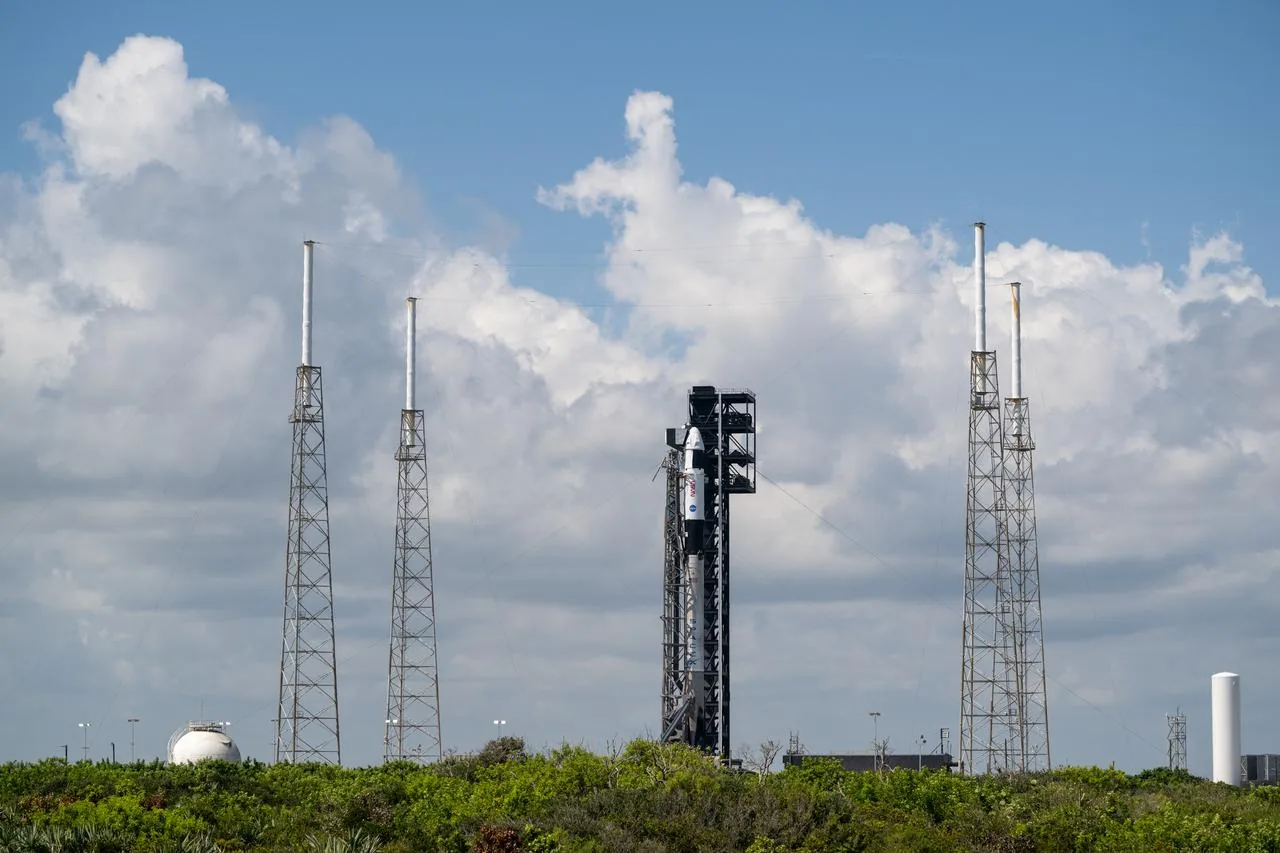
I get asked a version of this question more often than any other: "Why should we spend money on space when there are so many problems here on Earth?" It is a fair question, and it deserves a thoughtful answer -- not a dismissive one. Because when you actually dig into what space exploration does for us, the answer is not "despite our problems on Earth." The answer is "because of our problems on Earth."
Space exploration is not a luxury. It is one of the most powerful tools humanity has for understanding our planet, protecting our civilization, driving economic growth, and pushing the boundaries of what we are capable of. Let me show you why.
Watching Over Our Planet from Above
Here is a fact that might surprise you: some of the most important climate science in the world comes from space. NASA, ESA, JAXA, and other agencies operate a fleet of Earth observation satellites that monitor everything from ice sheet thickness in Greenland and Antarctica to deforestation in the Amazon to sea surface temperatures across every ocean.
The Copernicus program, operated by the European Space Agency and the European Commission, provides open-access data from its Sentinel satellite constellation that is used by scientists, governments, and organizations worldwide. Copernicus data has been instrumental in tracking the acceleration of polar ice melt, monitoring methane emissions from fossil fuel infrastructure, and providing early warning for wildfires, floods, and droughts.
NASA's PACE (Plankton, Aerosol, Cloud, ocean Ecosystem) satellite, launched in February 2024, is delivering unprecedented data about ocean health, atmospheric aerosols, and cloud properties. Its hyperspectral ocean color instrument can identify specific types of phytoplankton from orbit, which matters enormously because phytoplankton produce roughly half of the oxygen we breathe and form the base of the marine food chain.
Without space-based observation, our understanding of climate change would be fragmentary and dangerously incomplete. Satellites give us the global, continuous perspective that no network of ground stations can match.
Planetary Defense: Not Science Fiction Anymore
On September 26, 2022, NASA's DART (Double Asteroid Redirection Test) spacecraft deliberately slammed into Dimorphos, a small asteroid moon orbiting the larger asteroid Didymos. The impact successfully changed Dimorphos's orbital period by about 33 minutes -- far exceeding the minimum benchmark of 73 seconds that would have demonstrated the technique worked.
Let that sink in. Humanity now has a proven method for deflecting an asteroid. We tested it. It worked.
This matters because asteroid impacts are one of the few truly existential threats to civilization that we can actually do something about. The dinosaurs did not have a space program. We do. ESA's Hera mission, launched in October 2024, is currently en route to Dimorphos to conduct a detailed post-impact survey, measuring the crater, the asteroid's internal structure, and the precise change in its orbit. This data will be critical for refining future deflection strategies.
Simultaneously, survey programs like NASA's NEO Surveyor mission, scheduled for launch in 2028, will dramatically improve our ability to detect potentially hazardous asteroids, particularly those approaching from the Sun's direction that are difficult to spot from the ground. Early detection gives us time, and time is everything when it comes to deflection.
The Space Economy: $630 Billion and Growing
The global space economy reached an estimated $630 billion in 2024, and it is growing fast. That figure encompasses satellite services, launch, ground equipment, manufacturing, and increasingly, new sectors like in-space logistics and orbital tourism.
But the raw number only tells part of the story. What matters is how deeply space infrastructure is woven into everyday life. GPS, which depends on a constellation of 31 satellites, underpins everything from navigation apps on your phone to precision agriculture to the timing systems that synchronize global financial transactions. The economic value of GPS to the US economy alone has been estimated at over $1.4 trillion since it became fully operational.
Satellite communications, Earth observation data, and space-derived weather forecasting collectively save lives and generate economic value that dwarfs the cost of the space programs that created them. The global space economy is projected to surpass $1 trillion by the early 2030s as new commercial space stations come online, in-space manufacturing matures, and lunar resource utilization begins.
Space is not a cost center. It is an investment with extraordinary returns.
Spin-Off Technologies: Space Innovation in Your Daily Life

Every time you use memory foam, scratch-resistant eyeglass lenses, an infrared ear thermometer, or water purification technology, you are benefiting from NASA spin-off technology. But the spin-offs go far beyond those classic examples.
Modern innovations with space origins include:
- CMOS image sensors, originally developed for space instruments, now power virtually every smartphone camera on Earth.
- Ventricular assist devices (heart pumps) were developed using technology from Space Shuttle fuel pump designs.
- Improved firefighter breathing systems were adapted from astronaut life support technology.
- Structural health monitoring systems, used to detect fatigue in aircraft and bridges, evolved from technology designed to monitor the Space Shuttle.
- Freeze-dried food preservation, now standard in emergency preparedness and outdoor recreation, was developed for the Apollo program.
NASA's Technology Transfer Program has documented over 2,000 spin-off technologies since the 1970s. The R&D done for space missions, where failure is catastrophic and conditions are extreme, produces solutions of extraordinary reliability and ingenuity that find applications across medicine, transportation, agriculture, and countless other fields.
International Cooperation: The Artemis Accords
In an era of geopolitical tension, space remains one of the most powerful platforms for international cooperation. The Artemis Accords, introduced by NASA in 2020, establish a framework of principles for the peaceful, transparent, and cooperative exploration of the Moon, Mars, and beyond.
As of early 2025, more than 40 nations have signed the Artemis Accords, including the United States, Japan, the United Kingdom, Canada, Italy, Australia, South Korea, India, France, Germany, and many others. The signatories span every inhabited continent and include both established space powers and emerging space nations.
The Accords build on the foundation of the 1967 Outer Space Treaty and address practical issues for the coming era of lunar exploration: interoperability of systems, transparency of operations, release of scientific data, preservation of heritage sites (like the Apollo landing locations), and sustainable use of space resources.
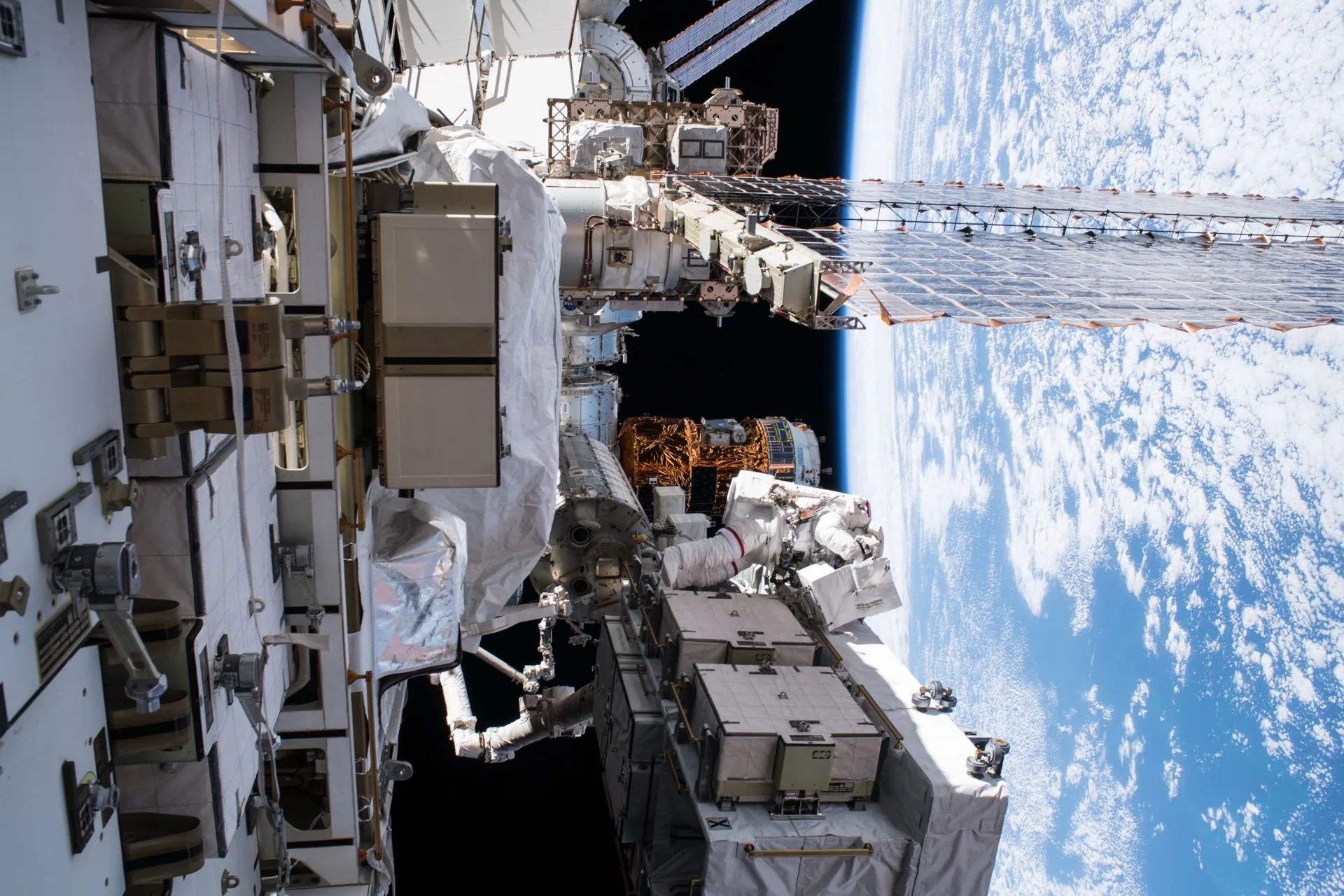
The International Space Station has already demonstrated that nations with serious political disagreements on Earth can collaborate brilliantly in orbit. The ISS partnership between the United States, Russia, Europe, Japan, and Canada has operated continuously for over 24 years. As we move into the era of lunar outposts and eventually Mars missions, international cooperation will not just be desirable -- it will be essential.
Inspiration: The Intangible Return That Matters Most
I want to address something that does not show up in economic analyses but is profoundly real. Space exploration inspires people. It inspires kids to study math and science. It inspires engineers to solve problems that seem impossible. It inspires all of us to think beyond our immediate circumstances and consider what humanity is capable of when we aim high.
The Apollo program did not just land humans on the Moon. It created a generation of scientists, engineers, doctors, and educators who were motivated by the audacity of the endeavor. Today, programs like Artemis, the Mars Sample Return mission, and the James Webb Space Telescope's ongoing discoveries are doing the same thing for a new generation.
The James Webb Space Telescope, which began full science operations in July 2022, has already transformed our understanding of the early universe, revealing galaxies that formed within a few hundred million years of the Big Bang, capturing detailed atmospheric spectra of exoplanets, and producing images of star-forming regions that are breathtaking in both their scientific content and their beauty.
When a child sees Webb's image of the Pillars of Creation or watches a Starship launch for the first time and says "I want to do that," a future scientist is born. You cannot put a dollar value on that, but it may be the most important return on investment of all.
The Path Forward
We live in a time when the tools for exploring space are more powerful, more affordable, and more widely available than ever before. Private companies are driving down launch costs. International partnerships are broadening access. Robotic missions are revealing the solar system in stunning detail. And a new generation of crewed exploration -- to the Moon, and eventually to Mars -- is taking shape before our eyes.
Space exploration is not a diversion from solving Earth's problems. It is one of the most effective ways we address them. It monitors our climate, protects us from cosmic threats, fuels economic growth, generates life-saving technologies, brings nations together, and reminds us that we are capable of extraordinary things.
The frontier is vast. And every step we take into it makes life better here at home.