In the first week of February 2021, three spacecraft arrived at Mars within days of each other. One was NASA's Perseverance rover. Another was China's Tianwen-1. The third was Al Amal -- "Hope" -- the Emirates Mars Mission, built and operated by the Mohammed Bin Rashid Space Centre (MBRSC) in Dubai. That a nation with no space heritage to speak of just a decade earlier had placed a science probe in orbit around another planet was, by any measure, one of the most remarkable achievements in the modern history of space exploration.
The Middle East's emergence as a serious player in space is not a fluke, and it is not slowing down. The United Arab Emirates and Saudi Arabia, in particular, are investing billions of dollars, developing indigenous technical capabilities, and sending their citizens to space at a pace that has taken the international space community by genuine surprise. This is a story about ambition, strategy, and the deliberate construction of spacefaring nations.
The UAE: From Zero to Mars in a Decade
The UAE's space journey is a case study in what can be accomplished when national will, financial resources, and smart institutional design converge.
The Mohammed Bin Rashid Space Centre (MBRSC), established in Dubai, has been the engine of the UAE's space program. MBRSC began with Earth observation satellites -- DubaiSat-1 (2009) and DubaiSat-2 (2013) -- developed in partnership with South Korea's Satrec Initiative. These early projects were deliberately structured as knowledge-transfer programs: Emirati engineers worked alongside Korean counterparts, progressively taking on more responsibility with each mission. By the time KhalifaSat launched in 2018, it was designed and built primarily by Emirati engineers at MBRSC's facilities in Dubai. KhalifaSat delivers sub-meter resolution Earth imagery and remains operational today.
But the program that put the UAE on the global space map was the Emirates Mars Mission (EMM). Announced in 2014, the mission had a hard deadline -- it had to arrive at Mars in time for the UAE's 50th National Day celebrations in 2021 -- and a clear scientific mandate: to study the Martian atmosphere, weather systems, and climate dynamics.
The Hope probe was developed in collaboration with the University of Colorado Boulder, Arizona State University, and the University of California, Berkeley. Critically, the UAE insisted that its engineers be centrally involved in every phase of development, not just writing checks. The spacecraft carries three instruments: the Emirates eXploration Imager (EXI) for visible and ultraviolet imaging, the Emirates Mars InfraRed Spectrometer (EMIRS) for atmospheric temperature and dust measurements, and the Emirates Mars Ultraviolet Spectrometer (EMUS) for studying the hydrogen and oxygen corona of Mars.
Hope entered Mars orbit on February 9, 2021, making the UAE the fifth entity to reach Mars (after NASA, the Soviet Union, ESA, and India) and the first Arab nation to conduct an interplanetary mission. The probe's data has contributed to new understanding of how energy moves through the Martian atmosphere, and the mission was extended beyond its original two-year plan. The scientific output has been published in leading journals, and the mission has been cited by planetary scientists worldwide.
The UAE has not rested there. MBRSC's MBZ-SAT, an advanced Earth observation satellite named after UAE President Sheikh Mohamed bin Zayed Al Nahyan, is the most advanced commercial imaging satellite built entirely within the UAE. The Rashid rover was developed as a lunar surface exploration mission and was carried to the Moon as a payload on the ispace Hakuto-R Mission 1 lander in April 2023. Though the lander crashed during its descent, the engineering development of Rashid represented another step in the UAE's capability ladder.
Looking ahead, the UAE has announced plans for an asteroid belt mission and has committed to a long-term vision that extends to a Mars settlement concept -- aspirational, certainly, but consistent with the country's pattern of setting ambitious targets and working systematically toward them.
Emirati Astronauts: National Heroes in Orbit
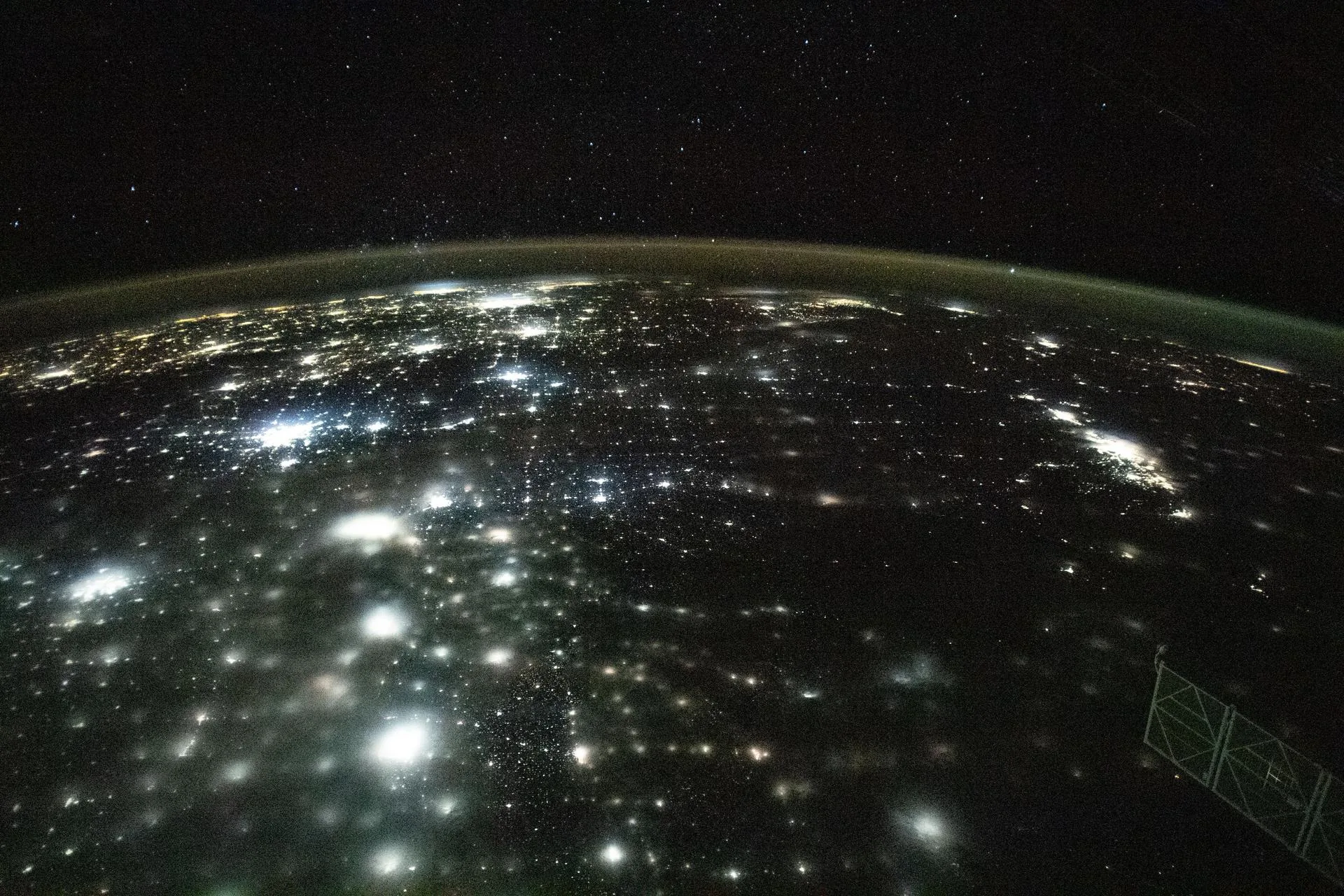
The human spaceflight dimension of the UAE's program has been equally impactful.
Hazza Al Mansouri became the first Emirati astronaut on September 25, 2019, launching aboard a Soyuz spacecraft to the International Space Station for an eight-day mission. The flight was arranged through a commercial agreement with Roscosmos and marked a historic moment for the Arab world. Al Mansouri conducted experiments in microgravity, including studies related to the behavior of seeds and the human body in space, and his mission generated enormous public enthusiasm across the region.
The next step was far more ambitious. Sultan Al Neyadi launched to the ISS aboard a SpaceX Crew Dragon in March 2023 as part of Crew-6, becoming the first Arab astronaut to undertake a long-duration mission -- a full six months aboard the station. Al Neyadi lived and worked as a full member of the Expedition 69 crew, conducting scientific experiments, performing maintenance on station systems, and completing a spacewalk, making him the first Arab to walk in space.
The significance of Al Neyadi's mission extends well beyond symbolism. A six-month rotation on the ISS requires months of training at NASA's Johnson Space Center and ESA's European Astronaut Centre, familiarity with multiple station systems, and the physical and psychological readiness to operate in microgravity for an extended period. The UAE's astronaut program, managed by MBRSC, has produced graduates capable of performing at the same level as their NASA, ESA, and JAXA counterparts. That is a capability statement.
Saudi Arabia: Rapid Acceleration Under Vision 2030
The Kingdom of Saudi Arabia entered the space arena more recently than the UAE but has moved with remarkable speed and ambition.
The Saudi Space Agency (SSA), established in December 2018 by royal decree, was later reorganized as the Saudi Space Commission (SSC), reflecting the kingdom's decision to treat space as a strategic national priority rather than a niche science portfolio. Saudi Arabia's space investments are part of the broader Vision 2030 economic diversification strategy championed by Crown Prince Mohammed bin Salman, which seeks to reduce the kingdom's dependence on oil revenues and build a knowledge-based economy.
Saudi Arabia's most visible space achievement to date came in May 2023, when two Saudi astronauts -- Ali AlQarni and Rayanah Barnawi -- flew to the International Space Station aboard the Axiom Space Ax-2 mission, a commercial mission launched on SpaceX Crew Dragon. AlQarni, a Royal Saudi Air Force fighter pilot, and Barnawi, a biomedical researcher, spent approximately 10 days aboard the ISS conducting experiments in areas including human physiology, cloud seeding, and material science.
Barnawi's flight was historic: she became the first Arab woman in space and the first Saudi woman in space, a milestone that resonated powerfully across the Middle East and globally. In a region where women's participation in STEM fields is rapidly growing, Barnawi's mission served as both an achievement and a catalyst.
The Saudi Space Commission has been building out institutional capacity with significant investment. The kingdom is developing satellite capabilities for Earth observation, communications, and scientific research. It has signed cooperation agreements with NASA, CNES (France's space agency), and multiple international partners. The commission has announced plans for a comprehensive space program that includes satellite development, astronaut training, and space-related research.
NEOM, Saudi Arabia's $500 billion mega-project in the northwest of the country, has incorporated space-related initiatives into its vision, including plans for space tourism infrastructure and technology development zones. While many NEOM concepts remain in early stages, the scale of investment signals that the kingdom views space capability as integral to its future economic identity.
Saudi Arabia has also invested in space education, establishing scholarship programs and partnerships with international universities to train a new generation of Saudi space engineers and scientists. The kingdom's relatively young population -- over 60% of Saudi citizens are under 35 -- provides a deep talent pool if the educational pipeline can be built fast enough.
Israel: The Established Player
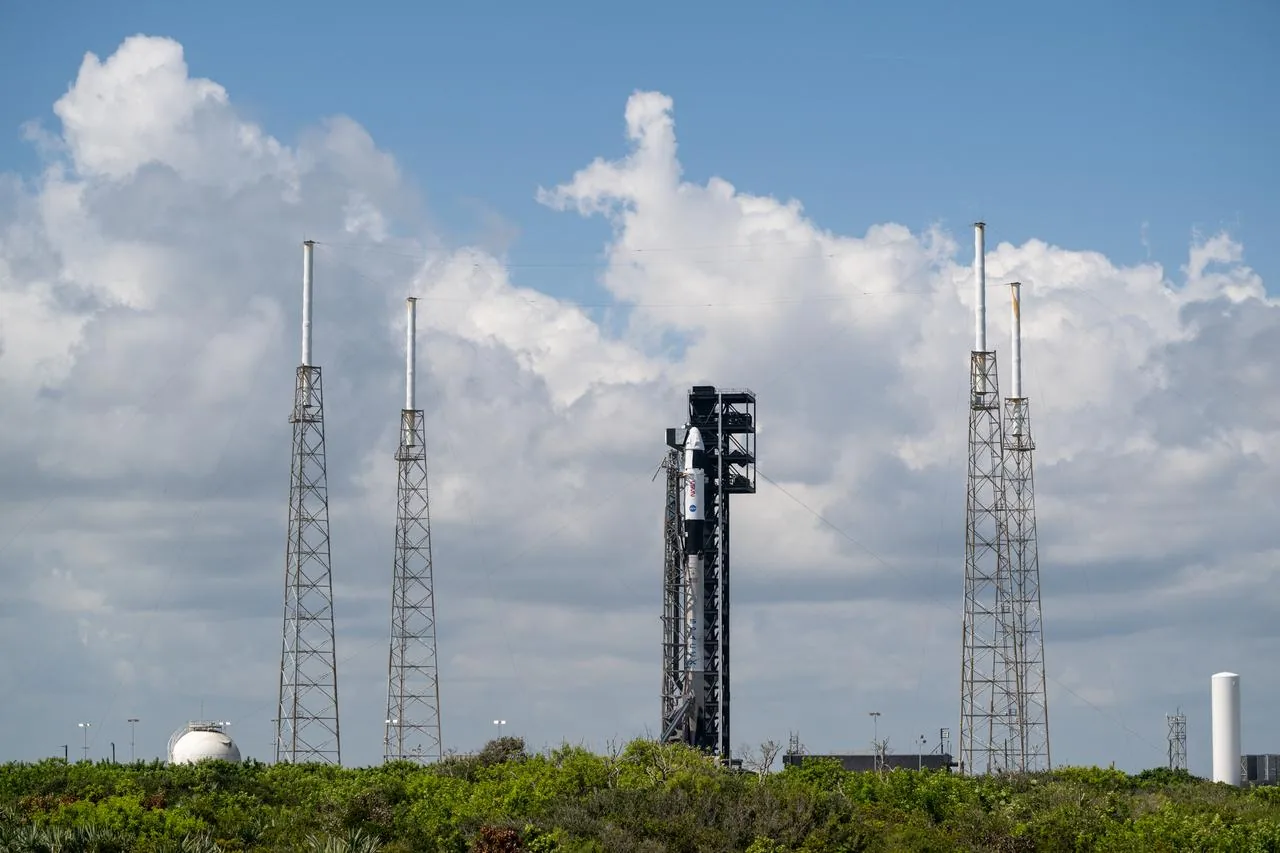
While the UAE and Saudi Arabia represent the newest Middle Eastern entrants to spacefaring status, Israel has been a space-capable nation for decades. The Israeli Space Agency (ISA) has a long history, and the country's defense-oriented satellite programs are among the most capable in the world.
The Ofeq series of reconnaissance satellites, built by Israel Aerospace Industries (IAI), provides the Israeli Defense Forces with high-resolution intelligence imagery. Ofeq satellites are launched domestically from the Palmachim Airbase using the Shavit launch vehicle -- a capability that makes Israel one of the very few nations that can both build and launch its own satellites. The launches are conducted westward, over the Mediterranean, to avoid overflying hostile territory, which imposes a performance penalty but reflects the unique geopolitical constraints under which Israel operates.
On the civil side, SpaceIL, an Israeli nonprofit, attempted to land the Beresheet spacecraft on the Moon in April 2019. The mission, which originated as a Google Lunar XPRIZE entry, reached lunar orbit and began its descent before a main engine failure caused it to crash. Despite the failure, Beresheet was the first privately funded spacecraft to reach lunar orbit and came tantalizingly close to landing. It demonstrated that a small nation and a modest budget -- approximately $100 million, much of it privately raised -- could reach the Moon. SpaceIL has announced plans for a follow-up mission, Beresheet 2.
Israel's space ecosystem also includes a growing commercial sector. Companies like NSLComm and Ramon Space are developing advanced communications and computing technology for satellites, and Israel's broader high-tech ecosystem provides a natural feeder pipeline for space startups.
What the Middle East's Space Ambitions Mean for the World
The rise of Middle Eastern space programs is reshaping the geography of the global space industry in several important ways.
First, it is expanding the talent base. Thousands of young engineers and scientists across the UAE, Saudi Arabia, and the broader region are entering space-related careers, trained at international institutions and increasingly at domestic ones. This is creating capabilities that will compound over time.
Second, it is creating new sources of demand. Middle Eastern governments are among the fastest-growing purchasers of satellite imagery, communications capacity, and launch services. This demand supports the broader global space economy and creates commercial opportunities for companies worldwide.
Third, it is diversifying international partnerships. The UAE and Saudi Arabia have signed cooperation agreements with the United States, Europe, Japan, South Korea, China, and India. In a world where space cooperation is increasingly complicated by geopolitical tensions, Middle Eastern nations are positioned as bridge-builders who can work across traditional alliance boundaries.
Finally, and perhaps most importantly, these programs are proving that spacefaring capability is not the exclusive preserve of the Cold War superpowers or the largest economies. The UAE, a nation of roughly 10 million people, put a spacecraft in orbit around Mars. Saudi Arabia sent two astronauts to the ISS within five years of establishing a space agency. These are achievements that would have seemed implausible a generation ago.
The Middle East is building space programs from scratch -- and building them fast. The next decade will determine whether these foundations become the basis for sustained, world-class space capability. If the trajectory holds, the answer seems increasingly clear.