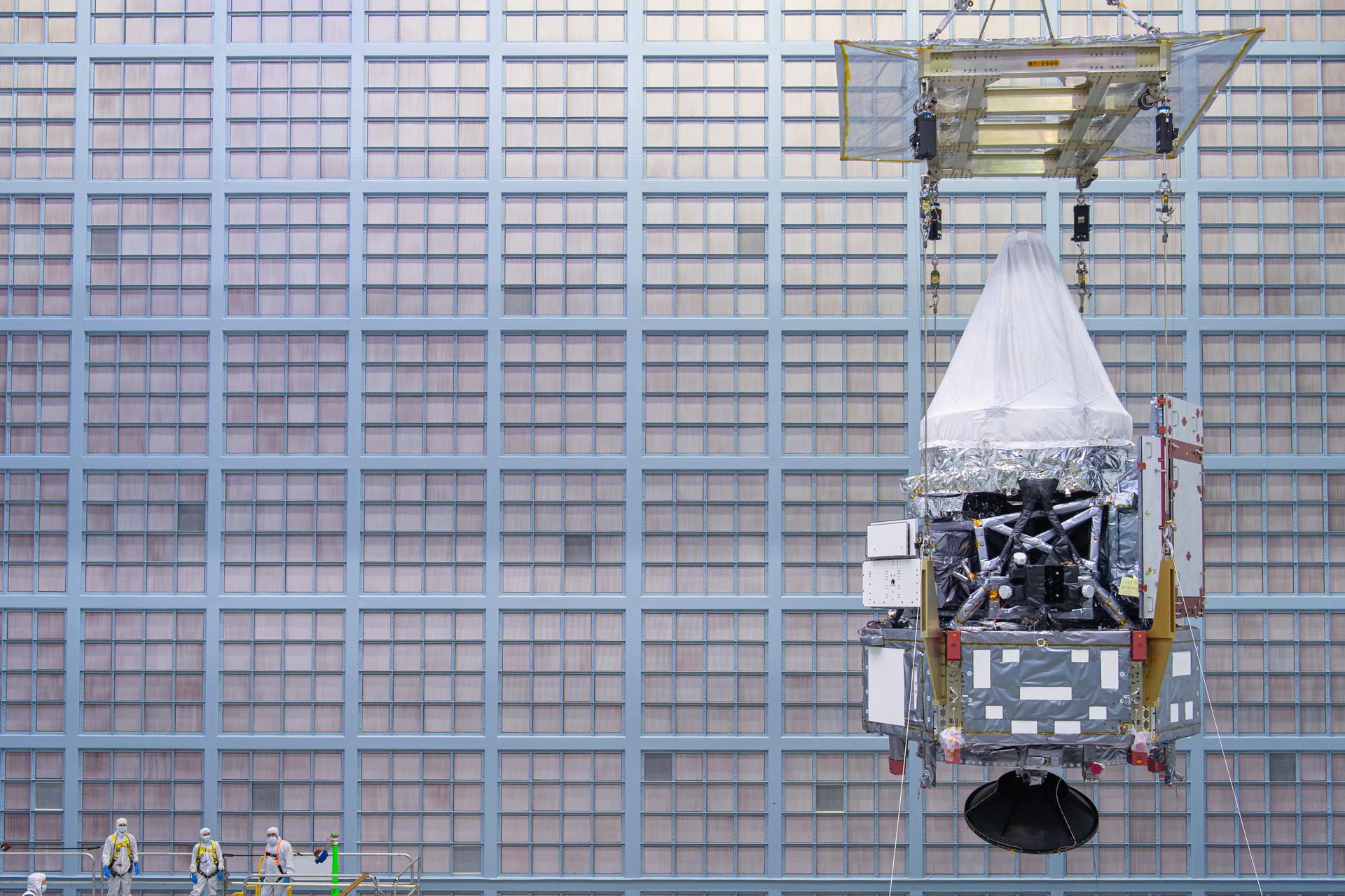
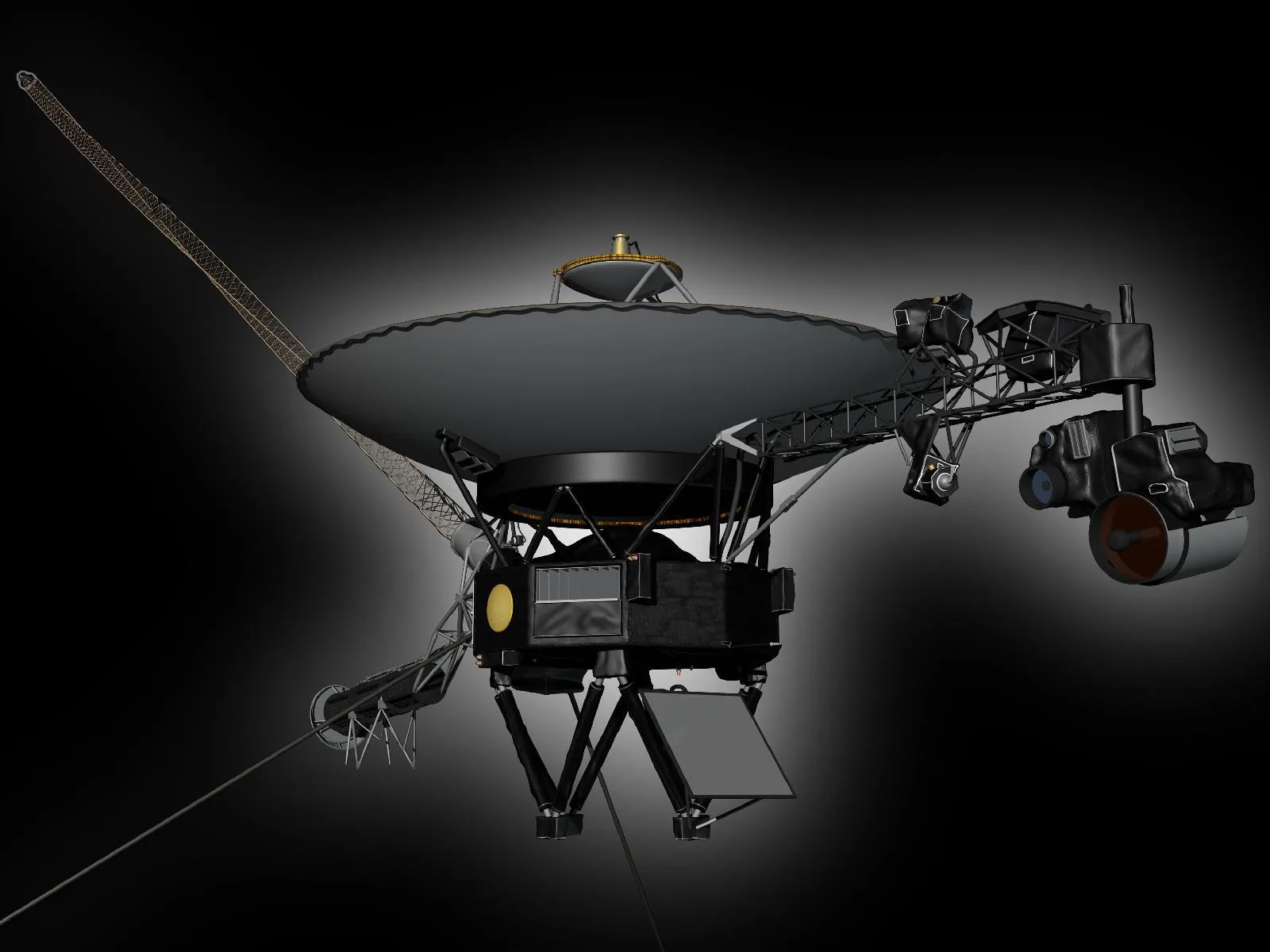
Somewhere out there, right now, two small spacecraft are hurtling through the darkness between the stars. They have no solar panels, no modern computers, no way to stop or turn around. Each carries a golden phonograph record etched with sounds and images of Earth -- a message in a bottle tossed into the cosmic ocean.
They are Voyager 1 and Voyager 2, and they are the farthest human-made objects from Earth. Launched in 1977, they are still transmitting data back to us after more than 47 years of continuous operation, from distances so vast that their radio signals, traveling at the speed of light, take nearly a full day to reach us.
Their story is one of the most remarkable in the history of exploration.
The Grand Tour
The Voyager missions were born from a celestial coincidence. In the late 1960s, aerospace engineer Gary Flandro discovered that the outer planets -- Jupiter, Saturn, Uranus, and Neptune -- were aligning in a way that occurs only once every 175 years. This alignment would allow a spacecraft to use the gravity of each planet to sling itself onward to the next, visiting all four gas giants in a single mission. NASA called it the Grand Tour.
Budget constraints initially scaled back the ambition. The twin Voyagers were officially tasked with studying only Jupiter and Saturn. But the engineers built them to last, and when Voyager 2 successfully completed its Saturn encounter, NASA approved the extended mission to Uranus and Neptune.
Voyager 1 launched on September 5, 1977 (actually 16 days after Voyager 2, which launched on August 20 -- the numbering reflects their arrival order at Jupiter, not their launch order). It flew past Jupiter in March 1979, sending back stunning images of the Great Red Spot, volcanic eruptions on Io, and the intricate structure of Jupiter's ring system. At Saturn in November 1980, it made a close flyby of the moon Titan, whose thick, hazy atmosphere had long intrigued scientists. This flyby trajectory bent Voyager 1 out of the ecliptic plane, ending its planetary tour but sending it on the fastest path out of the solar system.
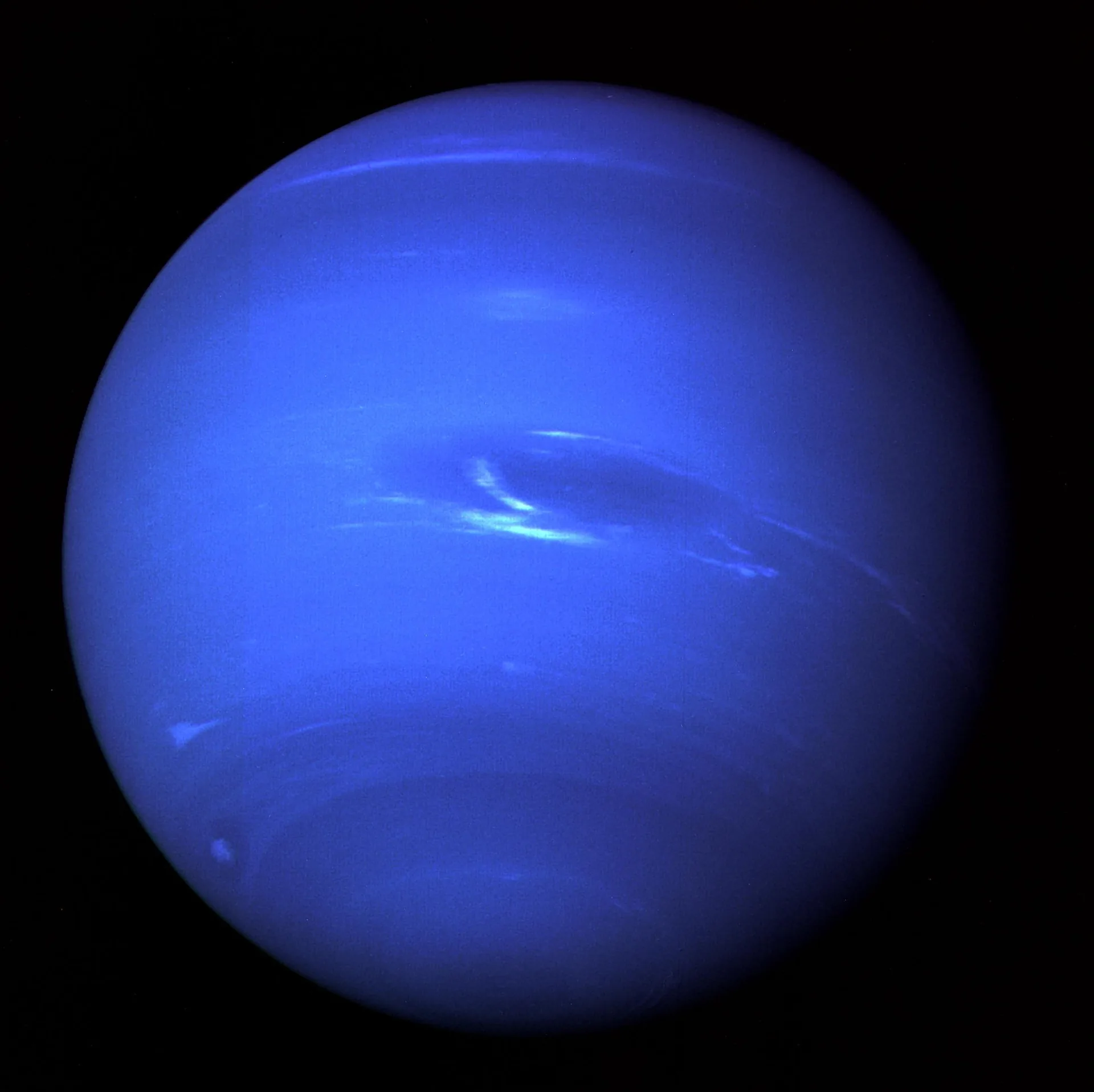
Voyager 2 took a different route, one that kept it in the ecliptic plane for encounters with all four giant planets. After Jupiter (1979) and Saturn (1981), it became the first and only spacecraft to visit Uranus (January 1986) and Neptune (August 1989). The Neptune encounter was a triumph -- the images of that deep blue world, its Great Dark Spot, and its moon Triton (with active geysers of nitrogen) remain among the most beautiful ever taken by a space probe.
Together, the Voyagers discovered 24 new moons, active volcanoes beyond Earth, rings around Jupiter and Neptune, and a wealth of data about the magnetic fields and atmospheres of the outer planets. They transformed our understanding of the outer solar system from a few blurry dots into vivid, complex worlds.
The Golden Record
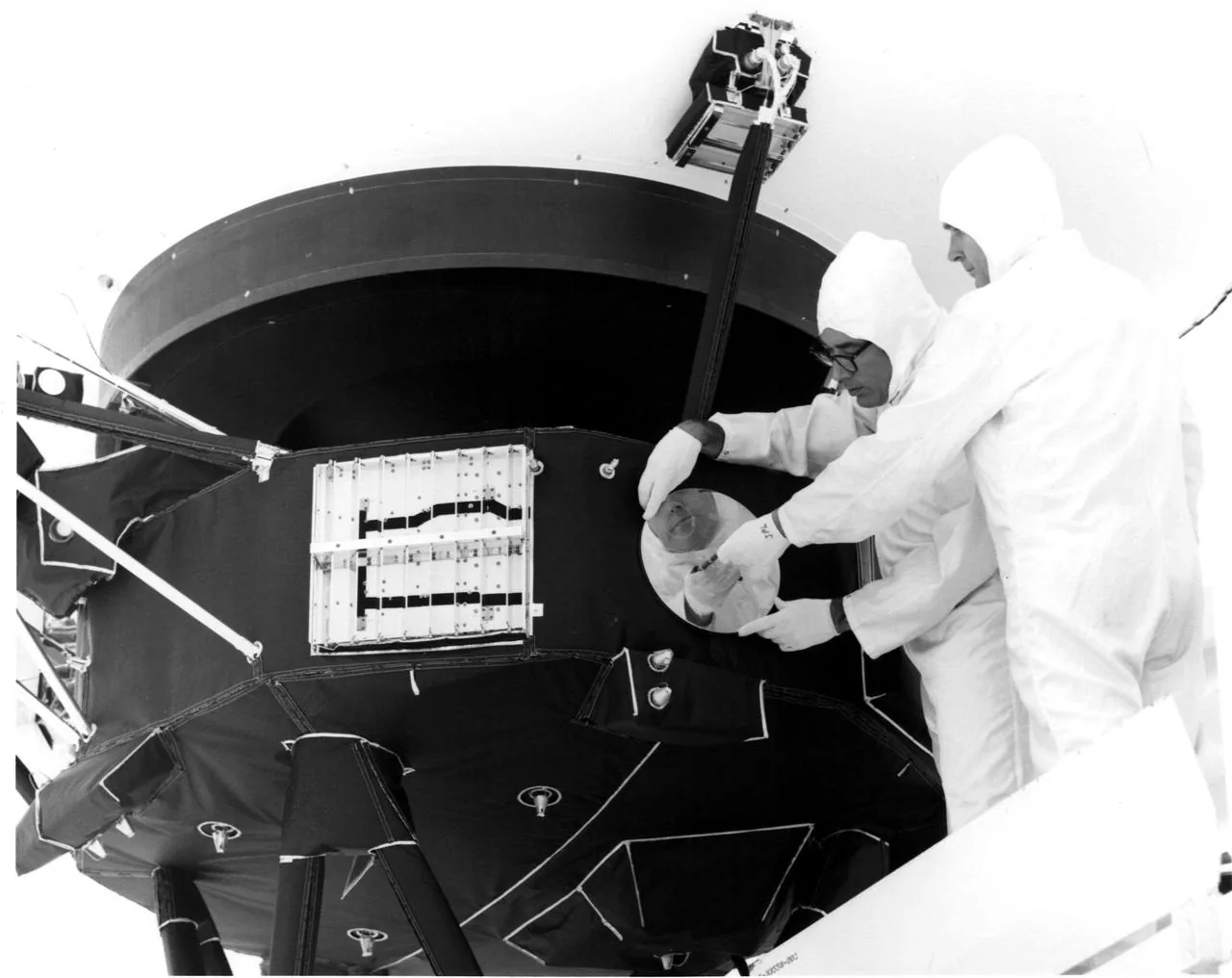
Attached to each Voyager is a gold-plated copper phonograph record, 12 inches in diameter, enclosed in an aluminum case with a stylus and symbolic instructions for playback. The Golden Record was the brainchild of a committee chaired by Carl Sagan, and it is one of the most poetic gestures humanity has ever made.
The record contains 115 images encoded in analog form, greetings in 55 languages, a selection of natural sounds (wind, thunder, birds, whales), and 90 minutes of music ranging from Bach to Chuck Berry, from Navajo night chants to Beethoven's Fifth Symphony. It carries the brainwaves of Ann Druyan (who would later marry Sagan), recorded as she thought about the history of Earth and what it means to be alive.
The chances of another civilization ever finding a Voyager are vanishingly small. The spacecraft are heading into the emptiness between stars, and the nearest star along either trajectory is tens of thousands of years away. But the Golden Record was never really about the odds. It was about us -- about what we chose to say about ourselves when given the chance to speak to the cosmos.
Crossing the Heliopause: Entering Interstellar Space
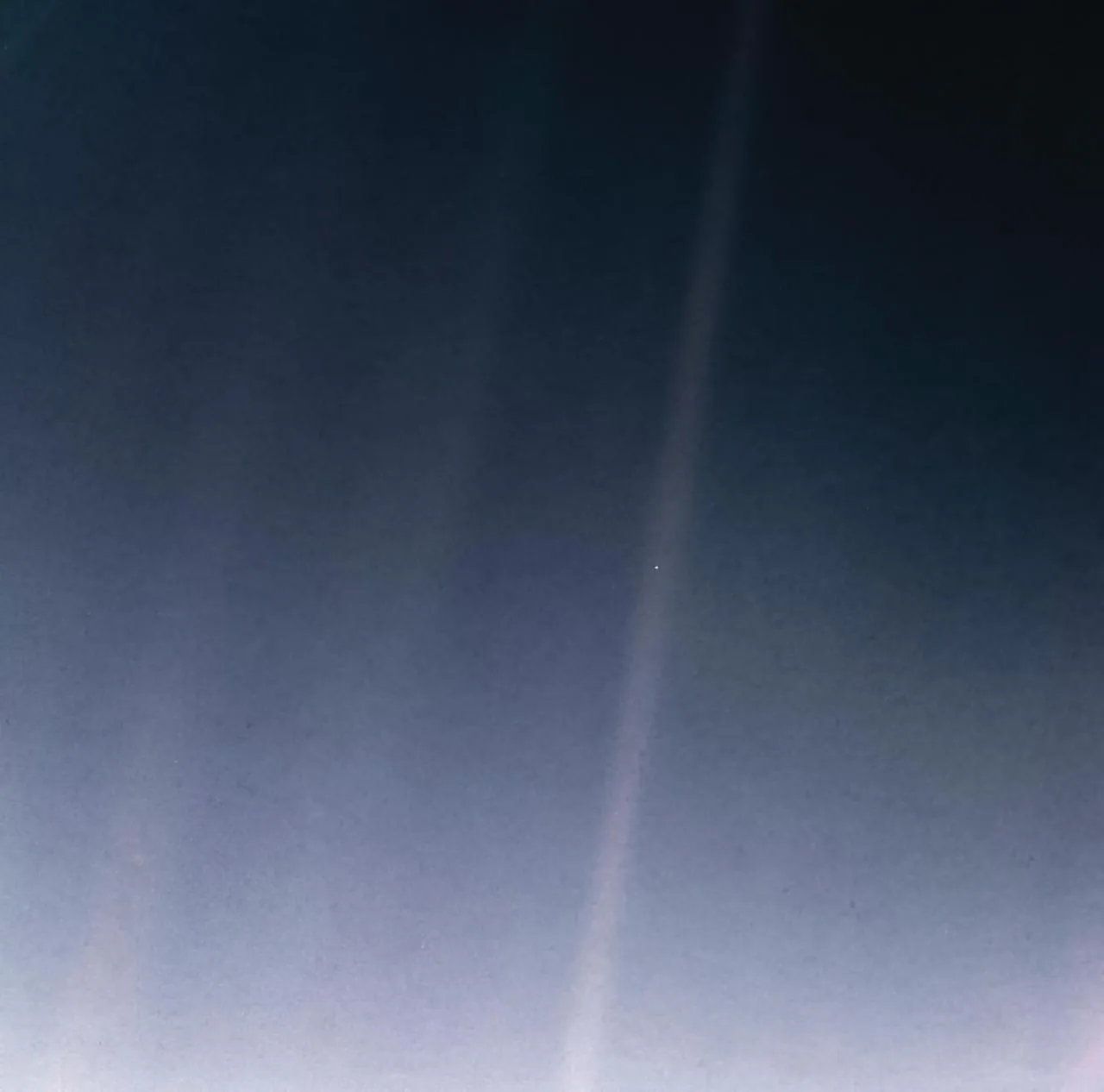
The Sun blows a constant stream of charged particles outward in all directions -- the solar wind. This wind inflates a vast bubble around the Sun called the heliosphere, and its outer boundary -- where the solar wind is finally halted by the pressure of the interstellar medium -- is called the heliopause.
In August 2012, Voyager 1 crossed the heliopause at a distance of about 121 astronomical units (AU) from the Sun (one AU is the Earth-Sun distance), officially becoming the first human-made object to enter interstellar space. The transition was confirmed by a dramatic change in the plasma environment detected by Voyager 1's instruments: the density of particles increased sharply, consistent with the denser interstellar medium.
Voyager 2 followed suit in November 2018, crossing the heliopause at about 119 AU. Crucially, Voyager 2's plasma science instrument was still fully operational (Voyager 1's had failed decades earlier), providing the first direct measurements of the interstellar plasma. The data revealed that the heliopause is a remarkably sharp boundary -- a cosmic shoreline where the Sun's influence ends and the galaxy begins.
Power and Time: The RTG Challenge
Both Voyagers are powered by radioisotope thermoelectric generators (RTGs) -- devices that convert the heat from decaying plutonium-238 into electricity. There are no solar panels; at the distances the Voyagers operate, sunlight is far too feeble.
But plutonium-238 has a half-life of 87.7 years, which means the RTGs lose about 4 watts of power per year. At launch, each Voyager had about 470 watts available. By now, that has dropped to roughly 220 watts -- less than what it takes to run three standard light bulbs. NASA has had to carefully manage power by turning off non-essential instruments and heaters one by one over the years. The spacecraft are slowly going cold and quiet.
Current estimates suggest that by the late 2020s, there will not be enough power to operate any science instruments. By the mid-2030s, the spacecraft will likely go silent altogether, their transmitters finally starved of the energy they need to shout across billions of kilometers of void.
The 2024 Glitch: Voyager 1's Near-Death Experience
In November 2023, Voyager 1 began sending garbled data back to Earth. Instead of the expected science and engineering telemetry, the signal was a repeating pattern of ones and zeros -- meaningless noise. Voyager 1, after 46 years of faithful service, appeared to be losing its mind.
The problem was traced to a single faulty chip in the flight data subsystem (FDS) -- one of three onboard computers, responsible for packaging data before transmission. About 3% of the chip's memory had become corrupted, probably by a cosmic ray strike or simple age-related degradation.
The fix was an engineering masterpiece. Because a complete software reload was not possible, the team at NASA's Jet Propulsion Laboratory had to partition the affected code and relocate it to other sections of the FDS memory, working around the damaged area. Every command took about 22.5 hours to reach Voyager 1, and another 22.5 hours for the response to come back -- a 45-hour round trip for each test. The team worked methodically through spring 2024, first restoring engineering data in April and full science data by June.
Voyager 1 was back. It was a stunning demonstration of engineering skill, patience, and the deep institutional knowledge of a team that has been tending these spacecraft for nearly half a century.
What Comes Next
Both Voyagers continue to return data about the interstellar medium -- the density, temperature, and magnetic properties of the material that fills the space between stars. This is genuinely unexplored territory; no instrument has ever measured this environment before.
But the clock is ticking. Within a few years, the last instruments will be powered down. The transmitters will eventually fall silent. The spacecraft will continue coasting outward, forever, on their trajectories through the Milky Way -- but we will no longer be able to hear them.
In about 40,000 years, Voyager 1 will pass within 1.6 light-years of the star Gliese 445, in the constellation Camelopardalis. Voyager 2 will pass within 1.7 light-years of the star Ross 248 in about 40,000 years as well. Neither will come particularly close to any star for a very long time.
But both will endure. In the cold vacuum of interstellar space, with no atmosphere to cause weathering and no significant source of erosion, the Voyagers and their Golden Records could survive for billions of years -- outlasting the Earth, outlasting the Sun, possibly outlasting the Milky Way itself.
Two small spacecraft, each about the size of a compact car, carrying a record of who we were and what we dreamed. Drifting between the stars. Still talking, for now. And when they finally go quiet, their silence will be the longest-lasting monument humanity has ever built.
There is something beautiful about that. And something achingly human.