CASC
Overview
Not a company in the commercial sense — CASC is the state's prime contractor for the Chinese national space programme, executing missions under state direction across four divisions (space systems, defense systems, aerospace technology applications, aerospace services), with commercial export sales run through subsidiary China Great Wall Industry Corporation (CGWIC).
Moat: Total and structural, not competitive — CASC owns the Long March family, the Shenzhou crewed programme, the Tiangong space station, Chang'e lunar exploration, Tianwen planetary exploration and BeiDou navigation, via research academies (CALT, CAST, SAST and others) that constitute essentially the entire Chinese state space-industrial base. Most Chinese commercial space startups are its customers, suppliers, or staffed by its alumni.
Business
Primary customers
- Government: Chinese state (CNSA, PLA, national programmes)
Sectors
Launch Vehicles · Human Spaceflight · Lunar & Planetary Exploration · Satellite Manufacturing · Navigation · Defense & Security
Key Products
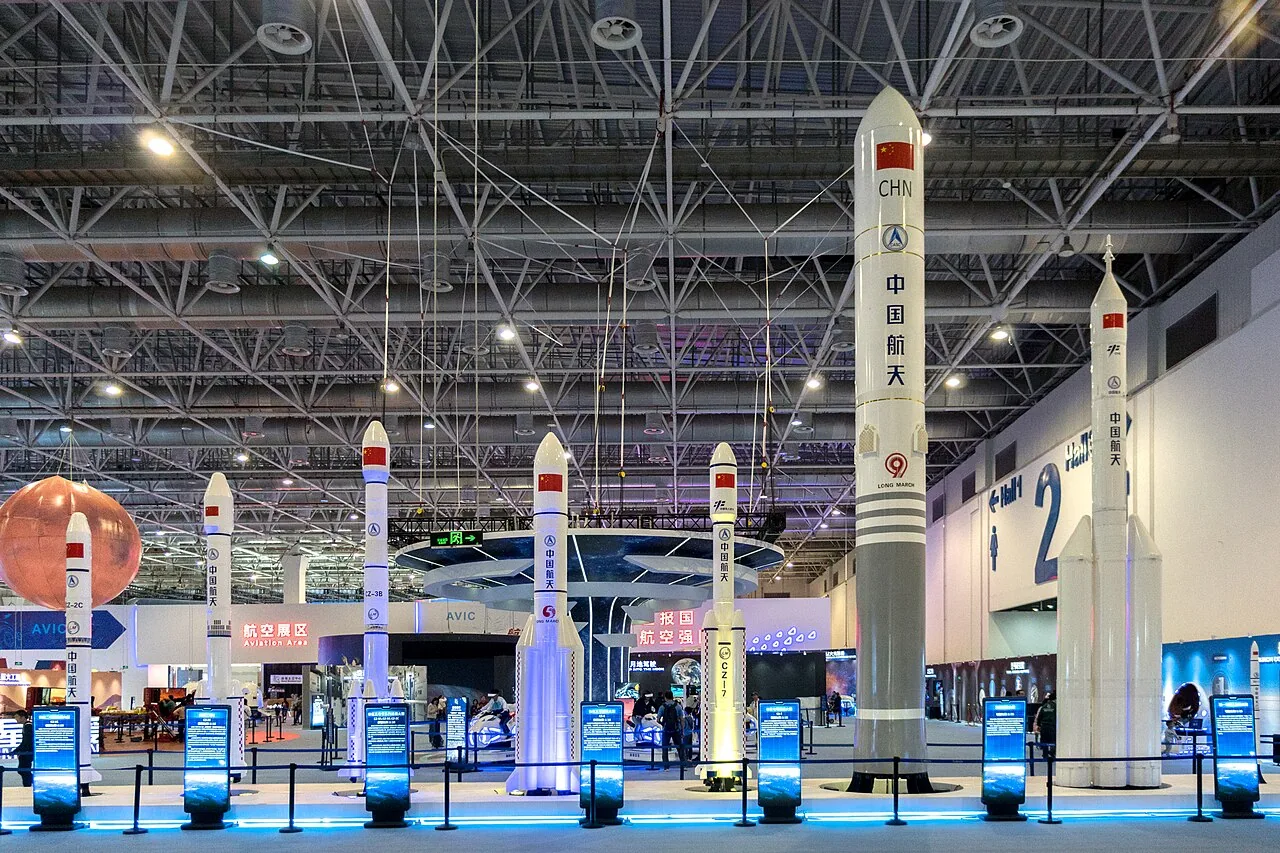
- Long March family (CZ-1 through CZ-12)operational
China's national launch-vehicle family across all payload classes.
First flight: 1970-01-01
- Long March 10Bdevelopment
Reusable super-heavy variant for crewed lunar missions.
First flight: 2026-07-10
- Tiangong space stationoperational
China's crewed orbital station.
First flight: 2021-01-01
- Chang'e lunar programmeoperational
Robotic lunar exploration; Chang'e-7 launch campaign underway.
First flight: 2007-01-01
- Mengzhoudevelopment
Next-generation crewed spacecraft for lunar missions.
Near-term Catalysts
- 2026
Chang'e-7 lunar mission launch
Carrier rocket arrived at Wenchang 2026-07-15; the highest-visibility near-term CASC event.
- 2026-2028
Long March 10B reusability development following its 2026-07-10 controlled recovery test
CASC entering reusable launch directly changes the competitive picture for every Chinese commercial launch startup.
Top Risks
- Owns the national launch-capacity bottleneck: Guowang's and Qianfan's multi-thousand-satellite ambitions both depend on Long March throughput CASC has not yet demonstrated.
- Late-mover on reusability — its first controlled recovery test came in July 2026, years behind SpaceX and roughly contemporaneous with (not ahead of) Chinese commercial entrants.
- CASC and multiple subsidiaries are subject to US export controls and entity-list restrictions, foreclosing Western components and most partnerships outside the Belt-and-Road bloc.
- Internal competition from the commercial sector it helped create — LandSpace, Space Pioneer, iSpace, Deep Blue, Orienspace and CAS Space now compete for launches CASC once monopolized.
Recent Milestones
- 2017-12-01
Restructured as a state-owned limited-liability company
- 2026-07-10
Long March 10B controlled rocket recovery test from the Hainan commercial spacecraft launch site — CASC's public entry into reusable launch
- 2026-07-15
Chang'e-7 carrier rocket arrives at the Wenchang Spacecraft Launch Site
What investors should know
Q1What is CASC?⌄
Q2How is CASC different from CASIC?⌄
Q3Is CASC's revenue publicly known?⌄
Q4What did CASC achieve in reusable launch?⌄
Q5What is CASC's role in China's megaconstellations?⌄
Peers
Compare side-by-side →Sources & References
Investor Relations
- CASC official English site · 2026-07-26