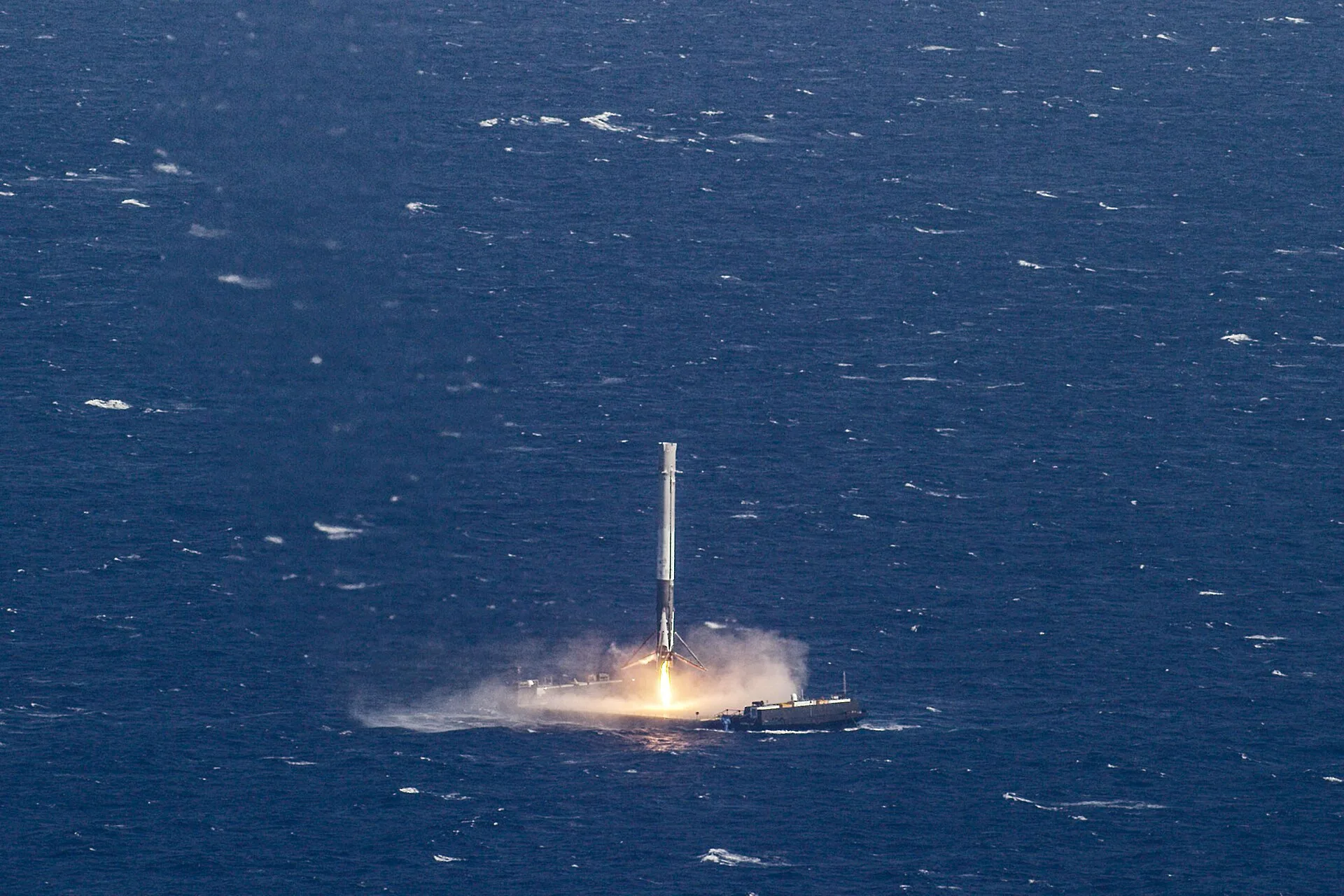
At 12:15 p.m. Beijing time on July 10, 2026, a rocket booster fell out of the sky over the South China Sea and did not land. It was caught.
Eleven minutes earlier, a Long March 10B had lifted off from the Hainan Commercial Space Launch Site carrying a satellite to orbit. Its first stage separated, flipped, relit its engines, and flew a controlled powered descent toward a waiting ship. In the final moments it did not extend landing legs, because it does not have any. Instead it deployed four hooks, which snagged a set of tensioned cables strung across a flexible net on the deck of a recovery vessel named Linghangzhe — "Navigator." The net absorbed what was left of the booster's energy, auxiliary cables steadied it against the swell, and an automated platform clamped it down for the trip home.
With that catch, China became the second country ever to recover an orbital-class rocket booster intact, and the first anywhere to do it without landing legs. It is a genuine milestone, and it is also widely misunderstood — because recovering a booster and reusing one are not the same achievement, and the gap between them is where the real story lives.
How China Recovered Its First Orbital Rocket Booster

The mission was operated by the China Aerospace Science and Technology Corporation (CASC), the state giant that builds and flies the Long March family. Liftoff came at 04:15 UTC on July 10 from the commercial spaceport on Hainan island — a coastal site whose geography matters enormously here, because it puts open water directly downrange of the pad.
This was not a dedicated test hop. It was the Long March 10B's maiden flight, and it was a real orbital mission: the second stage continued on and inserted an unnamed satellite into its target orbit, with full success confirmed roughly 90 minutes after liftoff. The recovery was attempted on the same flight that delivered the payload — a notably aggressive way to debut a new vehicle.
The catch itself happened about six minutes after stage separation. Chinese state broadcaster CGTN described the sequence: the descending booster's hook contacts tensioned cables on the platform, the cable system gradually decelerates the stage and absorbs its remaining kinetic energy — reducing impact loads on the vehicle — and auxiliary cables then stabilise it against wind and wave motion before a locking platform secures it.
That last detail is the one that separates this from a stunt. Catching a booster is not the hard part; catching it in a condition where it can fly again is.
Why China Caught the Booster in a Net Instead of Landing It on Legs
The obvious question is why bother. SpaceX has landed Falcon 9 boosters on legs hundreds of times. Legs work.
The rationale China's engineers have offered is that a net shifts much of the recovery function off the rocket and onto the ground infrastructure. Landing legs are dead weight: they are heavy, they are structural, they ride all the way to stage separation, and every kilogram of leg is a kilogram of payload the rocket cannot sell. Strip the legs and the crush cores and the deploy mechanisms out of the vehicle, put the shock absorption in a hydraulically damped net on a ship instead, and the booster gets lighter, simpler, and cheaper to build — while the expensive, complicated part stays on the deck where technicians can maintain it between flights.
The claimed second advantage is tolerance. A legged booster has to plant itself on a specific spot, upright, within the footprint of its own legs, or it tips. A net-and-cable system is more forgiving of landing-point deviation, which widens the window in which a capture still counts as a success.
The trade-offs are real, though. The approach requires a purpose-built vessel, it is hostage to sea state in a way a concrete pad is not, and the booster still has to fly a precise powered descent to arrive at the ship at all — the net removes the landing legs, not the guidance problem. It is also worth noting what the net did not save China from: two other Chinese boosters, the Long March 12A and LandSpace's commercial Zhuque-3, both flew recovery attempts equipped with conventional landing legs, and both failed during descent. The hardest parts of the problem happen long before touchdown.
What the Long March 10B Actually Is
The naming here confuses almost everyone, so it is worth being precise.
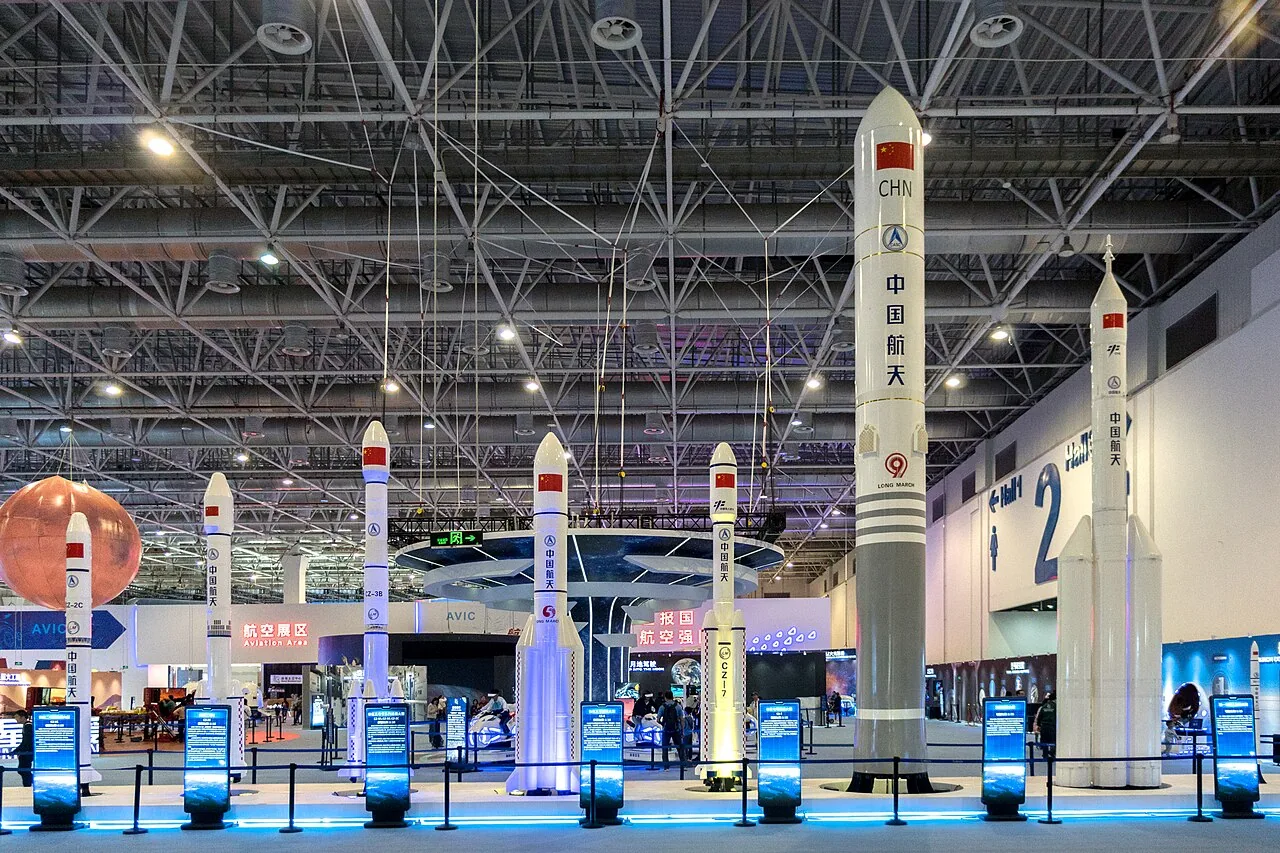
The Long March 10 is China's crewed lunar rocket: a roughly 90-metre, three-core, super-heavy vehicle with 21 YF-100K engines firing at liftoff and about 70 tonnes of payload to low Earth orbit. It exists to throw the Mengzhou crew spacecraft and the Lanyue lander at the Moon, in support of China's stated goal of putting astronauts there by 2030.
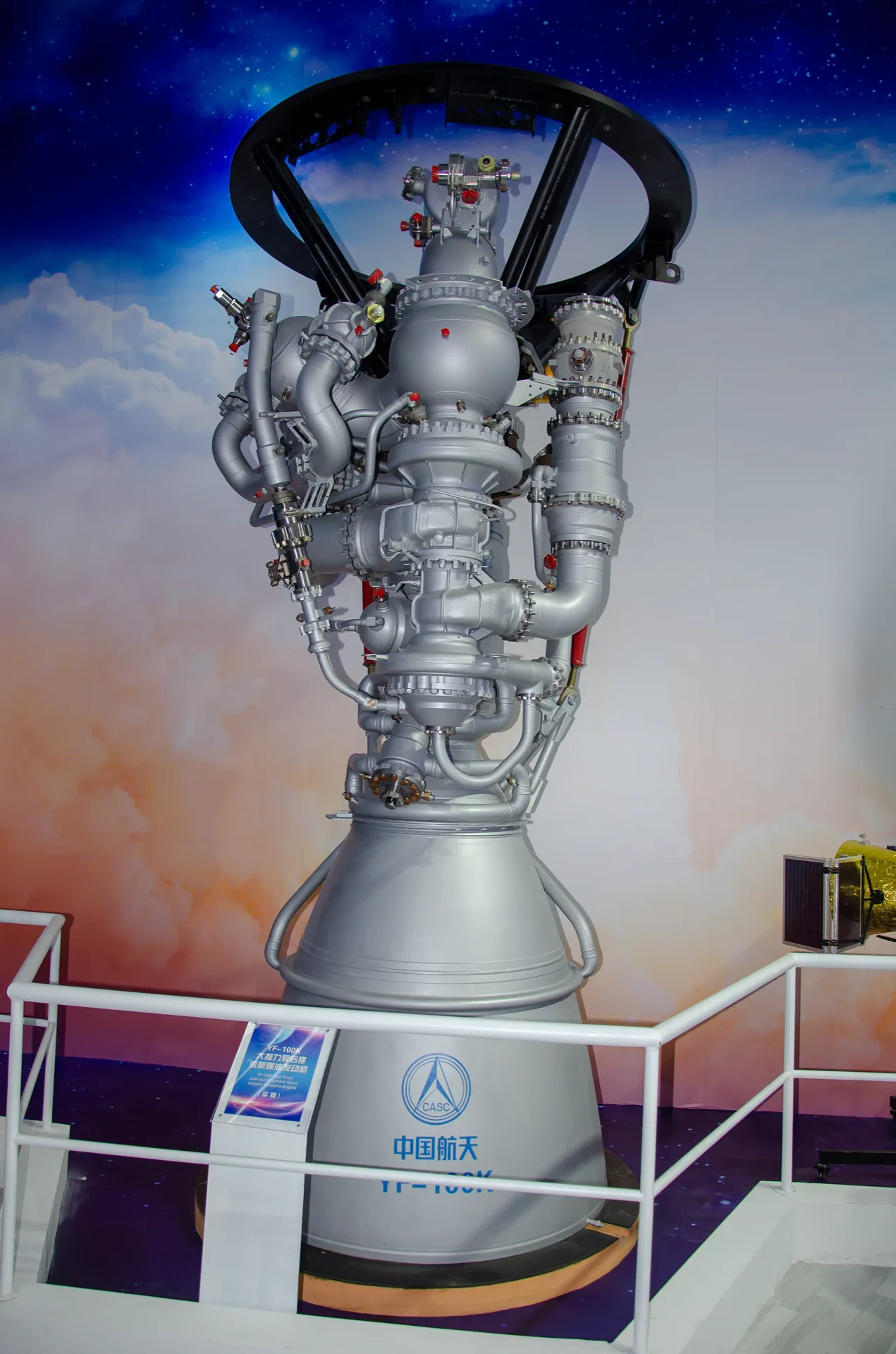
The Long March 10B is a different animal — a single-core, two-stage derivative aimed squarely at the commercial market. Per SpaceNews, it stands 63 metres tall, is 5 metres in diameter, and weighs about 760 tonnes at liftoff. Its first stage is powered by seven YF-100K engines burning kerosene and liquid oxygen for a combined 890 tonnes of thrust. Its second stage is methane-fuelled and flew the YF-219 engine for the first time on this mission. In reusable configuration it carries about 16,000 kg to low Earth orbit.
Both vehicles are products of the China Academy of Launch Vehicle Technology (CALT), CASC's principal rocket house. If those specifications sound familiar, they should: a single-core, seven-engine, kerolox-first-stage, roughly 16-tonne-to-LEO reusable rocket is, functionally, a Falcon 9 analogue — and that is plainly the point.
How China's Catch Compares to SpaceX and Blue Origin
Chronology is the honest way to frame this.
SpaceX landed a Falcon 9 first stage on solid ground in December 2015 and pulled off its first droneship landing at sea with the CRS-8 mission on April 8, 2016. Blue Origin recovered a New Glenn booster for the first time in November 2025, and in April 2026 it flew a previously recovered New Glenn booster again — though on that flight the upper stage underperformed and left AST SpaceMobile's BlueBird 7 satellite in a lower orbit than planned, drawing an FAA mishap investigation.
China's first orbital booster recovery, then, arrives roughly a decade after SpaceX's. That gap is the part of the story that gets flattened into "China caught up." It has not caught up. What it has done is more interesting: it skipped straight to a recovery architecture nobody else has flown, and it did so on a maiden flight, which is not how this normally goes. SpaceX needed several attempts and several destroyed boosters before CRS-8 stuck.
It is also fair to say the "second nation" framing does some work. Both prior recoveries were achieved by American companies, not by NASA. China's was achieved by a state conglomerate. Counted by organisation, CASC is third. Counted by country, it is second. Both statements are true and the distinction matters when people reach for Cold War analogies.
Why It Matters: Recovering a Booster Is Not the Same as Reusing One
Here is the thing the headlines mostly missed.
Landing a booster proves you can bring hardware home. It says nothing about whether that hardware is economically worth flying again. The entire business case for reusability lives on the far side of a second question: what does it cost, in time and money, to inspect and refurbish the stage and put it back on the pad?
SpaceX's own history illustrates the distance. It recovered CRS-8's booster in April 2016 and did not re-fly a recovered booster until the SES-10 mission on March 30, 2017 — nearly a year later, and that was a single reflight, not a cadence. The economics that eventually rewrote the launch industry, with individual Falcon 9 boosters now flying more than 20 times each, took years of iteration beyond that first catch. Blue Origin's April 2026 reflight shows the same lesson from the other direction: getting a used booster back off the pad is not the same as flying a clean mission.
CASC has said it intends to re-fly this specific first stage before the end of 2026 — roughly six months from catch to reflight. If it hits that, it will have compressed a timeline that took SpaceX about a year, on its first try. If it slips, that will be informative too, and for the same reason: the refurbishment problem is where reusability actually gets decided.
The demand signal behind all of this is not subtle. China is building two megaconstellations — Guowang at roughly 13,000 satellites and Qianfan at roughly 14,000 — and there is no realistic way to loft that many spacecraft on expendable rockets at a sane cost. Reusability is not a prestige project for China's launch sector. It is arithmetic.
What Comes Next for China's Reusable Rockets in 2026
The next few months are unusually dense with milestones.
CASC's reflight of the recovered Long March 10B stage, targeted before year's end, is the one to watch — it is the first genuine test of whether the net-capture architecture delivers a booster in re-flyable condition. Meanwhile LandSpace, the commercial company that beat CASC to a Chinese orbital recovery attempt, is expected to fly Zhuque-3's second mission no earlier than August 2026, with another crack at a landing after its December 2025 debut reached orbit but lost the booster to an abnormal combustion event during the landing burn. Zhuque-3 uses legs; the Long March 10B uses hooks and a net. China is, in effect, running two competing reusability bets simultaneously and letting flight data settle the argument.
Further out sits the three-core Long March 10 and the 2030 crewed lunar goal it was built to serve — a programme that shares engines and heritage with the 10B but answers a different question entirely.
For now, the scoreboard reads: one booster caught, zero boosters reflown. That second number is the one that will decide whether July 10, 2026 was a milestone or a turning point.
Readers tracking the wider picture may want to start with our guide to the reusable rocket revolution for how landing boosters rewrote launch economics in the first place, and our deep dive on China's commercial space industry for the companies racing alongside CASC. For the state programme's longer arc, see China's 2045 space endgame and China's private space revolution.
Sources & Data
- SpaceNews — flight report and Long March 10B specifications, including the seven-engine first stage, 890-tonne thrust figure and 16-tonne reusable payload capacity
- CGTN — Chinese state broadcaster's account of the net-capture sequence and the stated end-of-2026 reflight target
- South China Morning Post — additional independent reporting on the maiden flight and recovery
- SpaceX — Falcon 9 landing and reflight history used for comparison
- Blue Origin — New Glenn booster recovery and reuse used for comparison
Figures for the Long March 10B are as reported by CASC via state media and compiled by SpaceNews; China's civil space agency (CNSA) and CASC's own corporate portals were not reachable at the time of publication and are therefore not linked here.