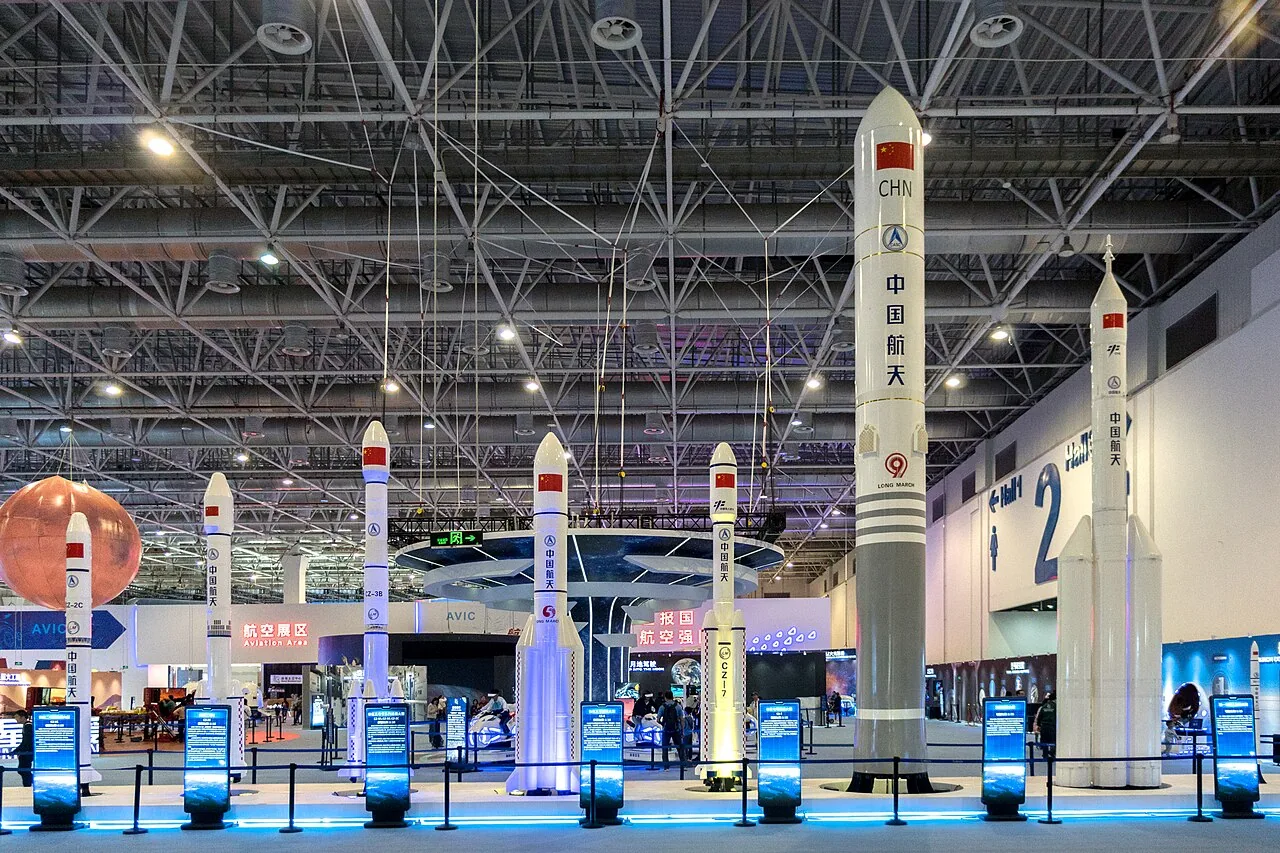
A New Great Wall -- Built Upward
Something extraordinary is happening in China's space industry, and most of the world has not been paying close enough attention. While Western media fixates on the familiar rivalry between SpaceX, Blue Origin, and Rocket Lab, an entire ecosystem of private launch companies has quietly erupted across China -- more than 30 firms competing, innovating, and launching at a pace that would have been unimaginable a decade ago. Backed by over $15 billion in investment since 2015 and enabled by a historic policy shift from Beijing, China's commercial space sector is no longer an afterthought. It is becoming a force that could reshape the global launch market within this decade.
The numbers alone tell a compelling story. In 2014, the Chinese government issued a landmark directive opening the space industry to private capital and enterprise. Before that, space launch was the exclusive domain of the state-owned China Aerospace Science and Technology Corporation (CASC) and its sibling, China Aerospace Science and Industry Corporation (CASIC). Within ten years of that policy change, dozens of startups have been founded, billions of dollars have flowed in, and orbital launches from private Chinese companies have become routine. This is not a single company chasing the SpaceX model. This is an entire national ecosystem building toward a commercial space future.
Key Takeaways
- 8 investable Chinese private launch and satellite firms are profiled below — all with deep, sourced company data on our companies hub.
- 3 are now public-market candidates: LandSpace (Shanghai STAR Market IPO filed Jul 2025, CNY 7.5B raise targeted), CAS Space (CNY 4.3B / ~$607M STAR IPO filed), and GalaxySpace (A-share IPO counseling Mar 2026).
- Implied valuations span a 6× range — from ~$700–850M (Deep Blue Aerospace, Orienspace) to ~$4.5B (GalaxySpace).
- Reusability race is live: Zhuque-3 maiden flight Dec 2025 (booster lost), Tianlong-3 maiden failed Apr 2026, Pallas-1, Hyperbola-3, Kinetica-2R, Nebula-1 all targeting first reuse 2026–2027.
- Guowang is now deploying, not just planned: 19 batches delivered, 154 spacecraft in orbit by Jan 2026, with GalaxySpace as the first private prime contractor.
- Largest single private space round in Chinese history: iSpace's CNY 5.04B (~$730M) Series D++ on 9 Feb 2026.
- For broader sector context, see our Every Publicly Traded Space Company pillar and Space Startup VC Funding Trends.
Chinese Private Launch Companies at a Glance
Before diving into the individual stories, the table below sketches the competitive landscape. Funding figures are cumulative disclosed venture capital; IPO status reflects publicly reported filings with the China Securities Regulatory Commission (CSRC) as of early 2026.
| Company | Founded | HQ | Flagship Vehicle | Payload (kg to LEO) | Implied Valuation | IPO / Latest Round |
|---|---|---|---|---|---|---|
| LandSpace | 2015 | Beijing | Zhuque-2E (methalox); Zhuque-3 (reusable) | ~4,000 (Zhuque-2E) / ~21,000 (Zhuque-3) | ~$4.1B | STAR Market IPO filed Jul 2025 — CNY 7.5B raise |
| Galactic Energy | 2018 | Beijing | Ceres-1 (solid); Pallas-1 (liquid, reusable target) | ~400 (Ceres-1) | ~$2.1B | Series D Sep 2025; pre-IPO counseling |
| iSpace (Interstellar Glory) | 2016 | Beijing | Hyperbola-1; Hyperbola-2/3 (reusable, in dev) | ~300 | ~$2–3B | $730M Series D++ Feb 2026 |
| Space Pioneer | 2019 | Beijing | Tianlong-2; Tianlong-3 (medium-lift, reusable) | ~17,000 (Tianlong-3 target) | ~$3.5B | Tianlong-3 maiden flight failed 3 Apr 2026 |
| Deep Blue Aerospace | 2017 | Nantong | Nebula-1 (reusable, in dev) | ~500 (target) | ~$700–850M | Series B-IV |
| CAS Space | 2018 | Guangzhou | Kinetica-1 (12 flights); Kinetica-2 (orbit on maiden); 2R reusable in dev | ~1,500 | ~$1.6B | Shanghai STAR Market IPO filed — CNY 4.3B (~$607M) raise |
| Orienspace | 2020 | Yantai | Gravity-1 (sea-launched solid); Gravity-2 (kerolox, reusable target) | ~6,500 | ~$700–850M (trade-press est.) | Privately held; no IPO filing |
| GalaxySpace | 2018 | Beijing | Satellite manufacturer (Guowang prime vendor) | n/a (satellites) | ~$4.5B | A-share IPO counseling filed Mar 2026 |
Two events define the next six months for this group. First, LandSpace's Zhuque-3 booster-recovery test in Q2 2026 — a clean propulsive landing closes the technical gap with Falcon 9 and would make LandSpace the only operational reusable-launch operator outside SpaceX. Second, Space Pioneer's Tianlong-3 return-to-flight after the 3 April 2026 maiden-flight failure; a second consecutive failure would slip the entire competitive cohort by 12–18 months and threaten the $3.5B valuation. The combined GalaxySpace + LandSpace IPO pipeline is the financing event of the decade for Chinese commercial space.
LandSpace: The Methane Pioneer

If there is a single achievement that announced China's private space sector to the world, it was the flight of Zhuque-2 on July 12, 2023. Built by LandSpace, a Beijing-headquartered company founded in 2015, Zhuque-2 became the first methane-fueled rocket in history to reach orbit -- beating SpaceX's Starship, Relativity Space's Terran 1, and every other methane-powered vehicle on the planet to that milestone.
The significance of this cannot be overstated. Methane (specifically liquid methane paired with liquid oxygen, or methalox) is widely considered the propellant of the future. It burns cleaner than kerosene, produces less engine coking, is easier to manufacture and store, and crucially, can be produced on Mars from local resources -- a key factor for interplanetary ambitions. SpaceX chose methane for Starship. Blue Origin chose it for New Glenn. And LandSpace chose it for Zhuque-2, a medium-lift vehicle capable of delivering roughly 6,000 kilograms to low Earth orbit.
The first Zhuque-2 launch attempt in December 2022 failed when the second stage engine shut down prematurely. But LandSpace regrouped quickly, identified the anomaly, and returned to the pad within seven months. The July 2023 success made global headlines. The story has accelerated dramatically since: as of May 2026, LandSpace operates the upgraded Zhuque-2E (≈4,000 kg to LEO) on a sustained commercial cadence from Jiuquan, with company guidance targeting 6–8 flights in 2026 to clear a Guowang/Qianfan megaconstellation backlog.
The bigger story is Zhuque-3 — a stainless-steel, partially reusable, Falcon-9-class vehicle (~21 t to LEO) designed for booster recovery. Zhuque-3 flew its maiden mission on 3 December 2025, with the upper stage reaching orbit but the booster lost on attempted recovery. A dedicated booster-recovery test is targeted for Q2 2026, followed by an intended first-reuse flight in Q4 2026. If those milestones land cleanly, LandSpace becomes the only operator outside SpaceX with a flying reusable methalox medium-lift vehicle.
The financing side has scaled to match. LandSpace filed for a Shanghai STAR Market IPO seeking CNY 7.5 billion (≈$1.07 billion) — earmarking CNY 4.73 billion for Zhuque-3 production scale-up and a new 10-meter-diameter heavy-lift vehicle. If completed at the targeted raise, it would be the largest Chinese commercial-space IPO to date. Cumulative private capital is now well above $1 billion.
Galactic Energy: The Workhorse
While LandSpace grabbed headlines with its methane breakthrough, Galactic Energy has been methodically building something arguably just as impressive: a reliable, high-cadence commercial launch service. Founded in 2018 and headquartered in Beijing, Galactic Energy developed the Ceres-1, a small solid-fueled rocket capable of delivering approximately 400 kilograms to a 500-kilometer sun-synchronous orbit.
Ceres-1 has become the most-flown Chinese private orbital rocket. By the end of 2025, Galactic Energy had completed 17 successful Ceres-1 launches and delivered over 70 satellites — a reliability moat no other Chinese private operator can match. Cadence has been strong throughout 2024 and 2025, including a record five flights in calendar 2024 alone, split across the Jiuquan land base and the Haiyang sea-launch barge. That track record of reliability is critically important. In the commercial launch market, customers do not just want raw performance — they want confidence that their payload will reach orbit on schedule. Galactic Energy has been delivering that confidence.
But the company is not standing still. Galactic Energy has also conducted China's first private sea launch, demonstrating a capability that only a handful of organizations worldwide have mastered. Sea launch offers significant advantages: it allows rockets to be launched from equatorial latitudes for maximum payload performance, reduces range safety concerns, and opens up more flexible scheduling. Beyond Ceres-1, Galactic Energy is developing Pallas-1, a kerolox liquid-fueled medium-lift vehicle designed for reusability — and Pallas-2, a heavier-class variant. A September 2025 Series D round implied a roughly $2.1B valuation, and the company is currently in pre-IPO counseling with the China Securities Regulatory Commission. The Pallas-1 debut flight is the single largest near-term catalyst for the company's public-market story.
iSpace China: The Trailblazer
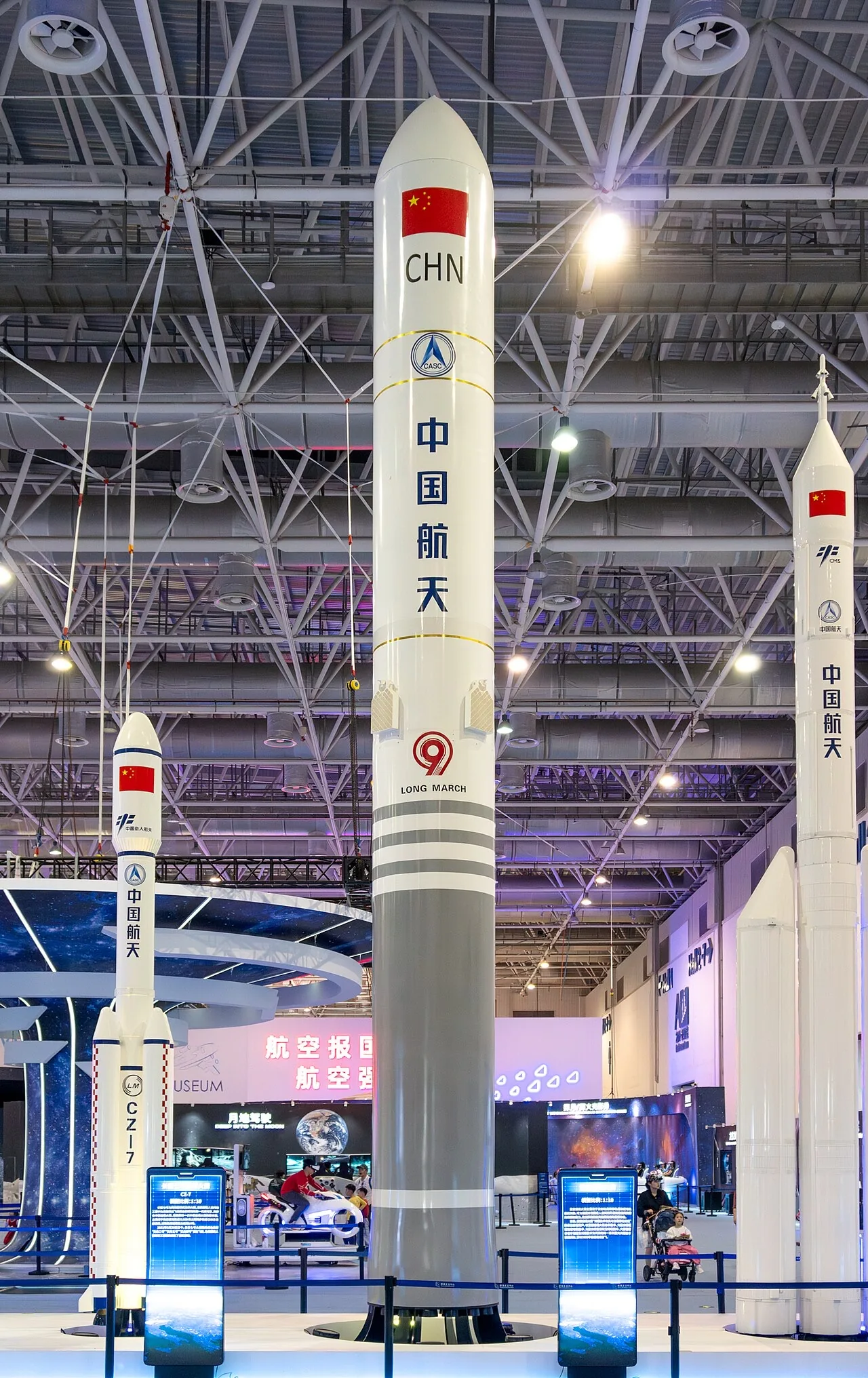
Beijing Interstellar Glory Space Technology, better known as iSpace, holds a distinction that no one can take away: it launched Hyperbola-1 on July 25, 2019, making it the first Chinese private company to reach orbit. That flight placed a satellite into a 300-kilometer orbit, and it sent a powerful signal to the entire Chinese entrepreneurial community that private orbital launch was possible.
Founded in 2016, iSpace followed a development path that mirrors many Western New Space companies — start with a small solid rocket, prove the technology, build operational experience, then scale up to larger liquid-fueled vehicles. The company is now developing Hyperbola-2 and Hyperbola-3, methalox reusable launch vehicles featuring vertical takeoff and vertical landing, directly inspired by SpaceX's Falcon 9 architecture, with the Hyperbola-3 maiden flight targeted for 2026. On 9 February 2026, iSpace closed a record-breaking CNY 5.037 billion (~$730M) Series D++ round — the largest single private space funding round in Chinese history. Cumulative funding now exceeds CNY 8 billion (~$1.1B), the war chest is large enough to fund multiple flight attempts, and the company is expanding factories across five provinces (Beijing, Shaanxi, Hainan, Sichuan, Guangdong). The raise lifts iSpace into direct financing parity with LandSpace and resets the bar for what counts as a credible Chinese reusable-launch operator.
Space Pioneer and Deep Blue Aerospace: The Next Wave
The depth of China's private launch ecosystem becomes clear when you look beyond the front-runners. Space Pioneer, founded in 2019 by former LandSpace CTO Kang Yonglai, is developing the Tianlong series of rockets. Tianlong-2 made history on 2 April 2023 as the first Chinese private liquid-propellant rocket to reach orbit on its maiden flight — a global first for a privately developed kerolox launcher debut. The more ambitious Tianlong-3 is designed as a medium-lift, reusable vehicle in the Falcon 9 class — approximately 17,000 kg to low Earth orbit. The Tianlong-3 program suffered two major setbacks: a 30 June 2024 hold-down structural failure during a static-fire test, and a maiden-flight loss on 3 April 2026 roughly 33 seconds after liftoff from Jiuquan due to an engine-bay anomaly. The company has acknowledged both anomalies and is targeting a second Tianlong-3 attempt before the end of 2026 — a successful return-to-flight is essential to defending the ~$3.5 billion implied valuation. Cumulative funding now stands at roughly $580M, and the Zhangjiagang production base is being built for 30 Tianlong-3 rockets and 500 engines per year, a manufacturing scale unmatched among Chinese private launch firms.
Deep Blue Aerospace has been making waves with its aggressive pursuit of vertical landing and reusability. In 2024, Deep Blue Aerospace conducted vertical landing tests that demonstrated the kind of propulsive landing SpaceX pioneered with Falcon 9. Watching a Chinese private company nail a rocket landing on a test pad is a reminder of just how quickly technology diffusion occurs when capital, talent, and government support align. Deep Blue Aerospace's Nebula-1 rocket is being designed for full reusability, and the company has attracted Series B-IV financing implying a roughly $700–850M valuation as of early 2026. The investor pitch is the same as Pallas-1's and Tianlong-3's: be the second Chinese operator to demonstrate orbital booster reuse, and capture a slice of the Guowang and Qianfan megaconstellation manifest.
Other companies worth watching include CAS Space (spun out of the Chinese Academy of Sciences — Kinetica-1 has now flown 12 times and Kinetica-2 reached orbit on its maiden flight, with a CNY 4.3B (~$607M) Shanghai STAR Market IPO filed at a ~$1.6B implied valuation), OneSpace (which attempted but failed to reach orbit in 2019), Linkspace (another vertical-landing test pioneer), and Orienspace, which conducted a successful orbital launch of its Gravity-1 rocket from a sea platform in January 2024 — a vehicle capable of delivering over 6,000 kilograms to low Earth orbit on its very first flight, making it the most powerful operational solid-propellant rocket in the world at debut. Orienspace is now developing the larger kerolox Gravity-2 with partial-reusability targets.
On the satellite side, the dominant private player is GalaxySpace, the first private prime contractor inside the state-led Guowang program. GalaxySpace operates a 100–150 satellite-per-year smart factory in Nantong, has filed two first-party constellations of its own (Galaxy-SAR-2 with 96 satellites, BlackSpider-3 with 81), and filed for A-share IPO counseling in March 2026 at a rumored ~$4.5B valuation.
Guowang: China's Answer to Starlink
The demand side of the equation is equally staggering. Guowang — a planned ~13,000-satellite broadband constellation operated by state-owned China SatNet — is no longer just a paper filing. The first commercially-built Guowang batch flew on Long March 12 in August 2025, with private firm GalaxySpace as prime contractor; by January 2026, GalaxySpace had delivered the 19th batch and helped place 154 spacecraft in orbit for China SatNet. The ramp is real, the manifest is the single biggest driver of Chinese launch demand through 2030, and private vendors are now the structural suppliers — not subcontractors.
Deploying thousands of satellites requires enormous launch capacity. This is precisely why Beijing has been so aggressive in nurturing private launch companies — state-owned rockets alone cannot meet this demand at competitive per-kilogram cost. The Guowang manifest creates a built-in market for every private Chinese launch company that can deliver reliable orbital access, and explains the parallel reusable-rocket race at LandSpace (Zhuque-3), Space Pioneer (Tianlong-3), iSpace (Hyperbola-3), CAS Space (Kinetica-2R), and Deep Blue (Nebula-1). Profitable mega-constellation deployment demands per-kilogram launch costs that only reusable rockets can achieve, which is why the next 24 months of booster-recovery milestones will determine who captures the deployment volume.
The second Chinese megaconstellation, Qianfan (also called the "Thousand Sails" or G60 Starlink constellation, Shanghai-led), is also mid-deployment. Together with Guowang, the two programs require multiple thousand satellites on orbit by the early 2030s. Launch demand on this scale is what sustains a domestic ecosystem of ten-plus private launch companies and the new commercial spaceports at Hainan (Wenchang Commercial Launch Site) and Haiyang (Shandong) that have come online to host the cadence.
The Policy Architecture Behind the Boom
None of this would have been possible without deliberate government action. The 2014 State Council directive that opened space to private enterprise was the catalyst, but Beijing has followed up with a series of supporting policies: streamlined licensing procedures, dedicated commercial launch sites (including the new Hainan Commercial Launch Site), preferential tax treatment for space startups, and active encouragement from provincial and municipal governments competing to host space industry clusters.
Cities like Beijing, Shanghai, Xi'an, Wuhan, and Chongqing have all established space industry parks and offered incentives to attract launch companies and satellite manufacturers. The Chinese venture capital ecosystem, which has matured enormously over the past decade, has provided the financial fuel. Many of China's private space founders are veterans of CASC and CASIC, bringing deep technical expertise from the state sector into their startups.
What This Means for the World
The implications are significant. Within a few years, the global launch market will not be a contest between SpaceX and everyone else. It will be a contest between SpaceX and a fleet of Chinese competitors offering reusable, low-cost launch services -- potentially at prices subsidized by the enormous domestic demand from Guowang and other government programs.
For the global satellite industry, this could be a net positive: more competition means lower prices and more options. For geopolitical strategists, it raises complex questions about supply chain dependencies, technology transfer, and the dual-use nature of launch technology.
What is undeniable is that China's private space revolution is real, it is accelerating, and it is producing results. The country that was a latecomer to commercial space is building an ecosystem that could rival the American New Space movement in scale, ambition, and technical achievement. Anyone who dismisses this transformation is not paying attention to the rockets rising from the launchpads.
Related Investor Reading
For a complete picture of the global commercial-space investing landscape:
- Every Publicly Traded Space Company — Complete Guide — sortable, live-priced table of every listed space stock, including how Chinese IPO candidates compare on revenue, valuation, and reusability progress.
- Space Startup VC Funding Trends — where the global venture money is flowing in 2025–2026; deals matrix with stage, lead investor, and subsector.
- How to Evaluate a Space Company — investor due-diligence framework (TRL, backlog, customer mix, unit economics, path to profitability) with a scored case study.
- Space Stocks & ETFs Investor Guide — thematic ETF coverage including ARKX, ROKT, and Chinese A-share exposure.
- NASA + DoD Space Contracts Investor Guide — the contract pipeline reshaping US space sector revenue, useful as a comparator to Beijing's Guowang/Qianfan manifest.
Sources & Data
Company-level data sourced from primary press releases, SEC and CSRC filings, STAR Market prospectuses, and trade-press reporting (SpaceNews, China Space News, Reuters). For citation-grade figures with primary-source URLs, see each company's full deep-dive page on the SpaceOdysseyHub companies hub. Article last verified May 11, 2026.