There are two versions of Starship economics in active circulation, and the gap between them is the difference between a $20 billion segment and a $200 billion segment.
The marketed version comes from Elon Musk and SpaceX leadership. It says a fully operational Starship — Block 3, V3, the version that begins flight testing on May 19, 2026 with IFT-12 — will be the first orbital-class rocket cheap enough to fundamentally re-base the launch market. Marginal cost per flight targets $20-30 million. Payload to LEO targets 150-200 metric tons. The implied $/kg falls to roughly $100-200. The Falcon 9 economic regime — the regime that already collapsed launch costs by an order of magnitude versus the Space Shuttle and EELV families — is itself supposed to be the legacy system Starship replaces.
The probable version, the one that institutional investors should model against, is more measured. Block 3 is unflown as of May 13, 2026. Orbital refueling — the critical unlock for HLS, Mars, and most extended-duration commercial missions — has not been demonstrated. Ship recovery has not been attempted. Routine commercial operations are a 2027-2028 outcome at the earliest, contingent on multiple successful Block 3 flights and a series of operational firsts that the IFT-12 window is just beginning to address.
Both versions might be right eventually. The investment question is what to model into 2026-2028 NPV, and at what probability weight. This article is the answer.
Key Takeaways
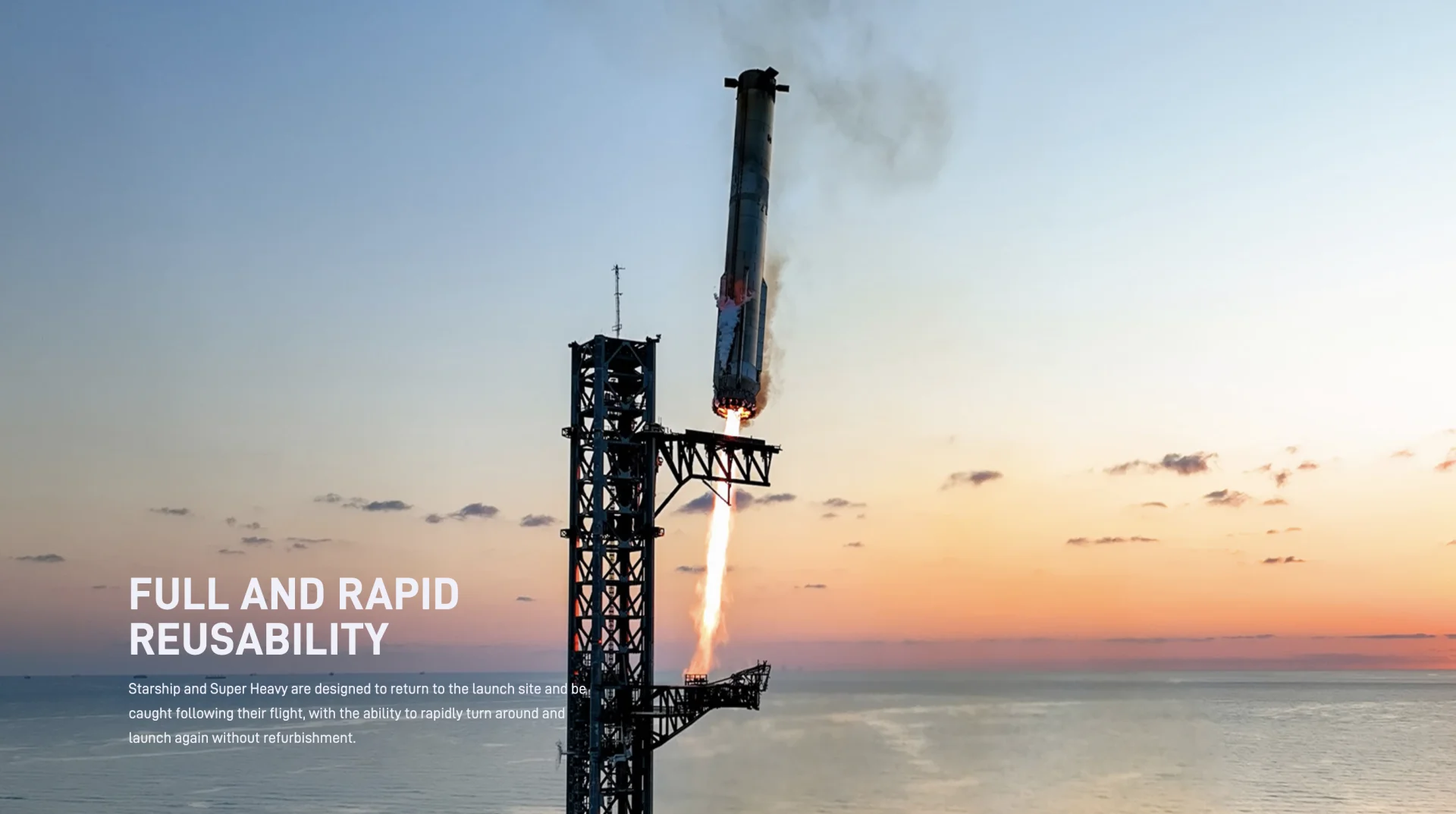
- Through IFT-11 (October 13, 2025): 11 integrated flight tests completed, 3 successful Mechazilla booster catches, 1 booster reuse (B14 on IFT-9), payload deploy capability demonstrated. Block 2 retired.
- IFT-12 (May 19, 2026 window): First Block 3 / V3 flight using Booster 19 and Ship 39 with Raptor 3 engines, first launch from Pad B. Targeting May 15-21 window per Starship Wiki.
- HLS contract value: $4.04 billion total ($2.89B Option A for Artemis III + $1.15B Option B for Artemis IV). NASA OIG confirms >$2.6 billion already disbursed through May 2025.
- Mechazilla catches: 3 successes (IFT-5 Oct 2024, IFT-7 Jan 2025, IFT-8 Mar 2025), 0 hard failures, 1 waved-off per planned abort criteria. No ship catch attempts yet — Musk targeting IFT-13 through IFT-15.
- Operational economics today (Block 1/2): No commercial revenue. Every flight is an integrated flight test funded internally or through HLS milestone payments.
- Marketed $/kg target: $100-200/kg to LEO at full reusability. We model $300-500/kg as the probable steady-state by 2028.
- Mars economics: Not a 2026-2030 revenue line. Mars architecture is a strategic narrative for Project Apex but not a near-term NPV contributor.
- Our base case Starship segment value: $60 billion (range $20-200 billion). Embedded in our hub SOTP.
1. The Integrated Flight Test Chronology
Every credible model of Starship economics starts with the flight test record. The data through IFT-11 is sufficient to construct a defensible operational picture; pretending we have more than that is fiction.
| IFT | Date | Outcome | Key Milestone | Cost Tier |
|---|---|---|---|---|
| 1 | Apr 20, 2023 | Failure | Multiple Raptor shutdowns; FTS at ~39km apogee | High R&D burn |
| 2 | Nov 18, 2023 | Partial | First hot-staging success; ship lost post-MECO | High R&D burn |
| 3 | Mar 14, 2024 | Partial | Orbital velocity; payload door + prop transfer demo; ship lost on reentry | High R&D burn |
| 4 | Jun 6, 2024 | Success | First soft splashdown for both stages | Reduced burn |
| 5 | Oct 13, 2024 | Success | First Mechazilla booster catch | Demonstrated reusability |
| 6 | Nov 19, 2024 | Partial | Catch waved off; ship reached space | Per-flight cost reduction visible |
| 7 | Jan 16, 2025 | Partial | 2nd booster catch; ship broke apart over Turks & Caicos | Block 2 debut, ship problems |
| 8 | Mar 6, 2025 | Partial | 3rd booster catch; Ship 34 lost attitude control | Block 2 ship debugging |
| 9 | May 27, 2025 | Partial | First Super Heavy reuse (B14 from F7); ship anomalies | Reusability proven |
| 10 | Aug 26, 2025 | Success | All objectives met: 8 Starlink simulators deployed, in-space Raptor relight, soft splashdown | First fully-clean flight |
| 11 | Oct 13, 2025 | Success | Retired Block 2 + Pad A. B15-2 + S38 both soft-splashed | Block 2 program complete |
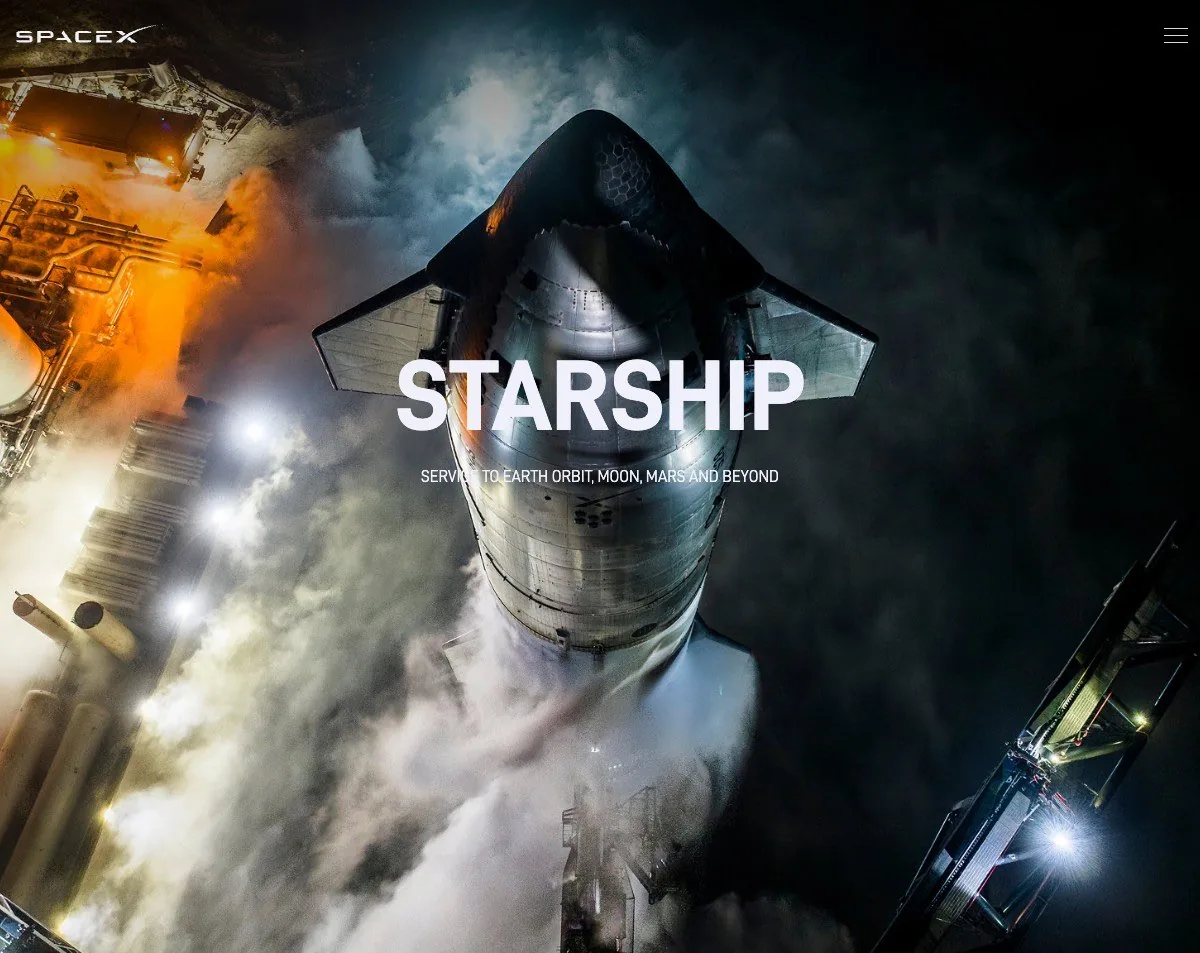
| 12 | May 19, 2026 (target) | TBD | First Block 3 / V3 flight (B19 + S39, Raptor 3); first launch from Pad B | New vehicle program begins |
Sources: SpaceX press, Wikipedia: List of Starship launches, SpaceX IFT-10 mission page, NASA SpaceFlight IFT-11 coverage.
Three observations from this record matter for institutional modeling.
Booster recovery is operationally mature. Three successful Mechazilla catches in three attempts (IFT-5, 7, 8), one planned wave-off (IFT-6), and one successful reflight (IFT-9 with B14). The booster side of Starship is, by any reasonable engineering standard, a demonstrated capability. The cost-per-booster amortization that makes the marketed $/kg targets plausible is largely about how many flights each booster gets, not about whether boosters can be recovered.
Ship recovery has not been attempted. Through IFT-11, every Ship has either soft-splashed in the Indian Ocean (Pacific in early flights) or broken up on reentry. The Mechazilla catch tower has the structural capability to catch ships per SpaceX engineering, and the marketed plan is to attempt the first ship catch on IFT-13 through IFT-15. But until that demonstration, the Ship side of Starship's reusability story is theoretical, not operational. This matters for $/kg modeling: a Starship system where boosters fly 10+ times and ships fly 1-2 times has very different unit economics than the full marketed reusability picture.
Block 2 retirement on IFT-11 was deliberate, not failure-driven. SpaceX chose to retire the Block 2 ship and Pad A specifically to clear the way for Block 3 / V3 and Pad B. The cadence between IFT-11 (October 2025) and IFT-12 (targeted May 2026) — approximately seven months — reflects the time required for major vehicle and pad transitions. This is not a healthy operational cadence; it is a development cadence. The transition to "operational Starship" requires the gap between flights to compress to weeks, then days. That is a 2027-2028 outcome at the earliest, and only if Block 3 works on early flights.
2. Block 2 → Block 3: What Actually Changes
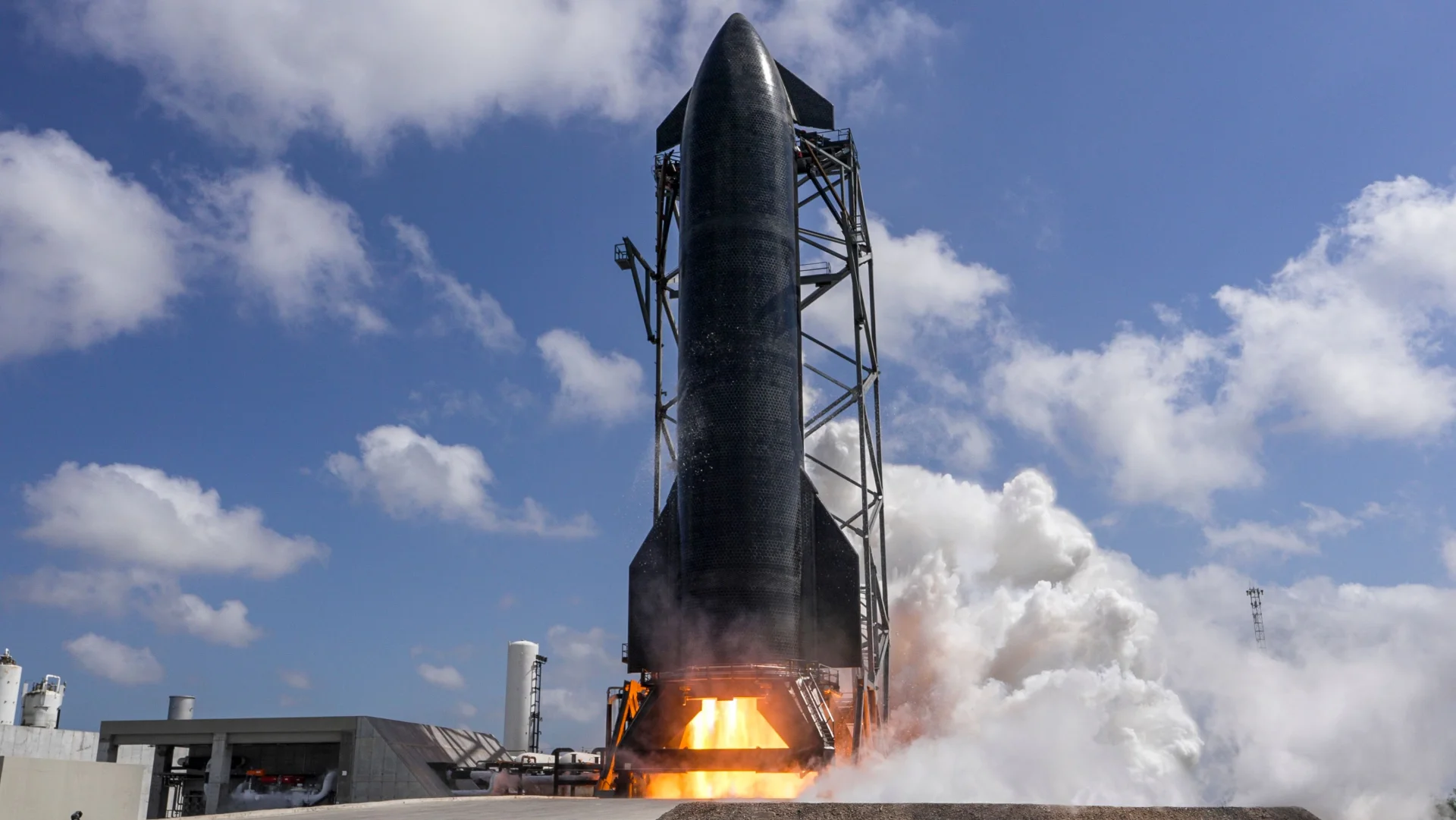
Each Starship "Block" represents a major vehicle generation. The transitions are not paint jobs; they are substantial engineering revisions.
Block 1 (IFT-1 through IFT-3): Original Starship and Super Heavy configuration. 33 Raptor 2 engines on the booster. Limited reuse intent — the program treated these vehicles as ultimately expendable test articles.
Block 2 (IFT-4 through IFT-11): Significant ship redesign with stretched propellant tanks, revised flap geometry to address reentry heating, and engineering changes to support Mechazilla catch operations. Booster largely unchanged. Booster reuse demonstrated on IFT-9.
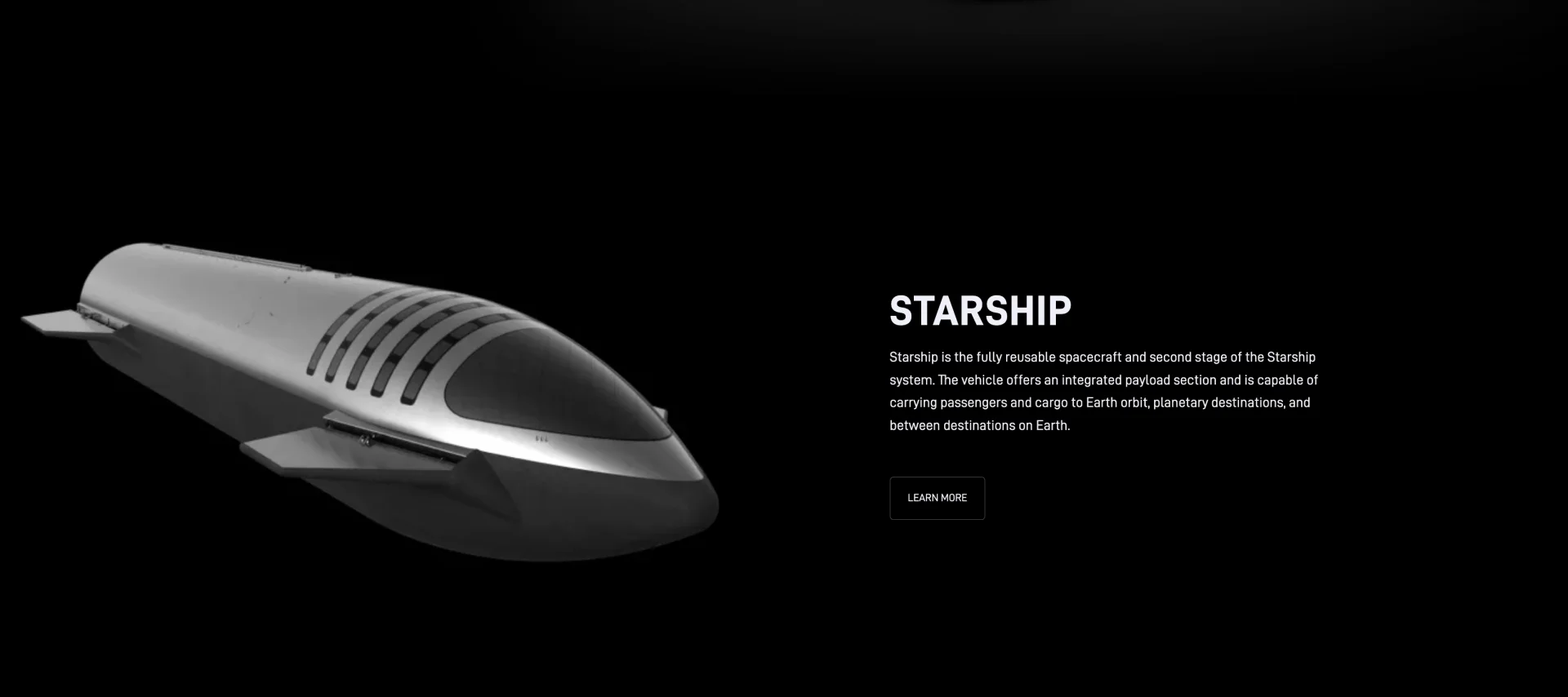
Block 3 / V3 (IFT-12 onward): The largest single transition in the program. Per SpaceX engineering disclosure and third-party reporting:
- Raptor 3 engines with simplified plumbing, higher thrust, and elimination of much of the external heat shielding that complicated Block 1/2 Raptor 2 servicing. Marketed marginal-cost target for Raptor 3 is approximately $1 million per engine versus an estimated $2-3 million for Raptor 2.
- Larger propellant capacity — both stages stretched, increasing payload-to-LEO target from ~100-150 metric tons (Block 2) to ~150-200 metric tons (Block 3).
- Stainless steel construction refinement — same fundamental architecture but with manufacturing improvements that reduce per-vehicle cost.
- Pad B operations — purpose-built for higher-cadence Block 3 launches with improved propellant chilldown, deluge water systems, and faster turnaround capability. Pad A retired with IFT-11.
- Ship catch capability as a design target, with first attempt planned on IFT-13 through IFT-15.
For investment modeling, the central question on Block 3 is not whether it will fly successfully — it almost certainly will, sooner or later — but how many flights are required before the marketed payload, marketed $/kg, and orbital refueling become operational. The probable answer is 5-10 Block 3 flights before "operational Starship" is a defensible characterization. At a development cadence of 2-3 months per flight, that puts operational Starship in mid-2027 to mid-2028 in the base case.
3. The HLS Economics: $4.04 Billion Through 2025
The single largest commercial commitment to Starship is NASA's Human Landing System contract for the Artemis program. The structure and current state of this contract matters disproportionately because it represents both the program's anchor revenue and its primary execution risk.
Contract structure:
- HLS Option A: Awarded April 16, 2021. Value: $2.89 billion firm-fixed-price for Artemis III lunar landing services. NASA press release.
- HLS Option B: Awarded November 15, 2022. Value: $1.15 billion for Artemis IV sustaining lunar landing services and ongoing development. SpaceNews coverage.
- Combined total: $4.04 billion.
Disbursement progress:
The most recent authoritative public datapoint is NASA OIG IG-26-004 ("NASA's Management of the Human Landing System Contracts," March 2026), which confirms that more than $2.6 billion — roughly 65 percent of the $4.04 billion combined contract value — was disbursed to SpaceX by May 2025. The remaining ~$1.4 billion flows through 2026-2029 as SpaceX completes development milestones including:
- Uncrewed lunar demonstration mission (originally planned for 2024, slipped to 2025-2026, currently expected 2026-2027)
- Orbital propellant transfer demonstration (the critical unlock for any extended-duration Starship mission; planned for 2026 but not yet attempted)
- Crewed Artemis III lunar landing (originally 2024-2025, currently expected 2027-2028 per GAO)
- Artemis IV sustained lunar landing (Option B milestone, currently expected 2028-2029)
Schedule risk:
NASA's Aerospace Safety Advisory Panel reported in 2025 that the Starship HLS schedule is "significantly challenged" and could be "years late" for Artemis III. GAO-25-107591 (NASA Major Projects, 2025) warns that Artemis III is likely to slip to 2027 at the earliest. NASA OIG IG-26-004 found that NASA is increasingly using federal personnel and support contractors to backstop SpaceX expertise gaps in propellant transfer and integrated systems engineering — a meaningful signal about the technical risk concentration.
For institutional investors, the implications are direct:
- The base case for full HLS revenue completion is 2028-2029, not the original 2025-2026 baseline.
- The probability of HLS scope expansion (additional Artemis missions, lunar logistics, beyond-Artemis cislunar operations) is high if Block 3 demonstrates orbital refueling successfully.
- The probability of contract cancellation is low (cost-of-switching is prohibitive for NASA), but the probability of milestone re-baselining and reduced payment cadence is meaningful.
We model HLS as providing $0.6-1.0 billion annually of recognized revenue through 2029, declining thereafter unless Option B is followed by additional contracted missions.
4. The $/kg Trajectory: Marketed vs. Probable
The single most important number in commercial space is the dollar cost to lift one kilogram to low Earth orbit. The history of this number is the history of the commercial space economy. The Saturn V era was $50,000+/kg. The Space Shuttle was approximately $54,500/kg. Falcon 9 expendable is approximately $2,720/kg. Falcon 9 reusable is approximately $1,500/kg. Falcon Heavy reusable is approximately $1,400/kg.
Starship's marketed $/kg is $100-200/kg at full reusability and operational cadence. If achieved, this would be a 7-15x compression versus current Falcon Heavy economics and would fundamentally alter the addressable market for orbital activity.
The question is what to model into 2026-2028.
The marketed math:
- Marginal cost per Starship launch: $20-30 million (Musk has stated $5-10 million per launch as the long-run target; SpaceX has used $20-30 million as the near-term operational target)
- Payload to LEO: 150-200 metric tons (Block 3 target)
- Implied: $20M / 150 tonnes = $130/kg at the low end; $30M / 100 tonnes = $300/kg at the high end
Our probable math for 2026-2028:
- Realistic marginal cost per launch (2027-2028): $40-70 million. This reflects Raptor 3 cost ($1M × 33 booster engines + 6 ship engines = $39 million in engines alone before structural amortization), propellant ($1-2M per flight), pad operations ($3-5M), and recovery operations ($2-3M).
- Realistic payload to LEO at 2027-2028 operational maturity: 100-150 metric tons. The marketed 200 tonne figure requires both stages to operate at design margin, which early Block 3 flights are unlikely to achieve.
- Implied $/kg: $300-500/kg at the operational midpoint.
The gap between $130/kg (marketed) and $300-500/kg (our probable case) is approximately 3-4x. It is the gap that determines whether Starship generates $20 billion of cumulative commercial launch revenue in 2026-2030 (our probable case) or $80-100 billion (the marketed case). The market is pricing in some weighted blend of these outcomes; the IPO target implies that blend is heavily weighted toward the marketed math.
We think the probable case is more likely to be the realized 2027-2028 operational state, with the marketed case potentially achievable in the 2030-2032 timeframe if Block 3 and follow-on iterations execute. The market may eventually be right; it is wrong to model the marketed case as the 2026-2028 outcome.
5. The Mars Architecture: Reality Check
Mars colonization is the foundational mission narrative of SpaceX. It is also the most overweighted element in published investor research and the least relevant to 2026-2030 NPV.
Here are the actual facts as of May 2026:
- No human Mars mission is contracted. NASA has not awarded any SpaceX contract for Mars surface operations. The Mars Sample Return program is not a SpaceX contract (the current architecture, restructured in April 2024, is still in study and does not award the Earth Return Vehicle to SpaceX).
- No commercial Mars payload customers exist. There is no published manifest of paying commercial customers for Mars surface delivery.
- Mars-class propellant transfer has not been demonstrated. A single Mars Starship mission requires multiple orbital refueling operations, each of which requires propellant transfer in LEO — which has not been operationally demonstrated.
- The earliest plausible uncrewed Mars Starship mission is 2026 launch window if every operational milestone is met aggressively, with 2028-2029 windows more realistic given the current development pace.
The Mars narrative serves three purposes in the IPO context:
- It is the cultural cornerstone of SpaceX's mission identity and a meaningful component of employee retention and capital attraction
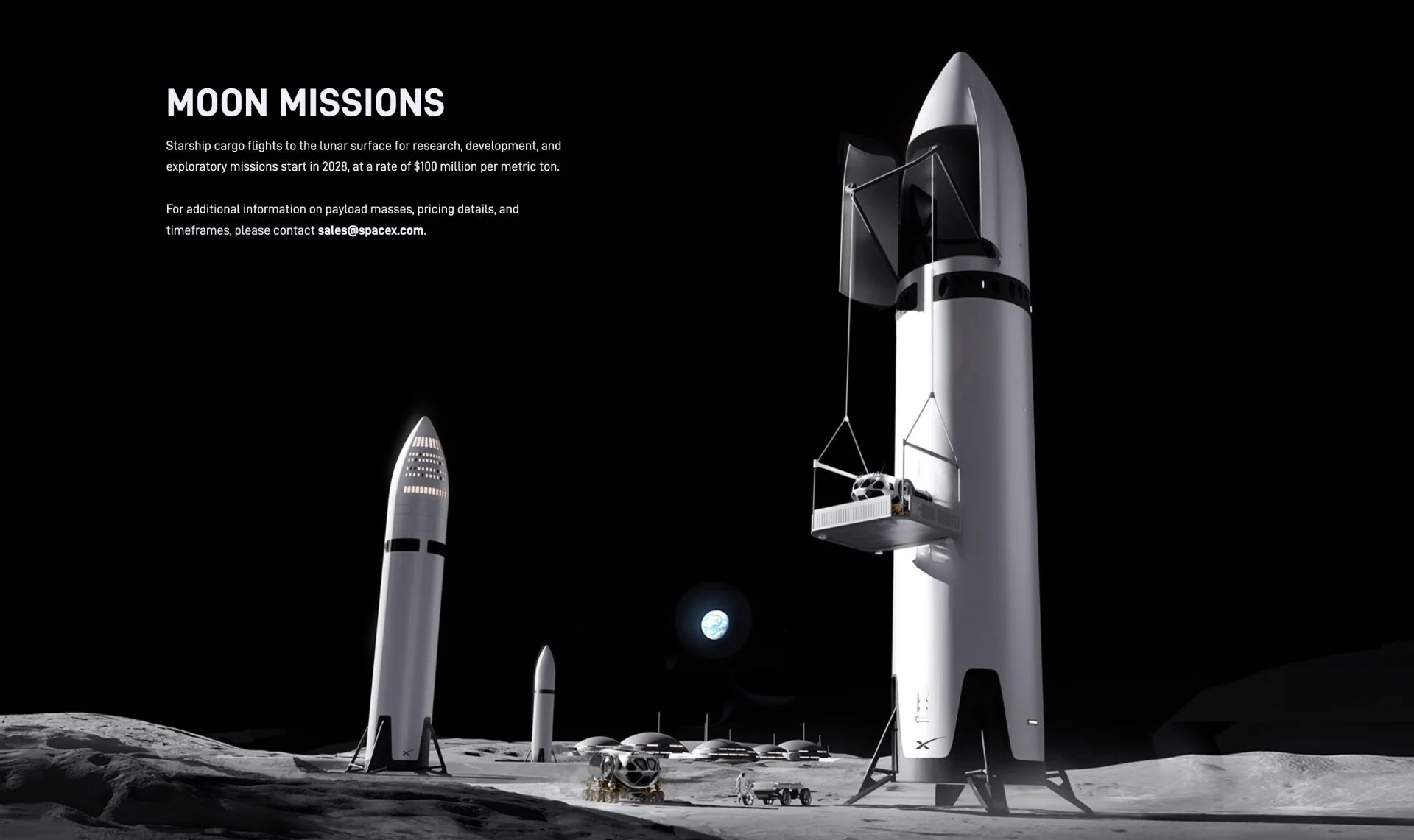
- It enables Starship's long-duration architecture (orbital refueling, large payload bays, surface landing capability) which has commercial applications beyond Mars
- It is a strategic narrative for Project Apex that distinguishes SpaceX from any other launch competitor
What it is not:
- A 2026-2030 revenue contributor of any material size
- A line item in our SOTP model
- A near-term NPV consideration for institutional investors
For the IPO, the Mars architecture should be priced as long-dated optionality with low probability weight and zero base-case revenue contribution. Investors paying a premium for the Mars narrative are paying for cultural alignment with Musk's mission framing, not for discounted future cash flows.
6. Point-to-Point Earth Transport: TAM Reality Check
The second SpaceX narrative that requires sober treatment is Starship Point-to-Point Earth Transport ("E2E") — the marketed use of Starship for sub-orbital intercontinental passenger flight, reducing 14-hour flights to 30-minute hops.
We are skeptical. The reasons:
Regulatory framework does not exist. Commercial intercontinental passenger flight is regulated by a dense interlocking framework of FAA, ICAO, IATA, and national civil aviation authorities that has spent 60 years optimizing for the operational characteristics of subsonic commercial jets. Suborbital launch from one country to another would require certification frameworks that do not yet exist. Concorde required 14 years of regulatory work after first flight; Starship is structurally more complex.
Noise and safety footprint near population centers. Starship is, by orders of magnitude, the loudest commercial vehicle ever designed. The launch and landing acoustics are incompatible with the urban-proximate spaceport architecture that E2E would require for the proposed travel times to make sense.
Operating costs at passenger-rated reliability are not $/kg-comparable. The marketed $20-30M per launch is for a payload mission. Passenger-rated operations require redundant abort modes, life-support systems, certified emergency capability, and operational margins that approximately triple the per-flight cost. At $60-90M per flight and 100 passengers per Starship, per-passenger cost is $600K-900K — roughly 100x first-class airfare on a comparable route. The TAM at this price point is essentially zero.
No customer commitments exist. No commercial airline has publicly committed to Starship E2E operations. No tour operator has booked Starship E2E capacity. There is no manifest.
For institutional modeling, assign zero value to E2E through 2030. It is a narrative element, not a business line. The optionality is real but the optionality value is small relative to the certain elements of the SpaceX investment thesis.
7. Starship Fleet Economics 2026-2030
If you strip out Mars and E2E, what is the actual Starship economic story for 2026-2030? It is more interesting than the dismissive elements suggest, but it is also more bounded.
Three realistic revenue lines:
7a. Starlink V3 deployment (internal transfer pricing)
The largest near-term volume use of Starship is internal Starlink deployment. Block 3 Starship is the planned delivery vehicle for the V3 Starlink satellite generation, each capable of more than one terabit per second of downlink capacity per FCC filings.
Volume: SpaceX has targeted approximately 10-15 Starship Starlink missions per year by 2027-2028, each carrying 30-60 V3 satellites.
Pricing: Internal transfer rate, not commercial. The cost-savings impact accrues to Starlink's economics, not to Launch Services revenue. We capture this in our Starlink segment modeling.
Strategic value: Significant. The transition from Falcon 9 Starlink deployment to Starship Starlink deployment is what unlocks the 70+ percent EBITDA margin that Quilty Space models for Starlink in 2026-2028.
7b. Commercial heavy-payload launches
External commercial customers for Starship-class payload delivery are limited but real. Categories include:
- Large commercial GEO satellites that benefit from Starship's payload volume (rather than just mass capacity)
- Direct-to-GEO commercial spacecraft that benefit from Starship's third-stage / kick-stage capacity
- Lunar logistics commercial customers (limited universe; primarily NASA Artemis-adjacent)
- Asteroid sample return commercial missions (highly speculative, primarily government)
We estimate this segment at $500M-1.5B annually by 2028 if Starship operates reliably. Most of this revenue is upside relative to the Falcon Heavy commercial market that already exists.
7c. Government heavy-payload missions
The most certain revenue line. Categories:
- NASA Artemis missions beyond HLS (cargo deliveries to lunar Gateway, sustained surface logistics)
- DOD/USSF heavy national security payloads that require Starship-class mass and volume (largely classified)
- NRO Starshield-on-Starship (potential but not yet contracted — see Section 8)
We estimate $1-2B annually by 2028 in government Starship revenue, with most flowing through extensions to existing contract vehicles (HLS extensions, NSSL Phase 3 task orders that specify Starship-class payloads, Golden Dome architecture awards).
7d. Total Starship segment 2028 base case
| Revenue line | 2028E Base | 2028E Bull | 2028E Bear |
|---|---|---|---|
| Starlink V3 deployment (internal) | $0 (captured in Starlink seg) | $0 | $0 |
| Commercial heavy-payload | $0.8B | $2.0B | $0.2B |
| Government heavy-payload | $1.2B | $2.5B | $0.5B |
| Direct Starship revenue | $2.0B | $4.5B | $0.7B |
| HLS milestone revenue | $0.5B | $0.5B | $0.3B |
| Total Starship revenue 2028E | $2.5B | $5.0B | $1.0B |
At a 30-50 percent EBITDA margin (lower than Starlink given commercial pricing pressure, higher than Falcon given vehicle reuse), 2028 Starship segment EBITDA ranges $0.3-2.5B. At 12-20x EBITDA, the segment values at $4-50 billion of direct EBITDA capitalization.
We add a strategic premium for optionality on 2029-2032 Starship operations (Mars narrative carry, additional government revenue lines, commercial market development), bringing our Starship segment fair-value range to $20-200 billion. Our base case is $60 billion, embedded in our hub SOTP and Sub 1 valuation analysis.
8. Starshield-on-Starship: The Hidden Optionality
We treated Starshield-on-Starship as zero base-case value above. Here is the case for treating it as meaningful upside.
The publicly disclosed Starshield baseline is the $1.8 billion NRO contract awarded in 2021, supporting approximately 183 Starshield satellites deployed through April 2025 on Falcon 9 missions. The Starshield architecture is currently sized for Falcon 9-class spacecraft.
The Trump administration's Golden Dome architecture — announced 2025, with the November 2025 $2 billion air-moving-target award the first publicly disclosed contract — calls for a militarized LEO surveillance and communications layer at substantial scale. The program's stated budget envelope is approximately $175 billion over an unspecified multi-year horizon.
If even 5-10 percent of Golden Dome flows through SpaceX as Starshield missions, the revenue line ranges $9-18 billion over the program's life. If Starship's payload-volume advantage attracts a meaningful share of Golden Dome to Starshield-on-Starship variants — larger spacecraft, more capable payloads, higher-priority orbital regimes — this could approach $15-30 billion of multi-year revenue.
The current public record provides zero evidence of Starshield-on-Starship missions. No Starshield mission to date has flown on Starship; all have flown on Falcon 9. The leadership-time-horizon question is whether the Golden Dome program will route additional revenue through Starship variants in 2027-2029, and whether that revenue should be modeled now or held as optionality value.
We model this as $10-20 billion of unbooked optionality value in our Starship segment bull case, with low probability weight in the base case. Investors who believe Golden Dome will materially expand Starshield's Starship-class mission set should add to our base case accordingly.
9. The Development Burn
Starship is the most expensive private aerospace development program in history. The total capital invested through IFT-11 is approximately $10-15 billion, per Sacra equity research and other third-party estimates. This includes:
- Vehicle development and manufacturing capex: ~$5-7 billion across Block 1, Block 2, Block 3 ships, boosters, and Raptor engines
- Starbase infrastructure: ~$2-3 billion for Pad A, Pad B, manufacturing facilities, test stands, and Mechazilla tower(s)
- Test campaign costs: ~$1-2 billion in flight hardware lost across IFT-1 through IFT-11
- R&D, engineering, and personnel: ~$2-3 billion in cumulative operational expenditure
This is funded through three sources: SpaceX internal cash flow from Falcon and Starlink ($8 billion of 2025 operating profit per The Information); the $4.04 billion HLS contract from NASA; and the $13-15 billion of primary and secondary fundraising completed since 2020.
The Starship development burn is not a sunk cost we are asked to recover from operations; it is a strategic R&D investment that has already happened. For investment modeling, the relevant question is what residual development capital is required to reach operational Starship, and the answer is approximately $3-5 billion over 2026-2028 — covering Block 3 iteration, ship recovery operations, orbital refueling demonstrations, and pad infrastructure expansion (Pad B operations plus Cape Canaveral Starship pads currently under construction).
This is significant but manageable. SpaceX 2025 operating profit alone covers the entire residual Starship development burn. The IPO does not need to fund Starship; it needs to fund the next stage of operating leverage that Starship enables.
10. The Bear Case on Starship
We owe the bear case equal weight.
Block 3 may take 5-10 flights to reach operational capability, and each one carries risk. IFT-12 is the first of an extended development campaign. The base case for completing the Block 3 development arc is 18-30 months from IFT-12. The bear case is 30-48 months if any single Block 3 flight encounters a structural anomaly that requires significant vehicle redesign (as Block 2 required several iterations on the ship).
Orbital refueling is unproven. Every aspect of the Starship economic narrative — HLS, Mars, large commercial payloads beyond LEO — requires successful orbital propellant transfer. The 2020 OIG-mandated 10-tankering refueling architecture for HLS Artemis III requires multiple successful propellant transfer operations, each of which has not been demonstrated. A schedule slip on orbital refueling propagates to every Starship-dependent commercial line.
Ship catch is harder than booster catch. Ships return from orbital velocity with significantly higher thermal and energetic loading than boosters returning from sub-orbital trajectories. The atmospheric heating phase, the high-altitude maneuvering, the terminal approach to Mechazilla — every phase is more demanding than booster catch. We expect first ship catch attempts in IFT-13 through IFT-15 and would not be surprised if first success requires multiple attempts.
Pad B operations may have unscheduled delays. Pad A operated through IFT-11 with multiple acoustic, deluge water, and structural challenges. Pad B's design incorporates lessons from Pad A but is a new operational facility. Early Pad B operations could surface issues that compress IFT-12, IFT-13, and IFT-14 cadence.
FAA license risk has not gone away. The Flight 8 mishap investigation (March-August 2025) demonstrated that the FAA can pause Starship operations after anomalies. The license modification process for higher annual launch counts is ongoing. Future mishaps could re-trigger pauses.
Commercial revenue may not develop. The marketed commercial Starship customer manifest exists in the form of letters of intent and exploratory contracts, not firm commercial purchase orders. If Block 3 economics work but commercial customers do not materialize at the projected rate, the launch services segment of our SOTP could underperform the base case by $20-40 billion.
The probability we assign to a bear case at $20 billion Starship segment value is approximately 20-25 percent.
11. The Bull Case on Starship
The flip side.
Block 3 may work first try, with a clean operational profile. IFT-10 was the first all-objectives-met Starship flight. IFT-11 confirmed Block 2 program completion was deliberate, not driven by accumulated technical debt. The Block 2 → Block 3 transition could be cleaner than the Block 1 → Block 2 transition was. If IFT-12 through IFT-15 produce three to four successful Block 3 flights inside a 12-month window, operational Starship arrives in 2027 rather than 2028.
Marketed $/kg is achievable by 2030, not 2028. Our probable case ($300-500/kg) is a 2027-2028 operational baseline. By 2029-2030, with full booster and ship reuse cadence, the marketed $100-200/kg range could be the realized economics. This is a multi-trillion-dollar TAM expansion event for the broader space economy and a large operational leverage event for SpaceX.
Starshield-on-Starship could materially expand the Starshield revenue line. If Golden Dome routes $15-30 billion through Starship-class Starshield missions in 2027-2030, the segment becomes a $200+ billion line item rather than the $80 billion we model in our base case.
Commercial heavy-payload demand could surprise to the upside. If Starship operational economics work, a wave of new commercial space business models become viable — orbital data centers, on-orbit manufacturing, large-aperture commercial telescopes, GEO communications expansion. The TAM expansion is hard to model precisely but is structurally significant.
Mars optionality. Set aside our skepticism about near-term Mars revenue. If Starship operates reliably and orbital refueling is demonstrated, the strategic optionality on Mars activities — government-funded scientific missions, eventual commercial cargo missions, longer-dated colonization architecture — becomes more credible. The market may price this even before contracts exist.
The probability we assign to a bull case at $150-200 billion Starship segment value is approximately 25 percent.
12. What We're Watching
Six leading indicators between now and end-2026:
- IFT-12 outcome (May 19, 2026 window, May 15-21). First Block 3 / V3 flight; first launch from Pad B. Success unlocks the operational-Starship narrative; another partial failure compresses Starship segment value in our model by $30-60 billion.
- IFT-13 cadence. If the gap between IFT-12 and IFT-13 is 2-3 months, operational Starship is on track. If it is 6+ months, the development arc has extended.
- First ship catch attempt (planned for IFT-13 through IFT-15). The transition from "boosters recovered, ships expended" to "fully reusable" is the largest single $/kg compression event.
- First orbital propellant transfer demonstration. Currently planned for 2026 but not yet scheduled. The HLS critical path runs through this milestone.
- Commercial Starship customer announcements. Firm purchase orders from external commercial customers — distinct from letters of intent — are the leading indicator of commercial demand materializing.
- Public S-1 disclosures on Starship. The Project Apex public S-1 will disclose Starship-specific capex, milestone payments, and forward-looking statements about commercial demand. This will significantly clarify the institutional valuation.
13. The Bottom Line
Starship is the most consequential variable in any SpaceX valuation model. The bull/bear gap on this segment alone is $130-180 billion of fair value, larger than the bull/bear gap on Starlink. The execution path is well-defined, the risk drivers are visible, and the leading indicators are observable in the public flight test record.
For institutional investors evaluating Project Apex, three things matter most:
Block 3 must work. Not perfectly on IFT-12, but credibly across IFT-12 through IFT-15. If the Block 3 development arc resembles the Block 2 arc — multiple iterations, ship problems, extended cadence — the Starship segment underperforms.
Orbital refueling must be demonstrated. This is the critical path technology for HLS, for Mars, and for any commercial business model that requires high-energy orbital missions. The 2026 propellant transfer demonstration is the most important single non-flight technical milestone.
Government revenue lines must materialize. HLS Option B disbursement, NSSL Phase 3 Lane 2 task orders that route to Starship, and potential Starshield-on-Starship missions through Golden Dome are the three near-term revenue contributors that distinguish base case from bull case.
We model the segment at $60 billion in our base case with a range of $20-200 billion across our scenarios. We assign these probability weights: 55 percent base, 25 percent bull, 20 percent bear. Probability-weighted expected segment value: approximately $68 billion.
Read this in the context of the hub SOTP analysis, where Starship is one of five segments. The companion piece on SpaceX Valuation & Secondary Markets sets the comparable-multiple framework. The companion piece on Government Contract Risk details the HLS, NSSL, and NRO Starshield concentration that anchors Starship's near-term revenue.
Sources & Methodology
Primary disclosure sources:
- NASA HLS Option A award ($2.89B, April 2021)
- NASA HLS Option B award ($1.15B, November 2022)
- NASA OIG IG-26-004 — HLS Contracts Management (March 2026)
- GAO-25-107591 — NASA Major Projects 2025
- SpaceX IFT-10 mission page
- SpaceX IFT-11 mission page
Third-party flight test reporting:
- Wikipedia: List of Starship launches
- NASA SpaceFlight IFT-11 coverage
- Starship Wiki — IFT-12 preparation
- Spaceflight Now — FAA Flight 9 clearance
Financial estimates:
- Sacra SpaceX coverage
- The Information — SpaceX $8B profit 2025
- Quilty Space Starlink Financial Overview
Methodology notes: All Starship marginal-cost estimates are model-derived from disclosed Raptor engine costs, third-party propellant cost analysis, and pad-operations estimates. The $/kg projections reflect base case operational maturity in 2027-2028; the marketed $100-200/kg may be achievable in 2029-2032 timeframe with full Block 3+ operational cadence. HLS disbursement figures are from NASA OIG IG-26-004 and may have advanced since the May 2025 reporting period. IFT-12 timing reflects publicly stated targets and is subject to change.
This article will be updated post-IFT-12 outcome and when the public S-1 lands. Recency stamp: May 13, 2026.
Frequently Asked Questions
What is the most important Starship milestone for SpaceX's IPO valuation? The IFT-12 outcome and the IFT-13 cadence. Block 3 is the operational vehicle that justifies the marketed Starship economics. A successful IFT-12 followed by IFT-13 within 2-3 months would be a strong signal that operational Starship is on track for 2027. Delays compound the bear case.
Will Starship reach the marketed $100-200/kg by 2030? We think it is plausible, not certain. Our base case for 2027-2028 operational economics is $300-500/kg. The marketed range becomes achievable as booster reuse cadence reaches 10+ flights per booster and ship reuse is operationally proven. The 2030 timeframe is more realistic than 2028 for hitting the marketed targets.
Is HLS at risk of being cancelled? We view contract cancellation as low probability (5-10 percent) but milestone re-baselining as high probability (60-70 percent). NASA does not have a near-term alternative for crewed lunar landing; Blue Origin's Blue Moon program is multi-year behind Starship HLS. Cancellation would require NASA to make a strategic choice with no clear backup option.
Does the Mars architecture have any near-term revenue contribution? No. We assign zero base-case revenue to Mars activities through 2030. The Mars narrative is strategic optionality that supports SpaceX's culture and capital attraction but does not contribute discounted cash flow in any 2026-2030 model.
What is Block 3's most important new capability? Operational maturity for both booster reuse cadence and ship recovery. Raptor 3 simplification reduces per-engine cost; the enlarged payload capacity increases per-flight revenue potential; Pad B operations enable higher launch cadence. The combination is what unlocks the marketed economics.
How does Starship affect the broader Project Apex IPO valuation? Starship is the single largest source of dispersion across our SOTP scenarios. The base case contributes $60 billion to a $785 billion pre-IPO segment-value total. The bull case at $200 billion contributes nearly 18 percent of bull-case segment value. The bear case at $20 billion barely registers. Investors who believe Starship will execute on the marketed timeline should expect their fair-value estimate to be materially above ours.
Disclosure: This article is for informational and educational purposes only and does not constitute investment advice. SpaceX is a private company; all financial figures presented here are estimates derived from third-party analyst reports, public regulatory filings, and our model assumptions unless explicitly cited to a primary SpaceX or government disclosure. Past performance does not predict future returns. Authors and SpaceOdysseyHub have no economic position in any secondary-market vehicle, pre-IPO fund, or publicly-traded security referenced. Consult a licensed financial advisor before making capital-allocation decisions in private or pre-IPO securities.