Venus is the planet we forgot. For decades, while Mars hogged the spotlight with its rovers, helicopters, and sample return ambitions, our other nearest neighbor sat neglected -- a scorching hellscape wrapped in acid clouds, seemingly too hostile to bother with. But Venus is making a comeback, and the reasons go far beyond simple curiosity. Venus may hold the key to understanding why Earth became a paradise for life while a nearly identical planet became a furnace. And there is an outside chance -- slim, controversial, but tantalizing -- that Venus might not be entirely lifeless after all.
The next decade will see more missions to Venus than the previous three decades combined. Let me tell you why that matters.
Earth's Twin Gone Wrong
Venus and Earth are eerily similar in many ways. They are nearly the same size -- Venus is about 95 percent of Earth's diameter. They have similar masses, similar densities, and were formed from the same region of the solar nebula roughly 4.5 billion years ago. If you were an alien astronomer surveying our solar system from a distance, you might reasonably expect these two planets to be quite similar.
You would be spectacularly wrong.
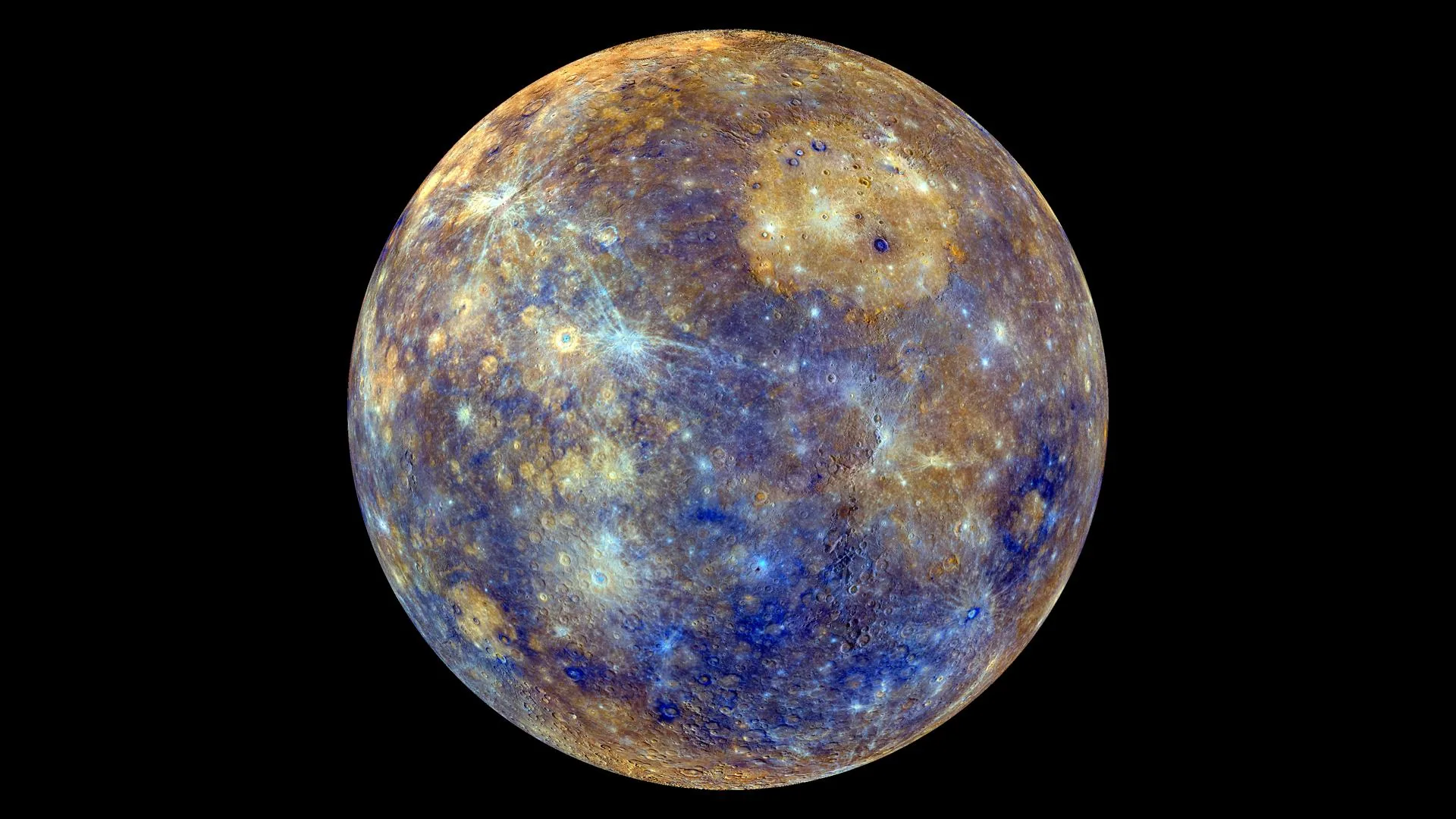
Venus's surface temperature averages 465 degrees Celsius -- hot enough to melt lead, hot enough to glow faintly red in the dark. The atmospheric pressure at the surface is 92 times that of Earth, equivalent to the pressure nearly a kilometer beneath our oceans. The atmosphere is 96.5 percent carbon dioxide, and the clouds are not made of water but of sulfuric acid. The surface is a barren volcanic landscape with no liquid water, baked by a runaway greenhouse effect that has turned Venus into the hottest planet in the solar system -- hotter even than Mercury, which orbits much closer to the Sun.
How did this happen? That is one of the most important questions in all of planetary science, because Earth and Venus started in very similar places. Understanding why Venus diverged so catastrophically helps us understand the conditions that make a planet habitable -- and by extension, helps us evaluate whether the thousands of exoplanets we are discovering around other stars might support life.
The Phosphine Controversy
In September 2020, a team led by astronomer Jane Greaves of Cardiff University published a bombshell paper claiming the detection of phosphine gas in Venus's atmosphere. Phosphine -- a molecule made of one phosphorus atom and three hydrogen atoms -- is significant because on Earth, it is produced almost exclusively by biological processes (or by industrial chemistry). Finding it on Venus, where no known geological or atmospheric process should produce it in significant quantities, raised the electrifying possibility of microbial life floating in the Venusian clouds.
The clouds of Venus, about 50 to 65 kilometers above the surface, are actually far more hospitable than the hellish ground below. At those altitudes, temperatures range from 0 to 80 degrees Celsius, and the pressure is close to Earth's surface levels. Some astrobiologists had speculated for years that acid-resistant microorganisms could potentially survive in this aerial environment, carried aloft by convective currents and living out their entire life cycles within cloud droplets.
The phosphine detection, however, quickly became one of the most contentious scientific debates of the decade. Other research teams reanalyzed the same data and reached different conclusions. Some argued that the spectral signal attributed to phosphine could be explained by sulfur dioxide, a common Venusian atmospheric gas. The original team defended their analysis and published follow-up work, but as of today, the question remains unresolved.
Whether or not the phosphine is real, the debate accomplished something important: it forced the scientific community to take Venus seriously again. The phosphine controversy was a catalyst for a wave of Venus mission proposals that had been gathering momentum for years.
DAVINCI+: Plunging Into the Atmosphere
NASA's DAVINCI+ (Deep Atmosphere Venus Investigation of Noble gases, Chemistry, and Imaging) mission is one of two Venus missions selected by NASA in 2021 after a long drought. DAVINCI+ will send a descent probe through Venus's atmosphere, taking measurements all the way down during a roughly one-hour plunge to the surface.
The probe will sample the atmospheric composition with unprecedented precision, measuring noble gases and their isotopes to reconstruct Venus's atmospheric history. Noble gases are chemically inert -- they do not react with other elements -- which means their ratios preserve information about the planet's formation and early evolution. By comparing Venus's noble gas inventory with Earth's, scientists can piece together when and how the two planets' atmospheres diverged.
DAVINCI+ will also capture the first high-resolution images of Alpha Regio, one of Venus's highland regions called tesserae. These ancient, deformed terrains may be the oldest surviving surfaces on Venus, potentially analogous to Earth's continents. If Alpha Regio shows evidence of having formed in the presence of water, it would support the hypothesis that Venus once had oceans -- a finding that would reshape our understanding of the planet's history.
VERITAS: Mapping Venus from Orbit
The second NASA Venus mission, VERITAS (Venus Emissivity, Radio Science, InSAR, Topography, and Spectroscopy), will map Venus's surface from orbit using synthetic aperture radar, similar to the technique used by the Magellan spacecraft in the early 1990s but with far greater resolution and capability.
VERITAS will create a global, high-resolution topographic map and measure surface composition using near-infrared spectroscopy through gaps in the cloud cover. Crucially, it will search for signs of active volcanism and tectonic activity, building on one of the most exciting recent discoveries about Venus.
Volcanic Activity Confirmed
In 2023, a team led by Robert Herrick of the University of Alaska Fairbanks published a remarkable finding. By painstakingly comparing Magellan radar images from the early 1990s, they identified a volcanic vent on Venus that had changed shape between two imaging passes just eight months apart. The vent, located on the volcano Maat Mons, appeared to have expanded and possibly overflowed with lava during that period.
This was the first direct evidence of active volcanism on Venus, confirming what many scientists had long suspected based on indirect clues: fluctuations in atmospheric sulfur dioxide, thermal anomalies detected by the Venus Express orbiter, and the relative youth of Venus's surface as indicated by its low crater count.
Venus is geologically alive. Its surface appears to have been catastrophically resurfaced by volcanic activity roughly 500 to 700 million years ago, and volcanism clearly continues today. Understanding the nature and extent of this activity is essential for understanding Venus's interior, its heat loss mechanisms, and the fate of its water.
EnVision: Europe Joins the Party
The European Space Agency's EnVision mission, selected in 2021, will complement the NASA missions by conducting a comprehensive study of Venus from its core to its upper atmosphere. EnVision will carry a suite of European instruments plus a NASA-provided synthetic aperture radar, and will study the planet's interior structure through gravity measurements, map surface composition and geological features, and investigate the atmospheric chemistry and cloud dynamics.
EnVision, DAVINCI+, and VERITAS together will provide the most comprehensive study of Venus ever undertaken. For the first time, we will have simultaneous data from orbit and through the atmosphere, allowing scientists to connect surface geology, atmospheric chemistry, and interior dynamics into a unified picture.
Rocket Lab's Audacious Bet
While NASA and ESA plan their flagship missions, a smaller but remarkably ambitious effort is underway at Rocket Lab. The New Zealand-American company, founded by Peter Beck, has been developing the Venus Life Finder -- a private mission concept that would send a small probe into Venus's atmosphere to directly search for organic molecules and signs of life in the cloud layer.
The concept is elegant in its simplicity. Rather than trying to land on the murderously hostile surface, the probe would sample the clouds during its descent, where conditions are far more moderate. It would carry an autofluorescence nephelometer -- an instrument that shines ultraviolet light on cloud particles and looks for the fluorescent glow that organic molecules produce.
Beck has been remarkably open about his personal conviction that something is alive in Venus's clouds, but he has also emphasized that the mission is designed to deliver definitive data either way. A detection of organic fluorescence would be groundbreaking. A non-detection would also be valuable, constraining the habitability of Venusian clouds and helping to close the phosphine debate.
Why Venus Matters More Than Ever
In an era of climate change, Venus serves as a stark warning. Venus experienced a runaway greenhouse effect that turned a potentially habitable world into an oven. Understanding exactly how and when that runaway occurred -- whether Venus ever had oceans, how long they lasted, and what triggered their loss -- speaks directly to our understanding of climate tipping points.
Venus is not just another planet to explore. It is a mirror held up to Earth, showing us what can happen when a planet's climate spirals out of control. The missions heading to Venus in the coming years will not only reveal the history of our evil twin but will inform our understanding of our own planet's future.
After decades of neglect, Venus is finally getting the attention it deserves. And honestly, it is about time.