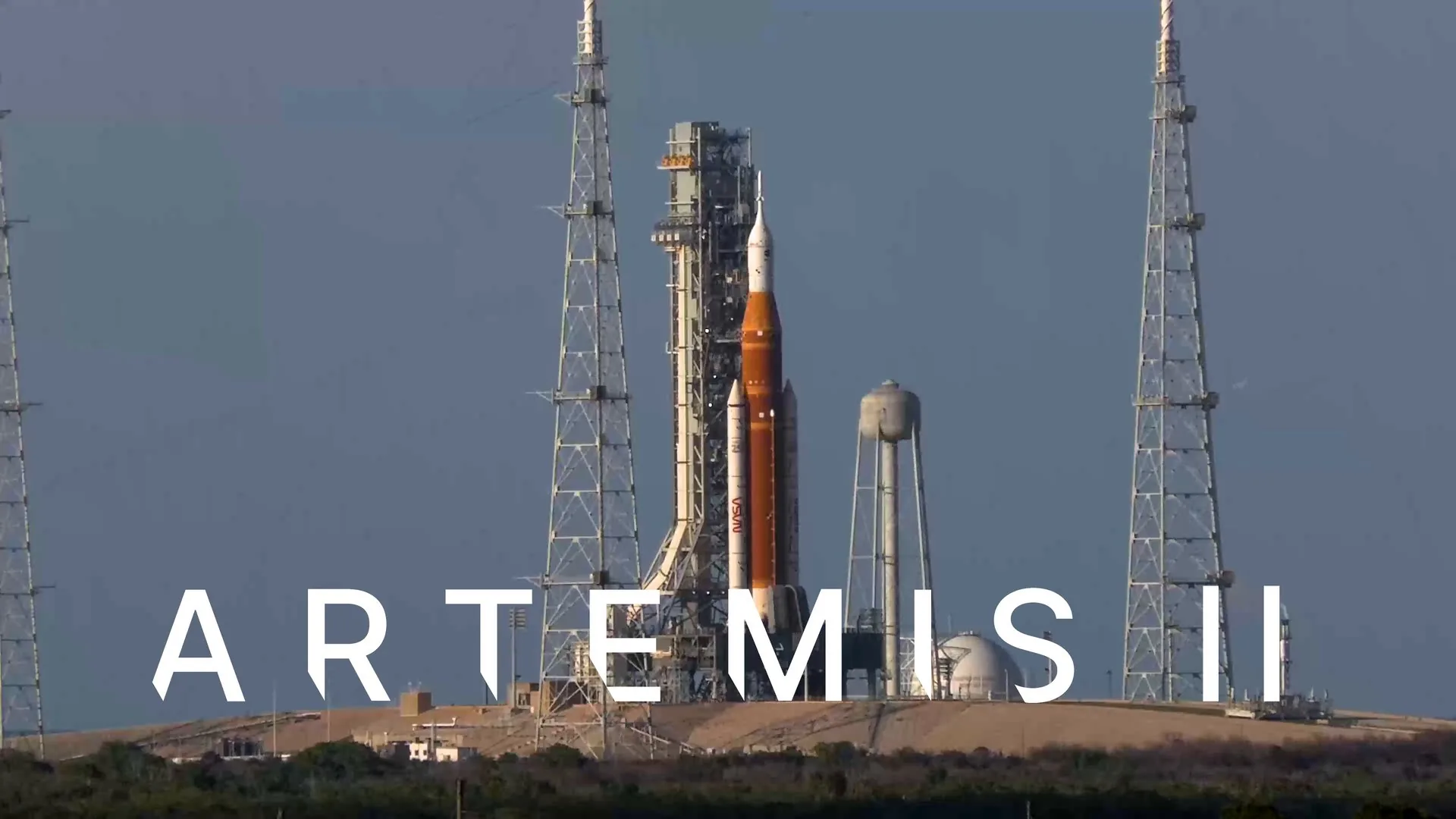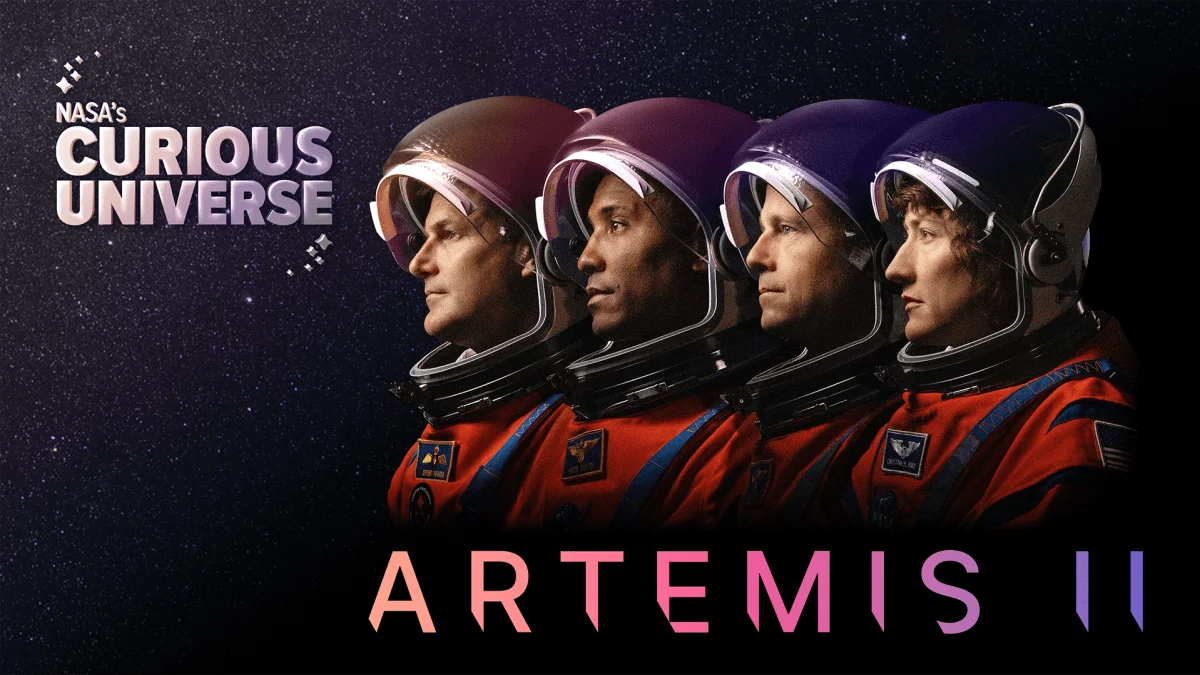
The countdown clock is ticking. At 6:24 p.m. EDT on Wednesday, April 1, 2026, NASA's Space Launch System will ignite its four RS-25 engines and two solid rocket boosters, generating 8.8 million pounds of thrust to send four astronauts on a trajectory no human has followed since December 1972. Artemis II is not a rehearsal. It is the real thing — the first crewed mission beyond low Earth orbit in over half a century.
Here is everything you need to know before liftoff.
The Crew Making History
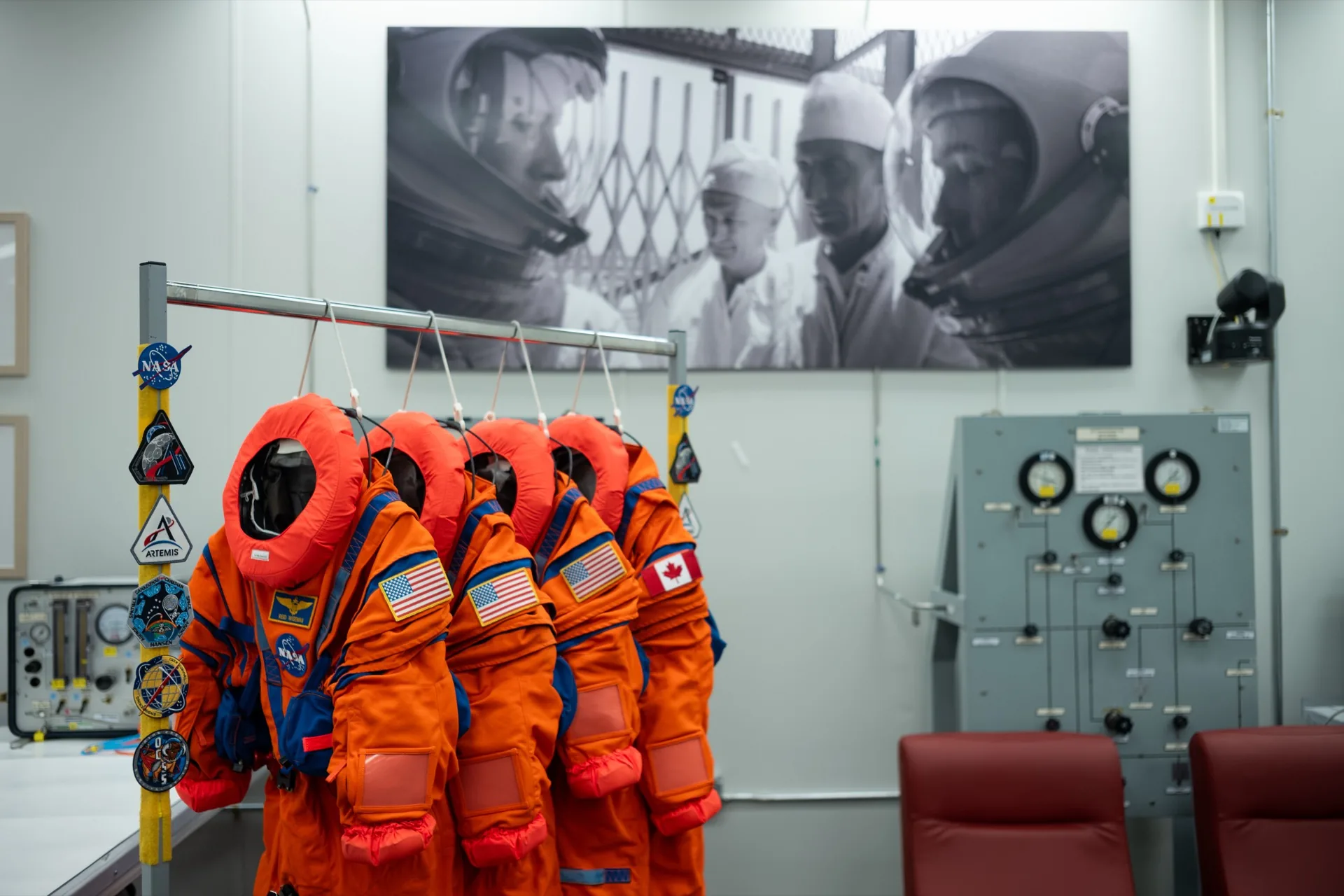
Four astronauts will strap into the Orion spacecraft atop the world's most powerful operational rocket:
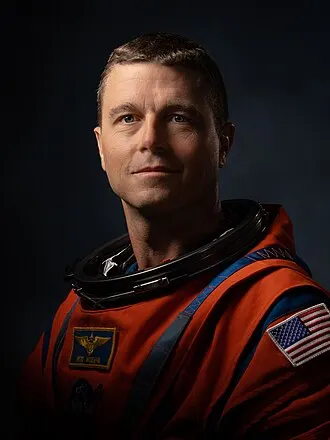
- Commander Reid Wiseman — a Navy test pilot and former ISS resident who has logged 165 days in space. Wiseman will oversee the mission from the left seat.
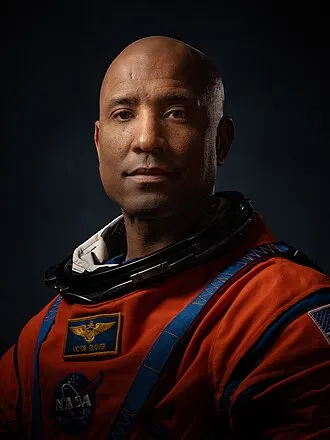
- Pilot Victor Glover — a Naval aviator who served as pilot on SpaceX Crew-1 to the ISS. When SLS clears the tower, Glover will become the first person of color to travel beyond low Earth orbit.
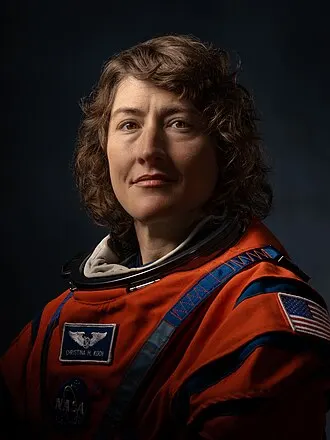
- Mission Specialist Christina Koch — a veteran of a 328-day ISS mission and co-participant in the first all-female spacewalk. Koch will become the first woman to fly to lunar distance.
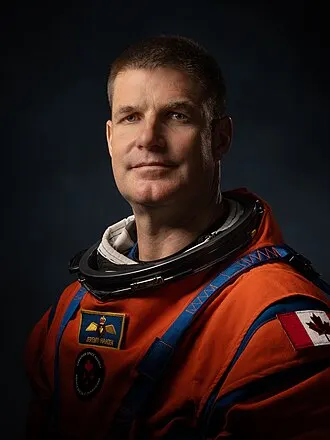
- Mission Specialist Jeremy Hansen — a Canadian Space Agency astronaut and former CF-18 fighter pilot. Hansen will be the first non-American to leave Earth orbit, marking a milestone for international cooperation in deep space exploration.
Together they represent a crew unlike any that has flown before — more diverse, more experienced, and carrying the weight of an entire generation's spaceflight ambitions.
The Rocket: SLS Block 1
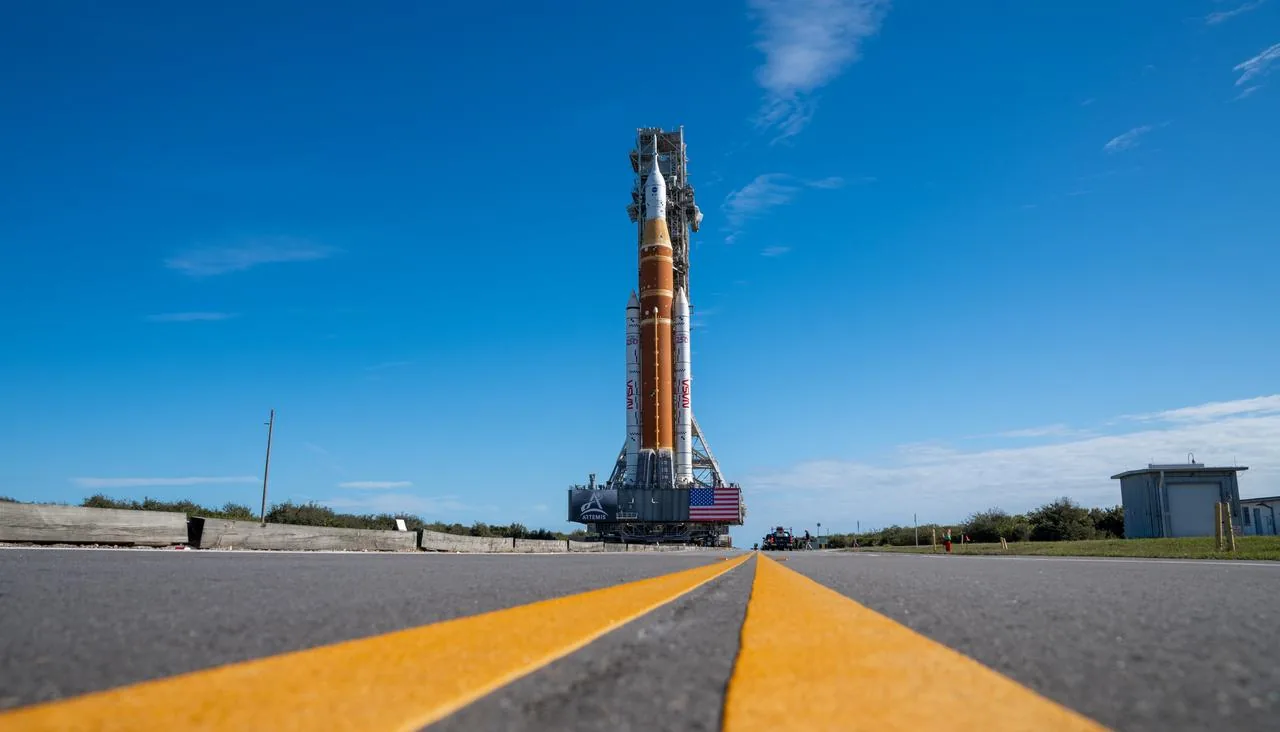
The Space Launch System standing at Pad 39B is, by several measures, the most powerful rocket ever to carry astronauts. Its core stage, painted in signature orange insulation foam, houses over 733,000 gallons of liquid hydrogen and liquid oxygen that will feed four RS-25 engines — the same engine family that powered every Space Shuttle mission.
Three of the four RS-25 engines on this rocket are veterans of the shuttle era. Engine 2047 flew on STS-135, the final shuttle mission in 2011. Engine 2059 powered STS-134, the penultimate flight. Engine 2061 helped build the International Space Station. Between them, they have flown 22 shuttle missions and accumulated over 1.1 million seconds of hot-fire experience. The fourth engine, number 2062, will make its inaugural flight — assembled at the end of the shuttle program but never launched until now.
Flanking the core stage are two five-segment solid rocket boosters, each producing 3.6 million pounds of thrust. Together, the SLS Block 1 configuration produces approximately 8.8 million pounds of thrust at liftoff — 15 percent more than the Saturn V that carried Apollo astronauts to the Moon.
The Mission: Ten Days Around the Moon
Artemis II will follow a free-return trajectory — a flight path that uses the Moon's gravity to sling the spacecraft back toward Earth without requiring a lunar orbit insertion burn. This is the same type of trajectory that saved the Apollo 13 crew in 1970, and it serves as both a safety feature and a test of Orion's deep-space navigation capabilities.
The mission profile unfolds in stages:
- Launch and Earth Orbit — SLS lifts off from Pad 39B. After booster separation and core stage cutoff, the Interim Cryogenic Propulsion Stage (ICPS) places Orion into an initial orbit. The crew spends roughly 24 hours checking spacecraft systems.
- Trans-Lunar Injection — The ICPS fires its RL10 engine to accelerate Orion onto a lunar-bound trajectory, then separates. From this point forward, the crew is committed to a deep-space flight.
- Outbound Transit — Over four days, the crew flies toward the Moon, testing Orion's life support, navigation, communication systems, and habitation equipment.
- Lunar Flyby — Orion passes approximately 4,600 miles (7,400 km) beyond the far side of the Moon — farther than any crewed spacecraft has ever traveled. At this distance, the crew will see the entire lunar far side with their own eyes.
- Return Transit — The Moon's gravity bends Orion's path back toward Earth over approximately four days.
- Reentry and Splashdown — Orion hits Earth's atmosphere at roughly 25,000 mph (40,000 km/h) — the fastest any crewed vehicle has traveled during reentry. The heat shield, the largest ever built for a crewed spacecraft at 16.5 feet in diameter, must withstand temperatures of approximately 5,000 degrees Fahrenheit. Parachutes deploy, and the capsule splashes down in the Pacific Ocean, where the USS Portland and a Navy recovery team will be waiting.
The entire mission spans approximately ten days.
The Road to the Pad: Delays, Fixes, and Determination
Getting to this point was anything but smooth. Artemis II was originally scheduled for late 2024, then pushed to September 2025, then February 2026. Each delay had a reason.
After the successful uncrewed Artemis I mission in November 2022, engineers discovered issues with the Orion heat shield. Charring patterns during reentry were not as predicted — pieces of the ablative material came off in unexpected ways. NASA spent months analyzing the data and concluded that while Artemis I's heat shield protected the spacecraft, modifications were needed to ensure crew safety during the higher-energy reentry of Artemis II.
A wet dress rehearsal in early 2026 uncovered a liquid hydrogen leak, pushing the launch from February to March. Then in late February, a helium flow issue during testing triggered a decision to roll the fully stacked rocket back to the Vehicle Assembly Building on February 25. Engineers identified and resolved the issue, and the stack made its final trip to the pad on March 18.
Now, with the countdown clock active and weather forecasts showing an 80 percent chance of favorable conditions, Artemis II appears ready.
How to Watch the Launch
NASA will provide extensive coverage across multiple platforms:
- 7:45 a.m. EDT, April 1 — Live views and commentary of propellant loading begin on NASA's YouTube channel
- 12:50 p.m. EDT — Full launch coverage begins on NASA+, NASA's streaming service
- 6:24 p.m. EDT — Targeted liftoff time (2-hour launch window)
Streaming is available on:
- NASA+ (free streaming at plus.nasa.gov)
- NASA YouTube channel
- NASA social media (Facebook, X/Twitter, Twitch)
- ABC News Live (also on Disney+ and Hulu)
- C-SPAN (website, YouTube, radio, and mobile app)
If weather or technical issues cause a scrub on April 1, backup launch opportunities are available through April 6.
For those near Florida's Space Coast, the launch will be visible from beaches and viewing areas around Kennedy Space Center and Cape Canaveral. The Kennedy Space Center Visitor Complex is offering special launch viewing packages.
Why Artemis II Matters Beyond the Mission Itself
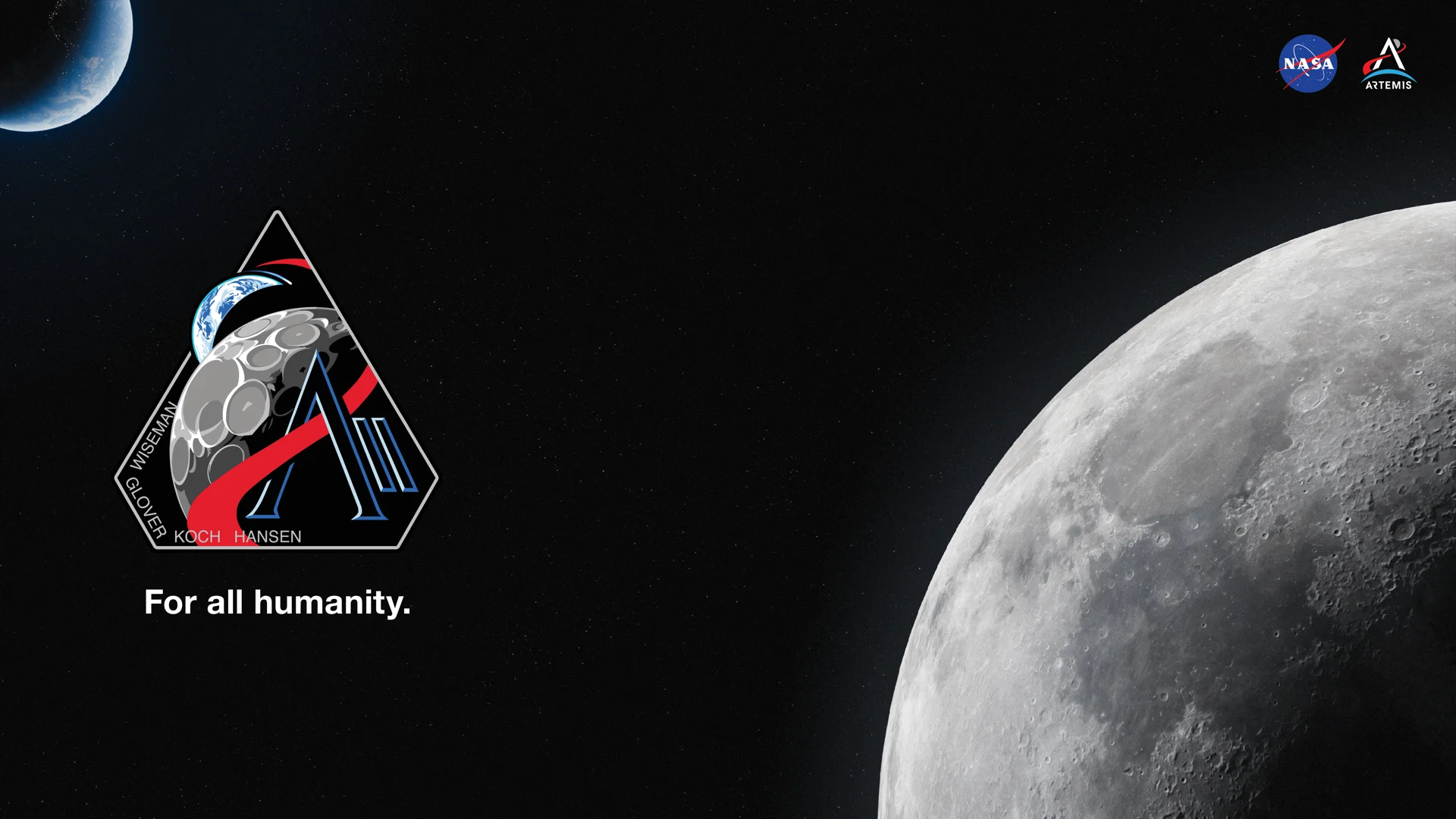
Artemis II is not just a test flight. It is the proof of concept for everything that follows. If Orion's life support keeps four humans alive and healthy during a ten-day deep-space transit, if the heat shield handles reentry at interplanetary speeds, if the SLS performs as designed on its second flight — then NASA has a verified, human-rated transportation system for the Moon.
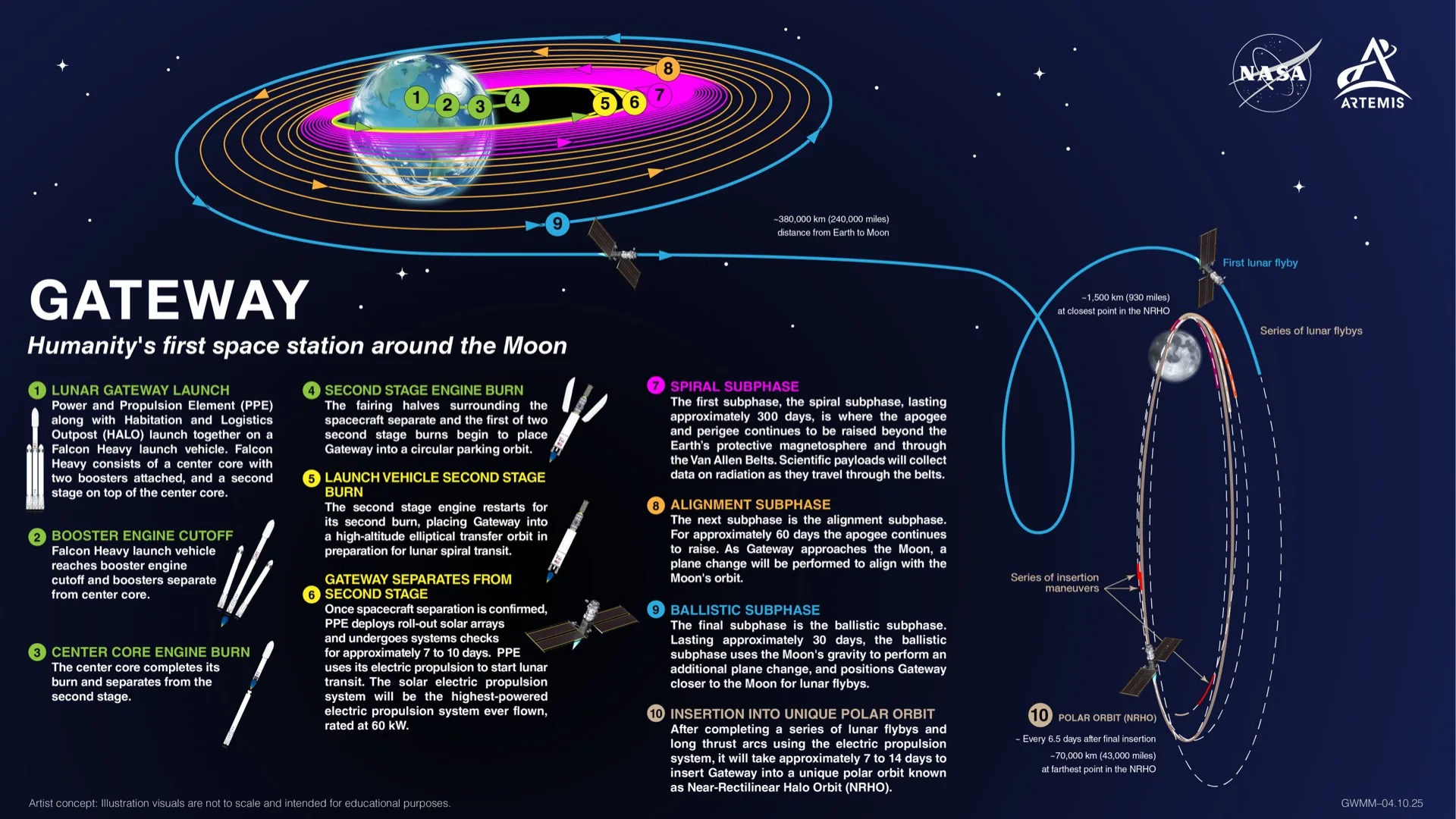
That system is the backbone of the Artemis program's larger ambitions. Artemis III, planned to follow within roughly two years, will attempt the first crewed lunar landing since Apollo 17, using a SpaceX Starship variant as the Human Landing System. Artemis IV will begin construction of the Lunar Gateway, a small space station in lunar orbit that will serve as a staging point for surface missions.
But none of that happens without Artemis II proving that humans can ride SLS and Orion to the Moon and back safely.
The mission also carries symbolic weight. When Victor Glover looks out the window at the receding Earth, he will be the first Black astronaut to see our planet as a distant blue marble. When Christina Koch photographs the lunar far side, she will be the first woman to witness it in person. When Jeremy Hansen communicates with mission control from beyond the Moon, he will demonstrate that lunar exploration is no longer an exclusively American endeavor.
More than fifty years after Gene Cernan's bootprints in the Taurus-Littrow valley, humans are going back. And this time, the crew looks like the world they represent.
What Comes Next
If Artemis II succeeds, the dominoes begin to fall quickly. NASA has already selected a crew for Artemis III and is deep into planning for Artemis IV. The Lunar Gateway's Power and Propulsion Element and Habitation and Logistics Outpost modules are in advanced development. International partners — the European Space Agency, the Japanese Aerospace Exploration Agency, and the Canadian Space Agency — all have hardware contributions in the pipeline.
The Artemis program's ultimate goal extends beyond flags and footprints. NASA envisions a sustained human presence on and around the Moon by the early 2030s, using lunar resources like water ice at the south pole to produce propellant and support long-duration habitation. The Moon, in this vision, becomes not just a destination but a proving ground for the technologies and operational experience needed to eventually send humans to Mars.
All of that begins with four astronauts, four RS-25 engines, 8.8 million pounds of thrust, and a countdown clock ticking toward 6:24 p.m. on April 1, 2026.
The Moon is waiting.