In the first week of June 2026, a robotic spacecraft about the size of a small car eased to within a few hundred kilometres of a tumbling rock that most people have never heard of. The rock is called Kamoʻoalewa, it is no wider than a football field, and it has been quietly accompanying Earth around the Sun for the better part of a century. The spacecraft is called Tianwen-2, and its arrival marked the moment China joined one of the most exclusive clubs in spaceflight: the handful of nations that have flown a mission to collect a piece of an asteroid and bring it home.
If the mission succeeds, China will become only the third country — after Japan and the United States — to return material from an asteroid to Earth. But Tianwen-2 is more ambitious than a single grab-and-go. After it delivers its asteroid sample, the spacecraft is designed to keep flying for another eight years to rendezvous with a comet. It is, in effect, two deep-space missions stacked into one.
China Joins the Asteroid Sample-Return Club
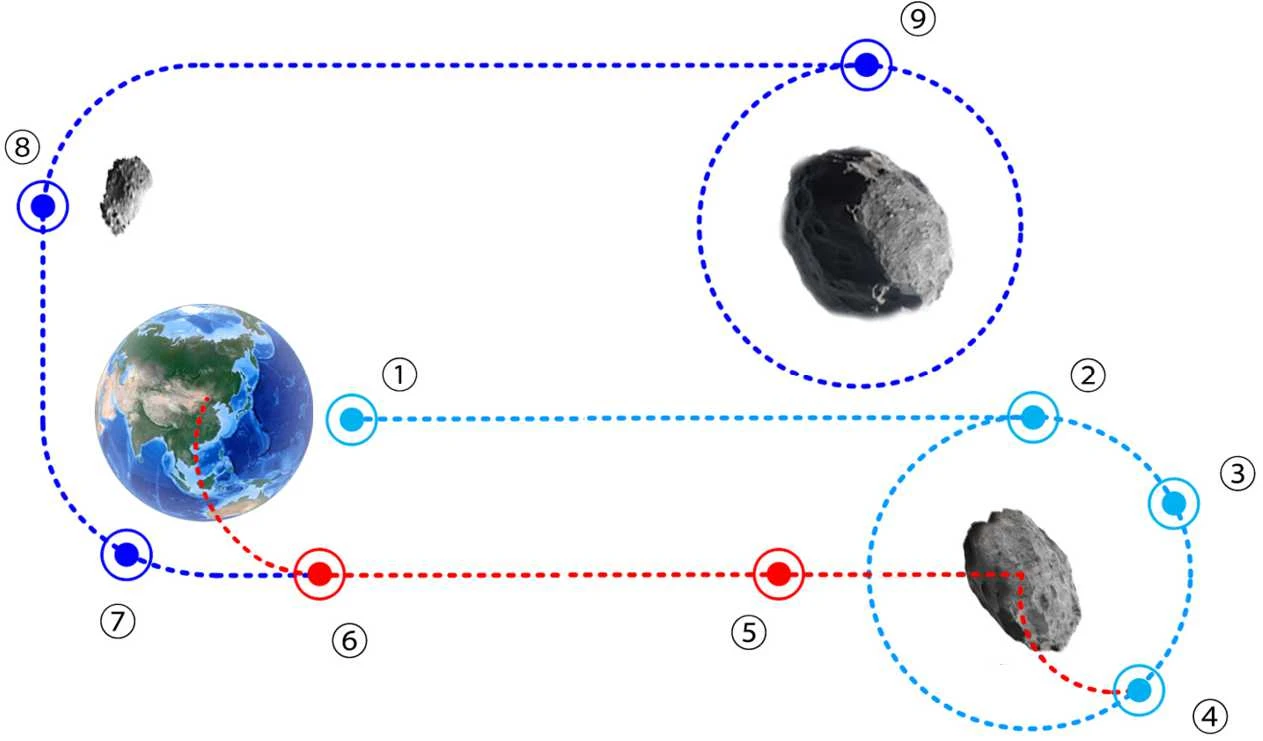
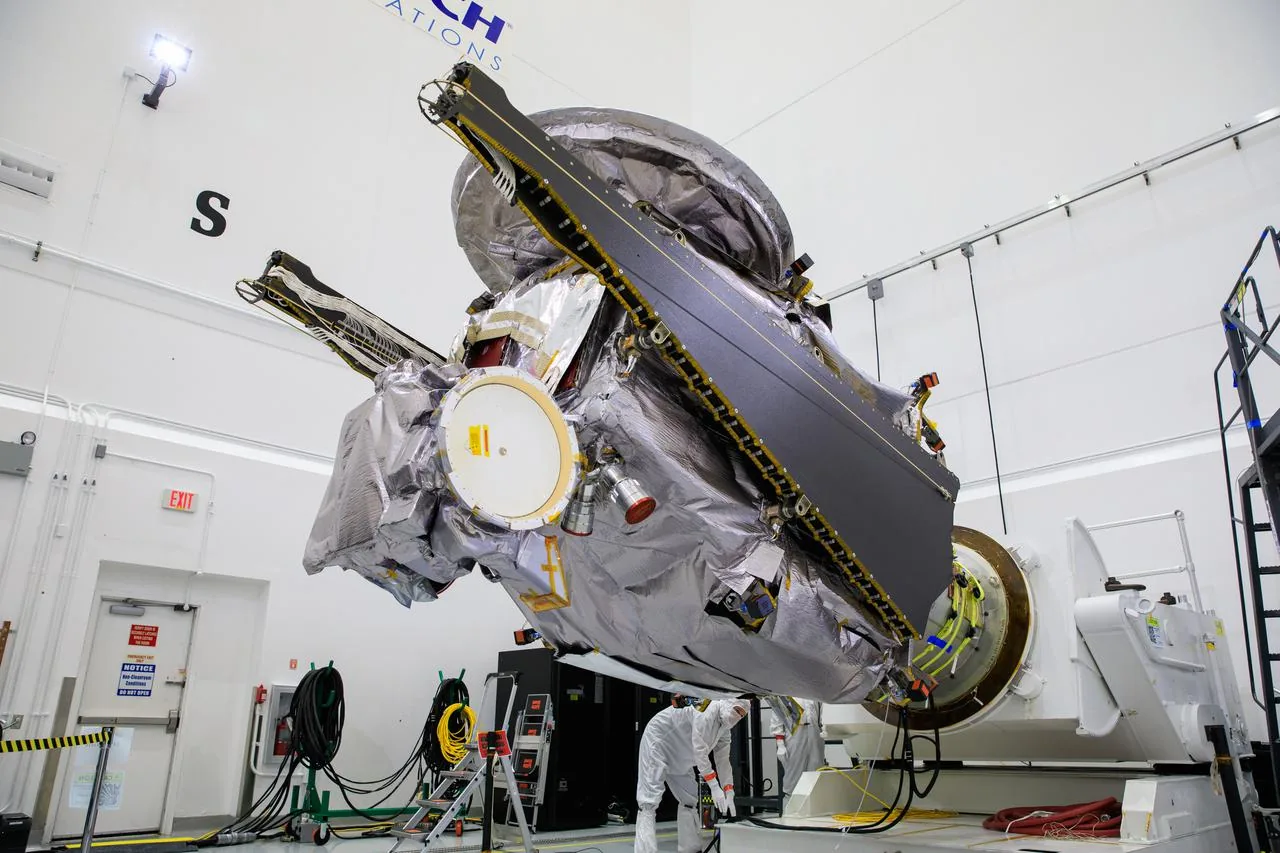
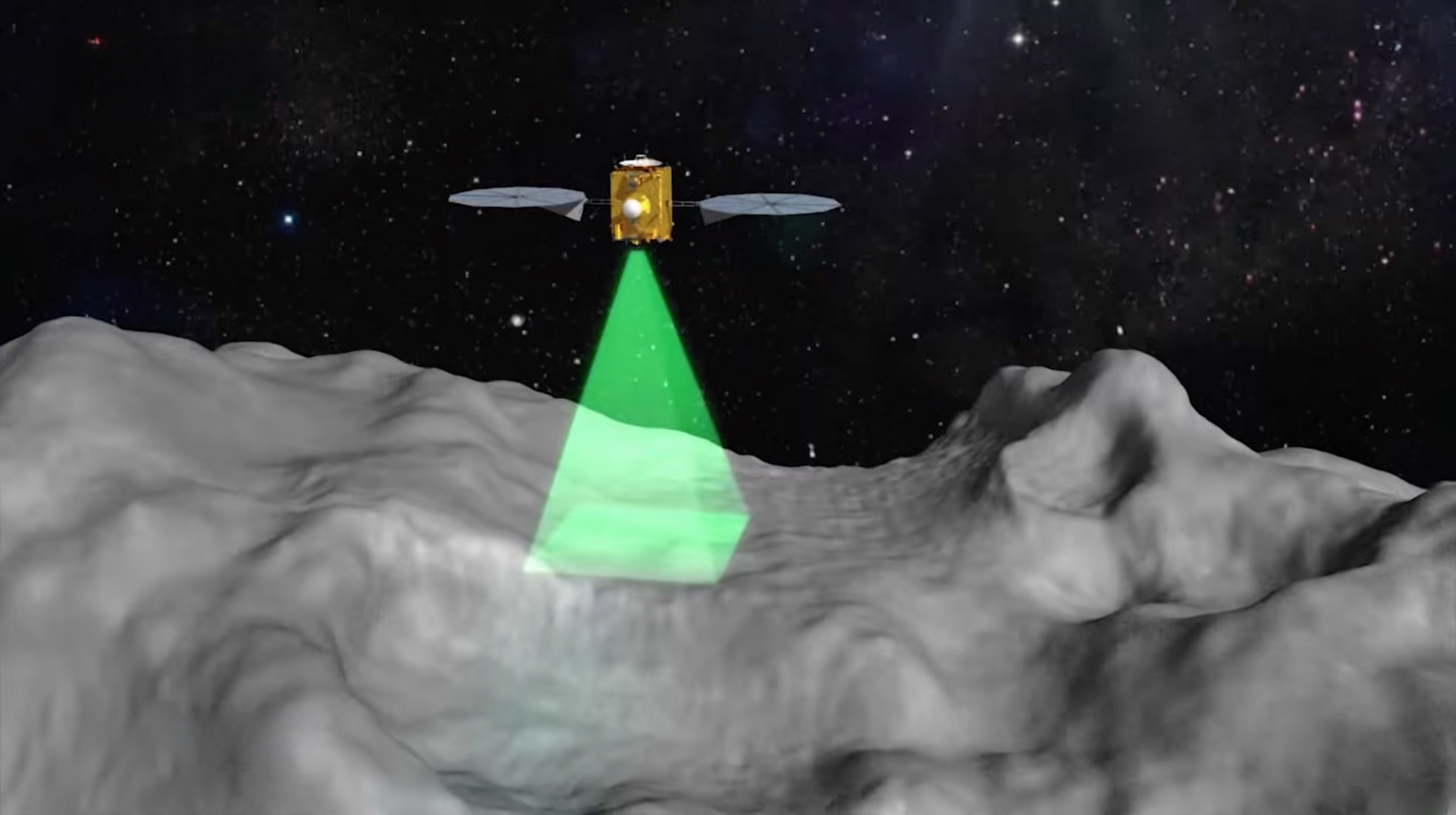
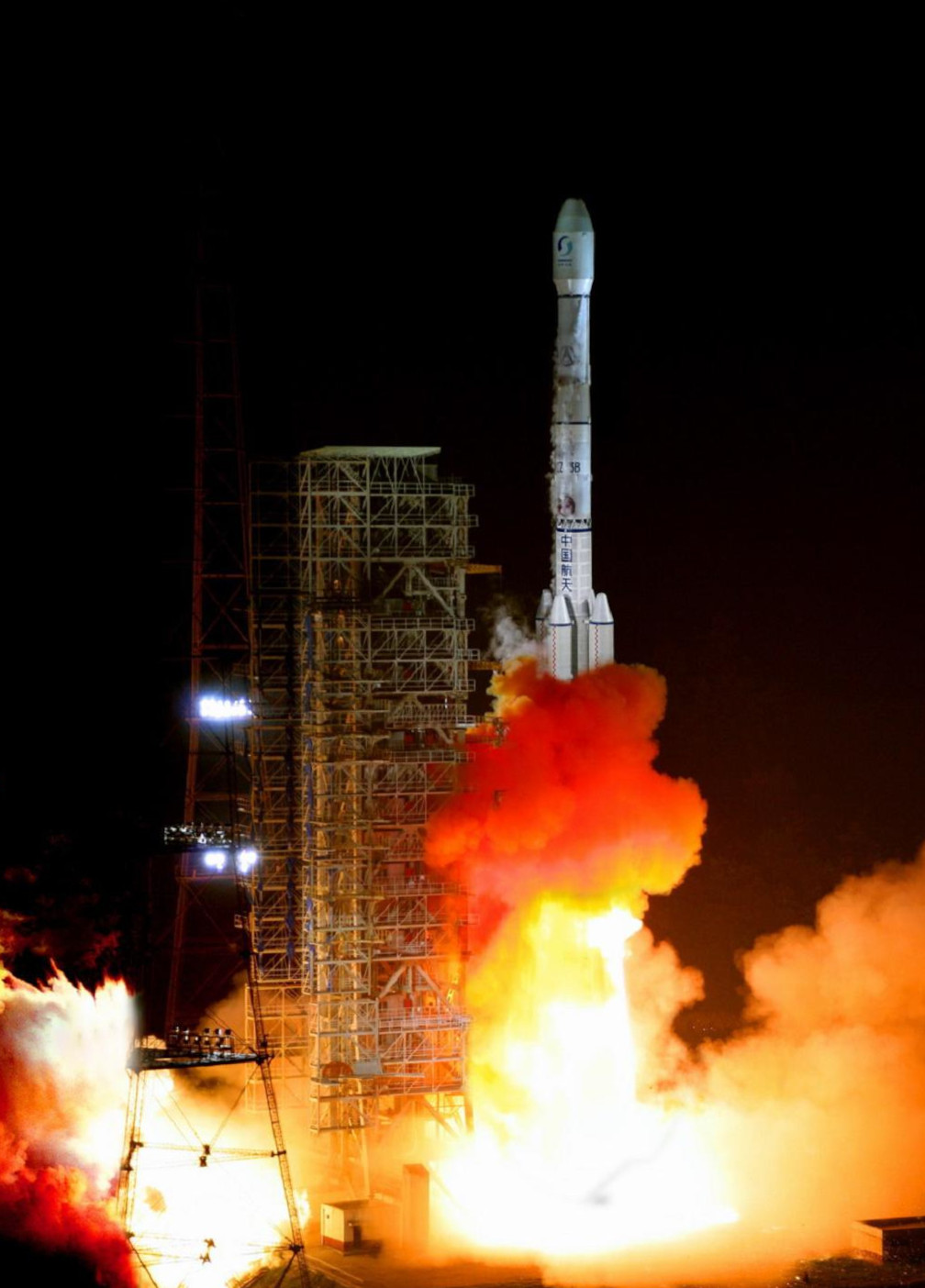
Tianwen-2 lifted off on 28 May 2025 at 17:31 UTC aboard a Long March 3B rocket from the Xichang Satellite Launch Center in southwestern China. The roughly 2,100-kilogram spacecraft was built by the China Academy of Space Technology (CAST) and is operated by the China National Space Administration. It carries eleven scientific instruments — among them multispectral cameras, a thermal-emission spectrometer, an imaging spectrometer, a magnetometer, particle analysers, and a sounding radar to probe beneath the surface.
After roughly thirteen months in transit, the spacecraft reached its target in early June 2026 and began station-keeping in the asteroid's neighbourhood. Chinese mission controllers reported a series of precise braking burns on approach, slowing the probe enough to settle into a stable position alongside an object whose gravity is so feeble that "orbiting" it in the conventional sense is barely possible.
The mission is the second flight in China's planetary-exploration program, which is named Tianwen — a phrase meaning "questions to heaven," borrowed from a classical Chinese poem. Its predecessor, Tianwen-1, delivered an orbiter, lander, and the Zhurong rover to Mars in 2021. Tianwen-2 also draws directly on the engineering heritage of China's lunar program, which twice pulled off automated sample returns: Chang'e-5 brought back lunar soil in 2020, and Chang'e-6 returned the first-ever samples from the Moon's far side in 2024. Bringing material home from an asteroid is the logical next rung on that ladder.
What Is Kamoʻoalewa, Earth's Quasi-Moon?
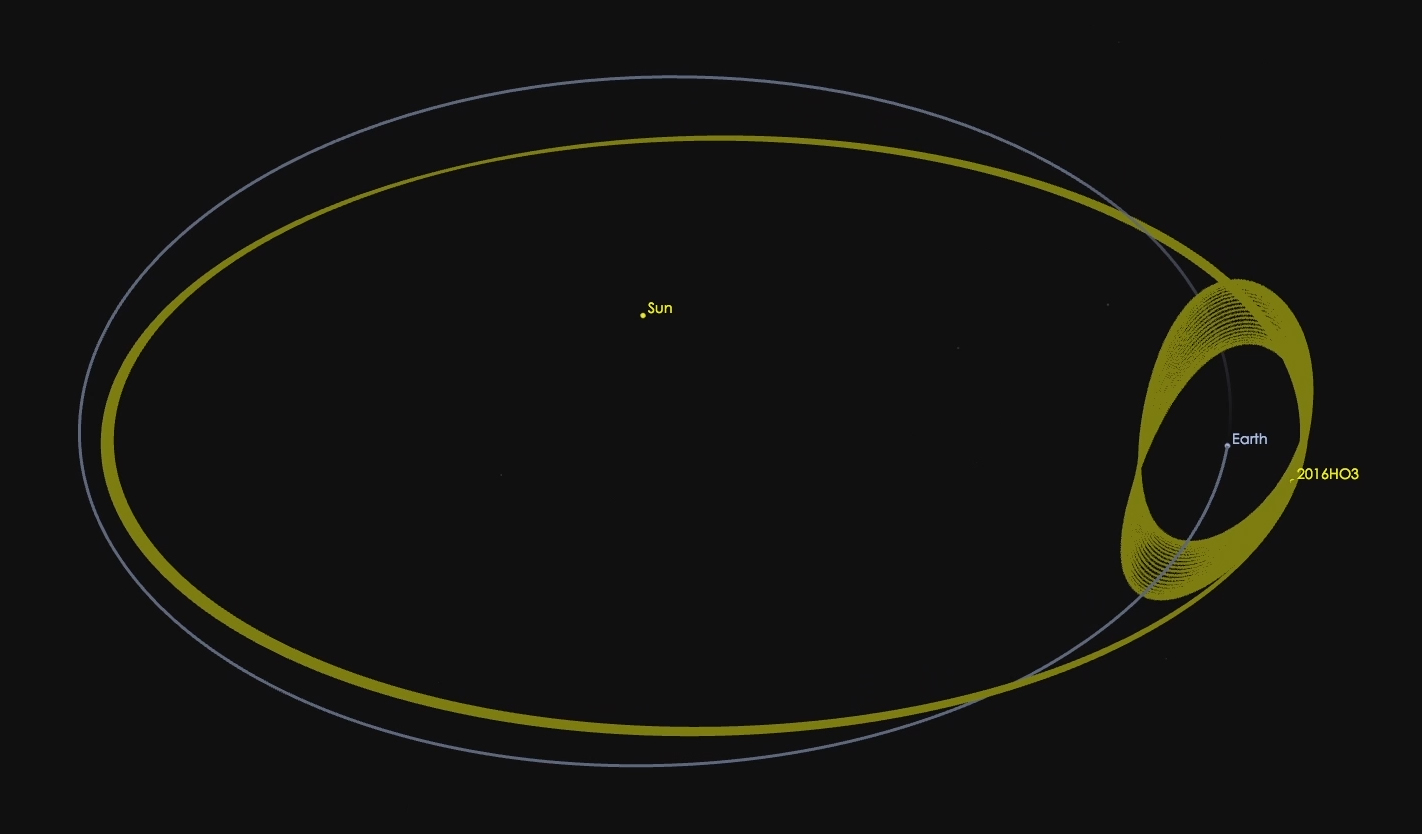
Tianwen-2's target is formally catalogued as 469219 Kamoʻoalewa, and before it was named it was known by its discovery designation, 2016 HO3. It was spotted in April 2016 by the Pan-STARRS survey telescope in Hawaii, and its Hawaiian name roughly translates to "the oscillating fragment" — a fitting label for an object that appears to wobble alongside our planet.
Kamoʻoalewa is a quasi-satellite of Earth. It does not actually orbit Earth the way the Moon does; instead, it circles the Sun on a path so similar to our own that, from Earth's point of view, it seems to loop around us in a slow corkscrew. It never comes closer than about 38 times the Earth-Moon distance, and it never drifts too far away. Of the small bodies known to keep this kind of company with Earth, Kamoʻoalewa is the most stable, expected to maintain its dance for centuries. That makes it both scientifically interesting and, crucially, relatively easy to reach and return from.
The asteroid itself is small — estimated at somewhere between 40 and 100 metres across — and it spins remarkably fast, completing a rotation in under half an hour. Its most tantalising feature, though, is its possible origin. Reflectance measurements from large ground-based telescopes suggest its surface resembles weathered lunar material, raising the striking possibility that Kamoʻoalewa is a chunk of the Moon, blasted into solar orbit by an ancient impact. That hypothesis is genuinely contested: research published in 2026 argued the lunar-origin case is far from settled. A returned sample is the only way to test it directly — which is precisely what Tianwen-2 is designed to provide.
The 13-Month Chase: From Xichang to a Tumbling Rock
Reaching a quasi-satellite is not as simple as pointing a rocket at it. Although Kamoʻoalewa shadows Earth, its orbit is tilted and elongated enough that matching velocities with it requires a long, looping cruise rather than a quick hop. Tianwen-2 spent more than a year spiralling outward, using solar electric propulsion — efficient ion-style thrusters powered by its solar arrays — to gently reshape its trajectory until it could fall into step with the asteroid.
That patient approach is a hallmark of modern sample-return design. Japan's Hayabusa missions and NASA's OSIRIS-REx both spent years in transit and months surveying their targets before committing to a sample grab. Tianwen-2 follows the same playbook: characterise first, touch later. In the months after arrival, the spacecraft is tasked with mapping Kamoʻoalewa's shape, spin, temperature, and composition, building the detailed model engineers need before they dare bring the spacecraft into contact with the surface.
This cautious cadence reflects how unforgiving these encounters are. Round-trip radio signals take minutes, so the spacecraft must execute its most delicate manoeuvres autonomously, with the asteroid's weak and irregular gravity making every approach a navigation puzzle. The reconnaissance phase is therefore not a formality — it is the foundation on which the entire sampling attempt rests.
How Tianwen-2 Will Grab a Piece of an Asteroid
The centrepiece of the mission is the sample collection itself, and Tianwen-2 is designed to attempt it in more than one way. The baseline technique is "touch-and-go": the spacecraft descends, briefly contacts the surface to disturb and capture regolith, and immediately retreats — the same broad approach used by Hayabusa2 and OSIRIS-REx. But Tianwen-2 also carries a more novel option engineers call "anchor-and-attach," in which the probe would deploy drill-tipped robotic arms to anchor itself to the surface and collect material while attached, rather than relying on a fleeting touch.
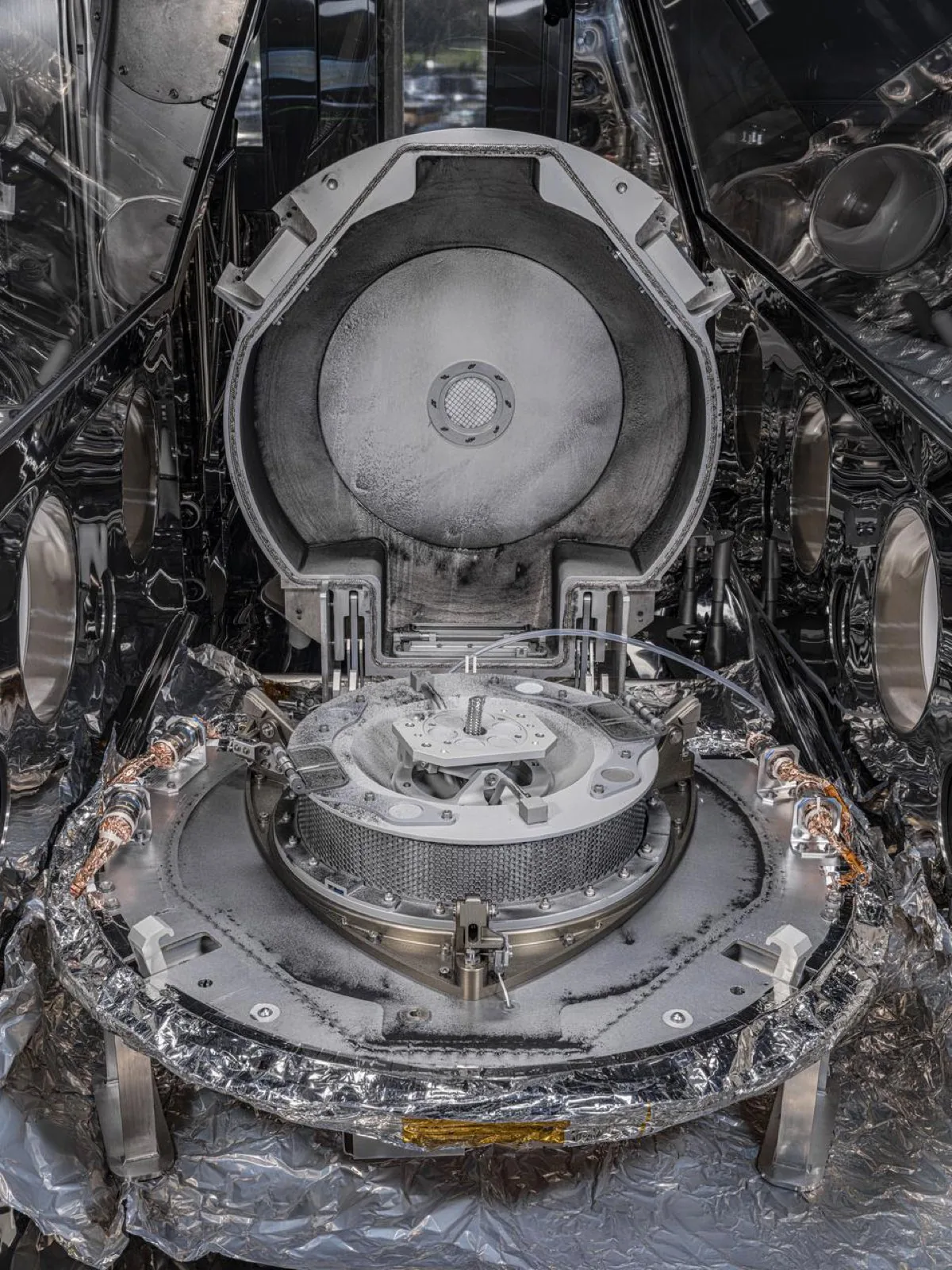
Having two methods is a hedge against the unknown. No one knows in advance whether Kamoʻoalewa's surface is a loose rubble pile, a hard consolidated rock, or something in between, and the right sampling strategy depends entirely on what mission planners find when they arrive. The mission aims to bring back on the order of 100 grams of material — modest by terrestrial standards, but an enormous scientific haul when the sample is pristine, uncontaminated rock older than Earth's oldest surviving rocks.
The science payoff is considerable. Pristine asteroid samples preserve a chemical record of the early solar system that meteorites — scorched by atmospheric entry and altered on the ground — simply cannot match. As NASA's analysis of the Bennu samples demonstrated, returned asteroid material can contain organic molecules and water-bearing minerals that speak to how the ingredients for life were distributed across the young solar system. Kamoʻoalewa offers something additional and unique: if it really is a piece of the Moon, its sample would let scientists study lunar geology and impact history from an entirely new angle. Tianwen-2's haul will also feed directly into research on asteroid mining and space resources, where understanding the physical make-up of near-Earth objects is a prerequisite for ever exploiting them.
A Two-for-One Mission: The Comet After the Asteroid
What sets Tianwen-2 apart from earlier asteroid missions is what happens after the sample is safely on its way home. The plan calls for the spacecraft to depart Kamoʻoalewa in 2027 and release a return capsule that will re-enter Earth's atmosphere and parachute to the ground, with the sample touchdown expected in late 2027. The Chang'e lunar program proved China can recover such capsules reliably, returning them to the grasslands of Inner Mongolia.
But the main spacecraft will not come home. Instead, it is designed to use Earth as a gravitational slingshot, bending its path toward the asteroid belt and a second, very different target: 311P/PANSTARRS. This object is one of the strangest in the solar system — a so-called "active asteroid," or main-belt comet, that orbits among the rocky asteroids yet sheds dust like a comet. The Hubble Space Telescope famously captured 311P sprouting as many as six comet-like tails, behaviour thought to arise from rapid rotation flinging material off its surface rather than from the ice sublimation that drives ordinary comets.
Tianwen-2 is projected to reach 311P around January 2035, after a multi-year cruise, and to study it for several months. Reaching it would let scientists examine the blurry boundary between asteroids and comets up close — two categories that, the more we look, increasingly bleed into one another. It is the kind of bonus objective that turns a single sample-return flight into a decade-spanning campaign across two classes of small body. China's broader deep-space ambitions, detailed in our China space program deep dive, increasingly lean on exactly this sort of multi-target efficiency.
Why Tianwen-2 Matters for Science — and for China
For planetary science, Tianwen-2 promises a third independent line of asteroid samples to set alongside Japan's Ryugu and Itokawa returns and America's Bennu cache. Comparing material from chemically and dynamically distinct objects is how researchers reconstruct the history of the solar system, and a possibly lunar-derived quasi-satellite adds a genuinely new data point. If the sample confirms a Moon origin, it would reshape how scientists think about how impacts redistribute material across the inner solar system.
For China, the mission is also a statement of capability. Pulling off autonomous proximity operations, surface sampling, an interplanetary return, and a follow-on comet rendezvous within a single mission demonstrates a maturity that few space agencies can claim. It slots neatly into a fast-widening portfolio that already spans Mars, the Moon, and a crewed Tiangong space station, with a Mars sample-return effort of its own on the horizon to rival the long-delayed NASA-ESA Mars Sample Return — coordinated internationally through agencies such as the European Space Agency.
The next milestones will unfold over the coming months as Tianwen-2 surveys Kamoʻoalewa and selects a sampling site, with the actual collection attempt the make-or-break moment of the primary mission. Should the capsule streak back through Earth's atmosphere in late 2027 carrying even a hundred grams of an asteroid that may once have been part of the Moon, it will rank among the most consequential sample returns of the decade — and the spacecraft that delivered it will already be on its way to a comet.