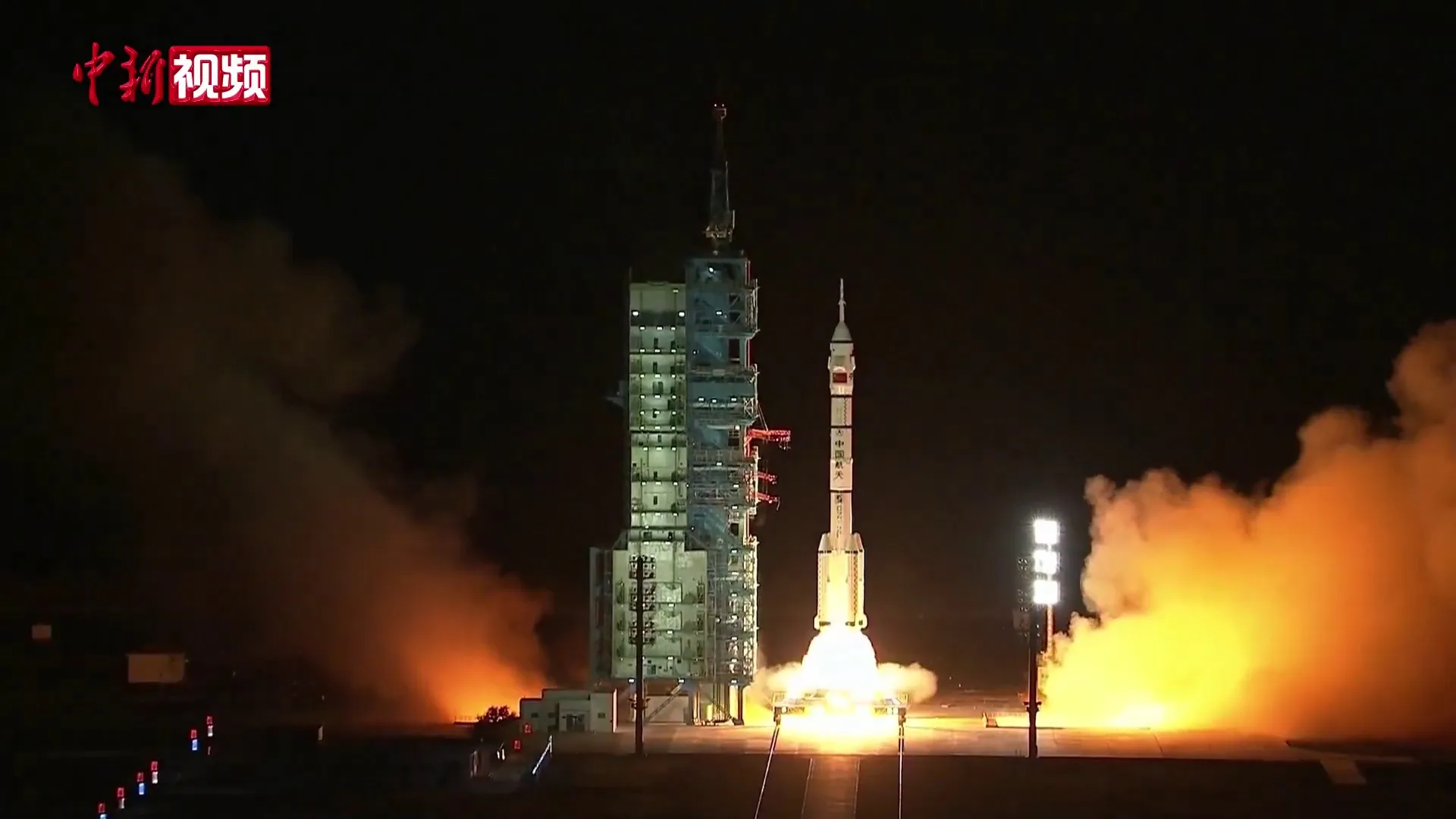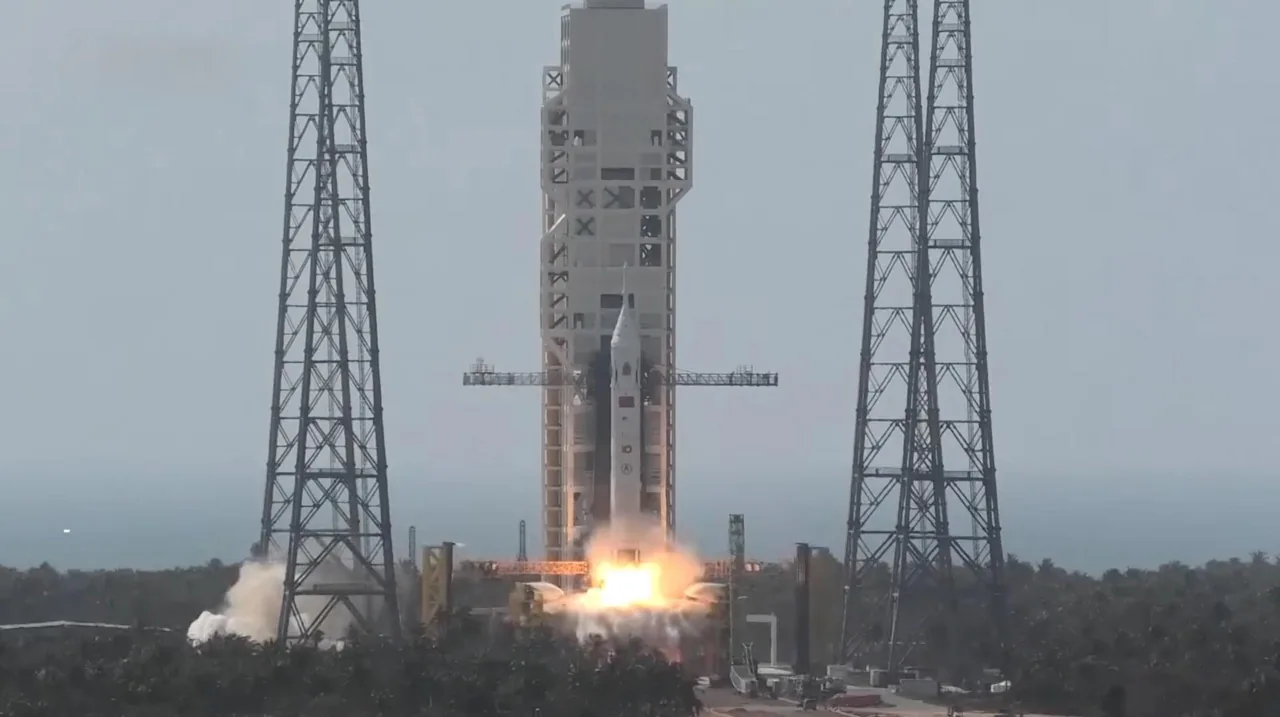
On a humid June morning in 2025, at a test stand tucked into the hills outside Beijing, a scaled-down Mengzhou capsule was violently flung skyward by a cluster of solid-propellant abort motors. Seconds later it drifted gently under parachute to a dusty landing. Chinese state television called it a "max-Q abort test." Western analysts called it something else: the moment China's crewed lunar program stopped being a slide deck and started behaving like hardware. Five years earlier, a crewed Chinese Moon landing by 2030 sounded aspirational. After that test — and after the successive reveal of the Long March 10 super-heavy rocket, the Lanyue lunar lander, and a public taikonaut shortlist that includes two women — it began to look like a schedule.
This is Part 2 of Space Odyssey Hub's deep dive into the Chinese space program. In Part 1, we traced the arc from Qian Xuesen's 1955 deportation to the Tiangong space station, Chang'e lunar sample returns, and Zhurong on Mars. Here, we pivot forward: to the 2030 crewed Moon landing, the International Lunar Research Station (ILRS) being built with Russia, the Guowang and Qianfan megaconstellations challenging Starlink, Tianwen-3's audacious bid to beat NASA to Mars samples, and the counter-space capabilities that have turned low Earth orbit into a contested military theatre. The through-line is a single number — 2045 — the year Beijing has publicly committed to becoming a "comprehensive space power" on par with, or ahead of, the United States.
Setting the Stage: China's 2045 Ambition
In 2017, standing before the 19th Party Congress, Xi Jinping delivered what has since become the ideological north star of the Chinese space program: "The space dream is part of the dream of making China stronger." Two years later, marking the 50th anniversary of China's first satellite Dongfang Hong-1, Xi escalated the framing from "space dream" to "space power." By the time the 14th Five-Year Plan (2021–2025) was published, with its dedicated chapter on aerospace, the ambition had been given a deadline: become a comprehensive space power by 2045, with intermediate milestones in 2030 (crewed Moon landing, operational megaconstellations) and 2035 (basic ILRS lunar outpost, Mars sample return complete).
That 2045 target is not merely symbolic — it is the centenary of the founding of the People's Republic, the horizon Beijing uses to frame its economic and military modernization goals. According to the State Council Information Office's 2022 white paper China's Space Program: A 2021 Perspective, the program spans five coordinated pillars: space infrastructure, space transportation, deep space exploration, human spaceflight, and an emerging commercial sector.
The gap with the United States is real but narrowing. In 2024, China conducted 68 orbital launches to the United States' 158 — but more than 130 of the US launches were SpaceX Falcon 9 flights deploying Starlink. Strip out SpaceX and China is already the world's second-largest government launch provider. In crewed spaceflight, it is the only nation other than the US with an independently developed, continuously occupied space station, and the only nation to have soft-landed on the lunar far side and returned samples from both sides of the Moon.
Where the gap remains wide is commercial. SpaceX alone delivered roughly 80% of the mass launched to orbit globally in 2024. No Chinese launch provider — state or private — is yet flying a reusable orbital rocket. That is the single most important benchmark Beijing is racing to close, and nearly every element of the 2045 plan is either waiting on, or designed to enable, reusable heavy-lift capability.
The Race to the Moon: Crewed Lunar Landing by 2030
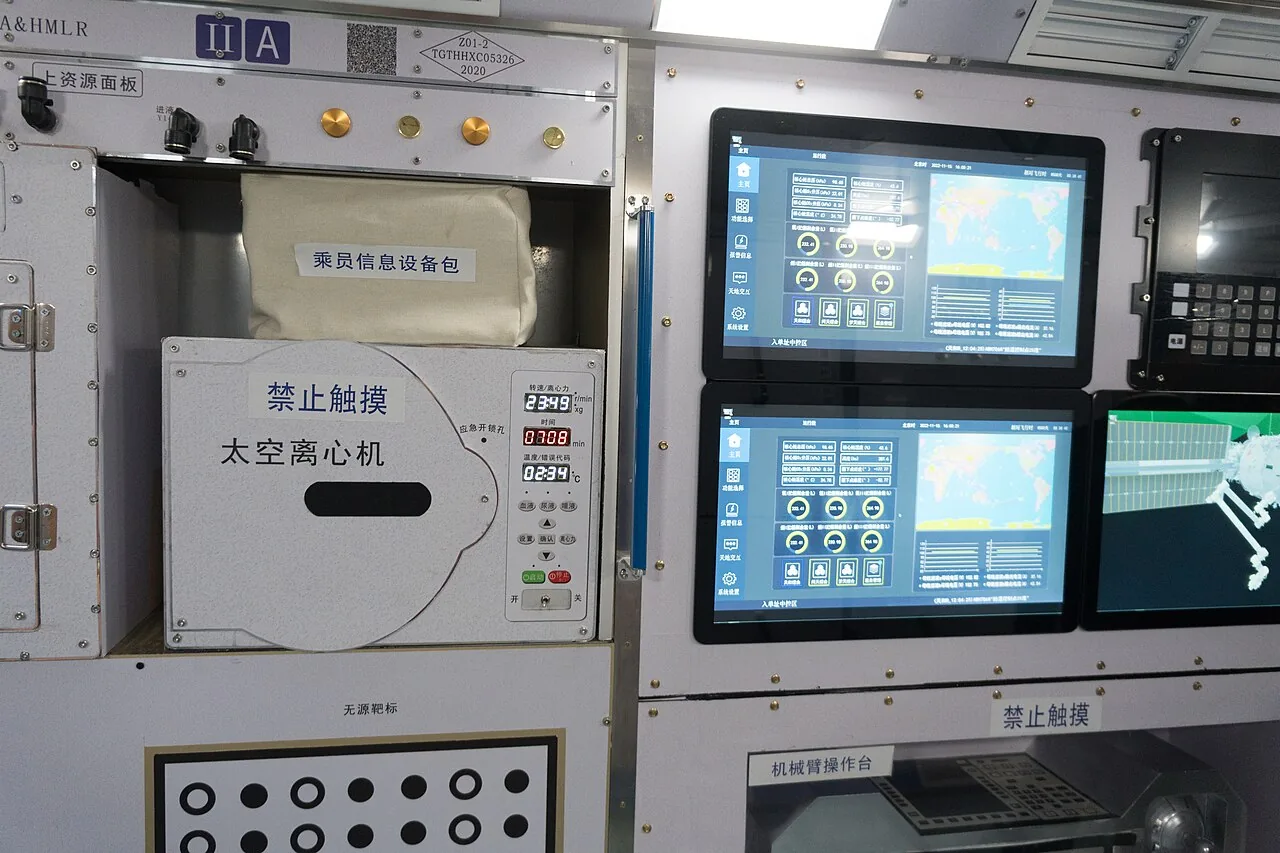
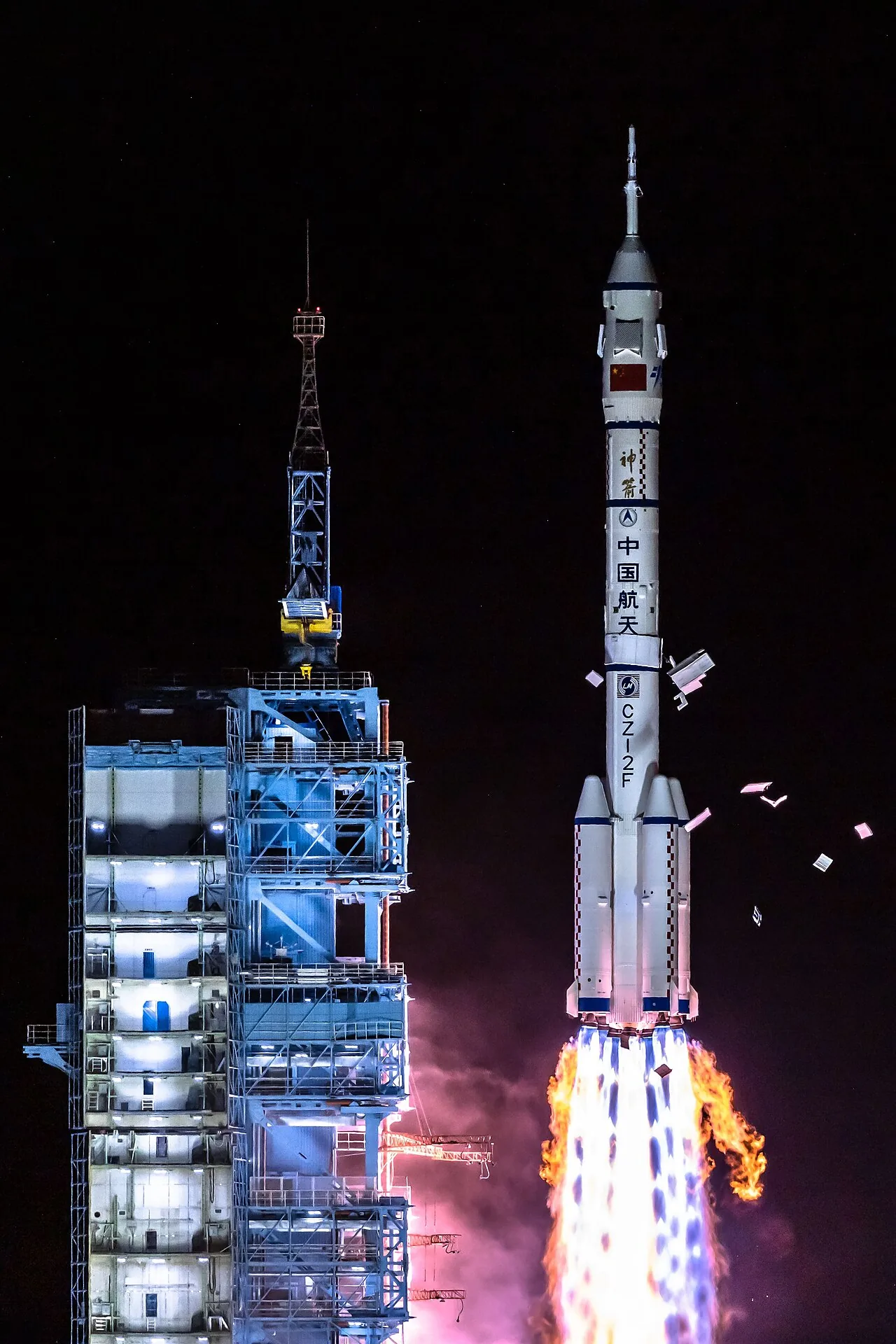
On July 12, 2023, Lin Xiqiang, deputy director of the China Manned Space Agency (CMSA), walked into a press conference in Beijing and said the quiet part out loud: China would land taikonauts on the Moon before 2030. It was the first official, dated, on-the-record commitment — and it has since hardened into a program of record with funded hardware, named vehicles, and a mission architecture that looks strikingly like Apollo.
The mission profile is straightforward. Two Long March 10 rockets launch on the same day from a new dual-pad complex under construction at the Wenchang Space Launch Site in Hainan. The first carries the Lanyue lunar lander and its propulsion stage to trans-lunar injection (TLI). The second carries three taikonauts aboard a Mengzhou crewed spacecraft. The two vehicles perform lunar-orbit rendezvous, two taikonauts transfer to Lanyue and descend to the surface, spend roughly six hours conducting extravehicular activity (EVA), then ascend and rejoin Mengzhou for the return to Earth. It is, essentially, Apollo's lunar-orbit rendezvous executed with two launches instead of one Saturn V — a concession to the fact that no Chinese rocket yet matches Saturn V's lift capacity.
The hardware stack is now public:
| System | Role | Key Specs |
|---|---|---|
| Long March 10 (CZ-10) | Human-rated heavy lifter | 92 m tall, three-core kerolox stage, 27 tons to TLI, 70 tons to LEO |
| Mengzhou ("Dream Vessel") | Next-gen crewed spacecraft | 21 tons, 7-crew LEO variant / 3-crew lunar variant, partially reusable heat shield |
| Lanyue ("Embracing the Moon") | Crewed lunar lander | 26 tons wet, supports 2 taikonauts for ~6 hours of surface EVA |
| Wangyu | Lunar surface rover | Pressurized rover in study for post-2030 missions |
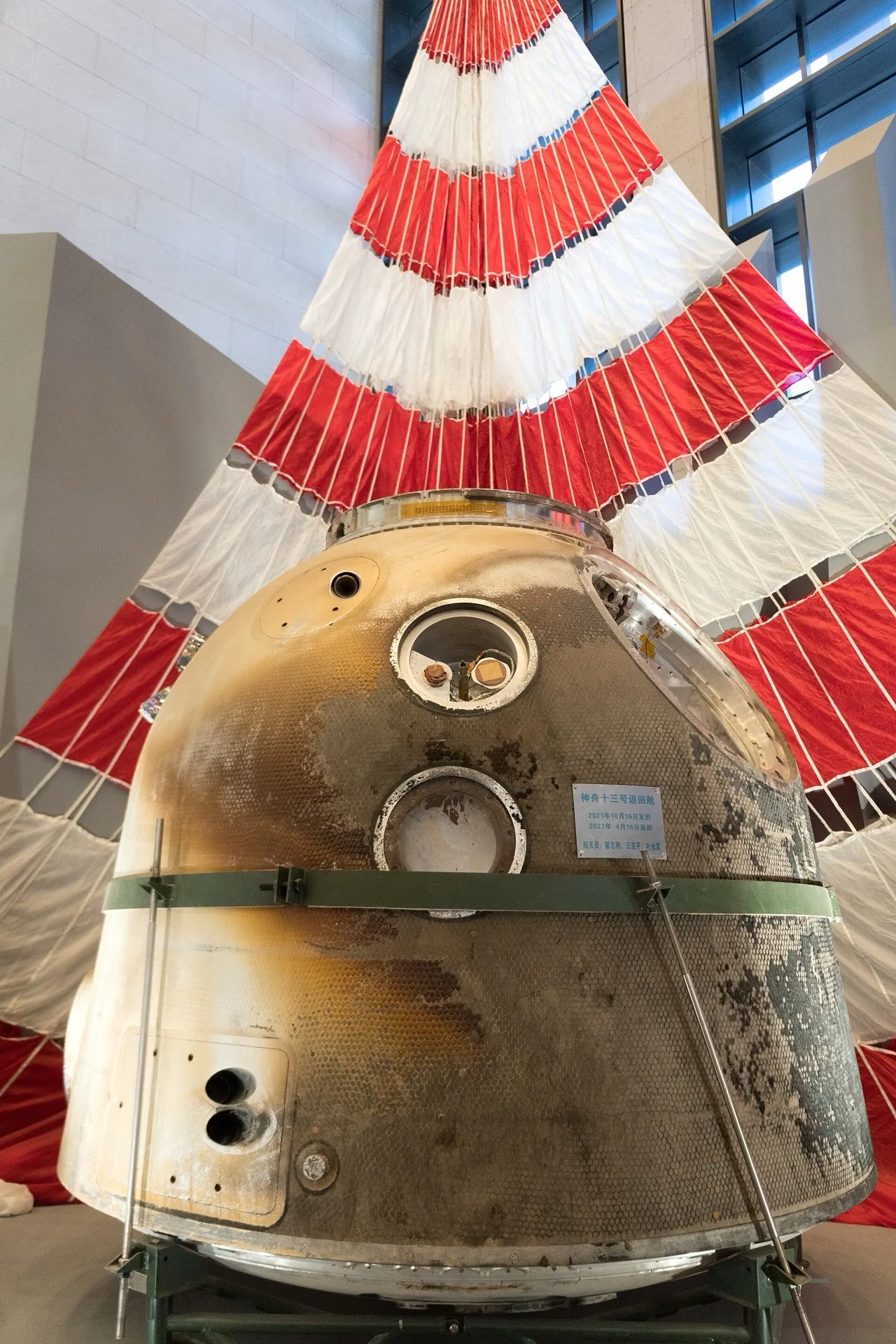
Mengzhou replaces the Shenzhou capsule that has flown every Chinese crewed mission since 2003. It is larger, heavier, and designed for both low Earth orbit taxi duty (up to seven crew to Tiangong) and three-crew lunar missions. The June 2025 max-Q abort test cleared one of the highest-risk qualification gates. An uncrewed lunar test is expected in 2027, followed by an uncrewed lunar landing dress rehearsal in 2028 or 2029.
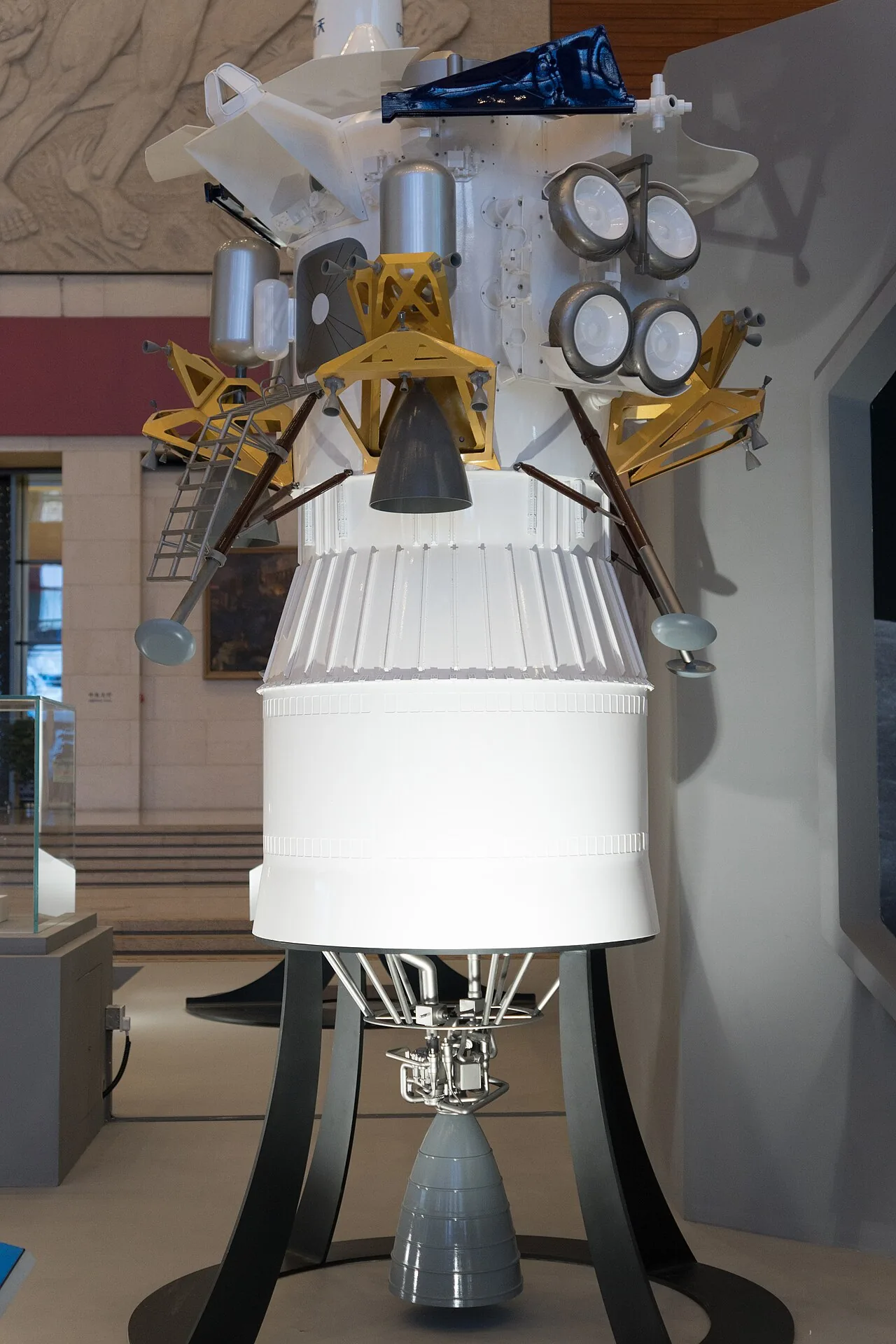
Lanyue — "Embracing the Moon," a reference to a Mao Zedong verse — is a two-stage lander optimized for the lunar south pole. Unlike SpaceX's Starship HLS, which bets on enormous mass margins and methane propellant, Lanyue is conventional: storable hypergolic propellants, four landing legs, and a small crew cabin sized for two. It is closer in philosophy to the Apollo Lunar Module than to HLS — a deliberate risk-management choice.
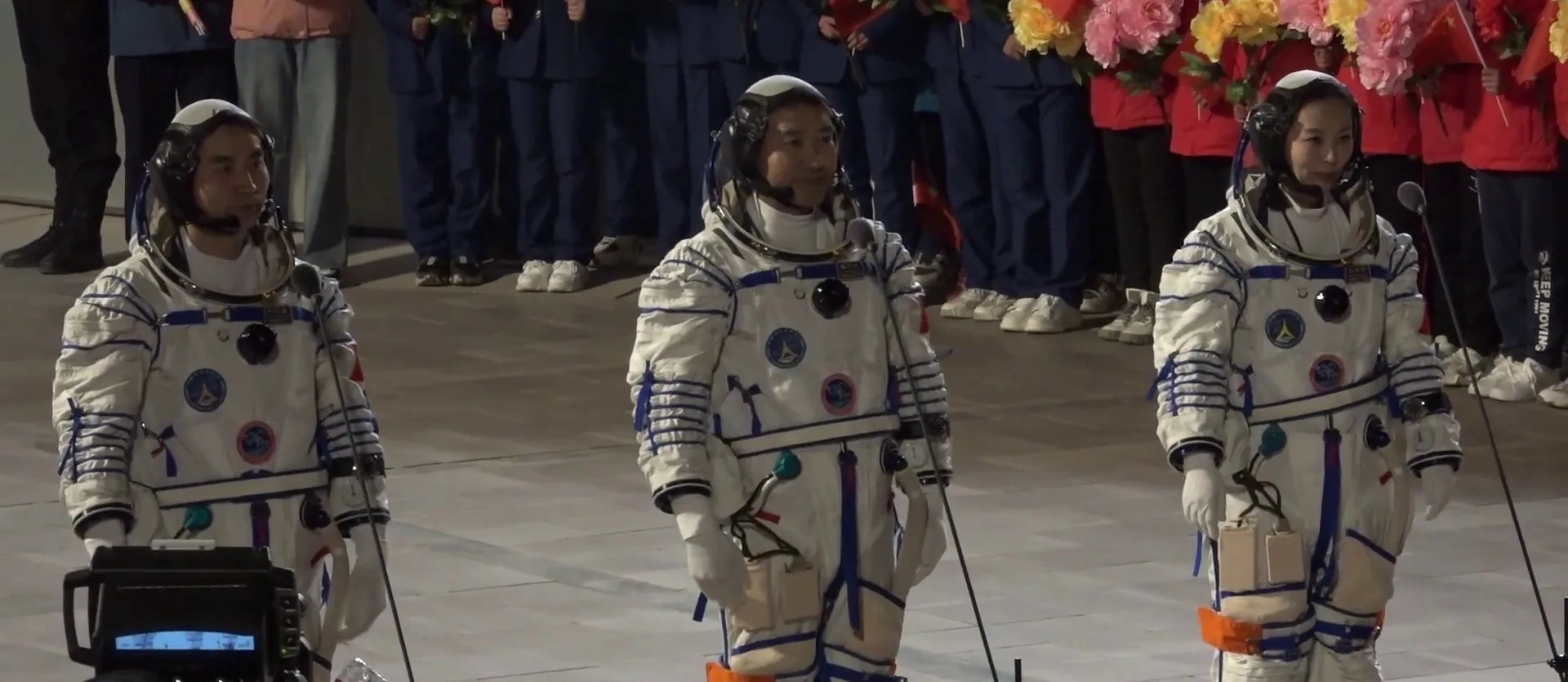
The surface crew is not yet named, but the shortlist is widely believed to include Liu Yang (China's first woman in space, 2012), Wang Yaping (China's first woman spacewalker, 2021), and Chen Dong. If Wang Yaping walks on the Moon in 2030, she would become the first woman of any nationality to do so — a soft-power prize NASA's Artemis III is also targeting.
ILRS: The International Lunar Research Station with Russia
A crewed flags-and-footprints mission in 2030 is the visible half of China's lunar strategy. The invisible half — invisible mostly because Western media pays it less attention — is the International Lunar Research Station, or ILRS. Jointly announced by CNSA and Roscosmos in March 2021, ILRS is explicitly framed as an alternative architecture to the US-led Artemis Accords, which now have more than 50 signatories including most of Europe, Japan, India, Brazil, and South Korea.
ILRS has fewer partners but a tighter bloc. As of early 2026, roughly thirteen nations have signed ILRS cooperation agreements: China, Russia, Venezuela, South Africa, Belarus, Pakistan, Azerbaijan, Nicaragua, Egypt, Senegal, Serbia, Thailand, and a handful of observers. The bloc leans heavily toward Belt and Road partners and states with limited Western alignment — a pattern that reflects China's broader geopolitical posture.
The ILRS roadmap is organized in three phases:
- Reconnaissance phase (2026–2030) — Chang'e 7 (2026) surveys the lunar south pole and Shackleton-area permanently shadowed regions for water ice. Chang'e 8 (2028) demonstrates in-situ resource utilization (ISRU), 3D-printing of regolith "bricks," and short-range autonomous rover navigation. Russia's Luna-26 and Luna-27 orbiter and lander are slotted in as complementary scouts.
- Construction phase (2030–2035) — Following the first crewed landing, a series of robotic missions delivers habitat modules, a communications relay at the Earth-Moon L2 point, a high-power energy system (possibly a small fission reactor, which CNSA and Roscosmos have jointly studied since 2021), and a pressurized rover. The goal is a "basic ILRS" at the lunar south pole by 2035 — uncrewed but continuously operational.
- Utilization phase (2036 and beyond) — Regular crewed rotations of 3 to 5 taikonauts, expanded science operations, possible extraction of lunar water ice for propellant, and an eventual lunar-orbit gateway station.
By 2035, if both programs stay on schedule, the Moon will host two permanent research stations — one at Shackleton Crater (Artemis) and one at or near the Amundsen or Haworth crater rim (ILRS) — separated by only a few hundred kilometers. That geography matters. The permanently shadowed regions of the lunar south pole are the only known concentration of water ice on the Moon, and the highest-value real estate is concentrated across perhaps a dozen craters. Both blocs have already staked informal claims. Whether the 1967 Outer Space Treaty, which forbids territorial sovereignty but is silent on resource extraction, can contain the resulting friction is one of the defining unresolved questions of 2030s space policy.

The Megaconstellation Race: Guowang and Qianfan
If the Moon is China's long-horizon prize, low Earth orbit is the near-term battlefield — and the two weapons China is fielding are called Guowang and Qianfan. Together they represent the largest national satellite-broadband program outside SpaceX's Starlink, and both are racing to deploy before ITU spectrum rights expire.
Guowang (SatNet), formally the China Satellite Network Group, is the state-owned flagship. Established by the State Council in April 2021 and headquartered in the new Xiong'an New Area southwest of Beijing, Guowang is authorized to deploy 12,992 satellites across two sub-constellations — GW-A59 at around 600 km altitude and GW-2 at around 1,145 km. First launches began in December 2024 aboard a Long March 5B, and as of early 2026 roughly 90 Guowang satellites are on orbit. The stated target is full constellation deployment by 2035, with early commercial services by 2028.
Qianfan (Thousand Sails), also marketed internationally as SpaceSail, is the commercial-ish challenger, backed primarily by the Shanghai municipal government through Shanghai Spacecom Satellite Technology (SSST). Qianfan's ITU filing is for 15,000 satellites in three shells. Its deployment has moved faster than Guowang's: roughly 90 satellites launched in 2024, aiming for 648 operational satellites by the end of 2025 and 14,000 by 2030. Unlike Guowang, Qianfan has signed commercial distribution deals in Brazil, Thailand, Malaysia, Oman, and Kazakhstan, and has positioned itself as the "Belt and Road Starlink" — explicitly pitching Global South governments on a non-American broadband alternative.
Counting both primary constellations, plus additional filings from China Mobile, China Telecom, the Honghu constellation, and several provincial operators, Chinese ITU submissions now encompass more than 50,000 planned satellites. That number is partly spectrum-warehousing — a common industry tactic — but even at a 40% realization rate, it would put roughly 20,000 Chinese satellites in LEO by 2035, compared to Starlink's projected 30,000 to 42,000.
The bottleneck is launch cadence. Deploying 15,000 satellites by 2030 requires something on the order of 100 to 150 launches per year dedicated to megaconstellations alone — more than twice China's current total national launch rate. That math is why every major Chinese rocket program, state and private, is racing to reusability:
- Long March 9 (CZ-9) — CASC's super-heavy, now redesigned as a fully reusable methalox two-stage vehicle targeting ~150 tons to LEO, first flight no earlier than 2033
- Long March 10A — a two-stage partially reusable derivative of the lunar Long March 10 for LEO cargo
- Zhuque-3 (LandSpace) — stainless-steel methalox reusable, targeting 2026 maiden flight
- Tianlong-3 (Space Pioneer) — kerolox reusable in the Falcon 9 class, debut slipped from 2024 to 2026 after a 2024 static-fire anomaly
- Nebula-1 (Deep Blue Aerospace) — small-lift reusable, low-altitude hops completed 2024
The geopolitical framing is overt. Chinese diplomatic cables and CNSA white papers consistently describe Guowang and Qianfan as instruments of "digital sovereignty" for partner nations — a direct counter to what Beijing characterizes as US informational dominance via Starlink. For countries including Russia, Iran, and several in Africa where Starlink has been restricted or declined, Qianfan is already positioning as the default alternative.
Mars and Beyond: Tianwen-3 Sample Return and Deep Space Probes
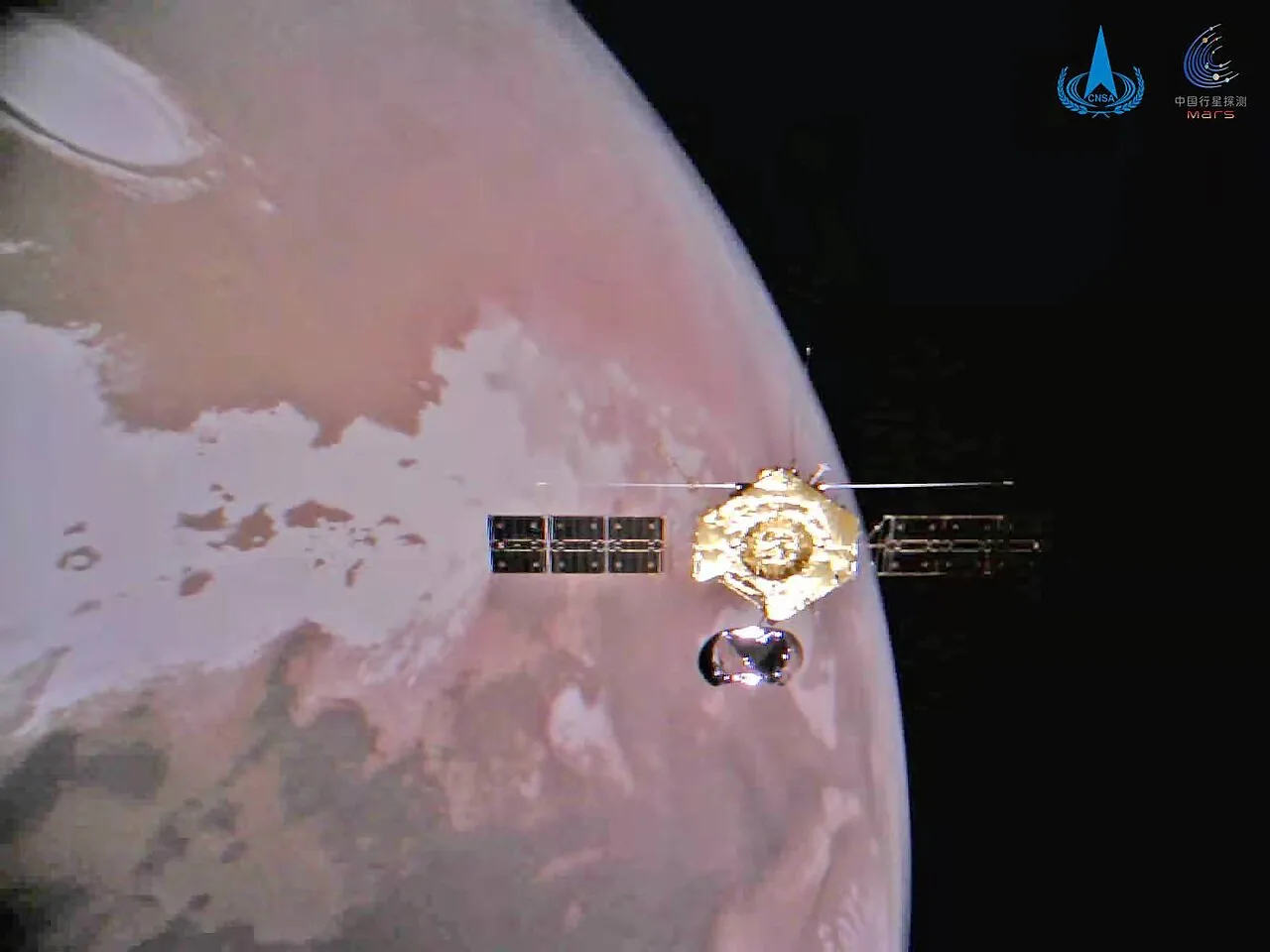
While the Moon and LEO absorb most of the public narrative, China's deep-space program has quietly become the most aggressive in the world. The centerpiece is Tianwen-3 — a Mars sample return mission that, if successful on its current schedule, will return Martian material to Earth in 2031, roughly four years ahead of NASA's repeatedly descoped Mars Sample Return (MSR) program.
Tianwen-3 is a two-launch architecture, planned for launch in late 2028 on a pair of Long March 5 rockets. The first stack carries a lander, ascent vehicle, and surface sampling system. The second carries an orbiter and an Earth-return capsule. The lander touches down at a site in or near Utopia Planitia or Chryse Planitia — both low-latitude regions with abundant subsurface water ice and well-characterized terrain — collects roughly 500 grams of surface and subsurface samples using a drill and a small rover, and launches the ascent vehicle back to Mars orbit. The orbiter performs rendezvous, transfers the sample container to the return capsule, and departs for Earth. Touchdown on Chinese soil is planned for July 2031.
The schedule is aggressive but the risk profile is manageable for one reason: China has already demonstrated every individual step. Chang'e 5 performed a lunar-surface sample ascent and orbital rendezvous in 2020. Tianwen-1 demonstrated Mars orbital insertion, atmospheric entry, and soft landing in 2021. Zhurong rolled onto the Martian surface and operated for over a year. What remains is system integration at Mars — non-trivial, but not unprecedented.
Beyond Mars, the Tianwen franchise is expanding fast:
- Tianwen-2 (launched May 2025) — currently en route to near-Earth asteroid 469219 Kamoʻoalewa (a suspected fragment of the Moon) for sample collection in 2026, followed by a decade-long cruise to main-belt comet 311P/PANSTARRS for a 2035 flyby.
- Tianwen-4 (launch 2029–2030) — a dual-spacecraft mission to Jupiter and the outer solar system. The primary spacecraft enters orbit around Jupiter and maneuvers to a Callisto orbit; the secondary, released during Jupiter flyby, performs a Uranus flyby in the late 2040s, making China the second nation after Voyager 2 to reach Uranus.
- Tianwen-5 and beyond — concept studies for a Venus atmospheric sample return in the early 2030s and a Triton/Neptune system mission proposed for the mid-2030s.

Supporting this deep-space cadence is a growing global tracking infrastructure. China's Deep Space Network includes 35-meter and 66-meter dishes at Kashgar and Jiamusi, plus a major southern hemisphere station at Neuquén, Argentina. Additional tracking agreements have been signed with Namibia, Pakistan, and Venezuela. The Argentine station has drawn US concern because, although negotiated as a civilian facility, it is operated by CLTC — a unit originally under the PLA Strategic Support Force.
Military Space: PLA Strategic Support Force and Counter-Space
The civilian-military boundary in Chinese space has always been fuzzy. It became fuzzier in December 2015, when the PLA Strategic Support Force (SSF) was formally established as a unified command for space, cyber, and electronic-warfare operations — the first major military organization of its kind anywhere. In April 2024, the SSF was restructured again, split into three co-equal services: the PLA Aerospace Force, the PLA Cyberspace Force, and the PLA Information Support Force, all reporting directly to the Central Military Commission. The restructure elevated space to a full warfighting domain within the Chinese military.
The capabilities that sit under this command have grown steadily alarming to US planners:
- January 2007 ASAT test — A SC-19 kinetic interceptor destroyed the defunct Fengyun-1C weather satellite at 865 km altitude, producing more than 3,000 trackable debris fragments that remain on orbit today. It is still the worst single debris-generating event in the history of spaceflight.
- Shijian-21 (October 2021) — A spacecraft officially described as a "space debris mitigation" satellite maneuvered to a defunct Chinese BeiDou-2 navigation satellite in geostationary orbit, grappled it, and towed it to a graveyard orbit roughly 3,000 km above GEO. US Space Command assessed the operation as a demonstration of rendezvous-and-proximity operations (RPO) with clear counter-space applications.
- Shiyan-24C series (2023–2025) — Multiple satellites performing RPO maneuvers in geostationary orbit, including close approaches to US military SIGINT satellites.
- Yaogan reconnaissance family — More than 100 operational satellites across optical, radar, and SIGINT categories; the Yaogan-30 triplets in particular are configured for ocean surveillance and carrier-battle-group tracking.
- Directed-energy development — Multiple open-source studies document Chinese ground-based laser dazzlers and jammers; the 2022 US DoD China Military Power report assessed China as "likely" to field operational ground-based ASAT lasers capable of damaging LEO satellite optics by the mid-2020s.
General Chance Saltzman, Chief of Space Operations for the US Space Force, testified to Congress in 2024 that China has roughly tripled its on-orbit satellite count since 2019 and "is the most comprehensive and serious challenge" to US national-security space. General Stephen Whiting of US Space Command has described China's counter-space buildup as "breathtaking" in pace.
Chinese military space infrastructure also includes a new generation of large comsat buses — particularly the Dongfang Hong-5 (DFH-5) platform, a 10-ton-class geostationary bus used for both commercial communications and the Tianlian data-relay network that supports Tiangong and reconnaissance satellites.
The Commercial Bridge: State-Private Integration
Part 1 of this series established the state-driven core of Chinese space: CASC, CASIC, the Shenzhou program, Chang'e, Tiangong. Part 2 would be incomplete without the layer that has appeared on top of that core since the 2014 State Council guideline opening the sector to private capital. That layer now comprises more than 400 registered space startups and has absorbed an estimated $15 billion in cumulative investment.
The commercial launch sector alone has produced three distinct orbital-class rockets already flying:
- Zhuque-2 (LandSpace) — in July 2023 became the world's first methalox rocket to reach orbit, beating both SpaceX Starship and Relativity Terran to that milestone.
- Ceres-1 (Galactic Energy) — a small solid-fueled launcher that has flown more than 15 successful orbital missions, including from a sea-launch platform.
- Tianlong-2 (Space Pioneer) — the first privately developed liquid-fueled rocket to reach orbit from China, in April 2023.
The next horizon, as noted earlier, is reusability. The race to a Chinese Falcon 9 equivalent has become the single most closely watched competition in the domestic sector, with LandSpace's Zhuque-3, Space Pioneer's Tianlong-3, Deep Blue Aerospace's Nebula-1, and Orienspace's Gravity-2 all targeting vertical-landing first flights between 2026 and 2027. Whichever company wins will be the de facto anchor for Guowang and Qianfan deployment — a contract pipeline measured in hundreds of launches.
Satellite manufacturing has followed a similar pattern. Commercial EO companies including Chang Guang Satellite Technology (operator of the 100+ satellite Jilin-1 constellation), MinoSpace, and Spacety have scaled rapidly, often leveraging state anchor customers alongside commercial sales. Chang Guang in particular now operates the world's largest commercial sub-meter optical EO constellation outside of Planet Labs.
Regulation is catching up. A national Space Law, in drafting since 2020, entered State Council review in 2025 and is expected to formalize licensing, liability, and orbital-debris rules for commercial operators. State-owned banks and local-government-linked funds remain the dominant capital source, but foreign venture interest — constrained by US outbound-investment rules — is cautiously returning via Hong Kong and Middle Eastern intermediaries.
Opportunities and Risks: What Could Go Wrong (or Right)
China's path to 2045 is not guaranteed. The program faces genuine structural tailwinds — and genuine structural headwinds.
Opportunities
- Government consistency. Unlike NASA, which faces administration-level priority shifts every four to eight years, Chinese space priorities are locked into five-year plans and centenary goals. Long March 10, Mengzhou, and Lanyue are funded through the 2030 crewed landing regardless of political cycles.
- Vertical integration. CASC, the dominant state contractor, builds everything from propellants to avionics to payloads in-house, with few external single points of failure.
- Talent pipeline. China graduates more than 700,000 STEM students at the bachelor's level annually, with aerospace enrollment growing faster than the national average. Tsinghua, Beihang, and Harbin Institute of Technology now rank among the top aerospace engineering programs globally.
- Cost base. Labor and facility costs for launch and satellite manufacturing remain 40% to 60% below comparable US costs, even after a decade of wage inflation.
- Diplomatic soft power. Turn-key satellite exports — Pakistan's PakSat, Venezuela's VeneSat, Nigeria's NigComSat, Egypt's MisrSat-2, Ethiopia's ETRSS — have created a durable export franchise. Training Global South engineers and ground-station operators reinforces the bloc around ILRS and Qianfan.
Risks
- US export controls. Since 2022, the US CHIPS Act and expanded ITAR / EAR rules have steadily cut Chinese access to advanced semiconductors, high-reliability space-grade FPGAs, gallium-nitride power amplifiers, and precision inertial measurement units. Chinese programs have workarounds, but they tend to add cost, mass, or reliability risk.
- Russia as a weakening partner. ILRS was designed with Russia as the equal-partner half. Post-2022 Russia is a structurally diminished space partner: Luna-25's 2023 lunar crash, the decaying Roscosmos budget, and the brain drain from Russian aerospace all mean Beijing is increasingly likely to carry the program alone.
- Demographic cliff. Chinese working-age population peaks in 2030 and declines thereafter. The generation that will staff the 2040s space program is already born and is smaller than its predecessors.
- Taiwan scenario. A cross-strait military crisis — even short of outright conflict — would likely trigger Western sanctions that paralyze foreign partnerships on ILRS, Qianfan, and deep-space tracking agreements. The program has been engineered to be sanctions-resilient, but not sanctions-proof.
- Debris and orbital congestion. A 2007-style ASAT incident — intentional or accidental — in a crowded Guowang/Qianfan/Starlink orbital regime could cascade into Kessler-syndrome conditions that damage Chinese programs as much as anyone's.
Budget-wise, estimates for China's total 2024 space spending range from $14 billion (IISS, excluding military) to roughly $30 billion on a purchasing-power-parity basis that includes military space, commercial state investment, and opportunity costs. NASA's 2024 budget was $24.9 billion. In nominal dollars, China still trails the US. In purchasing power, and in the integrated civilian-military-commercial accounting that Beijing actually uses, the two programs are now at rough parity.
Conclusion: The New Orbital Cold War
The shorthand comparison everyone reaches for is Apollo versus Soyuz — the 1960s space race. It is the wrong analogy. That race was binary, symbolic, and short. It ended when Neil Armstrong stepped onto the Sea of Tranquility.
A better analogy is the 1970s and 1980s — the Space Shuttle era overlaid with Salyut and Mir. Two rival blocs, each with permanent orbital stations, each with parallel planetary programs, each pursuing military space capabilities, each selling launch and satellite services to allies. No single "victory" moment. Instead, decades of routine operation, divergent technology standards, rival rule-making bodies, and gradual accumulation of infrastructure that made each side's position harder to unwind.
That is the trajectory the 2030s are now on. By 2035, absent a major program failure on either side, the solar system will host two lunar research stations at the same polar region, two rival megaconstellations in low Earth orbit with more than 30,000 combined satellites, parallel Mars sample return archives in laboratories on opposite sides of the Pacific, and two competing frameworks — the Artemis Accords and the ILRS cooperation agreements — each claiming to be the legitimate governance template for lunar resource use. The question of whose lunar base stays occupied longest, whose satellites serve the next billion internet users, and whose interpretation of the Outer Space Treaty prevails will matter more than the question of who plants the next flag.
Seventy years ago, a Caltech aerodynamicist named Qian Xuesen sat in a Los Angeles immigration cell, stripped of his US security clearances and about to be deported to a country that had no rockets, no satellites, and no space program. He spent five years under effective house arrest before being traded to Beijing in 1955 in exchange for American pilots captured in Korea. Within two decades the country he helped build had put satellites in orbit. Within five, it was running the world's only continuously crewed space station. In five more, on current schedules, it intends to be running a lunar base.
The arc from deported rocketeer to 2045 space power is not yet complete. But it is no longer speculative. It is a program of record — with hardware on test stands, taikonauts in simulators, and a deadline circled on the calendar of the Chinese Communist Party. The new orbital cold war has begun, and it will be won not in a single dash to the Moon, but in the long, patient, infrastructural years that follow.