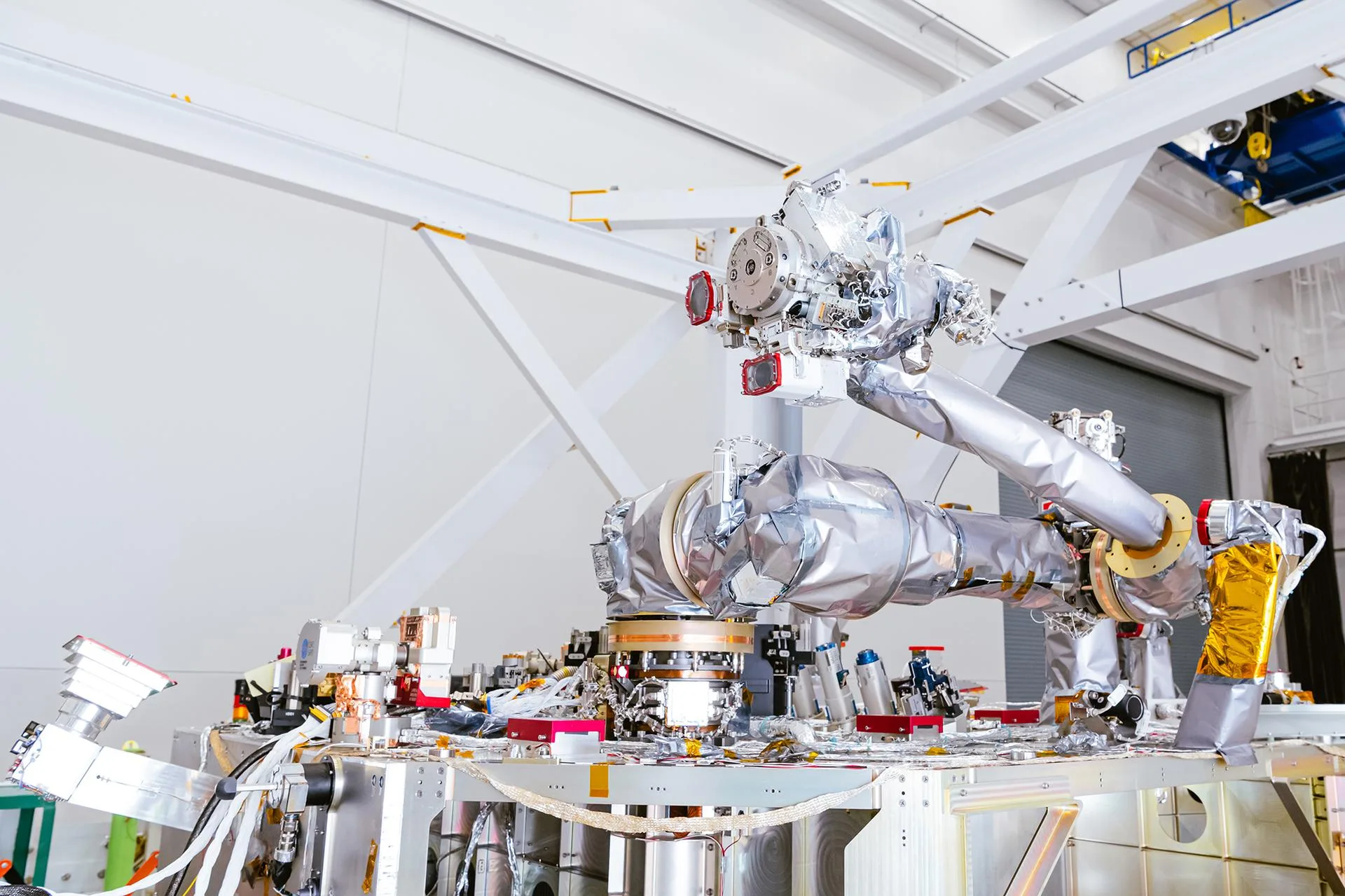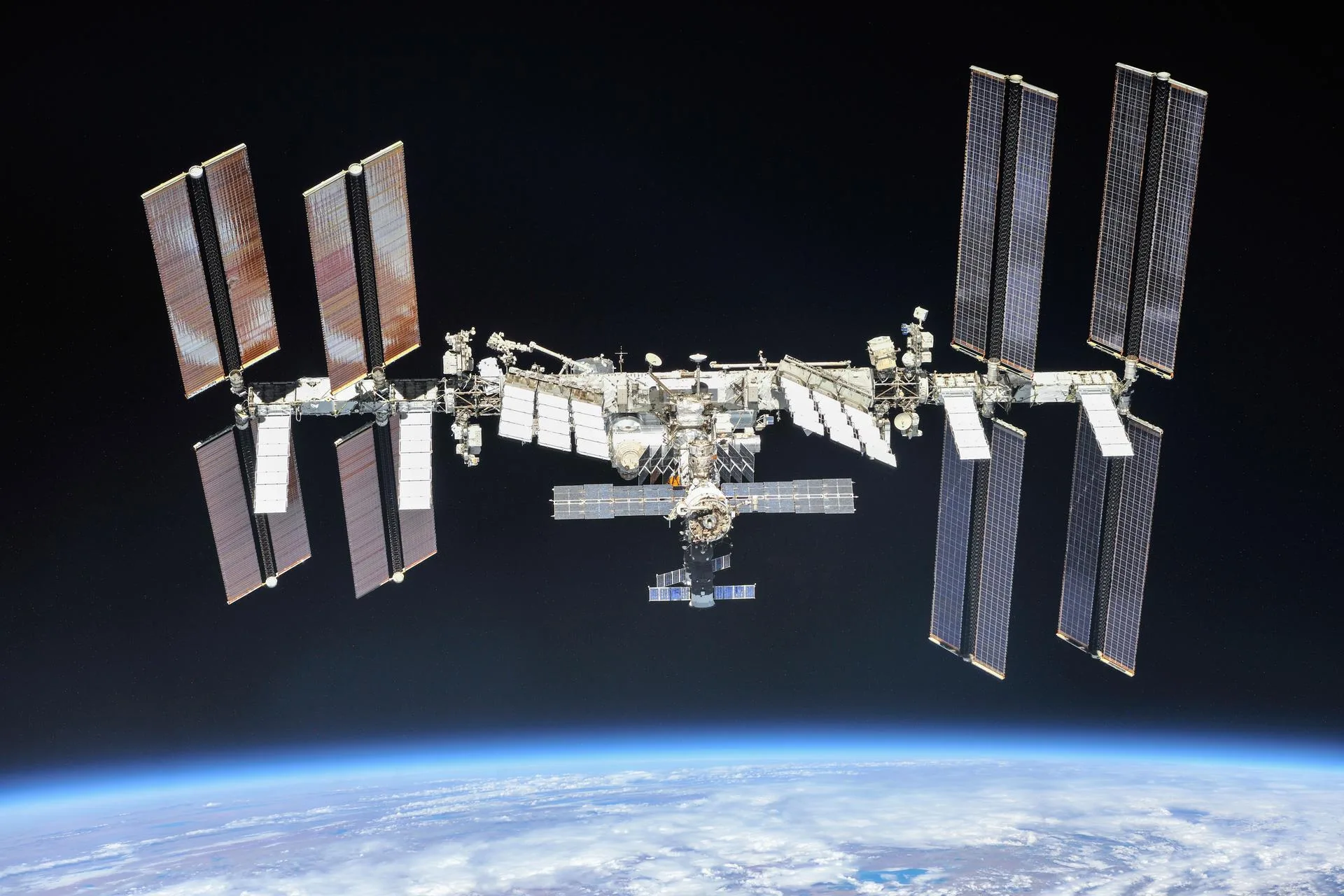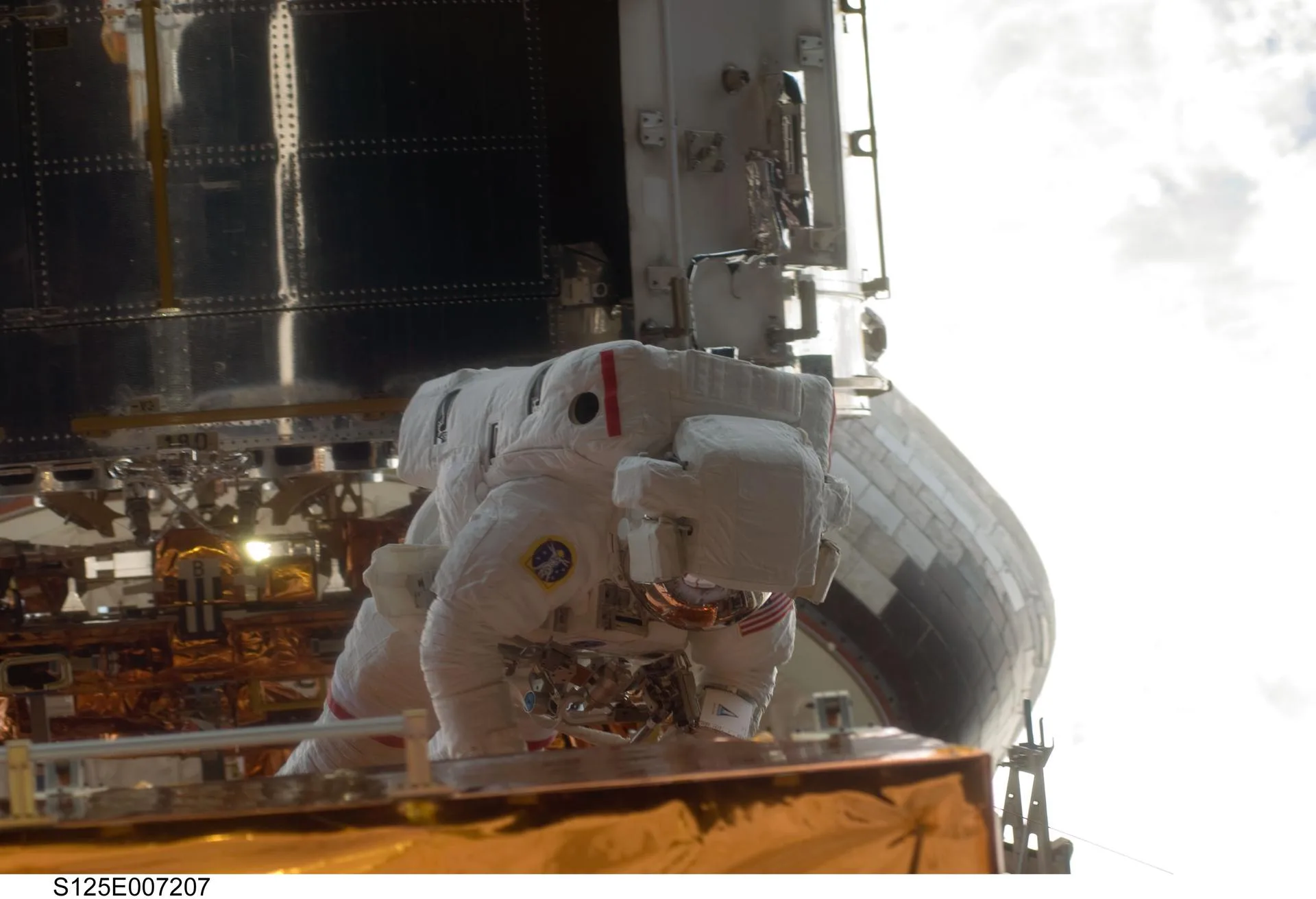
In July 2026, two spacecraft were attempting the same difficult thing at opposite ends of Earth's gravity well: touching a satellite that was never designed to be touched.
One of them, Northrop Grumman's Mission Robotic Vehicle, rode a Falcon 9 out of Cape Canaveral on July 21 to begin what the company describes as a decade of work in geostationary orbit. The other, a 425-kilogram servicing craft called LINK, was already in low Earth orbit and in trouble — spinning, with two of its three reaction wheels dead, its rendezvous with an ageing NASA observatory slipping by weeks.
Between them, those two missions are the clearest snapshot yet of an industry that has spent a decade promising to end the era of disposable spacecraft, and is now being graded on whether it can actually do it.
Why Satellites Were Built to Be Thrown Away
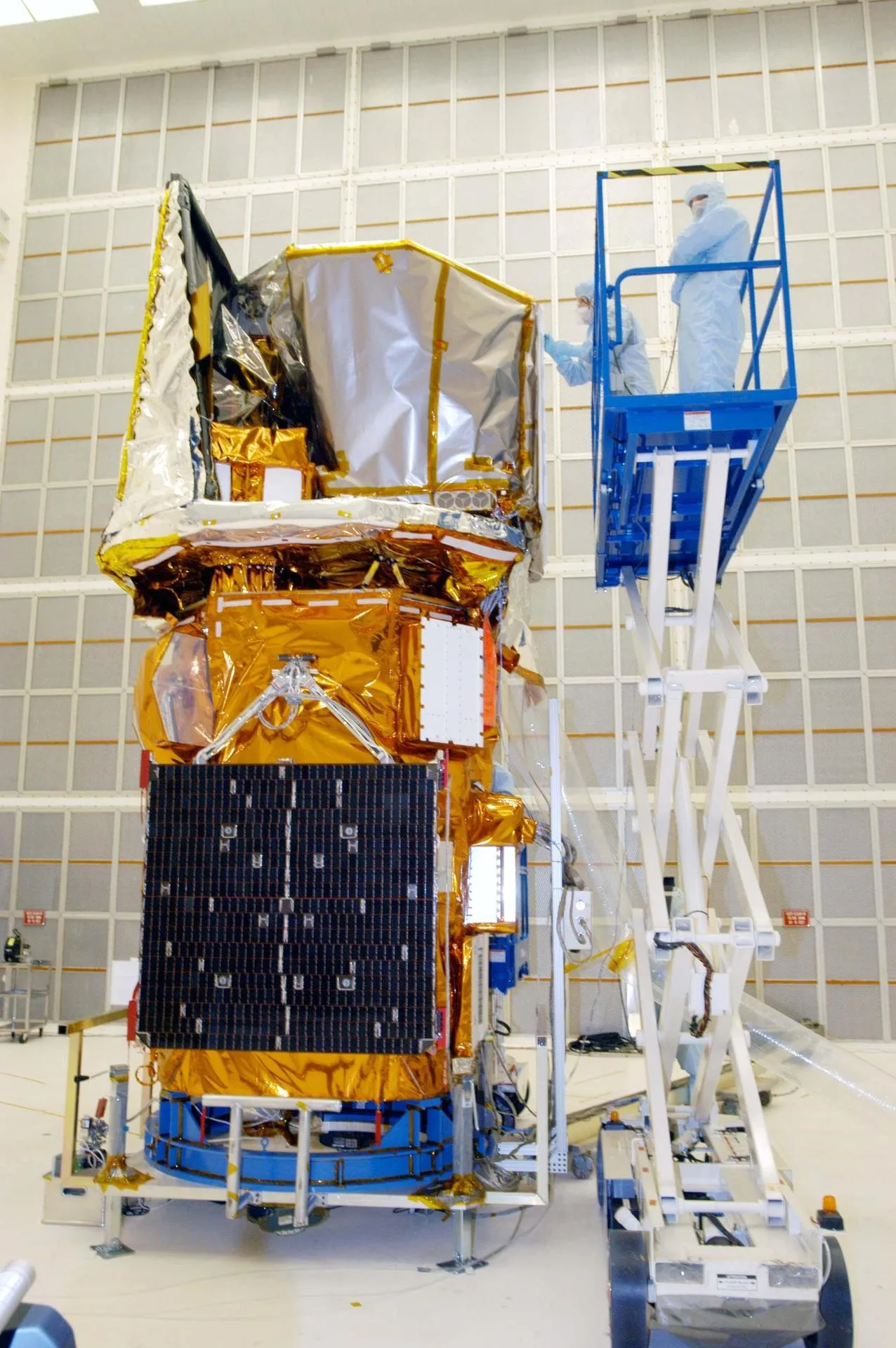
Almost every satellite ever flown is a sealed system. It launches with a fixed quantity of propellant, and when that propellant runs out the mission ends — not because the antennas failed, or the solar arrays degraded past use, or the transponders stopped working, but because there is nothing left to hold the spacecraft in its assigned slot.
The result is a fleet of machines retired in good health. A geostationary communications satellite can reach the end of its fuel budget with a payload that would happily keep earning revenue for another decade. The operator's only options have been to drift it to a graveyard orbit and buy a replacement, at a cost that typically runs into hundreds of millions of dollars once the satellite and its launch are counted.
Some satellites do not even get that choice. NASA's Neil Gehrels Swift Observatory, launched in 2004 to catch gamma-ray bursts, carries no propulsion system whatsoever. It has spent two decades slowly falling, its orbit eroding under atmospheric drag from an initial altitude of roughly 600 kilometres to around 400 kilometres today.
The one great exception was Hubble, and the exception proves the point: Hubble was serviced five times by astronauts because it was deliberately built to be serviced, studded with handrails, grapple fixtures and modular instrument bays, and because a Space Shuttle existed to carry crews to it. That programme ended in 2009. Everything since has had to be done by robots, to satellites that were given none of those affordances. (The Hubble servicing missions remain the benchmark for what hands-on repair can achieve.)
The scale of what is now in orbit has changed the arithmetic. In a July 2025 report on in-space servicing, assembly and manufacturing, the U.S. Government Accountability Office noted that the number of active satellites rose from about 1,400 in 2015 to more than 11,000 in 2025, with over 18,000 more projected to launch by 2030. Throwing all of them away is becoming both expensive and, in the busiest orbits, actively dangerous.
How a Robot Grabs a Satellite That Was Never Designed to Be Caught
The engineering breakthrough behind commercial servicing was not a new gripper. It was the realisation that almost every large satellite already carries two features a robot can use.
The first is the apogee engine nozzle — the bell of the motor that pushed the satellite into its final orbit and has been dormant ever since. The second is the launch adapter ring, the sturdy circular interface that bolted the spacecraft to its rocket. Neither was designed as a docking port, but both are structurally strong, geometrically predictable, and present on hardware built decades before anyone contemplated servicing it.
Northrop Grumman's SpaceLogistics unit built its Mission Extension Vehicle around exactly that insight. MEV-1 extended a probe into the throat of Intelsat 901's apogee engine, expanded it to lock, and drew itself in against the launch ring — the first docking between two commercial spacecraft in orbit, achieved on 25 February 2020. MEV-2 repeated the trick on Intelsat 10-02 in April 2021.
Getting there is its own problem. There is no GPS service at geostationary altitude, so the approach is flown on lidar, cameras and relative navigation, closing the final metres on a target that is tumbling slightly, thermally distorted, and entirely uncooperative. MEV-1 spent five years docked to Intelsat 901 before undocking and leaving the satellite to retire after 24 years of service. Between them, the two MEVs have docked with three commercial communications satellites and delivered more than ten years of combined mission extension.
Katalyst Space Technologies took a different route for Swift. Its LINK spacecraft carries three robotic arms designed to grip the observatory's ground-handling flanges — fittings installed so that technicians could manoeuvre the spacecraft in a cleanroom on Earth, now pressed into service as a capture point 400 kilometres up.
What Northrop Grumman's New Robotic Servicer Changes in 2026
The Mission Extension Vehicles worked, but each one is a bodyguard assigned to a single client: it docks, stays, and provides propulsion for years. That is an expensive way to keep one satellite alive.
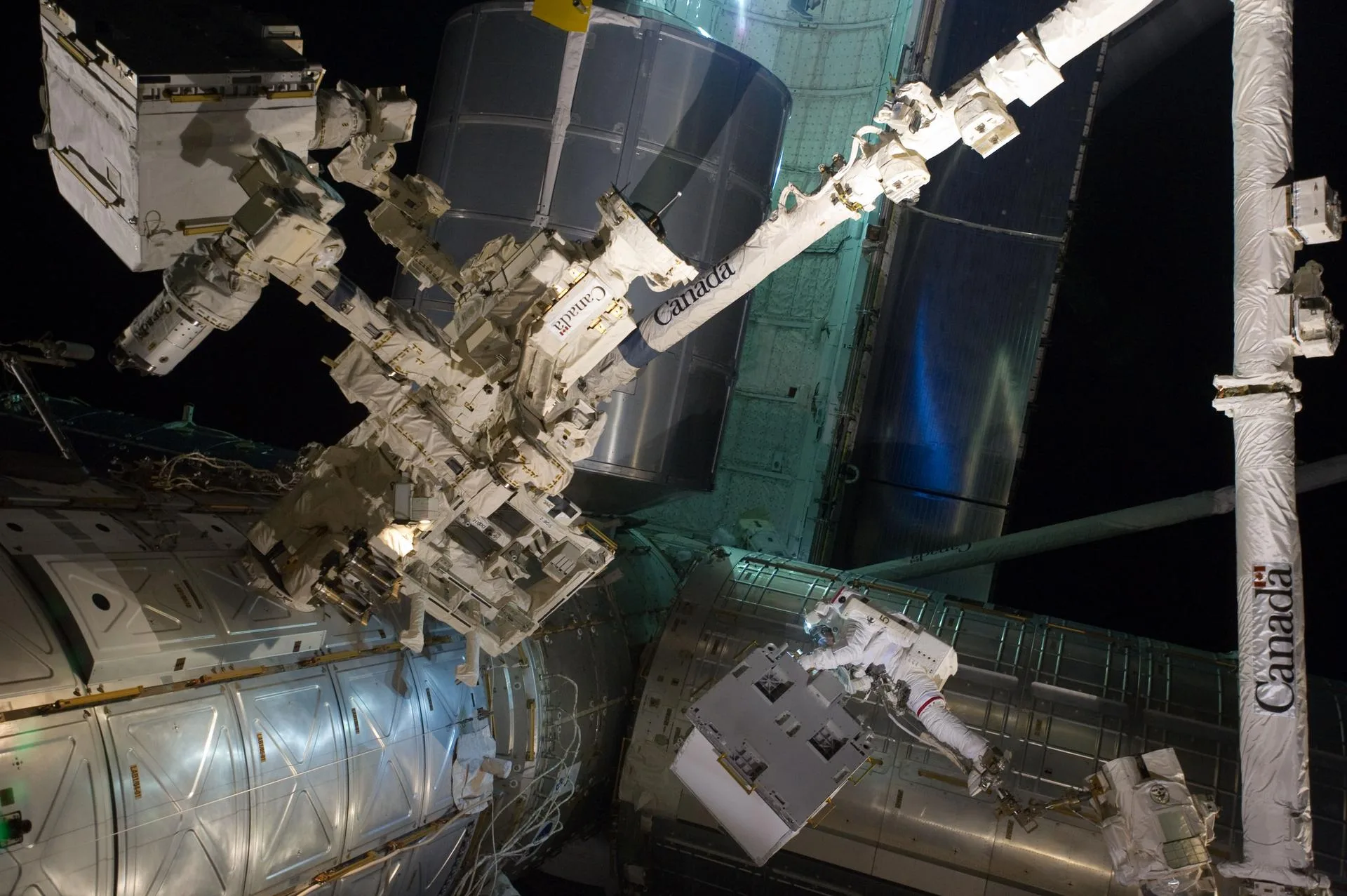
The Mission Robotic Vehicle that launched on 21 July 2026 is built to break that one-to-one relationship. It carries two fully articulated robotic arms and a set of specialised tools, with the robotics payload developed by the U.S. Naval Research Laboratory under a partnership with DARPA. Rather than parking on a client, it installs hardware and moves on.
The hardware it installs are Mission Extension Pods — small propulsion units that Northrop Grumman characterises as jetpacks for ageing satellites, each capable of adding around six years of life. Three of them launched alongside the MRV. Once a pod is attached, the MRV is free to fly to the next customer, which changes the economics: one servicer, many clients, amortised across a fleet.
Northrop's stated ambitions for the vehicle go well past life extension, listing inspection, relocation, repair, upgrades, debris removal and in-space assembly. Ryan Tintner, vice president and general manager at the company, described the MRV as "a whole new class of advanced autonomous space robotics that will learn and evolve." For a fuller picture of the company behind it, see our Northrop Grumman deep dive.
Inside the $30 Million Rescue of NASA's Swift Observatory
Swift's problem is a slow-motion emergency. The observatory remains scientifically productive — it is one of the fastest instruments in the world at swinging onto a gamma-ray burst — but its orbit has been decaying faster than planned, because heightened solar activity around the recent solar maximum puffed up the upper atmosphere and increased the drag acting on it.
NASA moved unusually quickly. On 24 September 2025 the agency awarded Katalyst Space Technologies a $30 million Small Business Innovation Research Phase III contract to build and fly a boost mission, a contracting route that let it compress a development timeline that would normally run years. "Given how quickly Swift's orbit is decaying, we are in a race against the clock," said Shawn Domagal-Goldman, acting director of NASA's Astrophysics Division.
LINK launched on 3 July 2026 aboard a Pegasus XL. Then, over the weekend of 25 July, it began to spin, and communications became sporadic. NASA's Swift mission blog reported on 28 July that two of the spacecraft's three reaction wheels were inoperable and that its cold-gas thruster system had lost some functionality, while other major subsystems remained healthy and the spacecraft kept both power and its link to the ground.
Katalyst began firing LINK's gimbaled electric propulsion thrusters to null the body rates, with the company reporting that the burns were having the intended effect. The plan from there is to update the spacecraft's guidance and control software, then work with NASA to assess revised approach options — a decision that will turn on whether a partially degraded servicer can safely close on a NASA science asset. The rendezvous, originally set for earlier in the summer, has slipped toward late August.
If it works, Swift gains years of additional observing. If it does not, the episode becomes a costly demonstration of how little margin these missions carry.
Orbital Gas Stations: Why Refueling Is the Bigger Prize
Pods and tugs are, ultimately, workarounds. The capability that would genuinely rewrite satellite design is propellant transfer — pumping fuel from one spacecraft into another and letting the client fly on under its own power.
That is what the U.S. Space Force is trying to prove with its Tetra demonstrations. Conceived in 2022 as a single experiment budgeted at roughly $44.5 million, the effort was split into two flights: Tetra-5, planned for 2026, and Tetra-6, to follow in 2027. The demonstration pairs a Space Force target satellite fitted with Orbit Fab's Rapidly Attachable Fluid Transfer Interface valve with Astroscale U.S.'s APS-R refuelling spacecraft, which is to carry roughly 30 kilograms of hydrazine to geostationary orbit, dock, and transfer it — then top up its own tanks at an Orbit Fab depot and repeat the exercise on a second satellite. The U.S. Space Force has begun signalling that future satellites should be designed to be refuelled at all, which matters more than any single demonstration.
The same rendezvous skills apply to debris. Astroscale flew ADRAS-J in February 2024 to inspect a Japanese H-2A upper stage abandoned in orbit since 2009, closing to within 15 metres of it and photographing it from all sides before completing operations and beginning its own deorbit in 2026. A follow-up, ADRAS-J2, contracted with JAXA for about ¥12 billion (roughly $82 million), is planned for the 2027 fiscal year and is meant to actually grab the stage and drag it down. That work sits squarely inside the wider space debris crisis.
Why Satellite Servicing Matters — and What Still Stands in the Way
The case for servicing is straightforward. Commercial operators get more revenue-generating years from assets they have already paid for. Military planners get satellites that can manoeuvre aggressively without spending down a fixed fuel budget, which is a resilience argument as much as an economic one. Astronomers get instruments that outlive their propellant. And the debris problem gains a class of vehicle that can remove the worst objects rather than merely tracking them.
The obstacles are equally clear, and the GAO laid them out bluntly. Its July 2025 report found that the Department of Defense and NASA have invested more than $2 billion in servicing demonstrations over the past decade while the robotic capabilities themselves remain largely unproven in operational use. It identified four barriers: fragmented priorities across government and industry, satellite operators who are not requiring serviceability in new designs, limited opportunities for developers to test hardware, and unclear regulations and technical standards.
NASA's own flagship attempt is the cautionary tale. OSAM-1 was meant to refuel Landsat 7 and assemble an antenna in orbit using a five-metre robotic arm. Originally projected at between $626 million and $753 million, its estimated cost had climbed past $2 billion by an October 2023 assessment from NASA's Office of Inspector General. The agency cancelled it in early 2024, citing technical, cost and schedule problems and the absence of a committed partner; Congress appropriated $227 million and directed a reassessment, and NASA reconfirmed the cancellation after concluding a descoped version carried unacceptable risk.
Underneath all of it is a chicken-and-egg problem. Operators will not pay extra to make satellites serviceable until servicing is routine, and servicing cannot become routine without satellites designed to accept it. Every mission flying now is an attempt to break that loop from the technology side — proving the capability on hardware that never anticipated it, in the hope that the next generation of spacecraft will be built to make the job easy. The broader shift toward doing real industrial work in orbit is covered in our look at the in-space economy.
July 2026 offered both possible futures in the same month. One spacecraft is beginning a decade of servicing work with two robotic arms and three jetpacks in its hold. Another is fighting to stop spinning long enough to save a telescope. Which of those two images defines the industry will depend less on the technology than on whether anyone is willing to buy it once it works.