Every conversation about the future of space stations tends to start with a list of companies. Axiom. Vast. Starlab. Orbital Reef. The list is easy to write and tells almost nothing, because the interesting question is not who is building a station — it is what shape the station is allowed to be, and who decided that.
The answer is less romantic than the renderings suggest. Almost every architectural decision in orbit traces back to a single, stubbornly physical constraint: the diameter of the rocket fairing that carries the hardware off the ground. Everything else — module count, assembly method, crew volume, whether a station spins, whether it can ever exceed a few hundred tonnes — is downstream of that number.
Understanding the constraint explains the entire field. It explains why the International Space Station looks like a chain of buses bolted to a girder rather than a wheel. It explains why Sierra Space keeps deliberately exploding fabric pressure vessels in Alabama. It explains why Vast is racing to orbit with a station barely larger than a school bus. And it explains why, between January and June 2026, NASA proposed tearing up its own commercial station strategy, was told no by the entire industry, and quietly reversed course.
Why the Rocket Fairing Decides What a Space Station Looks Like
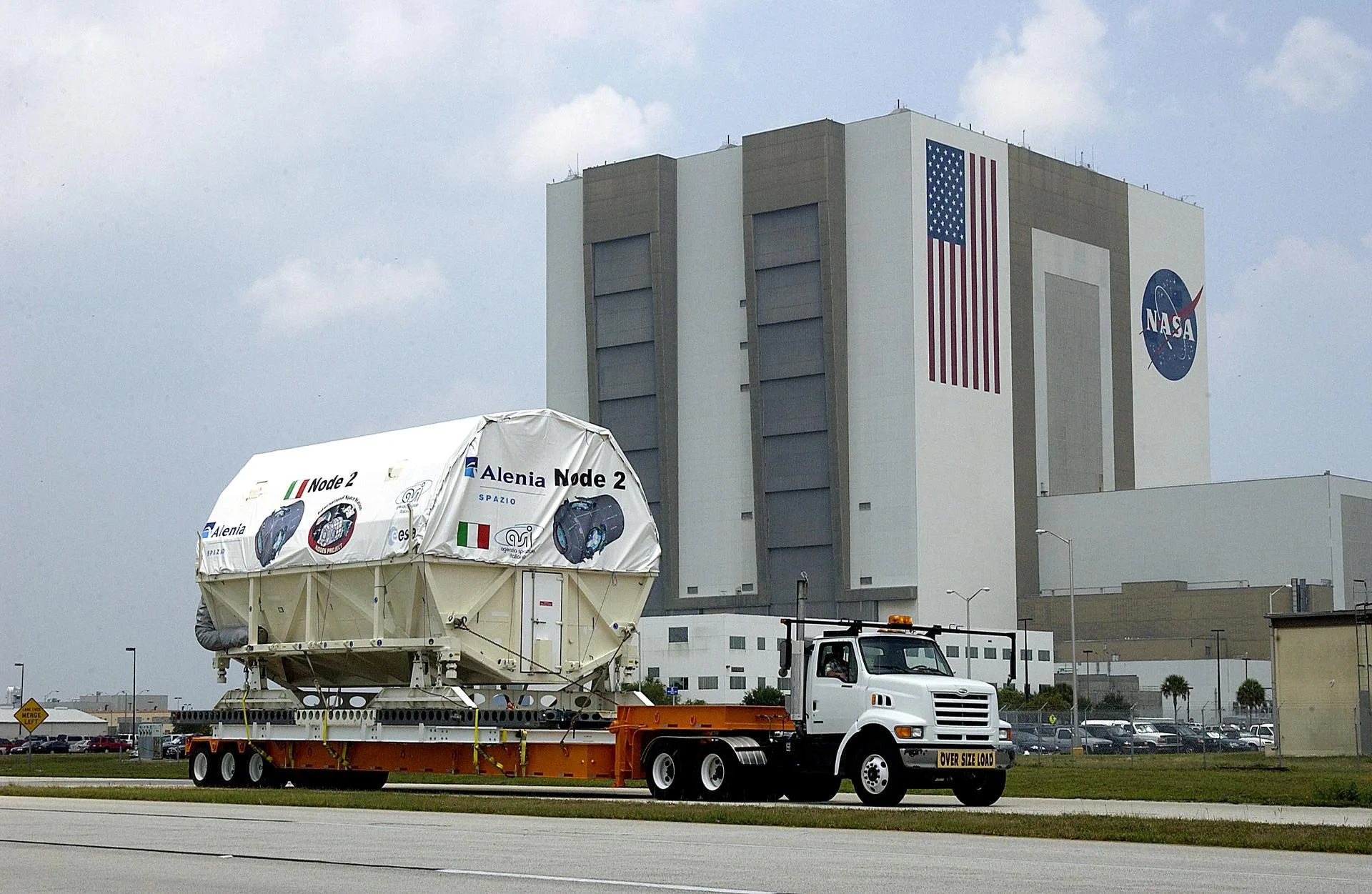
A crewed pressure vessel has to survive launch as a rigid object, and rockets are narrow. The Space Shuttle's payload bay was 4.6 metres wide and 18.3 metres long, and that single measurement set the diameter of nearly every American module ever flown. The US Destiny laboratory is 4.2 metres across. Node 2, Harmony, is 4.4 metres. Those are not design preferences; they are the largest cylinders that fit in the vehicle available at the time.
The consequence is a hard ceiling on volume per launch. Pressurised volume scales with the square of the radius, so a fairing that is a metre wider is worth far more than a fairing that is a metre taller. A 4.5-metre module is a corridor. A 9-metre module is a room. That difference is why the current generation of station designs cluster around whichever rocket their builder expects to actually exist.
Today's constraint set is broader than the Shuttle's but still narrow. A Falcon 9 fairing offers roughly 5.2 metres of outer diameter and about 4.6 metres of usable width. New Glenn widens that to 7 metres. SpaceX's Starship, if it reaches operational cadence, opens up roughly 9 metres — and that single number is the reason several station architectures on paper today simply cannot fly on anything else.
There are exactly three ways around the fairing. Build small modules and connect many of them. Build something soft that packs small and expands large. Or assemble structure in orbit that never had to fit in a fairing as a finished object. Every station flying, funded, or seriously proposed is some combination of those three, and each carries a different failure mode.
Rigid Modules: The Architecture That Built Everything in Orbit
The scale ladder
Bars show pressurised volume relative to the ISS. Select any rung for its architecture, lift constraint and status.
- Architecture
- Rigid modular
- Mass
- ~420 t
- Lift constraint
- Shuttle · 4.6 m × 18.3 m payload bay
The only large station humanity has ever completed. More than 40 assembly flights and well over a thousand hours of spacewalking, with a 109 m truss carrying structural loads, power, thermal fluid and data between the pressure vessels.
Operating · deorbit planned ~2030
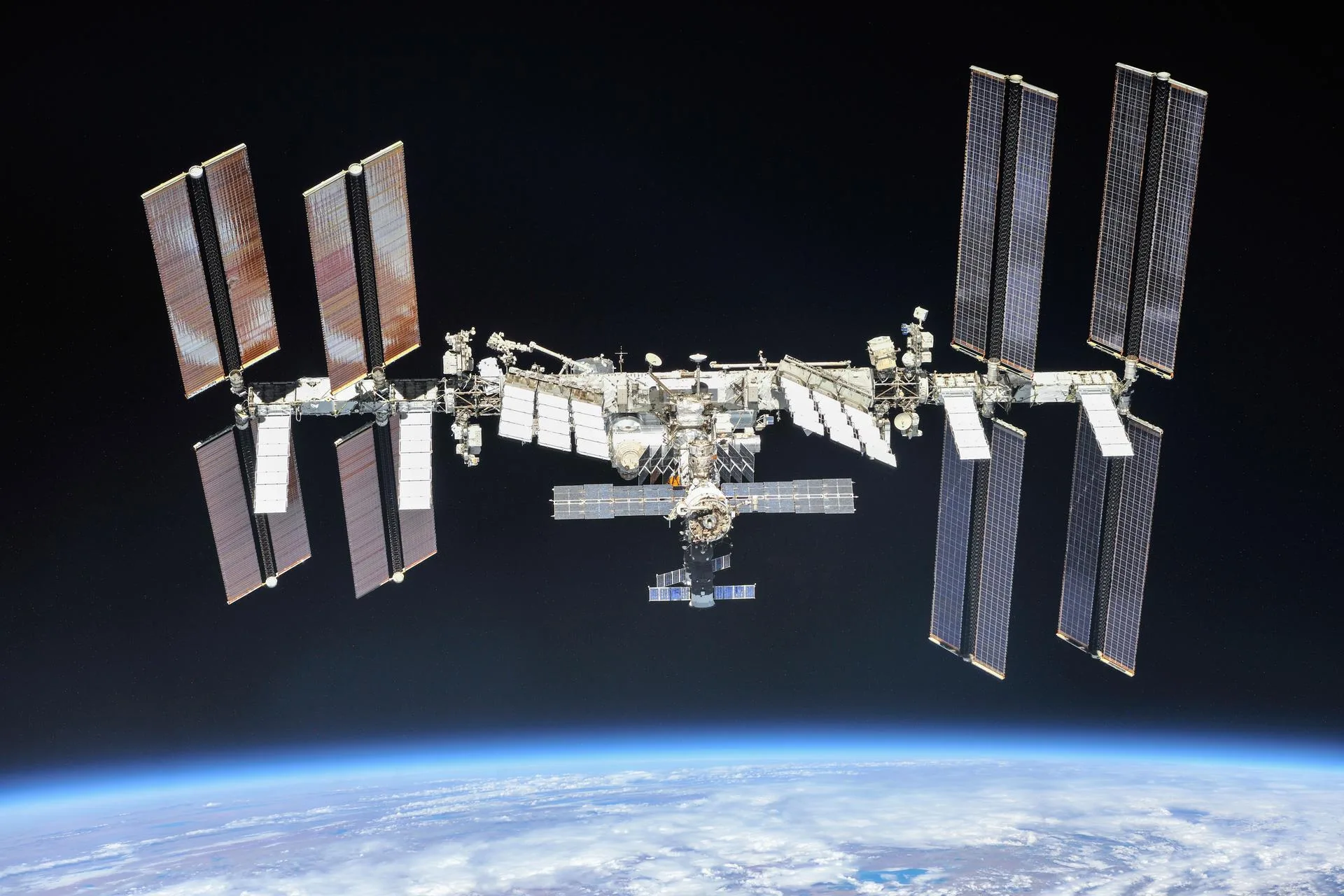
The modular approach is the only one with a completed, crewed, decades-long track record, and it is worth being precise about what it cost. The ISS took more than 40 assembly flights and well over a thousand hours of spacewalking to reach roughly 420 tonnes and about 388 cubic metres of habitable volume. It is not one structure but dozens of pressure vessels, hatches, and a 109-metre truss holding the solar arrays away from the modules so they do not shadow each other.
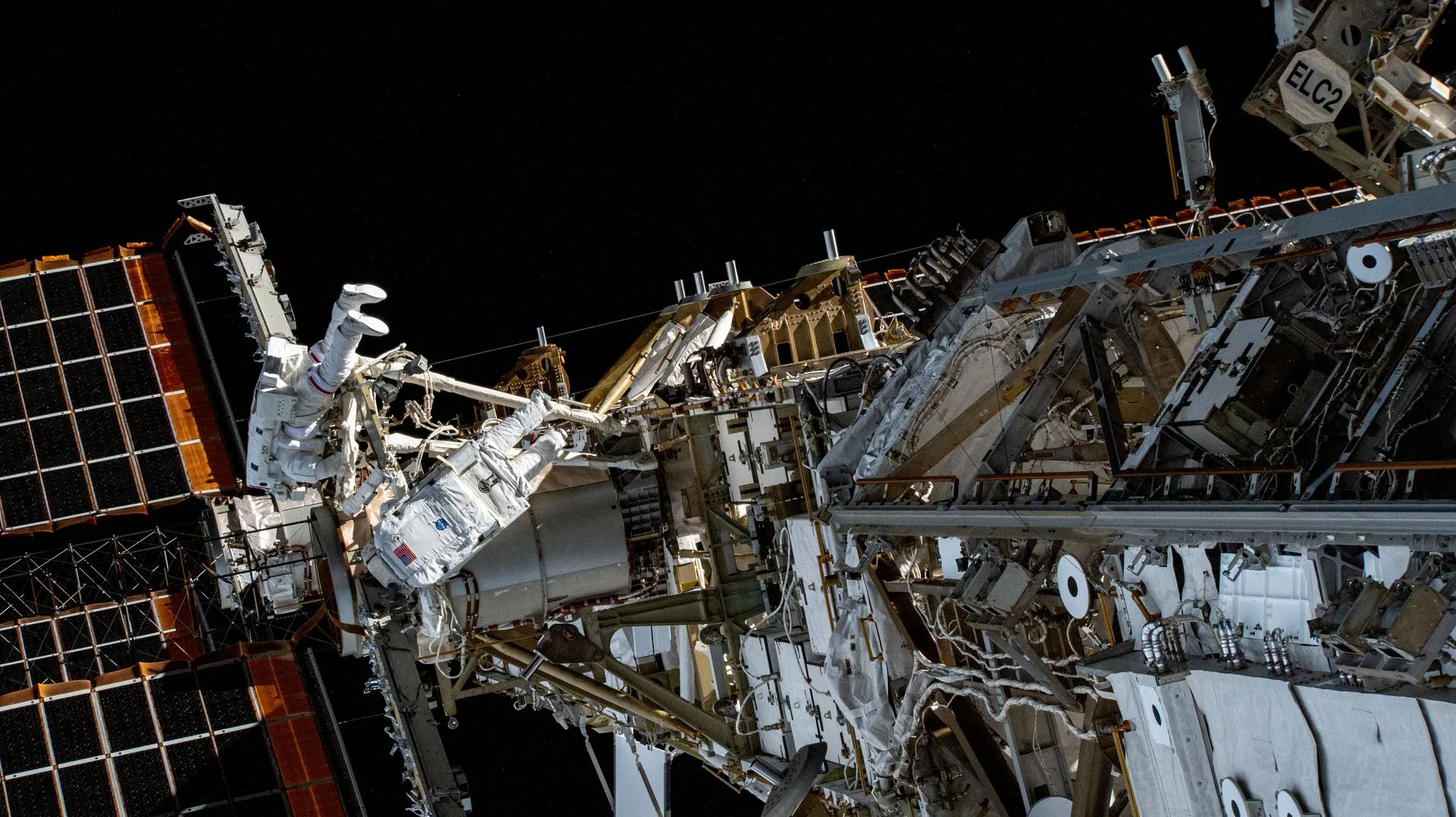
That truss is the part most people misread. It is not decorative and it is not a hull — it is the load path. Rigid-module stations solve the fairing problem by refusing to be a single object, which means something has to carry structural loads, power, thermal fluid, and data between the pieces. On the ISS that job belongs to the truss and the miles of cabling and ammonia lines strung along it. The architecture works, but the integration cost is brutal and most of it has to be paid by humans in suits.
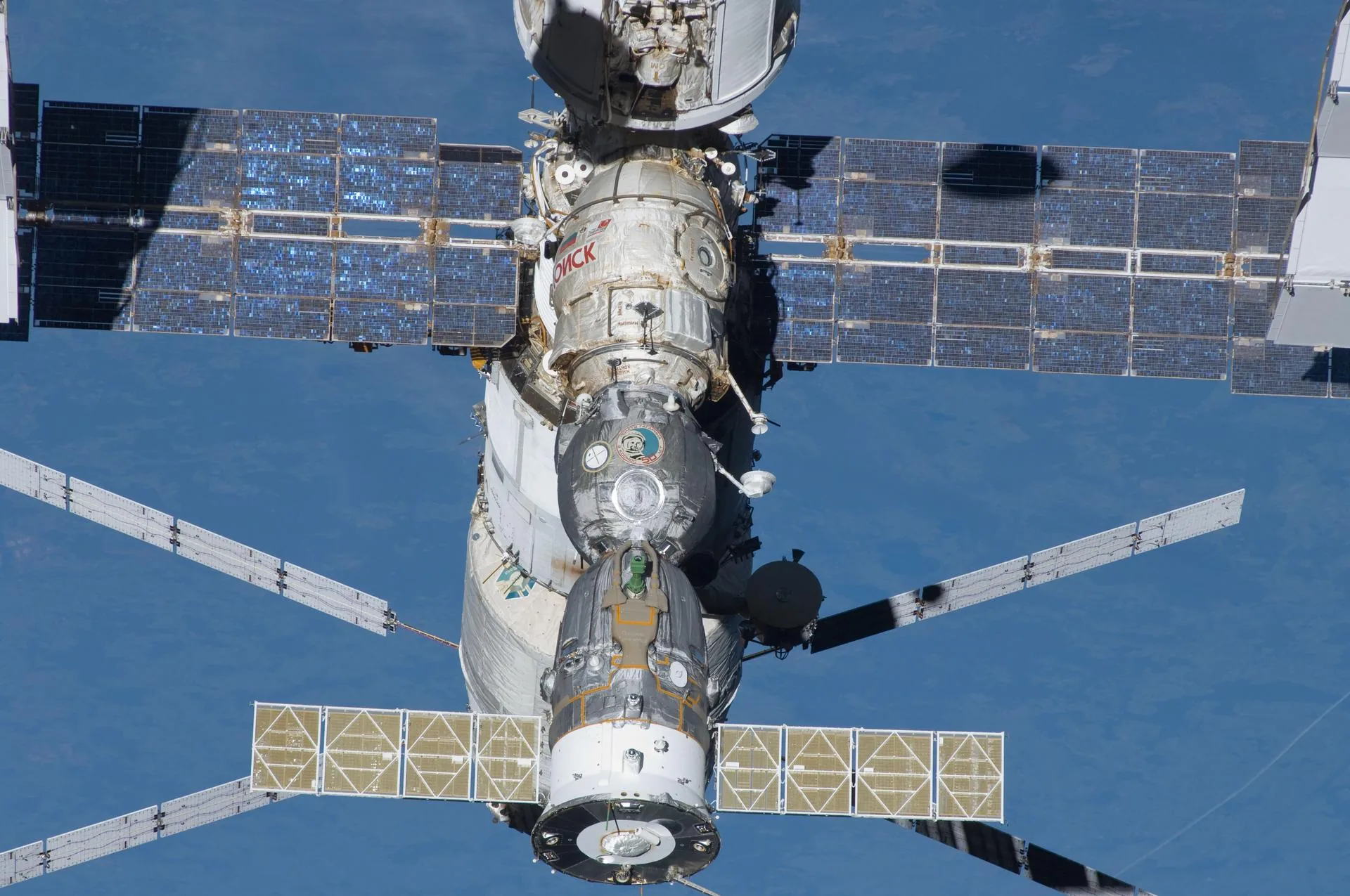
China's Tiangong is the more efficient expression of the same idea. Three modules — Tianhe, Wentian, Mengtian — arranged in a T, roughly 100 tonnes, assembled in about eighteen months rather than a decade. It is a fraction of the ISS's mass and does a large share of the useful work, largely because it was designed as one coherent station from the start instead of accreting over twenty-five years of shifting international politics. China has signalled intent to roughly double it toward a six-module configuration.
Two national programmes are now following the same template. India's Bharatiya Antariksh Station is planned as five modules, with the BAS-1 base module targeted for launch around 2028 on the LVM3 and the full station assembled through the 2030s. Russia's proposed Orbital Station takes an unusual shortcut: rather than building fresh, current plans involve separating Russian segment modules from the ISS when the programme ends and using them as a nucleus. Both are conventional rigid-module architectures, because that is the architecture that is known to work.
Inflatables: Packing 300 Cubic Metres Into a 5-Metre Fairing
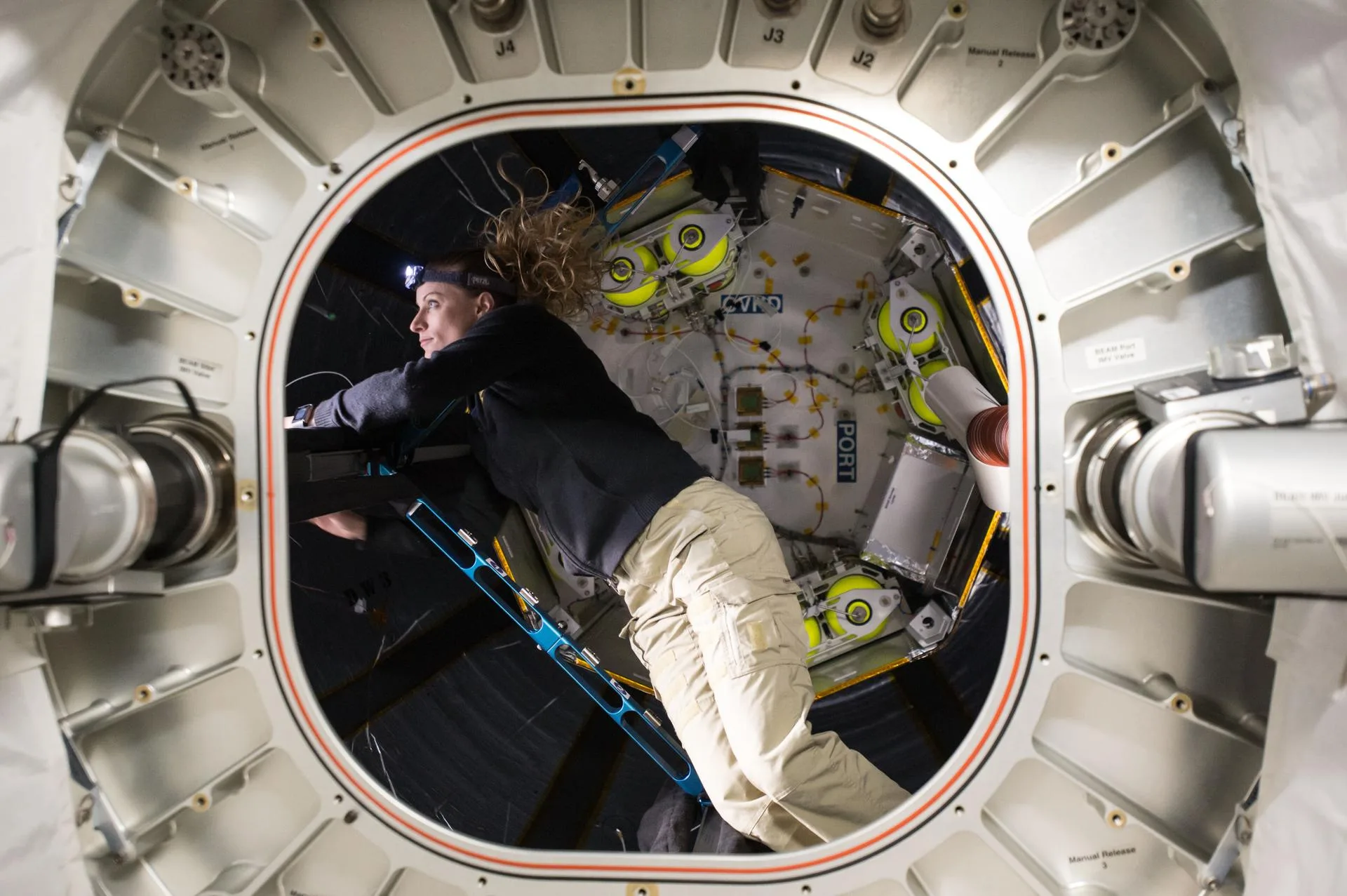
The second escape route treats the pressure vessel as fabric rather than metal. Sierra Space's LIFE habitat is built from woven high-strength softgoods — primarily Vectran — that launch folded inside a five-metre fairing and become a rigid structure once pressurised in orbit. Fully expanded, the design targets around 300 cubic metres, roughly a third of the ISS's entire pressurised volume, from a single launch.
The obvious objection is that fabric sounds alarming for something holding back vacuum. The counter-argument is empirical, and Sierra Space has been making it loudly by destroying test articles. In a December 2023 ultimate burst pressure test with ILC Dover and NASA's Marshall Space Flight Center, a full-scale LIFE article failed at 77 psi — about 27 per cent above NASA's recommended certification threshold of 60.8 psi, which is itself set at four times the module's maximum operating pressure. Woven Vectran under tension is, counter-intuitively, extremely strong.
The concept is not theoretical in orbit either. BEAM, the Bigelow Expandable Activity Module, has been attached to the ISS since 2016, expanding to roughly 13 feet long and 10.5 feet in diameter. Crews have entered it routinely for a decade, and it long ago outlived its original two-year demonstration and became permanent storage. That is about as strong a real-world endorsement as an experimental pressure vessel can earn.
What inflatables do not solve is everything that is not the shell. Racks, life support, avionics, and plumbing are rigid, dense, and still have to fit through the fairing and then be installed inside a volume that did not exist at launch. An expandable module buys enormous empty volume cheaply; it does not buy an outfitted laboratory. That outfitting gap is a large part of why expandables have been perpetually five years away since the 1990s.
The Free-Flyer Bet: Single-Launch Stations from Vast and Starlab
How they will actually look
Official operator renderings of the four stations competing under NASA’s Commercial LEO Destinations programme. Select a station to see it assembled in orbit.
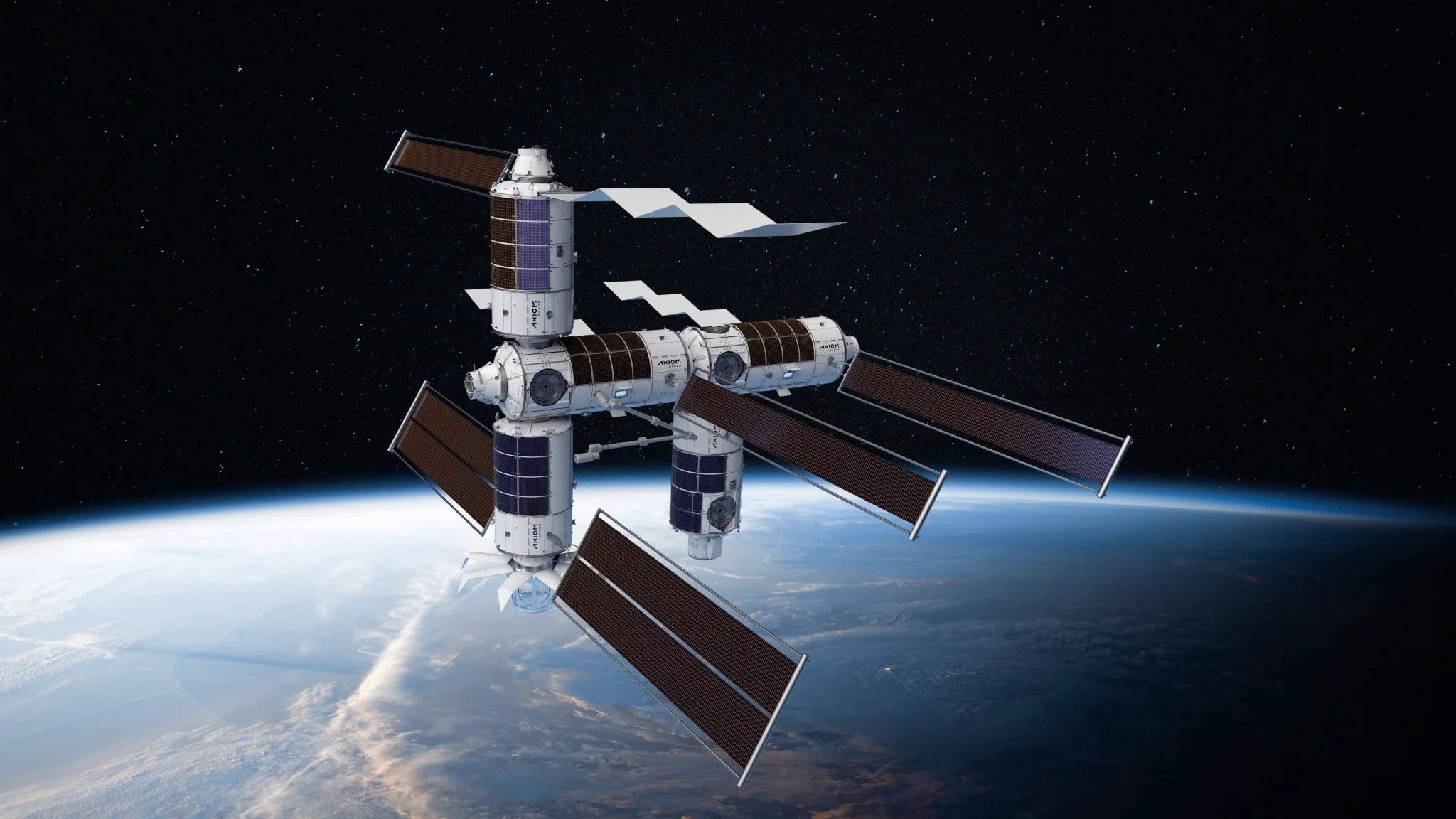
The completed Axiom Station — Payload Power Thermal Module, Habitat 1, an airlock, Habitat 2 and the Research and Manufacturing Facility. Every cylinder is a separate launch, and the cluster is what rigid-module architecture looks like when it is designed as a station rather than accreted like the ISS.
Rendering: Axiom Space, via NASA
The third approach sidesteps assembly entirely: make the station small enough, or the rocket big enough, that it launches as one finished object. Vast has taken the aggressive version of that bet. Haven-1 is a single module of roughly 14,000 kilograms offering about 45 cubic metres of habitable volume within 85 cubic metres pressurised — modest by ISS standards, and deliberately so. It launches on a Falcon 9, currently targeted for the first quarter of 2027, and is designed to host four crewed visits of up to two weeks each.
Haven-1 is explicitly a minimum viable product rather than an ISS replacement. Its purpose is to put a crewed commercial station in orbit before anyone else and retire the technical and regulatory risk that the larger Haven-2 depends on. Haven-2 is the actual competitive bid: a modular outpost with a central node sized for Starship, aimed at NASA's Commercial LEO Destinations programme.
Starlab, the Voyager and Airbus joint venture with Northrop Grumman support, takes the purest version of the single-launch philosophy. Rather than many modules, it is designed around one very large rigid module roughly eight metres in diameter, launched in a single Starship flight, arriving essentially complete. If it works, it collapses a decade of ISS-style assembly into one launch and eliminates the spacewalk-heavy integration campaign entirely. It is currently in design, targeting a launch around 2029.
Axiom Space occupies a genuinely different position, and its architecture has shifted. Rather than launching a free-flyer directly, Axiom plans to dock hardware to the ISS first — beginning with its Payload Power Thermal Module — then later detach and join it with a habitat module to form an independent station, potentially as early as 2028. The ISS acts as scaffolding: power, attitude control, and crew access come free while the station is assembled. Axiom has already flown four private crewed missions to the ISS and was awarded a fifth in January 2026. The trade is schedule risk in exchange for dependence on a station scheduled for destruction.
How NASA Spent Five Months in 2026 Arguing About Architecture
Station architecture timeline
Five months spent deciding whether low Earth orbit would be centrally or competitively architected.
- 28 Jan 2026CLD Phase 2 placed on hold
NASA formally pauses Commercial LEO Destinations Phase 2 while it realigns the acquisition timeline with revised requirements.
- 24 Mar 2026Ignition proposes a government core module
NASA unveils Ignition. For LEO it proposes ending full-and-open competition for complete stations in favour of a government-owned core module attached to the ISS, with commercial modules installed onto it.
- 25 Mar 2026Industry rejects it at a House hearing
The objection is structural, not sentimental: a government-anchored hub turns station operators into module vendors and removes the independent asset their private financing was raised against.
- 1 Jun 2026NASA reverses course
The agency drops the government-module approach and confirms it will proceed with the original commercial strategy, stating that the industry position would shape the path forward.
- Jun 2026Draft RFP released
A draft request for proposals follows within the month, restoring the competitive free-flyer model.
- Jul 2026Firm-fixed-price terms and a 2029 deadline
The draft solicitation puts Axiom, Starlab, Vast and Orbital Reef under firm-fixed-price accountability with a crewed flight test deadline of 2029. Industry feedback was due 27 July 2026.
For most of the past five years the assumption was that NASA would buy services from independent commercial free-flyers. In 2026 the agency briefly proposed something structurally different, and the resulting fight is the most consequential architecture argument in the field.
The sequence is tight. On 28 January 2026, NASA formally placed Commercial LEO Destinations Phase 2 on hold while it realigned the acquisition timeline. On 24 March, the agency unveiled Ignition, a broad strategy realignment. For low Earth orbit, Ignition proposed abandoning full-and-open competition for complete commercial stations in favour of a government-owned core module attached to the ISS, onto which companies would install commercial modules as precursors to eventual independent stations. NASA's stated reasoning was blunt: the business case for privately financed free-flying stations did not close, and the agency doubted providers could deliver operational capability soon enough.
Industry rejected it almost immediately, at a House hearing the following day. The objection was not sentimental. A government-anchored hub inverts the entire commercial model — it turns station operators into module vendors, makes their schedules hostage to a government core, and removes the independent asset that private financing was raised against. Companies that had spent years raising capital against owning stations were being asked to become subcontractors on someone else's.
By 1 June 2026, NASA had conceded. The agency confirmed it would drop the government-module approach and proceed with the original commercial strategy, stating that the industry position would shape the path forward. A draft request for proposals followed that month. By July, the draft solicitation had put Axiom, Starlab, Vast, and Orbital Reef under firm-fixed-price terms with a crewed flight test deadline of 2029, with industry feedback due on 27 July 2026. Phase 2 awards to at least two providers are expected before the year ends.
The episode matters beyond procurement. It was a live argument about whether the next generation of orbital infrastructure would be centrally architected or competitively architected, and the competitive model won — for now. It also cost roughly five months of schedule against a 2030 ISS retirement, which is the one resource none of the programmes has spare. The broader commercial station race and its 2030 deadline is where that lost time will show up first.
Spin, Truss, and the Kilometre Problem
Five ways to build a station
Every station flying or proposed is one of these, or a blend. Each solves the fairing differently — and each fails differently.
- How it beats the fairing
- Refuses to be a single object — many fairing-sized pressure vessels joined in orbit.
- Where the loads go
- An external truss plus hatches and interconnects. On the ISS, a 109 m truss carries loads, power, ammonia coolant and data between modules.
- How it fails
- Integration cost. Assembly is paid for in launches and in astronaut spacewalk hours, both of which scale badly.
Everything described so far shares one property: none of it spins, and none of it is large. The step from a 400-tonne station to anything deserving the word megastructure requires solving two problems that no flying hardware currently addresses.
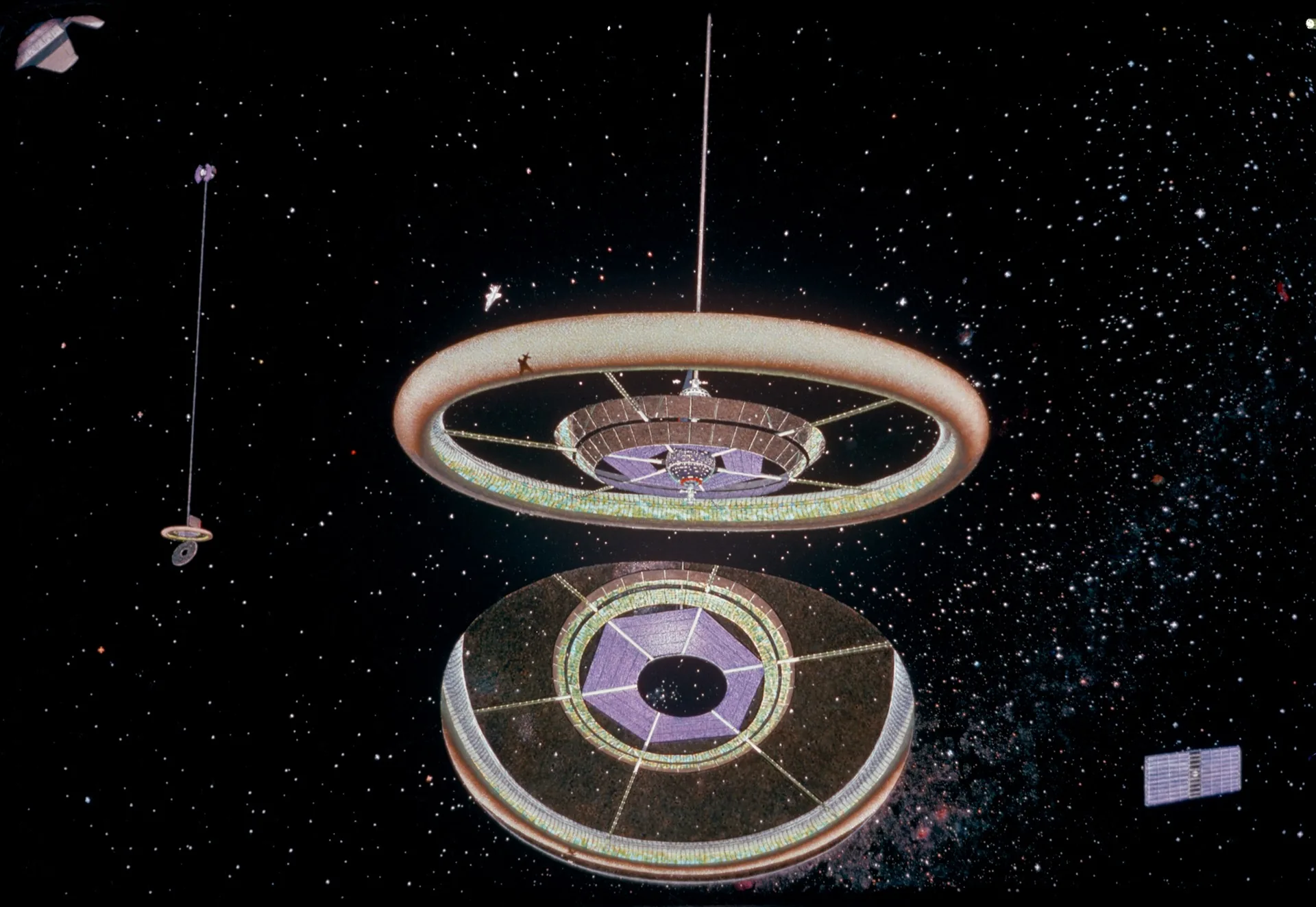
The first is artificial gravity. Vast has been the most explicit about intent, describing a long-term goal of a roughly 100-metre multi-module station rotating end over end at about 3.5 rpm to generate artificial gravity, launched by Starship. The physics is straightforward — centripetal acceleration scales with radius and the square of angular velocity — but the engineering is not. Rotating joints must pass power, fluid, and crew between spinning and non-spinning sections while holding pressure, for years, without failure. Docking with a rotating structure means matching its spin. And below roughly 100 metres of radius, the rotation rates required produce Coriolis effects that make routine head movement nauseating. Rotation is not a module upgrade; it is a different vehicle class. The rotating habitat concepts first worked out by Gerard O'Neill remain the reference designs, and remain unbuilt.
The second problem is assembly, and here the recent record is genuinely discouraging. Getting beyond fairing-limited structures requires building in orbit — robotic assembly of truss, in-space manufacture of beams, joining of structures that were never a single object on the ground. NASA has invested in exactly this under the banner of on-orbit servicing, assembly and manufacturing, and the two flagship demonstrations both died. OSAM-1 was cancelled after a descoped plan was judged too risky to succeed. OSAM-2, formerly Archinaut — intended to 3D-print two ten-metre beams in orbit and unfurl solar arrays from them — was concluded in 2023 without ever flying. NASA continues funding ISAM capability development through a national consortium, but the flight demonstrations that would prove large-scale orbital construction have not happened.
That gap is the honest answer to when megastructures arrive. The physics of a Dyson swarm or a Kardashev-scale structure is not the obstacle, and neither is materials science. The obstacle is that humanity has never assembled a large structure in orbit by any means other than astronauts bolting modules together by hand during spacewalks, and has repeatedly failed to fund the demonstration that would change that. Until a robot builds something structural in orbit that no rocket could have launched intact, every station humanity flies will be a fairing-shaped object, and the ceiling stays where the ISS left it.
The near-term picture is therefore narrower but far more concrete than the renderings imply. Between roughly 2027 and 2030, expect a single-module free-flyer from Vast, at least two NASA-backed commercial stations under firm-fixed-price contracts with a 2029 crewed flight test milestone, a Chinese station growing toward six modules, and the first Indian module in orbit. Those are real, funded, and architecturally conventional. The kilometre-scale structures remain exactly where they have been for sixty years: physically permitted, economically unjustified, and waiting on a construction capability nobody has yet paid to prove. Comparing that trajectory against the full field of commercial station programmes shows how much of the future is already fixed by choices made about rocket diameters decades ago.