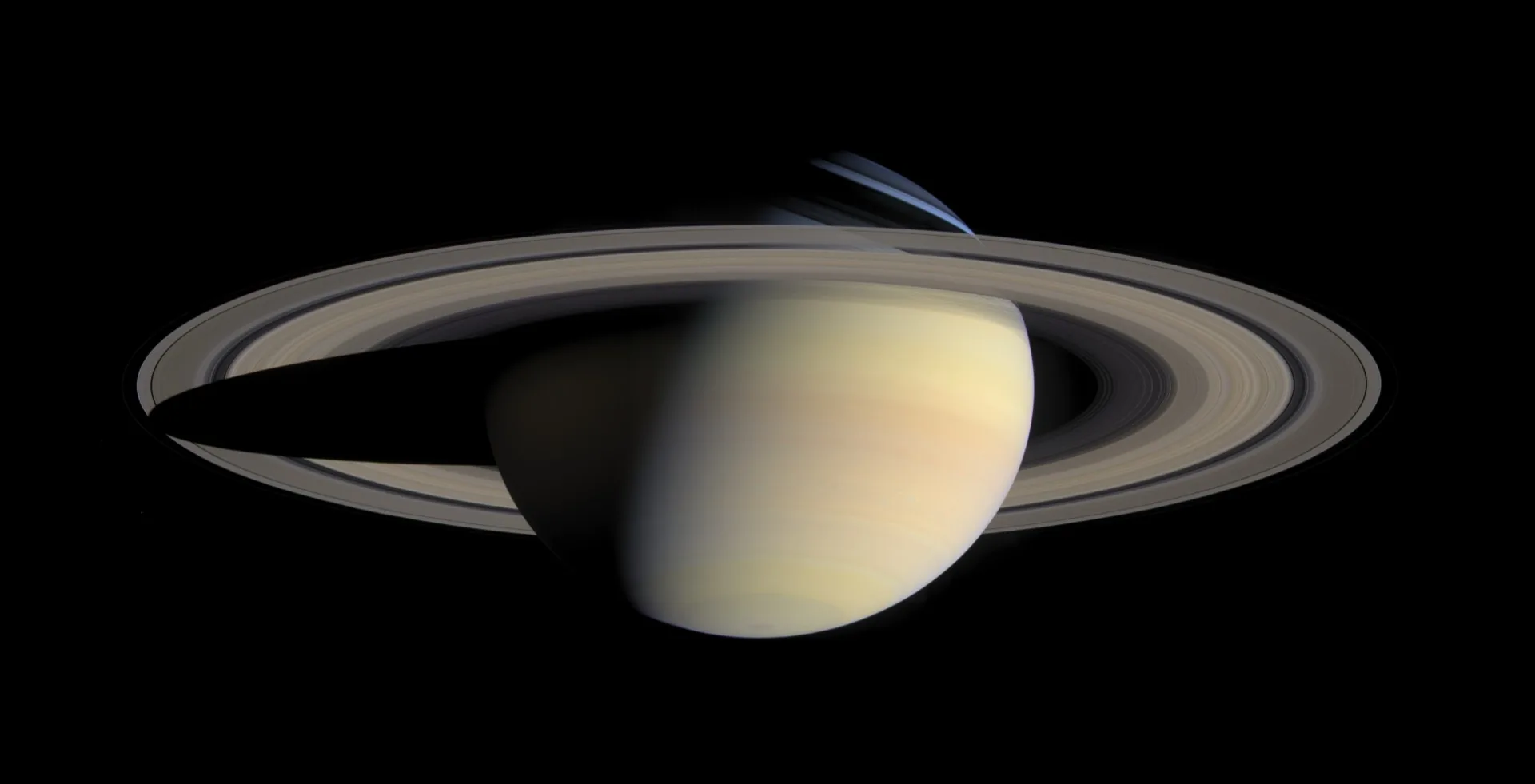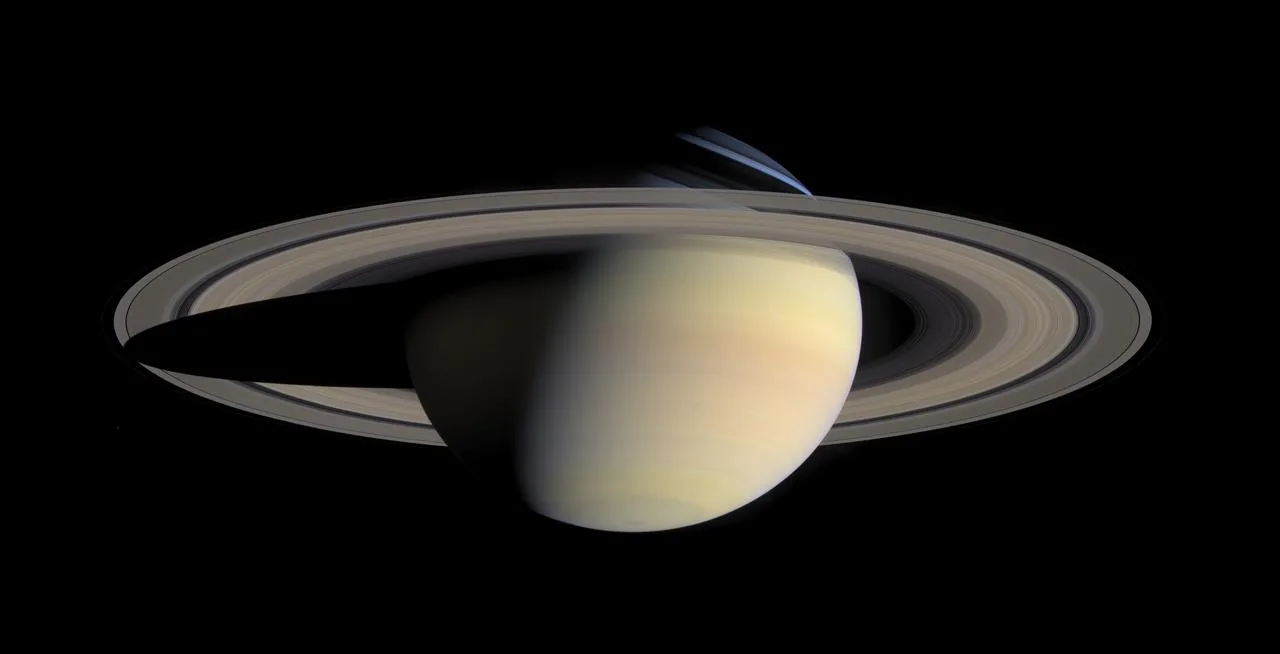
There is a moment in every space enthusiast's life when they see Saturn through a telescope for the first time. Not a photograph. Not a rendering. The actual planet, hovering in the eyepiece, impossibly beautiful, with those rings extending out to either side like a cosmic work of art. It looks fake. It looks too perfect to be real. But it is real, and the more we learn about Saturn, its rings, and its extraordinary moons, the more astonishing the system becomes.
Saturn has been visited by four spacecraft -- Pioneer 11, Voyager 1, Voyager 2, and Cassini -- and the last of these, Cassini, spent thirteen years orbiting the planet from 2004 to 2017. The data Cassini returned transformed Saturn from a pretty picture into one of the most scientifically rich systems in our solar neighborhood. And yet, some of the biggest questions remain wide open.
The Ring Age Debate: Young or Old?
Here is a question that should be simple but has generated one of the fiercest debates in planetary science: how old are Saturn's rings?
For decades, most scientists assumed the rings formed alongside Saturn, roughly 4.5 billion years ago, during the chaotic early days of the solar system. This made intuitive sense. Saturn is an old planet. Why would its rings be any different?
Then Cassini upended everything. The spacecraft's Cosmic Dust Analyzer measured the rate at which interplanetary dust settles onto the rings. The rings are made almost entirely of water ice, brilliant and reflective. If they had been accumulating dark, dusty material for billions of years, they should be visibly contaminated -- darker and dirtier than they appear. But they are not. They are remarkably clean, which suggests they are young. Perhaps only 100 to 400 million years old.
Think about what that means. If the rings are that young, then dinosaurs roamed Earth before Saturn had its rings. The most iconic feature of the most visually stunning planet in our solar system may be a relatively recent addition.
But not everyone is convinced. Some researchers argue that dynamic processes within the rings -- collisions between ring particles, interactions with embedded moonlets -- could act as a self-cleaning mechanism, refreshing the surface of ring particles and maintaining their brightness even over billions of years. The debate continues, and it may take a future dedicated Saturn mission to settle it.
Ring Rain: Saturn Is Eating Its Own Rings
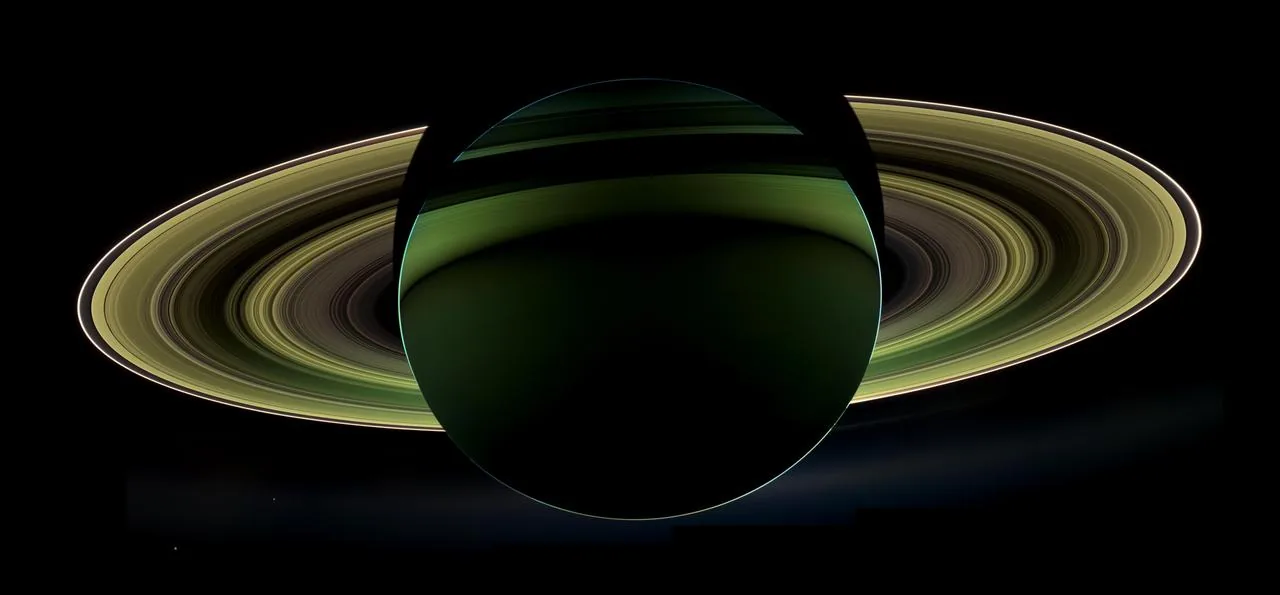
Whether the rings are young or old, one thing is increasingly clear: they are not going to last forever. Saturn is actively losing its rings through a process that scientists call ring rain.
Ring rain was first suspected from Voyager observations in the 1980s, and Cassini confirmed it in dramatic fashion. Charged water ice particles from the innermost rings are being pulled along Saturn's magnetic field lines and funneled into the planet's atmosphere, where they burn up. Cassini's Grand Finale orbits -- daring dives between the planet and its innermost ring in 2017 -- showed that material is falling from the rings into Saturn at a rate far higher than previously estimated.
Current calculations suggest that the rings could be completely gone within 100 to 300 million years. In cosmic terms, that is the blink of an eye. We are living in a privileged era -- a brief window of solar system history during which Saturn happens to be adorned with its magnificent rings. Generations of astronomers billions of years from now, if they exist, will know Saturn only as a naked gas giant.
This realization adds a poignant urgency to studying the rings while we still can.
Cassini's Grand Finale: A Spacecraft's Last Gift
In September 2017, Cassini ended its mission by deliberately plunging into Saturn's atmosphere. This was not a failure -- it was by design. The spacecraft was running low on fuel, and NASA wanted to ensure that it would not accidentally crash into and contaminate Enceladus or Titan, moons that might harbor conditions suitable for life.
But before that final plunge, Cassini executed 22 Grand Finale orbits that threaded the gap between Saturn and its innermost ring -- a region no spacecraft had ever visited. These orbits produced a treasure trove of data. Cassini measured the mass of the rings directly for the first time, finding them to be surprisingly light -- another piece of evidence supporting the young rings hypothesis. The spacecraft sampled ring particles and atmospheric molecules, mapped Saturn's gravity and magnetic fields at close range, and captured breathtaking images of the planet's cloud tops from an altitude of just a few thousand kilometers.
Cassini's final signal reached Earth on September 15, 2017. The spacecraft had become part of the planet it spent thirteen years studying. It was one of the most emotionally powerful moments in the history of space exploration.
Titan: An Alien World with a Familiar Face
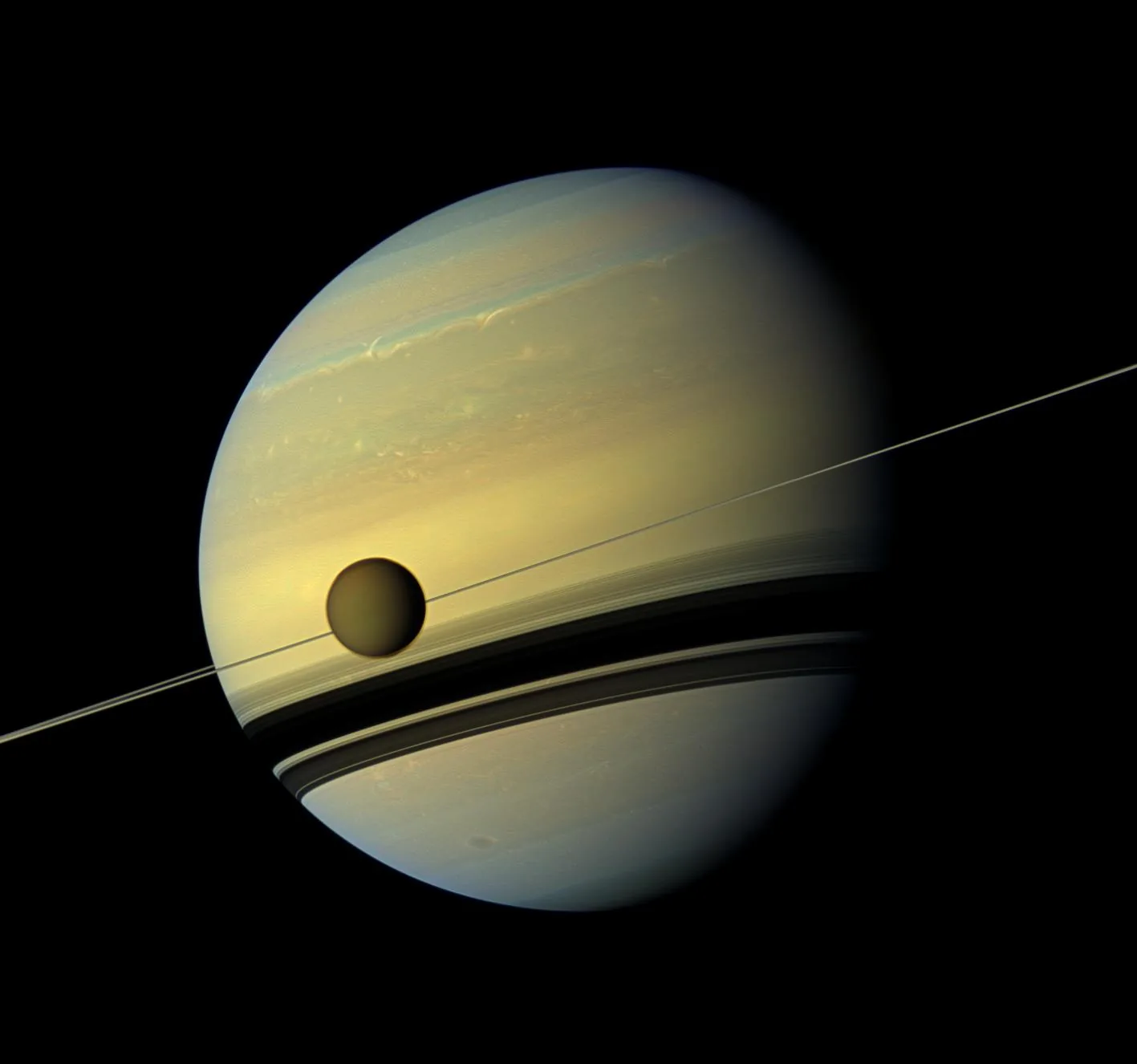
Saturn has 146 known moons, but two of them stand head and shoulders above the rest in terms of scientific interest. The first is Titan.
Titan is the second-largest moon in the solar system and the only moon with a thick, substantial atmosphere. That atmosphere is primarily nitrogen -- like Earth's -- but laced with methane and other hydrocarbons that give it a hazy, orange appearance. The surface pressure is about 1.5 times Earth's. If you stood on Titan, you would not need a pressure suit, just extreme cold-weather gear and an oxygen supply, because the temperature hovers around minus 179 degrees Celsius.
What makes Titan truly remarkable is its methane cycle. Titan has lakes, seas, rivers, and rain -- but the liquid is not water. It is liquid methane and ethane. The Cassini orbiter's radar instrument pierced the haze and mapped Titan's surface, revealing a world with eerily Earth-like geography: shorelines, river channels carved by flowing methane, sand dunes made of hydrocarbon particles, and vast seas concentrated near the north pole. The largest, Kraken Mare, is bigger than the Caspian Sea.
The Huygens probe, which Cassini carried to Saturn and released in January 2005, descended through Titan's atmosphere and landed on the surface -- the most distant landing ever achieved by a human-made object. Huygens transmitted images of a flat, pebble-strewn landscape with rounded stones that appeared to have been shaped by flowing liquid, much like river rocks on Earth.
Titan's complex organic chemistry makes it a fascinating laboratory for prebiotic processes. The atmosphere is a soup of organic molecules, some of which are building blocks for more complex compounds. NASA's Dragonfly mission, a rotorcraft lander scheduled to launch in the late 2020s, will hop across Titan's surface studying its chemistry and searching for signs of prebiotic or even biological processes.
Enceladus: The Little Moon That Could
If Titan is Saturn's headline act, Enceladus is the unexpected opening band that stole the show. This tiny moon -- only 500 kilometers in diameter, small enough to fit within the borders of France -- has become one of the most compelling targets in the search for extraterrestrial life.
The story began in 2005 when Cassini discovered plumes of water vapor and ice particles erupting from fractures near Enceladus's south pole. These fractures, nicknamed "tiger stripes," are warm cracks in the icy crust through which material from a subsurface ocean is being vented directly into space. Cassini flew through these plumes multiple times, tasting their contents with its onboard instruments.
What Cassini found was extraordinary. The plumes contain water, salts, silica nanoparticles, molecular hydrogen, and simple organic compounds. The silica particles indicate hydrothermal activity on the ocean floor -- hot water circulating through rock, exactly the kind of environment that supports life around deep-sea vents on Earth. The molecular hydrogen suggests that chemical reactions between water and rock are actively occurring, providing a potential energy source for microbial life.
Enceladus is essentially giving away free samples of its ocean. A future mission would not need to drill through kilometers of ice to study the ocean's composition -- it just needs to fly through the plumes and collect what is being offered. Multiple mission concepts have been proposed, including the Enceladus Orbilander, which would both orbit the moon and eventually land near the tiger stripes.
Why the Rings May Disappear -- And Why That Matters
The potential impermanence of Saturn's rings raises profound questions about the solar system's history and its future. If the rings are young, what created them? The leading hypothesis is that a moon -- perhaps the size of Mimas -- wandered too close to Saturn, crossed the Roche limit where tidal forces overcome a body's self-gravity, and was torn apart. The debris spread out into the magnificent ring system we see today.
This means that ring systems around giant planets may be transient features that come and go over the course of solar system history. Jupiter, Uranus, and Neptune all have faint, dusty rings today. Perhaps they once had grander ring systems that have since faded away. Perhaps Saturn's current rings are just the latest in a series.
The rings are not just beautiful -- they are a laboratory for understanding disk dynamics, the same physics that governs protoplanetary disks around young stars, accretion disks around black holes, and the formation of galaxies. Saturn's rings are the most accessible example of these processes, close enough for detailed study, complex enough to challenge our models.
Saturn continues to guard its secrets. The age of the rings, the depth of Titan's methane seas, the habitability of Enceladus's ocean -- these are questions that demand future missions, future instruments, and future generations of scientists willing to look at the ringed planet and ask, as humans always have, what else is there to discover?
The answer, as Saturn keeps reminding us, is always more than we expected.