"Den som väntar på något gott väntar aldrig för länge." — Swedish proverb. "He who waits for something good never waits too long." 🇸🇪
Sweden waited. For sixty years, the country launched sounding rockets and stratospheric balloons from a snow-covered range above the Arctic Circle, built a global network of satellite ground stations so quietly that most of the space industry barely noticed, and contributed instruments to nearly every major European science mission from Rosetta to JUICE. Then, in the 2020s, Sweden decided it was done waiting. The sounding rocket range is becoming an orbital spaceport. The ground station network has grown into the largest commercial satellite communications infrastructure on Earth. The country's first military satellite is in orbit. And ESA's reusable rocket demonstrator is standing on a launch pad in Kiruna, preparing for its first hop.
This is the story of how a Nordic nation of ten million people, with no colonial space legacy, no superpower patron, and no equatorial geography, built itself into one of Europe's most important space infrastructure providers — and why the next chapter may be the most consequential yet.
Sweden's Space Heritage: From ESRO Campaigns to Viking
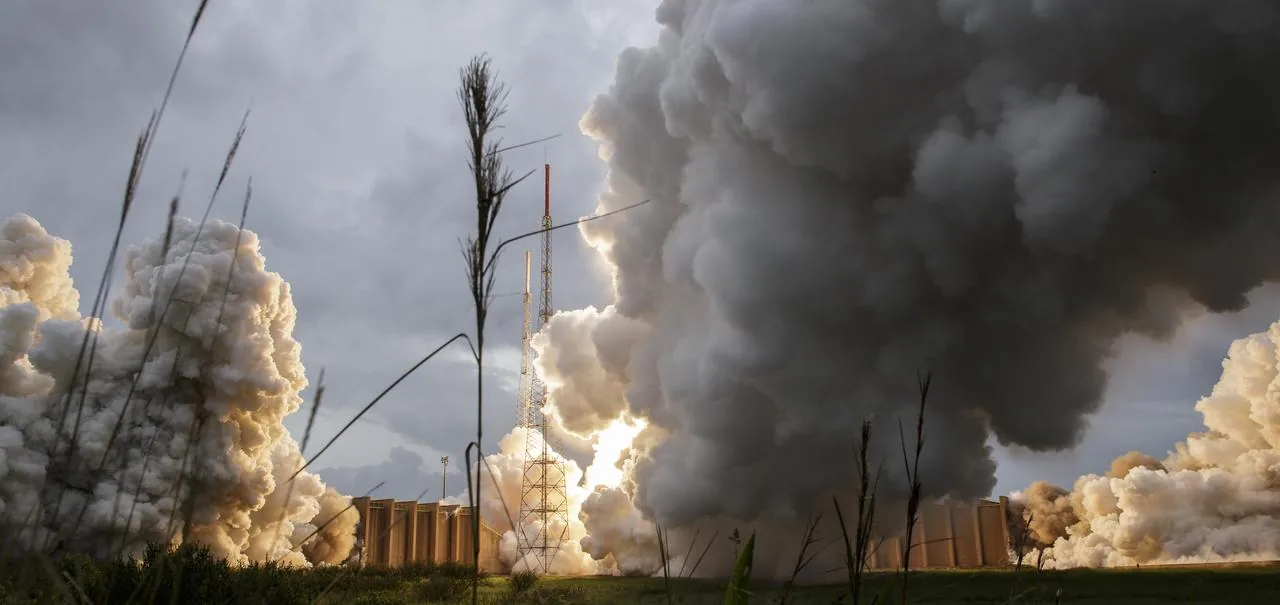
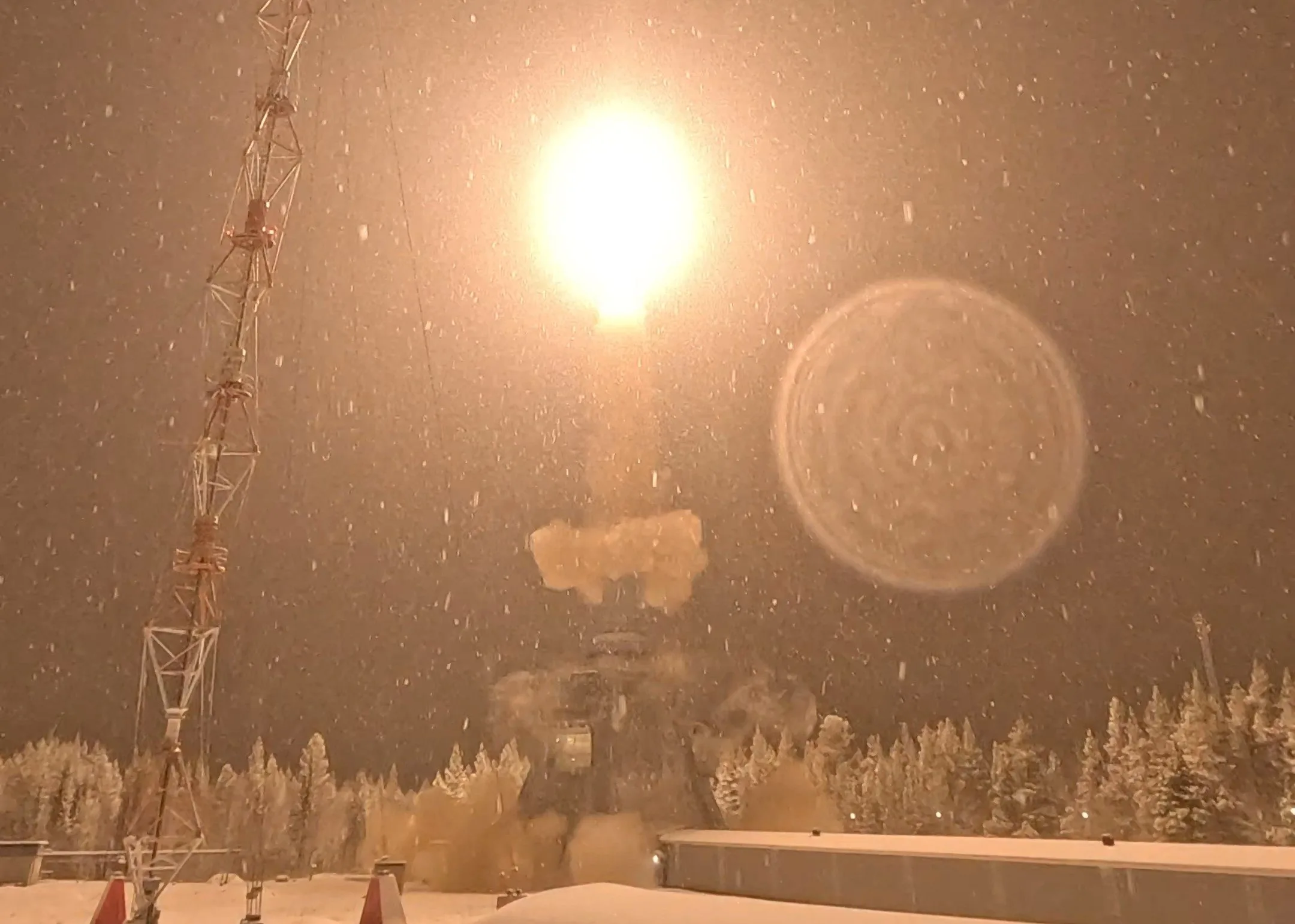
Sweden's involvement in space began not with a grand national vision but with geography and scientific curiosity. The country's far northern latitude — Kiruna sits at 67.86 degrees north, well above the Arctic Circle — made it an ideal location for studying the aurora borealis and the upper atmosphere. In the early 1960s, the European Space Research Organisation (ESRO), the precursor to ESA, was looking for a site to launch sounding rockets for ionospheric and magnetospheric research. Northern Sweden, with its sparse population, vast downrange recovery areas, and proximity to the auroral zone, was a natural choice.
Construction of the European Space Range — Esrange — began in 1964, about 40 kilometers east of Kiruna. The facility was officially inaugurated on September 24, 1966. The first rocket launch followed on November 19, 1966: a French-built Centaure sounding rocket carrying Belgian science payloads. It was modest by any standard — a small solid-fuel rocket lobbing instruments to about 150 kilometers altitude for a few minutes of data collection before splashing down in the uninhabited wilderness. But it established a pattern that would define Swedish space activity for decades: infrastructure provider, international partner, quiet enabler.
During the ESRO period from 1966 to 1972, more than 150 sounding rockets flew from Esrange. Most were Centaure, Nike Apache, and Skua vehicles reaching altitudes between 100 and 220 kilometers, supporting European research in atmospheric physics, ionospheric science, and auroral phenomena. The range was busy, productive, and thoroughly international — scientists from across Western Europe used Swedish infrastructure to study the space environment above their heads.
In 1972, ESRO transferred ownership of Esrange to Sweden. To manage the facility and Sweden's growing space ambitions, the Swedish government established Rymdbolaget — the Swedish Space Corporation, later known as SSC and now branded SSC Space. The new entity inherited a functioning launch range and a mandate to keep it running. What nobody predicted was how far the company would expand beyond that original brief.
Sweden's ambitions grew through the 1970s and 1980s alongside its deepening participation in ESA, which Sweden had joined as a founding member. Swedish engineers and scientists contributed to European space projects while simultaneously building domestic expertise. The culmination of this first era came on February 22, 1986, when Sweden's first satellite — Viking — rode an Ariane 1 rocket into orbit from Kourou, French Guiana, launched as a co-passenger alongside the French Earth observation satellite SPOT 1.

Viking was a polar-orbiting research satellite designed to investigate plasma processes in the magnetosphere and ionosphere — essentially continuing the work of Esrange's sounding rockets from a much higher vantage point. Built by SAAB Space (with Boeing Aerospace as a major subcontractor), the octagonal satellite weighed 286 kilograms, measured 1.9 meters in diameter, and operated in a highly elliptical 817 by 13,530 kilometer polar orbit, spinning at three revolutions per minute. The orbit was carefully chosen to allow Viking to pass through the auroral zone at varying altitudes, sampling the magnetic field lines where solar wind particles funnel down toward Earth's atmosphere to create the northern lights.
Viking's scientific instruments worked excellently, returning data on electric and magnetic fields, plasma waves, and particle distributions in the auroral acceleration region. The satellite operated for 444 days before radiation damage at high altitude degraded its battery beyond recovery. But the mission accomplished something beyond its science objectives: it proved that Sweden could design, build, manage, and operate a satellite. The experience, the institutional knowledge, and the industrial capability that Viking created became the foundation for everything that followed.
Esrange Space Center: Sixty Years and Counting
Esrange has evolved far beyond its origins as a sounding rocket range. Today it is one of the most versatile space facilities in Europe — a place where sounding rockets, stratospheric balloons, satellite ground stations, rocket engine tests, and now orbital launch infrastructure coexist within a single sprawling complex in the Swedish Arctic.
The numbers tell part of the story. More than 600 sounding rockets have been launched from Esrange since 1966. Nearly 700 stratospheric balloons have been released. The facility has hosted campaigns for NASA, ESA, CNES (France), DLR (Germany), and dozens of universities and research institutions. In the sounding rocket world, Esrange is one of the most active and experienced ranges on the planet.
Sounding rockets remain a core activity. Modern campaigns from Esrange use vehicles like the Swedish-German TEXUS and MAXUS rockets for microgravity research, the REXUS rockets that carry student experiments, and specialized vehicles for atmospheric science and technology demonstration. A typical sounding rocket flight reaches altitudes between 80 and 800 kilometers, providing several minutes of microgravity or access to atmospheric layers that are too high for balloons and too low for satellites — the so-called "ignorosphere" between 50 and 200 kilometers altitude that remains surprisingly poorly understood.
The Balloon Capital of Europe
Esrange's stratospheric balloon program deserves particular attention because it illustrates one of the Arctic location's most elegant advantages: the midnight sun.
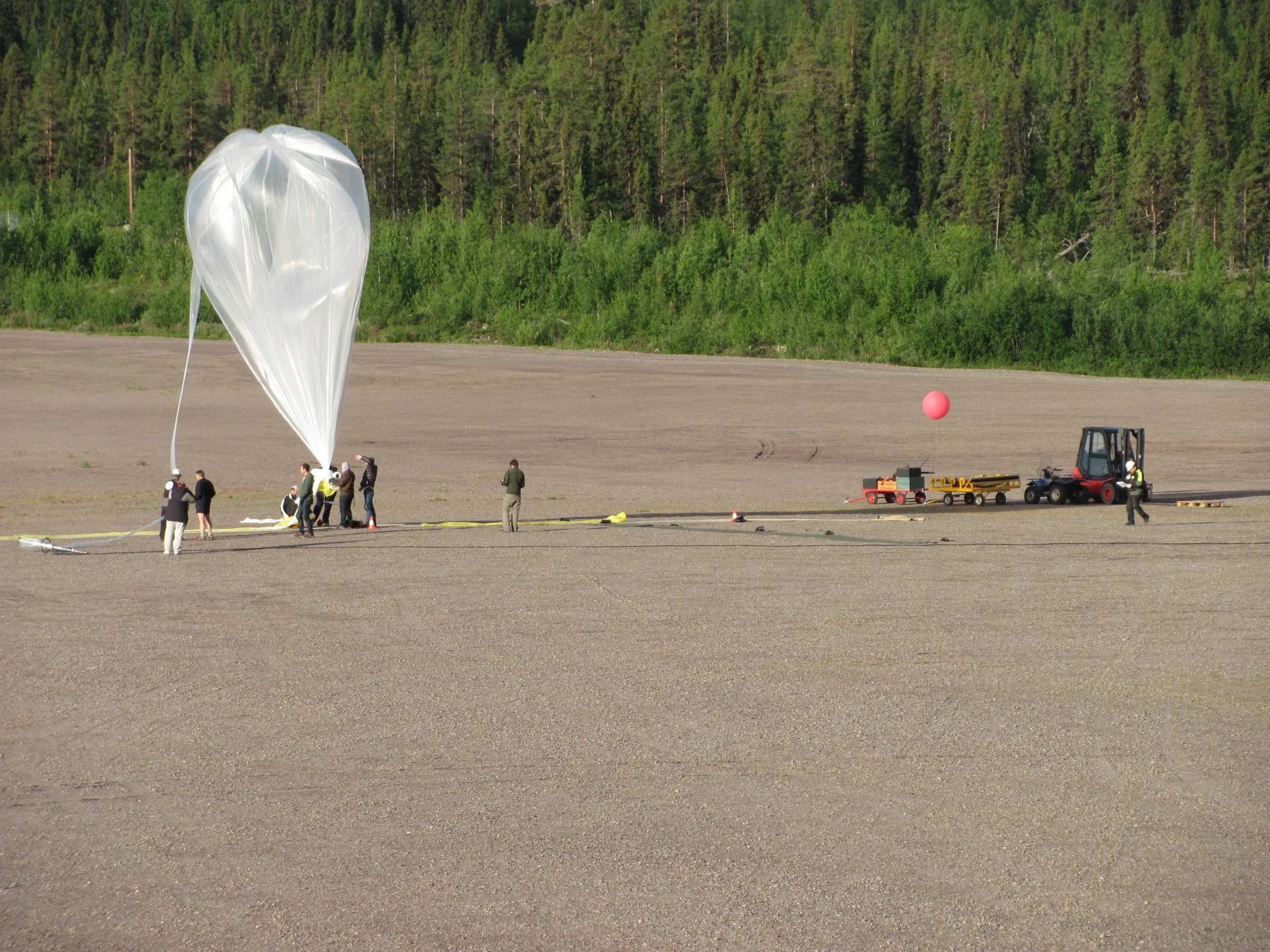
During the Arctic summer, from roughly late May through mid-July, the sun never sets at Esrange's latitude. This constant sunlight is extraordinarily valuable for balloon operations. Stratospheric balloons are essentially giant bags of helium floating at altitudes between 20 and 45 kilometers. When the sun shines on a balloon, the gas inside heats and expands; when darkness falls, it cools and contracts. This daily thermal cycling stresses the balloon material and causes altitude oscillations that can disrupt scientific observations. Under the midnight sun, these temperature fluctuations are minimized. The balloon floats at a stable altitude for days or even weeks at a time, providing a steady platform for instruments studying cosmic rays, solar physics, atmospheric chemistry, or astronomical phenomena.
The results have been remarkable. In the summer of 2024, SSC Space set a new record by launching eight stratospheric balloons in a single campaign season, surpassing the previous record of five set in 2019. One of those flights carried a NASA balloon that reached a maximum float altitude of 160,667 feet (approximately 49 kilometers) — a new NASA record for a balloon flight from Sweden. The campaigns involved partnerships with NASA, CNES, and scientific teams from across Europe and North America.
The SUNRISE III mission, a German-led solar telescope, launched from Esrange in June 2024 aboard one of the largest scientific balloons ever flown — a 60-million-cubic-foot monster that, when fully inflated at altitude, was larger than a football stadium. The telescope studied the sun's magnetic field and chromosphere at resolutions impossible to achieve from the ground, taking advantage of both the altitude (above 99.5 percent of Earth's atmosphere) and the continuous Arctic sunlight.

The Orbital Transformation
For most of its history, Esrange was a suborbital facility. That is changing.
The transformation began in earnest around 2020 when the Swedish government and SSC Space committed to developing orbital launch capability at Esrange. The vision was straightforward: Europe needed sovereign access to polar and sun-synchronous orbits, and Esrange's Arctic location made it uniquely suited to provide that access without the complications of overflying populated areas.
Infrastructure development has proceeded methodically. Launch Complex 3B was built to support ESA's Themis reusable rocket demonstrator program. Launch Complex 3C is being developed specifically for orbital missions, initially for Firefly Aerospace's Alpha rocket. The Orbital Launch Control Center (OLCC), the nerve center for orbital mission operations, was formally inaugurated on February 18, 2026. The OLCC oversees vehicle monitoring, countdown procedures, and coordination with range safety and airspace authorities.
A critical regulatory milestone was achieved on June 20, 2025, when Sweden and the United States signed a Technology Safeguards Agreement (TSA) — a bilateral treaty that provides the legal and technical framework for American commercial launch vehicles to operate from Swedish soil. Without this agreement, launching a U.S.-built rocket like Firefly Alpha from Esrange would be legally impossible under American export control regulations. The TSA negotiations took years and represented a significant diplomatic achievement.
In June 2025, the first Themis demonstrator — a 30-meter-tall, single-engine reusable rocket prototype built by ArianeGroup — was transported 3,000 kilometers from its factory in Les Mureaux, France, to Esrange. It was installed on Launch Complex 3B. ArianeGroup and ESA are targeting the second quarter of 2026 for the first low-altitude hop test, in which Themis will fly to approximately 100 meters altitude, hover, and land vertically. A second flight campaign, currently being defined, may see Themis reach altitudes above 20 kilometers, with an engine shutdown and relight sequence to validate the critical landing burn.
For orbital launches, Firefly Aerospace signed an agreement with SSC Space in 2024 to launch its Alpha rocket from Esrange. Alpha is a small launch vehicle capable of placing approximately 1,000 kilograms into low Earth orbit. The inaugural launch from Sweden is scheduled for late 2026 or early 2027. If successful, it would mark the first orbital launch from mainland European soil — a milestone whose strategic significance for European space autonomy cannot be overstated.
In March 2026, the picture expanded further when SSC Space announced a SEK 209 million (approximately $20 million) contract with the Swedish Defense Materiel Administration (FMV) to establish satellite launch capability at Esrange for military purposes, enabling tactically responsive space missions for Sweden and its NATO allies.
Swedish Space Corporation: The Quiet Infrastructure Giant

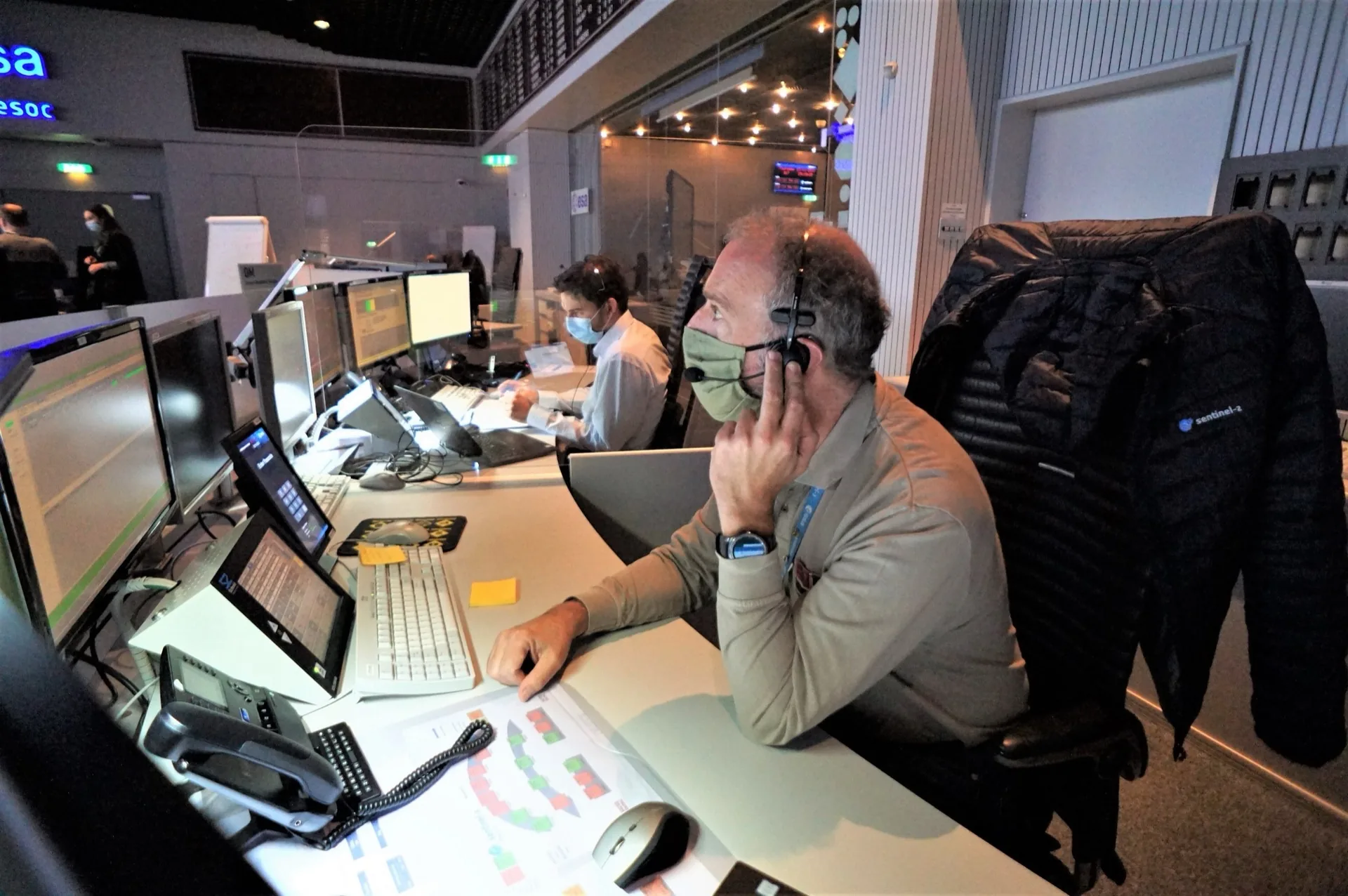
If Esrange is Sweden's most visible space asset, SSC Space — the company that operates it — is the country's most consequential one. And most people in the space industry, let alone the general public, have only a vague idea of what SSC Space actually does and how large it has become.
SSC Space is 100 percent owned by the Swedish government. It was founded in 1972 as Rymdbolaget to take over Esrange from ESRO, but it has grown into something far larger than a single launch range operator. Today, the company employs close to 800 people with operations in Sweden, the United States, Australia, Chile, Thailand, Germany, the Netherlands, and the United Kingdom. In 2024, SSC Space reported net sales of SEK 1,744 million (approximately $170 million), a 19 percent increase from the previous year.
The company operates across three main business areas: launch services (sounding rockets, balloons, and soon orbital launches from Esrange), engineering services (spacecraft operations, aviation systems, and technical consulting), and — the one that truly sets SSC apart — satellite ground station services.
PrioraNet: The World's Largest Commercial Ground Station Network
SSC Space owns and operates PrioraNet, the world's largest commercial network of multi-mission satellite ground stations. This is the asset that makes SSC quietly indispensable to the global space industry.
The network comprises approximately 10 SSC-owned ground stations strategically positioned around the globe, plus 11 supplementary partner stations. SSC's own stations are located in Sweden, the United States, Canada, Chile, Thailand, and Australia. Partner stations extend the network's reach to Germany, Italy, Spain, Latvia, South Africa, India, Japan, and Antarctica. Collectively, PrioraNet provides ground station coverage across every continent on Earth, including Antarctica.
At Esrange alone, the ground segment includes more than 30 antennas. The company describes its ground station network as the world's second-largest commercial operation of its kind — though by some measures, it is the largest multi-mission commercial network, depending on how you define the category.
The service PrioraNet provides is deceptively simple: when a satellite passes over one of SSC's ground stations, the station's antennas track the satellite, download its data, and upload commands. For satellites in low Earth orbit — which is most Earth observation, weather, and scientific satellites — each ground contact lasts only about 10 to 15 minutes per pass. The more ground stations you have, spread across more latitudes and longitudes, the more passes you can catch and the more data you can download. A global network like PrioraNet means satellite operators can access their spacecraft multiple times per orbit, rather than waiting hours for the satellite to pass over a single station.
The customers are a who's-who of the space industry: ESA, NASA, EUMETSAT, national space agencies, commercial satellite operators, and increasingly, constellations of small satellites that need distributed ground infrastructure they cannot afford to build themselves. In 2024, ispace — the Japanese lunar exploration company — contracted SSC's ground station network to support its M3 lunar mission, demonstrating that PrioraNet's capabilities extend beyond Earth orbit.
The geopolitical dimension of SSC's ground station business became visible in 2020, when the company announced it would not renew contracts with Chinese customers at its stations in Kiruna, Santiago (Chile), and Dongara (Australia). SSC cited the changed "geopolitical situation" as the reason, following a Swedish Defense Research Agency finding that Chinese access to Arctic ground station infrastructure could potentially be used for military intelligence purposes. The decision was a quiet but significant moment in the broader Western decoupling from Chinese space infrastructure.
Revenue and Growth
SSC Space's financial trajectory reflects the broader growth of the space industry. The company's 2024 turnover of SEK 1,744 million represented 19 percent growth over 2023. The January-through-September 2025 interim report showed continued momentum, with net sales of SEK 1,331 million — an 8 percent increase over the same period in 2024. The company's operating profit in 2024 was slightly negative (SEK -9 million), reflecting heavy capital investment in new antenna systems and launch infrastructure at Esrange — investments that are expected to generate returns as the orbital launch business materializes and ground station demand continues to grow.
OHB Sweden: The Satellite Builder
Sweden does not just operate space infrastructure — it builds satellites. OHB Sweden, based in Stockholm, is the country's primary satellite manufacturer and one of Europe's most experienced builders of small and medium-sized spacecraft.
OHB Sweden traces its lineage directly back to the Swedish Space Corporation's satellite division — the same team that built Viking in the 1980s. The division was later spun off and eventually acquired by OHB SE, the German space and technology group. Today, OHB Sweden operates as an OHB subsidiary but retains deep roots in the Swedish space ecosystem and a distinctive engineering culture shaped by decades of building capable satellites on tight budgets.
Prisma: Pioneering Formation Flying
One of OHB Sweden's most important missions was Prisma, launched on June 15, 2010, aboard a Ukrainian Dnepr rocket from Yasny, Russia. Prisma consisted of two satellites — the larger Mango spacecraft and the smaller Tango target — designed to demonstrate autonomous formation flying and rendezvous in orbit.
The mission was groundbreaking. Prisma demonstrated that two satellites could autonomously find each other, approach, fly in precise formation, and perform proximity operations with centimeter-level accuracy — all without human intervention. The onboard GPS navigation system provided relative positioning accurate to better than 10 centimeters and velocity measurements to within 1 millimeter per second. The system could maintain passive safe relative orbits, perform autonomous rendezvous from several kilometers away down to a few hundred meters, execute proximity operations with centimeter accuracy, and trigger collision avoidance when necessary.
These are exactly the capabilities required for future missions involving in-orbit servicing, active debris removal, and on-orbit assembly — fields that barely existed as practical engineering disciplines when Prisma launched but have since become among the hottest areas in the space industry. The technologies validated by Prisma directly influenced ESA's subsequent planning for missions like e.Deorbit (later ClearSpace-1), the European active debris removal demonstrator.
Prisma also tested the High Performance Green Propulsion (HPGP) system, which uses ADN-based (ammonium dinitramide) propellant as a less toxic alternative to hydrazine — the standard but highly hazardous fuel used in most spacecraft thrusters. The successful in-orbit demonstration of HPGP was a significant milestone for environmentally safer space propulsion.
InnoSat: A Platform for Small Science
OHB Sweden developed the InnoSat platform as a standardized, low-cost microsatellite bus for scientific research missions. InnoSat spacecraft weigh approximately 40 to 50 kilograms in their standard configuration, with dimensions of roughly 60 by 70 by 85 centimeters. The platform is designed to be highly adaptable — different instrument payloads can be accommodated with minimal changes to the core spacecraft systems.
The first InnoSat mission was MATS (Mesospheric Airglow/Aerosol Tomography and Spectroscopy), a joint project between OHB Sweden and Stockholm University. MATS was launched on November 4, 2022, aboard a Rocket Lab Electron vehicle from Mahia Peninsula, New Zealand, into a 585-kilometer circular orbit. The satellite studies noctilucent clouds and atmospheric airglow from oxygen molecules in the mesosphere — the atmospheric layer between roughly 50 and 80 kilometers altitude where temperatures can drop below minus 130 degrees Celsius. MATS was the first new Swedish scientific research satellite in over two decades, and it validated the InnoSat concept as a viable platform for affordable, capable science missions.
Arctic Weather Satellite and the Sterna Constellation
OHB Sweden's most commercially significant recent achievement is the Arctic Weather Satellite (AWS), a technology demonstrator built for ESA and EUMETSAT. Launched on August 16, 2024, aboard a SpaceX Falcon 9 from Vandenberg Space Force Base as part of the Transporter-11 rideshare mission, AWS carries a cross-track scanning microwave radiometer for high-resolution atmospheric temperature and humidity measurements. The satellite operates in a polar orbit optimized for Arctic coverage — a region where weather forecasting remains particularly challenging and where climate change is occurring fastest.
The prototype's success led to a major contract: ESA awarded OHB Sweden the contract to build 20 satellites for the EPS-Sterna constellation, a full operational weather monitoring system based on the AWS design. The contract is valued at EUR 248 million. The first six Sterna satellites are targeted for launch in 2029. For OHB Sweden, this represents the transition from a boutique builder of one-off science satellites to a series manufacturer of operational constellation spacecraft — a qualitative leap in the company's capabilities and commercial scale.
Sweden's Scientific Contributions: IRF and the Instrument Tradition
Sweden's scientific footprint in space extends far beyond its own satellite missions. The Swedish Institute of Space Physics (IRF), a government research institute headquartered in Kiruna with additional offices in Uppsala, Umea, and Lund, has built instruments for an extraordinary roster of international space missions.
IRF's core expertise is in measuring plasmas, electric and magnetic fields, and energetic particles in space — the physics of the solar wind, planetary magnetospheres, and the interaction between the two. This expertise, developed over decades of sounding rocket experiments from Esrange and refined through each successive satellite mission, has made IRF a go-to partner for ESA and other space agencies when they need reliable, flight-proven plasma instruments.
The list of missions carrying IRF instruments reads like a timeline of European space science. The Cluster mission (launched 2000) — four satellites flying in formation to study Earth's magnetosphere in three dimensions — carries IRF instruments. Mars Express (2003), ESA's long-running Mars orbiter, includes IRF contributions. The Rosetta comet mission (2004) carried two IRF instruments: an ion mass spectrometer (ICA) built in Kiruna and two Langmuir probes (LAP) built in Uppsala, both designed to study the partially ionized gas and dust flowing from Comet 67P/Churyumov-Gerasimenko as it was heated by the sun. ESA's three-satellite Swarm constellation (2013), mapping Earth's magnetic field with unprecedented precision, includes IRF instrumentation.
BepiColombo, the joint ESA-JAXA mission to Mercury launched in 2018, carries three IRF instruments across its two orbiters: MIPA (Miniature Ion Precipitation Analyzer) on the European Mercury Planetary Orbiter, and contributions to the Japanese Mercury Magnetospheric Orbiter's particle instrument package, including an Energetic Neutrals Analyzer. Solar Orbiter (2020), studying the solar wind and the Sun from inside Mercury's orbit, carries IRF-built sensors.
But IRF's largest project to date is its contribution to JUICE — the Jupiter ICy Moons Explorer, launched in April 2023 on a trajectory that will bring it to Jupiter in 2031. Two of the mission's ten scientific instruments are Swedish, developed by IRF. The Particle Environment Package (PEP), led by IRF in Kiruna, will study how neutral and charged particles behave in Jupiter's magnetosphere and interact with the icy moons Europa, Ganymede, and Callisto. For IRF, JUICE represents both the culmination of decades of instrument-building experience and the institute's most ambitious undertaking.
Looking ahead, IRF is developing the SCIENA instrument (Solar wind Cometary Ions and Energetic Neutral Atoms) for ESA's Comet Interceptor mission, which will visit a dynamically new comet — one making its first approach to the inner solar system from the Oort Cloud. And IRF has been selected to lead instrument consortia for two potential future ESA missions: the Plasma Observatory, a multi-spacecraft magnetospheric physics mission, and M-MATISSE, a Mars mission concept. Both are in competition under ESA's science program.
The breadth of IRF's portfolio is remarkable for an institute with a relatively modest headcount. It reflects a deliberate Swedish strategy: rather than trying to build entire missions independently — which would be prohibitively expensive for a country Sweden's size — invest in world-class instrument-building capability and use it as currency to buy seats at the table of the biggest international missions. It is a strategy that has worked exceptionally well.
The Arctic Launch Advantage
Why would anyone build an orbital launch site above the Arctic Circle? The answer lies in orbital mechanics and geography.
Most of the world's spaceports — Cape Canaveral, Kourou, Baikonur, Tanegashima, Sriharikota — are located at low or mid-latitudes. This makes sense for launches into equatorial or low-inclination orbits, particularly geostationary transfer orbits, because launching from near the equator gives the rocket a free velocity boost from Earth's rotation. Kourou, at 5 degrees north latitude, is optimally positioned for these missions, which is why ESA built its primary spaceport in French Guiana.
But a large and growing share of satellite missions require high-inclination orbits, specifically polar orbits (inclination near 90 degrees) and sun-synchronous orbits (SSO, typically 96 to 99 degrees inclination). Earth observation satellites, weather satellites, reconnaissance satellites, and many scientific missions all operate in these orbits because they allow the satellite to eventually pass over every point on Earth's surface. Sun-synchronous orbits are particularly valuable because the satellite crosses each latitude at the same local solar time on every pass, providing consistent lighting conditions for imaging.
To reach a polar orbit, a rocket must launch roughly due north or due south. To reach a sun-synchronous orbit, it must launch slightly west of due north (retrograde to Earth's rotation). In both cases, the rocket's ground track during ascent runs north-south — and this is where Esrange's geography becomes a decisive advantage.
Esrange sits at 67.89 degrees north latitude, near the top of Scandinavia. Launches to the north overfly only the sparsely inhabited Arctic, then the Arctic Ocean. There are no populated areas in the flight path. No foreign countries' territory to negotiate overflight agreements with. No densely populated coastlines to worry about in the event of a launch failure. The contrast with many other potential European launch sites is stark: launching a rocket due north from most locations in continental Europe would send it over multiple countries and millions of people.
Esrange can serve orbital inclinations ranging from approximately 87 to 100-plus degrees — precisely the range needed for polar and sun-synchronous missions. It cannot efficiently serve equatorial or low-inclination orbits, which is why Esrange is complementary to Kourou rather than competitive with it. Europe needs both: Kourou for geostationary and low-inclination missions, Esrange (and Andoya) for polar and sun-synchronous missions. The two spaceports address different orbital regimes, and having both gives Europe complete orbital access using its own infrastructure.
The Nordic Launch Corridor
Sweden is not alone in the far north. Norway's Andoya Spaceport, located at 69 degrees north on the island of Andoya in northern Norway, was inaugurated in late 2023 — roughly nine months after Esrange's inaugural ceremony as an orbital-capable facility. Andoya offers launch inclinations from 87.4 to 108 degrees, similar to Esrange, and is designed to serve the small satellite market with vehicles like Isar Aerospace's Spectrum rocket.
Together, Esrange and Andoya form what is increasingly referred to as a Nordic launch corridor — two independent, complementary spaceports in neighboring NATO countries, both optimized for polar and sun-synchronous orbits. The strategic value of this redundancy is significant. If one site is unavailable due to weather, technical issues, or — in a more concerning scenario — military disruption, the other can provide backup access. For a Europe that has painfully learned the cost of depending on Russian launch services (Soyuz launches from Kourou ended abruptly after Russia's invasion of Ukraine in 2022), having multiple independent launch options is no longer an abstract preference but an operational necessity.
The Nordic corridor also offers scheduling flexibility. Polar and SSO launch demand is growing rapidly, driven by the proliferation of Earth observation constellations, military surveillance satellites, and IoT/communications systems in polar orbit. Having two operational spaceports in the same latitude band reduces bottlenecks and gives launch providers options for manifesting missions.
Future Outlook: Europe's Second Operational Spaceport
Sweden's space program is entering a period of acceleration that has no precedent in its sixty-year history.
At Esrange, the convergence of multiple programs is creating a critical mass of activity. Firefly Aerospace's Alpha rocket, ESA's Themis reusable demonstrator, and potentially other launch vehicles will share the facility's growing infrastructure. If the first orbital launch occurs in late 2026 or early 2027 as planned, Esrange will become the first operational orbital spaceport on mainland Europe — a distinction with both practical and symbolic significance for European space sovereignty.
The defense dimension is new and growing fast. Sweden's entry into NATO in March 2024 has accelerated the military space conversation. In January 2026, the Swedish government announced an investment of more than SEK 5.3 billion (approximately $500 million) in enhanced drone and space capabilities for the armed forces, with SEK 1.3 billion dedicated specifically to space-based reconnaissance and surveillance. Around ten additional military satellites will be acquired, following the successful launch of Sweden's first military communications satellite, Gna-3, in August 2024. The head of the Swedish Armed Forces' Space Department has outlined a roadmap that envisions operational military satellites by 2030.
The March 2026 contract between SSC Space and FMV to establish military launch capability at Esrange — valued at SEK 209 million — signals that Esrange will serve as a dual-use facility for both commercial and defense missions. For NATO, having a member state with an operational orbital launch site above the Arctic Circle, capable of providing tactically responsive space access to the alliance, is a significant strategic asset.
OHB Sweden's EUR 248 million Sterna constellation contract positions the company for long-term growth as a series satellite manufacturer. The InnoSat platform continues to attract interest for future science missions. And the company's heritage in formation flying (Prisma) and autonomous rendezvous positions it well for the emerging markets in in-orbit servicing, active debris removal, and on-orbit assembly.
SSC Space's ground station business continues to expand. As the number of satellites in orbit grows — from roughly 10,000 active satellites today to potentially 100,000 or more by the early 2030s — the demand for ground station contact time grows proportionally. SSC Space's PrioraNet network, with its global coverage and multi-mission flexibility, is positioned to capture a significant share of this growth. The company's decision to cut ties with Chinese customers in 2020, while costly in the short term, has arguably strengthened its position as a trusted Western infrastructure provider — a distinction that carries increasing commercial value in an era of bifurcating space ecosystems.
Sweden's broader national space ambitions were articulated at the spacenext 2026 conference, where Swedish officials outlined a goal of becoming a European New Space leader by 2029. The country's government has unveiled what it describes as the largest research and innovation investment in Swedish history, with space technologies among the priority areas. The Swedish National Space Agency (SNSA), with an annual budget of approximately SEK 1.3 billion (around EUR 100 million) — the majority of which funds Sweden's ESA contributions — provides the institutional framework for these ambitions.
IRF continues to push the boundaries of space physics instrumentation. With instruments currently operating at Mars (Mars Express), en route to Mercury (BepiColombo), studying the Sun from close range (Solar Orbiter), and headed for Jupiter (JUICE), Swedish-built sensors are conducting science across much of the solar system. The upcoming Comet Interceptor and potential Plasma Observatory missions would extend this reach further.
Perhaps the most striking thing about Sweden's space program is how consistently it has punched above its weight without calling attention to itself. There has been no Swedish astronaut corps, no crewed spaceflight ambitions, no flashy national prestige missions. Instead, Sweden has methodically built the infrastructure that everyone else needs — ground stations, launch facilities, instrument expertise, satellite platforms — and in doing so has made itself quietly indispensable to the European and global space enterprise.
The spaceport above the Arctic Circle, the ground stations spanning every continent, the instruments flying to Jupiter and Mercury, the formation-flying satellites that proved autonomous rendezvous was possible, the weather constellation contract that will put Swedish-built satellites in operational service for decades — none of these individually make Sweden a space superpower. Collectively, they make Sweden something arguably more valuable: a space infrastructure power. In an industry that is growing faster than at any time since the 1960s, the countries that own the infrastructure will shape the future.
Sweden has been building that infrastructure, patiently and persistently, for sixty years. The waiting is over. The launches are about to begin.