FragmentationOctober 19, 2024
Intelsat 33e Breakup (GEO)
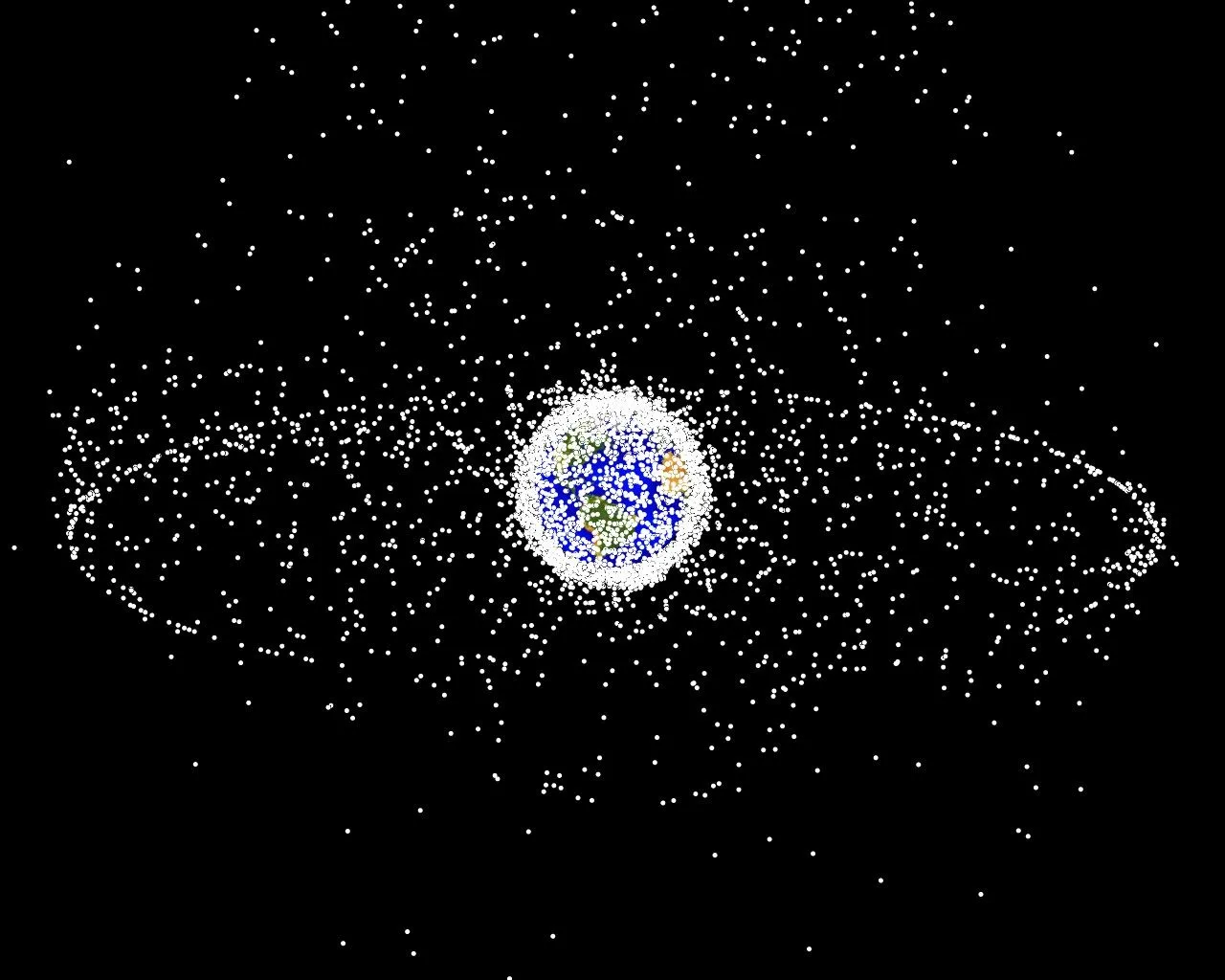
On 19 October 2024, the Boeing-built Intelsat 33e communications satellite disintegrated in geostationary orbit. The U.S. Space Force initially tracked about 20 fragments, later cataloguing dozens, while a NASA-standard breakup model estimated roughly 4,400 pieces larger than 1 cm. The event is especially significant because geostationary debris does not decay — fragments will circulate in the densely packed GEO belt indefinitely, threatening high-value broadcast and communications satellites.
At a glance
- Date
- October 19, 2024
- Type
- Fragmentation
- Orbit regime
- GEO (~35,786 km)
- Trackable fragments
- 4,393+
In depth
On 19 October 2024, at about 04:30 UTC, the Intelsat 33e communications satellite abruptly disintegrated in geostationary orbit. Built by Boeing on its 702MP bus and launched in August 2016, the high-throughput satellite served customers across Europe, Africa, the Middle East and Asia from a slot at 60° East. It had a troubled history — propulsion problems around 2016 and 2017 delayed its entry into service and cut short its planned 15-year design life by somewhere between a year and a half and roughly three and a half years, depending on the estimate — and its sudden, total breakup ended operations without warning after less than eight years on station. Intelsat confirmed the loss of the spacecraft, and the failure was uninsured, adding a significant financial blow to the technical one.
The debris picture grew steadily as more sensors turned toward the wreckage. U.S. Space Forces–Space initially reported tracking about 20 associated fragments; commercial space-domain-awareness firms such as ExoAnalytic Solutions soon identified far more, counting roughly 500 pieces within about ten days and more than 700 by mid-December 2024 as fainter fragments came into view. A separate analysis applying the NASA Standard Breakup Model estimated the event generated on the order of 4,393 fragments larger than 1 cm — most too small to track individually but each capable of destroying a functioning satellite at orbital speed. What makes this breakup uniquely serious is its location: unlike low-orbit debris that atmospheric drag eventually removes, geostationary debris sits at roughly 35,786 km where there is effectively no drag. These fragments will circulate in and around the crowded GEO belt for a very long time — centuries or longer.
The GEO ring is prime real estate, home to the world's broadcast, weather and communications satellites, so a persistent debris field there is a lasting concern for every operator sharing that band. In the aftermath, tracking networks worked to map the spreading cloud and issue conjunction warnings so nearby satellites could be watched or maneuvered, and the event reinforced arguments for stronger end-of-life disposal — boosting dying GEO satellites into a "graveyard" orbit a few hundred kilometers above the belt before they can fail catastrophically. Well into 2025 and beyond, hundreds of Intelsat 33e fragments remained under active surveillance, and the breakup stands as one of the most consequential GEO fragmentation events on record.
Frequently asked questions
How many fragments did the Intelsat 33e breakup create?
Tracked counts grew over time: the U.S. Space Force first reported about 20 fragments, while ExoAnalytic Solutions identified roughly 500 within about ten days and more than 700 by mid-December 2024. A NASA Standard Breakup Model analysis estimated around 4,393 fragments larger than 1 cm in total, most too small to track individually.
Will the Intelsat 33e debris ever come down?
Not for a very long time. The satellite broke up in geostationary orbit at roughly 35,786 km, where there is essentially no atmospheric drag. Unlike low-orbit debris that re-enters within months or years, GEO fragments remain a hazard to the crowded geostationary belt for centuries or longer.
What caused Intelsat 33e to break apart?
The exact root cause of the October 2024 breakup was not publicly confirmed. The Boeing-built satellite had a history of propulsion malfunctions around 2016 and 2017 that had already reduced its service life, and its sudden total disintegration is consistent with a catastrophic on-board failure rather than a collision.
Why is a breakup in GEO more serious than one in low Earth orbit?
Geostationary orbit is a narrow, densely shared ring where the world's broadcast and communications satellites sit, and there is no atmospheric drag to clean it up. A LEO debris cloud largely re-enters over time, but GEO debris circulates for centuries or longer, making every fragment a long-term collision threat to high-value satellites.
Related
Data sourced from ESA Space Debris Office, NASA Orbital Debris Program Office, and U.S. Space Command catalog reporting. © SpaceOdysseyHub.