So you love space. Maybe you have glow-in-the-dark stars on your ceiling. Maybe you have watched every rocket launch video on YouTube twice. Maybe you looked up at the Moon one night and thought, "I want to go there." If that sounds like you, you are in the right place. This guide is packed with everything a young space fan needs to know -- from the basics of our solar system to how rockets actually work, from what astronauts eat for dinner to how you can start exploring the universe from your own backyard tonight.
Let us blast off.
A Tour of Our Solar System
Our solar system is our cosmic neighborhood, and it is wilder than any science fiction movie.
The Sun is the star at the center of everything. It is so big that about 1.3 million Earths could fit inside it. The surface temperature is around 5,500 degrees Celsius (10,000 degrees Fahrenheit), and it has been burning for about 4.6 billion years. It will keep going for another 5 billion or so, which gives us plenty of time to explore.
Mercury is the closest planet to the Sun and the smallest planet in our solar system. It has almost no atmosphere, so during the day the surface reaches 430 degrees Celsius, and at night it drops to negative 180 degrees. Talk about extreme weather.
Venus is sometimes called Earth's "evil twin." It is almost the same size as Earth, but its thick atmosphere traps heat so effectively that the surface temperature is about 465 degrees Celsius -- hotter than Mercury, even though Venus is farther from the Sun. It also rains sulfuric acid there. Maybe not ideal for a vacation.
Earth -- that is us. The only known planet with liquid water on its surface, a breathable atmosphere, and life. We are pretty special, and one of the reasons we explore space is to understand why.
Mars is the planet humans are most likely to visit next. It has the tallest volcano in the solar system (Olympus Mons, about 22 kilometers high -- nearly three times the height of Mount Everest) and a canyon system (Valles Marineris) that would stretch across the entire United States. NASA's Perseverance rover is exploring Mars right now, looking for signs of ancient life.
Jupiter is the heavyweight champion -- a gas giant so massive that all the other planets combined would still weigh less. Its Great Red Spot is a storm that has been raging for hundreds of years and is bigger than Earth. Jupiter has at least 95 known moons, including Europa, which has a liquid ocean beneath its icy surface where life might exist.
Saturn is famous for its stunning rings, made of billions of pieces of ice and rock ranging from tiny grains to chunks the size of houses. Saturn is so light for its size that if you could find a bathtub big enough, it would float.
Uranus rotates on its side, like a rolling ball, probably because something enormous crashed into it billions of years ago. It is an "ice giant" with a blue-green color from methane in its atmosphere.
Neptune is the farthest planet from the Sun and has the fastest winds in the solar system -- over 2,000 kilometers per hour. Its moon Triton is one of the coldest objects in the solar system and might have geysers that shoot nitrogen gas into space.
And then there are the dwarf planets (including Pluto, which we still love even though it was reclassified in 2006), asteroids, comets, and the Kuiper Belt -- a region beyond Neptune filled with icy objects that we are just beginning to explore.
How Do Rockets Work?
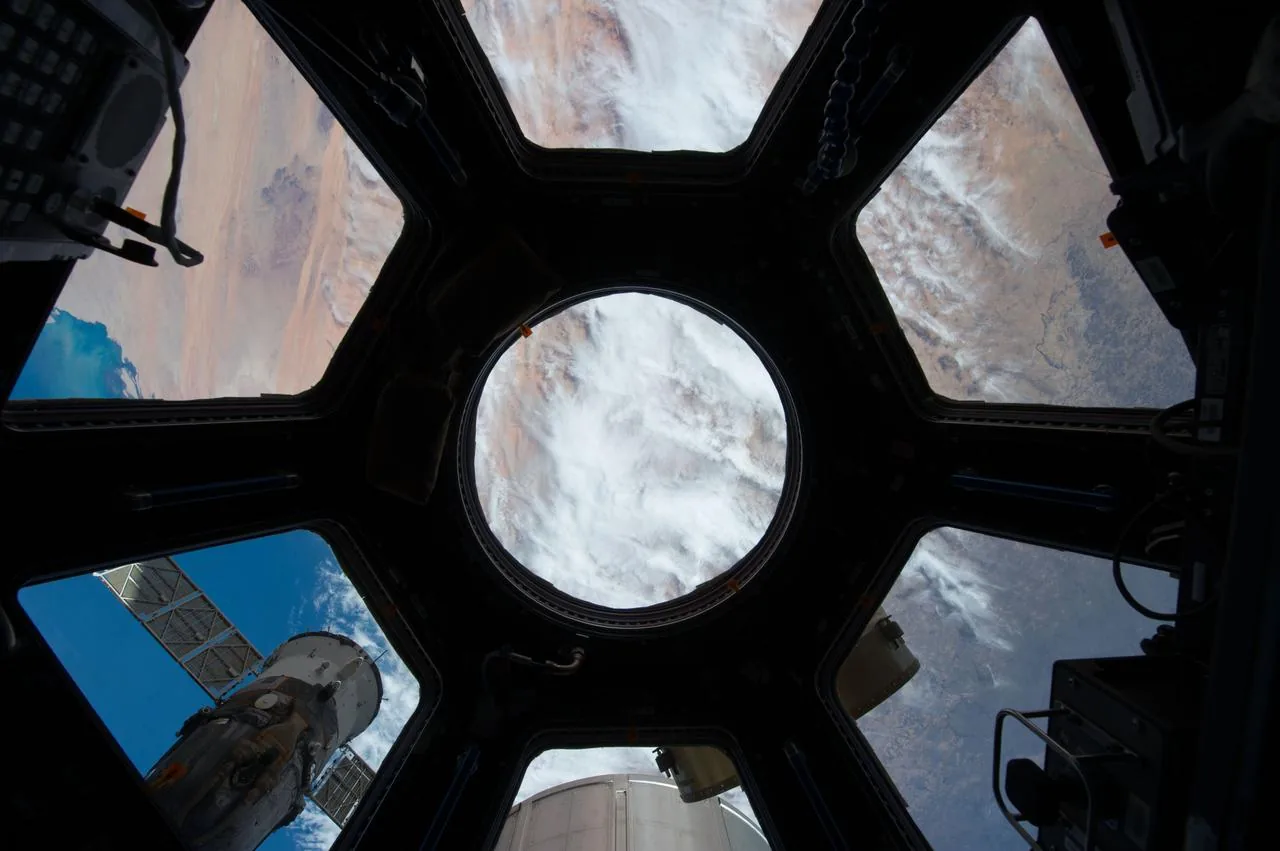
Here is the big secret about rockets: they work on the same principle as a balloon you blow up and then let go. When air rushes out of the balloon in one direction, the balloon flies in the other direction. That is Newton's Third Law of Motion -- for every action, there is an equal and opposite reaction.
A rocket engine burns fuel (called propellant) and forces the hot exhaust gases out of the bottom of the rocket at incredible speed. The force of those gases shooting downward pushes the rocket upward. The faster and harder the gases are expelled, the more thrust the rocket produces.
Most rockets use either solid propellant (which burns like a giant firework and cannot be turned off once lit) or liquid propellant (which can be controlled, throttled up and down, and even shut off and restarted). SpaceX's Falcon 9 rocket, for example, uses liquid oxygen and a type of refined kerosene called RP-1. The Space Shuttle used both -- solid rocket boosters strapped to the sides and liquid hydrogen and oxygen in the main engines.
Here is something amazing: to get to orbit, a rocket needs to reach a speed of about 28,000 kilometers per hour (17,500 miles per hour). That is fast enough to travel from London to New York in about 12 minutes. Most of the rocket's weight at launch is fuel -- the Falcon 9 is about 96% propellant by mass.
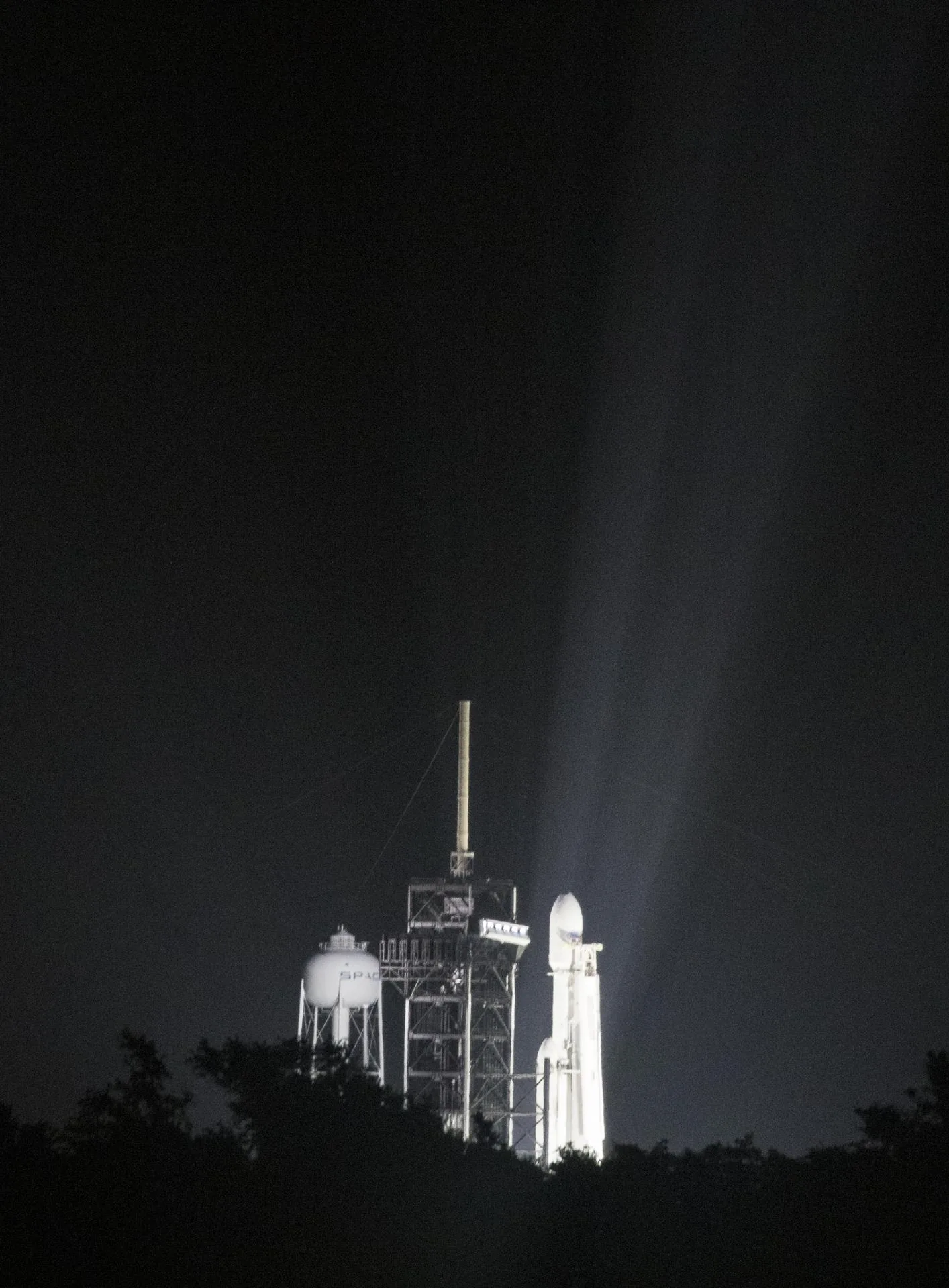
And here is the coolest part of modern spaceflight: some rockets can now land themselves after launch and be used again. SpaceX's Falcon 9 boosters routinely fly back to Earth and land on their tails, either on a landing pad near the launch site or on a drone ship floating in the ocean. Watching a 47-meter-tall rocket booster descend on a column of flame and gently touch down never gets old.
What Do Astronauts Eat in Space?
Forget the image of astronauts squeezing grey paste out of tubes -- space food has come a long way. Astronauts on the International Space Station eat a variety of foods including tortillas (used instead of bread because bread makes crumbs that float everywhere and can clog equipment), freeze-dried fruits, thermostabilized pouches of curry, macaroni and cheese, shrimp cocktail, and even brownies.
There is no refrigerator on the ISS (well, not for food -- there are science freezers), so food is either freeze-dried (you add water from the station's water recovery system), thermostabilized (heat-treated and sealed, like canned food but in pouches), or irradiated to keep it safe without refrigeration.
Astronauts report that their sense of taste is dulled in microgravity -- fluids shift toward their heads, causing a stuffy-nose sensation similar to a cold. That is why spicy food and hot sauce are especially popular on the station. Space agencies also send occasional fresh fruit and vegetables on resupply missions, which crews reportedly go absolutely wild for after months of packaged food.
Drinking in space is done through pouches with straws. If you tried to pour a glass of water, the water would form floating blobs and drift around the cabin. (Which is fun to watch but terrible for electronics.)
The Coolest Space Facts You Can Share With Anyone
- A day on Venus is longer than a year on Venus. It takes Venus 243 Earth days to rotate once on its axis but only 225 Earth days to orbit the Sun.
- There is a mountain on Mars called Olympus Mons that is nearly three times the height of Mount Everest and about the same size as the entire state of Arizona.
- Neutron stars are so dense that a teaspoon of neutron star material would weigh about 6 billion tonnes -- roughly the weight of every car on Earth combined.
- The footprints Apollo astronauts left on the Moon are still there and will remain undisturbed for millions of years because there is no wind or rain to erode them.
- Space is completely silent. Sound needs a medium (like air or water) to travel through, and space is a near-perfect vacuum. Explosions in space are eerily quiet.
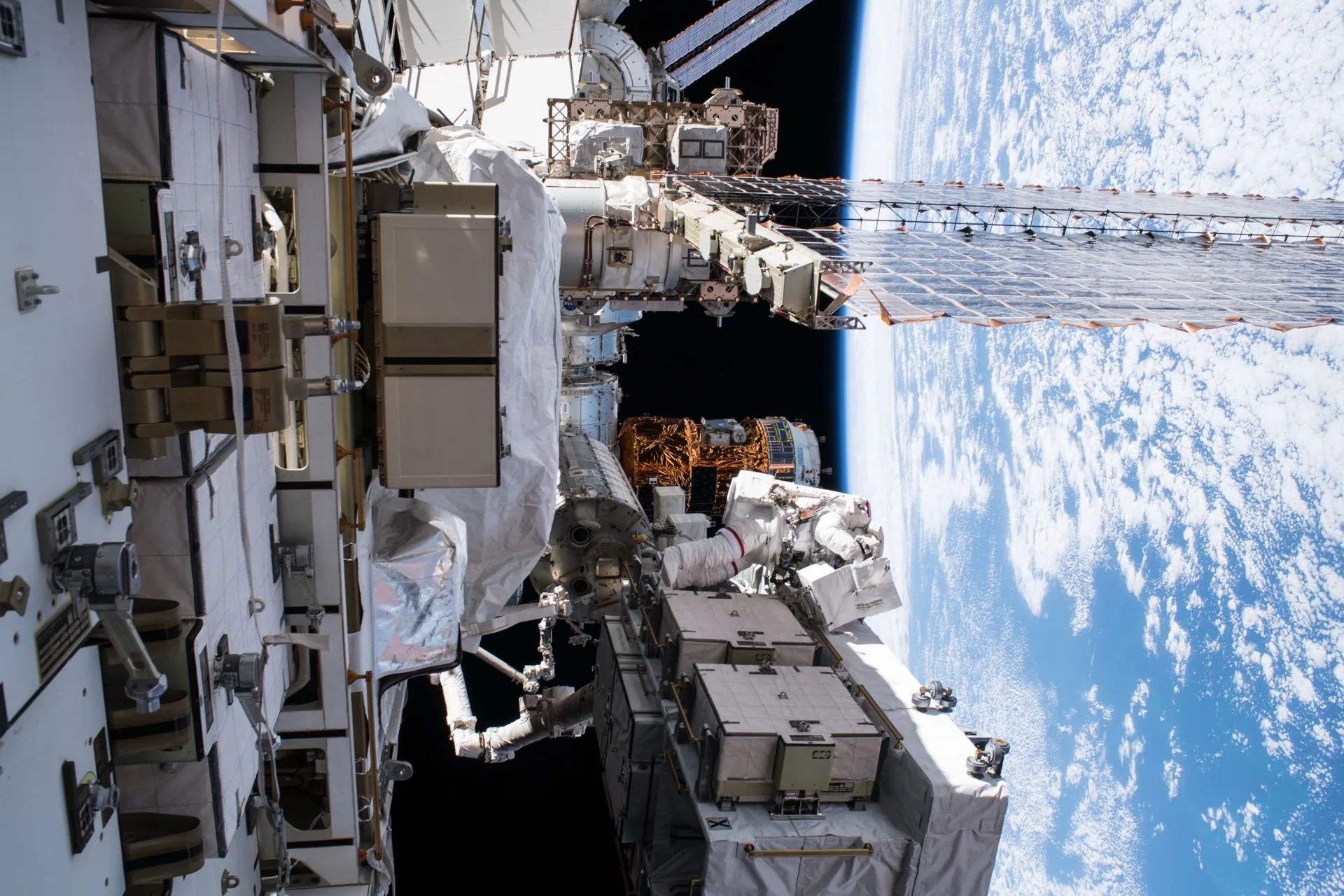
- The International Space Station orbits Earth at about 28,000 km/h, which means the astronauts on board see 16 sunrises and 16 sunsets every single day.
- If you could drive a car straight up at highway speed, you would reach space in about an hour. But getting to the Moon at the same speed would take about five months.
How to Start Stargazing Tonight
You do not need a telescope to start exploring the sky. Here is what to do:
Step 1: Find a dark spot. Get away from streetlights and porch lights if you can. Even a backyard with the house lights off is better than a brightly lit street. The darker the sky, the more stars you will see.
Step 2: Let your eyes adjust. It takes about 20-30 minutes for your eyes to fully adapt to the dark. Avoid looking at your phone during this time (or use a red-light app that will not ruin your night vision).
Step 3: Learn a few constellations. Start with the easy ones. The Big Dipper (part of Ursa Major) is visible year-round in the Northern Hemisphere. Follow the two "pointer stars" at the end of the Dipper's bowl, and they lead you to Polaris, the North Star. Orion the Hunter, with his distinctive three-star belt, dominates the winter sky.
Step 4: Spot the planets. Planets look like bright stars that do not twinkle (because they are close enough that their light comes from a disc, not a point). Jupiter and Venus are often the brightest objects in the sky after the Sun and Moon. Free apps like Stellarium or Sky Map can help you identify what you are seeing.
Step 5: Watch for the ISS. The International Space Station is visible to the naked eye as a bright, steadily moving point of light crossing the sky. It looks like a very bright star gliding silently across the heavens. The website spotthestation.nasa.gov tells you exactly when and where to look from your location.
Step 6: Get binoculars. Before you invest in a telescope, a decent pair of binoculars (7x50 or 10x50) can show you the craters on the Moon, Jupiter's four largest moons, star clusters like the Pleiades, and the Andromeda Galaxy. They are cheaper than a telescope and much easier to use.
Space Camps and Programs for Young Explorers
U.S. Space and Rocket Center -- Space Camp (Huntsville, Alabama): The original and still the most famous. Space Camp offers week-long programs for kids as young as 9, with activities including simulated Space Shuttle missions, rocket building and launching, astronaut training simulators, and SCUBA-based spacewalk experiences. Over 1 million young people have attended since it opened in 1982. Programs run year-round.
Euro Space Center (Transinne, Belgium): Europe's answer to Space Camp, offering multi-day programs for young people aged 8 and up. Activities include astronaut training simulations, microgravity experiences, and mission simulations. The center partners with ESA and provides a distinctly European perspective on spaceflight.
Cosmodome (Laval, Quebec, Canada): Offers space-themed day camps and residential programs with simulated missions, rocket building, and space science activities. Programs are available in English and French.
NASA Visitor Centers: Every major NASA center has a visitor complex with educational programs. The Kennedy Space Center Visitor Complex in Florida and the Space Center Houston in Texas are the biggest, offering camp programs, behind-the-scenes tours, and chances to meet real astronauts.
Science Fair Project Ideas for Future Space Explorers
Want to do a space-related science fair project? Here are some ideas:
- Test how different soil types support plant growth in simulated Martian conditions. Use soil with low nutrients, limit water, and see which plants survive best. This is real research -- NASA is studying the same thing.
- Build and launch model rockets with different fin designs and measure which design achieves the highest altitude or most stable flight. You will learn about aerodynamics and experimental design.
- Investigate how microgravity affects seed germination. You cannot create zero gravity at home, but you can use a clinostat (a slow-rotating device that randomizes the direction of gravity for plants) to simulate some of its effects.
- Map the night sky over several weeks and track the movement of planets against the background stars. This is exactly what ancient astronomers did, and it teaches you orbital mechanics in the most direct way possible.
- Test different materials for their effectiveness as radiation shielding. Use a UV light source and UV-sensitive beads to measure how well different materials block radiation -- a real problem for future astronauts on long missions.
People Who Inspire Us
Space exploration has always been driven by extraordinary people. Here are a few worth knowing:
Mae Jemison became the first African American woman in space when she flew on the Space Shuttle Endeavour in 1992. She is a physician, an engineer, and a dancer who has spent her career proving that you can be all of the things you love.
Kalpana Chawla was born in Karnal, India, and became the first woman of Indian origin to go to space. She flew on two Space Shuttle missions and devoted her career to aerospace engineering, inspiring millions of young people in India and around the world.
Chris Hadfield is a Canadian astronaut who commanded the ISS and became famous for making space accessible and exciting to millions through his photography, social media posts, and a rendition of David Bowie's "Space Oddity" recorded on the station. His message: space is for everyone.
Katherine Johnson was a mathematician at NASA whose orbital calculations were critical to the success of the first American crewed spaceflights. When the agency began using electronic computers, astronaut John Glenn specifically asked that Johnson verify the computer's numbers before he would fly. She was that good.
Wally Funk waited 60 years to go to space. She was part of the "Mercury 13" -- women who passed the same physical tests as male astronaut candidates in the 1960s but were never allowed to fly. In 2021, at age 82, she finally went to space on Blue Origin's New Shepard, becoming the oldest person to reach space at that time.
Your Journey Starts Now
Here is the most important thing to know: every single astronaut, every rocket engineer, every planetary scientist started exactly where you are right now -- looking up at the sky and wondering what is out there. The difference between those who dream about space and those who explore it is not intelligence or talent alone. It is curiosity that does not quit, the willingness to work hard at math and science (even when it gets tough), and the belief that the universe is worth understanding.
Read everything you can. Watch rocket launches. Build model rockets. Stargaze. Ask questions. Join science clubs. Visit space museums. And most importantly, never let anyone tell you that your dreams are too big. We live in an era where humans are going back to the Moon, robots are exploring Mars, and the first person to walk on another planet might be reading this article right now.
That person could be you.