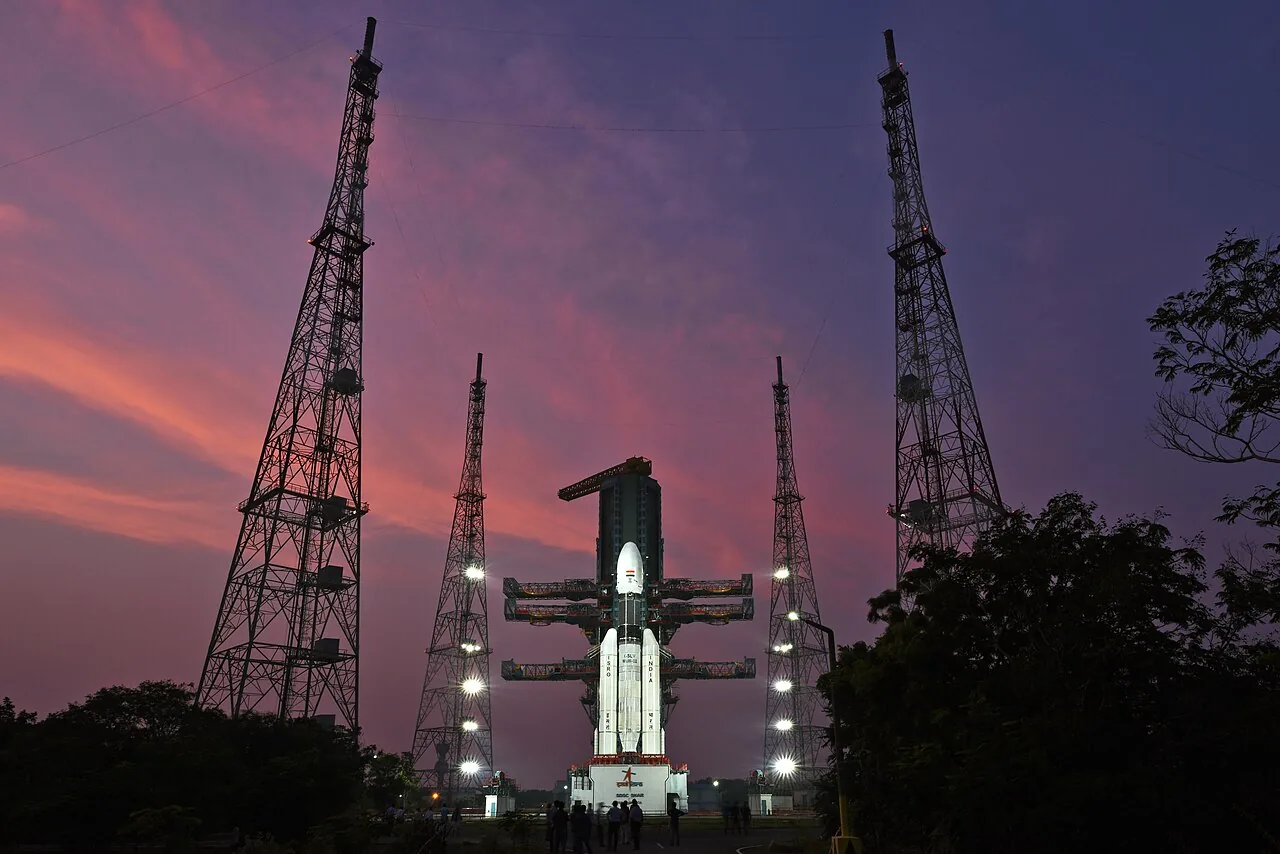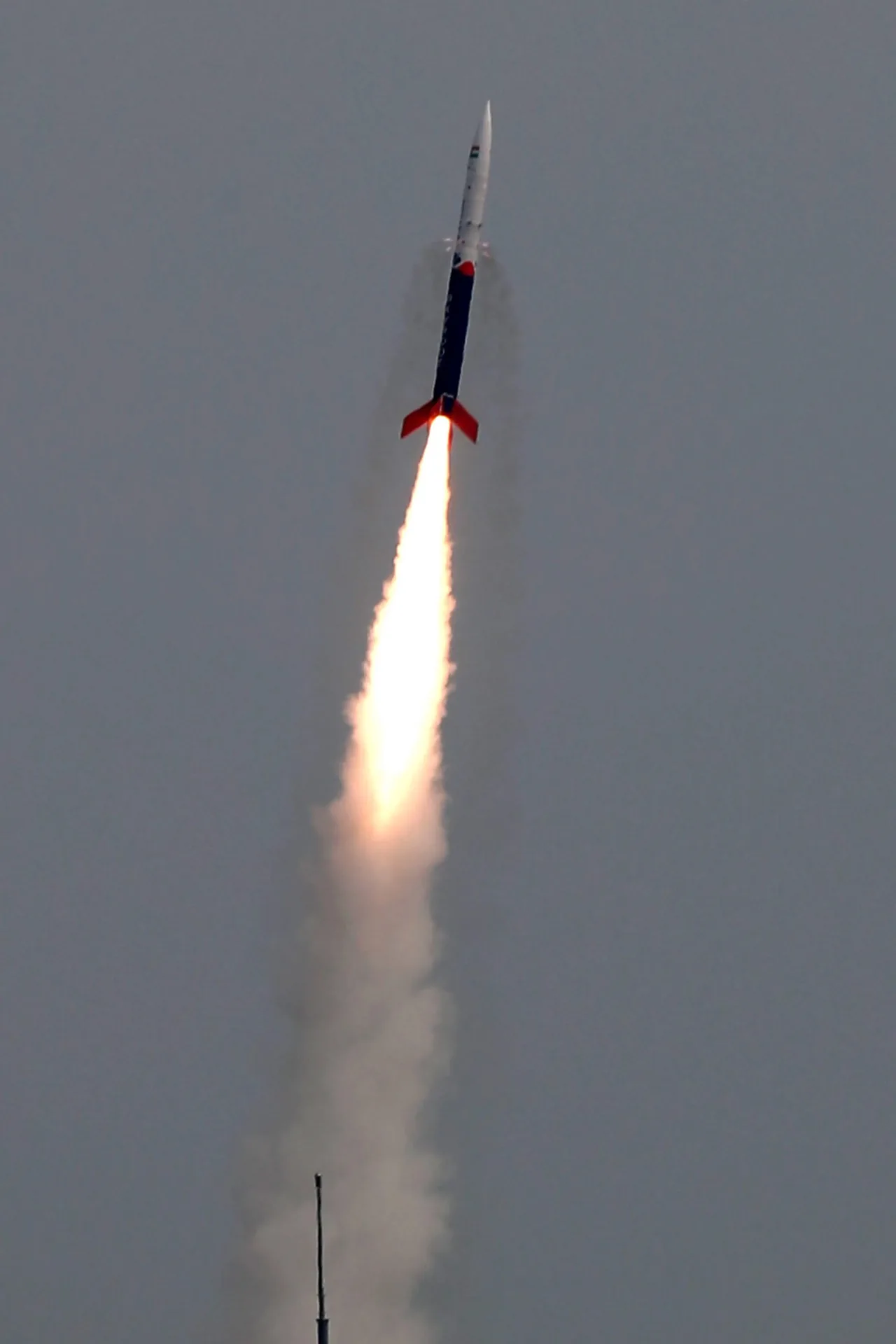
At 11:30 in the morning on July 18, 2026, the countdown at Sriharikota stopped. A navigation-system reading had drifted outside its limit, and the flight computer did what it was built to do: it held. For thirty-five minutes, a four-stage rocket named Vikram-1 stood on the First Launch Pad of the Satish Dhawan Space Centre while a room full of engineers — most of them under forty, almost none of them employed by the government — decided whether their machine was ready. At 12:05 pm, it was. The rocket lifted off, shed three solid stages in sequence, and lit a small 3D-printed liquid engine one last time to nudge its payloads into a low Earth orbit roughly 450 kilometres up.
With that final burn, Hyderabad-based Skyroot Aerospace became the first private company in India to launch a satellite to orbit — and India became, as officials and national media framed it, the third country in the world where a home-grown private firm has independently reached orbit, after the United States and China. The mission had a name that captured the moment exactly: Aagaman, Sanskrit for "arrival."
Mission Aagaman: How Vikram-1 Reached Orbit
Vikram-1 is a small-lift launch vehicle, and almost nothing about it is borrowed. The roughly 24-metre, four-stage rocket is built around a carbon-composite structure and a family of solid motors that Skyroot named after former Indian president and missile scientist A.P.J. Abdul Kalam. The first stage is the Kalam-1200, static-fired for 110 seconds in August 2025; the second is the Kalam-250; the third is the Kalam-100, which produces roughly 100 kilonewtons of vacuum thrust and steers with a flexible nozzle. The precision of orbital insertion comes last, from a liquid-fuelled Orbital Adjustment Module whose engine is 3D-printed — the same additive-manufacturing approach that has become a signature of India's new launch startups.
The flight carried six payloads. The most important to Skyroot was SCOPE, an in-house satellite bristling with sensors whose job was to stream back data on how the rocket actually behaved in flight. Alongside it rode a technology demonstration from the German company DCUBED, an Earth-observation satellite called SOLARAS S3 from the Indian startup Grahaa Space, and Embrace, a robotic-arm demonstrator from Cosmoserve Space designed to test the capture of orbital debris. Then there were the payloads that were pure symbolism: a lab-grown "Cosmic Bloom" diamond from Bengaluru's Cosmos Diamonds, an 18-karat gold rocket engraved with microscopic sculptures of C.V. Raman, Abdul Kalam and Vikram Sarabhai, and a handwritten "Vande Mataram" postcard from Prime Minister Narendra Modi. "This mission highlights the talent, determination and entrepreneurial spirit of our youth," Modi said after the launch.
Skyroot rates Vikram-1 to carry a few hundred kilograms to low Earth orbit — the company has quoted figures between roughly 300 and 480 kilograms depending on the target orbit and rocket configuration. That places it squarely in the "small-lift" class: a dedicated taxi for the smallsats that today mostly hitch rides as secondary passengers on much larger rockets.
From a 90-Kilometre Hop to Orbit: The Road Skyroot Travelled
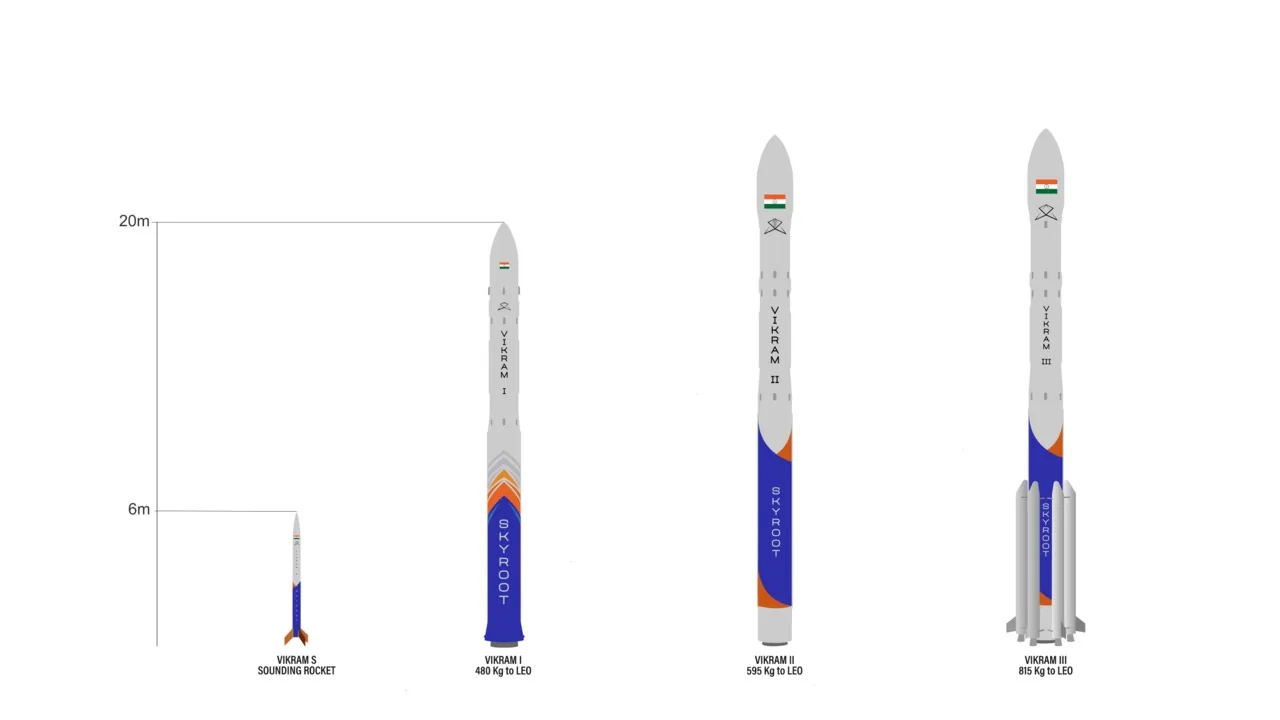
Skyroot did not appear overnight. Founders Pawan Kumar Chandana and Naga Bharath Daka, both former engineers at the Indian Space Research Organisation, left to start the company in June 2018 — the first year that India seriously began opening its space sector to private capital. Their breakthrough came on November 18, 2022, when a slender rocket called Vikram-S rose from Sriharikota on a suborbital flight named Prarambh ("the beginning") and reached about 89.5 kilometres — the first privately built Indian rocket to touch space. It proved almost nothing about orbital flight, but it proved the team could build a rocket and fly it.
The distance from that 90-kilometre hop to a 450-kilometre orbit is enormous. Suborbital flight needs only to go up; orbit needs to go sideways fast enough — around 7.8 kilometres per second — that the vehicle keeps missing the Earth as it falls. Bridging that gap took Skyroot nearly four years of engine qualification, stage separation tests and guidance work, funded by a war chest that turned the company into India's first spacetech unicorn. A round in May 2026 raised roughly $60 million and pushed Skyroot's valuation past $1.1 billion, with backers that have included Singapore's Temasek and GIC. For the full story of how the company was built, see our Skyroot Aerospace deep dive.
What Vikram-1 Means for India
For India, the significance runs deeper than one rocket. For six decades, spaceflight in the country meant ISRO — a public agency that put a probe around Mars on its first attempt and landed near the Moon's south pole, all on famously thin budgets. Vikram-1 marks the moment that lineage produced a genuinely private orbital launch provider. That matters because the global space economy is shifting from government programmes to commercial ones, and a nation that can only launch through a state agency is a nation renting out one launch queue.
The policy groundwork made this possible. In 2020 India created IN-SPACe, the regulator and promoter that authorises private launches and opens ISRO's facilities — including Sriharikota's pads — to companies like Skyroot. Our explainer on how IN-SPACe reshaped India's space sector traces that reform. The government's own ambition is stark: officials have repeatedly cited a target of expanding India's space economy to roughly $44 billion by 2033, and lifting the country's share of the global market from about 2 percent toward 8 percent. Those are projections, not guarantees — but a private company that can reach orbit on demand is exactly the kind of building block such a target requires. Vikram-1 is one of several fronts in India's broader private-space boom, which now spans launch, satellites, propulsion and ground systems.
India Joins the US and China: The Private Orbital Club
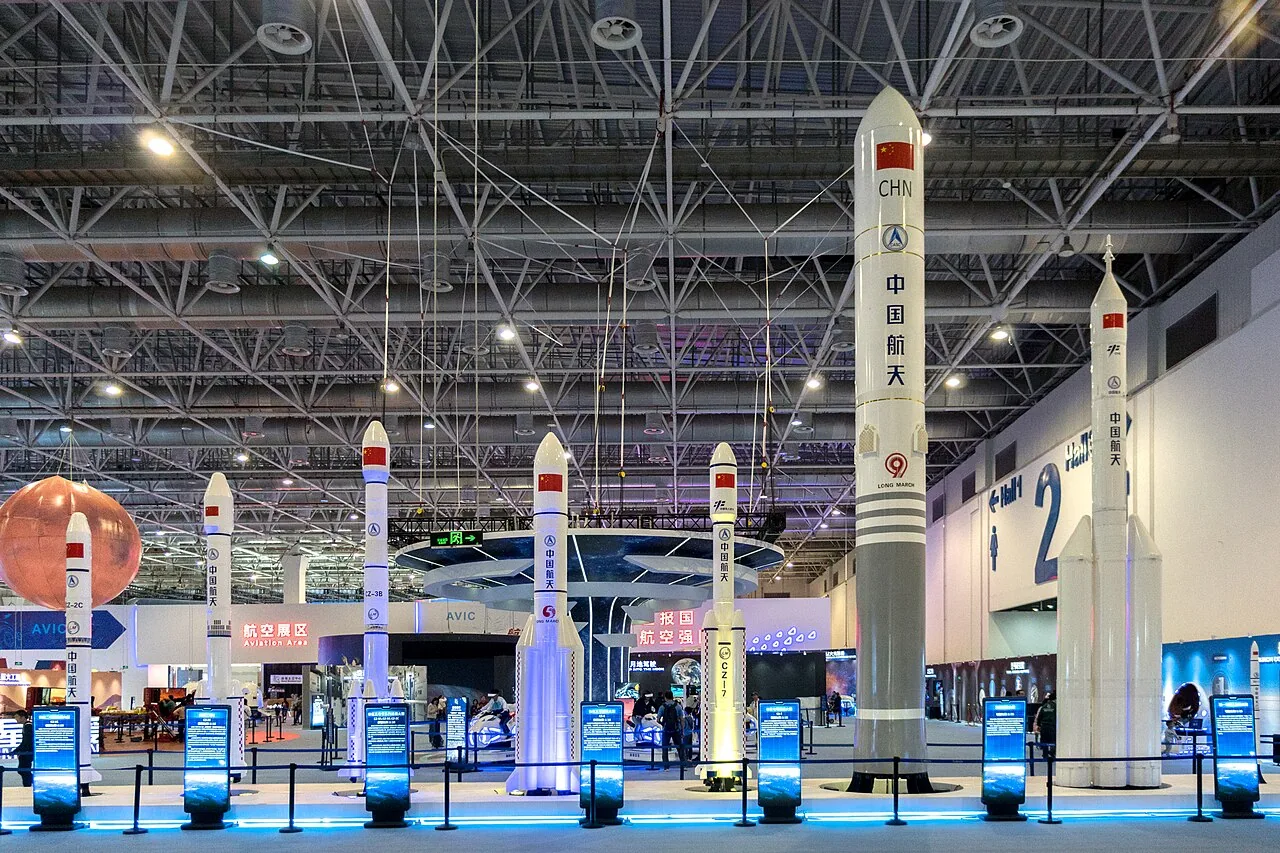
The "third country" framing deserves a careful footnote. Several nations host private orbital launches; what makes India's case clean is that Skyroot is a domestically founded company that developed its vehicle in-house and flew it to orbit. On that measure, the comparison to the United States and China is fair — and instructive.
The United States got there first, and the story is now legend. On September 28, 2008, after three consecutive failures that nearly bankrupted the company, SpaceX's small Falcon 1 became the first privately developed liquid-fuelled rocket to reach orbit. That fourth flight bought SpaceX the time it needed to build Falcon 9 and, eventually, to dominate global launch. America's small-launch scene has since widened to include Rocket Lab's Electron, which first reached orbit in 2018, and Firefly's Alpha.
China opened its sector to private capital in 2014, and the results have been explosive. LandSpace's first orbital attempt, Zhuque-1, failed at its third stage in 2018 — but in 2023 the company's Zhuque-2 became the first methane-fuelled rocket in the world to reach orbit. China now reportedly has on the order of 400 private space companies, from Galactic Energy and i-Space to Space Pioneer and Orienspace, several already flying to orbit and racing toward reusable boosters. Our survey of China's private space revolution maps that landscape in full.
Against that backdrop, one detail of Mission Aagaman stands out: Vikram-1 reached orbit on its maiden orbital attempt. That is genuinely uncommon — Falcon 1 needed four tries, and LandSpace's first orbital shot failed outright. Maiden-flight success is never guaranteed and no single launch proves reliability, but a clean first orbital flight is a strong opening statement.
The Rockets Coming Next: Agnibaan, Vikram-2, SSLV and NGLV
Vikram-1 is not the end of India's private-launch story — it is the starting gun, and the field behind it is crowded.
The most direct rival is Agnikul Cosmos, a Chennai startup whose Agnibaan rocket is built around fully 3D-printed, semi-cryogenic engines. Agnikul flew a single-stage suborbital demonstrator, SOrTeD, in May 2024, and through 2026 has been test-firing clustered engines — a four-engine simultaneous firing earlier in the year marked an Indian first — as it works toward an orbital debut. It has raised past a $500 million valuation and, notably, took a ₹25 crore equity investment from the Tamil Nadu government, the first time an Indian state body has bought a stake in a space startup. We compare the two head-to-head in Skyroot vs Agnikul: India's private launch race, and profile Agnikul's approach in our Agnikul Cosmos deep dive.
Skyroot itself is already building bigger. Vikram-2, targeted for 2027, is designed to carry around 900 kilograms to low Earth orbit using a cryogenic upper stage powered by the 3D-printed, methane-burning Dhawan engine; a still-larger Vikram-3 with strap-on boosters follows behind it.
The public sector is commercialising too. ISRO's Small Satellite Launch Vehicle (SSLV) — a roughly 500-kilogram-class rocket — is being handed to industry: Hindustan Aeronautics Limited won the technology-transfer deal for about ₹511 crore ($60 million) and will, after a two-year mentoring period, build and market the SSLV on its own from 2027. Above that, ISRO is developing the partially reusable Next Generation Launch Vehicle, internally called Soorya, and in April 2026 issued a tender for the landing-leg hardware that betrays its reusable ambitions. The result is an ecosystem where two private startups, a defence major and the national agency are all converging on the same small-to-medium launch market at once.
Why Vikram-1 Matters Beyond the Launch Pad
Zoom out, and Vikram-1's flight is less about a single rocket than about who gets to reach space. For most of the space age, orbit was the exclusive domain of superpower governments. The last two decades have shattered that monopoly — first in America, then in China, and now, with Mission Aagaman, in India. Each addition to that list lowers the price of access and widens the range of people and companies who can put something useful above the atmosphere.
The immediate market Vikram-1 is chasing is real. Thousands of small satellites are launched every year for Earth observation, communications and technology tests, and most of them still fly as secondary payloads, going where the primary customer's rocket happens to go. A dedicated small launcher that can place a smallsat in its own precise orbit, on its own schedule, is a different product — Skyroot has long pitched Vikram as a "cab to space." Whether it becomes commercially viable will depend on flight rate, price and reliability across many launches, not one. History is unsentimental about small rockets: for every Electron there is an Astra, and the class is littered with companies that reached orbit once and then struggled.
But that is a problem for future flights. On July 18, 2026, a rocket built almost entirely by a private Indian team, funded by private capital, launched from a national pad and put its payloads exactly where it meant to. India spent decades earning a place among the world's spacefaring nations through its space agency. With Vikram-1, its private sector claimed one too — and the arrival, fittingly, was named for exactly that.