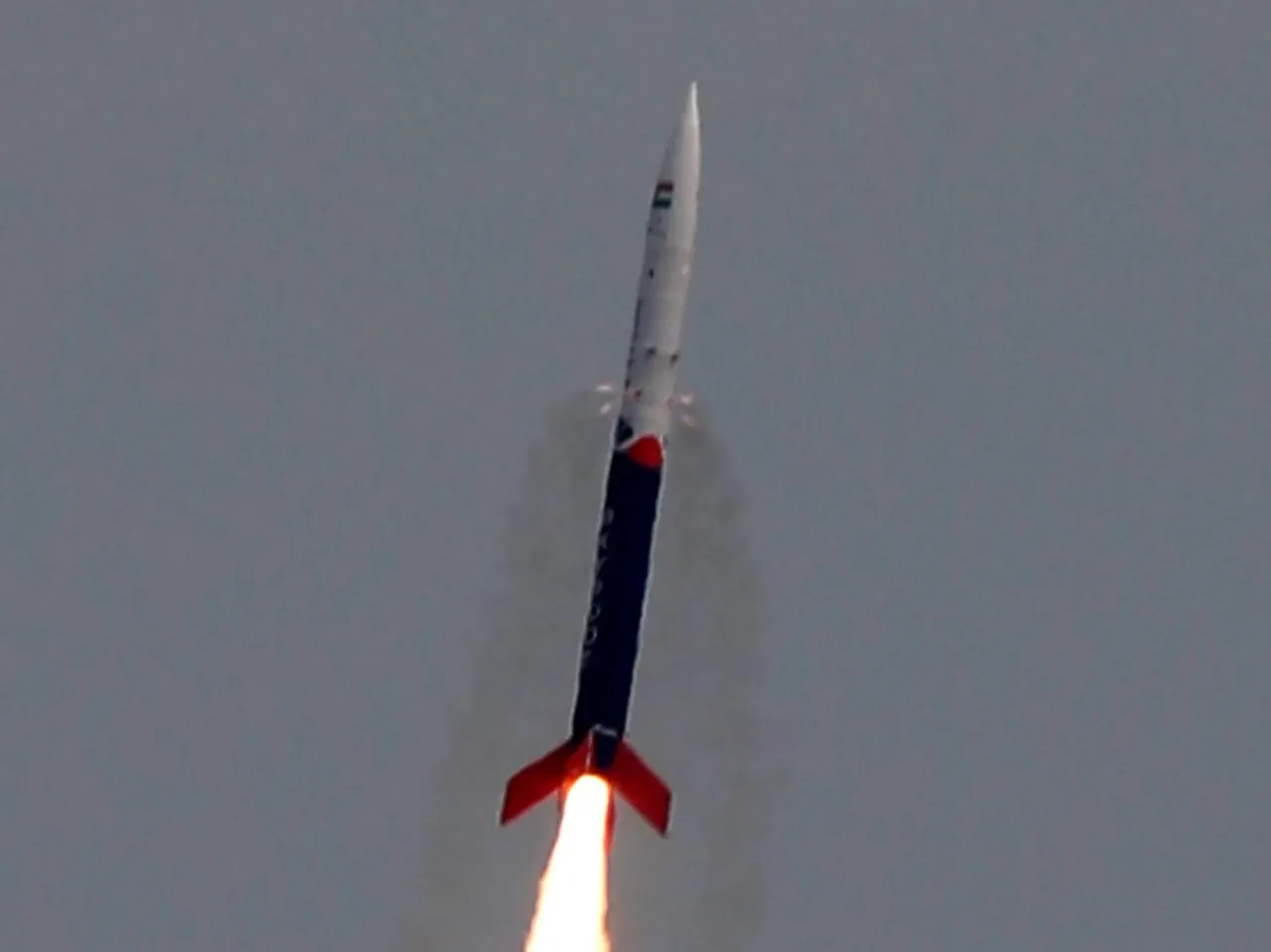
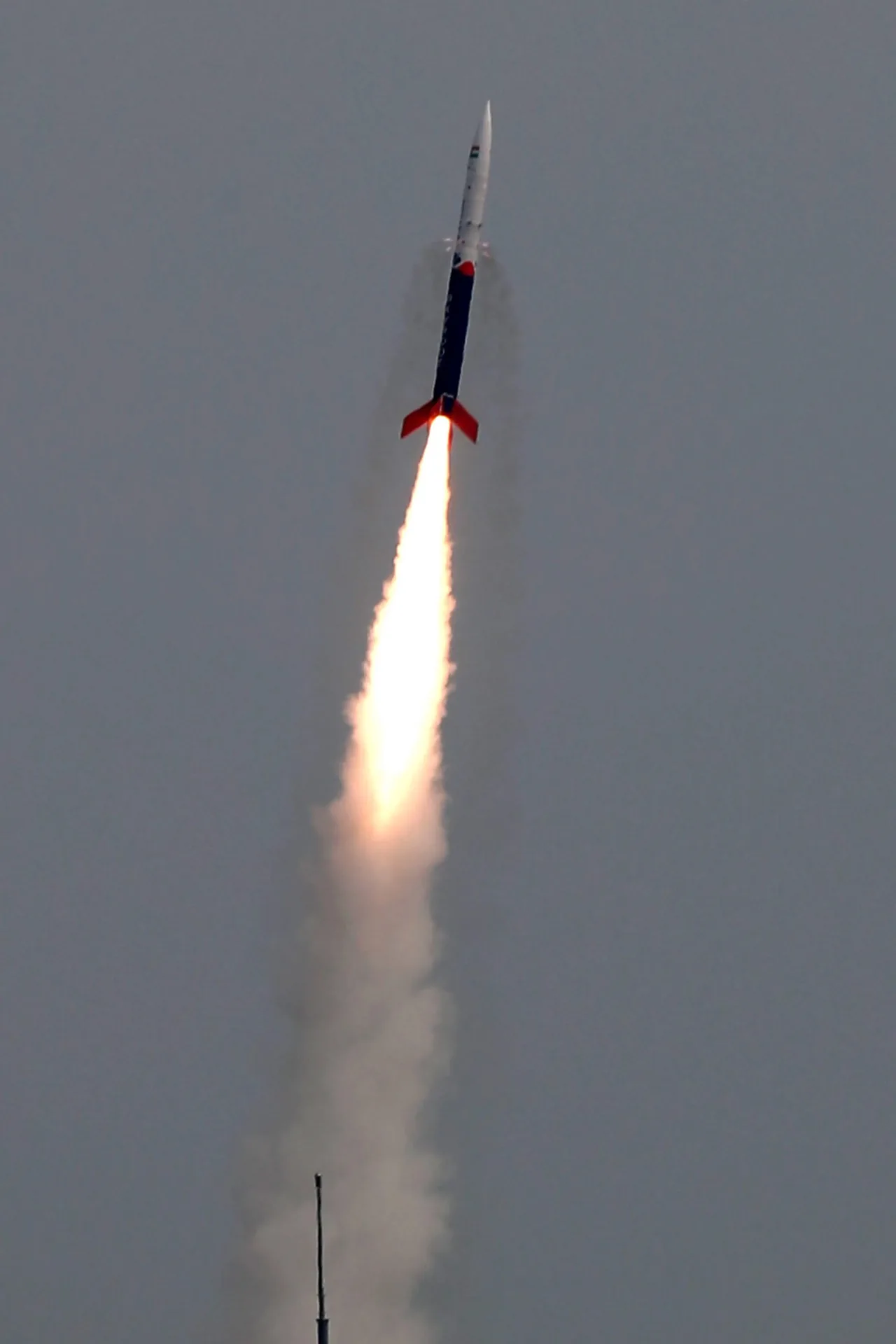
In November 2022, a sleek, black-and-orange rocket named Vikram-S lifted off from the Satish Dhawan Space Centre at Sriharikota. The flight lasted just five minutes, reaching an apogee of 89.5 kilometers. By the standards of SpaceX Starship or even ISRO's PSLV, it was a modest achievement. But its significance was historic: Vikram-S, built by Hyderabad-based startup Skyroot Aerospace, was the first rocket designed, built, and launched by a private Indian company. It signaled that India's space sector — long the exclusive domain of ISRO — was entering a new, more competitive, and vastly more ambitious era.
This is Part 2 of our comprehensive series on the Indian space industry. In Part 1, we traced the remarkable journey of ISRO from bullock carts at Thumba to Chandrayaan-3's triumph at the lunar south pole. Here, we examine the private space revolution reshaping India's space landscape — the startups building rockets and satellites, the billions in investment flowing in, the policy reforms enabling it all, the satellites orbiting above, and the challenges that will determine whether India becomes a top-tier space superpower.
The Policy Big Bang: How India Opened Its Skies (2020–Present)
For decades, ISRO was essentially India's entire space program. Private companies participated only as vendors and subcontractors, building components to ISRO specifications. Unlike the United States, where NASA coexisted with a robust commercial space industry from the 1960s onward, India kept space firmly in government hands.
The transformation began on June 24, 2020, when the Indian government announced sweeping reforms to open the space sector to private participation. The reforms were driven by several factors:
- Global competition: SpaceX, Blue Origin, and a wave of international NewSpace companies were demonstrating that private enterprise could match or exceed government capabilities in space.
- Economic opportunity: The global space economy, valued at approximately $546 billion in 2024 according to the Satellite Industry Association, was growing rapidly — and India's share was a mere 2-3%.
- ISRO's limitations: With its modest budget, ISRO could not simultaneously pursue ambitious exploration missions and meet the country's growing demand for launch services and satellite applications.
- Strategic imperative: India needed a more resilient and redundant space capability, and private sector participation could achieve scale that ISRO alone could not.
Prime Minister Narendra Modi framed the reforms as the "space equivalent of 1991 liberalization" — a reference to the economic reforms that transformed India from a closed, stagnant economy into one of the world's fastest-growing. He declared: "The space sector is getting the benefit of the reforms. The government is committed to making India a global hub for manufacturing satellites, launching them, and providing space-based services. Private sector participation will be the force multiplier."
IN-SPACe: The Regulatory Bridge
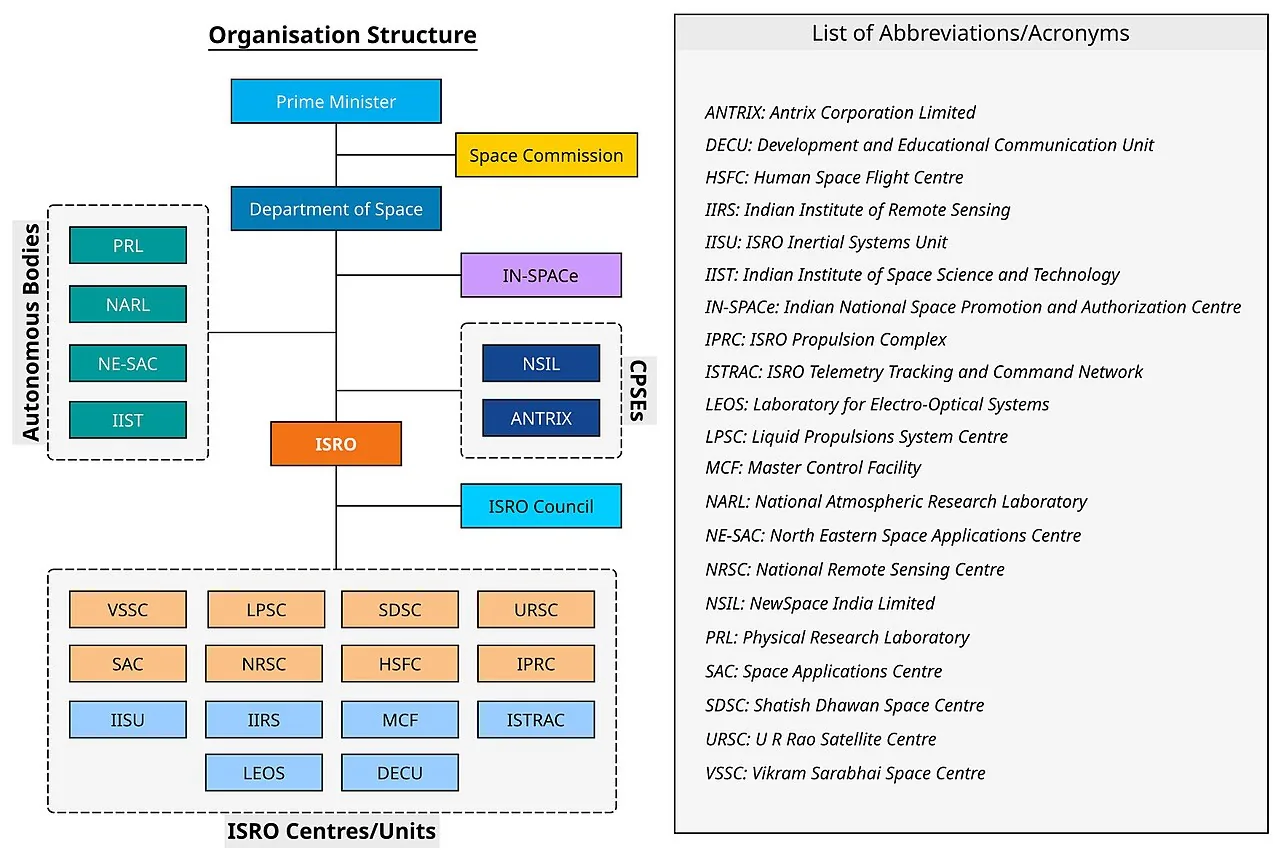
The Indian National Space Promotion and Authorization Centre (IN-SPACe) was established as an autonomous body under the Department of Space to serve as the single-window authorization and regulatory body for private space activities. IN-SPACe is responsible for:
- Authorizing private launches, satellite deployments, and space activities
- Facilitating access to ISRO facilities, data, and intellectual property
- Promoting the Indian space industry to domestic and international investors
- Regulating safety, spectrum allocation, and orbital debris mitigation
IN-SPACe Chairman Pawan Goenka stated: "Our job is to be an enabler, not a gatekeeper. We want India's private space companies to move fast, innovate freely, and compete globally."
NewSpace India Limited (NSIL): Commercializing ISRO
NewSpace India Limited (NSIL), a Government of India company under the Department of Space, serves as the commercial arm of ISRO. It handles:
- Commercial launches: Marketing PSLV and GSLV launch services to international customers
- Technology transfer: Licensing ISRO-developed technologies (including the SSLV, cryogenic engines, and satellite platforms) to private industry
- Satellite manufacturing: Overseeing the transfer of satellite manufacturing to Indian industry under the PPP (Public-Private Partnership) model
NSIL has already transferred the manufacture of PSLV to a private consortium led by Hindustan Aeronautics Limited (HAL) and Larsen & Toubro (L&T), marking the first time India's workhorse rocket will be built primarily by private industry.
The Indian Space Policy 2023
In April 2023, the Indian government released the Indian Space Policy 2023, a comprehensive framework that formalized the roles of ISRO (research and development, exploration), IN-SPACe (regulation and promotion), and NSIL (commercialization). The policy explicitly stated that the private sector would be the "preferred mode" for operational space activities, while ISRO would focus on research, exploration, and human spaceflight.
This was a philosophical shift of enormous proportions. For the first time, ISRO was being repositioned from a do-everything agency to a research and enablement organization — much as NASA had evolved from the Space Shuttle era to the Commercial Crew and Artemis programs.
The Startup Constellation: Major Private Players
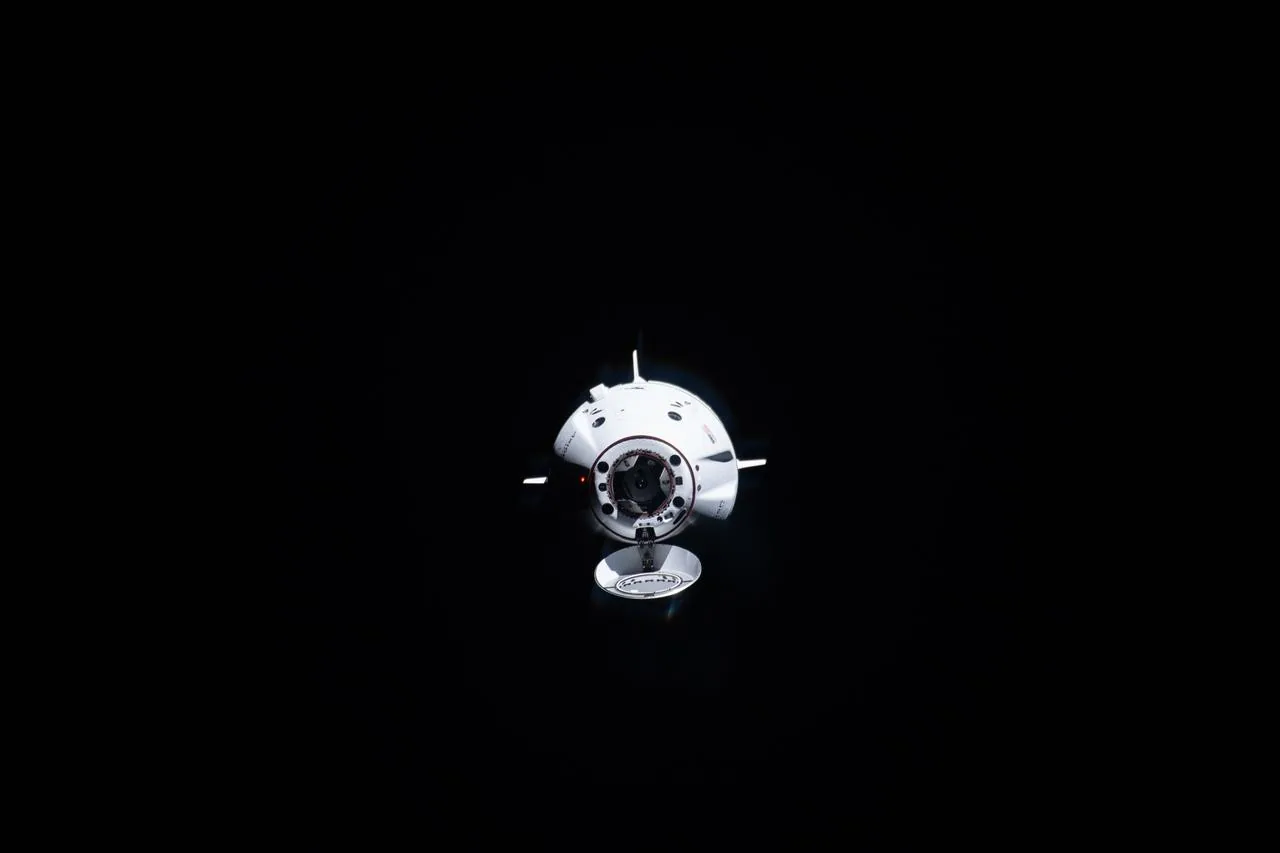
India's private space sector has exploded from a handful of companies in 2020 to over 250 registered space startups by 2026, spanning launch vehicles, satellite manufacturing, space data analytics, ground systems, and component manufacturing. Here are the most significant players:
Skyroot Aerospace (Hyderabad)
Founded in 2018 by Pawan Kumar Chandana and Naga Bharath Daka — both former ISRO scientists — Skyroot became the first Indian private company to launch a rocket when Vikram-S flew on November 18, 2022.
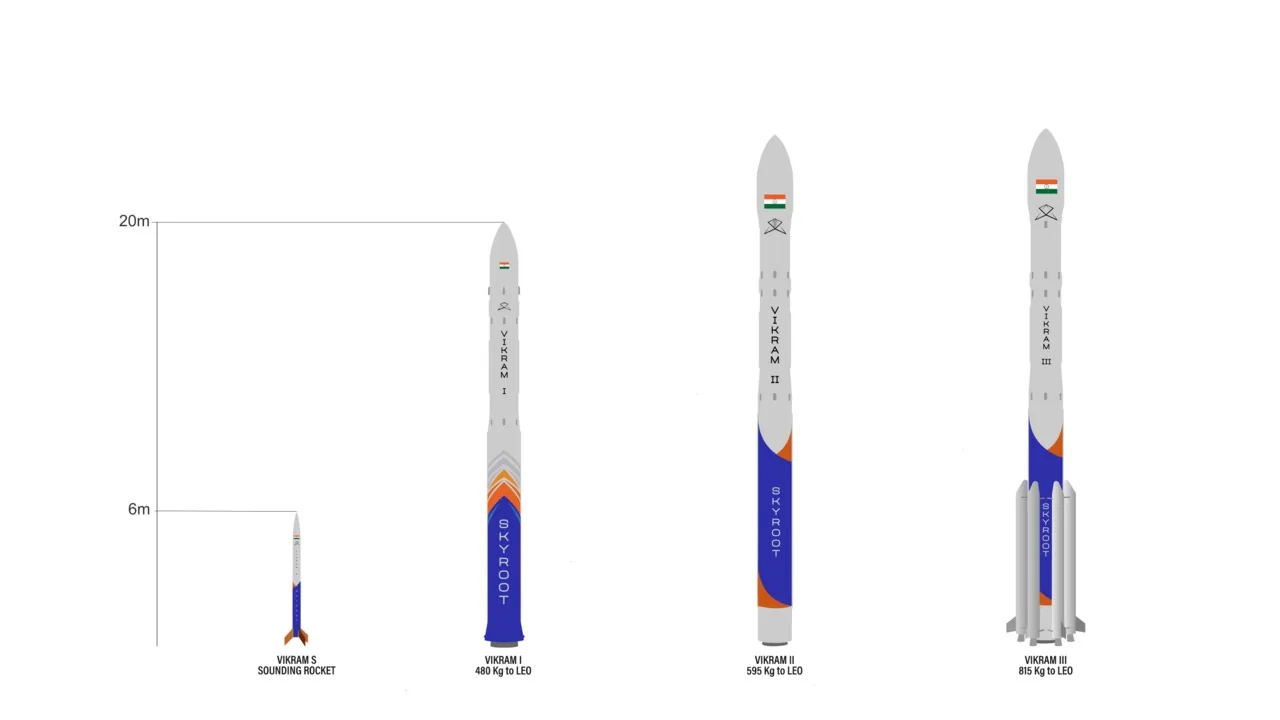
Skyroot's roadmap centers on the Vikram series of launch vehicles:
- Vikram-1: A small satellite launch vehicle capable of placing up to 480 kg in low Earth orbit (LEO), designed to compete with Rocket Lab's Electron
- Vikram-2: A medium-lift vehicle targeting the small-to-medium satellite market
- Vikram-3: A heavy-lift vehicle with LEO capacity of up to 815 kg
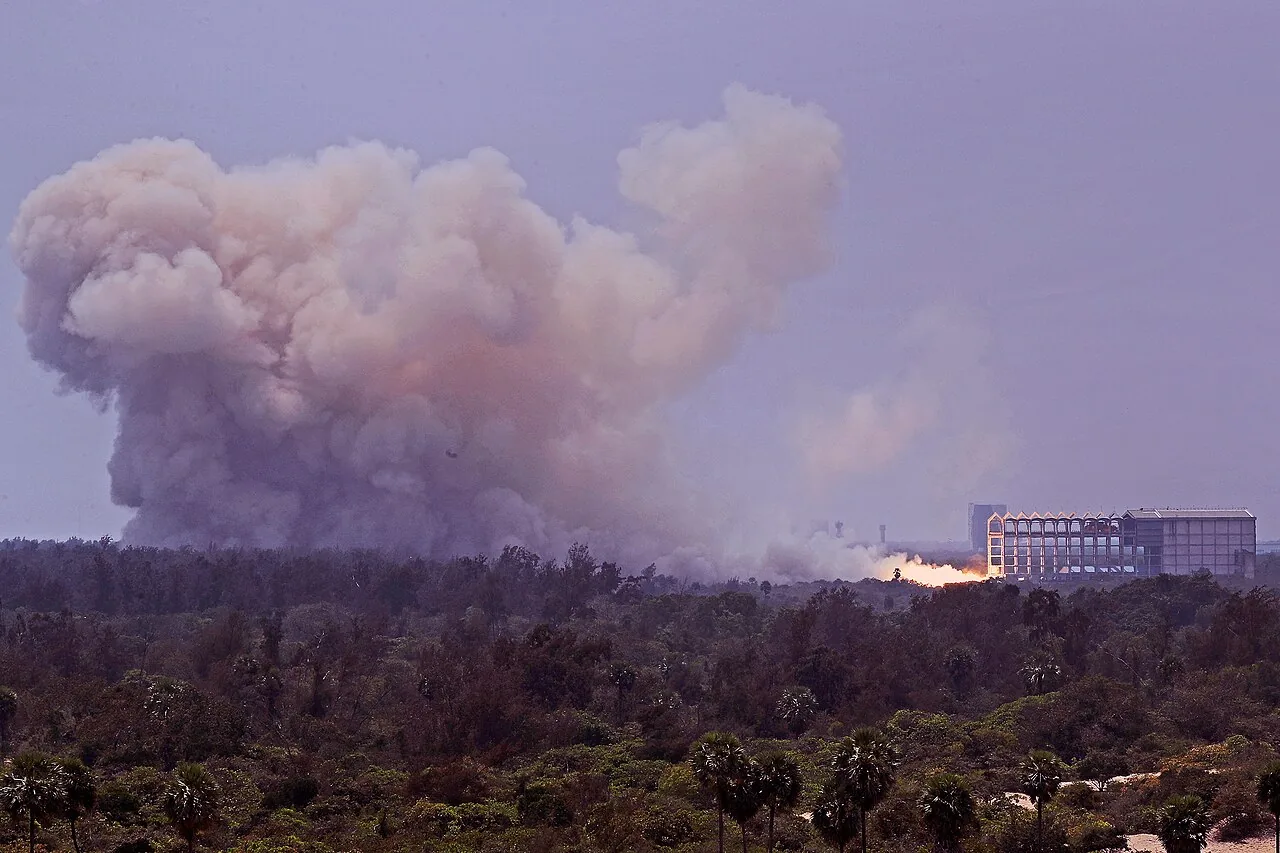
The company has raised over $100 million in funding, including investments from GIC (Singapore's sovereign wealth fund), Temasek, Nexus Venture Partners, and others. Skyroot achieved a major technical milestone by successfully test-firing the Dhawan-1, India's first privately developed cryogenic rocket engine, named after former ISRO Chairman Satish Dhawan.
CEO Pawan Chandana has said: "We want to be the launch vehicle of choice for the global small satellite industry. India has the engineering talent, the cost advantage, and now the policy environment to become a global launch hub."
Agnikul Cosmos (Chennai)
Founded in 2017 by Srinath Ravichandran and Moin SPM, Agnikul Cosmos achieved a world-first in May 2024 when it launched the SOrTeD (Sub-Orbital Technology Demonstrator) mission — powered by India's first single-piece 3D-printed rocket engine, the Agnilet. The engine was entirely 3D-printed in a single piece using Inconel superalloy, drastically reducing manufacturing time, cost, and the number of potential failure points.
Agnikul's Agnibaan rocket is designed as a highly customizable launch vehicle:
- Payload: Up to 300 kg to LEO
- Unique feature: Modular design allowing 2-7 engines in the first stage, configured per customer requirements
- Manufacturing: 3D-printed engines enable rapid production
- Launch flexibility: Designed for launch from Agnikul's own mobile launch platform ("Dhanush"), reducing dependence on ISRO's Sriharikota facilities
The company has raised over $40 million from investors including Mayfield India, pi Ventures, and Celesta Capital. It also has a partnership with ISRO to use the Sriharikota launch complex.
Co-founder Srinath Ravichandran has stated: "We want to democratize access to space. A 3D-printed engine can be produced in days, not months. That changes the economics of launch entirely."
Pixxel (Bengaluru)
Pixxel is building one of the world's most advanced commercial hyperspectral imaging satellite constellations. Unlike traditional satellites that capture images in a few spectral bands (like a standard camera), hyperspectral satellites capture data across hundreds of narrow spectral bands, enabling detection of subtle changes in vegetation health, water quality, mineral composition, air pollution, and greenhouse gas emissions that conventional satellites miss.
Pixxel's constellation, called Fireflies, aims to deploy 24+ hyperspectral satellites in sun-synchronous orbit, providing global coverage with revisit times of 24–48 hours. The data has applications in:
- Agriculture: Crop health monitoring, disease detection, precision farming
- Mining: Mineral exploration, tailings monitoring, environmental compliance
- Climate: Methane leak detection, carbon monitoring, deforestation tracking
- Defense: Camouflage detection, terrain analysis, maritime surveillance
Pixxel has raised over $71 million, including a $36 million Series B led by Google. The company launched its first two demonstration satellites in 2023 and is ramping up constellation deployment.
CEO Awais Ahmed has said: "We're building the health monitor for the planet. With hyperspectral data at this resolution and frequency, we can detect environmental changes weeks before they become visible to the human eye."
Dhruva Space (Hyderabad)
Dhruva Space focuses on satellite platforms, space-qualified components, and ground station infrastructure. The company has developed the P-30 series of satellite platforms for 30–200 kg microsatellites, and operates one of India's largest private ground station networks.
Dhruva also holds the distinction of deploying India's first privately built satellites in space — two technology demonstration satellites launched in 2022 aboard ISRO's PSLV-C54 mission.
Bellatrix Aerospace (Bengaluru)
Bellatrix specializes in advanced propulsion systems, including electric propulsion (hall-effect thrusters) and green propulsion (using non-toxic propellants). The company's Arka orbital transfer vehicle is designed to provide last-mile delivery services — taking satellites from the launch vehicle's orbit to their final operational orbits.
This is significant because many small satellite operators face a common problem: rideshare launches deliver them to a "compromise" orbit, and they lack the propulsion to reach their desired orbit. Bellatrix's Arka solves this by offering in-space transportation.
Other Notable Players
- Galaxeye Space (Chennai): Building multi-sensor satellites combining synthetic aperture radar (SAR) and optical imaging — the first company worldwide to do so on a single platform
- Kawa Space (Bengaluru): Developing AI-powered Earth observation satellites for climate monitoring
- Manastu Space (Mumbai): Developing green propulsion systems using hydrogen peroxide instead of toxic hydrazine
- SatSure (Bengaluru): Using satellite data analytics for agricultural lending, helping banks verify crop conditions before approving farm loans
- Digantara (Bengaluru): Building a space situational awareness (SSA) platform to track orbital debris and prevent satellite collisions — addressing one of the most critical challenges in modern space operations
- 114ai (Mumbai): Developing autonomous systems for satellite operations and space logistics
The Investment Landscape: Billions Flowing In
India's private space sector has attracted approximately $400 million in cumulative funding between 2020 and 2026, according to industry estimates. While this pales in comparison to the billions invested in US space startups, the growth trajectory is striking:
| Year | Estimated Funding | Key Rounds |
|---|---|---|
| 2020 | ~$25M | Early seed rounds |
| 2021 | ~$50M | Skyroot Series A, Pixxel Series A |
| 2022 | ~$80M | Agnikul Series B, Skyroot Series B |
| 2023 | ~$90M | Pixxel Series B (Google-led) |
| 2024 | ~$75M | Multiple growth rounds |
| 2025 | ~$80M+ | Continued growth |
Investors include a mix of Indian venture capital firms (Kalaari Capital, Blume Ventures, pi Ventures, Speciale Invest), global VCs (Omnivore, Celesta Capital), sovereign wealth funds (GIC, Temasek), and strategic investors (Google, Airbus Ventures).
The Indian government has also established a ₹1,000 crore (~$120 million) venture capital fund for space startups through IN-SPACe, providing equity and debt financing for early-stage companies.
Sunil Bharti Mittal, chairman of Bharti Enterprises (which controls satellite company OneWeb through Eutelsat Group), has said: "India's space sector is where India's IT sector was in the late 1990s — on the cusp of a transformation that will create global champions. The combination of engineering talent, cost competitiveness, and now policy support makes India uniquely positioned."
Satellites in the Sky: India's Orbital Footprint
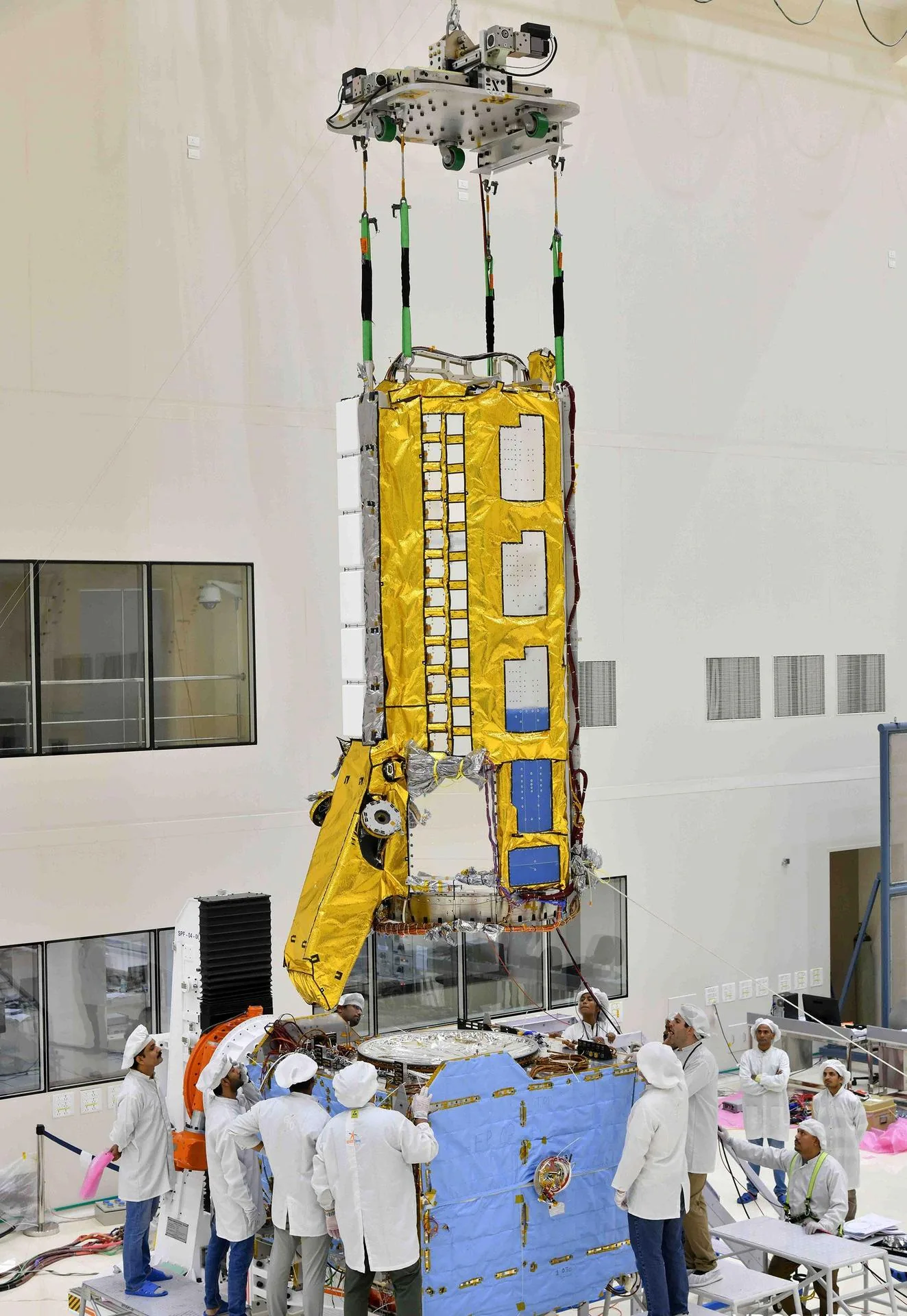
As of early 2026, India has over 60 operational satellites in orbit, making it one of the world's largest satellite operators. These satellites span multiple categories:
Communication Satellites (~25 operational)
The GSAT and CMS (Communication Satellite) series in geostationary orbit provide:
- DTH television broadcasting serving 200+ million households
- VSAT services for banking, commerce, and governance
- Military communication through dedicated encrypted transponders
- Disaster management communication during emergencies
Earth Observation Satellites (~20 operational)
Including the Cartosat, Resourcesat, Oceansat, and RISAT (Radar Imaging Satellite) series:
- Cartosat-3: 0.25-meter resolution optical imaging — among the best in the world
- RISAT-2BR1: Synthetic aperture radar providing all-weather, day-night imaging
- Oceansat-3: Ocean color monitoring for fisheries, sea surface temperature, and chlorophyll estimation
- EOS (Earth Observation Satellite) series: Next-generation platforms with multi-spectral capabilities
Navigation Satellites (7 operational — NavIC constellation)
Providing regional positioning accuracy of better than 10 meters, with plans to expand to 11 satellites for global coverage.
Science Satellites
- AstroSat: India's first multi-wavelength space observatory, launched in 2015, operating in visible, ultraviolet, and X-ray bands
- XPoSat: India's X-ray Polarimetry Satellite, launched in 2024, studying polarization of X-rays from celestial sources — only the second such mission in the world after NASA's IXPE
Small Satellite Launch Vehicle (SSLV)
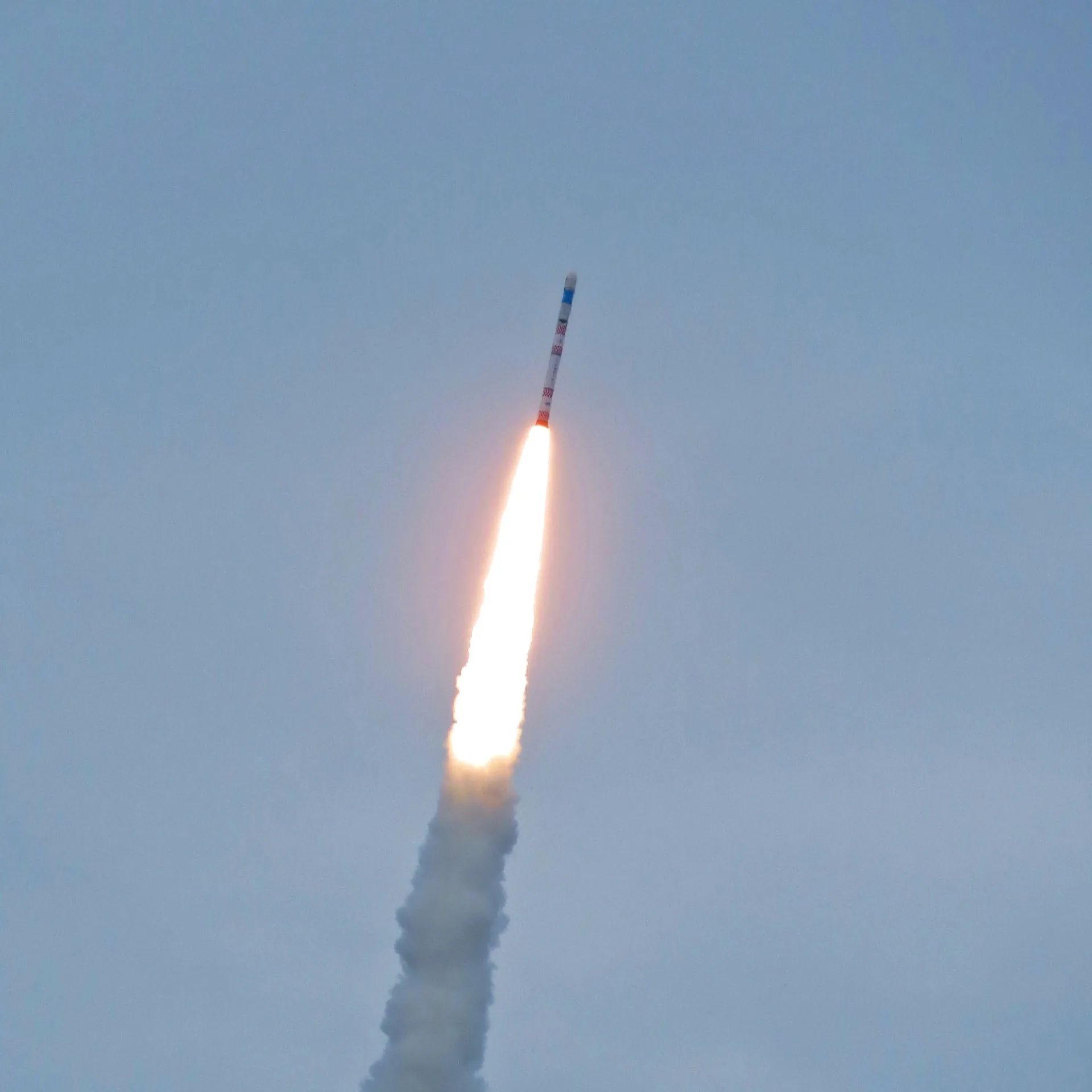
ISRO's newest rocket, the Small Satellite Launch Vehicle (SSLV), is designed specifically for the growing small satellite market. Capable of placing up to 500 kg in LEO, the SSLV can be assembled and launched in just 72 hours using a minimal team of six people — compared to weeks and hundreds of personnel for a PSLV launch. This rapid-turnaround capability is designed to serve the constellation-building needs of both Indian and international customers.
International Collaboration: India as Space Partner
India's space relationships span the globe, reflecting both strategic partnerships and scientific collaboration:
NASA-ISRO Collaboration
The NASA-ISRO relationship has deepened significantly in recent years:
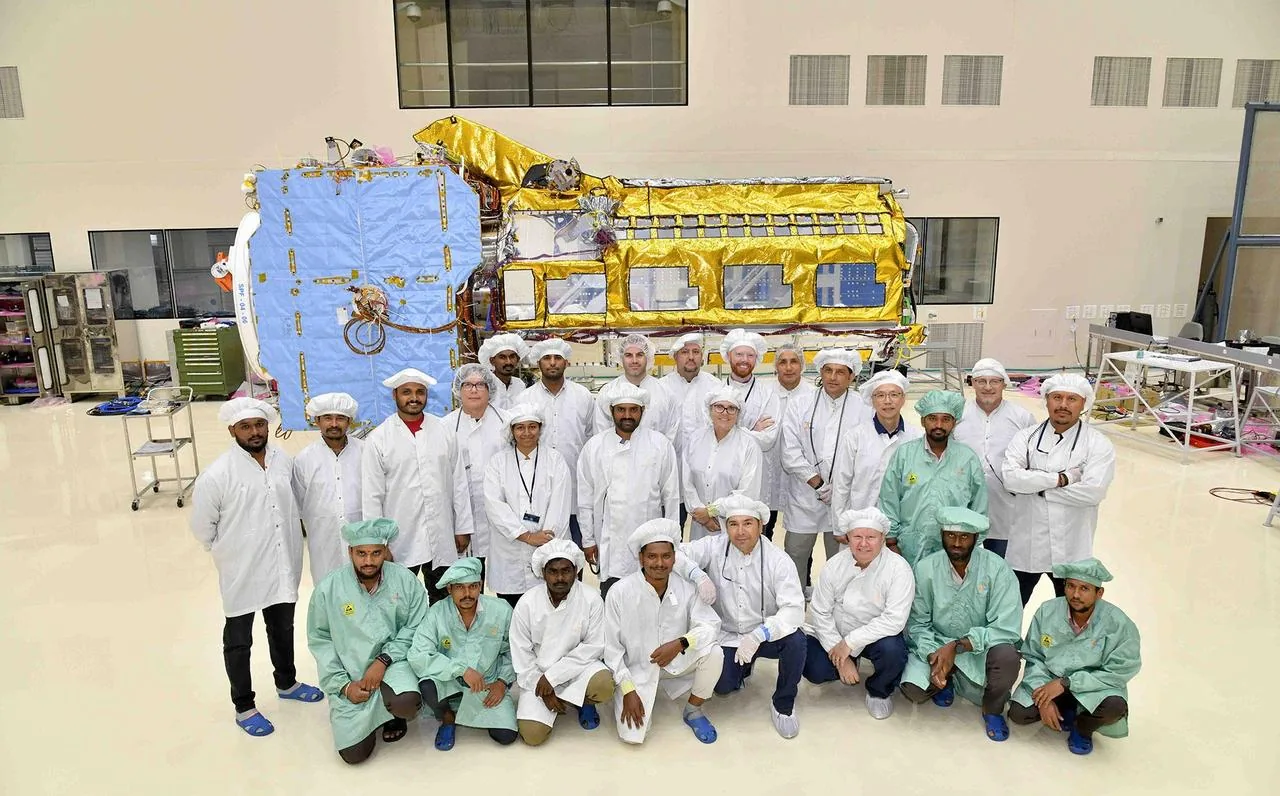
- NISAR satellite: The $1.5 billion joint Earth observation mission (launched 2025)
- Artemis Accords: India signed the Artemis Accords in June 2023, paving the way for collaboration on lunar exploration
- Axiom Mission 4: Indian astronaut Shubhanshu Shukla visited the ISS in 2025
- Joint working groups: Active cooperation in Earth science, planetary science, and heliophysics
US President Joe Biden, during PM Modi's state visit to Washington in June 2023, said: "India and the United States are working together to reach the stars. Our space cooperation reflects the depth of our partnership."
ESA Collaboration
India has long-standing cooperation with ESA, including instruments on Chandrayaan and Mars Orbiter missions. Future collaboration includes joint Earth observation projects and potential participation in ESA's ExoMars-related activities.
France (CNES)
France has been one of India's oldest and most reliable space partners. CNES and ISRO collaborate on joint satellite missions (including the Trishna thermal infrared mission for monitoring water stress and evapotranspiration), launch vehicle technology, and maritime surveillance.
Japan (JAXA)
The LUPEX (Lunar Polar Exploration) mission is a joint ISRO-JAXA mission planned for 2028–29. JAXA will provide the rover, and ISRO will provide the lander. The mission aims to explore the permanently shadowed regions of the lunar south pole for water ice — a critical resource for future lunar habitation.
Israel, UAE, and Other Partners
India maintains space cooperation agreements with over 60 countries, including joint satellite projects, data sharing, and capacity building for emerging space nations.
Opportunities: Why India Could Be the Next Space Superpower
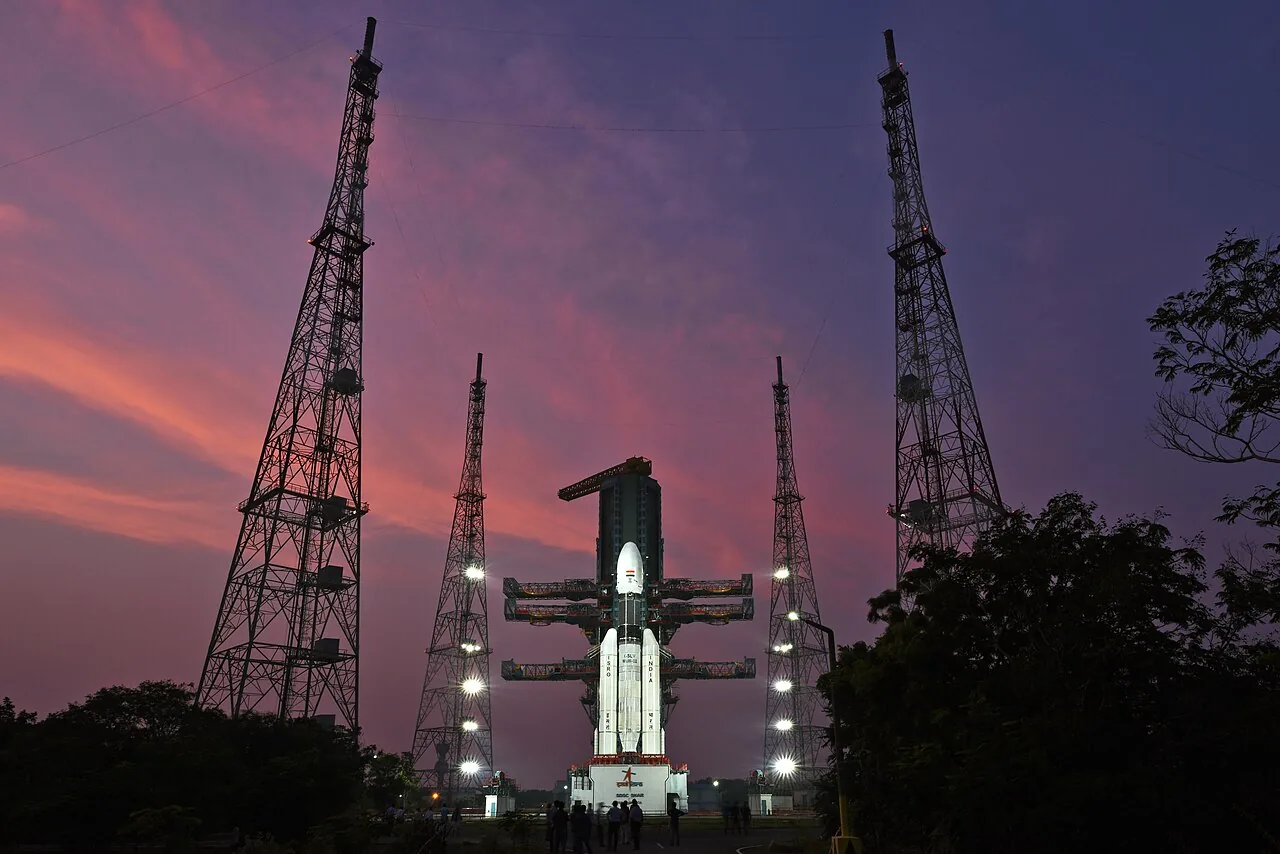
Several structural advantages position India for an outsized role in the global space economy:
1. Engineering Talent at Scale
India produces approximately 1.5 million engineering graduates annually. While quality varies, the top tier — graduates of IITs, IISc, NITs, and leading private universities — are world-class. Many Indian engineers who cut their teeth at ISRO, NASA, SpaceX, and other international organizations are now returning to lead Indian space startups.
2. Cost Competitiveness
India's labor costs are 60-80% lower than the US or Europe for equivalent engineering work. This translates directly into lower satellite and launch vehicle manufacturing costs. A satellite that costs $100 million to build in the US might cost $20-30 million in India — without sacrificing quality, as ISRO's track record demonstrates.
3. Growing Domestic Market
India's demand for satellite services — communications, broadband (particularly rural), Earth observation, navigation, and defense — is enormous and growing rapidly. The Indian military's increasing focus on space-based assets (surveillance, communications, navigation) creates a large and stable government market.
4. Strategic Location
Sriharikota's location at 13.7°N latitude provides good access to both equatorial and polar orbits. India is also well-positioned to serve the Asian, Middle Eastern, and African markets — regions where demand for satellite services is growing fastest.
5. ISRO's Technology Pipeline
The technology transfer pipeline from ISRO to private industry — including the PSLV, SSLV, cryogenic engines, satellite buses, and decades of engineering data — provides Indian startups with a technological head start that their international competitors cannot match. No other country is transferring comparable rocket technology to its private sector.
6. Government Support
The combination of IN-SPACe's regulatory framework, NSIL's commercial arm, government venture funding, and high-level political commitment provides a supportive ecosystem that has accelerated development timelines.
As Kailasavadivoo Sivan, former ISRO Chairman, has observed: "The opening of the space sector is the most important policy decision for the Indian space industry since the creation of ISRO itself. It will multiply India's space capability manifold."
Challenges: The Roadblocks Ahead
Despite the promising trajectory, India's space ambitions face significant headwinds:
1. Capital Gap
While $400 million in startup funding is impressive for India, it is a rounding error in the global context. SpaceX alone has raised over $10 billion. Rocket Lab raised $600 million before its IPO. Indian space startups need access to much larger pools of capital — both domestic and international — to fund the extremely capital-intensive work of building and testing rockets and satellites.
The absence of a vibrant public market exit pathway (no Indian space SPAC or IPO to date) also limits investor appetite for large follow-on rounds.
2. Regulatory Maturity
While IN-SPACe has made significant progress, India's space regulatory framework is still evolving. Key areas that need clarity include:
- Liability and insurance: Who bears the risk if a private Indian rocket fails and causes damage?
- Spectrum allocation: How will frequencies be allocated among the growing number of satellite operators?
- Space debris: What are the obligations of private operators regarding end-of-life satellite disposal?
- Data policy: What are the restrictions on sharing high-resolution Earth observation data collected by private satellites?
- Export controls: How will India balance promoting exports with controlling sensitive dual-use technologies?
3. Infrastructure Limitations
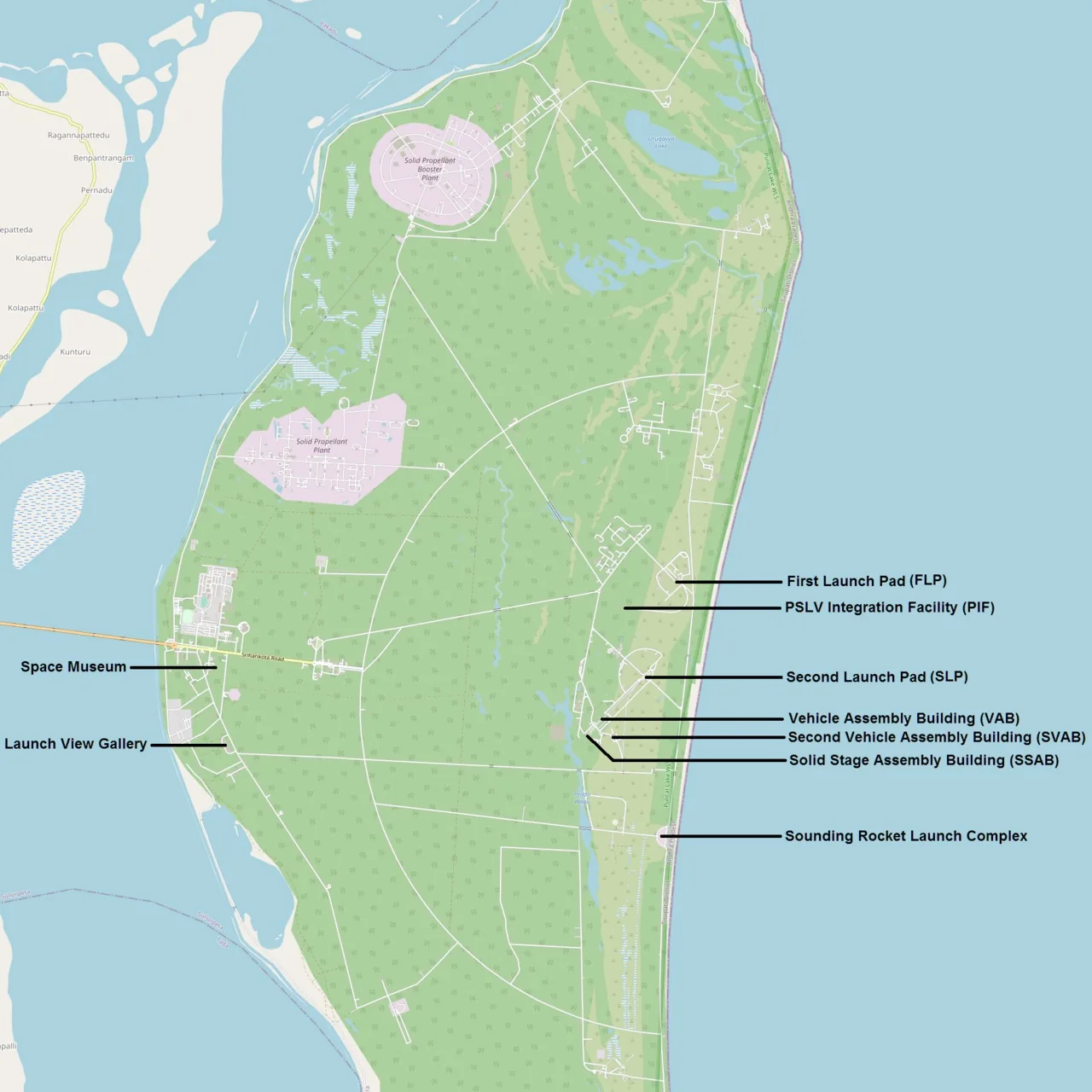
Sriharikota remains India's only orbital launch facility. While ISRO is building additional launch pads, the concentration of all launches at a single site creates bottlenecks and vulnerability. India needs additional launch sites — potentially in Tamil Nadu (Kulasekarapattinam, where a second spaceport is under development) and possibly offshore launch platforms.
4. Supply Chain Depth
India's space component supply chain, while growing, lacks the depth and diversity of the US or European aerospace ecosystems. Many critical components — radiation-hardened electronics, certain types of sensors, advanced materials, and specialized test equipment — must still be imported. Building a truly indigenous supply chain will take years of sustained investment.
5. Brain Drain and Talent Retention
Indian space engineers are in global demand. SpaceX, Blue Origin, NASA JPL, and European space companies actively recruit from Indian engineering schools and ISRO. Indian space startups must compete for talent against both international employers (who offer higher salaries) and India's booming IT sector (which offers higher compensation for lower-risk work).
6. Geopolitical Risks
India's space program operates in an increasingly complex geopolitical environment. The US-China technology competition, export control regimes (ITAR, EAR, Wassenaar Arrangement), and evolving space security dynamics all create uncertainties. India must navigate these carefully — maintaining partnerships with the US and its allies while preserving strategic autonomy.
7. Market Competition
India is entering a crowded global launch market. SpaceX's Falcon 9 dominates commercial launches with unmatched reliability and cost (thanks to reusability). Rocket Lab's Electron has established itself in the small satellite market. China's Long March and commercial launchers offer stiff competition. India must find niches — such as dedicated small satellite launches, constellation deployment, and regional navigation services — where its cost advantages and growing capabilities can command market share.
The Defense Dimension: Space as Strategic Asset
India's military space capabilities have grown significantly, though they receive less public attention than civilian programs:
- Defence Space Agency (DSA): Established in 2019 in Bengaluru to coordinate military space operations across the Army, Navy, and Air Force
- Defence Space Research Organisation (DSRO): Develops military-specific space technologies
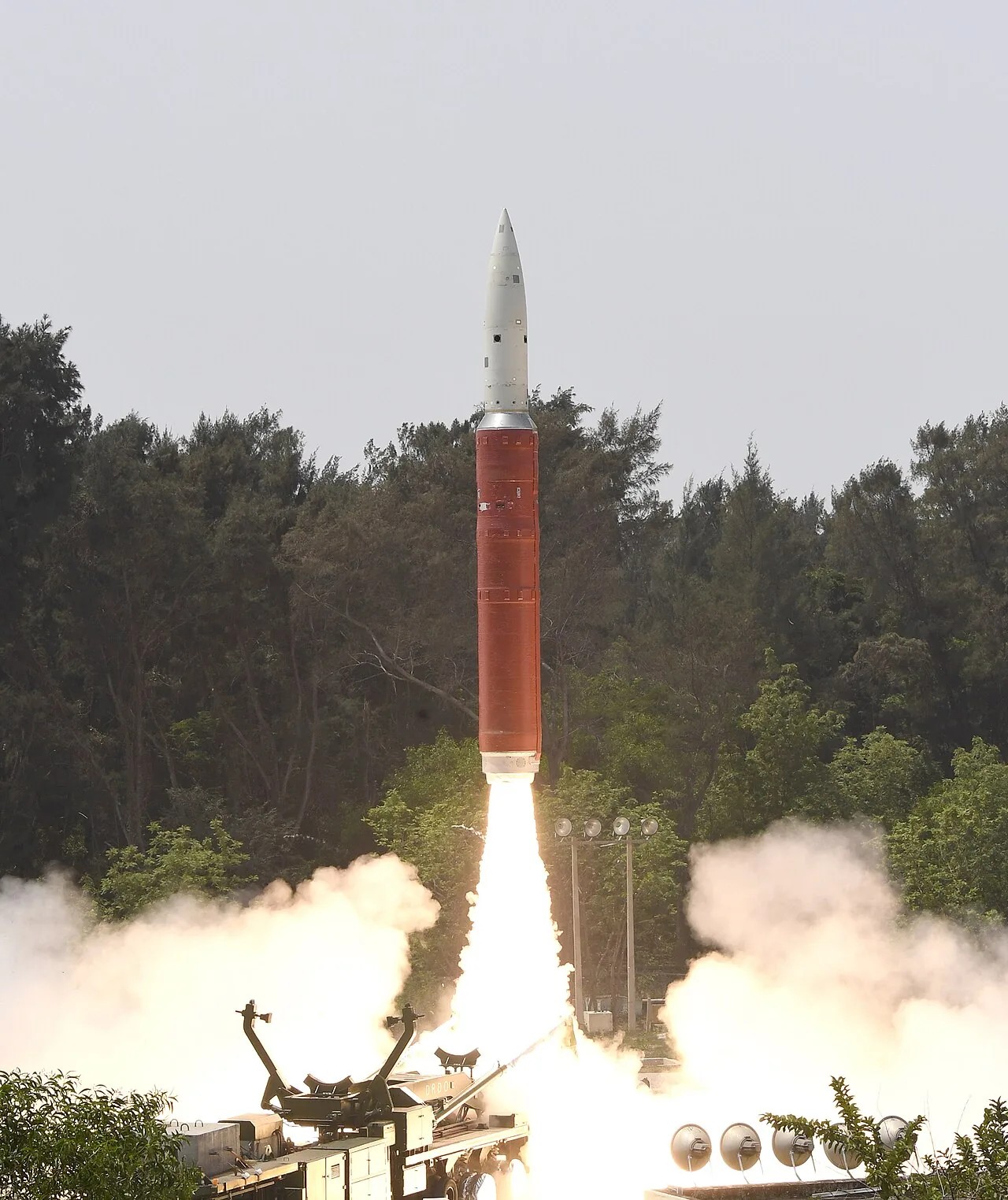
- Mission Shakti (2019): India successfully tested an anti-satellite (ASAT) weapon, destroying a defunct Indian satellite in low Earth orbit and becoming the fourth country (after the US, Russia, and China) to demonstrate this capability. PM Modi declared: "India has established itself as a space power. Mission Shakti was a defensive measure, and India does not intend to enter an arms race in space."
- Military communication satellites: Dedicated GSAT satellites with encrypted military transponders
- Surveillance satellites: High-resolution optical and radar imaging satellites for strategic surveillance
The intersection of military and commercial space is likely to deepen, with private Indian companies increasingly contributing to defense space requirements — a pattern already well-established in the US with SpaceX, Planet Labs, and others.
India's Space Economy: The Numbers
According to the Indian Space Association (ISpA) and industry estimates:
| Metric | Value |
|---|---|
| India's share of global space economy | ~2-3% ($12-15 billion) |
| ISRO's annual budget (2025-26) | ~$1.95 billion |
| Number of private space startups | 250+ |
| Cumulative private investment (2020-26) | ~$400 million |
| Commercial launches conducted by ISRO | 400+ foreign satellites from 36 countries |
| Operational Indian satellites | 60+ |
| Indian space sector employment | ~50,000 (estimated, public + private) |
| Target for space economy by 2030 | $44 billion (government target) |
The government's target of growing the Indian space economy to $44 billion by 2030 is ambitious but reflects the conviction that space is the next frontier of Indian industrial development.
Global Praise: What the World Says About India's Space Program
India's space achievements have drawn admiration from across the world:
Barack Obama (former US President): "India's space program is a source of pride not just for Indians but for the entire world. It shows what is possible when a nation commits to science and technology as instruments of development."
Elon Musk (CEO, SpaceX), responding to Chandrayaan-3: "Congratulations to ISRO. This is really exciting."
Thomas Zurbuchen (former NASA Associate Administrator for Science): "ISRO consistently demonstrates that great space science doesn't require the biggest budgets — it requires great engineers, clear objectives, and the courage to innovate."
Emmanuel Macron (French President), during PM Modi's state visit to France in 2023: "India and France share a vision of space as a domain for peaceful cooperation and sustainable development. India's space achievements are an inspiration."
Jean-Yves Le Gall (former President of CNES): "India is one of the most important space-faring nations in the world. ISRO's ability to execute complex missions at remarkable cost efficiency has earned the respect of every space agency."
Ban Ki-moon (former UN Secretary-General): "India's space program demonstrates that space technology can be a powerful tool for sustainable development, and that developing nations can be leaders in space exploration."
The Road to 2035: India's Space Ambitions
Looking ahead, India's space roadmap includes some of the most ambitious projects in the country's history:
- Gaganyaan: India's first crewed spaceflight, targeting 2026-27
- Chandrayaan-4: A lunar sample-return mission, planned for 2028
- LUPEX (India-Japan): Lunar polar exploration mission, 2028-29
- Shukrayaan: A Venus orbiter mission, under study
- Indian Space Station (BAS — Bharatiya Antariksha Station): A modular space station in low Earth orbit, with the first module targeted for 2028 and full assembly by 2035. PM Modi announced: "India will have its own space station by 2035. This is our commitment to the future of Indian science."
- Next-Generation Launch Vehicle (NGLV): ISRO is developing a partially reusable heavy-lift launch vehicle to replace the GSLV and reduce per-kilogram launch costs
- Expanding NavIC: From regional to global coverage with 11+ satellites
- Space solar power: Preliminary studies on beaming solar energy from space to Earth
Conclusion: A Nation's Cosmic Coming of Age
India's space story is, at its core, a story about ambition meeting capability. From the bicycle-carried sounding rockets of Thumba to the Chandrayaan-3 landing at the lunar south pole — from a program that began with a $25 budget allocation in 1962 to one that now attracts billions in private investment — the trajectory is extraordinary.
What makes India's space program unique is its dual nature. It is simultaneously a vehicle for cutting-edge scientific exploration and a practical tool for national development. No other major space program so explicitly links its cosmic ambitions to the everyday needs of its citizens — from the farmer who relies on INSAT weather data to the fisherman guided by NavIC, from the student learning through satellite-enabled education to the soldier communicating through military GSAT channels.
As India's space sector transitions from government monopoly to a vibrant public-private ecosystem, the next decade promises to be the most transformative yet. The challenges are real — capital gaps, regulatory maturation, infrastructure bottlenecks, global competition. But if the history of India's space program teaches anything, it is that this nation has a remarkable ability to turn constraints into catalysts.
Dr. Vikram Sarabhai's 1969 vision — of a space program that serves "the real problems of man and society" — has not only been realized but vastly exceeded. And the best, as Prime Minister Modi told a tearful K. Sivan at the Chandrayaan-2 control center, is truly yet to come.
"A nation that reaches for the stars builds a path for future generations to walk among them."
This is Part 2 of a two-part series. Read Part 1: "India in Space: The Complete Story of ISRO, Historic Missions, and a Nation's Cosmic Ambition" on SpaceOdysseyHub.