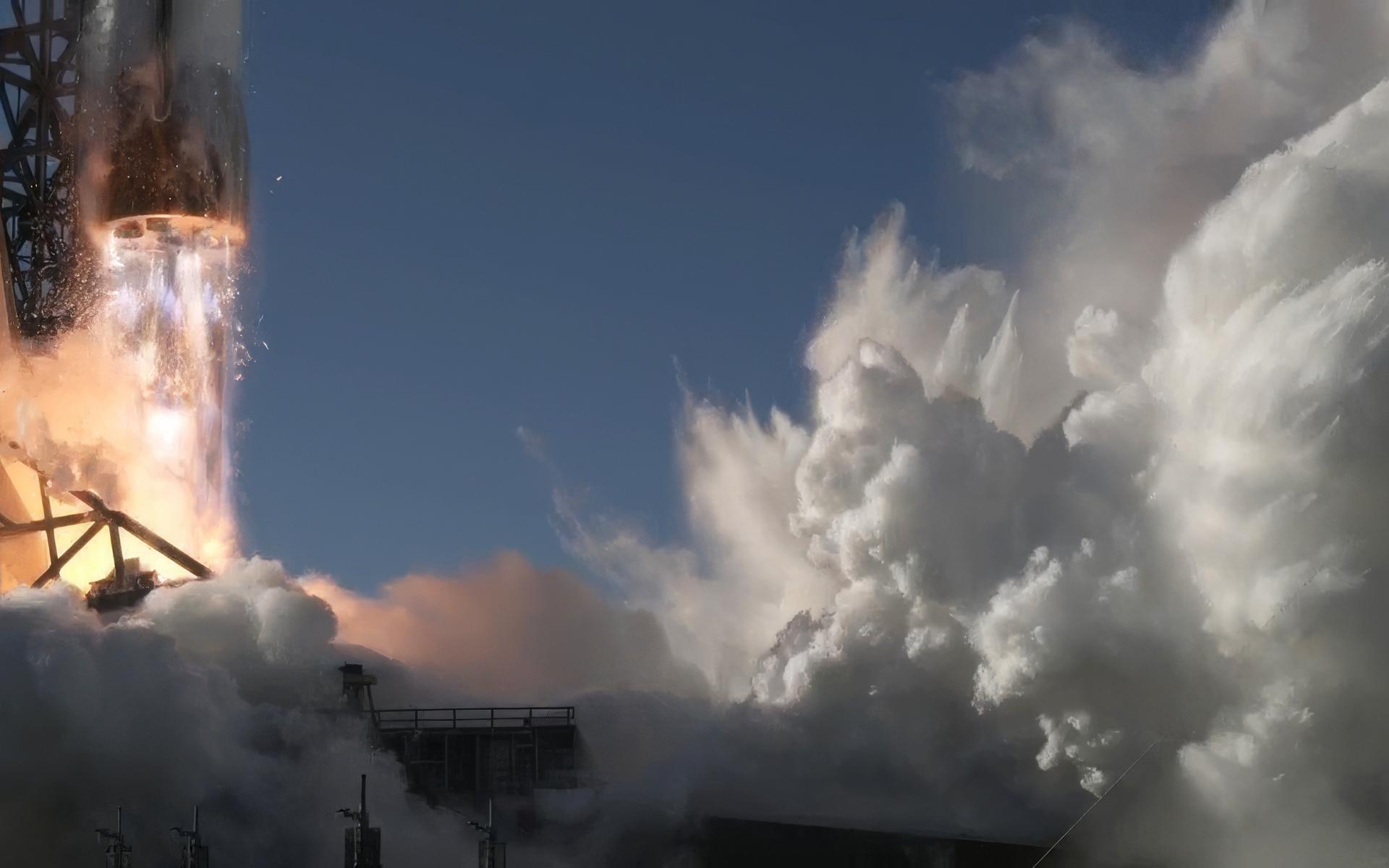
Twenty-four hours after NASA announced $749 million in Moon Base Phase One contracts, the rocket assigned to carry one of those missions to the lunar surface turned Launch Complex 36 at Cape Canaveral Space Force Station into a fireball.
The New Glenn explosion on May 28, 2026 — technically a static fire anomaly during a ground test, not a launch — was described by Col. Brian Chatman, commander of Space Launch Delta 45, as "the largest explosion" ever seen at Cape Canaveral. No personnel were killed or injured. The rocket itself was virtually destroyed.
What followed in the ten days since has reshaped the short-term calculus of America's return to the Moon. NASA Administrator Jared Isaacman announced a formal policy of "de-coupling" the Blue Moon landers from New Glenn. Blue Origin CEO Dave Limp pledged the company would fly again before year's end. And a question that once seemed theoretical — what happens to Artemis if New Glenn is unavailable? — became the most pressing problem in American human spaceflight.
What Exploded at Launch Complex 36 on May 28
A static fire test is a controlled ground burn. The rocket sits clamped to the launch mount, the engines fire briefly to verify performance, then shut down. That sequence failed catastrophically on May 28 at LC-36.
The blast was severe enough to virtually disintegrate New Glenn's first stage. The rocket's transporter-erector — the structure used to raise the vehicle to the vertical on the pad — was left in wreckage on the concrete surface. The large service gantry suffered structural damage near its base. A lightning protection tower was mangled. The force of the explosion extended across the entire pad complex.
Critically, not everything was lost. A large vehicle processing hangar adjacent to the pad survived without major damage. Propellant storage tanks and distribution systems remained intact. Limp said publicly on June 1 that the support tower "can be repaired in place rather than torn down and replaced" — a finding that meaningfully shortens the recovery timeline. His statement concluded: "We will fly again before the end of this year."
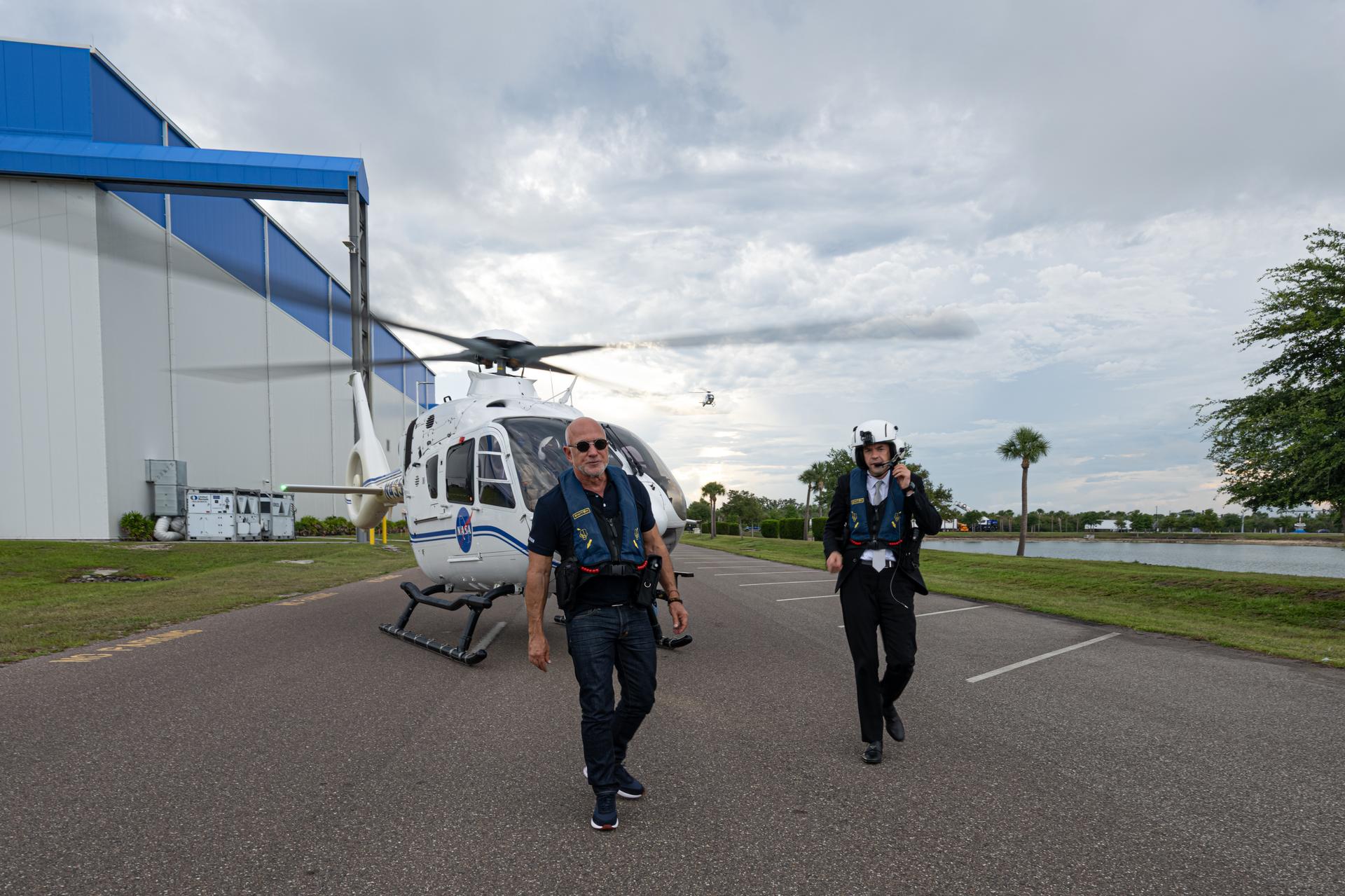
NASA Administrator Isaacman and senior engineers traveled to Florida the following day. Isaacman and Blue Origin founder Jeff Bezos then conducted a helicopter flyover of the LC-36 explosion site before meeting with Blue Origin engineers and employees at the facility. Isaacman described it as "a setback that happens in this business" and pledged NASA's support in finding the root cause. No independent root-cause report had been released publicly as of June 8, 2026.
The Blue Moon Dependency Problem: Built for One Rocket
To understand why the explosion matters beyond Blue Origin's balance sheet, it helps to understand how deeply the Blue Moon landers were engineered around New Glenn.
New Glenn's payload fairing measures seven meters in diameter — significantly wider than any other operational Western launch vehicle. Blue Origin designed both the Blue Moon Mk.1 cargo lander and the Blue Moon Mk.2 crewed lander specifically around that payload volume. John Couluris, Senior Vice President of Lunar Permanence at Blue Origin, described the co-optimization during the NG-3 broadcast in April 2026: "Having the launch vehicle as the same company's vehicle as the lander has allowed us to optimize the entire stack, the entire design. We've gotten a lot more performance out of our lander thanks to New Glenn."
The tight coupling that made Blue Moon more capable became a structural liability on May 28.
The Blue Moon Mk.1 — the cargo variant, whose flight unit is formally named "Endurance" — is assigned to deliver lunar terrain vehicles and early equipment to the lunar south pole under NASA's Moon Base Phase One program. It was targeted to land on the Moon in Fall 2026 as a pathfinder for the crewed missions that follow.
The Blue Moon Mk.2 is the crewed lander for Artemis 3, planned to dock with Orion in lunar orbit in mid-2027. It uses liquid hydrogen as its descent propellant — a choice that yields high specific impulse for lunar descent but requires dedicated ground infrastructure that SpaceX's launch complexes are not built to support.
NASA's Response: De-Coupling as a Policy Signal
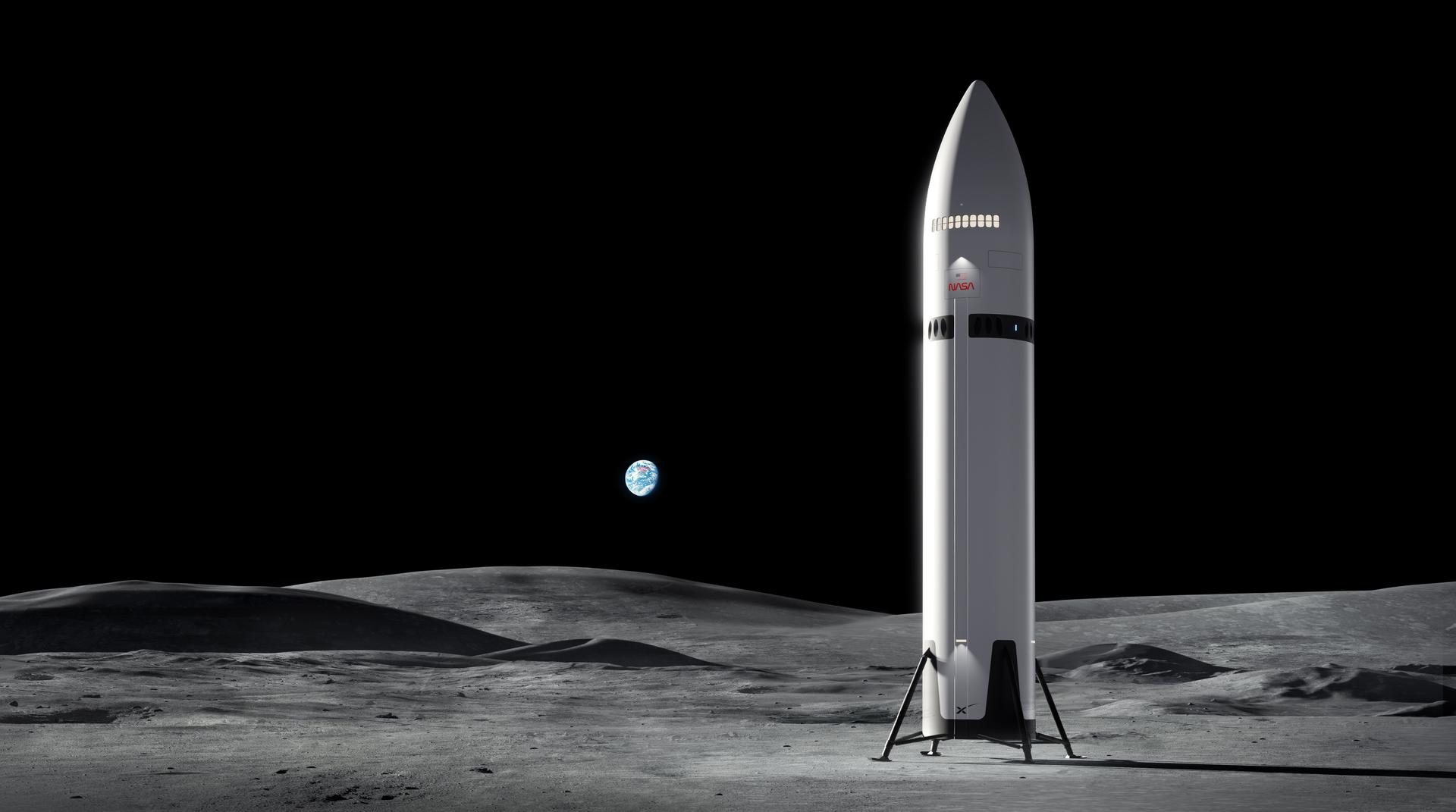
Isaacman's public position — stated in a FOX Business interview on June 5 and confirmed by a NASA spokesperson — was that the agency would formally separate Blue Moon's schedule from New Glenn's return-to-flight timeline.
"We are not going to sit on our hands and wait for the capabilities necessary to achieve the nation's most pressing objectives," Isaacman said. "We are also de-coupling the lander from the launch vehicle and the pad itself."
That statement carries important nuance. Decoupling the lander from the pad means NASA does not want Artemis planning to depend on how fast Blue Origin can repair LC-36. It does not automatically mean Blue Moon will fly on a different rocket — but it signals that NASA is actively evaluating whether that is possible.
Isaacman framed the mission stakes explicitly: "We are laser focused on the lander because we're laser focused on our mission to return astronauts to the surface of the moon before 2028." He confirmed NASA wants Blue Moon Mk.2 "available for our test mission in 2027, which is Artemis 3, and potentially available to meet our landing objectives in 2028" — a reference to Artemis 4 and the planned first sustained lunar south pole presence.
The declaration came from the same administrator who personally flew to Florida to survey the wreckage — a gesture that reflects how seriously NASA treats the timeline risk.
The Alternative Launcher Problem: Physics Constrains the Options
If NASA wants Blue Moon to fly on something other than New Glenn, the engineering constraints are stark.
Isaacman articulated the market reality plainly at the CNBC CEO Summit: "In terms of heavy lift, you know, real heavy lift, you've got SpaceX and Blue Origin, and obviously one of them is down a pad right now."
SpaceX's Falcon Heavy has a payload fairing diameter of 5.2 meters. SpaceX has developed a taller extended version, but has announced no wider option. Blue Moon, optimised around a seven-meter envelope, would not fit. Beyond fairing geometry, SpaceX's launch pads at Kennedy Space Center are not equipped for liquid hydrogen fueling infrastructure. Adapting any Falcon Heavy pad for cryogenic hydrogen on a compressed Artemis timeline would be a significant undertaking under any circumstances.
United Launch Alliance's Vulcan Centaur uses liquid hydrogen in its upper stage but carries a 5.4-meter standard fairing. NASA's SLS vehicle has a wider core but is fully allocated to Orion crew missions and constrained by its own launch cadence. For a direct side-by-side on how these vehicles compare on payload performance, see the Falcon 9 vs Vulcan Centaur vs New Glenn comparison.
The result: the launch market for a hydrogen-fuelled, seven-meter-class payload is effectively a market of one. The only technically credible path for Blue Moon to reach the Moon on Artemis schedule — without a vehicle redesign or major ground infrastructure reconfiguration — is for New Glenn to return to flight well ahead of the Artemis 3 window.
Artemis 3 and 4: What Holds, What Doesn't
NASA's dual-lander strategy — simultaneously developing SpaceX's Starship HLS and Blue Origin's Blue Moon for Artemis — was conceived precisely as insurance against this kind of single-point failure. The explosion did not affect Starship HLS development, which remains on its own test timeline.
Isaacman confirmed that NASA intends to fly both landers for Artemis 3 in a dual-demonstration approach: Starship HLS and Blue Moon Mk.2 docking separately with Orion, with one serving as backup for the other. The dual-lander architecture was always the most risk-tolerant approach; the Blue Moon setback makes it the only viable near-term one.
The successful Artemis II crewed Moon flyby in April 2026 generated real programmatic and political momentum. Artemis II demonstrated Orion's life-support systems, deep-space navigation, and thermal control across a 10-day mission. The Artemis III window is when NASA crosses from demonstration to landing. Slipping it would reverberate through every stakeholder group, including the international partners who signed the Artemis Accords.
Artemis 4, the first mission targeting sustained south pole presence in 2028, relies on multiple Blue Moon Mk.1 cargo deliveries preceding the crewed landing. The Phase One announcement on May 27 allocated approximately $749 million across four prime contractors for exactly this infrastructure build-up. The explosion happened twenty-four hours later. All of those contracts now carry an asterisk.
Whether Artemis 3 holds its 2027 target depends on variables NASA has not yet publicly resolved: the root cause of the May 28 anomaly, when New Glenn returns to flight, and whether the agency can certify Blue Moon on any alternative vehicle in time. None of those answers exist publicly as of this writing.
Blue Origin's Path Back: Engineering and Credibility
Limp's pledge to fly again before year's end is aggressive but not implausible given the damage assessment. The hangar survived. Propellant systems are intact. The support tower can be repaired in place rather than rebuilt from scratch. The primary losses — the transporter-erector and parts of the gantry — are hardware.
The harder challenge is cause. A static fire anomaly at this scale raises serious questions about whether the failure originated in the engine, the propellant system, the ground infrastructure, or the test procedure itself. Blue Origin must identify the root cause, implement and verify corrective action, and satisfy Air Force and FAA requirements before returning to flight. "We will fly again before year's end" is an intention until those steps are complete.
It is worth noting that New Glenn completed its second mission (NG-2) successfully from this same pad in November 2025, carrying NASA's ESCAPADE twin spacecraft onto a Mars-trajectory orbit just six months before the explosion. The company has demonstrated it can fly. The question is whether it can investigate, fix, and re-certify fast enough to preserve the program milestones that now depend on it.
Why the Timing Amplifies the Stakes
The explosion's timing sharpened its impact in ways that go beyond engineering. The Moon Base Phase One awards were announced the day before, with multiple commercial partners celebrating contracts and NASA leadership sharing a moment of visible optimism. Then, in less than twenty-four hours, the rocket at the center of that program was destroyed on its own pad during a ground test.
For NASA, the credibility of Artemis depends on sustaining momentum toward the Moon, with a program architecture that has already navigated SLS delays, Starliner problems, and funding uncertainty. For Blue Origin, this is a test not just of its engineering but of its institutional maturity — whether it can investigate rapidly, communicate transparently with NASA and its public stakeholders, and return to safe operations on a compressed timeline.
Both outcomes remain possible. Neither is certain. The Moon is still the destination. The route there, as of June 2026, is more contested than it was twenty-four hours before the explosion.