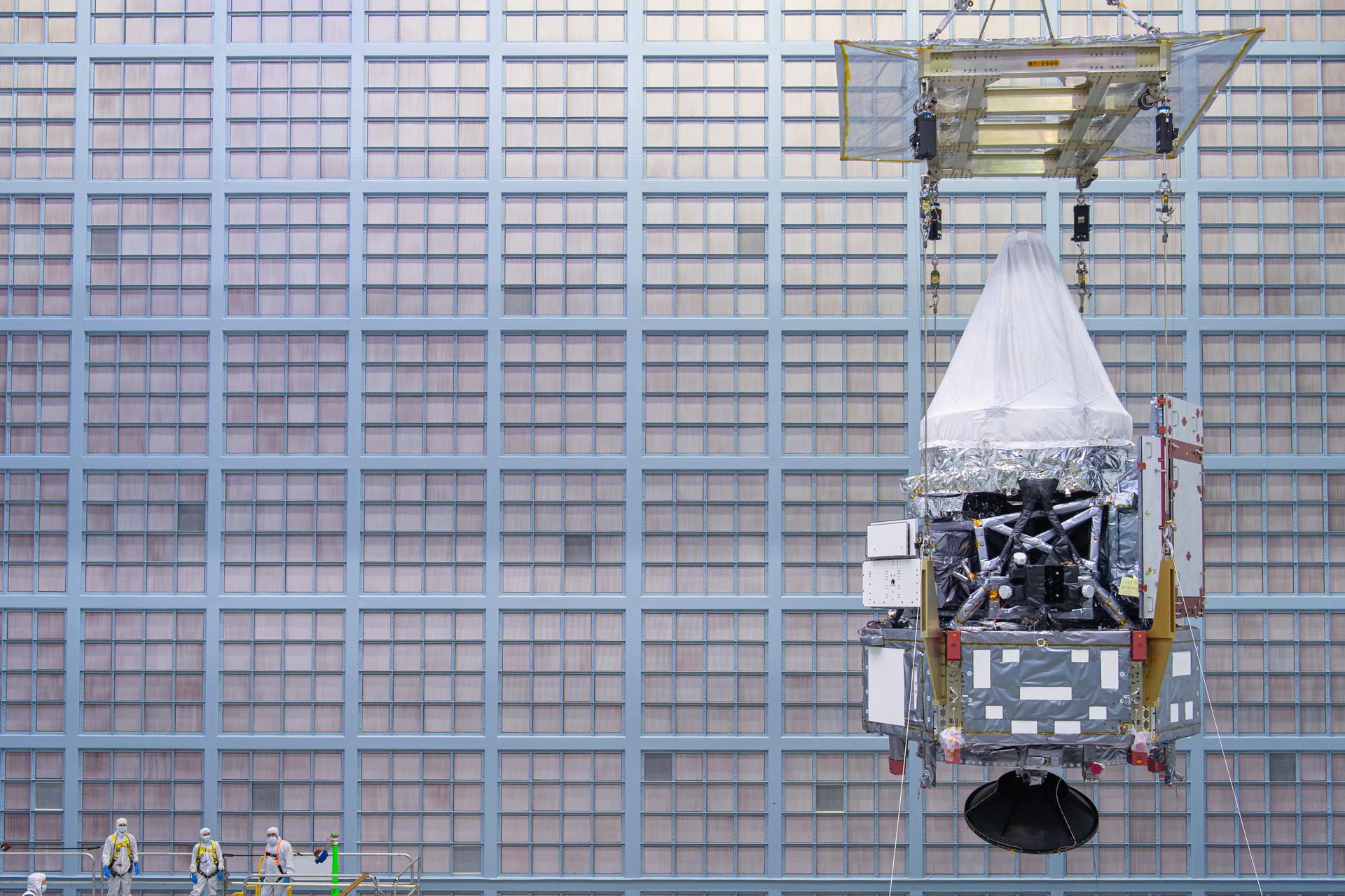
When NASA's Nancy Grace Roman Space Telescope launches in September 2026 on a SpaceX Falcon Heavy from Launch Complex 39A at Kennedy Space Center, it will join an orbit already occupied by two of the most productive scientific instruments humanity has ever built: the James Webb Space Telescope and ESA's Euclid. And it will take its place as the spiritual successor to a 36-year-old instrument that fundamentally changed how astronomers understand the universe — the Hubble Space Telescope.
The natural question is how they compare. The accurate answer is that they are not really competing. Roman, Hubble, JWST, and Euclid were each designed to solve different scientific problems, using different wavelengths, different orbits, and fundamentally different instruments. Understanding what each one actually does — and what it cannot do — is the clearest way to understand what Roman adds to humanity's observatory fleet.
How Roman, Hubble, JWST, and Euclid Compare
The table below places the four telescopes side by side on the specifications that matter most for understanding their capabilities.
| Specification | Roman | Hubble | JWST | Euclid |
|---|---|---|---|---|
| Mirror diameter | 2.4 m | 2.4 m | 6.5 m | 1.2 m |
| Launch year | 2026 | 1990 | 2021 | 2023 |
| Launch vehicle | SpaceX Falcon Heavy | Space Shuttle Discovery | Ariane 5 | SpaceX Falcon 9 |
| Orbit | Sun–Earth L2 | LEO (~547 km) | Sun–Earth L2 | Sun–Earth L2 |
| Wavelength range | 0.5–2.3 μm (NIR) | 0.1–2.5 μm (UV–NIR) | 0.6–28 μm (NIR–MIR) | 0.55–2.0 μm (VIS–NIR) |
| Field of view | 0.28 sq deg (WFI) | ~0.003 sq deg (ACS) | ~0.006 sq deg (NIRCam) | ~0.57 sq deg (VIS) |
| Angular resolution | 0.11 arcsec/pixel | ~0.05 arcsec (WFC3) | ~0.07 arcsec (2 μm) | ~0.18 arcsec (VIS) |
| Primary science | Dark energy, exoplanets, wide surveys | Galaxy morphology, UV astronomy | First galaxies, exoplanet atmospheres | Dark energy, weak lensing |
| Key instruments | WFI + Coronagraph | ACS, WFC3, COS, STIS | NIRCam, NIRSpec, MIRI | VIS, NISP |
| Approximate cost | ~$3.9 billion | ~$10 billion (incl. servicing) | ~$10 billion | ~€1.4 billion |
| Status (Jun 2026) | Pre-launch (KSC) | Operational | Operational | Operational |
The most striking entry in that table is field of view. Roman's Wide Field Instrument sees 0.28 square degrees of sky per exposure. That is approximately 100 times larger than Hubble's Advanced Camera for Surveys (ACS), and roughly 47 times larger than JWST's NIRCam combined modules. Euclid's visible-light instrument actually has a slightly larger field at 0.57 square degrees — but Roman's larger mirror gives it significantly better resolution and infrared depth. The differences between these numbers are not incidental engineering variations. They reflect the core scientific mandate each telescope was built to fulfill.
Roman's Wide-Field Advantage: 100 Times What Hubble Sees Per Exposure
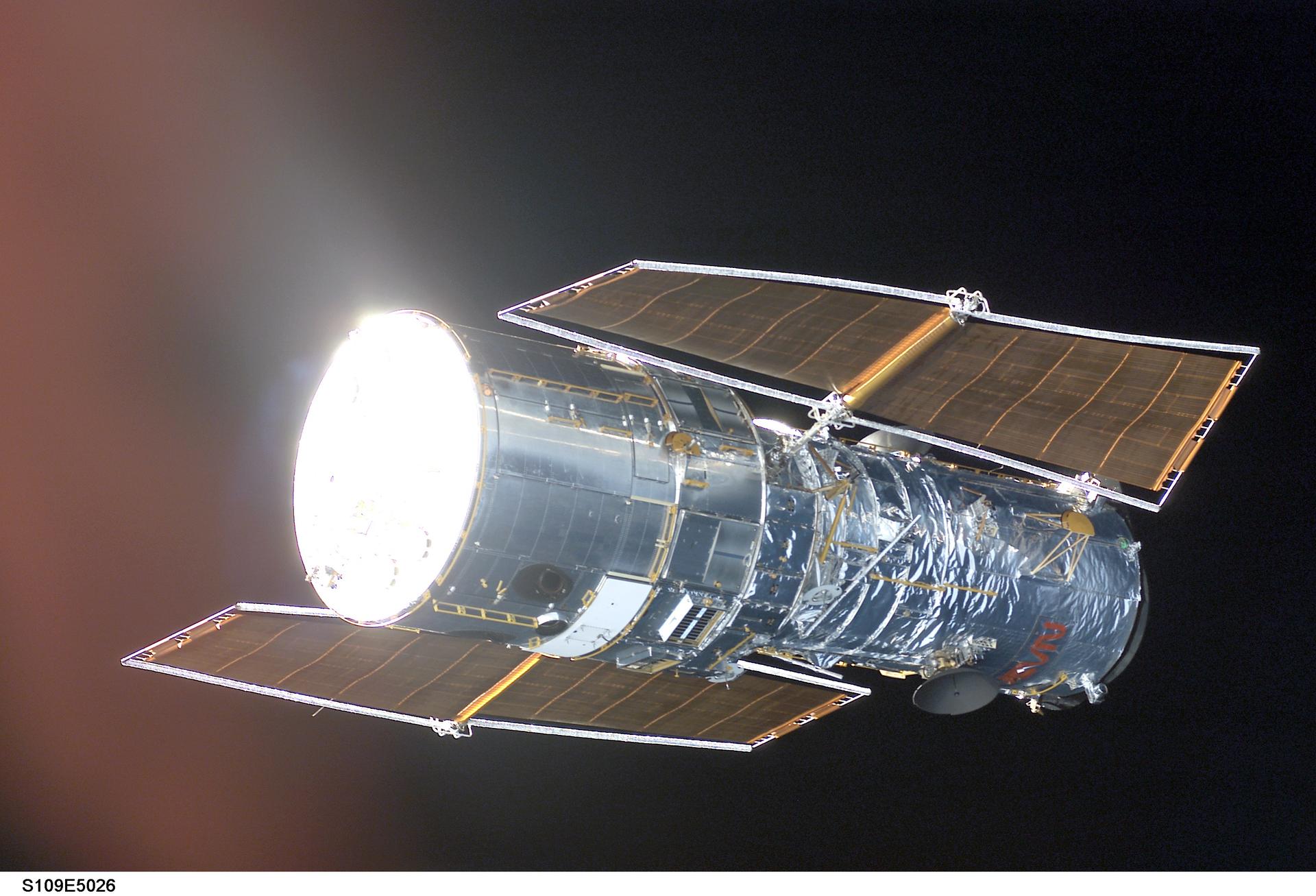
Roman's identifying characteristic is its Wide Field Instrument — 18 near-infrared detectors arranged in a 4×4 grid, each a 4k×4k mercury-cadmium-telluride (HgCdTe) array. The HgCdTe technology is the same family used in JWST's NIRCam detectors, matured through that program before being adopted for Roman's much larger focal plane. The full WFI mosaic produces 288 megapixels per exposure across that 0.28 square-degree field.
For context: Hubble's famous Ultra Deep Field — the image of approximately 10,000 galaxies that required roughly 400 hours of total accumulated exposure from 2003 to 2004 — covers approximately 11 square arcminutes. Roman can cover that same sky area in a single exposure. Its primary science mission will survey approximately two billion galaxies over a five-year primary mission, mapping the large-scale structure of the universe at a detail and statistical completeness Hubble could never achieve in any practical timeline.
This survey capacity points directly at Roman's central scientific target: dark energy. Measuring the equation-of-state parameter that describes dark energy's evolution requires cataloguing the positions, shapes, and distances of hundreds of millions of galaxies across billions of light-years — a statistical problem that demands breadth. The approach used is weak gravitational lensing: tiny systematic distortions in the shapes of background galaxies caused by the mass of foreground structure reveal the distribution of dark matter and, over cosmic time, the influence of dark energy on how that structure grows. Roman's wide field makes it the fastest credible instrument for this survey.
Roman also carries a second distinct instrument: the Coronagraph, which will demonstrate direct imaging of exoplanets around nearby stars at contrast ratios approximately 100 to 1,000 times better than any previously flown space coronagraph. Unlike Roman's primary WFI-driven science, the coronagraph is a technology demonstration — but the performance floor it establishes will inform the design of future large direct-imaging missions.
JWST's Deep Power vs. Roman's Survey Speed
JWST and Roman will orbit the same point in space: the Sun–Earth L2 Lagrange point, approximately 1.5 million kilometers from Earth in the anti-Sun direction. Their thermal stability, freedom from Earth-scattered light, and deep-space vantage will be equivalent. What differs dramatically is what they do with their position.
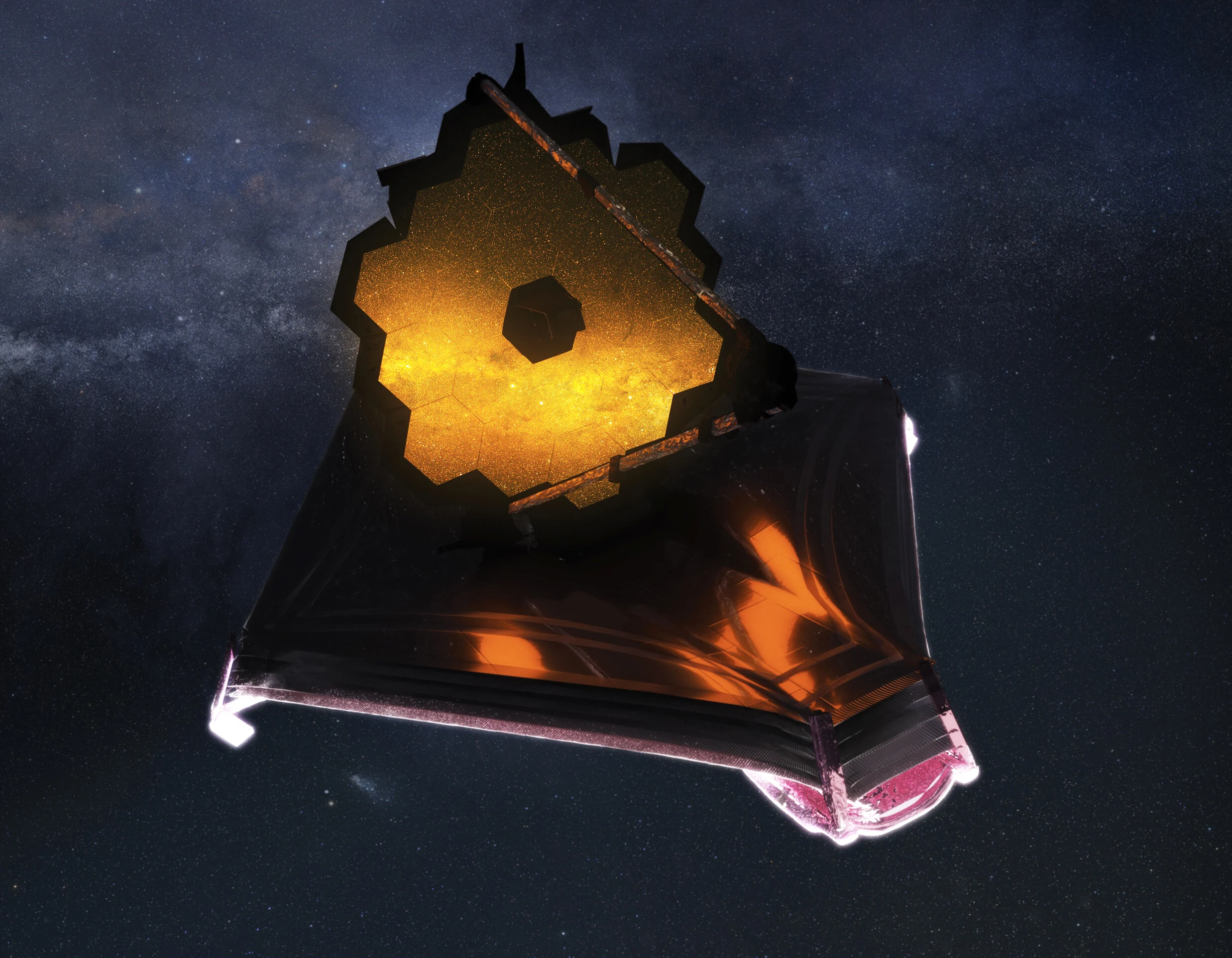
JWST's primary mirror spans 6.5 meters — composed of 18 gold-coated beryllium hexagonal segments. That aperture collects approximately 7.4 times more light per unit time than Roman's 2.4-meter mirror. When JWST stares at a galaxy at redshift 10 — light that has been traveling for over 13 billion years — it can resolve individual star-forming regions. Its NIRSpec spectrograph can observe up to 100 objects simultaneously through programmable microshutter arrays, generating spectra that reveal chemical compositions, velocities, and star-formation histories in a single observation. MIRI, the mid-infrared camera and spectrograph, extends JWST's sensitivity to 28 micrometers — wavelengths that probe cold dust, warm molecular gas, brown dwarf atmospheres, and exoplanet thermal emission. Nothing currently in orbit reaches that range.
What JWST cannot do efficiently is survey. Its small field of view means it requires thousands of pointings to cover areas Roman handles in dozens. Time on JWST is severely oversubscribed — the Space Telescope Science Institute receives proposals requesting roughly ten times more observing time than is available each cycle. JWST is built for depth on specific, high-priority targets.
Roman and JWST are therefore natural partners. Roman's all-sky near-infrared survey will identify rare objects at scale: unusual morphologies, transient events, microlensing candidates, high-redshift quasars, and exoplanet transits. JWST will follow up the most compelling targets with the spectroscopic and mid-infrared detail Roman cannot provide. This pipeline — Roman discovers, JWST characterizes — is already being designed into joint science programs at the Space Telescope Science Institute, which operates both missions.
Hubble at 36: The Sky's Best UV Eye Is Still Operating
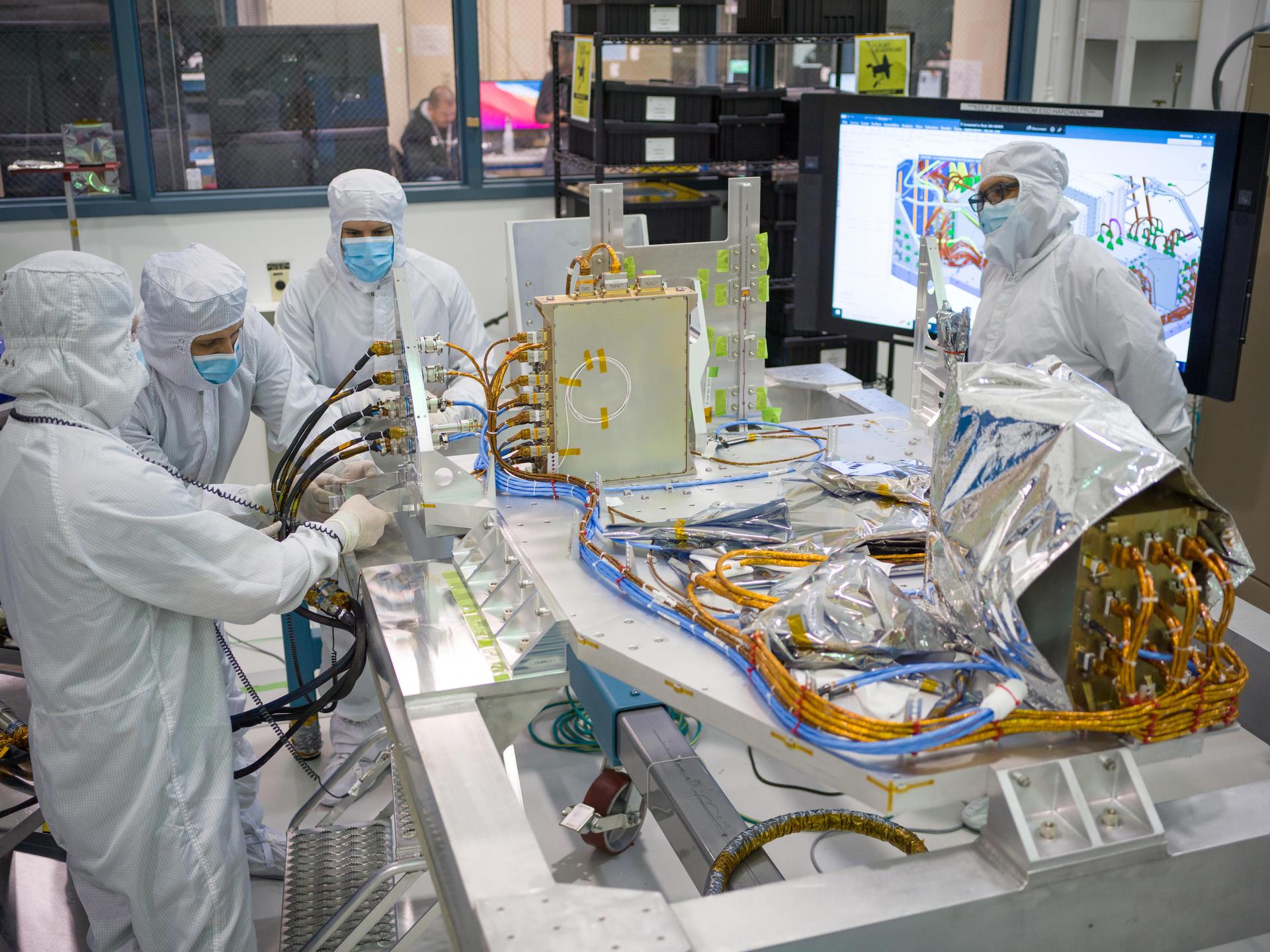
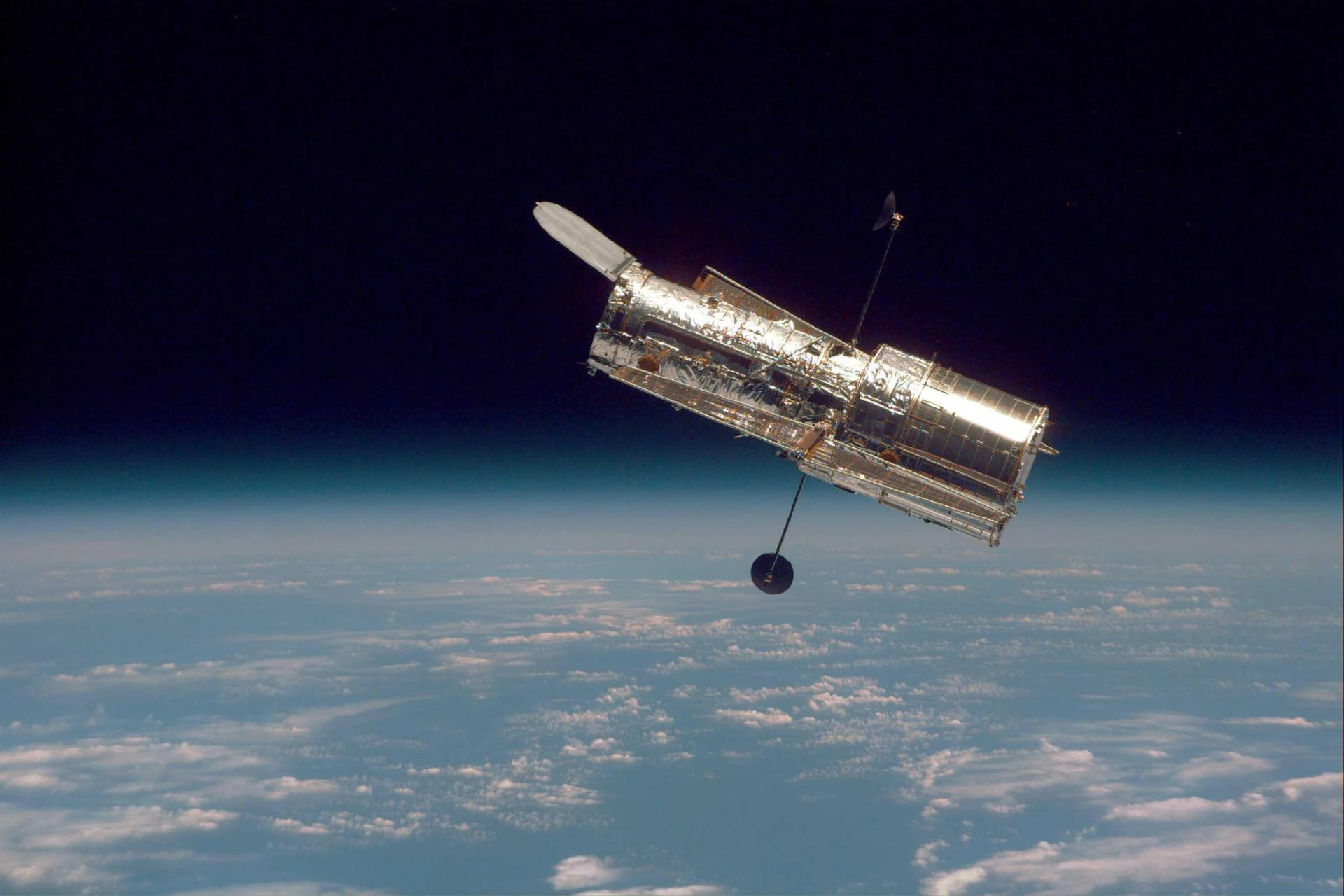
The Hubble Space Telescope launched from the Space Shuttle Discovery on April 24, 1990. As of mid-2026 it has been in service for 36 years — an instrument that has outlasted the career of most astronomers who first used it. Its gyroscopes have been a recurring concern; NASA shifted to single-gyroscope operations in 2024, reducing pointing flexibility but preserving the telescope's ability to observe. Hubble is still producing science.
No other large space telescope currently covers the far ultraviolet. JWST's sensitivity begins around 600 nanometers — ultraviolet is entirely outside its wavelength range by design. Roman's WFI begins at 500 nanometers. Euclid's visible camera starts at 550 nm. The far ultraviolet below 300 nanometers — where hot massive stars radiate most of their bolometric luminosity, where quasar absorption lines reveal the composition of the intergalactic medium, and where supernovae in their earliest hours emit most conspicuously — belongs to Hubble's instruments and to the history of missions that kept it operating.
Hubble also occupies a completely different orbit than the other three. Its low Earth orbit at roughly 547 kilometers altitude was essential to the five astronaut servicing missions that repaired its optics in 1993 and upgraded its instruments four more times through 2009. Roman, JWST, and Euclid are all stationed at L2 — too far from Earth for servicing missions with any current crewed vehicle. That commitment to unserviceability buys stable thermal conditions and operational simplicity, but it means every hardware failure is permanent.
Euclid: Europe's Dark Universe Survey Already Underway
ESA's Euclid launched on a SpaceX Falcon 9 from Cape Canaveral on July 1, 2023. It entered its L2 orbit and began science operations in early 2024. By June 2026 it has been collecting data for more than two years — and in the dark energy science that both Roman and Euclid target, that head start matters.
Euclid's design centers on two instruments: VIS (visible imager) and NISP (near-infrared photometer and spectrograph). Its 1.2-meter mirror is smaller than Roman's 2.4-meter aperture, but its VIS field of view at approximately 0.57 square degrees per pointing is somewhat larger than Roman's 0.28 square degrees. The trade-off is depth and resolution. Euclid's VIS achieves roughly 0.18 arcseconds per pixel; Roman's WFI delivers 0.11 arcseconds per pixel. Roman's larger mirror also enables it to reach significantly fainter sources at comparable exposure times.
Euclid's primary survey targets roughly 15,000 square degrees of extragalactic sky — approximately one-third of the full sphere — over a six-year primary mission, building a cosmological dataset for weak lensing and galaxy clustering analysis. Roman's primary high-latitude survey covers roughly 2,000 square degrees at greater depth. The programs are complementary by design: Euclid maps more sky at moderate depth; Roman covers a subset of that sky with higher resolution and infrared sensitivity. Joint analyses of the overlapping datasets are already being planned through ESA and NASA coordination agreements, with combined constraints on dark energy parameters expected to be significantly stronger than either mission alone.
Why Astronomy Needs All Four Telescopes
The instinct to rank these four instruments on a single scale misses how observatories actually function. Each occupies a largely non-overlapping niche.
Hubble is the only large-aperture UV telescope in orbit. Its 36-year archive remains scientifically active on topics from stellar population synthesis to quasar variability. When astronomers need UV spectra, there is no substitute in operation, and there is no planned successor that covers the same wavelength range at comparable aperture before the early 2030s at the earliest.
JWST is the deep near-infrared and mid-infrared instrument. Its 6.5-meter mirror and 28-micrometer sensitivity reach are unmatched. When a Roman survey or a ground-based telescope flags an unusual galaxy at high redshift, JWST is the instrument that will take its spectrum and characterize its physical state.
Euclid is conducting the wide-sky optical and near-infrared dark energy survey now, building a cosmological dataset that will be cross-correlated with Roman data for joint parameter constraints on the equation of state of dark energy.
Roman is the wide-field near-infrared complement: a survey machine operating at Hubble's resolution across fields 100 times larger, at the infrared wavelengths most needed for photometric redshifts of billions of galaxies. The history of space telescopes reveals that science almost always advances fastest not from a single instrument but from the convergence of multiple complementary datasets.
September 2026 will be the first moment all four of these telescopes are operational simultaneously. The era of coordinated multi-observatory infrared and optical astronomy — Roman's wide fields informing JWST followup, Roman and Euclid surveys cross-correlated for dark energy, Hubble's UV filling the gap neither L2 telescope can reach — has not yet begun. It is starting now.