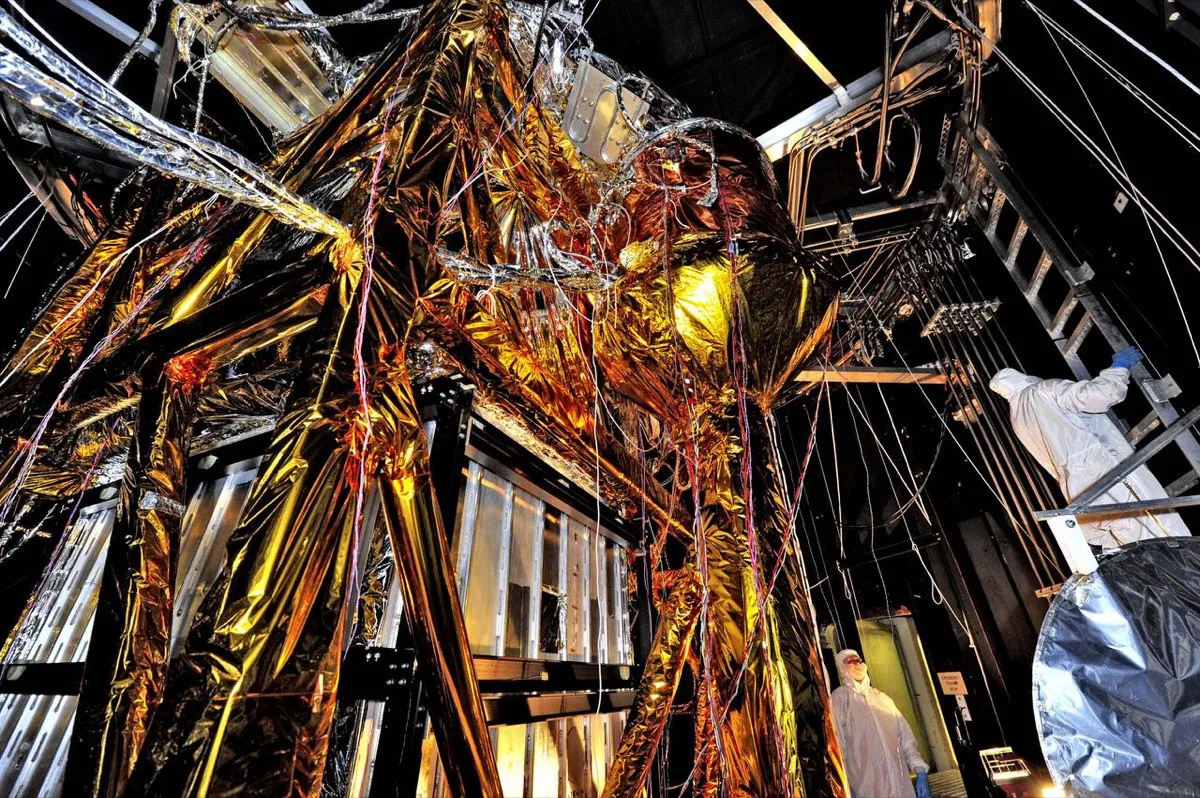
Every so often, I step back and try to take in the full arc of space exploration -- from the first tentative satellite beeping in orbit to a helicopter flying on another planet. When you lay the milestones end to end, the trajectory is breathtaking. In barely a century, we went from looking up and wondering to sending robots to catch pieces of asteroids and bring them home. The story of space discovery is, ultimately, the story of human ambition meeting the immensity of the cosmos and refusing to look away.
Here are the milestones that define that story, updated through the extraordinary events of 2023 and 2024.
The Space Age Is Born: Sputnik (1957)
On October 4, 1957, the Soviet Union launched Sputnik 1, a polished metal sphere no bigger than a beach ball, into low Earth orbit. Its radio signal -- a simple, rhythmic beep -- was picked up by amateur radio operators around the world, and in an instant, the Space Age had begun. Sputnik proved that artificial objects could orbit the Earth, and it ignited a competition between superpowers that would drive some of the most ambitious engineering projects in human history.
Yuri Gagarin: The First Human in Space (1961)
On April 12, 1961, Soviet cosmonaut Yuri Gagarin climbed into the Vostok 1 capsule and became the first human being to travel to outer space. His single orbit of the Earth lasted just 108 minutes, but its significance was immeasurable. A human had left the planet and returned safely. The psychological barrier had been broken, and the space race shifted into overdrive.
The Apollo Moon Landings (1969-1972)
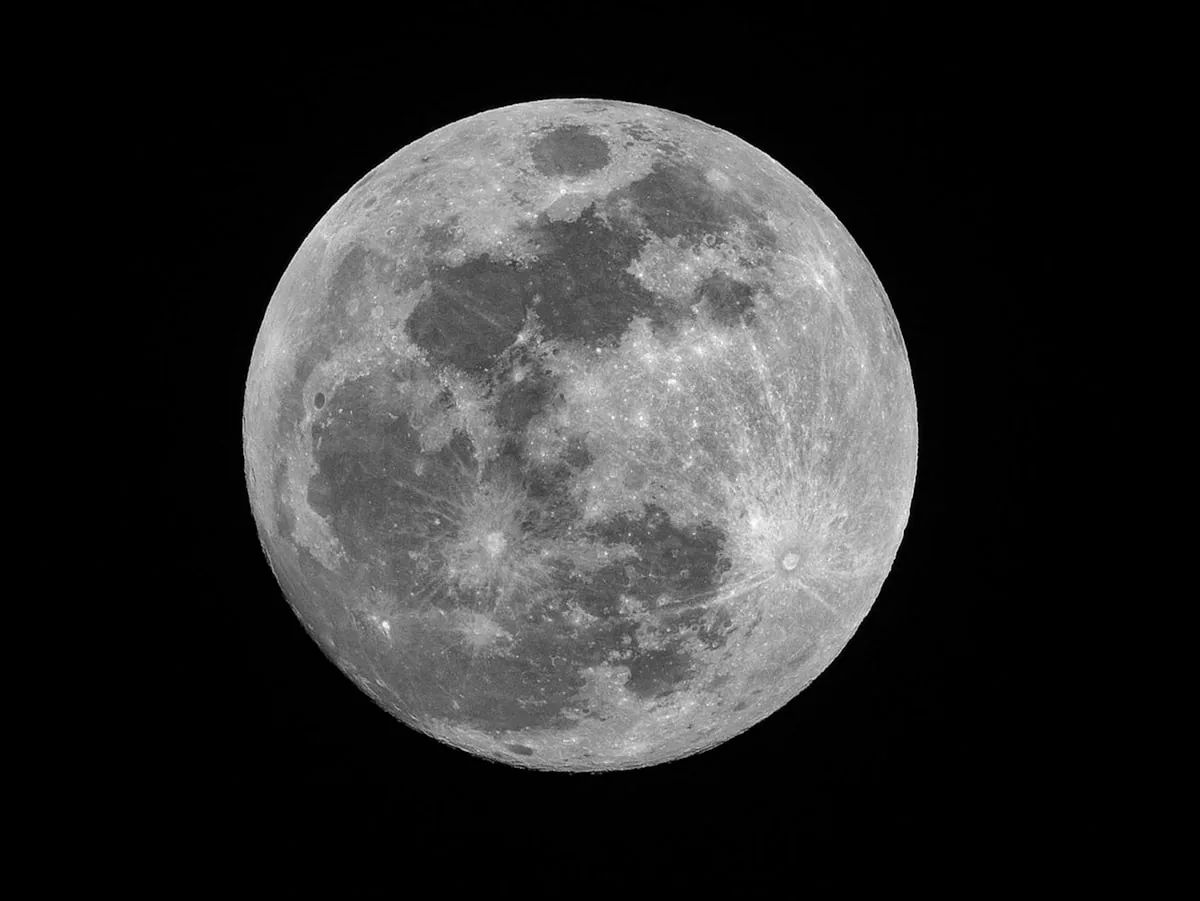
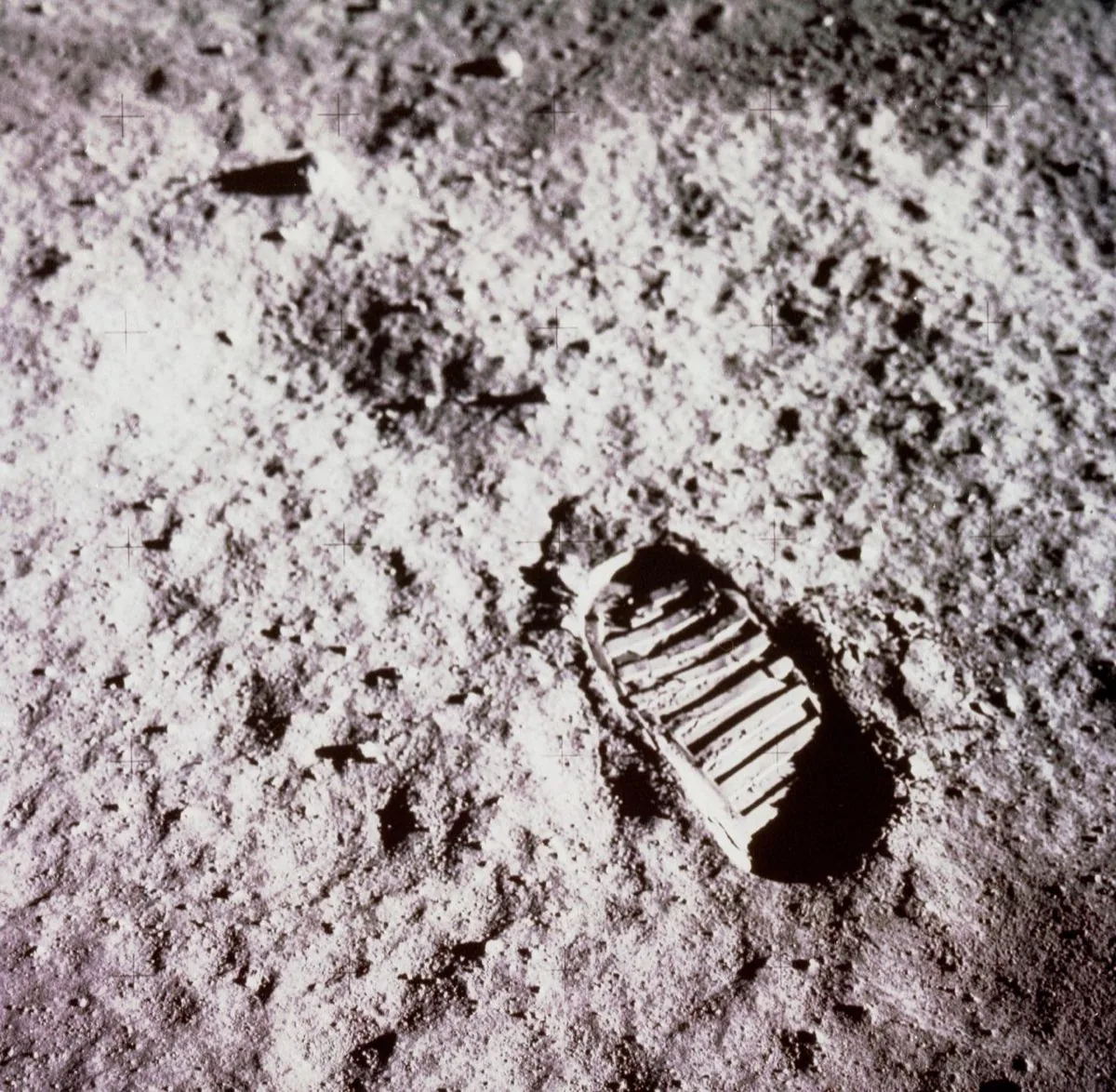
NASA's Apollo program remains the most audacious exploration venture in human history. Between July 1969 and December 1972, twelve astronauts walked on the surface of the Moon across six successful missions. Neil Armstrong's words as he stepped onto the lunar surface on July 20, 1969 -- "That's one small step for a man, one giant leap for mankind" -- remain the defining statement of the exploration era.
What often gets overlooked is the sheer scientific bounty. Apollo astronauts brought back 382 kilograms of lunar samples that we are still analyzing today, deployed experiments that measured moonquakes and solar wind, and fundamentally changed our understanding of the Moon's origin and geological history.
The Voyager Grand Tour (1977-Present)
Launched in 1977, Voyager 1 and Voyager 2 embarked on what was originally a four-year mission to study Jupiter and Saturn. Nearly five decades later, both spacecraft are still transmitting data from interstellar space -- the only human-made objects to have crossed that boundary.
Voyager's achievements include the first detailed images of Jupiter's Great Red Spot and volcanic eruptions on its moon Io, the discovery of active geysers on Neptune's moon Triton, and the iconic "Pale Blue Dot" photograph taken by Voyager 1 in 1990, showing Earth as a tiny speck suspended in a sunbeam. As of 2025, Voyager 1 is more than 24 billion kilometers from Earth, still sending data home at the speed of light -- though the signal takes over 22 hours to arrive.
The Hubble Space Telescope (1990-Present)
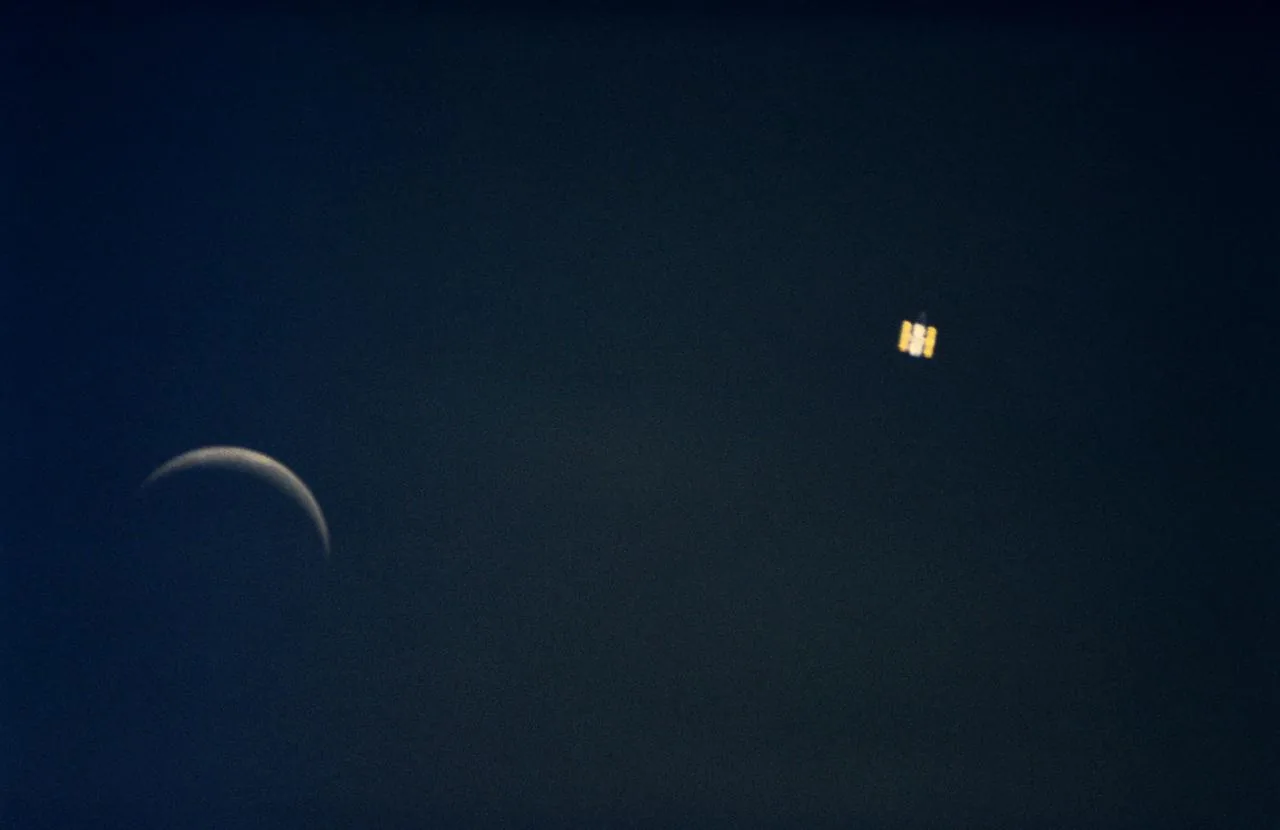
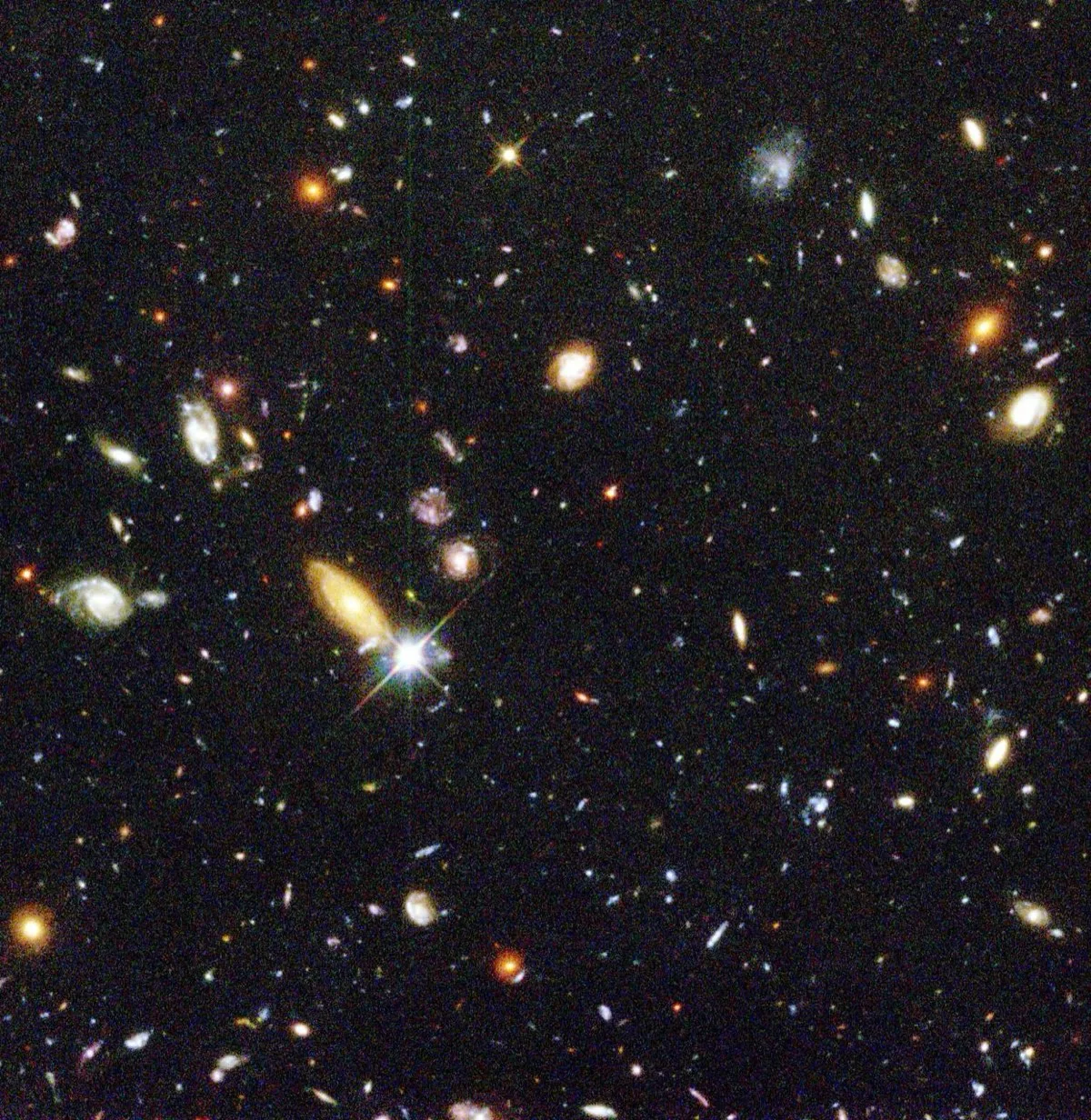
Deployed from the Space Shuttle Discovery on April 25, 1990, Hubble transformed our understanding of the universe. Its Deep Field images revealed that even apparently empty patches of sky are teeming with galaxies -- thousands of them, stretching back billions of years. Hubble refined our measurement of the universe's expansion rate, documented the life cycles of stars in exquisite detail, and provided the first atmospheric measurements of exoplanets.
Over 34 years old and still operational, Hubble continues to produce valuable science alongside its successor, the James Webb Space Telescope. Its longevity is a testament to brilliant engineering and five daring servicing missions by Space Shuttle crews.
Mars Rovers: From Sojourner to Perseverance (1997-Present)
NASA's Mars rover program represents one of the most sustained and successful exploration campaigns in history. It began with the tiny Sojourner rover in 1997, which operated for 83 sols. Spirit and Opportunity followed in 2004, with Opportunity famously continuing for over 14 years -- far exceeding its 90-day warranty. Curiosity, which landed in 2012, is still operating in Gale Crater as of 2025, having traveled over 30 kilometers across the Martian surface.
Perseverance, which landed in Jezero Crater in February 2021, has taken the program to a new level. It has collected and cached rock and soil samples for future return to Earth, confirmed that Jezero once held a lake and river delta, and deployed the Ingenuity helicopter -- a milestone so significant that it deserves its own section.
The Kepler Space Telescope and the Exoplanet Revolution (2009-2018)
Kepler proved that planets are everywhere. By staring at a single patch of sky and watching for the tiny dimming caused when planets cross in front of their stars, Kepler discovered over 2,700 confirmed exoplanets and showed that, on average, every star in the Milky Way hosts at least one planet. The total confirmed exoplanet count now exceeds 5,600, and Kepler's legacy continues as its data yields new discoveries years after the telescope's retirement.
New Horizons at Pluto (2015)
On July 14, 2015, the New Horizons spacecraft completed a historic flyby of Pluto after a nine-year, five-billion-kilometer journey. The images it returned were stunning: a world of unexpected complexity, with nitrogen ice glaciers, towering water-ice mountains, and a heart-shaped plain of frozen nitrogen that captured the world's imagination. New Horizons later flew past Arrokoth, a pristine Kuiper Belt object, on New Year's Day 2019, providing our first close look at one of the solar system's most ancient and undisturbed bodies.
DART: Humanity Punches an Asteroid (2022)
On September 26, 2022, NASA's Double Asteroid Redirection Test (DART) spacecraft intentionally slammed into Dimorphos, a small moon orbiting the asteroid Didymos, at roughly 22,500 kilometers per hour. The purpose was to test whether a kinetic impactor could alter an asteroid's orbit -- a potential planetary defense technique against future asteroid threats.
The results, confirmed in 2023, exceeded expectations. DART shortened Dimorphos's orbital period around Didymos by approximately 33 minutes -- far more than the minimum threshold of 73 seconds that would have constituted success. Follow-up observations revealed that the impact ejected a massive debris plume and significantly reshaped the asteroid's surface. For the first time in history, humanity had intentionally and measurably changed the orbit of a celestial body. The ESA's Hera mission, launched in October 2024, is now en route to Didymos to conduct a detailed post-impact survey.
The James Webb Space Telescope: A New Window on the Cosmos (2022-Present)
JWST began science operations in mid-2022, and its impact has been nothing short of revolutionary. Its first deep field image, released on July 12, 2022, showed a galaxy cluster called SMACS 0723 in staggering detail, with gravitationally lensed galaxies stretching back over 13 billion years visible in an area of sky that, to the naked eye, would be covered by a grain of sand.
Since then, JWST has discovered galaxies that formed far earlier than models predicted, detected carbon dioxide and other molecules in exoplanet atmospheres, peered into stellar nurseries with unprecedented clarity, and provided the first tentative hints of a potential biosignature molecule on the exoplanet K2-18b. It has also captured breathtaking new views of familiar objects -- the Pillars of Creation, the Carina Nebula, Jupiter's auroras -- that reveal layers of detail invisible to previous telescopes. JWST is, without exaggeration, rewriting astronomy in real time.
OSIRIS-REx: Bringing an Asteroid Home (2023)
On September 24, 2023, NASA's OSIRIS-REx mission delivered a capsule containing approximately 121 grams of material collected from the surface of the asteroid Bennu to the Utah desert. This was the largest asteroid sample ever returned to Earth and only the third asteroid sample return mission in history, following Japan's Hayabusa and Hayabusa2 missions.
The significance of this cannot be overstated. Bennu is a carbon-rich, ancient asteroid that has remained largely unchanged since the formation of the solar system 4.5 billion years ago. Preliminary analysis revealed the presence of water-bearing clay minerals, abundant organic compounds, and the critical element phosphorus -- the same building blocks associated with the origin of life. These samples will be studied for decades, shared with laboratories around the world, and may hold clues to how the ingredients for life were delivered to early Earth.
Chandrayaan-3: India Reaches the Lunar South Pole (2023)
On August 23, 2023, the Indian Space Research Organisation (ISRO) achieved a historic milestone when Chandrayaan-3's Vikram lander touched down near the Moon's south pole. India became just the fourth country to successfully land a spacecraft on the Moon, and the first to land near the lunar south pole -- a region of intense scientific interest due to permanently shadowed craters that may harbor water ice.
The Pragyan rover that rolled off the lander conducted chemical analyses of the lunar surface using its LIBS and APXS instruments, detecting sulfur, iron, titanium, and other elements. While the mission lasted about two weeks before the onset of lunar night ended operations, it demonstrated that India possesses the technological capability for precision planetary landing and established ISRO as a major force in lunar exploration.
Ingenuity: 72 Flights on Mars (2021-2024)
Let me linger on this one, because it still astonishes me. Ingenuity, a small helicopter that weighed just 1.8 kilograms, was designed as a technology demonstration. NASA hoped it would complete up to five short flights to prove that powered flight was possible in Mars's thin atmosphere, which has roughly 1% the density of Earth's.
Ingenuity flew 72 times.
Over nearly three years of operations, Ingenuity covered a total distance of over 17 kilometers, reached altitudes of up to 24 meters, and served as an aerial scout for the Perseverance rover, scouting routes and identifying scientifically interesting features from above. It survived dust storms, harsh Martian winters, and communications blackouts. Its final flight, on January 18, 2024, ended with rotor blade damage that grounded the helicopter permanently.
What began as a 30-day experiment became one of the most successful technology demonstrations in the history of space exploration. Ingenuity proved that aerial exploration of other worlds is not just possible but practical, paving the way for larger, more capable rotorcraft on future missions -- including the Dragonfly mission to Titan.
Looking Forward
The pace of discovery shows no signs of slowing. The Artemis program is working toward returning humans to the Moon. Europa Clipper is en route to Jupiter. JWST continues to deliver revelations with every observation cycle. ESA's Euclid telescope is mapping the dark universe. Private companies are developing increasingly capable launch vehicles and lunar landers.
But for me, the most important thing about this timeline is not any single event. It is the pattern. Each milestone builds on the ones before it. Sputnik led to Gagarin. Gagarin led to Apollo. Hubble led to JWST. Sojourner led to Perseverance and Ingenuity. The story of space discovery is cumulative, collaborative, and ongoing. Every generation inherits the achievements of the last and pushes the boundary a little further into the unknown.
We are still early in this story. The best milestones have not happened yet. And that, more than any single discovery, is what fills me with wonder about the future of space exploration.